
















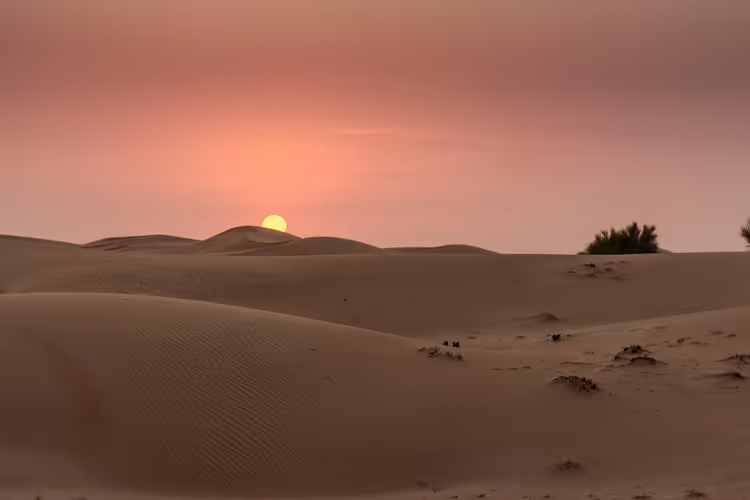
UAE: alcohol ban, robot jockeys and skiing in the desert
The capital of the UAE is Abu Dhabi, not Dubai. This mistake appears even in travel guides.
The United Arab Emirates consists of seven emirates, and each one operates by its own rules. Sharjah has a complete alcohol ban, while Dubai serves alcohol in licensed bars and hotel restaurants. In summer, temperatures here exceed 40 °C, camel races are run by robots, and skiers hit the slopes inside a shopping mall.
Below are the facts about the country that most often surprise tourists. We verified the figures on 09/13/2026 using open sources and noted where the number is an estimate rather than an exact measurement.
The UAE in numbers: seven emirates and 11.5 million residents
💡 In short:
- Capital: Abu Dhabi. Largest city and main resort destination: Dubai.
- Population around 11.5 million, most of whom are expats (as of 2026, UN statistics).
- In summer, daytime temperatures rise above forty degrees, and the comfortable season runs from November through March.
- Country figures: 09/2026, verified against UN population data and the Henley & Partners report.
The country occupies the desert coastline of the Persian Gulf and the Gulf of Oman, and it has exactly as much greenery as it waters. Fresh water comes from desalination, so irrigating lawns and trees is expensive. This shapes the distinctive look of its cities: narrow strips of parks, lots of stone and glass.
Native citizens are a minority of the population; the majority are expats from India, Pakistan, Egypt, the Philippines, and Europe. That is why you will hear English more often than Arabic in Dubai, and menus and signs are duplicated in English. English will be enough for you in a taxi, at the police station, and in a hospital.
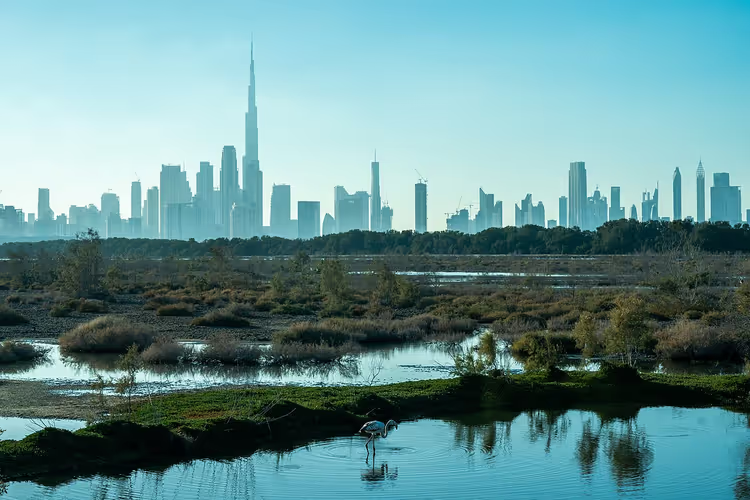 © Chuck202 · CC BY-SAPhoto: Chuck202, CC BY-SA (https://creativecommons.org/licenses/by-sa/4.0), Wikimedia Commons
The seven emirates are Abu Dhabi, Dubai, Sharjah, Ajman, Umm Al Quwain, Ras Al Khaimah, and Fujairah. Each has its own government services and its own tourism rules: some issue alcohol licenses, others do not issue them at all. Keep this in mind if you are planning a route across several emirates.
Indicator | Value | Source |
|---|---|---|
Population | about 11.5 million | |
Millionaires in Dubai | about 81,200 | |
Inflow of wealthy individuals in 2025 | about 9,800 | |
Camel racing season | October through April |
From desert to megacities
Back in the 1960s, Dubai was a cluster of mud-brick houses and a market by the creek. The UAE as a state emerged in 1971, when six emirates united after the British administration left. Ras Al Khaimah joined them in 1972. Today Dubai is a major port, an aviation hub, a financial center, and the region's tourism showcase.
Oil and gas remain Abu Dhabi's main source of wealth, but the country's economy has long stopped depending on a single industry. Dubai earns from trade, logistics, tourism, and finance; Sharjah from manufacturing; Fujairah from its port and access to the Indian Ocean. This diversification is exactly why the country has grown into a regional hub.
The concentration of money is just as striking. About 81,200 millionaires live in Dubai, and their number has grown by 102% over ten years (according to Henley & Partners, Gulf News). In 2025 the Emirates topped the global ranking for inflow of wealthy individuals, with about 9,800 people moving here (as of: Henley & Partners capital migration review).
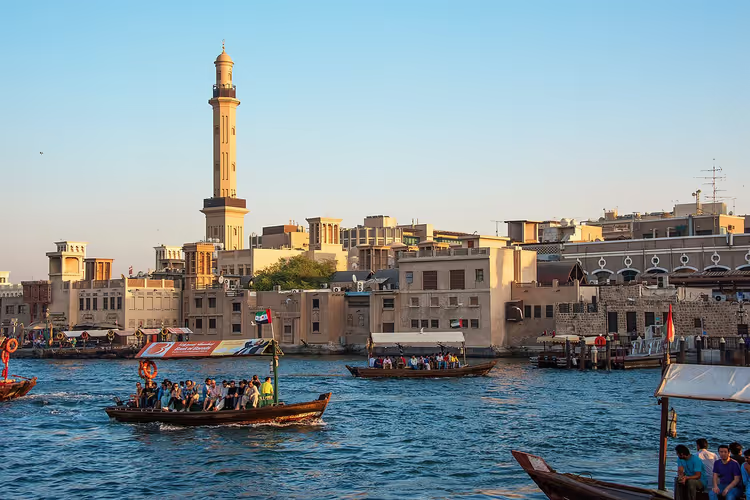 © Phil6007 · CC BY-SAPhoto: Phil6007, CC BY-SA (https://creativecommons.org/licenses/by-sa/4.0), Wikimedia Commons
Daily life for Emiratis: benefits, gold, and weddings
UAE citizens receive substantial support from the state. This includes free education and healthcare, a plot of land to build a house, and wedding subsidies. For visitors, something else matters more: the public sector plays a large role here, while private companies operate under international rules.
In practice, you will rarely see beggars or homeless people, and the level of everyday safety in cities is very high. The catch is something else: strict rules of conduct apply to tourists as well.
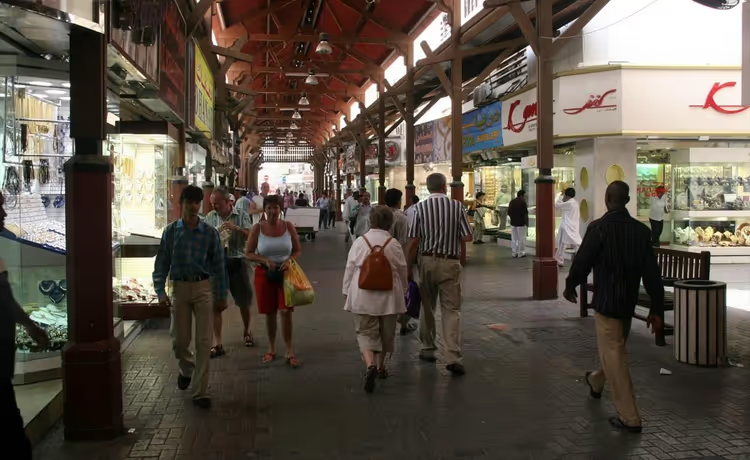 © Imre Solt · CC BY-SAPhoto: Imre Solt, CC BY-SA (http://creativecommons.org/licenses/by-sa/3.0/), Wikimedia Commons
Marriage in the Emirates is often a family decision: parents take part in choosing a partner, and relationships outside marriage are punishable by law. Polygamy is allowed, but in practice most families are monogamous, because maintaining several households is expensive.
Gold here is not just jewelry but also a customary way to store money. The Dubai Gold Souk has hundreds of shop windows, and buying gold for a wedding is part of local tradition. Prices are tied to the global rate, so bargaining hardly works, but the weight and purity are checked in front of you.
Laws and fines: what tourists cannot do
Alcohol is sold only in licensed venues: in bars and restaurants at hotels, as well as in dedicated stores in Dubai and Abu Dhabi. In Sharjah there is no alcohol at all. Drinking on the street, appearing drunk in a public place, and driving after alcohol are all prohibited.
Photograph people only with their consent, especially women. Government facilities, military zones, and service personnel must not be photographed. If in doubt, put your phone away: explaining yourself to the police will take longer than the shot is worth.
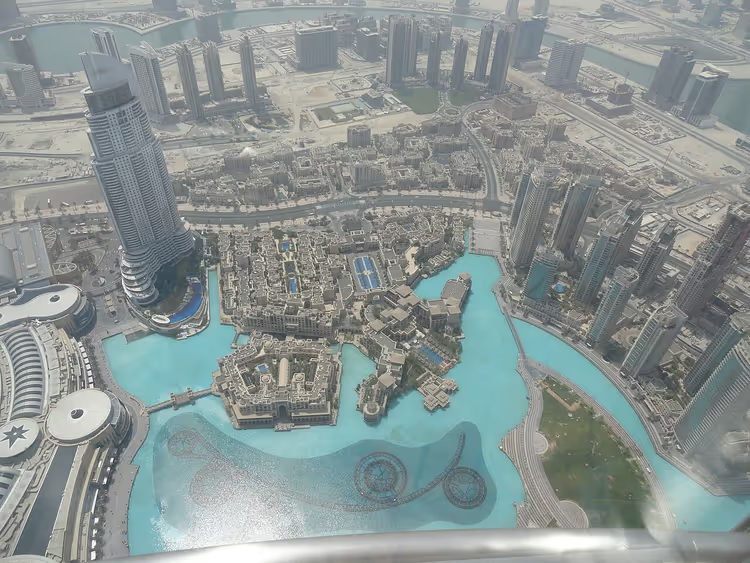 © Fabio Achilli from Milano, Italy · CC BYPhoto: Fabio Achilli from Milano, Italy, CC BY (https://creativecommons.org/licenses/by/2.0), Wikimedia Commons
Hitchhiking is not accepted here: on the highways between emirates it is dangerous, and local drivers do not pick up passengers. Punishments in the country are strict, but tourists are more likely to face fines for minor violations: jaywalking, smoking, and eating on transport where it is prohibited. Pay fines officially, through the emirates' apps, not through intermediaries.
Transport and heat: a driverless metro
The Dubai Metro runs without a driver, trains operate on schedule, and stations are air-conditioned. Bus stops are enclosed and cooled, and the metro has a dedicated car for women and children. Taxis are convenient, but a trip between emirates will cost noticeably more than a city ride.
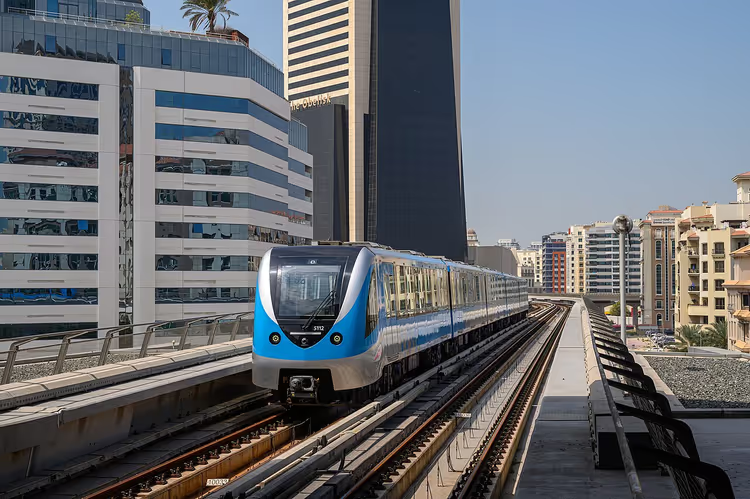 © Rob Dammers · CC BYPhoto: Rob Dammers, CC BY (https://creativecommons.org/licenses/by/2.0), Wikimedia Commons
In summer the city lives on a nighttime schedule. During the day you hide in malls, the metro, and hotels, and you go out after sunset. Humidity on the coast is high, so the heat feels stronger than the thermometer shows.
In winter it is comfortable both day and evening, so the season from November to March is the best time for the city, excursions, and beaches. Plan outings for the morning: by midday, even in December, the sun is beating down.
Entertainment: camel racing and skiing in the desert
Camel racing remains a popular sport. The jockeys here are small robots: the owner controls the pace remotely, and a mechanism with a whip and a speaker is mounted on the camel. The season at the Al Marmoom racetrack runs from October to April, and spectator entry is usually free (as of 09/2026, Al Marmoom race calendar).
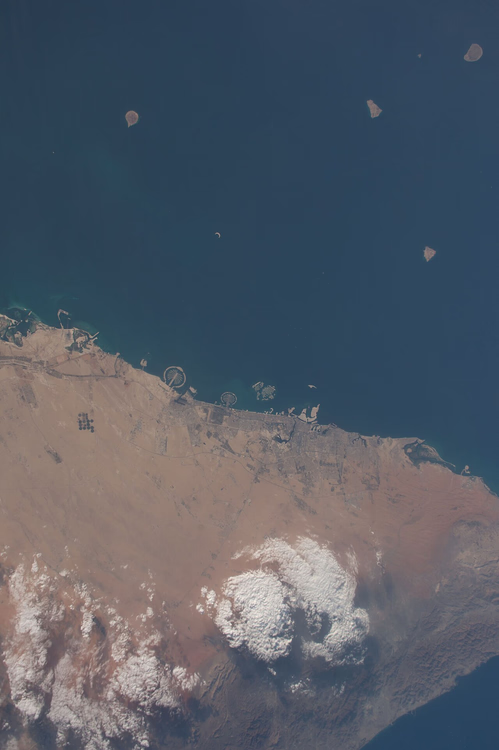
Dune safari is another local format. Jeeps drive over the sand with reduced tire pressure, and the evening ends with dinner at a camp. Take a safari in the morning or at sunset: during the day the sand is scorching, and there is no shade anywhere.
Skiing in the desert is not a joke. The Mall of the Emirates houses an indoor complex called Ski Dubai: snow lies here year-round, and the temperature inside stays below freezing even in August. Jackets, skis, and boots are provided on site, so you do not need to bring your own gear.
Skyscrapers are a separate topic. Burj Khalifa remains the tallest building on the planet, and Burj Al Arab became a symbol of Dubai even before observation decks appeared. Book tickets for the upper floors online in advance: during high season, sunset slots sell out first.
⁉️🤔 Frequently asked questions
What is the capital of the UAE?
The capital of the UAE is Abu Dhabi, not Dubai, although Dubai is larger and better known. Abu Dhabi is home to the federal ministries, embassies, and the president's residence. You can get there from Dubai by bus or car in an hour and a half to two hours.
Can you drink alcohol in the UAE?
Yes, but only in licensed places: bars and restaurants at hotels, as well as in certain stores in Dubai and Abu Dhabi. In Sharjah, alcohol is not sold at all. Drinking on the street, appearing drunk in public, and driving after drinking are prohibited.
When is the best time to visit the UAE?
The best season runs from November to March, when temperatures stay in a comfortable range. In summer, daytime heat exceeds forty degrees, and you will move most of your walks to the evening. During holidays and New Year dates, hotel prices rise the most.
What to see in the UAE besides Dubai?
The country has six other emirates, and they are noticeably different. Abu Dhabi is the capital with a calmer pace, Sharjah is stricter in its rules and dry law, Fujairah opens onto the Indian Ocean, and Ras Al Khaimah is known for its mountains. Plan your transfers in advance: from Dubai to Sharjah and Ajman it takes 20-40 minutes.
Can you photograph people in the UAE?
Photograph people only with their consent, especially women. Government facilities, military zones, and service personnel cannot be photographed. Publishing someone else's photos without permission can also get you a fine. The rule is simple: ask permission before pointing your camera.
Video about the trip
If you prefer watching to reading, start with a practical video overview: the author shows transport, prices, and rules of conduct in Dubai.
In short: what to book
The UAE is conveniently divided into two parts: Dubai and everything else. For your first trip, take a hotel near the metro in Dubai, and leave Abu Dhabi, Sharjah, and Fujairah for day trips.
- If you want beaches and a mild winter: plan your trip from November to March and stay closer to the coast.
- If you don't like crowds: choose Abu Dhabi or Fujairah, they are calmer.
- If you're traveling with children: plan for Ski Dubai and evening walks instead of daytime treks across the city.
Plan your trip for November-March and book accommodation in advance: prices rise fastest in high season.

A small editorial team writing guides for independent travel. We travel ourselves, but we haven’t been everywhere, so we check prices, opening hours and how to get there against official sources.