
















Bratislava in two days: 25 sights worth seeing on foot
Bratislava is more compact than Vienna and noticeably cheaper than Prague. The Old Town here can genuinely be walked on foot in one day, and the distance between the cliff-top castle, the Gothic cathedral, and the Danube embankment is only a couple of kilometers. The city sits at the meeting point of Austria and Hungary, so it's easy to come here from Vienna even for a single day.
A ticket to the Bratislava Castle museum costs €14 (as of 09/2026, city tourism portal), and with the Bratislava CARD entry is free. Admission to the city's main museum is often the biggest expense for many visitors, so it's better to build your route around one or two paid attractions.
We've put together 25 places worth seeing first, and for each one we've listed the admission fee, opening hours, and honest limitations. Some sights are in the Old Town, while others require a trip to the outskirts, so plan your day in advance.
Ad: this article contains affiliate links (we earn a commission if you book through them, at no extra cost to you).
1. Bratislava Castle
💡 In short:
- The Old Town is walkable: from the Main Square to the Castle you climb for about 15 minutes (on the map).
- The most famous sights are closed on Mondays or Tuesdays, so check the day of your visit in advance.
- For museums, get the 24-hour Múzeum mesta Bratislavy combined ticket for €18 (as of 09/2026, Múzeum mesta Bratislavy), it covers several sights.
- Prices and opening hours: 09/2026, verified on the official Bratislava Castle website.
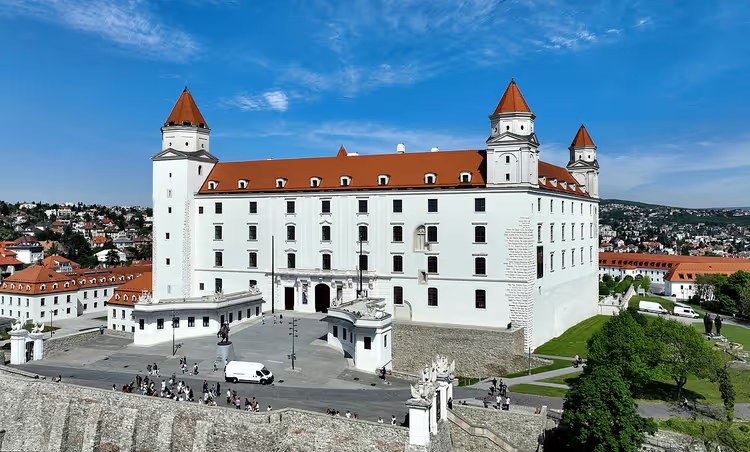
You can see Bratislava Castle from anywhere in the city: it stands on a cliff above the Danube, and its white walls under a red roof rise 80 meters above the river (as of 09/2026, Bratislava city tourist office). The palace terraces are open daily from 08:00 to 22:00 and remain free. The museum inside is open every day except Tuesday, from 10:00 to 18:00, with the last entry at 17:00.
For €14 you can explore the Historical Museum of the Slovak National Museum, with finds from the Stone Age to the Celts and Romans. On the second floor there's a Hall of Fame with sports trophies of Slovak hockey players, their personal belongings, jerseys, and sticks from legendary matches. If your budget is tight, just go up to the terraces: the panorama of the Danube, the bridges, and the tiled roofs of the Old Town opens up from there.
 © C.Stadler/Bwag · CC BY-SAPhoto: C.Stadler/Bwag, CC BY-SA (https://creativecommons.org/licenses/by-sa/4.0), Wikimedia Commons
The first structures appeared on this site as early as the third millennium BC, as archaeological excavations show. Written sources mention the castle from 907 (according to the city portal). In the 15th century the palace complex was surrounded by fortifications and gates, but in the early 19th century a major fire destroyed a significant part of the Castle.
Restoration of the monument began only in 1953, when public pressure pushed the authorities to start the work, and it was completed in 1968. The castle received the appearance of late Gothic 15th-century architecture: a regular quadrangular shape, pointed corner turrets, symmetrical rows of large windows. The well-preserved entrance gates are themselves an architectural monument.
The lower park at the foot of the palace deserves a separate visit: graceful statues, neat landscaping, and benches in the shade. In the evening the lighting comes on, and the white walls become especially photogenic. From the hill it's convenient to photograph the SNP Bridge and the embankment, so many people come up here closer to sunset.
- Cost: museum €14 (as of 09/2026, source), courtyard and terraces free.
- Opening hours: museum Tue-Sun 10:00-18:00, courtyard daily 08:00-22:00.
- The catch: the museum is closed on Tuesdays, and in July and August there's little shade on the terraces.
2. Main Square
 © Neil Aitkenhead · CC BY-SAPhoto: Neil Aitkenhead, CC BY-SA (https://creativecommons.org/licenses/by-sa/3.0), Wikimedia Commons
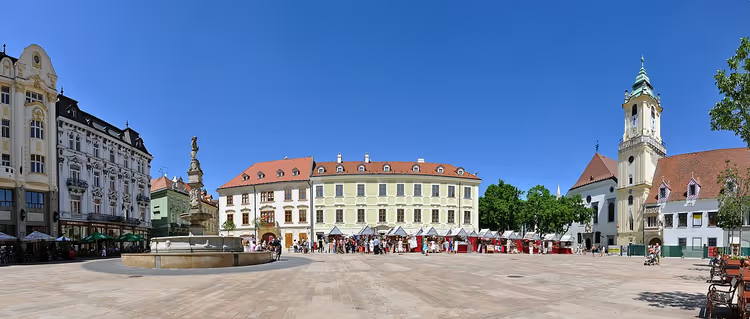
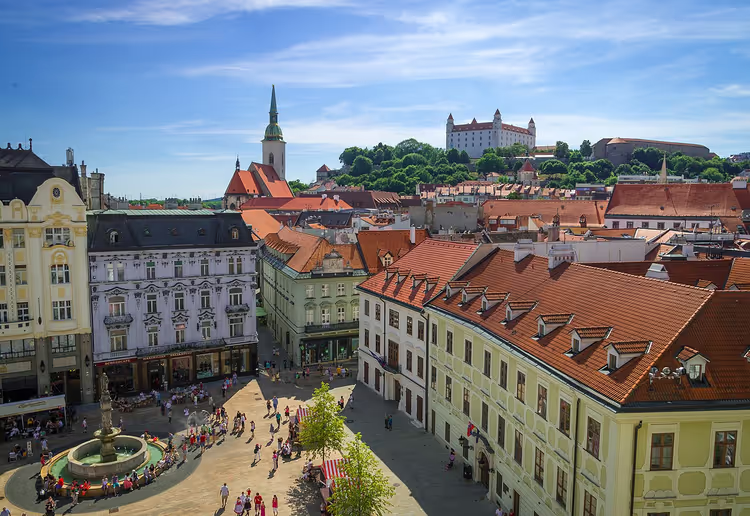
Main Square, or Hlavné námestie, remains the starting point for any walk through the Old Town. It used to be called Market Square until the market moved, and now it's a small, cozy square surrounded by palaces of different styles. Strict Gothic houses, Classicist buildings, and Baroque palaces stand side by side, making the square look like an open-air architecture exhibition.
In the center you'll see a fountain from 1572 with a statue of the knight Roland; its history is covered in more detail in point 14. To the left of the Old Town Hall, the Wine Museum operates with winemaking equipment and samples of Slovak varieties. One of the houses, the Rococo Kutscherfeld Palace, bears a plaque noting that composer Anton Rubinstein lived here in 1847, and the building now houses the French embassy.
On Franciscan Square, a continuation of Main Square, stands a Baroque palace built for the wealthy brewer Martin Spech. A walk through this quarter turns into a tour of architectural monuments from the past. Come here in the morning, before tour groups fill the center, and you can calmly examine the facades and the windows of the first coffeehouses.
- Cost: entry to the square is free, the Wine Museum charges a separate fee.
- Who it's for: for those who want to see architecture of four styles in half an hour.
- The catch: the square is small, so it's not worth spending half a day here.
3. Devin Castle
 © Murli · CC BY-SAPhoto: Murli, CC BY-SA (http://creativecommons.org/licenses/by-sa/3.0/), Wikimedia Commons
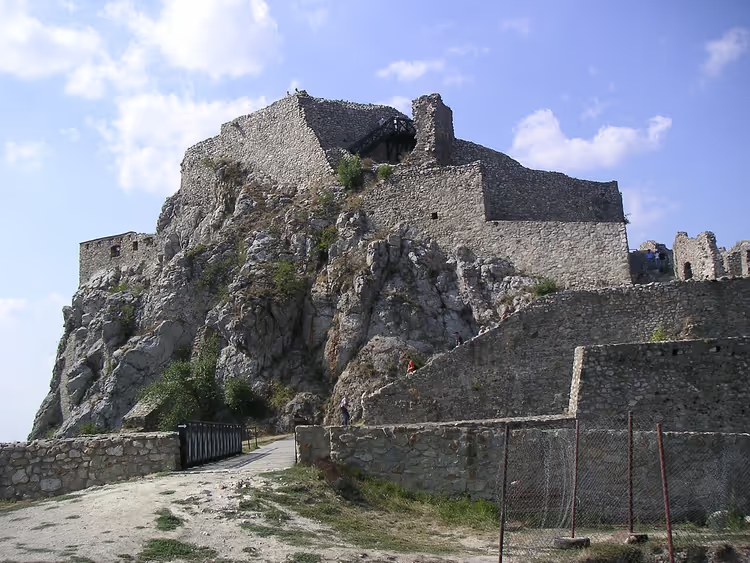
Devin Castle stands on a high cliff above the confluence of the Morava and the Danube. It would be hard to find a better location for a fortress: the rivers protected it on two sides, and the hill offered a view for dozens of kilometers. From a distance, the two surviving towers look tiny, but up close you can see they were massive structures with thick walls.
The first documentary evidence of Devin Castle dates back to 864, when it belonged to Great Moravia. According to tradition, the enlighteners Cyril and Methodius worked here, translating Greek church texts into the Slavic language. The last major siege was the Ottoman one in 1606, after which the citadel stopped serving as a defensive fortification.
The castle was finally destroyed by Napoleonic troops, who blew up the fortifications and left only what would not give way. Today, the surviving wing houses a small exhibition with everyday objects and clothing from the Middle Ages. Last entry is 45 minutes before closing (according to the castle's page on the city museum website).
- Who it's for: those who care about views of the river confluence rather than palace interiors.
- The catch: only ruins remain of the fortress, and there is nowhere to shelter from rain and wind here.
4. Slavin Memorial Complex
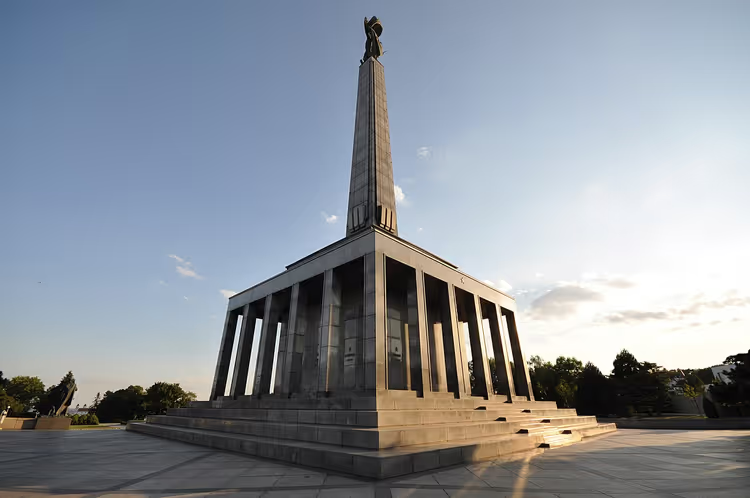 © Jorge Láscar from Australia · CC BYPhoto: Jorge Láscar from Australia, CC BY (https://creativecommons.org/licenses/by/2.0), Wikimedia Commons
The Slavin memorial stands on a hill with a symbolic name and is dedicated to the soldiers who died during the liberation of the city in 1945. More than six thousand of them are buried here, so the complex combines a monument and a military cemetery. The memorial was opened for the fifteenth anniversary of the Victory and is considered one of the most expressive in Europe.
The central figure of a soldier with a banner in his raised hand, together with the pedestal, rises 52 meters. At the foot of the staircase there is a sculptural composition: two soldiers and a boy clinging to one of them. On the opposite side stands the figure of a girl greeting the liberators with bread and salt.
The grounds are divided into three parts. The first is dedicated to the oath to the battle flag and takes the form of a two-flight staircase with bas-reliefs. The second combines the sculptures and the cemetery, while the third is represented by the Mourning Hall, whose doors feature bas-reliefs depicting episodes from the liberation of the city. From the memorial's terraces you can enjoy a panorama of Bratislava, and you can combine the visit with a walk through the surrounding streets.
- Cost: free entry.
- Who it's for: those who want to see the city from above without paying for the observation deck.
- The catch: a long staircase leads to the memorial, and the climb requires some effort.
5. SNP Bridge
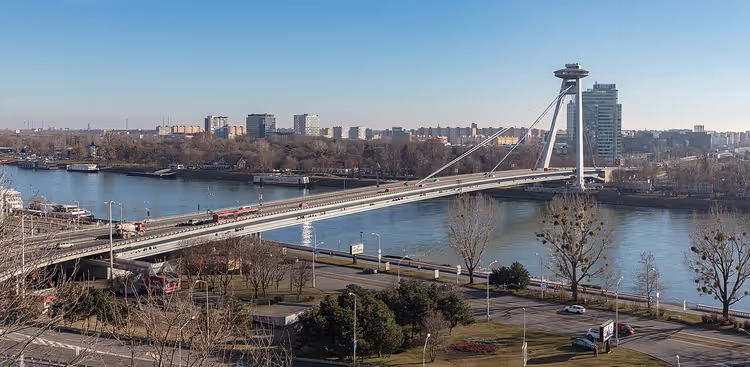 © Diego Delso · CC BY-SAPhoto: Diego Delso, CC BY-SA (https://creativecommons.org/licenses/by-sa/4.0), Wikimedia Commons
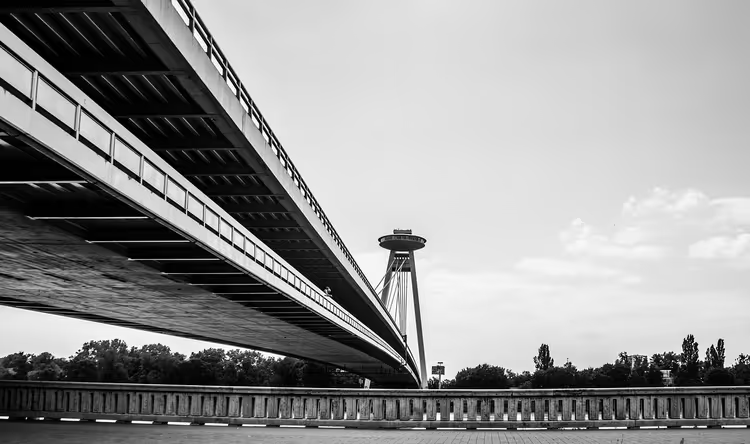
The SNP Bridge can safely be called an architectural marvel of bridge engineering. The suspension structure has no supports in the Danube riverbed and crosses the river in a single span. Opened in 1972, the bridge was first called the New Bridge, and later renamed in honor of the Slovak National Uprising.
To build this innovative crossing, part of the residential buildings in the Jewish quarter on the riverbank had to be demolished. In return, the new route solved traffic and pedestrian problems. The upper deck of the two-level span is for cars, the lower one serves pedestrians and cyclists.
At the top of the single 84.6-meter pylon there is an observation deck, reached by elevator. The structure is 430.8 meters long, and inside the pylon there is an emergency staircase of 430 steps. The bridge also doubles as a water pipeline, supplying water to the Old Town and the Petržalka district.
- Cost: crossing the bridge is free.
- The catch: the observation deck on the pylon has its own schedule, check it before going up.
6. Presidential Palace
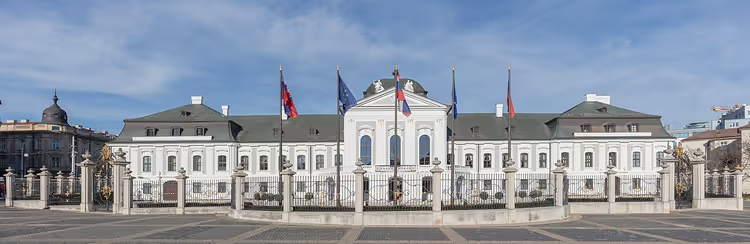 © Diego Delso · CC BY-SAPhoto: Diego Delso, CC BY-SA (https://creativecommons.org/licenses/by-sa/4.0), Wikimedia Commons
The majestic white building under a gray shaped roof serves as the country's main administrative institution. The palace was built in 1765 for Count Grassalkovich, an influential advisor to Queen Maria Theresa (according to the Bratislava city guide). The building is also known as Grassalkovich Palace, and it hosted balls, feasts, and ceremonial receptions.
Composer Joseph Haydn is known to have sometimes taken part in these events, delighting guests with his music. The wedding of the emperor's daughter took place within the palace walls. The building of white and gray brick is decorated with sculptural bas-reliefs, molded arched window surrounds, and ornate entrance porticos.
In 1919, the palace housed government offices, and later it was home to the Pioneer Palace. After restoration in the early nineties, it became the residence of the President of Slovakia. Today the building is surrounded by a transparent bulletproof fence, and on the palace square you will see a large fountain with a model of the globe in the center.
- Cost: the interior halls are closed, the palace park behind the building is open for walks.
- Who it's for: for those who want to stroll through the garden and walk to the Old Town.
7. St. Martin's Cathedral
 © Rob Hurson from Kentstown, Ireland · CC BY-SAPhoto: Rob Hurson from Kentstown, Ireland, CC BY-SA (https://creativecommons.org/licenses/by-sa/2.0), Wikimedia Commons
St. Martin's Cathedral was built over an ancient cemetery. Beneath the building are catacombs up to six meters deep with tombs of clergy and nobility. The church was founded in 1221, making it the oldest large cathedral in Bratislava (according to the collection of city landmarks).
The tall tower in a rich green color is topped with a massive gilded crown of St. Stephen weighing about 300 kilograms. After its consecration in 1485, the cathedral became the coronation site for rulers of the Kingdom of Hungary. Monarchs and their wives were crowned here, and Maria Theresa also underwent the ceremony in this very church.
The cathedral is surrounded by the chapels of St. Anne, St. John, and St. Sophia, and nearby stands the sculpture "St. Martin and the Beggar." On the portal you can see a relief depiction of the Holy Trinity. Inside, stained glass windows, the main altar, and carved decorations await, and kings once stood in the gallery during mass.
- Cost: entry to the cathedral is free, donations are welcome.
- The catch: during services, tourists are asked not to enter the central part of the church.
8. Old Town Hall
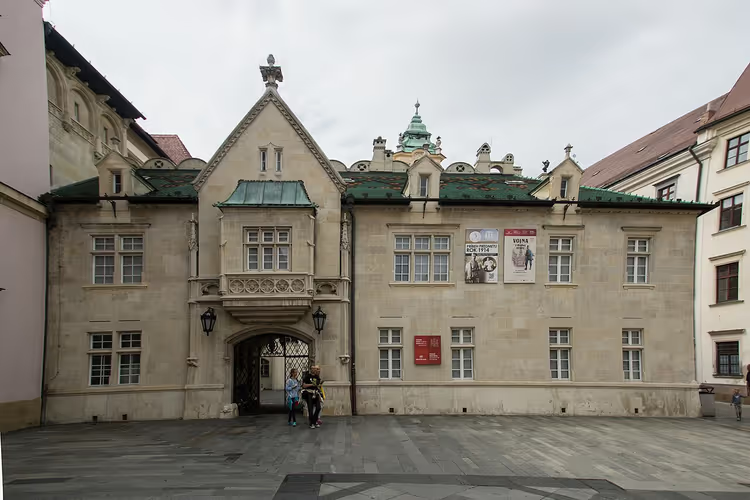 © Pedro J Pacheco · CC BY-SAPhoto: Pedro J Pacheco, CC BY-SA (https://creativecommons.org/licenses/by-sa/3.0), Wikimedia Commons
The Old Town Hall unites several historic buildings that were once private houses. The main building was erected in the 14th century, and the additions appeared in the early 15th century. Over four centuries, the complex was rebuilt several times, gaining elements of avant-garde Gothic and Renaissance.
The three-tier corner tower has remained unchanged, rising with its Gothic dome above the terracotta roofs of neighboring houses. The town hall served the city council and at times functioned as a prison and a mint. A cannonball lodged in the wall still recalls the French invasion.
Today the historic building houses the City Museum, whose exhibits tell the story of the city's development. An hour is enough to see it, so the town hall is easy to include in a route together with the Main Square. A separate ticket for the town hall together with the Apponyi Palace costs €8, reduced €4, and a 24-hour Múzeum mesta Bratislavy ticket for €18 covers this exhibition along with the museum's other sites (as of 09/2026, official museum price list).
- Hours: check the museum website, exhibitions are closed on certain days of the week.
- Who it's for: for those who want to understand how a small town became a capital.
9. Capuchin Church of St. Stephen
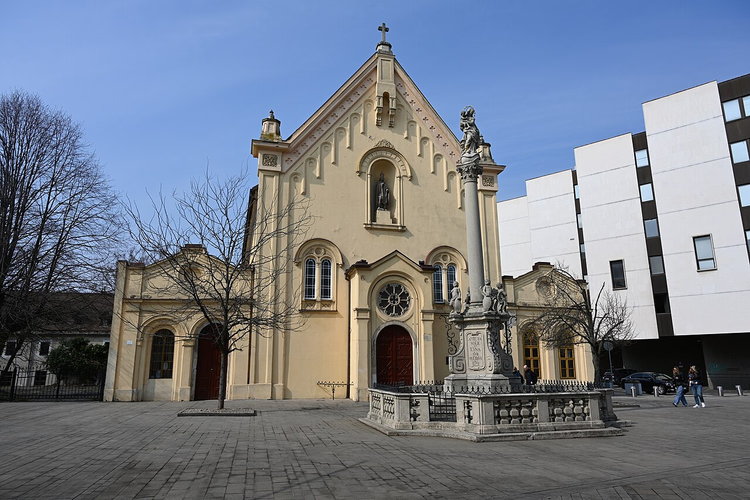
On Župné Square you will notice a small sand-colored church without a bell tower. The absence of a tower immediately points to the Capuchin order, for whom modesty was part of their rule. The monks arrived in the city in 1676, moving here from Austria (according to the city tourism portal).
At first the brothers rented the Chapel of St. Catherine, but the space was insufficient. After buying a plot of land, the Capuchins built the more spacious Church of St. Stephen in 1711. Until 1860 the church was rebuilt several times, and it acquired an attractive appearance without external pomp.
From a niche in the facade, a statue of St. Stephen on a pedestal looks down at you. The main entrance is decorated with a rose window, and the top of the building is crowned with a cross. In front of the church, a statue of the Virgin Mary stands on a column, as if blessing the parishioners.
- Cost: entry is free.
- The catch: the church is easy to miss if you walk across the square without a map.
10. Chapel of St. James
 © Brutalhovno · CC BY-SAPhoto: Brutalhovno, CC BY-SA (https://creativecommons.org/licenses/by-sa/3.0), Wikimedia Commons
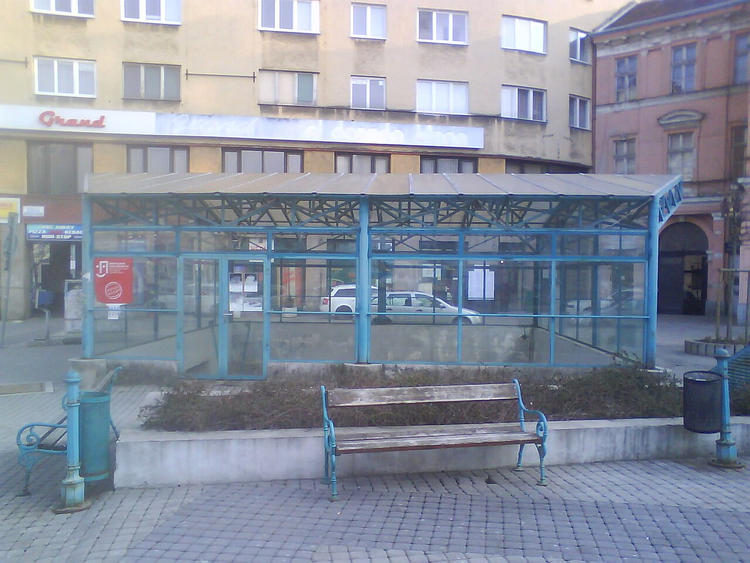
The ruins of the old Chapel of St. James were discovered in the Old Town in 1994 during construction work. Archaeologists determined that the Church of St. Lawrence from the 11th-12th centuries stood nearby, as indicated by the outline of its foundation in dark cobblestone. Deeper excavations uncovered the remains of an ancient rotunda from around 1100.
On the site of the demolished rotunda, the Romanesque ossuary of St. James was built. In 1436, the chapel itself was constructed here, and it was destroyed in 1529 due to the threat of the Ottoman invasion. These are the ruins that were found during excavations and then enclosed in a glass pavilion.
Today the remains of the chapel are part of the city museum as a branch. Visitors are not admitted every day, but only on feast days dedicated to St. James. If you get inside, you will see masonry from the 13th-16th centuries right under the glass floor.
- Cost: viewing through the glass pavilion is possible almost always.
- The catch: entry inside is rare, and you cannot plan the visit date in advance.
11. Zoo
 © Soggy Pandas · CC BY-SAPhoto: Soggy Pandas, CC BY-SA (https://creativecommons.org/licenses/by-sa/4.0), Wikimedia Commons
Bratislava Zoo is located in the Mlynská dolina area, far from the Old Town. It opened in 1960 and is smaller in size than its counterparts in other capitals. But in terms of the variety of its residents, the collection is on par with major European zoos, and the grounds look well maintained.
The facility's main feature is tied to its endangered species rescue program. Rare species are kept and bred here, including the white rhinoceros, European bison, and short-nosed kangaroo. The enclosures are separated by thick transparent glass, which makes it easy to observe the animals without disturbing them.
In the bird corner, you'll hear parrots and see owls, pigeons, pheasants, swans, and wild geese. The exotarium houses amphibians, reptiles, and fish. Next to the zoo there's a children's area with rides and a cafe, which makes the trip convenient for families with children.
The zoo is open every day, including holidays, and the last entry is at 6:00 PM (as of 09/2026, official zoo website). It's best to start your visit before noon. Allow at least an hour each way for the trip from the center.
- Who it's for: families with children and anyone tired of palaces and museums.
- The catch: the zoo is far from the center, so a visit will take half a day including travel.
12. Esterházy Palace
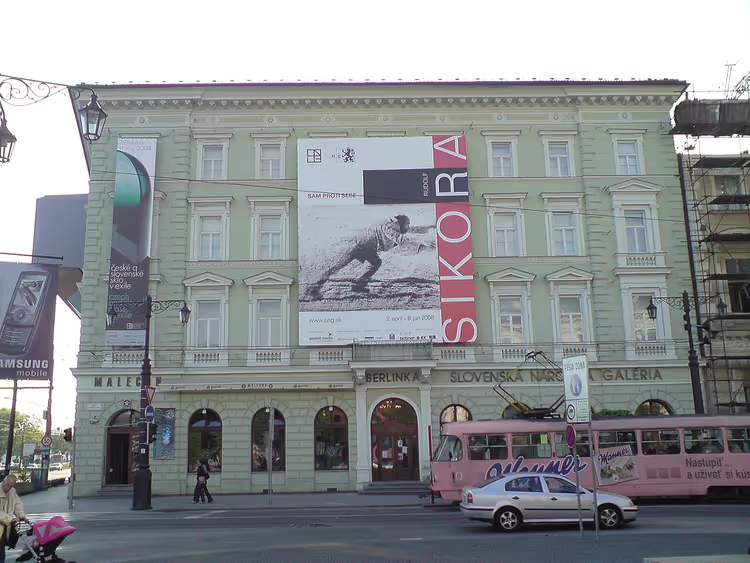
In the Old Town on the banks of the Danube, a strict and majestic building draws the eye. It was built in the late 19th century by members of the noble Hungarian Esterházy dynasty. Originally from the Slovak town of Galanta, under the Habsburgs they became one of Europe's largest private landowners and were considered equal in rank to monarchs.
Members of the family collected paintings, and the composer Haydn once served as their kapellmeister. The symmetrical building in the neo-Renaissance spirit is distinguished by its precision of form; the project was prepared by architect J. Feigler Jr. After the 1920 reconstruction, the staircase, pediments, French balconies, and arched first-floor windows were preserved.
In 1950, the palace became home to the Slovak National Gallery. Its collection numbers more than 55,000 items: photographs, sculptures, decorative art objects, and paintings. The collection includes works by Pablo Picasso and Andy Warhol, and on the ground floor there is a cafe and a bookshop.
- Cost: the gallery's permanent exhibitions are paid, the cafe is accessible without a ticket.
- Who it's for: for those who want to see classical art and relax by the river.
13. Multium Gallery
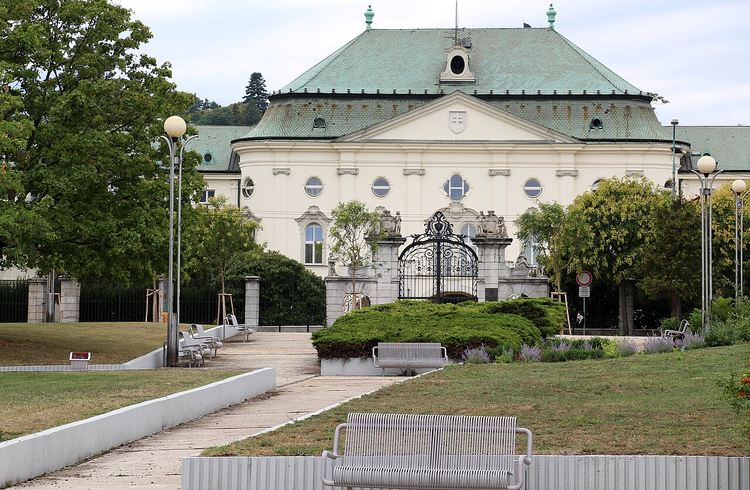 © Fred Romero from Paris, France · CC BYPhoto: Fred Romero from Paris, France, CC BY (https://creativecommons.org/licenses/by/2.0), Wikimedia Commons
Multium Gallery is located not far from Bratislava Castle and caters to those who are tired of medieval sights. Visitors pass through six rooms, three on each floor. From the outside, the white corridors resemble an office, but as soon as you open the door, the sense of space disappears.
Inside each room there is only a small platform for a person, while decorative elements are reflected repeatedly in mirrors. This creates an illusion of infinity that can make your head spin. Each room has its own ornaments and patterns, and the visit is accompanied by music that enhances the effect.
The gallery's creator, Tomáš Hatraks, has said he was inspired by the work of Yayoi Kusama and Matej Krén. Visitors are sometimes asked to wait a few minutes so that groups don't get in each other's way. The gallery is open year-round from 10:00 to 20:00; an adult ticket costs €5, and a child's ticket up to age 15 costs €3 (as of 09/2026, gallery's official website).
- Who it's for: for those traveling with children and wanting unusual photos.
- The catch: the rooms are very small, and the visit takes less than an hour.
14. Maximilian Fountain
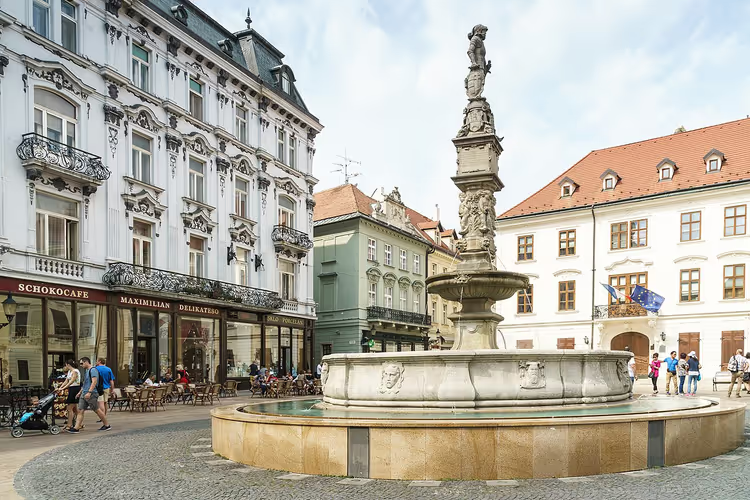 © Radler59 ( talk ) · CC BY-SAPhoto: Radler59 ( talk ), CC BY-SA (https://creativecommons.org/licenses/by-sa/4.0), Wikimedia Commons
Bratislava has more than 140 fountains, but the oldest and most beloved by locals stands on the Main Square. Maximilian Fountain was built in the Renaissance style in 1572 (according to the capital's sights guide). The occasion was the coronation of Maximilian II: during the public festivities, a fire broke out in the city, and there was not enough water to extinguish it.
The top of the structure is adorned with a figure of the knight Roland holding a sword and the coat of arms of Hungary. At that time, Bratislava was the capital of the Kingdom of Hungary, so the coat of arms makes sense here. Some researchers believe the sculpture depicts King Maximilian himself, but history has not preserved the name of the project's author. Only the name of the Austrian stonecutter who worked on the figure is known.
Over several centuries, the fountain endured a great deal, and some elements were lost. In 2019, it was restored and a missing detail was brought back: little boys urinating, which had previously been replaced by dolphins. The later basin, which did not fit the composition, was also removed, and today the fountain looks as it was originally intended.
- Cost: free to view around the clock.
- The catch: the figure of Roland is covered with a protective box for the winter.
15. Slovak National Theatre
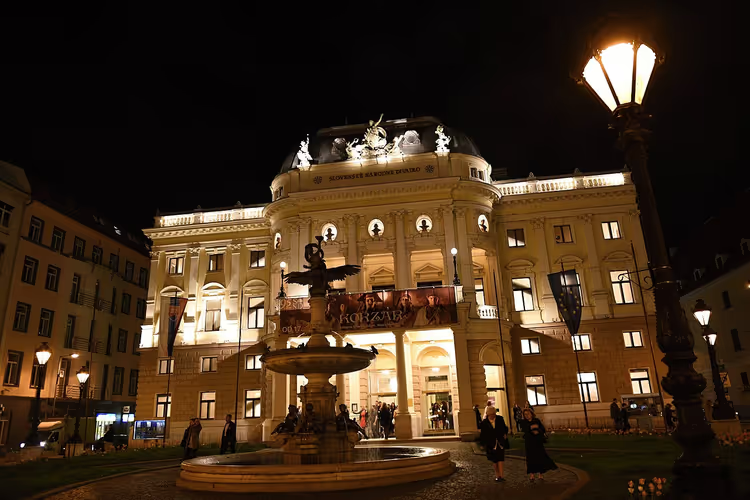 © Synalik ( talk ) · CC BY-SAPhoto: Synalik ( talk ), CC BY-SA (https://creativecommons.org/licenses/by-sa/4.0), Wikimedia Commons
The Slovak National Theatre is considered one of the country's most important cultural institutions. Its history began in 1920, when the Austrian Empire had already collapsed and the Czechoslovak Republic had just emerged. The first opera performed on this stage was "The Kiss" by composer Bedřich Smetana, and the premiere was sung in Czech.
The theatre's historic building was constructed in 1884-1886 on Hviezdoslav Square. In 2007, a new stage opened on the banks of the Danube, and today the company performs opera, ballet, and drama. The repertoire is based on classical and national works, so you will often see Puccini's "Tosca" or Verdi's "Aida" on the playbill.
The theatre experiments with form: here Boris Eifman staged a ballet combining Wagner's music with the plot of "The Brothers Karamazov." Tickets for popular performances should be bought in advance (according to the official Bratislava tourism website). Even if you are not attending a performance, it is worth taking a look at the building's illuminated facade.
- Who it's for: for those ready to spend an evening at the opera or ballet.
- The catch: in July and August there are almost no performances; the company is on break.
16. Pálffy Palace
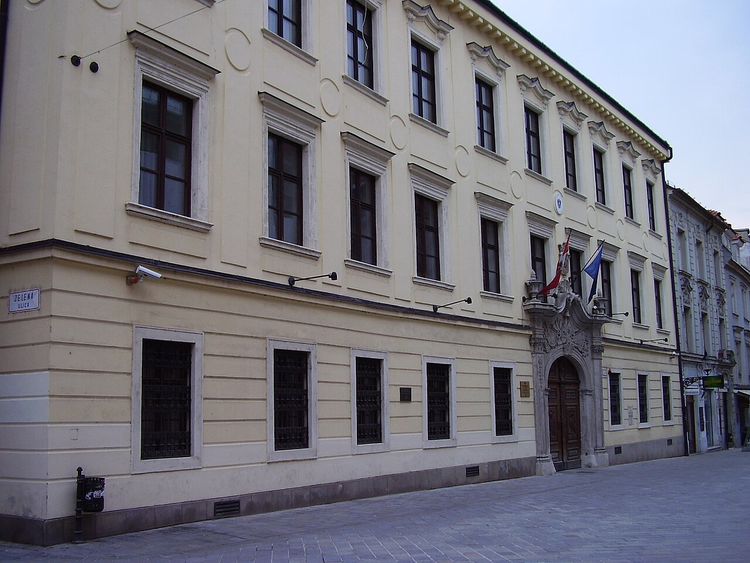
The Hungarian Pálffy dynasty of barons and counts owned five mansions in Bratislava. The oldest of them was built in the early 18th century on Panská Street, when the count held an important post in the city administration and had access to all the aristocratic salons (according to the city tourism office). Planning a residence, he bought three medieval buildings standing in a row.
All three houses were demolished, and their foundations were used for the new palace. Over three hundred years, the building was repeatedly rebuilt, most recently in the mid-19th century, when Ján František Pálffy ordered the main facade to be redesigned in the classical style. Since 1988, the premises have housed an art gallery.
The interior also changed, and archaeological research is periodically conducted on the grounds. Researchers found the remains of a 13th-century house and, next to it, a tower for defense against enemies. They also discovered a deep shaft left over from a Celtic camp that stood on the site of what would become Bratislava.
- Cost: gallery admission is by ticket, some rooms are closed between exhibitions.
- Who it's for: those interested in contemporary art and quiet courtyards.
17. Slovnaft Arena
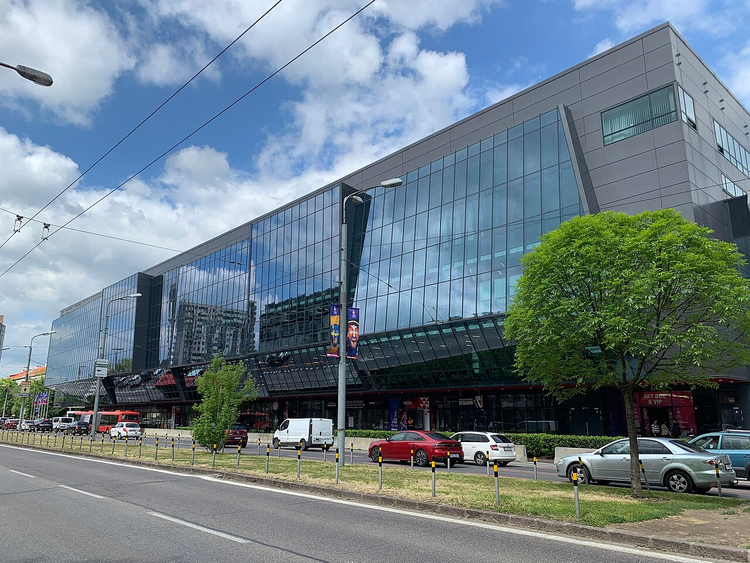
In the first half of the 20th century, the government of the young Czechoslovakia took up sports development. Construction of a large sports complex began in the 1930s, and the grand opening took place in December 1940. Since then, the arena has been reconstructed many times.
 © Milan Csaplár · CC BY-SAPhoto: Milan Csaplár, CC BY-SA (https://creativecommons.org/licenses/by-sa/4.0), Wikimedia Commons
The sports complex seats up to ten thousand spectators and remains the home arena of the Slovan hockey club. The last major renovation was completed in 2010, after which the arena was selected for the 2011 IIHF World Championship (according to the city tourism office page). It has also hosted the European Figure Skating Championships and the European Volleyball Championship.
Every autumn, the arena brings together figure skating fans for the Ondrej Nepela Memorial tournament. The tournament is named after the figure skater who won gold at the XI Winter Olympic Games in Sapporo in 1972. If you're visiting in winter, check the schedule: Slovan games take place almost every week.
- Who it's for: sports fans and those who want to see top-level competition without a football ticket.
- The catch: on game days, the area around the arena is closed to cars.
18. Primate's Palace
 © Diego Delso · CC BY-SAPhoto: Diego Delso, CC BY-SA (https://creativecommons.org/licenses/by-sa/4.0), Wikimedia Commons
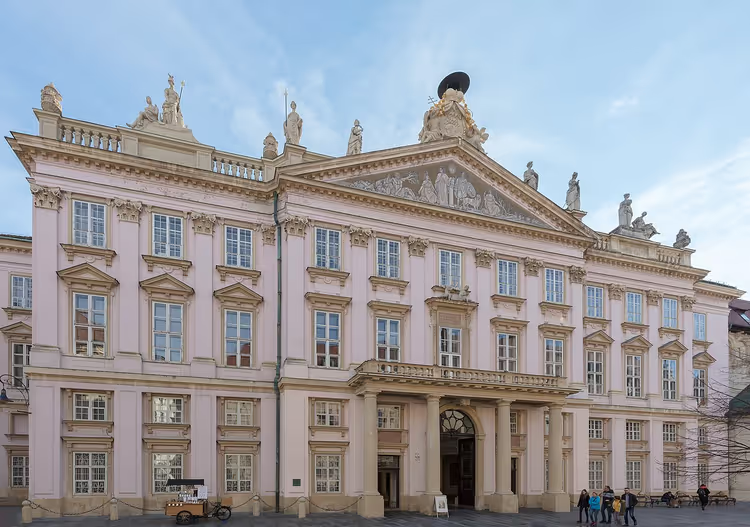
The Primate's Palace, also called the Archbishop's Palace, is considered one of the most beautiful buildings in the city. In the second half of the 18th century, architect Melchior Hefele prepared a design for the residence of Hungary's first cardinal, József Batthyány. Construction took place from 1778 to 1781, and an old mansion had to be demolished to make way for it.
The roof is crowned with the archbishop's coat of arms, above which sits a cardinal's hat that signaled the owner's status. Bratislava was once the capital of the Kingdom of Hungary, and coronations took place at St. Martin's Cathedral. The Peace of Pressburg between Napoleon and Austria, which had lost the war, was signed in the Mirror Hall.
In the early 20th century, the palace passed to the city, and restorers found tapestries rolled up inside one of the walls, created in 1630 in English royal workshops. Today the collection can be seen on the ground floor, and the palace itself serves as the residence of the head of the city council (according to the official Bratislava portal).
- Cost: admission to the halls is ticketed, and the halls are not open every day.
- The catch: during official receptions, access is closed without notice.
19. Sigismund Gate
Four gates lead into Bratislava Castle, built at different times. The Sigismund Gate, or Žigmund Gate, is on the southeast side and is considered the most photogenic (according to the Bratislava city tourism office). Its history goes back about five hundred years, but the late Gothic masonry has survived surprisingly well.
The gate got its name in honor of King Sigismund of Luxembourg. He liked the castle so much that he chose it as his residence and spent a great deal of time rebuilding the fortifications. On the way from the city, the king ordered the construction of a new gate with rich ornamentation, which has survived to this day.
Today it is a large structure with a red roof, and the road from the gate to the castle has become a favorite spot for photo shoots. After exiting the gate and walking down the road, you will reach an old Danube ford. The climb back takes about ten minutes, so save your energy for walking along the terraces.
- Cost: free to view.
- The catch: there are few benches nearby; the only place to rest in the shade is up at the castle.
20. Hviezdoslav Square
 © Unknown author · CC BY-SAPhoto: Unknown author, CC BY-SA (http://creativecommons.org/licenses/by-sa/3.0/), Wikimedia Commons
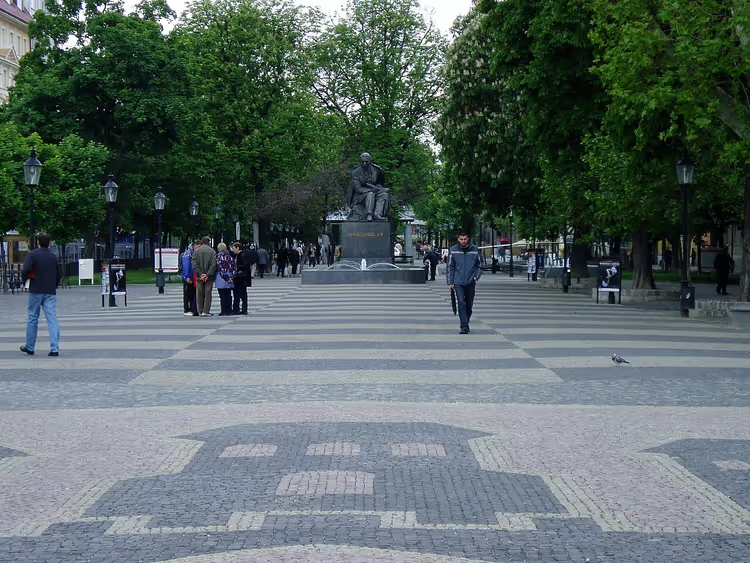
Hviezdoslav Square is considered the most famous and largest square in the city. It appeared in 1784, when the old city walls were dismantled and the moats beneath them were filled with earth (according to the city information page). Mansions belonging to fifteen wealthy families stood here, and the eastern part was occupied by a convent where noble daughters studied.
In 1848, people in the square heard the proclamation of Hungary's revival: the speech was delivered by national leader Lajos Kossuth. The Zöldfa Hotel once operated here, where Emperor Franz Joseph, Alfred Nobel, and Albert Einstein stayed. The Carlton Hotel stands on its site today.
In 1911, the square was adorned with a statue of the poet Sándor Petőfi, but the monument stood for only seven years and was blown up in 1918. At the end of the 20th century, the square was reconstructed, and it is now a large green pedestrian zone with two fountains. It is a convenient starting point for an evening walk to the Danube.
- Cost: free entry.
- Who it's for: those looking for a place to rest between visiting the theater and the embankment.
21. Mountain Park
 © Fred Romero from Paris, France · CC BYPhoto: Fred Romero from Paris, France, CC BY (https://creativecommons.org/licenses/by/2.0), Wikimedia Commons
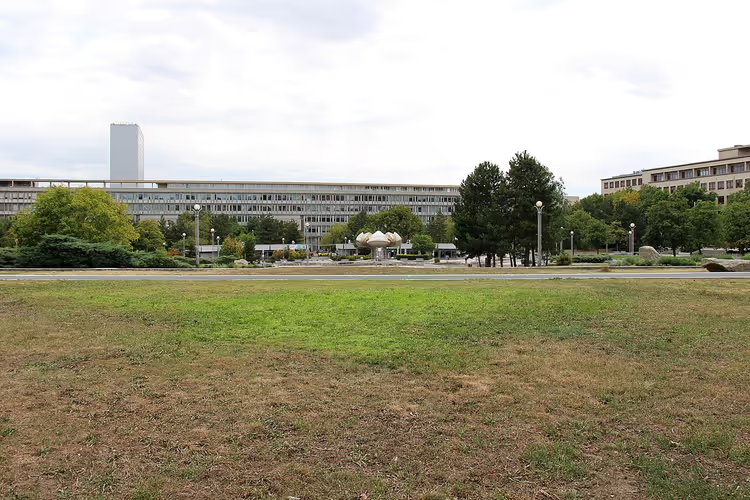
Mountain Park opened in 1868 and lies practically in the very center of the city. Much of the credit for its creation goes to Mayor Heinrich Justi, who wanted to preserve the unique natural landscape for future generations (according to the Bratislava tourism office). Century-old oaks, beeches, and pines still grow here, along with frequent ash trees and edible chestnuts.
Active members of the Bratislava Beautification Society laid out a network of paths, built a forester's house and a children's playground. Fifty benches were installed for resting, and the park's special character comes from its iron gazebos, lookout towers, and pavilions. Some trees have plaques with poems by national poets attached to them.
The park not only preserved old trees but also introduced new species: plane trees, yews, and lindens. Today the area covers about 22 hectares, and the landscape is formed by two valleys separated by a mountain ridge. In the center of the park stands a monument to Justi, who put great effort into preserving this place.
- Cost: free entry.
- The catch: some paths go uphill; with a stroller, only the lower alleys are convenient.
22. Apollo Bridge
Five bridges cross the Danube within the city limits, and the Apollo Bridge is the youngest among them. It got its name in memory of the Apollo oil refinery, which stood on the left bank until World War II. In 1944, the plant was destroyed by American aviation, but the name remained in the city's toponymy.
Construction began in 2002, and the grand opening took place in 2005. The design, however, was prepared much earlier, back in 1973 (according to a review of city landmarks). The originality of the structure lies in the absence of right angles: smooth lines and inclined arches are illuminated at night.
The bridge is also very massive: its length is 854 meters, and its weight reaches 5,240 tons. Pedestrians and cyclists have separate paths here, separated from the vehicle lanes, and an elevator makes it easier to get up onto the bridge. A bus stop is located right on the span, which is rare for bridges.
- Cost: free to cross on foot or by vehicle.
- The catch: there are no observation platforms on the bridge; it looks best from the embankment.
23. Transport Museum
 © Pudelek · CC BY-SAPhoto: Pudelek, CC BY-SA (https://creativecommons.org/licenses/by-sa/4.0), Wikimedia Commons
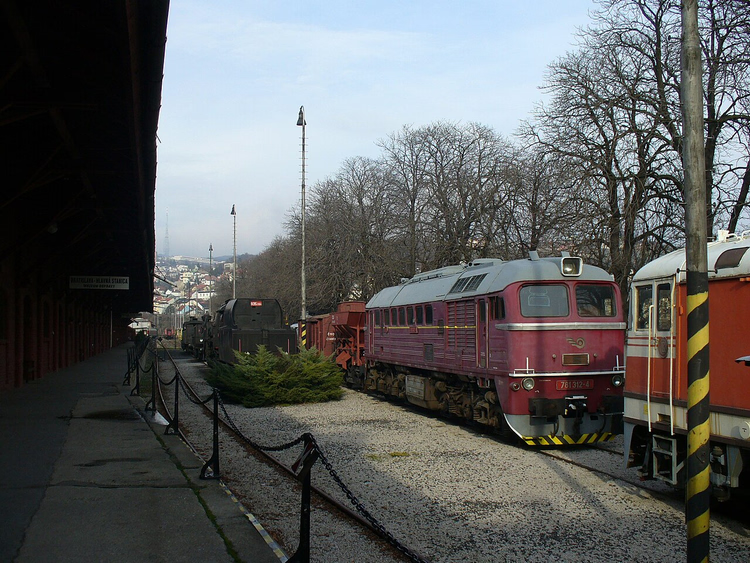
The Transport Museum operates next to the main railway station, so it is convenient to visit before catching a train. The venue opened to visitors in 1999 as a branch of the Slovak Technical Museum (according to the Slovak Technical Museum). A significant part of the exhibits stands directly in the open air.
Retro steam locomotives, draisines, and engines can be viewed from all sides and approached closely. In the large hangars, vintage cars await you, including a 1931 Mercedes-Benz 170 and a 1929 Skoda 860 that catch the eye. Many vehicles from Škoda and Tatra are on display, along with trucks, buses, and motorcycles.
The military equipment exhibition, painted in khaki, deserves special attention. Lovers of rarities will see an antique baby carriage, a wooden bicycle, and a model of a railway bridge assembled from construction set parts. Some of the hangars are styled as a "Depot" and a "Driving school," so the exhibition does not feel monotonous.
- Hours: check the museum page, the schedule changes by season.
- The catch: half of the equipment sits outdoors, so the visit is shorter in the rain.
24. Gerulata
 © Pudelek (Marcin Szala) · CC BY-SAPhoto: Pudelek (Marcin Szala), CC BY-SA (https://creativecommons.org/licenses/by-sa/3.0), Wikimedia Commons
In ancient times, the Danube served as the border of the Roman Empire. For nearly four centuries, from the 1st to the 4th century AD, a defensive line ran through here as part of the province of Pannonia. In the 5th century, the Migration Period brought well-armed Germanic tribes to this area, who broke through the defenses and devastated the border zone for a long time.
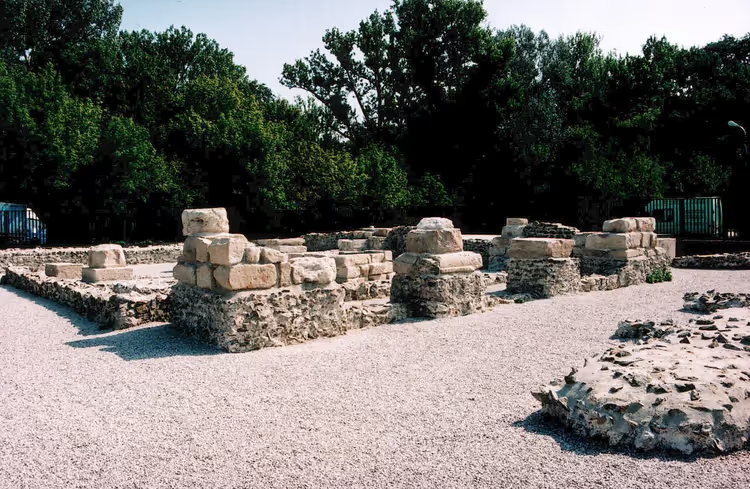
Later, Slavs settled on these lands, and the settlement that grew from them was named Rusovce. The Roman camp of Gerulata is mentioned in medieval sources from the 16th century, but for a long time its exact location remained a mystery (according to the Bratislava City Museum). It was only in 1965 that archaeologist Ján Dekan managed to locate the remains of the forts.
The fortifications that were found have been restored, and today they are part of the Bratislava Museum. The site is about eight kilometers from the city center, so it's worth making a dedicated trip. Fans of Roman history will enjoy it here; fans of palaces should pick a different stop on the route.
- Cost: the site is included in the Múzeum mesta Bratislavy combined ticket, which costs €18 for 24 hours (as of 09/2026, museum price list).
- The catch: it's a long way to get there, and the outdoor exhibition is small.
25. Michael's Gate
 © Jorge Láscar from Australia · CC BYPhoto: Jorge Láscar from Australia, CC BY (https://creativecommons.org/licenses/by/2.0), Wikimedia Commons
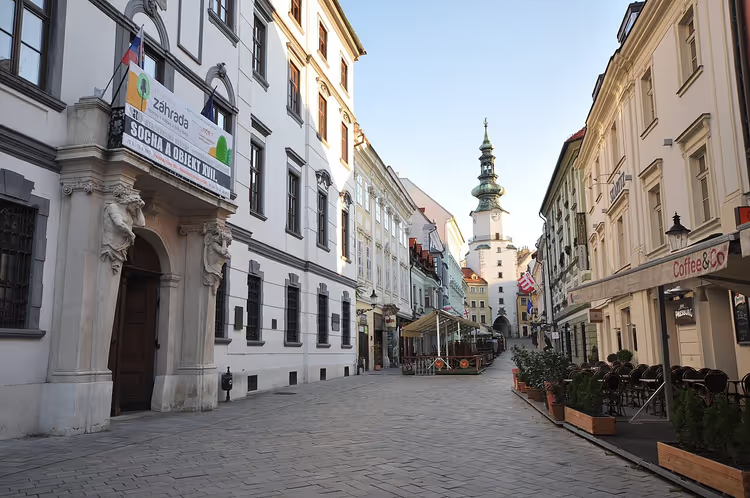
In the Middle Ages, Bratislava was surrounded by a wall with several gates facing different directions. St. Michael's Gate, built around 1300, is the only one of the four that has survived to this day. It was named after a church that once stood nearby and was demolished, with its stones reused for the fortress walls.
Like other defensive structures, the gate was equipped with a drawbridge over a water-filled moat. The main structure of the complex is the 51-meter Michael's Tower, which now houses a weapons museum. In the 18th century, the tower's exterior acquired baroque features, and its top was crowned with a statue of St. Michael slaying the dragon.
Many legends are tied to the old building: it is said that you must not talk under the gate's arches, but you can make a wish. The arch contains Bratislava's zero kilometer marker, with distances to other capitals listed nearby. You can view the city from the tower balcony from 10:00 to 18:00 every day except Tuesday (as of 09/2026, gate page).
- Cost: a separate ticket to Michael's Tower costs €6, reduced €4; it is also included in the 24-hour Múzeum mesta Bratislavy ticket for €18 (as of 09/2026, museum price list).
- Who it's for: those who want to see the Old Town panorama and the weapons museum.
- The catch: the tower is closed on Tuesdays, and the climb to the top involves a narrow staircase.
Tickets, opening hours, and days off
If you plan to visit several paid attractions, it is easier to compare them in a single table. Prices are for an adult visitor and were checked in September 2026. Children's tickets are cheaper almost everywhere, and some museums offer a discount with the Bratislava CARD.
Site | Admission | Hours | Closed |
|---|---|---|---|
Bratislava Castle | 14 €, courtyard free (ticket and hours) | 10:00-18:00, courtyard 08:00-22:00 | Monday |
Michael's Gate | 6 €, reduced 4 € (MMB ticket) | 10:00-18:00 (tower schedule) | Monday |
Devin Castle | 8 € April to October, 6 € November to March (rates) | check the museum page | seasonal |
Multium Gallery | 5 € (source) | 10:00-20:00 | open daily |
Bratislava Zoo | check the zoo website | summer until 19:00, last entry 18:00 | open daily |
Tours and tickets in Bratislava
Guided tours, skip-the-line tickets and activities — most offers can be cancelled free of charge.
See offers on GetYourGuideThe widget loads once you give your consent.
Bratislava sights on the map
The main sights are easy to split into two days: spend the first on the Old Town and the Castle, and use the second for Devin, the zoo, and Gerulata. Below is a map with all the points so you can build your own route.
Bratislava Attractions
Places on the map
- 1Bratislava Castle Castle on a rock above the Danube, museum 14 euros, terraces free from 8am to 10pm
- 2Main Square The starting point for a walk through the Old Town, palaces of four styles and a 1572 fountain
- 3Devín Castle Ruins of a fortress on a rock above the confluence of the Morava and the Danube, mini exhibition in the surviving wing
- 4Slavín Memorial Monument and military cemetery on a hill, free entry, panorama of the city from the terraces
- 5SNP Bridge A cable bridge without piers in the riverbed, an observation deck with a lift on the 84-metre pylon
- 6Presidential Palace Grassalkovich Palace from 1765, the halls are closed, the park behind the building is open for walks
- 7St. Martin's Cathedral The city's oldest major cathedral with catacombs, the coronation site of Hungarian kings
- 8Old Town Hall A 14th-15th century complex with a Gothic tower, the City Museum inside, ticket 8 euros
- 9Capuchin Church of St. Stephen A 1711 church without a bell tower on Zupné Square, free entry
- 10Chapel of St. James Ruins under a glass pavilion, open inside only on St. James's feast days
- 11Bratislava Zoo A zoo in Mlynská dolina with a white rhino and an exotarium, last entry at 6pm
- 12Esterházy Palace A neo-Renaissance palace on the Danube bank, now the Slovak National Gallery
- 13Multium Mirror Gallery Six mirrored rooms with an illusion of infinity, ticket 5 euros, less than an hour to see
- 14Maximilian's Fountain A 1572 Renaissance fountain with a figure of the knight Roland, restored in 2019
- 15Slovak National Theatre A historic 1886 building on Hviezdoslav Square, opera, ballet and drama
- 16Pálffy Palace The oldest of the Pálffy mansions on Panská Street, an art gallery since 1988
- 17Slovnaft Arena An arena for ten thousand spectators, home ground of the Slovan hockey club
- 18Primate's Palace A cardinal's residence from 1781, the Mirror Hall and English tapestries from 1630
- 19Sigismund's Gate The most photogenic gate of the castle, late Gothic masonry about five hundred years old
- 20Hviezdoslav Square The city's largest square, a green pedestrian zone with two fountains
- 21Horský Park 22 hectares of century-old oaks and beeches almost in the center, gazebos and fifty benches
- 22Apollo Bridge The city's youngest bridge, 854 metres of illuminated leaning arches, free crossing
- 23Museum of Transport Steam locomotives and vintage cars next to the main station, some exhibits outdoors
- 24Gerulata The remains of a Roman camp in Rusovce eight kilometers from the center, included in a combined ticket
- 25Michael's Gate The only surviving gate from around 1300, a 51-metre tower with a weapons museum, 6 euros
⁉️🤔 Frequently asked questions
How many days are enough for Bratislava?
One day is enough for the Old Town: Main Square, Bratislava Castle, the Old Town Hall, and Michael's Gate are all close to each other. Set aside a second day for sites outside the center: Devin Castle, the zoo in Mlynská dolina, and the Roman Gerulata. If you're short on time, pick one of them and don't try to cover everything at once.
Which days are the main museums closed?
Bratislava Castle and Michael's Gate are closed on Mondays. Devin Castle follows a seasonal schedule, so it's best to check the museum website before your visit. The 24-hour Múzeum mesta Bratislavy combined ticket for 18 € covers several sites, but it doesn't replace checking the schedule.
What can you see in Bratislava for free?
Main Square, the Slavin memorial complex, Horsky Park, and a walk along the Danube embankment are all free. The terraces of Bratislava Castle are also open to everyone from 08:00 to 22:00, and entry to St. Martin's Cathedral is free. This set of sights lets you spend a full day in the city without buying tickets.
Is it worth climbing Michael's Tower?
The 51-meter tower gives you a good view of the Old Town rooftops and Bratislava Castle. Inside there's a weapons museum, and the visit takes about an hour. The climb is up a narrow staircase, and the tower is closed on Tuesdays, so plan your visit for other days of the week.
When is the best time to visit Bratislava?
The city is most comfortable in May, June, and September: warm but without the summer heat, and shorter lines at ticket offices. July and August bring the most tourists and little shade in the squares. In winter you get Christmas markets, but some viewing platforms operate on reduced hours.
In short: what's worth booking
If you only have one day in the city: go for Bratislava Castle, the Old Town Hall, and Michael's Gate, then walk to the SNP Bridge in the evening. If you're traveling with kids: add the zoo and Multium Gallery. If you're into history: plan a separate trip to Devin Castle and Gerulata.
Only two things are worth deciding in advance: a time slot to enter the Castle and accommodation in the Old Town, so you don't waste time getting around. For an organized city tour, check out Bratislava tours on GetYourGuide, and for places to stay near the Main Square, browse Bratislava hotels on Trip.com. With that plan, you can comfortably see the main sights in two days.

A small editorial team writing guides for independent travel. We travel ourselves, but we haven’t been everywhere, so we check prices, opening hours and how to get there against official sources.