
















30 Places in Los Angeles: what to see, how much it costs and how to get there
Los Angeles stretches between the ocean and the San Fernando Valley. Thirty of the city's main sights are scattered across different neighborhoods, and you won't see them in one day. Trying to cover everything in a row ends in a traffic jam on Sunset Boulevard.
We put together a list of thirty attractions with prices, hours, and transportation. The city's two largest museums are free, and a ticket for the Warner Bros. studio tour in Burbank starts at $79 (as of 09/2026, official studio website). It's better to book the tour in advance: there may be no open slots on site.
For each place below, there's practical information: how much admission costs, which day the place is closed, how to get there without a car, and what to honestly call the catch.
Ad: this article contains affiliate links. We earn a commission if you book through them, at no extra cost to you.
How to plan your trip around the city
💡 In short:
- The Los Angeles Metro costs $1.75 per ride, and the daily spending cap is no more than $5 (as of 09/2026, LA Metro fares).
- Admission to the Getty Center and Griffith Observatory is free, but Getty requires a free timed reservation.
- Plan for three or four days: Hollywood, museums, and the ocean don't fit into one day.
- Prices and hours: 09/2026, verified on the official Getty Center website.
The city is easiest to divide by area: Hollywood, downtown, Santa Monica, and Pasadena. Metro trains and buses get you between them, while a few overlooks are reachable only by car or taxi.
1. Walk of Fame
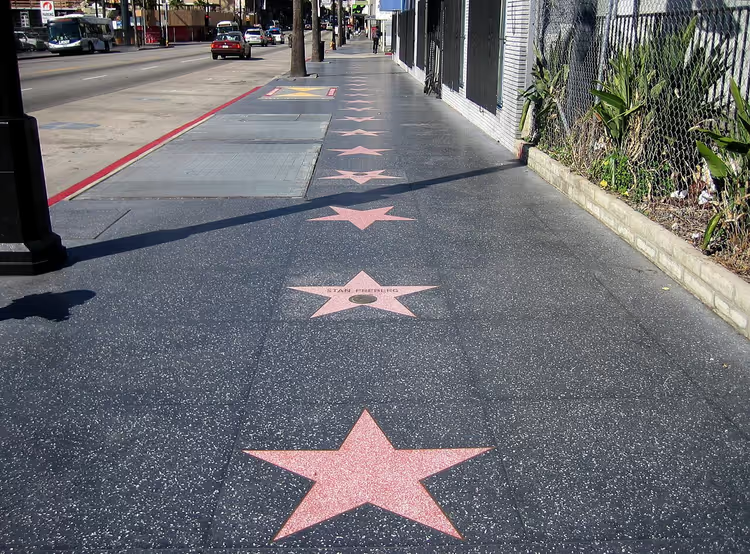
The Walk of Fame occupies the sidewalks of Hollywood Boulevard and Vine Street. It's eighteen blocks where the names of actors, musicians, directors, and even fictional characters like Mickey Mouse are set into the pavement. The first stars appeared here in the early sixties, and the list has since grown to several thousand names and keeps expanding every year.
Practical note: a star is not awarded by the city. The plaque is installed at a sponsor's request, and a committee selects a few dozen names from hundreds of submissions. A nominee must have worked in the industry for at least five years, so there are no random plaques on the sidewalk. Some artists decline the ceremony, so you won't find every name you remember from the movies.
Walking the Walk of Fame is free and open around the clock. The crowd gathers by midday, while in the morning you can calmly photograph the plaques of Charlie Chaplin, Walt Disney, and Michael Jackson. The Dolby Theatre, TCL Chinese Theatre, and Madame Tussauds are nearby, so Hollywood is convenient to see as one block.
The Hollywood/Highland Metro station sits right under the plaza where the route begins, and buses run along the boulevard. In the evening the sidewalk is packed with tourists and street performers, and you won't get through it quickly.
- How to get there: Hollywood/Highland Metro station, then walk along the boulevard.
- Cost: free, open around the clock.
- The catch: between Highland and Vine, costumed performers work the street and ask for money for photos.
2. Dolby Theatre
 © File:Dolby_Theatre.jpg : Adam Fagen from Washington, DC, USA derivative work: Jullit31 · CC BY-SAPhoto: File:Dolby_Theatre.jpg : Adam Fagen from Washington, DC, USA derivative work: Jullit31, CC BY-SA (https://creativecommons.org/licenses/by-sa/2.0), Wikimedia Commons
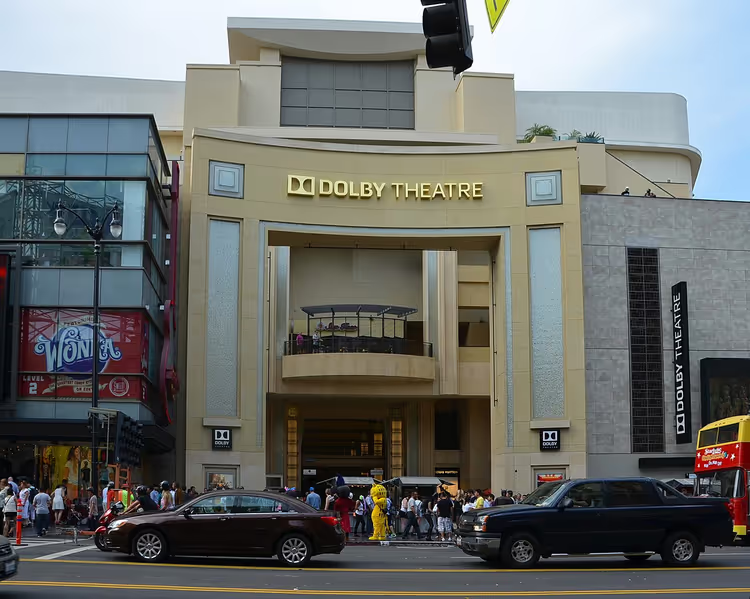
The Dolby Theatre stands in the Ovation Hollywood complex, and it's where the Oscars are handed out every year. The venue used to be called the Kodak Theatre, and after the company's bankruptcy it took the name of the audio brand. Inside there are nearly three and a half thousand seats, and in front of the facade you're greeted by a sculpture of the statuette.
You get inside on tours and for concerts: on ceremony day the complex is closed to tourists. The tour takes about an hour and goes backstage, where you'll see how the stage is prepared for a show.
- How to get there: Hollywood/Highland Metro station, then a two-minute walk.
- Cost: tours are paid, price depends on the season.
- The catch: the building's facade is unremarkable, everything interesting starts inside.
3. Getty Center
 © Robert F. Tobler · CC BY-SAPhoto: Robert F. Tobler, CC BY-SA (https://creativecommons.org/licenses/by-sa/4.0), Wikimedia Commons
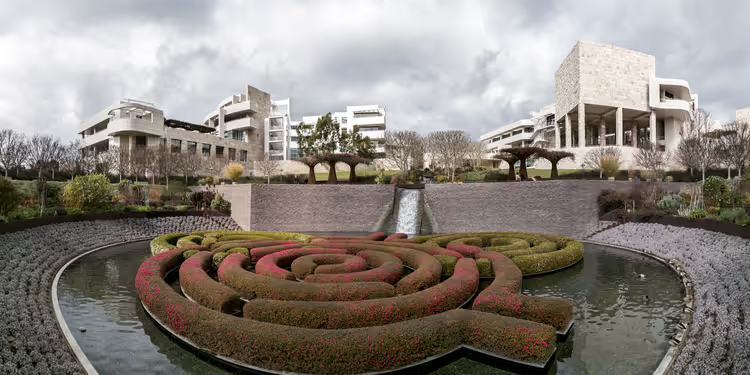
The Getty Center welcomes visitors for free, but with a free timed reservation (as of 09/2026, Getty). The complex sits on two ridges above Santa Monica, and the ride up from the parking lot takes a few minutes by tram. Inside you'll find pavilions with the collection, sculpture gardens, and an overlook with a panorama of the city.
Opening hours are simple: Tuesday through Friday and Sunday from 10:00 to 18:30, Saturday from 10:00 to 21:00, closed on Monday. Parking costs $25 per car, it is cheaper after 15:00, and free on Saturday evenings (as of 09/2026, parking rules). Book your time slot in advance: on weekends, available slots run out several days ahead.
Part of the galleries is currently closed for renovation, so check the floor plan at the entrance. Three hours is enough for the collection and gardens if you are not going to a special exhibition.
- Getting there: buses along Sunset Boulevard, tram from the parking lot.
- Cost: admission is free, parking is $25 per car (as of 09/2026, Getty Center).
- The catch: closed on Mondays, and part of the galleries is under renovation.
4. Rodeo drive and the golden triangle
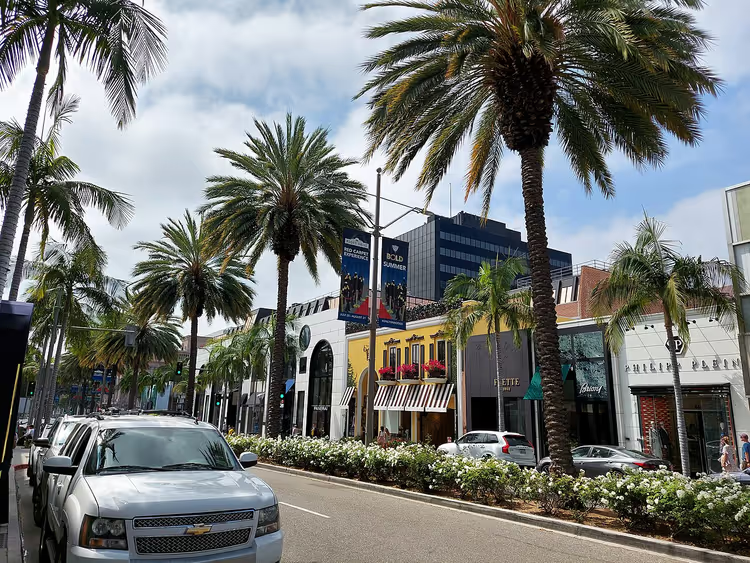
Rodeo Drive is a short street in Beverly Hills where boutiques occupy three blocks between Santa Monica, Wilshire, and Crescent boulevards. Together with the neighboring streets, the area is called the Golden Triangle: here you will find Chanel, Tiffany, and Dolce & Gabbana storefronts rather than the usual shopping malls.
People come to see the street on foot, and it is a free activity. During the day, personal shoppers work in the boutiques, in the evening architectural lighting comes on, and in December the blocks turn into a holiday display. In jeans and a T-shirt, you will feel out of place next to the dress code of certain stores.
- Getting there: buses along Santa Monica Boulevard, parking in Beverly Hills city garages.
- Cost: walking around is free.
- The catch: boutique prices are aimed at local clients, not tourists.
5. La brea tar pits and the ice age museum
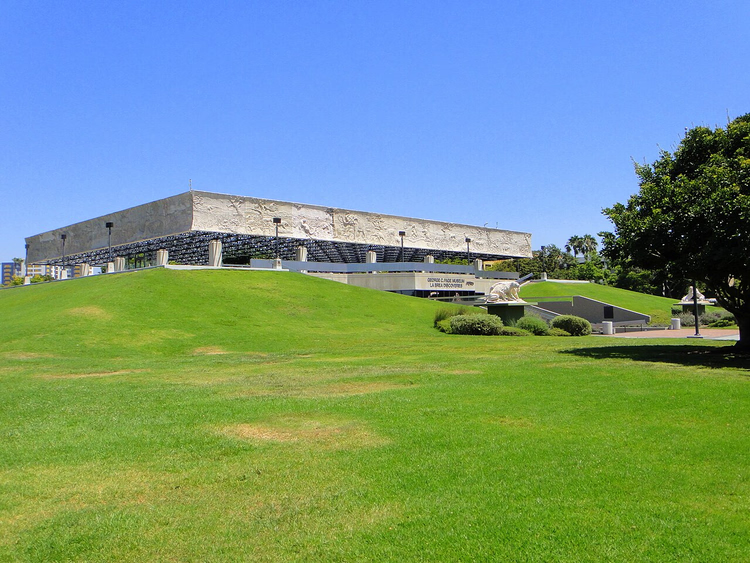 © Matt Kieffer · CC BY-SAPhoto: Matt Kieffer, CC BY-SA (https://creativecommons.org/licenses/by-sa/2.0), Wikimedia Commons
La Brea Tar Pits began as an asphalt lake where mammoths, saber-toothed cats, and ancient bison sank and died over thousands of years. Bones from these pits became the core of the museum collection, which stands next to the pools of black tar.
You will see life-size mammoth sculptures and glass windows into the laboratory where paleontologists clean new finds. Kids find this more interesting than many museums: you can watch a real excavation in progress.
- Getting there: buses along Wilshire Boulevard, stop next to LACMA.
- Cost: museum admission is paid, get tickets in advance.
- The catch: the park grounds are small, and a visit takes about an hour.
6. Wilshire Boulevard
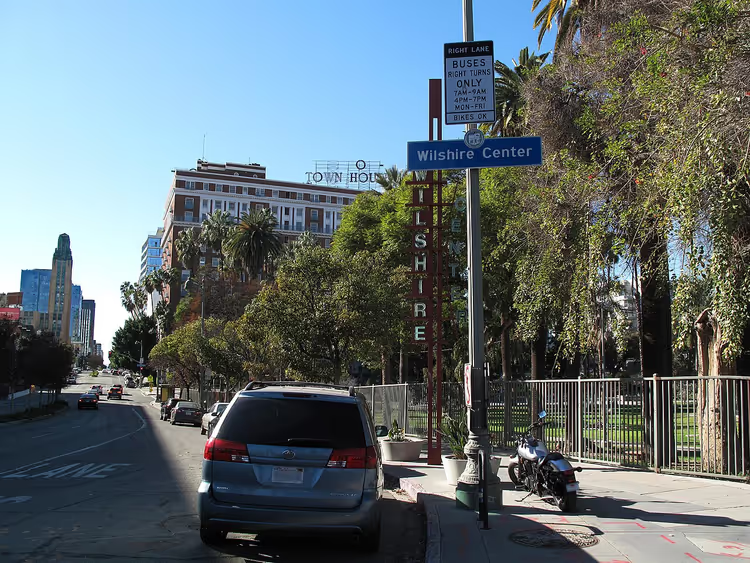 © Downtowngal · CC BY-SAPhoto: Downtowngal, CC BY-SA (https://creativecommons.org/licenses/by-sa/4.0), Wikimedia Commons
Wilshire Boulevard crosses the entire city from east to west, and along the "Miracle Mile" stretch it becomes the local center of luxury. This section is about two and a half kilometers long, and here you will find boutiques, restaurants, theaters, and two museums at once.
The street works well as a landmark: buses run along it, and the skyscrapers of the Miracle Mile district are a reminder of the city's business side. Walking along the boulevard is more interesting in the evening, when the storefronts are lit up.
- Getting there: buses along Wilshire Boulevard, subway stations along the street.
- Cost: walking around is free.
- The catch: traffic is heavy almost all day, and the sidewalks are narrow.
7. Universal Studios Hollywood
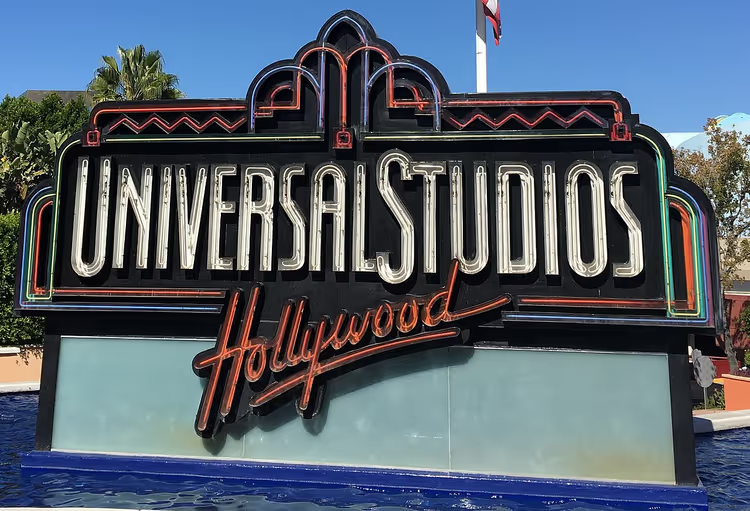 © 林振宇 · CC BY-SAPhoto: 林振宇, CC BY-SA (https://creativecommons.org/licenses/by-sa/4.0), Wikimedia Commons
Universal Studios Hollywood is a working film studio and theme park on a hillside. The studio opened more than a hundred years ago and was one of the first to shoot silent films. The main part of your visit: a tram tour through the backlot with Old West sets, a shark attack from "Jaws," and a simulated earthquake.
Ticket prices depend on the date, so check the price on the park's official website. Movie-based rides operate separately from the tour, and they take up the second half of the day. Universal Studios Hollywood tickets on GetYourGuide are sold with date selection, which is convenient on weekends.
Book a morning slot: in summer, lines for new rides start growing by noon.
- Getting there: subway to Universal City station, then a free shuttle.
- Cost: the park ticket already includes the studio.
- The catch: lines and prices are higher than at the city's museums.
8. Warner Bros. Studio Tour Hollywood
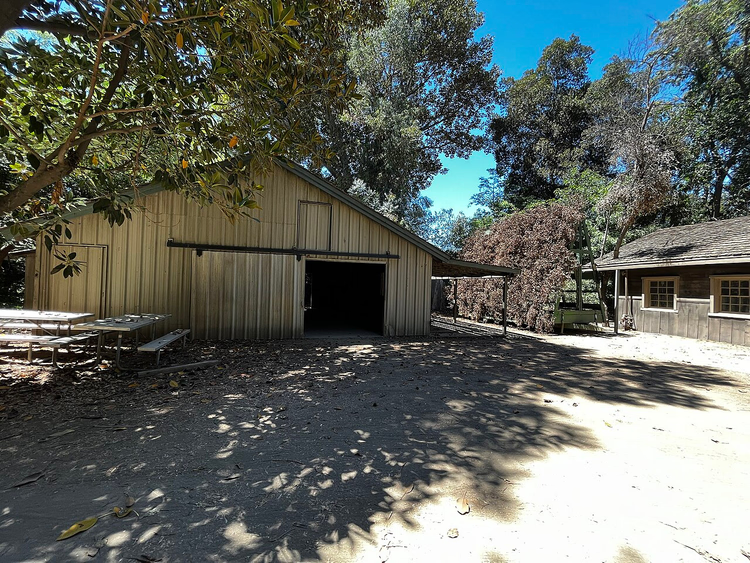
Warner Bros. Studio Tour Hollywood takes visitors onto a working studio lot in Burbank where films and TV series are shot. The tour is guided and lasts several hours, and some soundstages are in active use during your visit, so the route is different every time. Inside you will see sets and props: from Harry Potter and Friends to superhero costumes.
Tickets start at $79 for the standard tour, while expanded programs and premium access cost more than $300 (as of 09/2026, official website). Tours run from 8:30 to 15:30, so morning slots are the most convenient. Children under five are not allowed on the lot.
Book Warner Bros. studio tour tickets in Burbank a few days in advance: weekend slots sell out first.
- Getting there: Metrolink trains to Burbank, then a five-minute taxi ride from the station.
- Cost: from $79 per adult (as of 09/2026, tour prices).
- The catch: children under five are not allowed on the lot.
9. Chavez Ravine Arboretum
 © Self/en:User:Jengod + posted on Flickr · CC BY-SAPhoto: Self/en:User:Jengod + posted on Flickr, CC BY-SA (https://creativecommons.org/licenses/by-sa/4.0), Wikimedia Commons
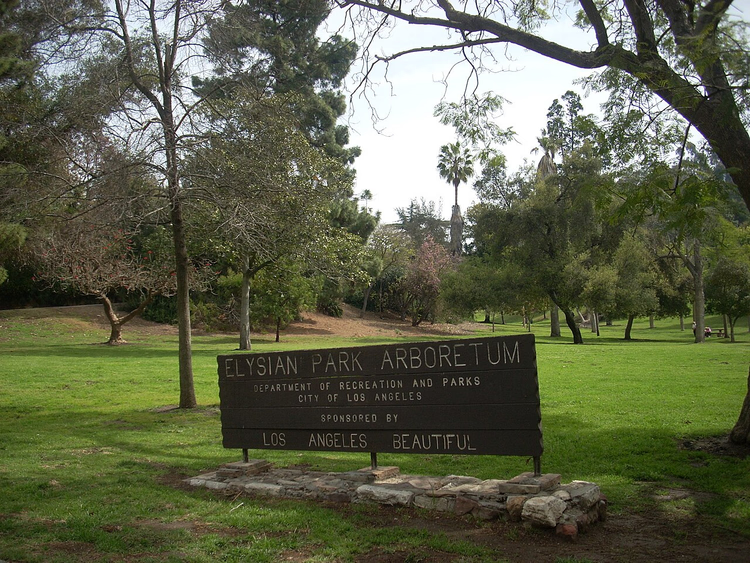
Chavez Ravine Arboretum covers a hillside in Elysian Park near downtown. It is a free botanical garden with hundreds of tree and shrub species from around the world: eucalyptus, palms, evergreen oaks, and flowering shrubs with a strong fragrance.
People come here to get away from traffic: the paths are quiet, there are shaded benches, and a library with books about plants operates nearby. You can combine the walk with a picnic, but leave yourself time for the climb, because the slope is fairly steep.
- Getting there: buses to Elysian Park, parking along the park roads.
- Cost: free admission.
- The catch: there is almost no infrastructure, so bring water with you.
10. LACMA in Los Angeles
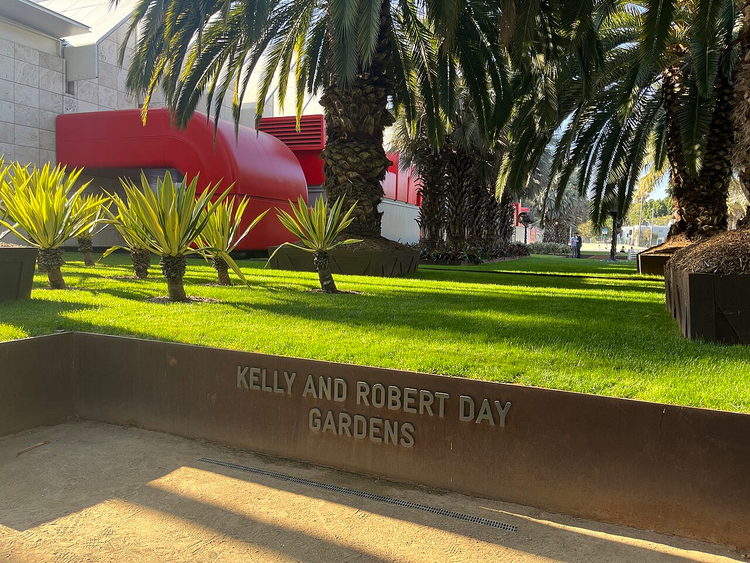
LACMA, the Los Angeles County Museum of Art, is one of the largest art museums in the country. The collection spans contemporary art, prints, sculpture, and photography, with roughly one hundred thousand items in storage. The permanent exhibitions are complemented by temporary shows that often become the main event of the city's cultural life.
The museum occupies several buildings, and you can easily spend half a day here. The La Brea Tar Pits and the Petersen Automotive Museum are right next door, so the whole area is convenient to cover in one day.
Good to know: before your trip, comparing insurance options is worth doing if you do not have a medical policy for the US.
- Getting there: buses along Wilshire Boulevard, parking under the museum.
- Cost: paid admission, check the museum website for prices.
- The catch: temporary exhibitions close between showings, so check the schedule in advance.
11. Petersen Automotive Museum
 © David Zaitz · CC BY-SAPhoto: David Zaitz, CC BY-SA (https://creativecommons.org/licenses/by-sa/4.0), Wikimedia Commons
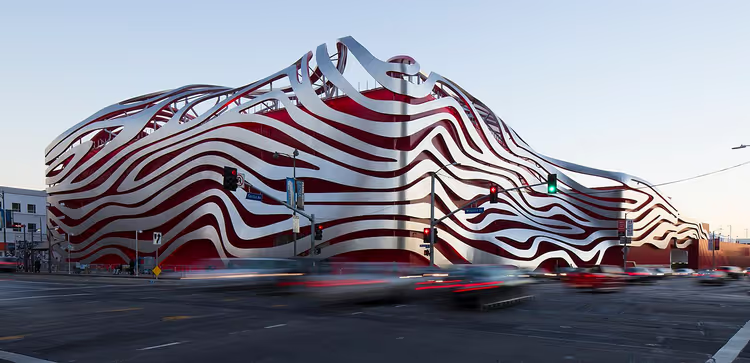
The Petersen Automotive Museum has assembled one of the world's largest automotive collections: more than a hundred cars and motorcycles across several floors. The first floor tells the history of the automobile from early twentieth-century models to modern sports cars, while the second is dedicated to cars of Hollywood stars.
Here you will find the Batmobile, rarities from classic films, and cars owned by actors whose names are familiar to any moviegoer. Among the celebrity cars: Clark Gable's Mercedes-Benz, Crawford's Cadillac, and Mansfield's Lincoln. A separate floor for children features cars from all eras, and the top level houses a conference hall and a restaurant.
A dedicated display case is reserved for the first models of the past century, which launched the history of the mass-market automobile. The museum opened in the early nineties and quickly made the list of the world's top ten automotive collections. About a million visitors come here every year, so buy weekend tickets in advance and plan your visit for the morning.
- Getting there: buses along Wilshire Boulevard, across from LACMA.
- Cost: paid admission, the ticket is valid all day.
- The catch: the galleries are packed with exhibits, and in a couple of hours you will see only part of the collection.
12. Union Station
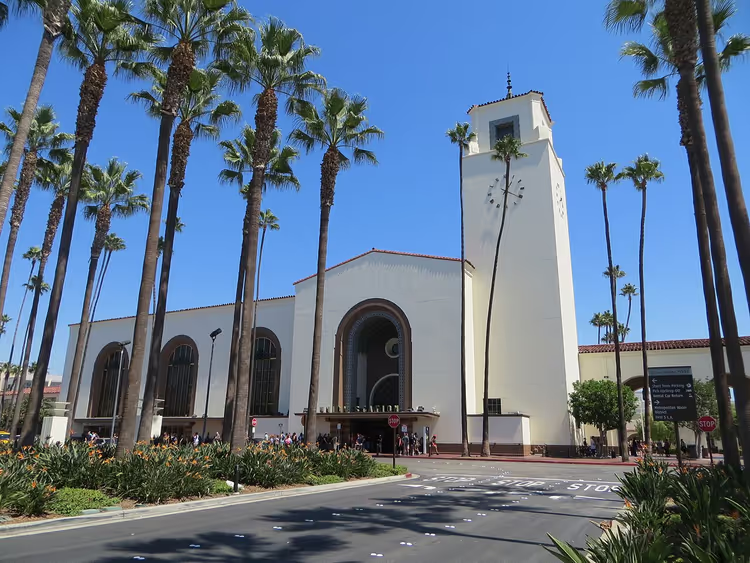 © David Wilson from Oak Park, Illinois, USA · CC BYPhoto: David Wilson from Oak Park, Illinois, USA, CC BY (https://creativecommons.org/licenses/by/2.0), Wikimedia Commons
Union Station is the city's main rail hub, built in the Spanish Colonial style. The domes, arches, and palm trees in front of the entrance make the station an attraction in its own right, and it has been featured in dozens of films. Metrolink commuter trains, Amtrak trains, and several metro lines pass through the station, so it is a convenient place to start your day.
Metro transfers are free within two hours (as of 09/2026, Metro fare rules). You can pay your fare with a bank card or a TAP card.
Booking a transfer from LAX airport is most convenient with a private driver if you arrive with luggage.
- How to get there: metro and buses to Downtown; the trip from the airport takes about half an hour.
- Cost: admission to the building is free.
- The catch: in the evening the area around the station empties out, and it is not a good place to walk around.
13. Walt Disney Concert Hall
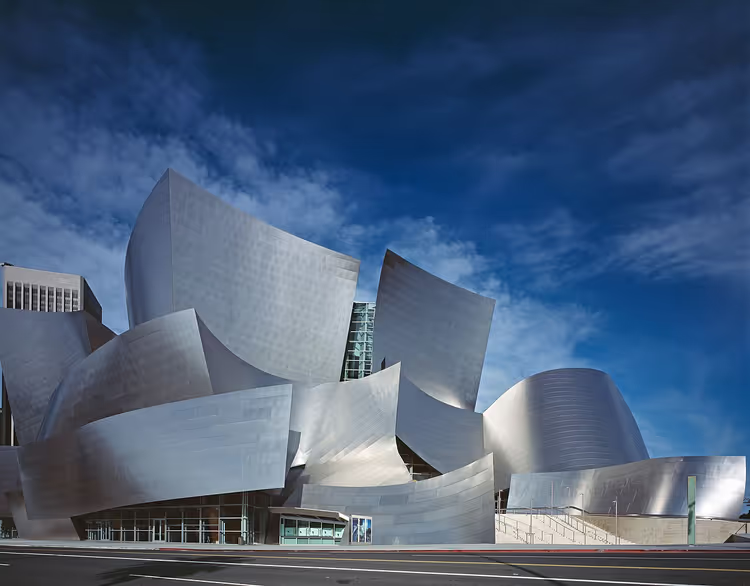
The Walt Disney Concert Hall is a building with metal sails instead of a conventional facade. Frank Gehry's project opened in the early 2000s and became one of the city's major works of contemporary architecture. Inside you will see an organ with pipes pointing in different directions and a lobby with views of Downtown streets.
You can get inside not only for a concert: many downtown tours include a look at the lobby and the main hall. If you are going to an evening concert, arrive early to see the facade in the sunset light.
- How to get there: metro to Civic Center station, then a five-minute walk.
- Cost: tours are paid; the price depends on the program.
- The catch: on concert days, free access to the lobby is closed.
14. Madame Tussauds
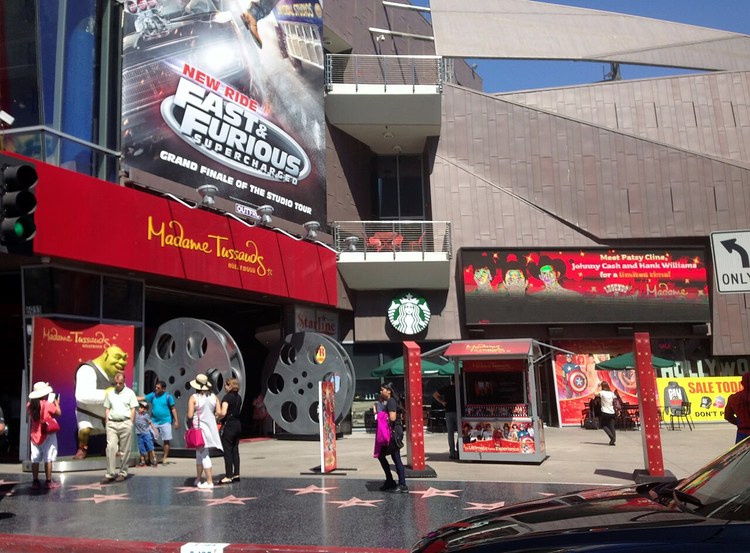 © Clotee Pridgen Alloc… · CC BY-SAPhoto: Clotee Pridgen Alloc…, CC BY-SA (https://creativecommons.org/licenses/by-sa/3.0), Wikimedia Commons
Madame Tussauds in Hollywood gives you a chance to take photos with stars you are unlikely to meet on the street. The figures are made of wax at full size, and the exhibition is divided into sections: Hollywood icons, movie characters, and television stars.
A separate behind-the-scenes tour shows how the figures are made and how much time goes into working on a single sculpture. The museum occupies a couple of floors, and two hours is enough to see it.
Tickets to Madame Tussauds on Tiqets are sold with time slots, so buy them in advance.
- How to get there: Hollywood/Highland metro station; the museum is next to the Walk of Fame.
- Cost: admission is paid; check the price on the museum's website.
- The catch: on weekends there is a line to take photos with popular figures.
15. Zoo and botanical garden
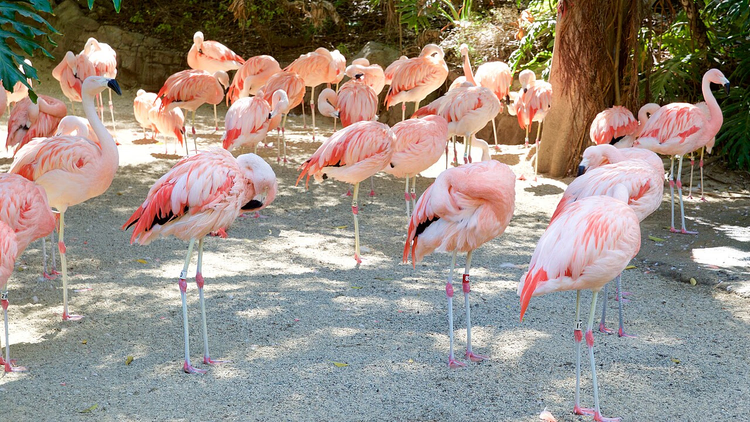 © Bill Abbott · CC BY-SAPhoto: Bill Abbott, CC BY-SA (https://creativecommons.org/licenses/by-sa/2.0), Wikimedia Commons
The Los Angeles Zoo covers more than fifty hectares in Griffith Park, and more than a thousand animals live on its grounds. Here you will see about two hundred and fifty species, some of which are on the Red List. Condors get special attention: the local breeding program for these birds is known far beyond the state.
A botanical garden operates alongside the zoo: wine palms, cypresses, and roses are planted along the paths. It is a convenient place to spend half a day with children.
- How to get there: buses to Griffith Park; parking is available at the entrance.
- Cost: admission is paid; check the price on the zoo's website.
- The catch: the grounds are large, and without a plan you will walk extra kilometers.
16. Griffith Park and Observatory

Griffith Park covers the hills north of Hollywood and remains the city's largest urban park. Its grounds are home to an observatory, a planetarium, a zoo, tennis courts, and dozens of kilometers of trails. From the observation deck at the observatory you will see the Hollywood sign on the hillside and the entire basin of the city.
Admission to the observatory is free, and the terrace offers the best view at sunset (as of 09/2026, Griffith Observatory). The observatory is open from noon to 10:00 PM on weekdays, from 10:00 AM on weekends, and is closed on Mondays. Arrive early: parking at the observation deck fills up after 6:00 PM.
- How to get there: the DASH bus goes up to the observatory from the metro station.
- Cost: admission is free; parking is paid.
- The catch: a narrow road and a line for parking at sunset hours.
17. Santa Monica Pier
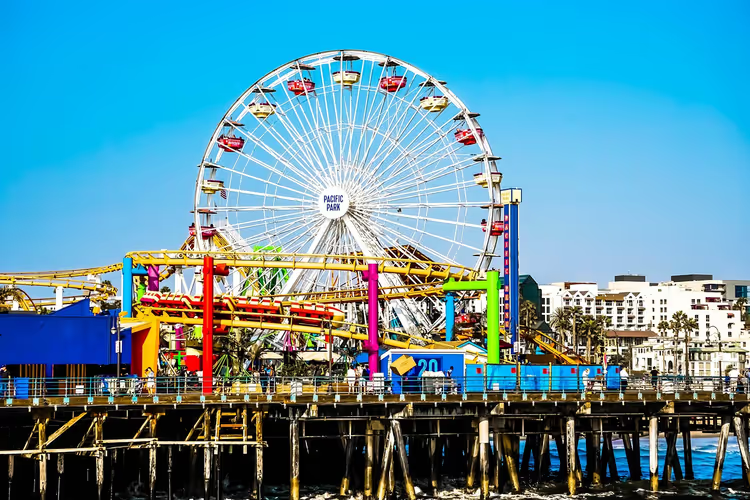
Santa Monica Pier stretches almost three hundred meters into the ocean, and the Pacific Park amusement park operates right on it. The wooden deck looks old, and the Ferris wheel lifts you forty meters up: on one side you see the city, on the other the open ocean.
There is a carousel with wooden horses that has been running for over a century, and street musicians perform in the evenings. Walking the pier is free; you only pay for the rides. Bring a windbreaker: it is always cooler on the pier than on the beach.
- Getting there: metro to Downtown Santa Monica, then a five-minute walk.
- Cost: pier entry is free, rides are ticketed.
- The catch: on weekends and at sunset the pier is packed.
18. Dodger Stadium: how to get to a game
 © Frederick Dennstedt from los angeles, usa · CC BY-SAPhoto: Frederick Dennstedt from los angeles, usa, CC BY-SA (https://creativecommons.org/licenses/by-sa/2.0), Wikimedia Commons
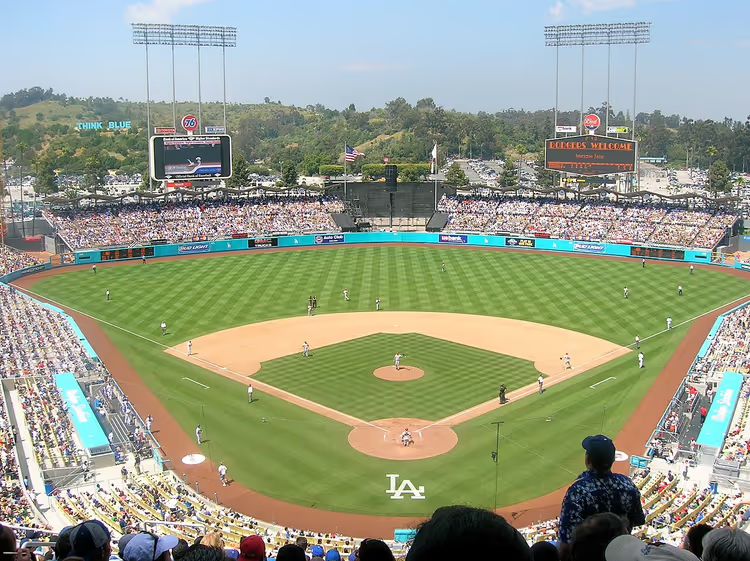
Dodger Stadium opened in the early sixties and remains one of the largest baseball stadiums in the country. The Los Angeles Dodgers play here, and the stadium was built with private money. Besides baseball, the venue has hosted the All-Star Game, the Olympic tournament, and soccer matches.
Game tickets are sold on the club's official website, and prices depend on the opponent and your seat location. Take the Dodger Stadium Express shuttle from Union Station: parking at the stadium is expensive, and after the game you sit in traffic longer than it takes you to get home.
- Getting there: free shuttle from Union Station on game days.
- Cost: tickets at various price levels, from cheap seats in the upper decks.
- The catch: on game days the area around the stadium is closed to cars.
19. Natural History Museum
 © David Leigh Ellis · CC BY-SAPhoto: David Leigh Ellis, CC BY-SA (https://creativecommons.org/licenses/by-sa/3.0), Wikimedia Commons
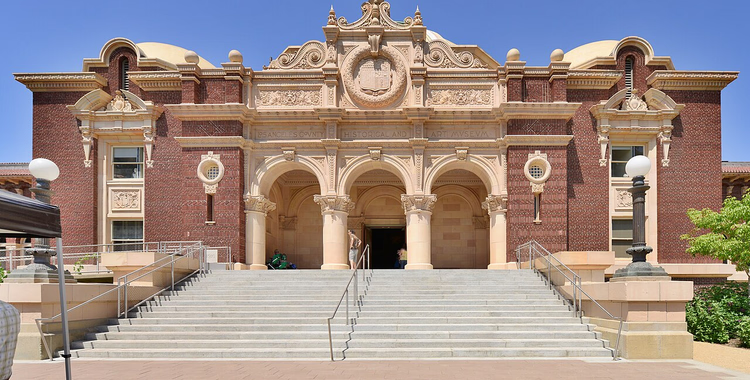
The Natural History Museum of Los Angeles County presents the history of the planet across three floors, and its collection is considered one of the largest in the country. The most popular areas are the halls with prehistoric animals and the exhibit on the history of America before Europeans arrived. Kids love the collections of rare objects and the seasonal butterfly pavilions.
The museum has operated for over a century and grew out of a small exhibition opened at the beginning of the last century. You can spend an entire day here if you are visiting with children.
Natural History Museum tickets are sold online, which saves time at the entrance.
- Getting there: metro to Expo Park/USC station, then walk through the park.
- Cost: admission is paid, special exhibits require a separate ticket.
- The catch: on weekends the dinosaur halls are full of school groups.
20. TCL Chinese Theatre
 © Mr Bullitt · CC BYPhoto: Mr Bullitt, CC BY (https://creativecommons.org/licenses/by/2.5), Wikimedia Commons
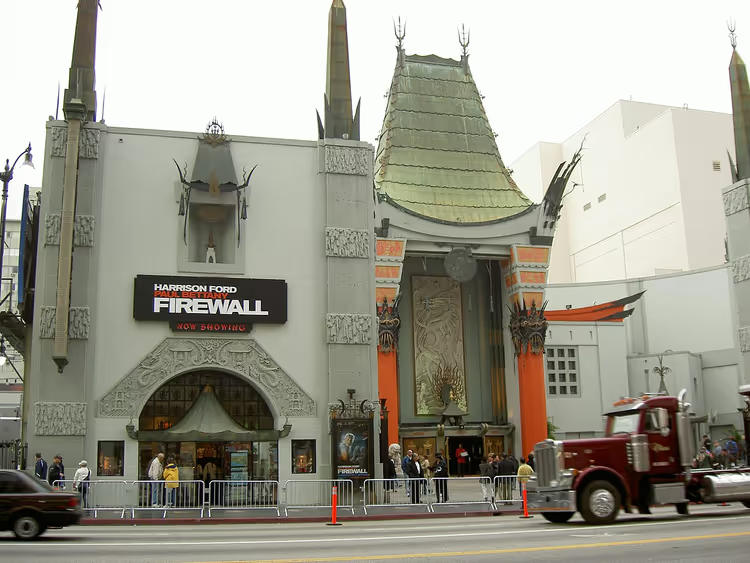
The TCL Chinese Theatre appeared in the late twenties of the last century and became the first movie theater with Chinese-style premieres. The courtyard in front of the entrance is enclosed by walls with copper domes, and the paving stones at the entrance bear handprints and footprints of actors.
Tours inside run every fifteen minutes, so you will not have to wait for a large group. If you want to see the interior and the auditorium, come during the day: screenings start in the evening.
- Getting there: Hollywood/Highland metro station.
- Cost: the tour is paid, tickets are sold at the entrance.
- The catch: tours run continuously, and groups are usually large.
21. Cathedral of Our Lady of the Angels
 © Los Angeles · CC BY-SAPhoto: Los Angeles, CC BY-SA (https://creativecommons.org/licenses/by-sa/4.0), Wikimedia Commons
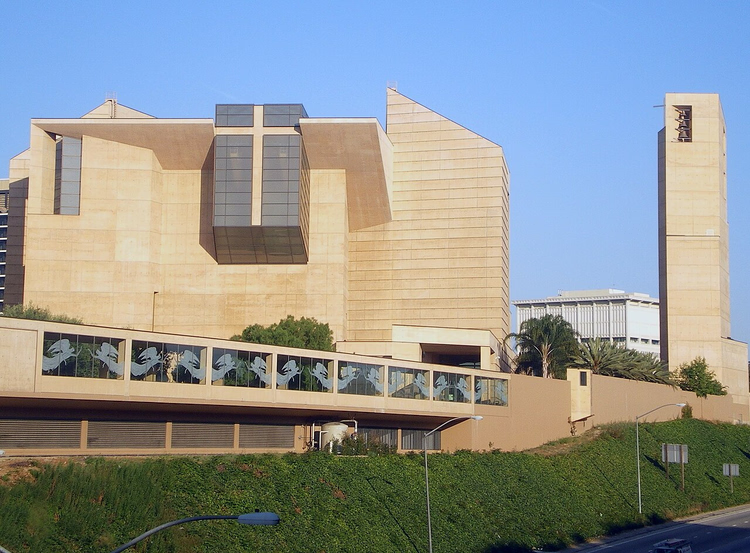
The Cathedral of Our Lady of the Angels was built after the earthquake that destroyed the old cathedral in the mid-nineties. Architect Rafael Moneo avoided right angles, which is why the building looks so unusual. A statue of the Virgin Mary stands above the bronze doors, and the interior seats about three thousand people.
You can enter for free and see the stained glass windows from the old cathedral, which were moved into the new building. The organ, about eighteen meters tall, is visible from almost anywhere in the hall, and during services sightseeing is restricted.
- Getting there: buses along Temple Street, metro to Civic Center station.
- Cost: entry is free, guided tours run on a schedule.
- The catch: during services tourists are asked not to walk around the hall.
22. Venice Beach and the oceanfront walk
 © Diliff · CC BY-SAPhoto: Diliff, CC BY-SA (https://creativecommons.org/licenses/by-sa/3.0), Wikimedia Commons
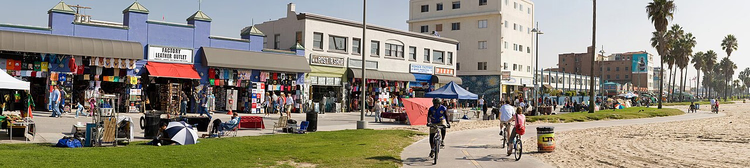
Venice Beach began as a "Venice" project for wealthy residents, but during the Great Depression the area was taken over by artists and musicians. The free spirit has remained: along the boardwalk you will see street shows, musicians, souvenir shops, and Muscle Beach, where bodybuilders train.
Surfing here is part of city life: you can rent a board, and express lessons are held right on the beach. Mexican fast food, street artists, and the sunset over the ocean turn a walk into the neighborhood's main evening entertainment.
- Getting there: buses to Venice Beach, then walk along the Ocean Front Walk, bike rentals along the beach.
- Cost: beach entry is free, board rental is paid.
- The catch: on weekends the boardwalk is packed, and parking near the beach is expensive.
23. Runyon Canyon Park
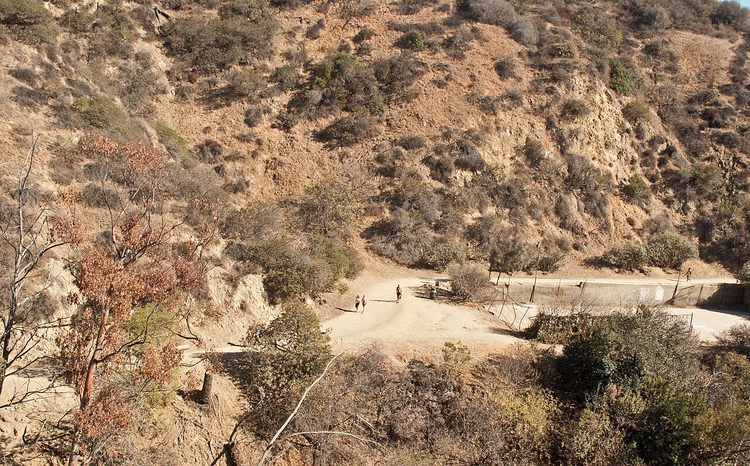
Runyon Canyon Park is a set of hills with trails right above Hollywood, where residents come for morning runs. From here you can see the city panorama and the "Hollywood" sign, and the routes are divided by difficulty: there are wide paths and steep climbs.
 © Downtowngal · CC BY-SAPhoto: Downtowngal, CC BY-SA (https://creativecommons.org/licenses/by-sa/3.0), Wikimedia Commons
You can walk your dog in the park; separate areas are set up for that. Admission is free, and the park is open from sunrise to sunset. There are no facilities on the grounds, so bring water.
- Getting there: buses to Hollywood Boulevard, then walk uphill.
- Cost: free, five entrances on different sides.
- The catch: during the day the upper sections have no shade and get very hot.
24. Bradbury Building
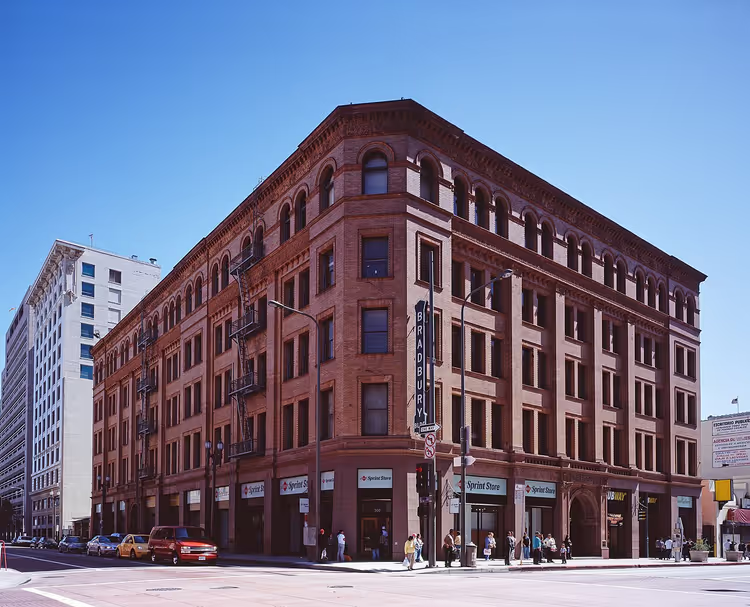
The Bradbury Building was built at the end of the nineteenth century, and from the outside the building gives no hint of what awaits you inside. The Victorian hall, Italian marble staircases, Mexican tile, and ornate French railings keep photographers busy longer than you would expect.
Inside you will see one of the city's most recognizable staircases: it has been filmed in movies and music videos, and the interiors are familiar even to people who have never been to Los Angeles. The building now houses a police department, but the hall is open to visitors during business hours.
Contemporaries considered the mix of styles a mistake and called the building an architectural nightmare. Arguing with them is pointless: the interior courtyard and staircase remain among the most photographed spots in the city. Seeing the hall takes about half an hour, and then you can walk through the historic district to City Hall.
- Getting there: metro to Pershing Square station, then a five-minute walk.
- Cost: hall entry is free.
- The catch: the building is in active use, so visitors are not allowed on the upper floors.
25. El Capitan Theatre
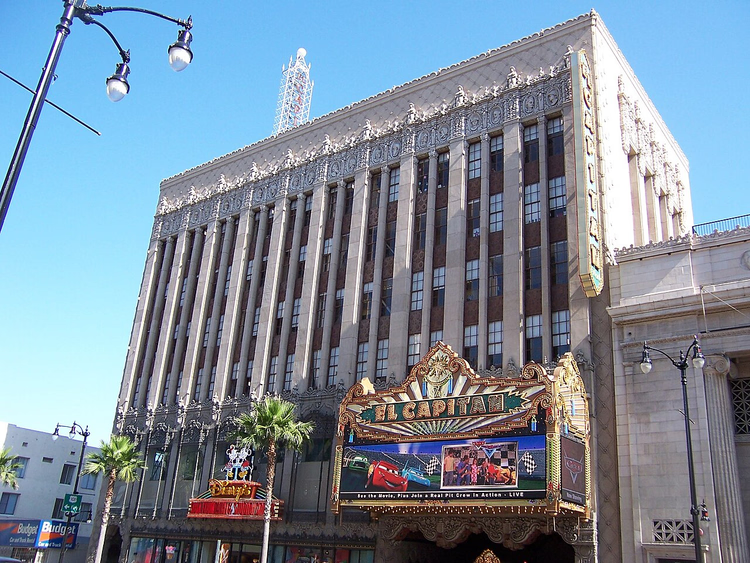
El Capitan Theatre is owned by Disney, and the company's film premieres are held here. Each screening is turned into a short show: before it starts, melodies from animated films are played on the organ, and during the screening the audience may get a surprise like confetti.
 © Unknown author · CC BY-SAPhoto: Unknown author, CC BY-SA (https://creativecommons.org/licenses/by-sa/2.5), Wikimedia Commons
Movie costumes are displayed in the lobby, and a small shop sells themed ice cream. Buy tickets in advance: for premieres, theaters sell out several days ahead.
- Getting there: Hollywood/Highland metro station, entrance next to the Walk of Fame.
- Cost: a screening ticket, price depends on the format.
- The catch: for popular screenings, no tickets remain at the box office.
26. Grammy Museum
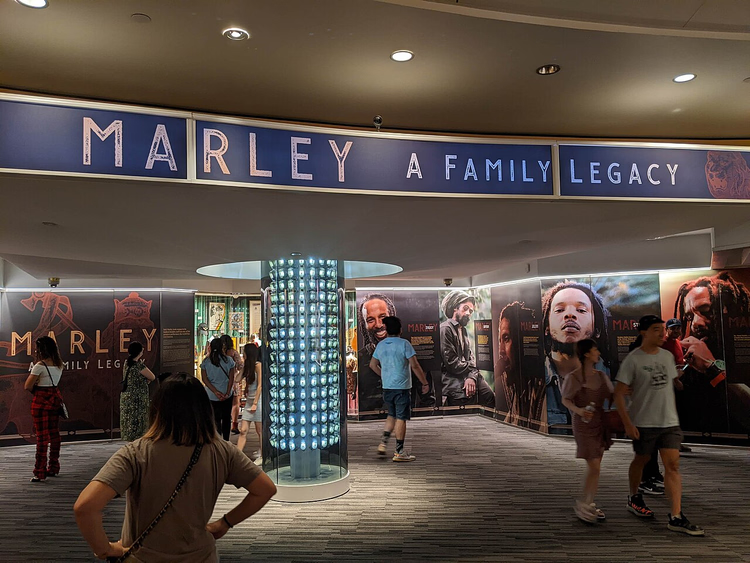
The Grammy Museum opened in the late two-thousands and tells the story of music across four floors. The exhibit covers different styles and genres, and one floor is dedicated to a recording archive. Here you will see stage costumes, instruments, and drafts of famous songs.
 © Jeremy Thompson · CC BYPhoto: Jeremy Thompson, CC BY (https://creativecommons.org/licenses/by/2.0), Wikimedia Commons
At the interactive exhibit, you can record your own track on professional equipment. The museum also hosts conferences and performances by musicians.
- Getting there: take the metro to Pico station, then walk to the LA Live complex.
- Cost: admission is paid, check the price on the museum's website.
- The catch: the interactive zones are popular, and there can be a line for them.
27. The Huntington Library and Gardens
 © Photograph by Mike Peel ( www.mikepeel.net ). · CC BY-SAPhoto: Photograph by Mike Peel ( www.mikepeel.net )., CC BY-SA (https://creativecommons.org/licenses/by-sa/4.0), Wikimedia Commons
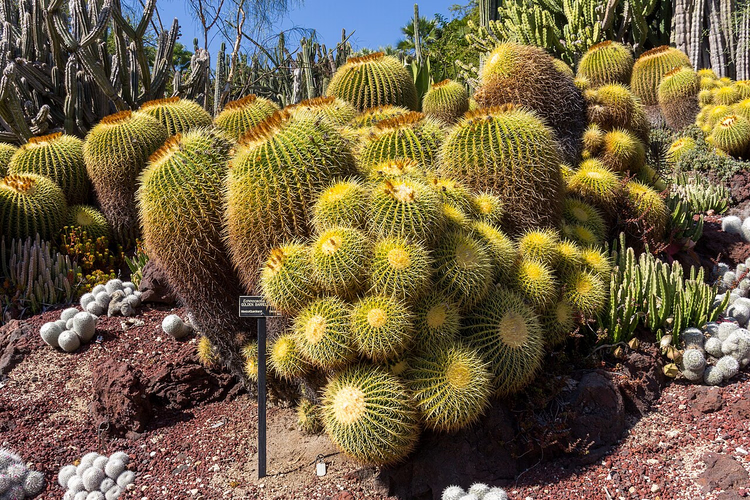
The Huntington Library began as a railroad magnate's collection, and today it is a research center with a museum and gardens. It houses rare books, including the Gutenberg Bible, first editions of Shakespeare, and letters from American presidents. In the art collection you'll find works by English portraitists and Dutch masters.
A separate reason to come: the botanical gardens with Japanese, Chinese, and desert sections. You're unlikely to cover the entire grounds in one visit, so allow yourself three hours.
- Getting there: buses from Pasadena; without a car, the trip takes longer.
- Cost: paid admission, tickets sold online.
- The catch: without a car, it takes longer to reach than the museums downtown.
28. Barnsdall Art Park and Hollyhock House
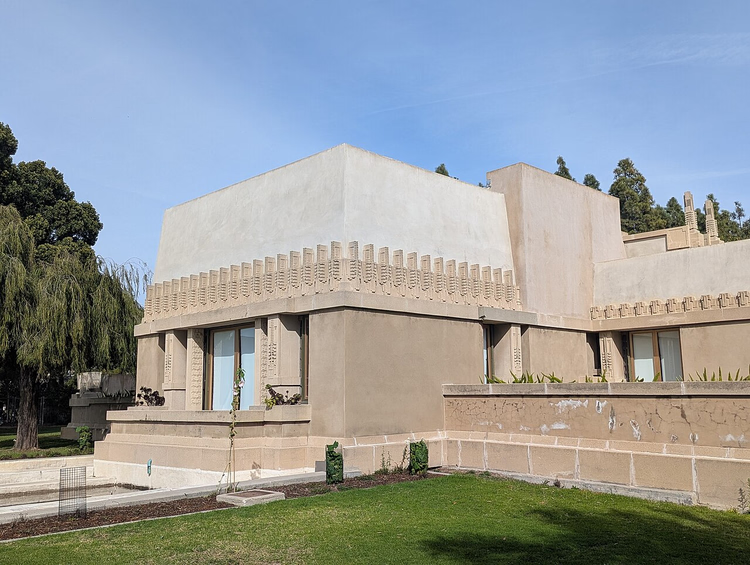
Barnsdall Art Park sits on a hill overlooking Hollywood and combines a gallery, workshops, and a historic house. The main attraction here is Hollyhock House, a Frank Lloyd Wright design that is listed as a UNESCO World Heritage Site. The surrounding park has walkways and flower beds, and hosts exhibitions and children's programs.
 © Jeremy Thompson · CC BYPhoto: Jeremy Thompson, CC BY (https://creativecommons.org/licenses/by/2.0), Wikimedia Commons
Stop by the gallery: park admission is free, and the house is open on a scheduled tour basis.
- Getting there: buses to Hollywood Boulevard, then up the hill.
- Cost: the park is free, house tours are ticketed.
- The catch: some areas are closed between exhibitions.
29. The Norton Simon Museum
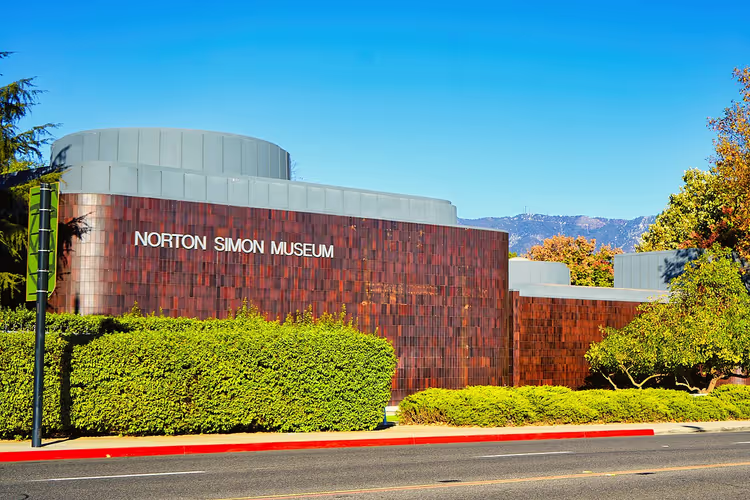 © Tony Mariotti from Los Angeles, United States · CC BYPhoto: Tony Mariotti from Los Angeles, United States, CC BY (https://creativecommons.org/licenses/by/2.0), Wikimedia Commons
The Norton Simon Museum in Pasadena grew out of a businessman's private collection and is considered one of the finest collections of European art on the West Coast. Here you'll see works by Raphael, Rembrandt, Goya, and Botticelli, and the collection's pride is its Impressionists: Monet, Pissarro, Degas, and Renoir.
The building is surrounded by a sculpture garden, and a stroll through it is included in the same ticket.
- Getting there: buses from downtown Pasadena, parking at the museum.
- Cost: paid admission; check the museum's website for prices.
- The catch: without a car, the trip from downtown takes about an hour.
30. The Japanese Garden: quiet and tea ceremonies
 © Alek Leckszas · CC BY-SAPhoto: Alek Leckszas, CC BY-SA (https://creativecommons.org/licenses/by-sa/4.0), Wikimedia Commons
The Japanese Garden is modeled on the estates of Japanese feudal lords and is divided into three zones. In the stone garden you'll see large boulders symbolizing the elements of nature, and near the water, streams murmur and small bridges stand. Further on, visitors move to the tea ceremony garden, where every element has its own meaning.
This is a place for a peaceful stroll: such quiet corners are rare in a megacity. Before you leave, stop by the gift shop, and it's best to take photos in the morning when the paths are nearly empty.
- Getting there: buses and taxis; the trip from downtown takes about an hour.
- Cost: paid admission; check prices at the ticket office.
- The catch: the garden is small, and a visit takes less than an hour.
Tours and tickets: what to book in advance
Some tickets in Los Angeles are sold by time slot, and in high season available slots run out quickly. Studio tours, parks, and popular museums are easier to book before your trip so you don't have to plan your route around the ticket office.
Tours and tickets in Los Angeles
Guided tours, skip-the-line tickets and activities — most offers can be cancelled free of charge.
See offers on GetYourGuideThe widget loads once you give your consent.
Compare programs in advance: a short Hollywood tour and a full day at a park cost different amounts, and cancellation policies depend on the specific tour.
Los Angeles attractions on the map
All thirty places are easy to plan by neighborhood: Hollywood, downtown, Miracle Mile, Pasadena, and the coast. Save the map to your phone so you can build your daily route.
⁉️🤔 Frequently asked questions
How many days do you need to see the main sights in Los Angeles?
Three or four days is enough for the essentials: Hollywood, the museums along Wilshire Boulevard, and the coast. On the first day, see the Walk of Fame and studio tours; on the second, set aside time for museums and the observatory; on the third, head to Santa Monica and Venice Beach. Pasadena and the gardens require a separate trip because getting there takes time.
Which attractions are free?
Admission is free at the Getty Center, Griffith Observatory, Runyon Canyon Park, the Walk of Fame, and Venice Beach. Griffith Park is open freely; you'll only pay for parking at the observatory.
Do you need a car in Los Angeles?
Metro and buses cover Hollywood, downtown, and Santa Monica, and a ride costs $1.75 (as of 09/2026, Metro fares). Without a car, it's harder to reach the gardens and Pasadena: some sites sit on hills that are only accessible by taxi.
When is the best time to go and how do you avoid lines?
Weekdays are calmer than weekends: museums have fewer school groups, and studios have more open slots. In summer, get morning park tickets to spend less time in line. For sunset at Griffith Observatory, arrive early; parking fills up.
Where do you buy tickets for studios and museums?
Studio tours and museums sell tickets online, and on-site slots may be unavailable. Book Universal Studios Hollywood tickets on GetYourGuide and museum tickets on Tiqets in advance, especially for weekends. Late intervals remain at the ticket office.
In short: what's worth booking
If you have three days, get tickets for a studio tour and one park, and leave museums for the second day. With kids, plan for the zoo and the natural history museum; for architecture, the Getty Center and the Bradbury Building are enough.
The selection matrix is simple: a budget trip relies on free attractions and the Metro, a short visit is built around Hollywood and the observatory, and a packed itinerary includes Pasadena, the gardens, and the ocean.
Los Angeles hotels on Trip.com are easier to choose in the Hollywood or Downtown areas: from there you can quickly reach the main sights.

A small editorial team writing guides for independent travel. We travel ourselves, but we haven’t been everywhere, so we check prices, opening hours and how to get there against official sources.