
















What to see in Florence: 25 places and ticket prices 2026
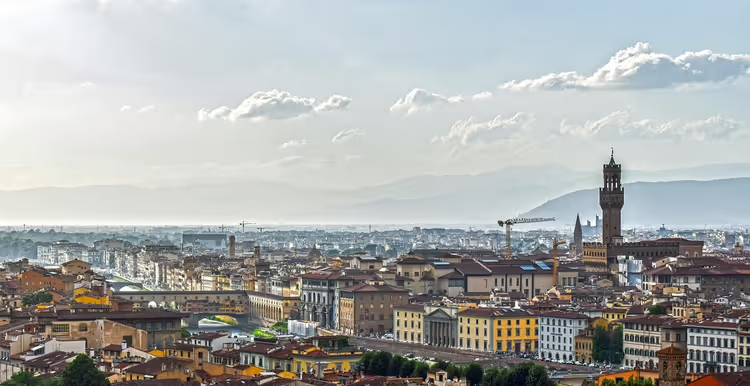
Florence fits within walking distance. Almost all the main landmarks stand in the historic center, between Santa Maria Novella station and the Arno River. In two or three days you can see the Duomo dome, David, and the Ponte Vecchio.
The main challenge here is not distance, but tickets. In high season, lines at the Uffizi Gallery and the cathedral dome stretch for an hour or more. Online booking solves the problem, but it's better to lock that in early too: a Uffizi ticket costs €25 when bought on the day of your visit and €29 when booked for a specific date (as of 09/2026, Uffizi ticket prices).
This is a selection of 25 places worth including in your itinerary. For each one there's an entrance, opening hours, and how to get there.
Tickets and lines in Florence
💡 In short:
- The core of the itinerary: the Duomo dome, the Uffizi Gallery, and David at the Galleria dell'Accademia.
- Allow 2-3 days for 25 addresses if you don't want to rush between museums.
- Buy tickets online: you skip the ticket office at the entrance and see the price right away.
- Prices and opening hours: 09/2026, verified on the official Uffizi Galleries website.
Major museums run on a similar schedule: Tuesday through Sunday, closed on Mondays. Holidays and the first Sunday of the month change this schedule, so check the museum's website before your visit.
Place | Entrance | Hours | Closed |
|---|---|---|---|
Uffizi Gallery | €25 on the day of visit, €29 with online booking (gallery prices) | Tue-Sun 8:15-18:30 | Monday |
Palazzo Pitti | €16 on site, €19 in advance (Uffizi ticket page) | Tue-Sun | Monday |
Boboli Gardens | €10 on site, €13 in advance (official prices) | Tue-Sun | Monday |
Galleria dell'Accademia | €20 plus €4 booking fee, free on the first Sunday of the month (official museum website) | Tue-Sun 8:15-18:50 | Monday |
Duomo complex: dome, Giotto's bell tower, baptistery, museum, Santa Reparata | single Brunelleschi Pass (Opera del Duomo website) | by booking slots | religious holidays |
Basilica of Santa Croce | paid entry, ticket with museum (basilica website) | check the website | check the website |
The rest of the places on the list are either free to enter or charge an admission fee. The exact amount is easier to check on site.
1. Basilica of Santa Croce
 © Grueslayer · CC BY-SAPhoto: Grueslayer, CC BY-SA (https://creativecommons.org/licenses/by-sa/4.0), Wikimedia Commons
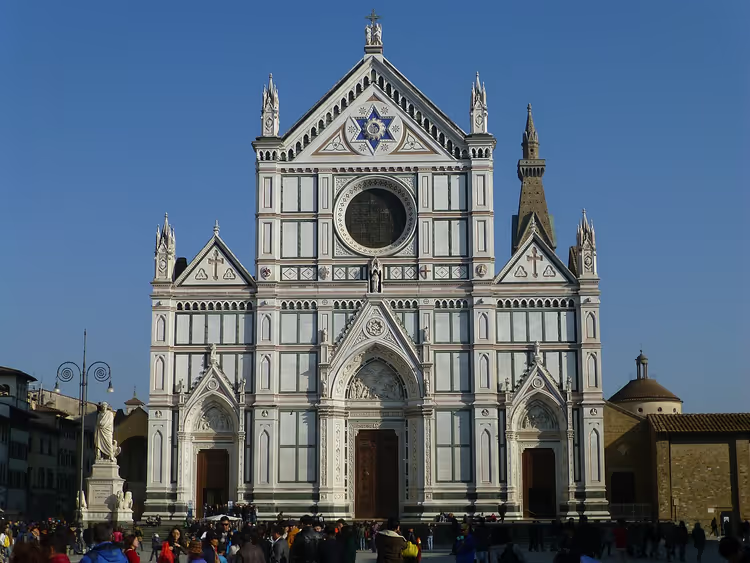
The Basilica of Santa Croce stands in the very center, on the square of the same name. The name translates as "Holy Cross," and the church's floor plan repeats the shape of an Egyptian cross. Inside you'll see frescoes and sculptures by Renaissance masters, and along the walls are the tombs of Galileo Galilei, Michelangelo, and Niccolò Machiavelli.
There's a separate reason to go inside, though: the cenotaph of Dante Alighieri. The poet himself is buried in Ravenna, but the Florentines erected a monument to him here. Admission is paid, and the ticket includes entry to the basilica's museum (official basilica website). It's fairly dark inside, so photos without flash often come out blurry.
- Getting there: in the center, a 5-minute walk from Piazza della Signoria (see map).
- Cost: paid admission, the ticket is also valid for the basilica museum.
- Who it's for: those interested in history and Renaissance art.
- Not for: tourists in shorts and with bare shoulders, the dress code is strict.
- The catch: there's little light inside, so photos come out dark.
2. Uffizi Gallery
 © Arek N. · CC BY-SAPhoto: Arek N., CC BY-SA (https://creativecommons.org/licenses/by-sa/3.0), Wikimedia Commons
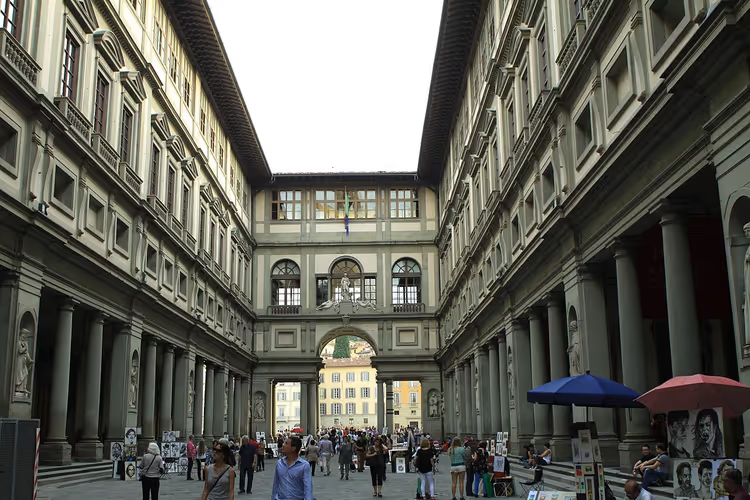
The Uffizi Gallery occupies the palace between Piazza della Signoria and the Arno River. It houses paintings by Botticelli, Leonardo da Vinci, Raphael, and Titian. Temporary exhibitions are on the ground floor, while the permanent collections occupy the second floor.
A ticket costs €25 on the day of your visit and €29 when booked online for a specific date (as of 09/2026, Uffizi prices). Arrive right at opening time: by midday the rooms fill up. From Santa Maria Novella station to the entrance is about a 10-minute walk (see map). Photography is allowed, and there's a café inside. It's best to book a guided tour in advance through Florence tours.
- Getting there: a 10-minute walk from Santa Maria Novella station (see map).
- Cost: €25 on the day of your visit, €29 when booked in advance.
- Hours: Tuesday to Sunday from 8:15, closed on Monday.
- The catch: in summer the rooms are packed by midday, and there's a line at the entrance even with a ticket.
3. Giotto's Bell Tower
 © Chabe01 · CC BY-SAPhoto: Chabe01, CC BY-SA (https://creativecommons.org/licenses/by-sa/4.0), Wikimedia Commons
Giotto's Bell Tower rises 85 meters and stands right next to the Cathedral of Santa Maria del Fiore. The climb goes up a narrow staircase of 414 steps and takes about 15 minutes (official Opera del Duomo website). Inside there's little light and it's a bit stuffy.
But from the viewing platform you see the cathedral dome almost at eye level. The combined Brunelleschi Pass gives access to the dome, the baptistery, and the Opera del Duomo Museum. You should skip the climb if you have a fear of heights or heart problems. The tower is closed during religious holidays.
- Getting there: Piazza del Duomo, next to the cathedral (see map).
- Cost: included in the Brunelleschi Pass, individual tickets are also sold.
- The catch: little space on the narrow flights of stairs, you'll be climbing in a stream of people.
4. Palazzo Vecchio
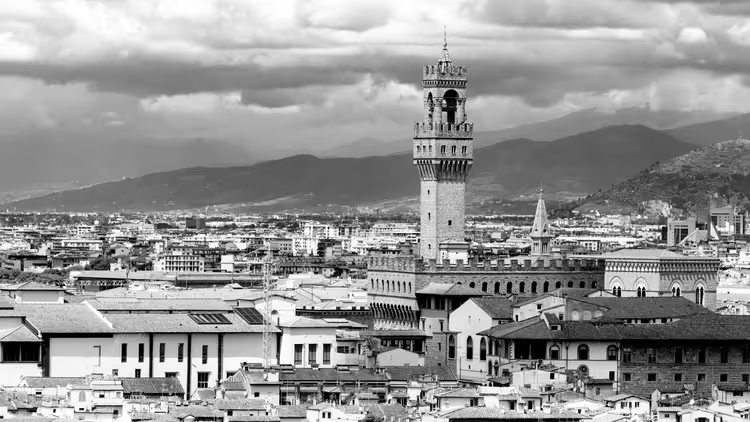
Palazzo Vecchio was once the seat of city government, and today it's the town hall on Piazza della Signoria. Italians consider the palace a symbol of the city. Above the facade rises Arnolfo's clock tower: townspeople have been setting their watches by its clock for centuries, and prisoners were once held in it.
You enter through a stone courtyard with painted walls and statues. The main hall, the Salone dei Cinquecento, is adorned with Michelangelo's sculptural group "Genius." The ceiling of the Hall of Lilies is covered with stucco work featuring honeycombs and flowers.
- Getting there: Piazza della Signoria, city center (see map).
- Cost: paid admission, tickets are sold on site and online.
- Who it's for: those who want to see the town hall's ceremonial rooms from the inside.
- The catch: in high season there's a line at the ticket office.
5. Palazzo Pitti
 © Almaak · CC BY-SAPhoto: Almaak, CC BY-SA (https://creativecommons.org/licenses/by-sa/3.0), Wikimedia Commons
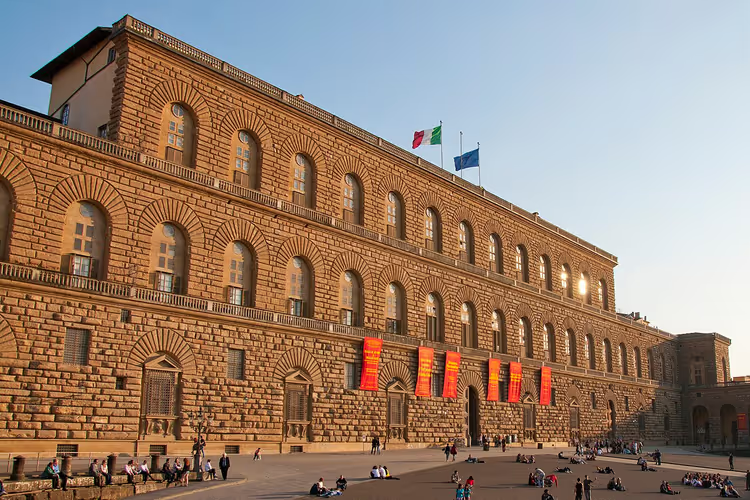
Palazzo Pitti stands on the left bank of the Arno and once served as the residence of ruling dynasties. Today it houses museums and galleries: paintings, silver, carriages. The square in front of the palace draws tourists with sculptures shaped like enormous faces, and in the courtyard a round fountain with cupids plays.
The second floor is occupied by a richly decorated gallery made up of several halls: Venus, Jupiter, Apollo, Mars, and Saturn. A ticket costs 16 € on site and 19 € when purchased in advance (as of 09/2026, official ticket page). Photography is not allowed inside the palace halls, but views from the windows and the gardens may be photographed. In the morning the ticket offices are calmer than after lunch.
- How to get there: by bus to the San Felice stop or on foot across the Ponte Vecchio (see map).
- Cost: 16 € on site, 19 € in advance, individual museums cost extra.
- The catch: some halls are periodically closed for restoration, and the list changes.
6. Ponte Vecchio
 © Diego Delso · CC BY-SAPhoto: Diego Delso, CC BY-SA (https://creativecommons.org/licenses/by-sa/4.0), Wikimedia Commons
Ponte Vecchio is considered the oldest and most recognizable bridge in Florence. It spans a narrow point of the Arno River and connects the center with the Oltrarno district. Above it runs the secret Vasari Corridor, which links the Uffizi, Palazzo Vecchio, and Palazzo Pitti.
In the past the bridge was used for selling meat; now it is lined entirely with jewelry shops. That is where the nickname "Golden Bridge" comes from. Ponte Vecchio is one of the few bridges that survived the war and the floods. In the evening street musicians perform on it, and the best view of the bridge itself opens up from the embankment.
- How to get there: on foot from Piazza della Signoria or from Palazzo Pitti (see map).
- Cost: free, shops are open during daytime hours.
- The catch: during the day the bridge is always crowded, so getting a calm shot is difficult.
7. Santa Maria del Fiore
 © Petar Milošević · CC BY-SAPhoto: Petar Milošević, CC BY-SA (https://creativecommons.org/licenses/by-sa/4.0), Wikimedia Commons
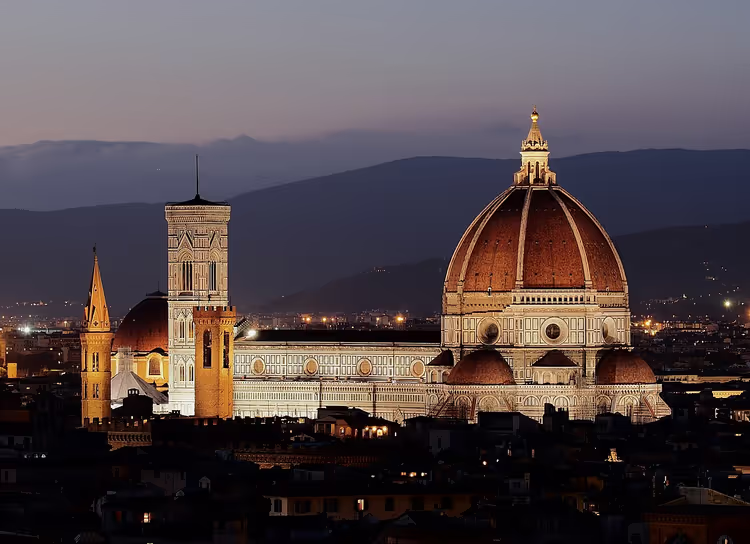
Santa Maria del Fiore, or simply the Duomo, serves as the main cathedral of Florence and carries the largest masonry dome in the world. The name translates as "flower of Saint Mary," and the word "Duomo" in Italian means the city's main cathedral. The facade combines three shades of marble: white, pink, and green.
The cathedral took more than a century to build, and its plan follows a Latin cross. Inside there is almost no gilding: Florentines believed that decoration should not distract from a conversation with God. The dome fresco near the altar is devoted to biblical scenes, and modest frescoes, paintings, and stained glass hang along the walls. From the observation deck you can see all of Florence, and Giotto's bell tower turns out to be almost within arm's reach from there. Guided tours enter without waiting in line.
Above the facade you see a statue of the Virgin Mary with the infant and a lily flower, and on either side of her stand the twelve apostles. Brunelleschi's dome is built of red brick and is visible from afar. Entry to the cathedral itself is free; you pay only for the dome climb (as of 09/2026, dome climb at the Duomo). The climb is 463 steps and a narrow passage between the two shells of the dome.
- How to get there: Piazza del Duomo, a 5-minute walk from Santa Maria Novella station (see map).
- Cost: the cathedral itself is free, the dome and bell tower are covered by a single Brunelleschi Pass.
- Who it's for: anyone visiting Florence for the first time.
- The catch: the line into the cathedral is long even with free entry; guided tours go through a separate entrance.
8. Santa Maria Novella
 © Commonists · CC BY-SAPhoto: Commonists, CC BY-SA (https://creativecommons.org/licenses/by-sa/4.0), Wikimedia Commons
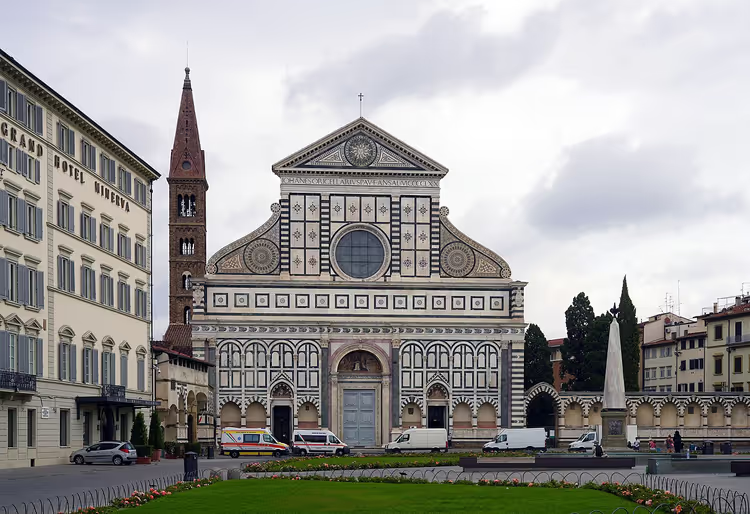
The Basilica of Santa Maria Novella stands on the square of the same name next to the train station. If you arrive by train and walk into the center, this is the first church you will come across. Its facade of white and green marble is easy to recognize by its geometric pattern.
Inside are works by Florentine masters: the tomb of the Bishop of Fiesole, a bust of Saint Antoninus, and a monument to Blessed Villana. The altar is considered one of the most beautiful in the city, and the chapels are decorated with frescoes by famous artists. The cloister with its galleries and biblical scenes on the walls deserves special attention. Nearby there is a historic pharmacy that has long been separate from the church but continues the tradition of monastic remedies.
- How to get there: Piazza Santa Maria Novella, opposite the station (see map).
- Cost: admission ticket, check the price on site.
- The catch: the church is always crowded, so a quiet walk through the halls is not possible.
9. Basilica of San Lorenzo
 © Nelson Pérez · CC BY-SAPhoto: Nelson Pérez, CC BY-SA (https://creativecommons.org/licenses/by-sa/3.0), Wikimedia Commons
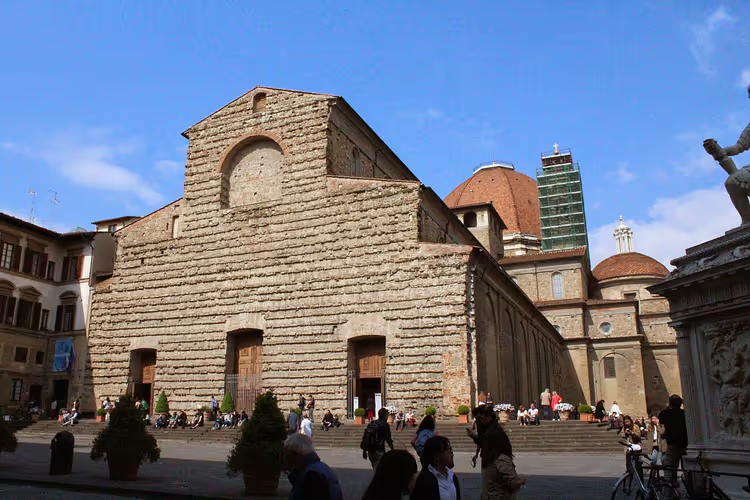
The Basilica of San Lorenzo is considered one of the oldest churches in the city: the first Christian structures appeared here more than fifteen hundred years ago. The church took on its current appearance under the Medici.
Michelangelo proposed an unusual solution: he placed the Medici tombs around the entire perimeter, along the walls, rather than in the center, as had been done before. The master never reached an agreement with the patron, a pope from the Medici family, so the facade remained unfinished. The basilica floor is laid with a pattern that is considered a work of art in itself.
Inside you will see tall columns, a patterned floor, and sarcophagi of Medici family members. The Old Sacristy contains works by Donatello, and the New Sacristy holds the tombs of dukes with sculptures by Michelangelo. The dome of the Chapel of the Princes is second in size only to the Duomo's dome. The complex also houses a library with rare manuscripts, but it has a separate entrance.
- How to get there: Piazza San Lorenzo, next to the San Lorenzo market (see map).
- Cost: entry to the basilica is paid, and parts of the complex are ticketed separately.
- The catch: the complex is divided into zones, so one ticket does not cover everything.
10. Baptistery of San Giovanni
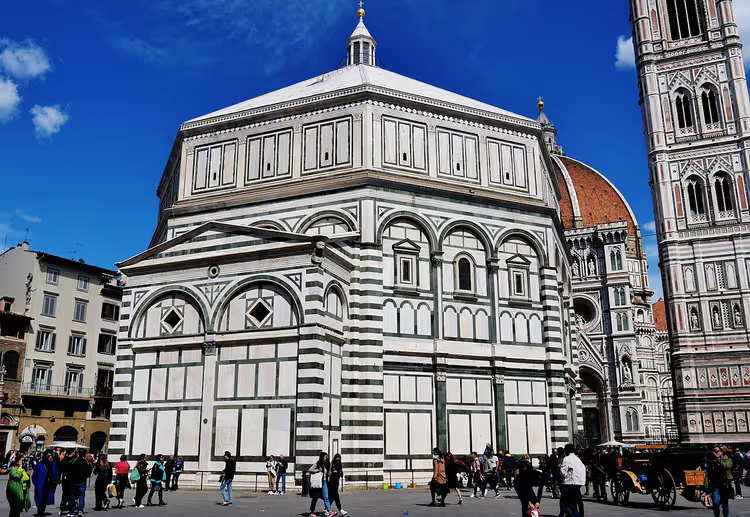 © Zairon · CC BYPhoto: Zairon, CC BY (https://creativecommons.org/licenses/by/4.0), Wikimedia Commons
The Baptistery of San Giovanni is part of the Duomo complex and is the oldest building on the square. Noble Florentines, including members of the Medici family, were baptized here. The font is designed for adults, since in those years people adopted Christianity at a conscious age.
The building has eight sides, each symbolizing a day of the week. The most famous doors are called the "Gates of Paradise": their eastern panels are decorated with ten gilded reliefs depicting scenes from the Bible. The font area is always crowded because the cathedral and bell tower stand right next to it.
- How to get there: Piazza del Duomo, between the cathedral and Giotto's bell tower (see map).
- Cost: included in the general Brunelleschi Pass.
- The catch: in high season the area by the doors is packed, and crowds make it hard to examine the reliefs.
11. Galleria dell'Accademia
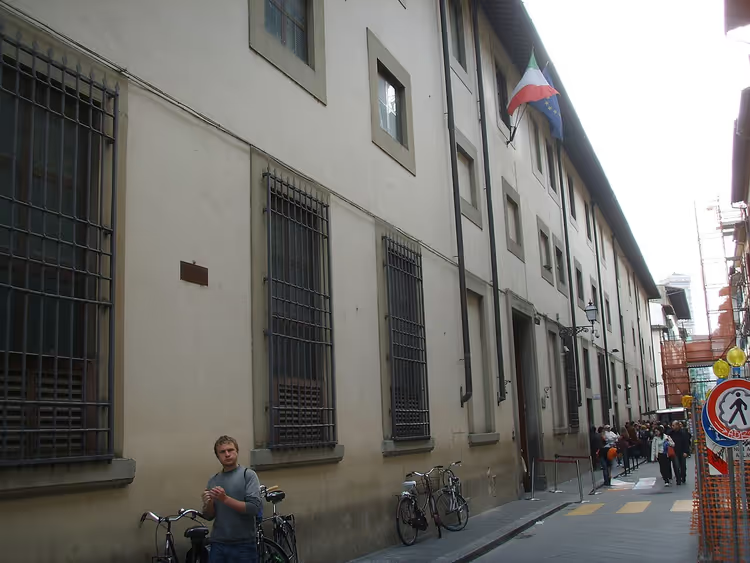 © sailko · CC BYPhoto: sailko, CC BY (https://creativecommons.org/licenses/by/2.5), Wikimedia Commons
The Galleria dell'Accademia is known above all for the statue of David. The marble giant was moved here from the city center so that it would not suffer from weather and vandals. A separate hall with overhead light was built for the sculpture, and there it looks different than it did on the square.
Besides David, you will find several other works by Michelangelo, 14th-century Italian painting, Gothic altars, and a collection of plaster models. The ticket costs 20 €, and online booking adds 4 €; on the first Sunday of the month entry is free, but booking is not available on that day (as of 09/2026, official museum website). The museum is open Tuesday through Sunday from 8:15 to 18:50, closed on Monday. Book a tour with entry to see David in advance if you do not want to stand at the entrance.
- How to get there: near Santa Maria del Fiore, in the center (see map).
- Cost: 20 € plus 4 € for booking, free on the first Sunday of the month.
- The catch: the David hall is always full, so you can only view the sculpture calmly from near the entrance.
12. Medici Chapel
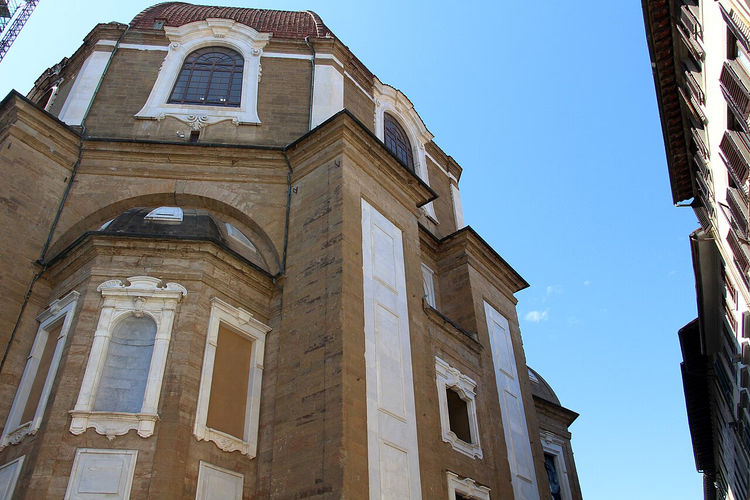 © Fred Romero from Paris, France · CC BYPhoto: Fred Romero from Paris, France, CC BY (https://creativecommons.org/licenses/by/2.0), Wikimedia Commons
The Medici Chapel is attached to the Basilica of San Lorenzo and is considered one of Michelangelo's finest works. It is a small, vertically elongated building entirely devoted to the theme of death. Members of the Medici dynasty are buried here.
The chapel's main sculptures are tied to the times of day: "Dawn," "Day," "Dusk," and "Night." They sit on the sarcophagi and look heavier than they do in photographs. In the center stands the "Madonna and Child," around which the entire ensemble is arranged. Opening hours are irregular: the chapel is closed on certain Mondays and Sundays, so check the schedule before your visit.
- How to get there: Piazza San Lorenzo, entrance through the basilica complex (see map).
- Cost: paid entry, the ticket is shared with part of the San Lorenzo museums.
- The catch: the rooms are small, and tour groups quickly fill the entire space.
13. Monastery and church of San Marco
 © Prof. Mortel · CC BYPhoto: Prof. Mortel, CC BY (https://creativecommons.org/licenses/by/2.0), Wikimedia Commons
The San Marco Monastery was founded in the Middle Ages, although Christian buildings stood on this site even earlier. The complex later passed to the Medici family, who then handed it over to Dominican monks. Today it is a museum with one of the finest collections of Renaissance frescoes.
The frescoes in the cells were painted by Beato Angelico, who was canonized as a saint. Gozzoli and Ghirlandaio also left works here. The museum also takes pride in its library of manuscripts and early printed books: works by ancient philosophers, monastic rules, writings of Thomas Aquinas and Augustine. Many of the volumes once belonged to the Medici.
- How to get there: Piazza San Marco, next to the Galleria dell'Accademia (see map).
- Cost: admission ticket, check the price on site.
- Who it's for: those who want to see Beato Angelico's frescoes in the original cells.
- The catch: the museum is small, and it gets especially crowded on rainy days.
14. Bargello Museum
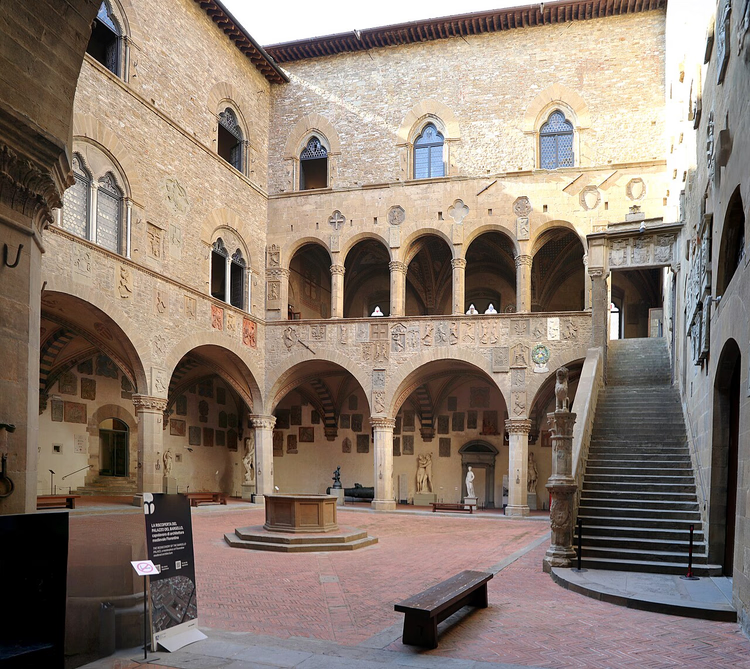 © Francesco Bini · CC BY-SAPhoto: Francesco Bini, CC BY-SA (https://creativecommons.org/licenses/by-sa/4.0), Wikimedia Commons
The National Bargello Museum occupies a castle-palace in the city center. Over its history, the building has served as a ruler's residence, a barracks, a prison, and an execution site. The palace was originally two stories; the third level was added after a fire.
Today the halls display sculptures by Italian Renaissance masters: Michelangelo, Donatello, Cellini, Sangallo. Here you will see statues, bas-reliefs, medals, and decorative elements from buildings demolished during the city's redevelopment. These fragments offer a glimpse of the splendor of the lost structures.
- How to get there: in the center, next to Palazzo Vecchio (see map).
- Cost: admission ticket, check the price on site.
- Who it's for: those interested in sculpture and the city's history.
- The catch: the exhibition is built around the collection rather than the interiors, so the rooms feel austere.
15. Dante Alighieri house museum
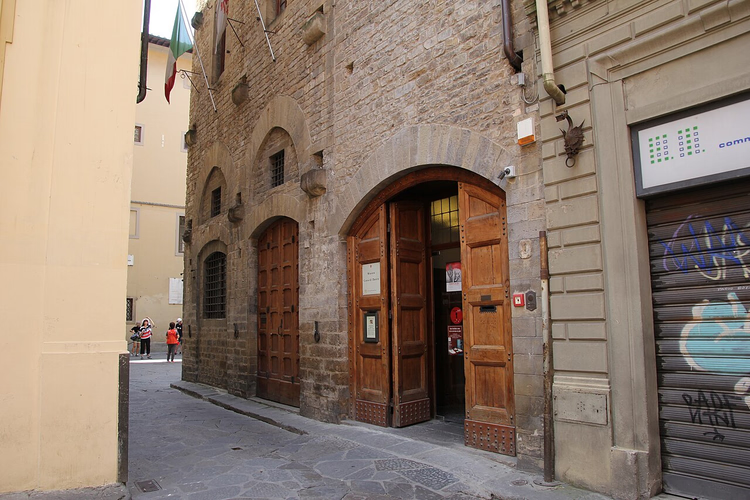 © Gianni Careddu · CC BY-SAPhoto: Gianni Careddu, CC BY-SA (https://creativecommons.org/licenses/by-sa/4.0), Wikimedia Commons
The Dante Alighieri House Museum occupies a modest three-story building in the old quarter. Only the foundation remains from the poet's actual house, and the current walls were built in the 20th century. Florentines painstakingly recreated the interiors of the rooms where Dante might have lived on the second floor.
Dante held the office of prior and meddled in politics, for which he was exiled from his native city. He wandered across Europe, returned to Italy, settled in Ravenna, and died without ever completing his diplomatic mission. The poet's muse, Beatrice, lived not far from this area. It was she who inspired his sonnets and the "Divine Comedy," although he saw her only a few times. The ground floor houses recreated apothecary rooms.
The poet belonged to the apothecaries' guild, and without that he would not have received full rights as a citizen. The top floor displays copies of lifetime editions dedicated to Beatrice (official website of the house museum).
- Getting there: old quarter, near Piazza della Signoria (see map).
- Cost: admission ticket, check the price on site.
- The catch: there are almost no authentic Dante items, the exhibition is largely a reconstruction.
16. Palazzo Medici Riccardi
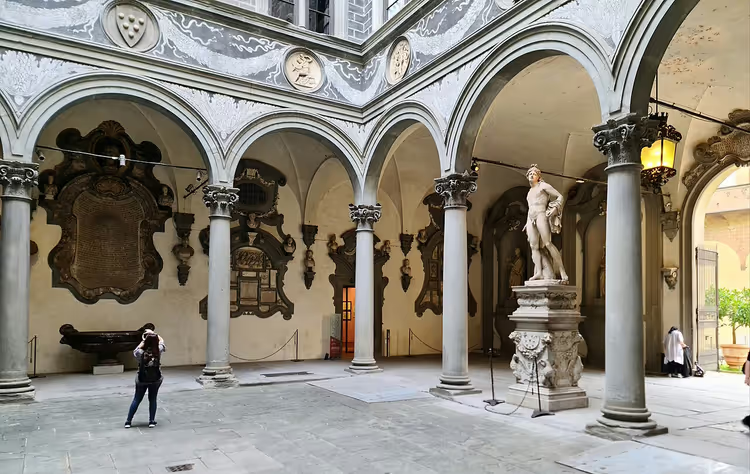 © Ricardalovesmonuments · CC BY-SAPhoto: Ricardalovesmonuments, CC BY-SA (https://creativecommons.org/licenses/by-sa/4.0), Wikimedia Commons
You'll recognize Palazzo Medici Riccardi by its austere three-story rusticated facade. The double name recalls the two families that owned the palace: the Medici and the Riccardi. From the outside the building looks ascetic, but the interiors amaze with their luxury and thoughtful layout.
Today a public library operates here, housing biblical manuscripts and copies of works by ancient philosophers. The palazzo's calling card is considered to be a statue by Bandinelli: the sculptor depicted Orpheus taming the dog Cerberus. In the hero's face, contemporaries recognized the features of the Medici. The eastern part of the palace is occupied by the family chapel with frescoes by Gozzoli, where portraits of the Medici are also recognizable among the saints.
- Getting there: near the Basilica of San Lorenzo, in the center (see map).
- Cost: paid entry, tickets sold on site.
- The catch: the interiors are not fully open for viewing, some halls are occupied by the library.
17. Piazzale Michelangelo
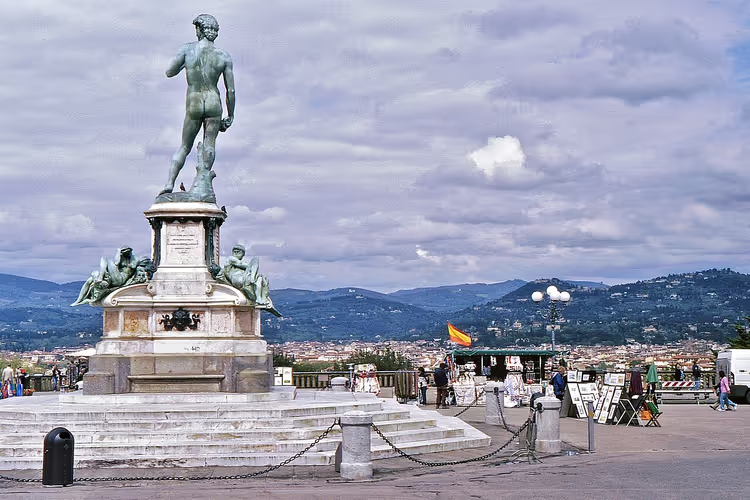 © Michael Wittwer · CC BY-SAPhoto: Michael Wittwer, CC BY-SA (https://creativecommons.org/licenses/by-sa/4.0), Wikimedia Commons
Piazzale Michelangelo lies on a hill above the city and serves as Florence's main viewpoint. A long avenue leads up to it, and the terrace itself looks directly onto the Duomo's dome and Giotto's bell tower. In clear weather you can see the entire historic center all the way to the distant hills.
In the center of the square stands a bronze copy of David, installed in the late 19th century. At its base are allegorical figures representing morning, day, evening, and night. The originals of these sculptures are in the Basilica of San Lorenzo, on the Medici sarcophagi. Part of the square is taken up by parking, but that doesn't spoil the view: come at sunset.
- Getting there: on foot from Ponte Vecchio up the hill or by bus (see map).
- Cost: free.
- The catch: at sunset a crowd gathers at the railing, and you have to wait for a spot at the edge.
18. Piazza della Signoria
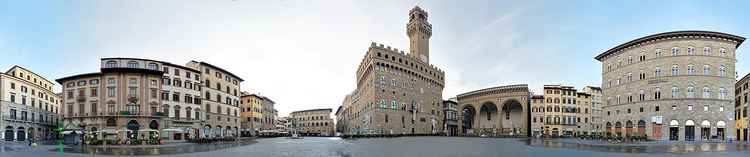 © User:MatthiasKabel · CC BY-SAPhoto: User:MatthiasKabel, CC BY-SA (https://creativecommons.org/licenses/by-sa/3.0), Wikimedia Commons
Piazza della Signoria is often called an open-air museum. Copies of works by Donatello and Michelangelo stand here alongside original statues by Bandinelli, Cellini, and Giambologna. Political life once boiled in this spot: the council met in the palace, and conspirators were executed in the square.
Some of the sculptures are gathered under the loggia, which was built for public ceremonies. The composition reads as a single allegorical cycle, where different eras intertwine. It's best to look in the morning, when the light is soft and there are still few tourists.
- Getting there: city center, near the Uffizi Gallery and Palazzo Vecchio (see map).
- Cost: free.
- The catch: during the day the square is packed, and some statues are covered in scaffolding during restoration.
19. Vasari Corridor
 © Armin Kleiner · CC BY-SAPhoto: Armin Kleiner, CC BY-SA (https://creativecommons.org/licenses/by-sa/4.0), Wikimedia Commons
The Vasari Corridor stretches above the rooftops from Palazzo Vecchio to Palazzo Pitti across Ponte Vecchio. It was built as a secret passage for Duke Cosimo I so he could move from palace to palace without going out into the street. The project was carried out by the architect Giorgio Vasari.
The collection of self-portraits that previously hung in the corridor was removed before its opening in 2024. The corridor was closed to the general public for a long time, and now visitors are admitted with a combined ticket together with the Uffizi for 43-47 € depending on the date (as of 09/2026, Uffizi Galleries ticket prices). Spots are limited, so book your ticket in advance. You walk along a narrow passage with windows, while the river and the old city drift beneath you.
- Getting there: entry is connected with the Uffizi Gallery and Palazzo Pitti (see map).
- Cost: only in combination with the Uffizi, combined ticket 43-47 € depending on the date.
- The catch: you can only get in with advance booking, and spots are limited.
20. Boboli Gardens
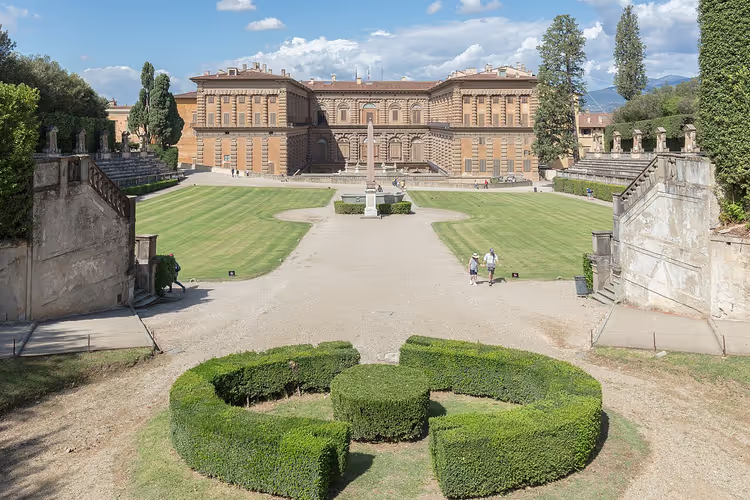 © Diego Delso · CC BY-SAPhoto: Diego Delso, CC BY-SA (https://creativecommons.org/licenses/by-sa/4.0), Wikimedia Commons
The Boboli Gardens stretch behind Palazzo Pitti and are considered a model of classical landscape design. They were laid out by order of Duchess Eleanor of Toledo. The layout concept was later replicated in the creation of other European parks.
Here you'll find terraces, fountains, grottoes and pavilions, complemented by antique sculptures. The amphitheater features an obelisk from Luxor that once adorned one of the Medici villas. The walk takes at least an hour, because the garden climbs up the hillside. A ticket costs €10 on site and €13 when purchased online (as of 09/2026, galleries ticket page).
- Getting there: behind Palazzo Pitti, entrance from the palace side (see map).
- Cost: €10 on site, €13 in advance.
- The catch: climbing the stone staircases is tough in the heat.
21. Laurentian Medici Library
The Laurentian Library opened as the Medici family's private collection, and today it is a public repository of manuscripts. The building for the books was constructed later than the collection itself, and the design belongs to Michelangelo. Here he combined luxury and practicality, and the entrance is designed using optical illusions.
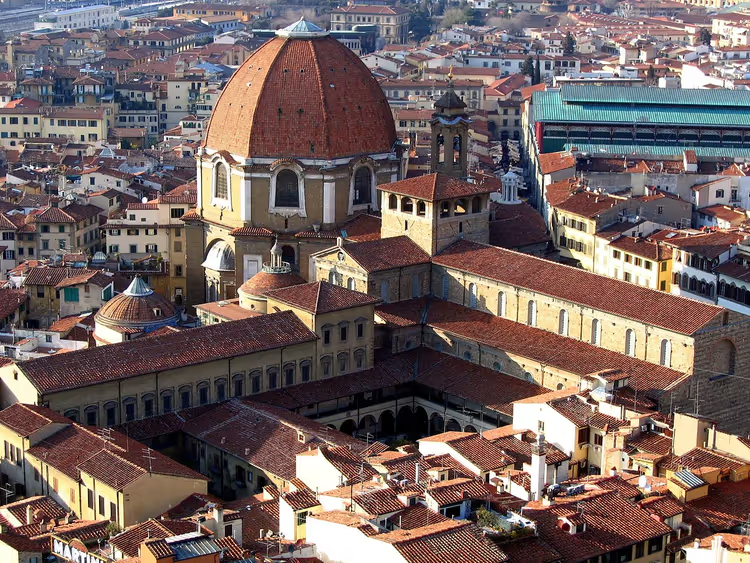
The main interior feature, a monumental staircase, resembles a flow of lava. The holdings contain more than 150,000 handwritten and printed books, from ancient papyri to 15th-century European editions (library official website). When Medici power weakened, the collection passed to the clergy and the city, and now it belongs to the state.
- Getting there: Piazza San Lorenzo, entrance through the basilica complex (see map).
- Cost: admission ticket, check the website for price and hours.
- The catch: the reading room is open on a limited schedule, tourists are not admitted at all times.
22. Museo delle Porcellane
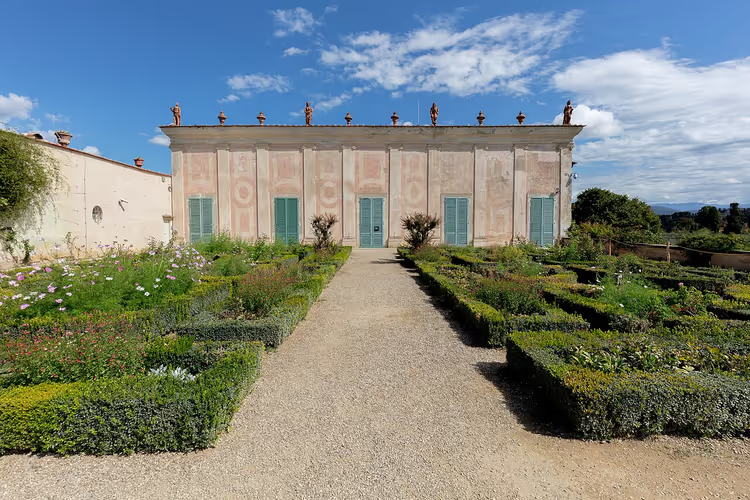 © Diego Delso · CC BY-SAPhoto: Diego Delso, CC BY-SA (https://creativecommons.org/licenses/by-sa/4.0), Wikimedia Commons
Museo delle Porcellane is part of the Uffizi Galleries complex and occupies the Casino villa in the Boboli Gardens. It houses pieces from Italian, Austrian and French manufactories that once belonged to royal and princely dynasties. Many items are connected to the history of the Medici family.
The collection is considered part of the Silver Museum. Every exhibit has both historical and artistic value: from dinner services and figurines to busts and accessories. The collection is small, but by visitor numbers the museum ranks among the popular ones in Florence.
The exhibition occupies three small rooms: the banquet hall, the Viennese porcelain room and the Saxon porcelain room. Among the relics you'll find dinner services, figurines and busts, as well as gifts from Napoleon to his sister Elisa. The banquet hall displays a lifetime portrait of the emperor by François Gérard.
- Getting there: in the Boboli Gardens, behind Palazzo Pitti (see map).
- Cost: admission with a Boboli Gardens ticket.
- The catch: the collection is small, it's not worth coming here just for the porcelain.
23. Museo Leonardo da Vinci
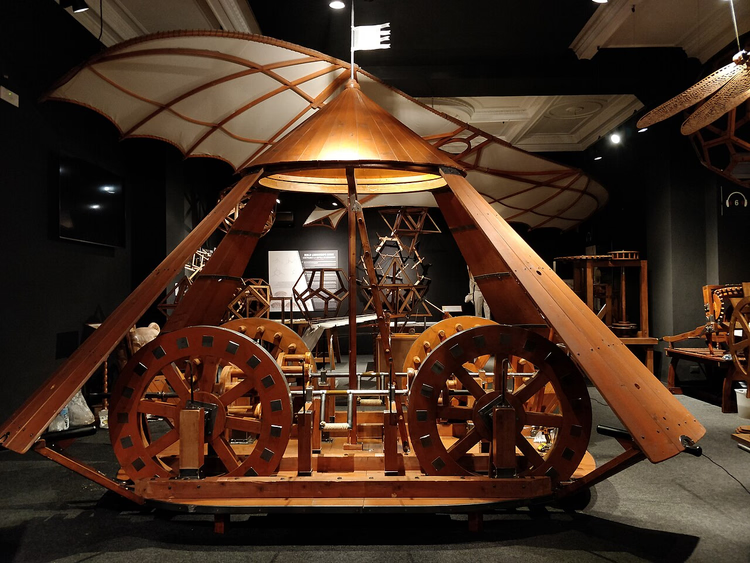 © LeonardoInteractiveMuseum · CC BY-SAPhoto: LeonardoInteractiveMuseum, CC BY-SA (https://creativecommons.org/licenses/by-sa/4.0), Wikimedia Commons
Museo Leonardo da Vinci is dedicated to the inventions of the artist and engineer. The museum is private, and it's not the only collection of its kind in Italy: similar ones exist in Venice, Rome, and Milan. It houses models built from Leonardo's drawings.
The main hall features a tank, a submarine, a helicopter, a parachute, and a multi-barrel cannon. Many models are demonstrated on screens, and in the mirror room you see yourself among the characters from the master's paintings. In the lab, you can work with copies of the drawings and try to assemble your own "mechanical curiosity." The exhibition is designed for both adults and children.
- Getting there: in the center, near Piazza della Signoria (see map).
- Cost: admission ticket, check the price on site.
- Who it's for: families with children and anyone who loves engineering.
- The catch: it's more of an interactive exhibition than a collection of Leonardo's original works.
24. Museo Galileo
 © Capvideo · CC BYPhoto: Capvideo, CC BY (https://creativecommons.org/licenses/by/4.0), Wikimedia Commons
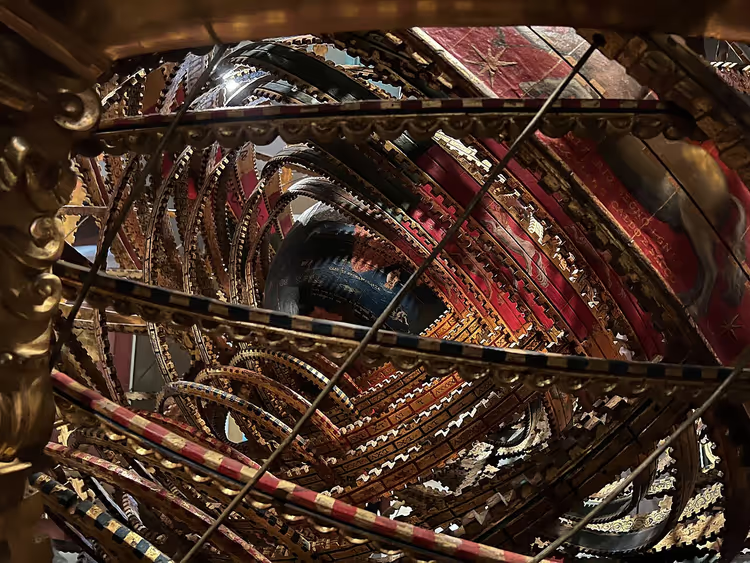
Museo Galileo is housed in a palace that looks like a fortress from the outside: small windows, thick walls, minimal decoration. It once held the Medici and Lorraine collection of scientific instruments, and today the palace has become a museum.
In the halls you'll see the telescopes Galileo worked with, inlaid medical instruments, obstetric mannequins, globes, and maps. You'll also remember the giant armillary sphere. Most of the mechanisms are still in working order, and some instruments are demonstrated in action on guided tours (as of 09/2026, official museum website).
- Getting there: in the center, next to the Uffizi Gallery (see map).
- Cost: admission ticket, check the price on the museum website.
- Who it's for: anyone interested in science and the history of instruments.
- The catch: the exhibition is dense, you can't see everything in one visit.
25. Palazzo Strozzi
 © Chabe01 · CC BY-SAPhoto: Chabe01, CC BY-SA (https://creativecommons.org/licenses/by-sa/4.0), Wikimedia Commons
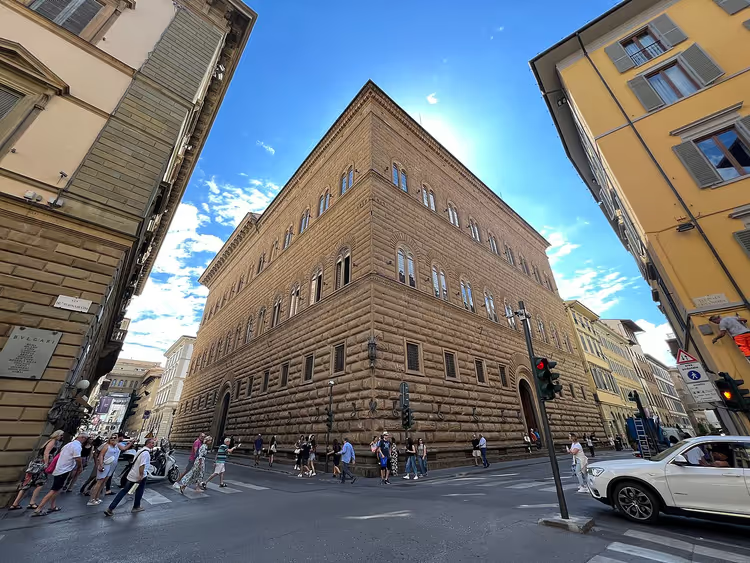
Palazzo Strozzi was built in the late 15th century, and the work stretched over nearly fifty years. The patron was Filippo Strozzi, who feuded with the Medici and used their palace as a model. The facade and layout of the palace are considered a prime example of Florentine Renaissance architecture.
Filippo Strozzi consulted astrologers about the timing of the foundation laying and personally supervised the masons, but died before the work was completed. The dynasty owned the palace for several centuries, until the last direct descendant left no heirs and the building passed to the city.
Today the halls host exhibitions of classical and contemporary art, concerts, and formal receptions. The inner courtyard has souvenir shops, cafes, and restaurants, so you can stop by without a ticket. Check the exhibition program on the palazzo's official website.
- Getting there: city center, near Piazza della Signoria (see map).
- Cost: a ticket is needed only for exhibitions, the courtyard is open freely.
- The catch: the palace interiors are mostly visible during exhibitions, there is no permanent collection.
Florence attractions on the map
Almost all the places on the list are in the historic center, so the route is easy to do on foot. Below is a map showing how the sights connect to each other. Open it on your phone and move through the neighborhoods: that way you won't miss a single address.
Plan your transitions between points in advance. The center is compact, but the streets are narrow, and by evening getting through the crowd at the Duomo is slower than in the morning.
If you're walking, split the city into two parts: the north with the Duomo, San Lorenzo, and San Marco, and the south with Palazzo Pitti, the Boboli Gardens, and the Oltrarno district. This way you hardly ever backtrack and save energy. Leave the morning hours for museums, and see the squares, the bridge, and the viewpoints after lunch, when the light is softer.
Tours and tickets in Florence
Guided tours, skip-the-line tickets and activities — most offers can be cancelled free of charge.
See offers on TiqetsThe widget loads once you give your consent.
⁉️🤔 Frequently asked questions
Do I need to buy tickets in advance?
Yes. At the Uffizi Gallery and Galleria dell'Accademia, the line takes longer than the walk through the halls themselves. An online ticket for a specific date costs more than a ticket at the box office, but you get in without waiting. Book at least a few days ahead, and even earlier in July and August.
How many days do I need for Florence?
Allow two or three days for the main sights. In one day you can realistically fit the Duomo dome, the Uffizi Gallery, and a walk to Piazzale Michelangelo. If you want to add Palazzo Pitti, the Boboli Gardens, and the San Marco museums, take four days and don't try to cover everything at once.
What can I see in Florence for free?
The Cathedral of Santa Maria del Fiore is free, you only pay to climb the dome and the bell tower. Piazza della Signoria, Ponte Vecchio, Piazzale Michelangelo, and the palace courtyards are open freely. On the first Sunday of the month, some museums also let you in without a ticket, but the lines on those days are longer than usual.
What days are museums closed?
Most state museums and galleries are closed on Mondays, including the Uffizi Gallery and Galleria dell'Accademia. They are open on Sundays, while some chapels and churches close on odd Mondays or even Sundays. It's easier to check the schedule on the museum's website on the day of your visit.
Where is the best view of the city?
For a panorama, go up to Piazzale Michelangelo: from there you can see the Duomo dome, Giotto's bell tower, and the entire center. The second option is climbing the cathedral dome, where you look at the city from above and also examine the frescoes inside. Come at sunset, but keep in mind you'll have to wait for a spot at the railing.
In short: what to book
Florence rewards those who plan ahead. Pick a couple of main museums, buy dated tickets, and leave at least one day free for unscheduled wandering.
- If you have only one day: take the Duomo dome and the Uffizi Gallery, leave the rest for next time.
- If you love sculpture: add Galleria dell'Accademia and the Bargello Museum.
- If you're traveling with kids: stop by Museo Leonardo da Vinci and climb up to Piazzale Michelangelo.
- If you need a quiet day: choose the Boboli Gardens and Palazzo Pitti in the morning, when there are no tour groups.
Just don't try to cram everything into a weekend: the lines eat up more time than the museums themselves.
It's easier to book tickets and tours in advance: Florence tickets on GetYourGuide.
Accommodation and transport are also worth arranging before the trip: hotels in the center on Trip.com or airport transfer.

A small editorial team writing guides for independent travel. We travel ourselves, but we haven’t been everywhere, so we check prices, opening hours and how to get there against official sources.