
















Amsterdam: thirty main sights, ticket prices and route
Amsterdam scares and attracts at the same time. Some come here for the canals and tulips, others for world-class museums. On a short trip it is easy to get overwhelmed: there are dozens of sights, tickets need to be booked in advance, and summer lines eat up half a day. We have gathered thirty of the city's main places and organized them for you: what to see, how much admission costs, and how to get there. A ticket to the Van Gogh Museum costs 25 € (as of 09/2026, museum website), and without a time slot you risk not getting in at a convenient time. Below you will find both the classics and places most tourists only discover by chance.
💡 In short:
- The city has thirty key sights, from Keukenhof Park to the Munttoren.
- Plan your trip for two or three days and book tickets online: museum slots sell out in advance.
- Prices and opening hours are current as of 09/2026.
Ad: this article contains affiliate links, we earn a commission if you book through them, at no extra cost to you.
1. Keukenhof
 © Balou46 · CC BY-SAPhoto: Balou46, CC BY-SA (https://creativecommons.org/licenses/by-sa/3.0), Wikimedia Commons
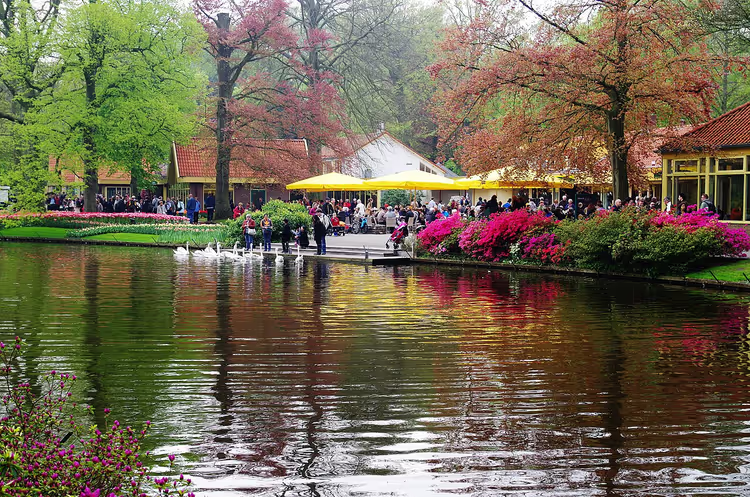
Keukenhof Park in Lisse is the main showcase of Dutch floriculture. On thirty-eight hectares, designers plant millions of tulips, hyacinths, and daffodils every year. You will see flower beds shaped like stars, ovals, and stripes, ponds, and sculptures among the floral arrangements. Each season the park is redesigned from scratch, so the same path looks different in spring than it did a year ago. Playful animal figures hide among the trees, and themed pavilions are set up along the walkways.
The park is open only in spring. In 2026 the season starts on March 19 and closes on May 10 (as of 09/2026, official park website). Admission starts at 20.50 € (as of 09/2026, official park website). Book your slot in advance: at peak bloom, weekend tickets disappear several days ahead. Each year countries take turns designing the main floral panorama, so the park keeps changing.
You can get there by bus from Schiphol Airport or from RAI station; the trip takes about an hour. A Tuesday morning is calmer than the weekend: no crowd at the entrance, and your flower bed photos come out without strangers' heads in the frame. Wear comfortable shoes and allow plenty of time: you will walk quite a bit along the paths. Keukenhof tickets and transfers on GetYourGuide.
2. Leidseplein
 © Ben Bender · CC BY-SAPhoto: Ben Bender, CC BY-SA (https://creativecommons.org/licenses/by-sa/3.0), Wikimedia Commons
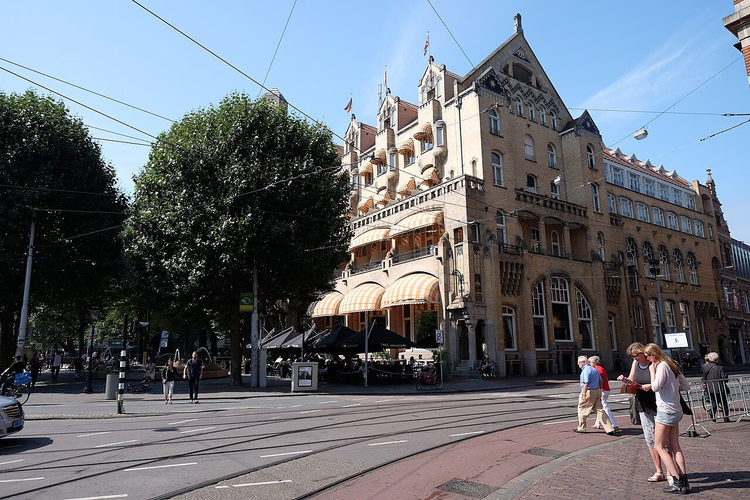
Leidseplein is the center of Amsterdam's nightlife. The square lies northeast of the Singelgracht canal, at the intersection of three streets. During the day people sit in cafes; in the evening hundreds of lights come on. Thousands of locals and tourists come here for coffee shops, theaters, and shows. At night the square turns into a nonstop fireworks display of signs.
The most famous address is the Bulldog Palace. The coffee shop opened in a former police station building and operates in an unconventional format: the menu includes pastries with hashish. Beginners should not go inside, but seeing the atmosphere of such a place is interesting. On the square you will also find theater box offices selling tickets to any show in the city.
In one corner stands the Stadsschouwburg theater building, in another the equally striking American Hotel. Bohemian life once thrived here, and Mata Hari rented a room. Nearby, the Boom Chicago comedy stage operates. Nightclubs and the Paradiso club, where world stars once performed, hide in the adjacent alleys.
The area is also good during the day. Historic houses, boutiques, and canal boat rides. The square is a stone's throw from Vondelpark, so you can end the evening with a quiet walk under the trees.
Check the Stadsschouwburg program: the repertoire includes drama productions and musicals that audiences eagerly attend. Across from it stands the American Hotel, which looks like a castle. The surrounding alleys are packed with shops, pastry shops, and bistros, and nightclubs and casinos operate nearby.
In one evening you can both have dinner and catch a show. If you are looking for a quiet evening, stay away from the loudest bars.
3. Van Gogh Museum
 © Warrox · CC BYPhoto: Warrox, CC BY (https://creativecommons.org/licenses/by/2.5), Wikimedia Commons
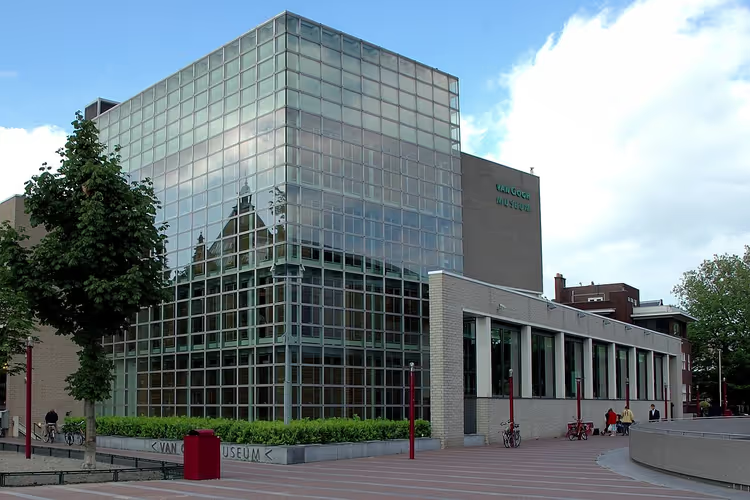
The Van Gogh Museum holds the largest collection of the artist's work. Vincent began painting at thirty-one and in six years created more than eight hundred paintings and about four hundred and fifty drawings. Recognition came only after his death. The exhibition is divided into four thematic sections by creative periods.
Besides Van Gogh's own canvases, works by his contemporaries hang here: Picasso, Monet, Toulouse-Lautrec, Manet. Separate rooms display the artist's letters to his brother Theo and personal belongings. The preservation of his legacy is thanks to Theo's widow and her son: they assembled the collection and gave it to the city.
The ticket costs €25 for adults, children under eighteen enter free (as of 09/2026, official website). Entry is strictly by time slot, so book in advance. Timed-entry ticket to the Van Gogh Museum on GetYourGuide.
4. Rembrandt House Museum
 © 14:43, 17 October 2006 · CC BY-SAPhoto: 14:43, 17 October 2006, CC BY-SA (http://creativecommons.org/licenses/by-sa/3.0/), Wikimedia Commons
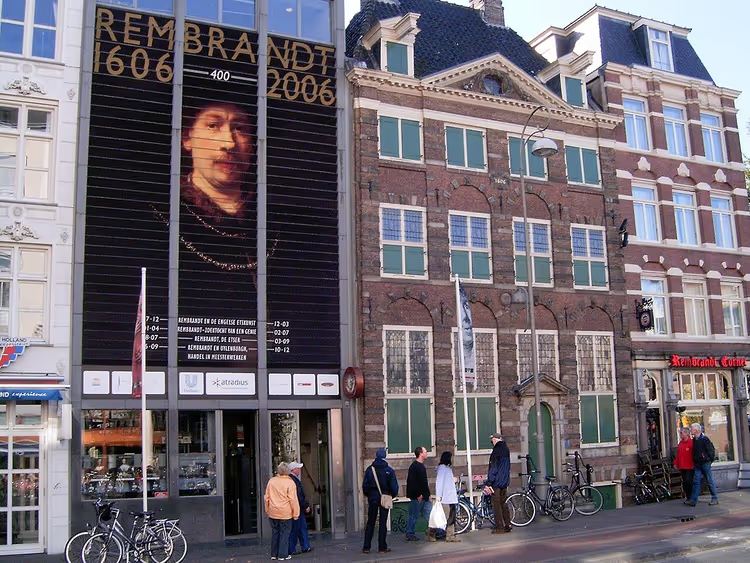
The Rembrandt House Museum is a rare chance to see not only the paintings, but also the daily life of the great Dutch master. Rembrandt lived in this house for seventeen years and later went bankrupt: all his possessions were sold at auction. A detailed inventory of the sold items survived, and the interiors were recreated based on it. Today the rooms look the same as they did during the artist's lifetime.
The museum opened in the early twentieth century. Paintings, prints, and furniture were collected by artists and patrons: some brought an early etching, others donated money to buy back the building. Over decades, the house took on its current appearance.
In the studio you will see brushes, paints, scrapers, and containers for mixing. It feels as if the owner has just stepped away and will soon return to work. For visitors, it is also a story about the master's collections: weapons, antique equipment, ancient books.
The many exhibits show what the artist was interested in. Separate rooms are dedicated to etchings and drawings.
Take your time walking through the rooms: the interior details will tell you more than the labels.
5. National Maritime Museum
 © Ainali · CC BY-SAPhoto: Ainali, CC BY-SA (https://creativecommons.org/licenses/by-sa/4.0), Wikimedia Commons
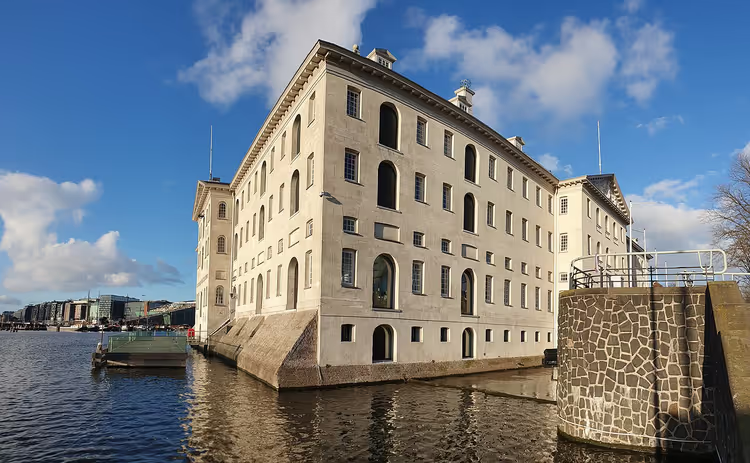
The National Maritime Museum is housed in a former naval warehouse. The building was constructed in the seventeenth century to a design by Daniel Stalpaert, and from the outside it resembles a huge ship. The museum opened here in the early seventies and became the center of the country's maritime history.
The exhibitions tell the story of five hundred years of Dutch shipping. A replica of an East India Company merchant ship is moored at the quay, and you can go aboard. Inside you will find maps, anchors, ship's wheels, and sailors' diaries. Separate exhibitions for children cover whaling and work in the port.
It is easy to spend two or three hours here. A virtual journey lets you feel the pitching of a ship during a storm and take part in a naval battle. Book tickets in advance, as the halls fill up with families on weekends.
6. Rijksmuseum
 © Marco Almbauer · CC BY-SAPhoto: Marco Almbauer, CC BY-SA (https://creativecommons.org/licenses/by-sa/3.0), Wikimedia Commons
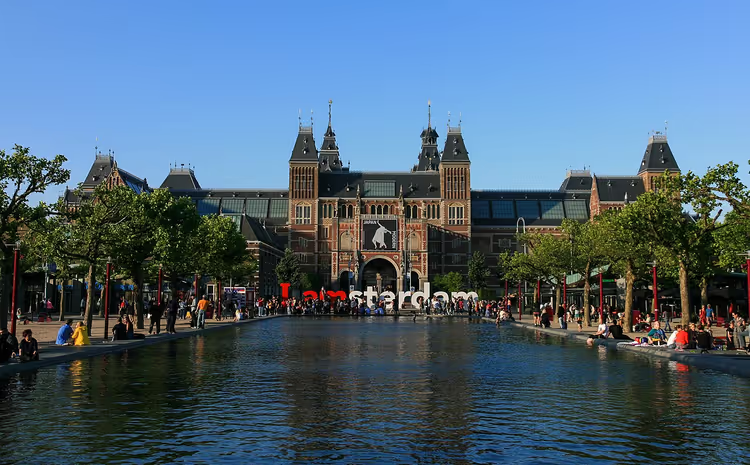
The Rijksmuseum is the country's main art museum. The massive brick building with steeply pointed roofs was designed by Pierre Cuypers in the late nineteenth century. The collections show the development of Dutch art from the fifteenth century to the present day. The museum occupies an entire block near Museumplein.
Rembrandt's "The Night Watch" hangs in the "Gallery of Honour" on the second floor. Nearby are paintings by Hals, Vermeer, and Steen, as well as sculptures, jewelry, and painted ceramics. The genres are highly varied: portraits, seascapes, still lifes, and scenes of everyday life. Allow at least three hours for your visit.
The ticket costs €25, children under eighteen enter free (as of 09/2026, official website). Entry is timed, so book in advance. Skip-the-line ticket to the Rijksmuseum.
7. Red light district (De Wallen)
 © Rungbachduong · CC BY-SAPhoto: Rungbachduong, CC BY-SA (https://creativecommons.org/licenses/by-sa/3.0), Wikimedia Commons
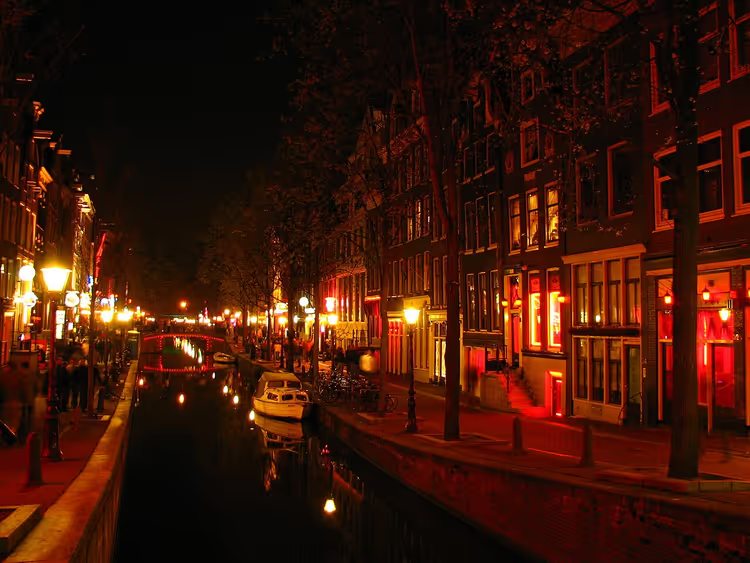
The red light district (De Wallen) is the most controversial Amsterdam neighborhood. Coffee shops, sex shops, and paid sex windows are everywhere you look. At night the area is loud and lit up, during the day it gets quieter. Everything around breathes carnal passion, but the old houses look calm.
There have been several attempts to shut the district down, and each time venue owners protested. The authorities bought out some of the brothels and handed them over to designers for fashion boutiques. This gave the windows a new, perfectly respectable face.
During the day the district is interesting for its old architecture and cozy cafes. You can sit with a cup of coffee and take a canal boat ride. Photographing the windows is not acceptable: respect local rules and do not take pictures of people without their consent.
8. H'ART Museum on the Amstel
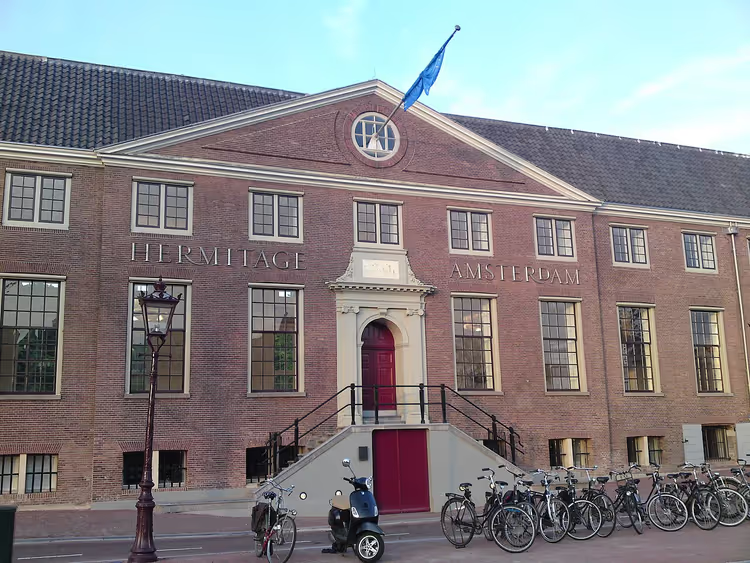 © Fentener van Vlissingen · CC BY-SAPhoto: Fentener van Vlissingen, CC BY-SA (https://creativecommons.org/licenses/by-sa/3.0), Wikimedia Commons
H'ART Museum is housed in the historic Amstelhof building at 51 Amstel. The building was constructed in the late seventeenth century and once served as a home for elderly women. Its facade became the longest in the city. In the early 2000s the building was renovated and converted into a museum.
Today it is home to H'ART Museum: it has no permanent collection of its own, but it hosts exhibitions from major world museums, such as the Pompidou Center in Paris. The museum is open daily from 10:00 to 17:00, and there is a cafe in the courtyard (as of 09/2026, museum website). The program changes, so check the current exhibition before your visit.
The renovation updated the interiors, the facade, and the surrounding grounds. Historical details were preserved, while modern halls for large exhibitions were added inside. There is enough space for major traveling exhibitions.
9. Artis Zoo
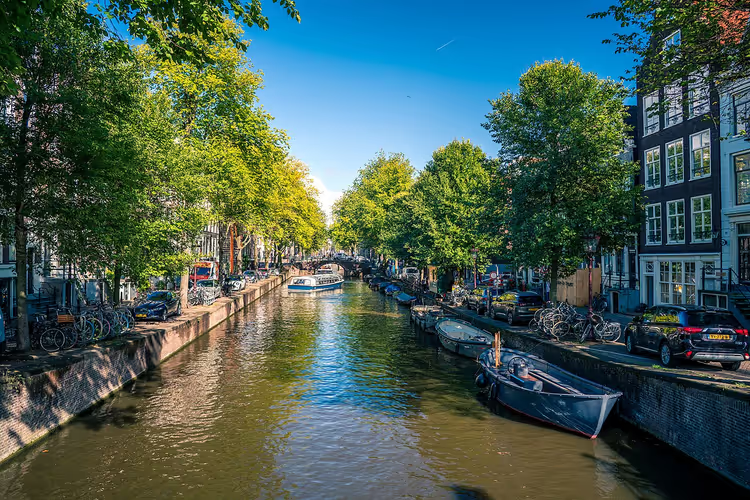 © Nan Palmero from San Antonio, TX, USA · CC BYPhoto: Nan Palmero from San Antonio, TX, USA, CC BY (https://creativecommons.org/licenses/by/2.0), Wikimedia Commons
Artis is the oldest zoo in Amsterdam, founded in the first half of the nineteenth century. Its founding fathers wanted to display rare animals, including the quagga, a zebra now extinct in the wild. Over time a planetarium and science museums were added, so it is more than just a spectacle.
The grounds are divided into themed zones: a camel lawn, a monkey rock, a predator gallery, an aquarium, and a children's farm. You will see Japanese macaques, an alpaca, and a miniature donkey. For families with children this is a full-day destination.
10. Royal Palace
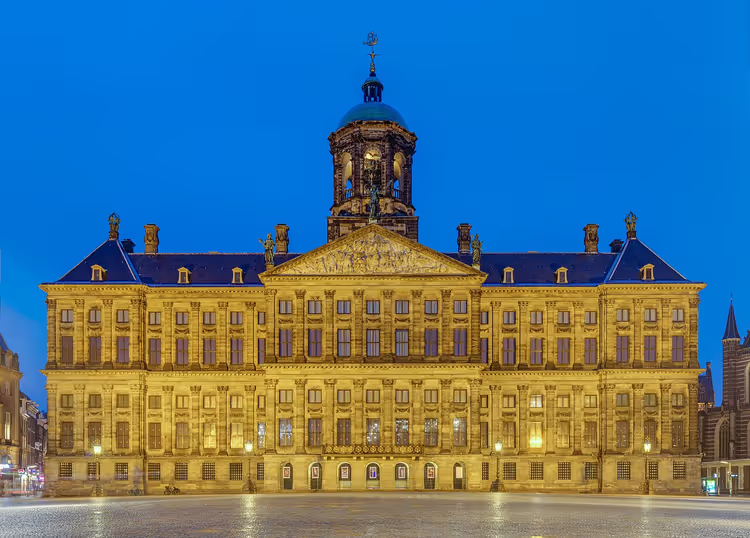 © Diego Delso · CC BY-SAPhoto: Diego Delso, CC BY-SA (https://creativecommons.org/licenses/by-sa/4.0), Wikimedia Commons
The Royal Palace stands on Dam Square. It was built in the seventeenth century as the city hall, a symbol of the republic's power. Today it is one of the palaces available to the royal family: receptions and ceremonies are held here. The palace is at the disposal of King Willem-Alexander.
Inside, luxury abounds. In the Central Hall, maps of the world with the Dutch colonies are laid out on the marble floor. The halls were once decorated with Rembrandt's largest painting, a fragment of which is kept in Stockholm. The palace was long considered the largest administrative building in Europe.
The palace is now open to visitors when the royal family is not using it. Check the schedule on site. For guests it is a chance to see the state rooms and the painting collection.
11. Diamond Museum
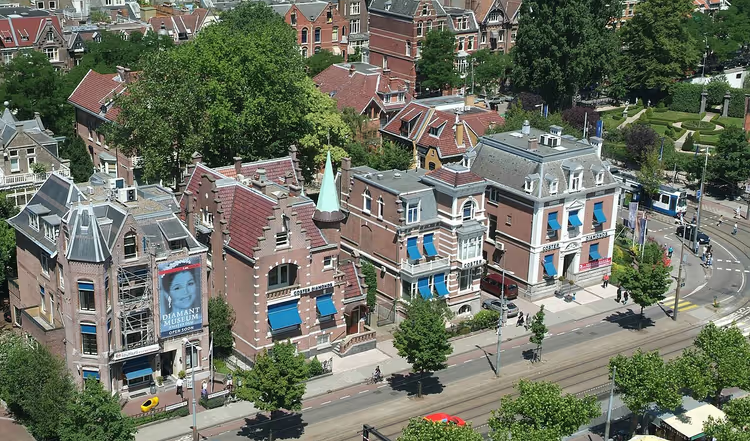
The Diamond Museum was created by the jewelry company Koster Diamonds. The museum and the workshop occupy the same building: first you view the collection, then you enter the workrooms. Here you can see how an unremarkable stone is transformed into a sparkling diamond. The company was one of the first to use steam power for stone cutting.
The exhibition features pieces from around the world. There is a tennis racket and a monkey skull encrusted with diamonds, as well as a replica of Van Gogh's "Starry Night". Works by Tiffany, Graff, and Mikimoto are on display. Diamant Diamond Museum ticket.
There is also a film about the history of diamonds and cutting, but it is only in English or Dutch. The visit takes about an hour, and most of the experience is visual.
12. NEMO Science Museum
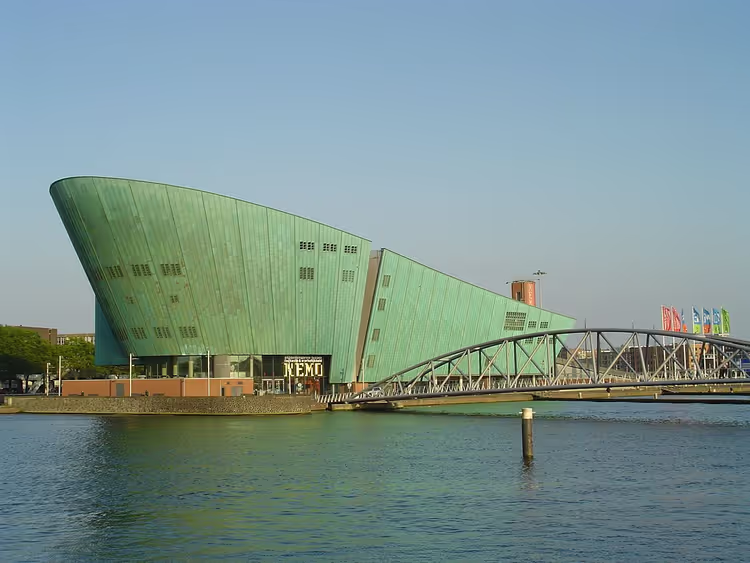
NEMO Science Museum stands on the waterfront in a building shaped like a ship. The project was designed by architect Renzo Piano in high-tech style. Queen Beatrix opened the museum in the late nineties, after several years of construction. It is a science and entertainment center for children and teenagers.
The halls reveal the secrets of technology, genetics, and economics. Each floor is dedicated to its own theme, and experiments are presented as shows and games. Children conduct experiments and operate mechanisms with their own hands. There is a free rooftop observation deck with a view of the city.
An adult ticket costs about €21.50, children's tickets are cheaper (as of 09/2026, official website). Go in the morning: by midday the interactive exhibits get noisy. NEMO museum tickets.
13. Amsterdam canals
 © Amsterdam Municipal Department for the Preservation and Restoration of Historic Buildings and Sites (bMA). The author is · CC BYPhoto: Amsterdam Municipal Department for the Preservation and Restoration of Historic Buildings and Sites (bMA). The author is, CC BY, Wikimedia Commons
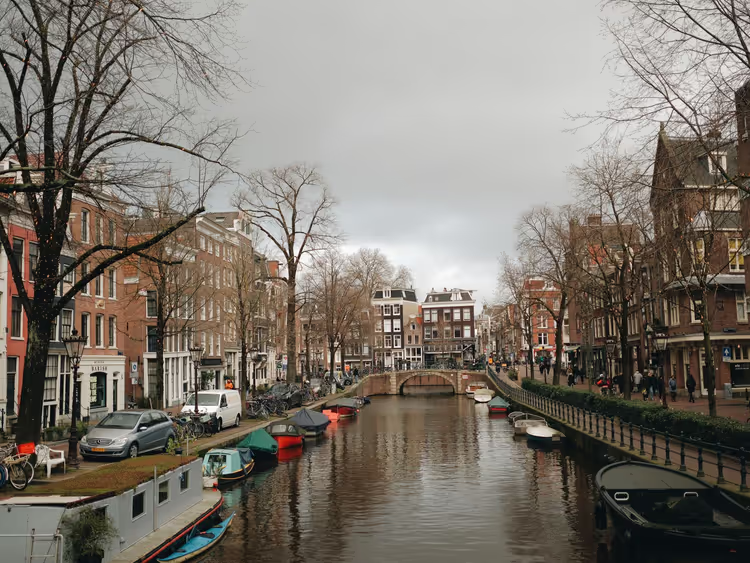
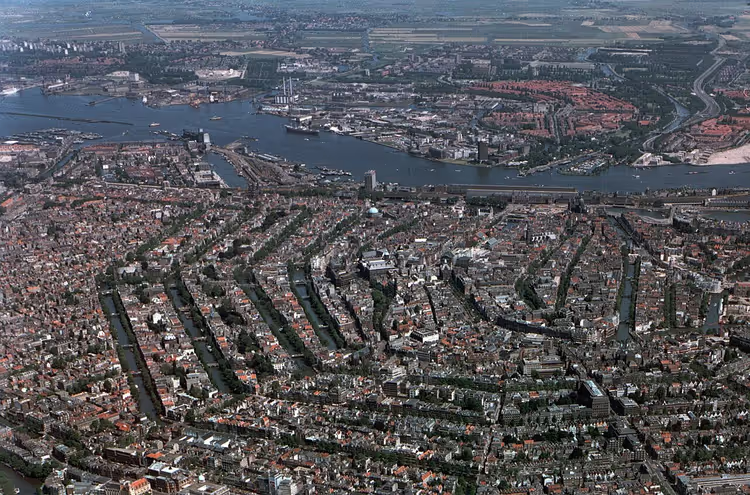
Amsterdam is called the Venice of the North for good reason. Four concentric semicircular rings of canals wrap around the old city. They are joined by fifteen hundred bridges and ninety islands. All the canals are man-made, dug for trade.
Singel was the first to be dug. It was built not for beauty, but for maritime connections and trade. Later the city was encircled by Herengracht, Keizersgracht and Prinsengracht, and mansions of the nobility rose along them. Many houses from that era still stand today and shape the city's look.
A canal cruise is a must on any itinerary. A classic one-hour cruise costs about fifteen euros, check the exact price with the operator. There are dinner options and evening cruises with illuminated bridges. Canal cruise on GetYourGuide.
To save money, get a combo ticket: it also includes a museum visit. Local agencies offer different packages, so finding one that fits is easy. The classic route runs along the main canals through the historic center.
Many buildings along the water date back to the Golden Age. Narrow facades, projecting windows and roof hooks create the city's recognizable look. The cruise is easy to combine with a walk through the Red Light District or Dam Square.
Evening cruises offer a different perspective: the lights on bridges and houses reflect in the water. In summer, grab a seat on the open deck; in winter, it's warm inside and you can see through the panoramic windows.
14. Muiderslot Castle
 © Agnes Monkelbaan · CC BY-SAPhoto: Agnes Monkelbaan, CC BY-SA (https://creativecommons.org/licenses/by-sa/4.0), Wikimedia Commons
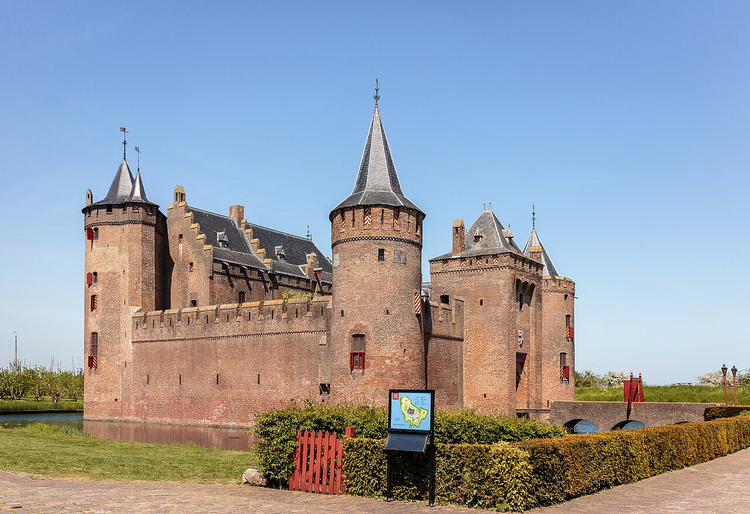
Muiderslot Castle stands in the town of Muiden, about fifteen kilometers from Amsterdam. The first mention of it dates back to the late thirteenth century. In the Middle Ages, trade tolls were collected here, then the castle changed hands and was expanded. In the late nineteenth century it was transferred to the state, and since then it has been a museum branch.
Today, collections of weapons and portraits recall its past. In summer, from April to October, the castle is open every day; in winter, only on weekends. An entrance ticket costs about fifteen euros, children under three enter free (as of 09/2026, official website). You can get there by bus from Central Station, the trip is short. Muiderslot Castle tour.
In the late thirteenth century the fortress fell into disrepair: its owner was killed, and the castle stood empty for a time. Restoration work began only in the 1370s.
Today the fortress stands among gardens and water. Climbing the towers opens up a view of the surrounding area.
In summer, come in the morning so you can cover both the halls and the gardens without rushing.
15. Dam Square
 © Sietske · CC BY-SAPhoto: Sietske, CC BY-SA (https://creativecommons.org/licenses/by-sa/3.0), Wikimedia Commons
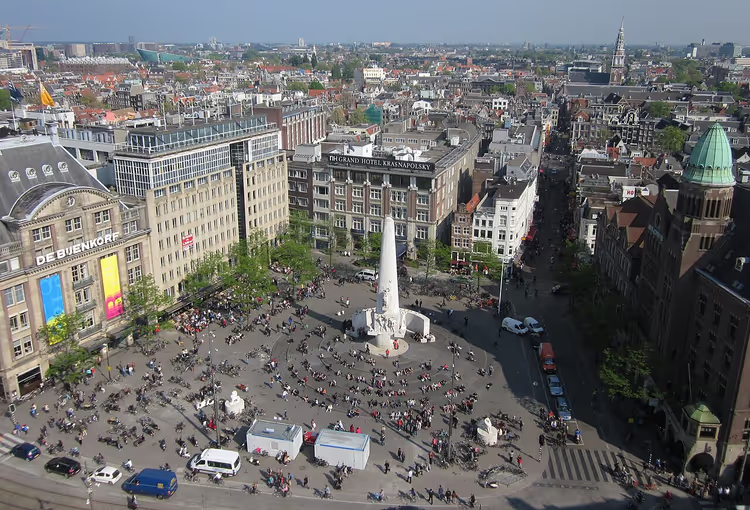
Dam Square is the historic center of the city and the entire country. There was once a dam here: it was built in the late thirteenth century and connected the two banks of the Amstel River. Over time, the dam grew and became a mooring place for merchant ships.
A fish market bustled nearby, and its fame spread across Europe. As time passed, the square's appearance changed along with the history of Holland. One thing remained: its status as the main square and its harmonious look. It's easy to get here, the stop is called Dam.
Dam Square remains the center of city life. People meet here, festivals and events are held here, and tourists take their first photos. During the day it's crowded and noisy, in the evening it gets calmer. It's a convenient starting point for a route through the center: canals and shopping streets are nearby.
Walk around the perimeter: different sides offer different views of the Royal Palace and the old facades. There are plenty of cafes nearby where you can rest or wait out the rain. The square is a stone's throw from the Munttoren and the Flower Market, so these spots are easy to combine into one walk. In the evening, the square looks different: the lighting is softer and the crowd is thinner. If you want calm shots, come closer to sunset.
16. Madame Tussauds
 © Vera de Kok · CC BY-SAPhoto: Vera de Kok, CC BY-SA (https://creativecommons.org/licenses/by-sa/4.0), Wikimedia Commons
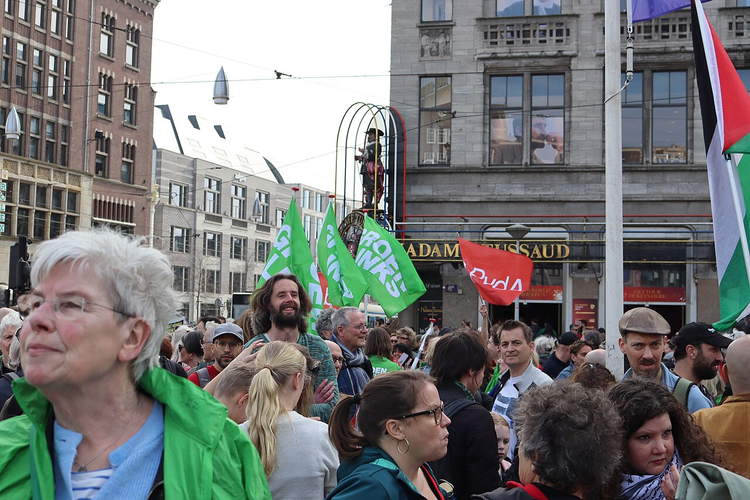
Madame Tussauds is a branch of the London wax museum. Here you'll come face to face with Van Gogh, Rembrandt, Picasso, and Dali. Modern stars stand nearby: Madonna, Michael Jackson, Marilyn Monroe. The museum operates on Dam Square next to a transit stop.
The exhibition is open every day, a ticket costs about twenty euros, online it's cheaper. Combo ticket to Madame Tussauds and the Amsterdam Dungeon.
17. Stedelijk Museum
 © John Lewis Marshall · CC BY-SAPhoto: John Lewis Marshall, CC BY-SA (https://creativecommons.org/licenses/by-sa/4.0), Wikimedia Commons
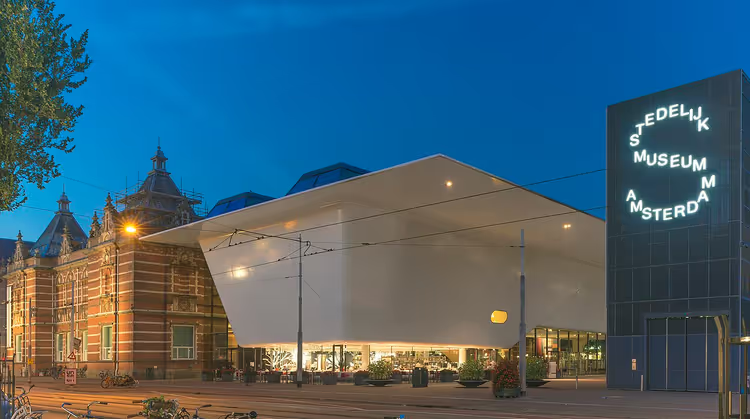
The Stedelijk Museum is the city's modern art museum. The collection includes paintings by Picasso, Monet, Chagall, and Malevich. Quite a few legal battles are tied to Malevich's works: some paintings were returned to his heirs and ended up in private collections. There's also a lot of contemporary art here: pop art, video art, arte povera.
Until the early seventies, the museum housed a large Van Gogh collection, which later moved to a separate building. The museum stands in the Museum Quarter on Museumplein. Trams and buses run here from the center. The exhibition is open daily, with extended hours on Fridays. Adult admission is around twenty euros, visitors under eighteen enter free.
18. Anne Frank House
 © Jose A. · CC BYPhoto: Jose A., CC BY (https://creativecommons.org/licenses/by/2.0), Wikimedia Commons
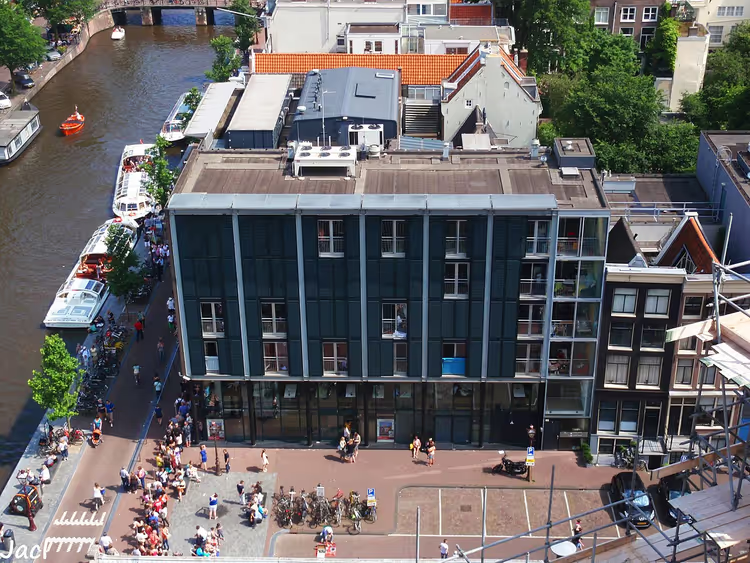
The Anne Frank House tells one of the saddest chapters in the history of the Netherlands. Anne was an ordinary girl from a Jewish family who had the misfortune of being born during the war. For two years, she and her loved ones hid in a secret annex in this very house. The girl did not live to see the end of the war.
The museum's main exhibit is Anne's diary. The rooms display photographs, furniture, and personal belongings, and her father's office has been reconstructed. The museum stands in the historic center, a twenty-minute walk from Central Station, with a tram stop nearby.
Hours vary by season, so check the website for times. A ticket costs €16.50 for adults, and it's cheaper for children aged ten to seventeen (as of 09/2026, official website). Tickets sell out quickly, so book in advance. Tickets to the Anne Frank House.
Tickets are sold only online and with a time slot; you can't buy them at the entrance. Come in the morning: lines are longer by evening.
The museum's name refers to the diary. The book became the key testimony to life in hiding and spread around the world. The museum doesn't just preserve memory; it explains how the tragedy touched one family.
19. Oude Kerk
 © C messier · CC BY-SAPhoto: C messier, CC BY-SA (https://creativecommons.org/licenses/by-sa/4.0), Wikimedia Commons
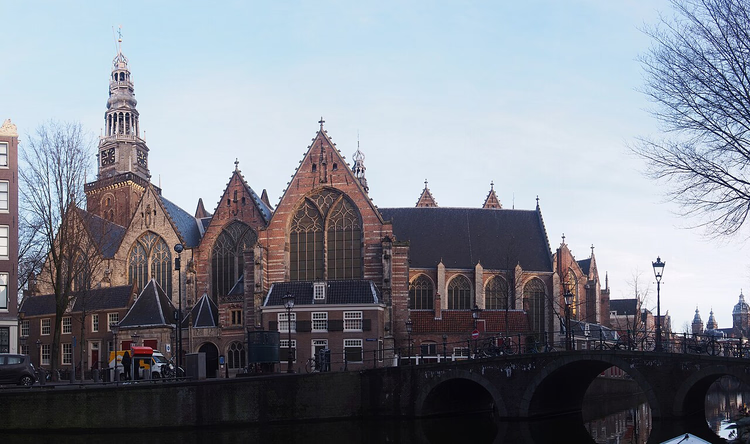
The Oude Kerk is the oldest building in Amsterdam. The church was founded in the early fourteenth century and was later restored and expanded several times. Even so, the building has kept its Gothic appearance. The interior also deserves attention.
Historians debate it, but according to one version, this is where Rembrandt baptized his children, and his wife is buried in the church. The church stands in the middle of the Red Light District on Oudekerksplein. You can walk here from Central Station in ten minutes. It's open on weekdays and on Sunday afternoons, and a ticket costs about ten euros. Climbing the bell tower costs extra and is only available in summer.
20. The Waag
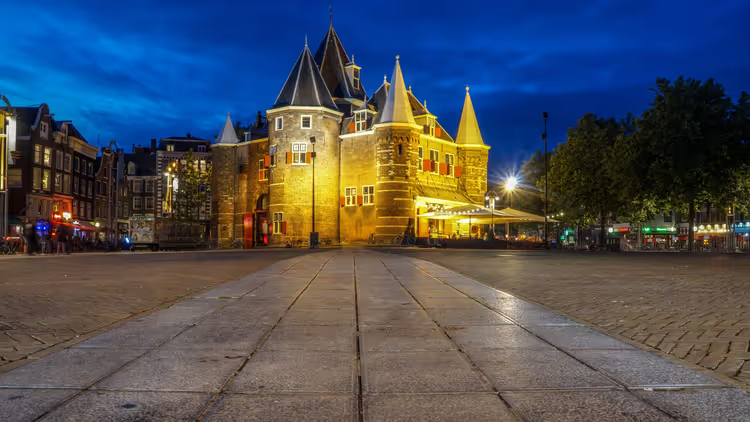
The Waag is one of the city's oldest civic buildings. It was built in the fifteenth century as a city gate. Later, the building served as a weigh house, a fire station, and an anatomical theater.
Today, public organizations operate inside, so you can only view the building from the outside. It stands in the center, on Nieuwmarkt square. You can get there by tram or on foot from Central Station.
21. Beurs van Berlage
 © Sergé Technau · CC BY-SAPhoto: Sergé Technau, CC BY-SA (https://creativecommons.org/licenses/by-sa/4.0), Wikimedia Commons
The Beurs van Berlage is one of the most interesting buildings in the center. It was built in the late nineteenth century to a design by Hendrik Berlage. The building became a model of the Amsterdam School of architecture. For many years, the country's main stock exchange operated here.
Today, the building houses a small museum about the work of the "white-collar workers" of the past and a large concert and exhibition hall. In the early 2000s, King Willem-Alexander got married here. The exchange stands on Damrak, a five-minute walk from Central Station. The museum and cafe are open daily.
22. Johan Cruijff ArenA
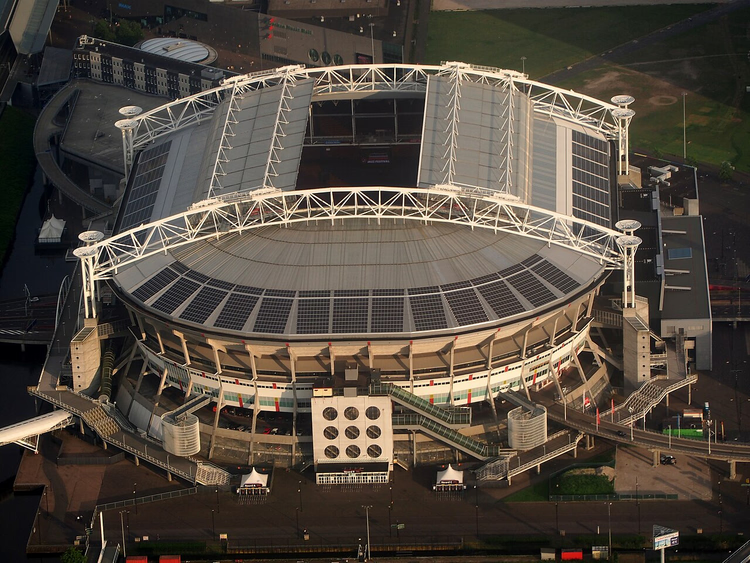
The Dutch love football and know the game well. The stadium was built in the mid-nineties and almost immediately became a city landmark. The home arena of Ajax is named after Johan Cruyff. Besides matches, it hosts concerts by world-famous stars.
The stadium bowl seats more than fifty thousand spectators. The stands and exits are designed so well that there is no crowding at the entrances even when the venue is sold out. The arena is easy to reach by metro, and the parking lot can accommodate twelve thousand cars. On days without matches or concerts, guided tours are available. A ticket costs about fifteen euros for adults and less for children. Tours are offered in English and Dutch.
23. Vondelpark
 © Dguendel · CC BYPhoto: Dguendel, CC BY (https://creativecommons.org/licenses/by/4.0), Wikimedia Commons
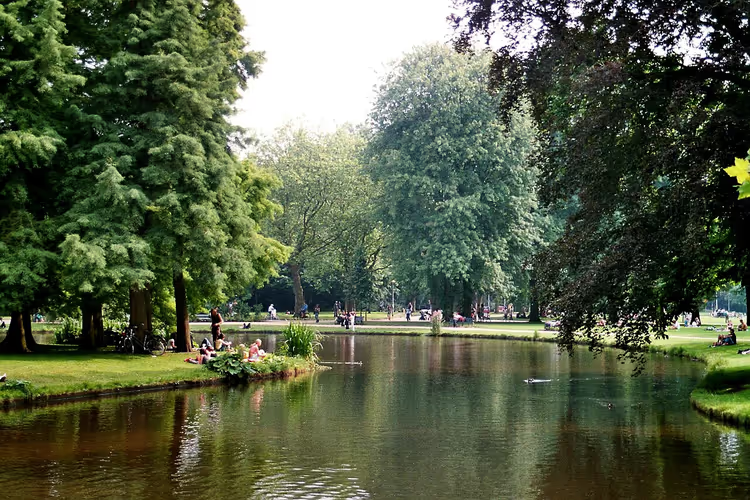
Vondelpark is a "wild" pocket of nature in the center of Amsterdam. You can lie on the lawns, walk dogs, and run along the paths. The park is open around the clock, and admission is free. It is a space of freedom for tourists tired of museums and for locals alike.
The park has its own film museum and an open-air summer stage. In the warm season, plays and concerts are performed outdoors, and admission to them is free. As you stroll, you will come across sculptures, pavilions, and a rose garden. For active visitors, there are tennis courts and sports equipment rentals.
Trams run here from the center. Come in the evening: the sunset over the pond looks especially beautiful.
24. A'DAM Lookout
 © Muck · CC BY-SAPhoto: Muck, CC BY-SA (https://creativecommons.org/licenses/by-sa/4.0), Wikimedia Commons
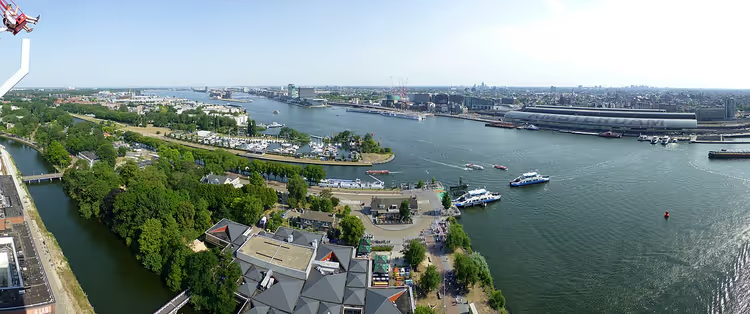
A'DAM Lookout is the best observation deck in the city. From the twentieth floor of the A'DAM Toren tower, you get a 360-degree panorama: the port, the historic center, and the canals. One floor below, the panoramic restaurant Moon is located. At the top, thrill-seekers can ride the Over the Edge swing right over the edge.
The deck is open daily, and the last guests are admitted one hour before closing. An adult ticket costs about thirteen euros, and it is cheaper for children. Tours and tickets to Amsterdam observation decks.
25. Amsterdam Dungeon
 © Ank Kumar · CC BY-SAPhoto: Ank Kumar, CC BY-SA (https://creativecommons.org/licenses/by-sa/4.0), Wikimedia Commons
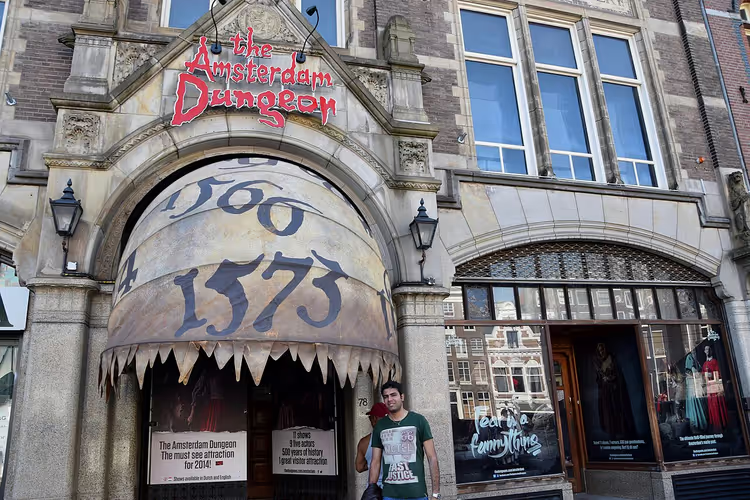
Amsterdam Dungeon is the city's most terrifying show. Visitors descend into a dungeon and walk through scenes of torture and medieval horror. The episodes include "The Bloody Tribunal," "The Labyrinth of Death," and "The Reaper: Journey to Hell." Emotions are guaranteed, and there are almost no calm scenes.
The attraction is open every day without days off. The first show starts in the morning, and the last one in the evening. Tickets cost from seventeen and a half to twenty-four euros, cheaper online. It will be too scary for young children, so bring older teenagers.
26. Bloemenmarkt
 © Massimo Catarinella · CC BY-SAPhoto: Massimo Catarinella, CC BY-SA (https://creativecommons.org/licenses/by-sa/3.0), Wikimedia Commons
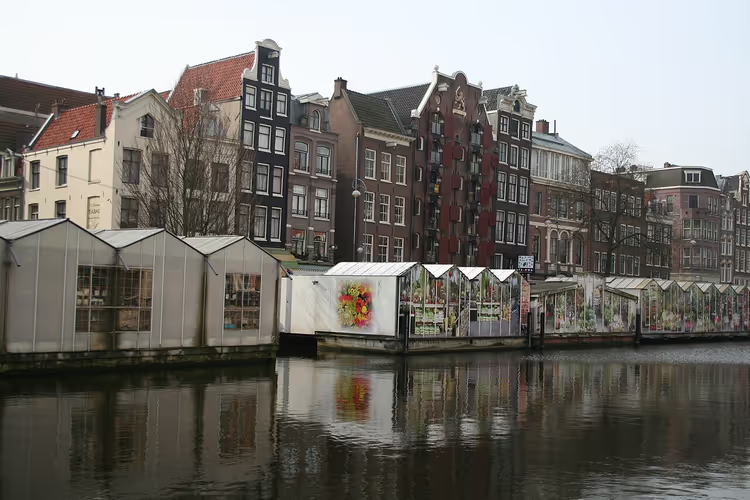
Bloemenmarkt is Amsterdam's main flower market. The first vendors began selling flowers from boats back in the seventeenth century. They floated along the canals beside pedestrian streets and made their living that way. Over time, the market moved to the Singel canal, closer to Dam Square.
Today it consists of floating shops on barges along the embankment. The displays feature flowers from Holland and exotic countries. Tulips are especially impressive: bulbs are sold here by the dozen at low prices. Come in the morning, by midday the aisles get crowded.
27. Begijnhof
 © G.Lanting · CC BY-SAPhoto: G.Lanting, CC BY-SA (https://creativecommons.org/licenses/by-sa/3.0), Wikimedia Commons
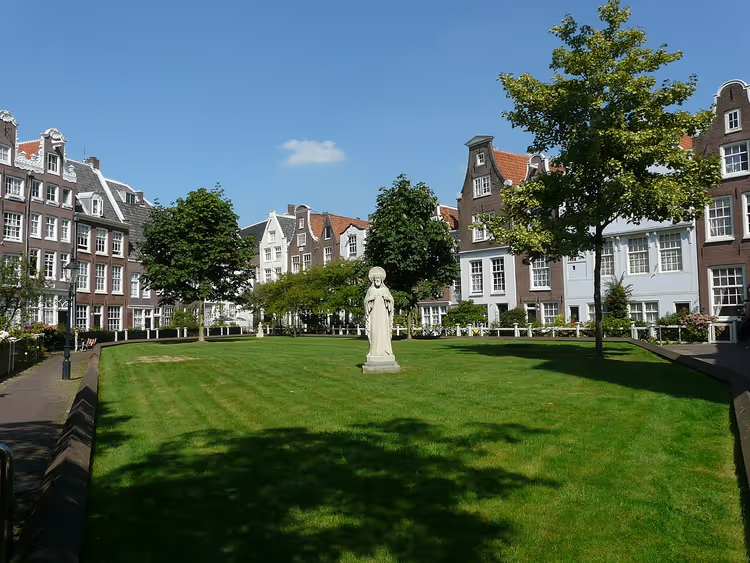
Begijnhof is a quiet courtyard hidden in the very center of the city. In the Middle Ages, Catholic women lived here who led an almost monastic life but did not take vows. The courtyard is surrounded by houses where the Beguines lived and prayed. Today there are no Beguines left, but single women still live on the grounds.
Most tourists find out about this place by accident. That is a shame: the medieval atmosphere here feels stronger than in the busy squares. The entrance is from Spui square through a narrow arch with stucco work. One wooden house has survived in its original form. The courtyard is free to visit during the daytime.
28. Albert Cuypmarkt
 © Patrick Nouhailler's… · CC BY-SAPhoto: Patrick Nouhailler's…, CC BY-SA (https://creativecommons.org/licenses/by-sa/3.0), Wikimedia Commons
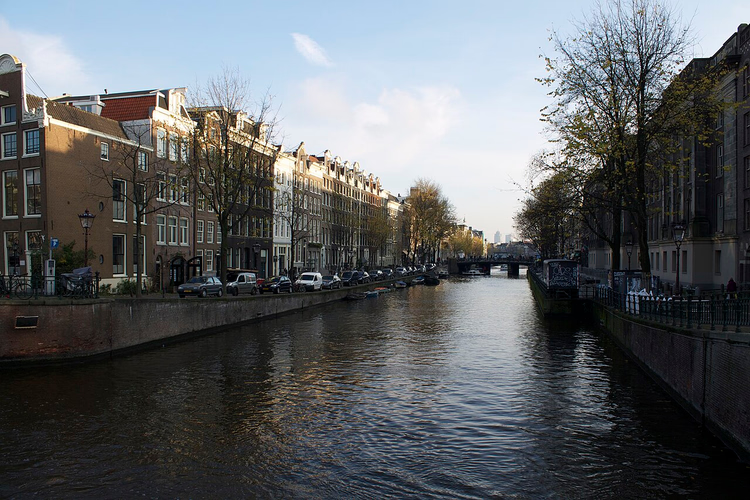
Albert Cuypmarkt is a market with more than a hundred years of history. It is not one of the heavily promoted spots because it sits away from the center. But it recreates the atmosphere of an old city market. The stalls offer goods from around the world: spices from Morocco, Turkish sweets, African fabrics, and European souvenirs.
The market is long: walking its full length at a leisurely pace is a walk in itself. It is easy to lose track of time among the stalls, with spices, sweets, jewelry, and electronics all around. The old market atmosphere has survived, even though it officially appeared in the early twentieth century.
Along the street there are snack bars and coffee shops, a cheese shop-museum, and a small fountain. Many people come here not to shop, but to grab a bite and feel the city.
The market runs along Albert Cuypstraat. It is closed only on Sundays; on other days it is open from morning to evening. Bring cash and take your time: haggling and sampling treats are part of the experience here.
29. De Krijtberg
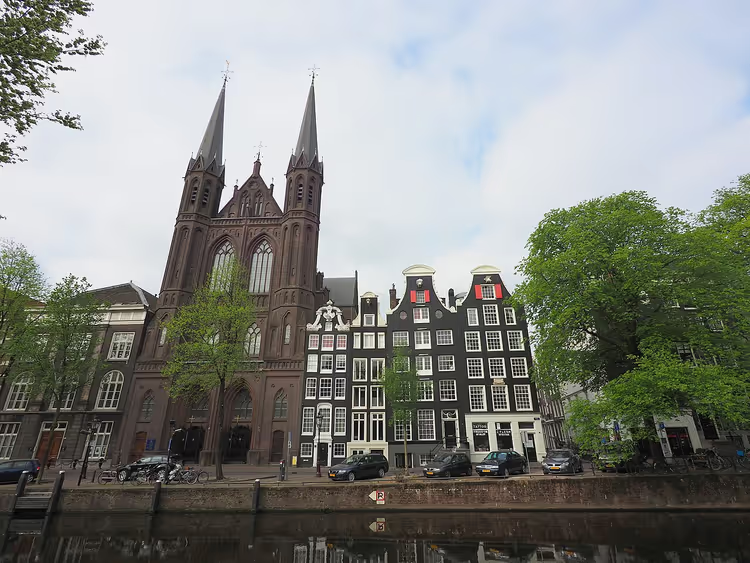
De Krijtberg is a Gothic church built on the site of a Jesuit chapel. It was erected in the late nineteenth century to a design by Alfred Tepe. The facade is ornate, the windows are decorated with stained glass, and the sculptures create the image of true Gothic architecture. The name translates as "chalk mountain": a chalk merchant's house once stood here.
Masses are still held in the church today. It is open to both worshippers and tourists. You will see the interiors, stained glass, murals, and a beautiful altar. Look for the church near the turn to the Flower Market.
30. Munttoren
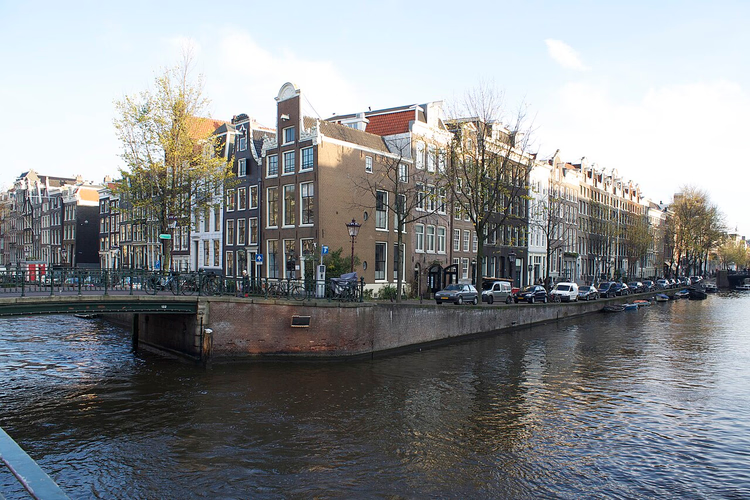 © Patrick Nouhailler's… · CC BY-SAPhoto: Patrick Nouhailler's…, CC BY-SA (https://creativecommons.org/licenses/by-sa/3.0), Wikimedia Commons
The Mint Tower grew out of the old city wall that protected Amsterdam. It stands at the confluence of the Amstel River and the Singel canal, next to the Flower Market. The tower and guardhouses were built in the late fifteenth century. A fire in the early seventeenth century destroyed the fortification, and the tower was soon rebuilt in the Renaissance style.
Today it is one of Amsterdam's symbols. The tower has thirty-eight bells that ring every fifteen minutes. On Saturday afternoons, local carillonneurs give real bell concerts. Walking along Kalverstraat, you will hear the chimes long before you see the tower.
Amsterdam attractions on the map
All thirty points are easy to view on a map. Open it on your phone and build a route for the day. That way you will not be running back and forth across the city and will save your energy.
Sights of Amsterdam
Places on the map
- 1Keukenhof Thirty-eight hectares of tulips in Lisse, park open only in spring, ticket from €20.50
- 2Leidseplein Hub of nightlife: Stadsschouwburg theatre, American Hotel and theatre box offices
- 3Van Gogh Museum Largest collection of the artist's works, ticket €25, entry strictly by timeslot
- 4Rembrandt House Museum House where the master lived for seventeen years, interior recreated from an inventory of sold belongings
- 5National Maritime Museum 17th-century naval warehouse, a replica of a Dutch East India Company ship moored nearby
- 6Rijksmuseum Country's main art museum, home to Rembrandt's Night Watch, ticket €25
- 7Red Light District Loud and lit up at night, interesting for its old architecture by day, no photos of the windows
- 8H ART Museum Former Hermitage Amsterdam in the Amstelhof building, touring exhibitions, 10 am to 5 pm
- 9Artis Zoo City's oldest zoo, themed zones, planetarium and children's farm
- 10Royal Palace Former 17th-century city hall on Dam Square, world maps on the marble floor
- 11Diamond Museum Museum and workshop of Koster Diamonds, showing the path from rough stone to finished jewelry
- 12NEMO Science Museum Ship-shaped building by Renzo Piano, hands-on experiments for children, free rooftop viewpoint
- 13Amsterdam Canals Four half-rings of canals, one and a half thousand bridges, an hour-long cruise around €15
- 14Muiderslot Castle 13th-century fortress fifteen kilometers from the city, ticket around €15
- 15Dam Square Historic city center on the site of a 13th-century dam, Royal Palace nearby
- 16Madame Tussauds Wax figures on Dam Square, ticket around €20, cheaper online
- 17Stedelijk Museum City museum of modern art on Museumplein, Picasso, Chagall and Malevich
- 18Anne Frank House Hideout where the family hid for two years, ticket €16.50, online only with a timeslot
- 19Oude Kerk City's oldest building, founded in the early 14th century, ticket around €10
- 20Waag (Weigh House) One of the oldest civic buildings on Nieuwmarkt square, exterior viewing only
- 21Beurs van Berlage Hendrik Berlage's project on Damrak, now a museum and concert-exhibition hall
- 22Johan Cruijff Arena Ajax's home arena for 50,000 spectators, guided tours around €15
- 23Vondelpark Park in the center, open around the clock and free, summer stage and rose garden
- 24A DAM Lookout 360-degree panorama from the 20th floor of A DAM Toren tower, a swing over the edge
- 25Amsterdam Dungeon Dungeon show with torture scenes, ticket €17.50-24, may frighten children
- 26Bloemenmarkt Floating flower market on the Singel canal, tulip bulbs at low prices
- 27Begijnhof Quiet medieval beguinage courtyard, free entry through the archway from Spui
- 28Albert Cuypmarkt Market with over a hundred years of history along Albert Cuypstraat, closed only on Sunday
- 29Munttoren Tower of the old city wall near the flower market, 38 bells ring every 15 minutes
Tours and tickets in Amsterdam
Guided tours, skip-the-line tickets and activities — most offers can be cancelled free of charge.
See offers on GetYourGuideThe widget loads once you give your consent.
Practical tips: accommodation, transport, and timing
The choice of neighborhood matters more than hotel stars. For museums, the Museum Quarter is convenient: the Rijksmuseum, Van Gogh Museum, and Stedelijk are right next to each other. The center around Dam Square suits those who want to see everything on foot. Quiet Jordaan appeals to lovers of narrow streets, canals, and cafes. The De Pijp district is cheaper and closer to Albert Cuypmarkt.
If you are going for a weekend, stay closer to the center: you will save time on travel. Hotels near the canal ring are usually more expensive, but the views from the windows are worth it. Away from the center prices are lower, but getting to the museums takes longer. In summer, available rooms are scarce and worth booking a couple of months ahead. Amsterdam hotels on Trip.com.
The center is compact, and most points are realistically walkable. For farther places there are trams, the metro, and buses. Tickets are bought at machines or in the app, and you need to tap them on the validator when entering and exiting.
From our travel experience: a day or multi-day pass is the most convenient option. If you plan to visit many museums, do the math on a city card: it includes transport and entry to some museums. Sometimes the card pays off, sometimes it does not, it all depends on your plans.
A bicycle is a whole different story. Rent one only if you are confident riding in traffic, and never walk on the bike path. Locals ride fast and hardly ever ring their bells. Bike rental is available on almost every corner, but traffic rules here are strict.
The best time to visit depends on your goal. In spring the city is awash in tulips and full of tourists, in summer it is warm and noisy, in autumn it is calmer, and in winter it is cheaper. If you want it quieter, choose weekdays and mornings. Plan your route by neighborhood so you do not have to crisscross the whole city. The Museum Quarter, the center, and the canals are easy to cover on foot in a day, while farther points like Muiderslot Castle or the stadium should be saved for separate days.
The simplest way to save money is online tickets. Almost all museums sell time slots online cheaper than at the door and without the queue. Buying online also protects you from finding no available slots left in high season. It is cheaper to eat away from the main squares: near markets and in residential neighborhoods prices are noticeably lower. Street food from stalls is also a decent option for a snack between museums.
Wear comfortable shoes: you will walk more than you expect over cobblestones and bridges. Keep in mind that some streets are one-way and winding, and the navigator sometimes takes you on a roundabout route. The center is safe, but watch your phone and wallet in crowds.
⁉️🤔 Frequently asked questions
How many days do you need to see the main sights?
Two or three days are enough to get to know the city. Spend the first day on the center and canals, the second on the museums in the Museum Quarter. Use the third day for farther places like Keukenhof Park or Muiderslot Castle. If you are short on time, choose the Rijksmuseum and a canal cruise, they are enough for a first impression.
When is the best time to go to Keukenhof?
The park is open only in spring; in 2026 the season runs from March 19 to May 10 (as of 09/2026, official website). At peak bloom, weekend tickets sell out several days in advance. Come in the morning on a weekday: fewer people and softer light for photos. Tulips do not bloom all at once, so check bloom reports before your trip.
Do you need to buy tickets in advance?
Yes, almost all museums have timed entry. The Rijksmuseum, Van Gogh Museum, and Anne Frank House sell slots online, and in high season they sell out weeks ahead. Book a few days in advance, or better yet, earlier. Without a slot you risk standing in line for an hour or more.
What can you see in Amsterdam for free?
Some places do not require a ticket. Vondelpark is open around the clock, the Begijnhof courtyard is open during the day, and you can walk the canals and streets without restrictions. Bloemenmarkt and Albert Cuypmarkt are also open to everyone. This route works if you want to save money and simply feel the city.
How do you get around the city?
The center is easy to cover on foot, as distances between the main points are small. For longer trips there are trams, the metro, and buses; tickets are sold at machines and in the app. A bicycle is a separate mode of transport: rent one only if you are confident riding in traffic. Do not walk on bike paths, locals ride fast.
In short: what is worth booking
The takeaway is simple: the city is compact, but tickets and timing matter a lot. If you have two days, go for the Rijksmuseum and a canal cruise. If you are traveling in spring, add Keukenhof and book your time slot in advance. With a family, it is worth checking out NEMO and Artis Zoo, while history lovers will enjoy the Anne Frank House and Muiderslot Castle.
Book ahead: skip-the-line Rijksmuseum ticket and canal cruise.

A small editorial team writing guides for independent travel. We travel ourselves, but we haven’t been everywhere, so we check prices, opening hours and how to get there against official sources.