
















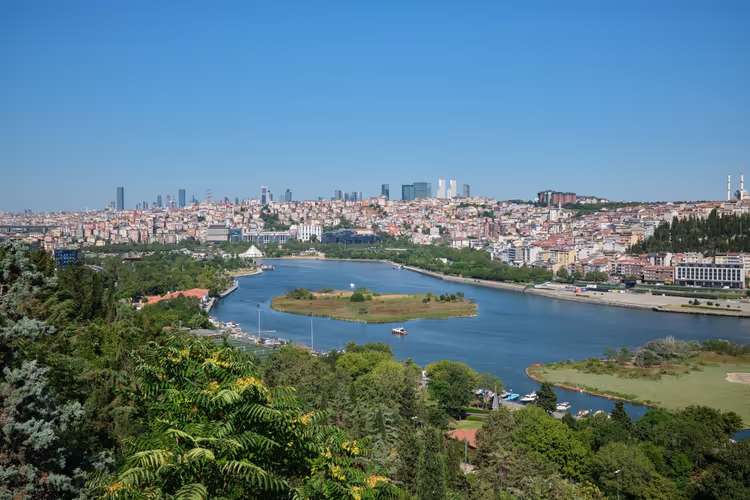
Istanbul attractions: 30 places worth seeing
Istanbul has more than two thousand years of history and two continents under its feet.
You are unlikely to cover all thirty places from this guide in one trip. We have organized the 30 main attractions of Istanbul by neighborhood and added a photo, directions, and opening hours to each one. A ticket to the Galata Tower costs €30, while you can enter the Blue Mosque for free (as of 09/2026, official website of Turkey's museums).
Ad: this article contains affiliate links, we earn a commission if you book through them, at no extra cost to you.
1. Haydarpaşa Railway Station
💡 In short:
- Getting around the city: tram T1 runs through Sultanahmet, Gülhane, and Eminönü, metro M4 takes you to the Asian side.
- Museum tickets: book a time slot online, in summer the ticket offices have long lines.
- Prices and opening hours: 09/2026, verified on the official museum website.
 © Starliner · CC BY-SAPhoto: Starliner, CC BY-SA (http://creativecommons.org/licenses/by-sa/3.0/), Wikimedia Commons
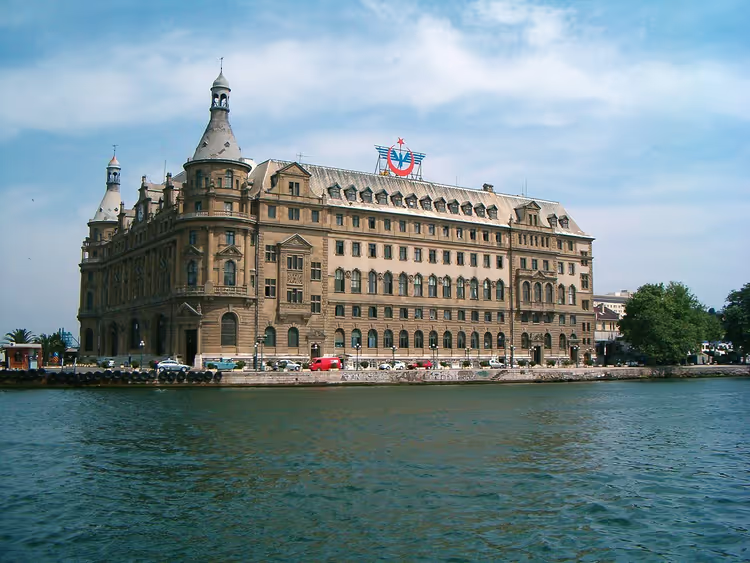
Haydarpaşa Railway Station stands on the Asian shore, in the Kadıköy district. The building was erected in 1906-1908 as the terminus of the Istanbul-Baghdad railway. The work was carried out by a German company in the neo-Renaissance style, and the station itself was a gift from Kaiser Wilhelm II to Sultan Abdul Hamid II (according to Turkish State Railways, 09/2026).
The building burned several times, and each time it was restored. In 1917, a fire broke out in an ammunition depot. In 1979, a cargo ship and a tanker collided 800 meters from the station, and the explosion damaged the harbor. The last major fire occurred on November 28, 2010, when the roof collapsed.
Nearby there is a railway workers' mosque with two minarets. Ferries across the Bosphorus depart from the local pier, and car ferries unload here as well. From the water you can see the station's elegant silhouette, which is why it is often included in boat tours. How to get there: metro M4, Ayrılıkçeşme stop, or a ferry from Bostancı, Yenikapı, and Kadıköy piers.
2. Galata Tower
 © Melih1969 · CC BY-SAPhoto: Melih1969, CC BY-SA (https://creativecommons.org/licenses/by-sa/4.0), Wikimedia Commons
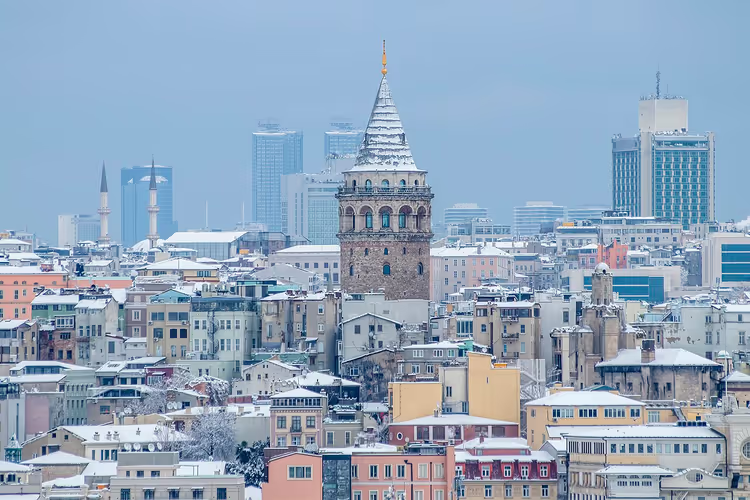
The Galata Tower is visible from almost anywhere in the European part of the city. The Genoese built it on the hill of the same name in the 14th century, and at the time it was the tallest structure in the Byzantine capital. In the early 16th century, the tower served as a prison for captured Christians, and later an astronomical observatory was opened on the upper platform (according to the official museum website, 09/2026).
In 1632, the scholar Hezarfen Ahmed Çelebi crafted wings and jumped from the tower. He flew across the Bosphorus and landed in the Asian part of the city. The sultan first rewarded the daredevil, then sent him to Algeria. The flight was discussed throughout Europe, and artists depicted it for years.
The tower was repaired in 1791, 1832, and 1875. After the 1964-1967 restoration, it received its modern dome, and an elevator was installed inside. The platform offers a panorama of the Golden Horn and the Bosphorus, which is why people go up there.
A ticket costs €30 for foreign tourists, children under 8 enter free (as of 09/2026, museum rates). The observation deck is open from 8:30 to 23:00. Come at opening time or after 20:00: during the day you will stand in line for the elevator. How to get there: metro M2, Şişhane station.
Buy your ticket online so you don't waste time at the ticket office, and once at the top, stay on the far side: from there you can see both the old city and the Bosphorus.
3. Blue Mosque
 © Moonik · CC BY-SAPhoto: Moonik, CC BY-SA (https://creativecommons.org/licenses/by-sa/3.0), Wikimedia Commons
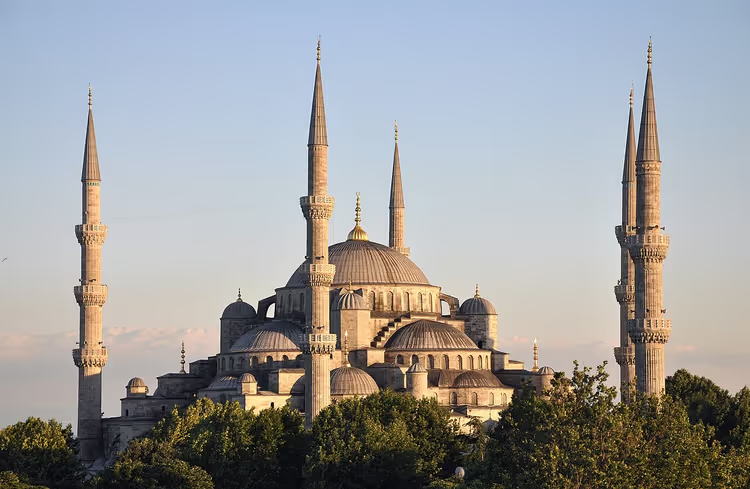
The Blue Mosque rose on Sultanahmet Square in 1609-1616 by order of Sultan Ahmed I. He took the construction money from his personal treasury. To make room for the mosque, the palaces of several dignitaries and the great palace of the Byzantine emperors were demolished (according to the monument description, 09/2026).
The domes inside are lined with sky-blue tiles, hence the name. The temple's main feature is its six minarets. Four stand at the cardinal points, and two are set in the outer courtyard. Only the Masjid al-Haram in Mecca has more minarets. The inner hall is covered by a huge dome, and the walls are decorated with floral ornaments and stained glass.
The inner hall stretches 53 meters long and 51 meters wide, and the dome above it reaches 23.5 meters in diameter (according to the monument description, 09/2026). In the western part there is a separate entrance for the sultan with a low chain: the ruler rode in on horseback and bowed so as not to hit it with his head, and this bow served as a reminder of humility before God. Besides the mosque, the complex includes primary and religious schools, a nursing home, the tomb of Ahmed I, baths, shops, and fountains. In 1826, the headquarters of the grand vizier who suppressed the Janissary revolt was located here.
In the niche facing Mecca, a black stone from the city holy to Muslims is kept.
Over four centuries, the mosque repeatedly suffered from fires and unrest, and rulers paid for repairs each time. Admission is free, but tourists are allowed in outside prayer hours. On Fridays access is closed until noon, so plan your visit for a weekday morning. You can get there by tram T1, get off at the Sultanahmet stop.
4. Topkapi Palace
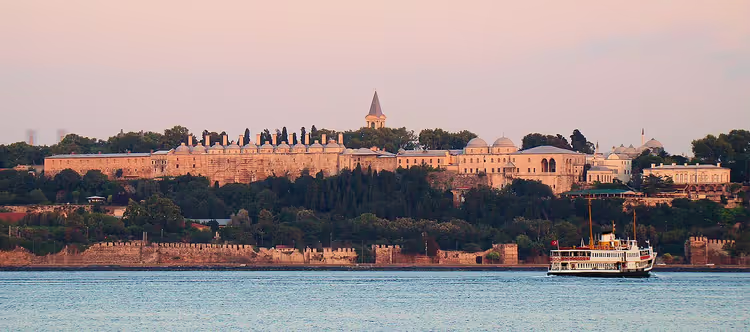 © Bjørn Christian Tørrissen · CC BY-SAPhoto: Bjørn Christian Tørrissen, CC BY-SA (https://creativecommons.org/licenses/by-sa/3.0), Wikimedia Commons
Topkapi served as the center of the Ottoman Empire for almost 380 years. Twenty-five sultans lived here. In 1854, Abdulmejid I moved to Dolmabahce, and in 1923 Ataturk moved the residence to Yildiz Palace. At that time, a museum was opened in the old chambers (according to the official museum website, 09/2026).
Construction began in 1465 by order of Mehmed II, the conqueror of Istanbul. Each new ruler expanded and decorated the complex. Today the collection holds more than 600,000 exhibits, and the palace itself blends styles from the 15th to 19th centuries.
Topkapi is divided into four courtyards and four gates. The first housed service buildings, the second was where the divan met and the treasury was kept. The third was given over to the harem and the school for officials, and the fourth contained a mosque and auxiliary pavilions.
The palace is closed on Tuesdays. A combined ticket for the palace, harem, and Hagia Irene costs 2,750 TL, about 55 EUR (as of 09/2026, official museum website). Two cafes and a restaurant operate on the grounds. Sarayburnu Cape, where Topkapi stands, lies at the confluence of the Golden Horn and the Sea of Marmara. Tram T1 will take you to the Gulhane stop, about 100 meters from the entrance.
Each sultan rebuilt the residence to suit himself, so the architecture mixes styles from different centuries. Take an audio guide or follow the route from the gate so you don't miss the treasury and the pavilion with relics. From the palace it's easy to walk to Hagia Sophia and Hagia Irene, they stand nearby, and you'll save time on transfers.
5. Hagia Sophia
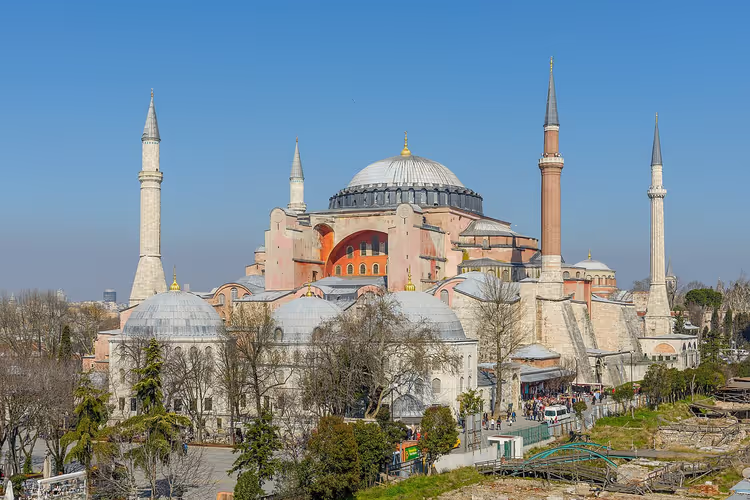 © Arild Vågen · CC BY-SAPhoto: Arild Vågen, CC BY-SA (https://creativecommons.org/licenses/by-sa/3.0), Wikimedia Commons
Hagia Sophia has been on the UNESCO World Heritage list since 1985. The temple was built in 532-537 under Emperor Justinian I. Materials were brought from across the Byzantine Empire: marble and columns were taken from the ruins of ancient cities in Syria, Egypt, and North Africa (according to UNESCO, 09/2026).
In 1054, within these walls, papal legates announced the deposition of the Patriarch of Constantinople, and the Christian church split into Orthodox and Catholic. Until 1204, the Shroud of Turin was kept here; after the sack of Constantinople it disappeared.
Architects of Kievan Rus and the Russian Empire tried several times to replicate the temple, and its engineering solutions are still used today. Forty windows are built into the base of the dome, and light floods the hall from all sides, making the space seem weightless (according to the cathedral description, 09/2026). Today Christian mosaics and Muslim details stand side by side, and that is exactly what draws travelers from all over the world.
In 1453, the cathedral was converted into a mosque, and for almost a hundred years it remained the main temple of the Ottoman capital. The frescoes and mosaics were covered with plaster due to Islam's prohibition on depicting people, and that is precisely why they survived. Since 1935, Hagia Sophia operated as a museum, and since 2020 it has again become a functioning mosque.
For foreign tourists, admission has been paid since 2024. Tourists enter through a separate entrance outside prayer hours, so come early in the morning. Getting there is easy: tram T1 to the Sultanahmet stop, then a 200-meter walk. The dome is visible from the square already, and you definitely won't miss it.
6. Sultanahmet
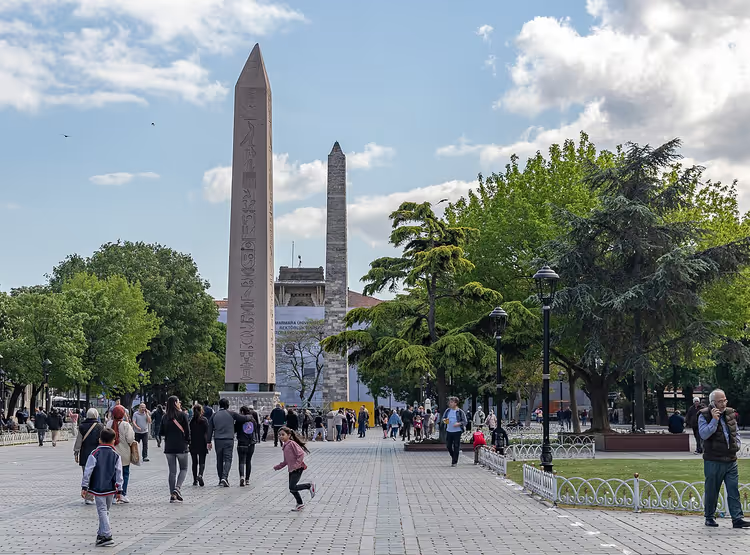 © Ninara · CC BYPhoto: Ninara, CC BY (https://creativecommons.org/licenses/by/2.0), Wikimedia Commons
Sultanahmet Square was a hippodrome from the 4th century. It hosted horse races, chariot races, athletic competitions, and gladiator fights. The stands stretched 400 meters long and 150 meters wide and held about 100,000 spectators (according to the monument description, 09/2026). The stadium was adorned with a gilded quadriga, which was taken to Venice in 1204.
The hippodrome was the site of celebrations for the circumcision of the sons of Suleiman the Magnificent and Hurrem. The arena was finally destroyed in the 17th century. Today, three monuments stand on the square: the Serpent Column, the Obelisk of Constantine, and the German Fountain.
The Serpent Column commemorates the Greek victory over the Persians. The Obelisk of Constantine was erected in honor of Emperor Basil I and stands 21 meters tall. The fountain was a gift from German Kaiser Wilhelm, and its interior is decorated with gold mosaics and monograms.
In 1826, Janissaries who rebelled against the sultan's reforms were executed here. In 1909, an uprising that overthrew Abdul Hamid II began on this square. Excavations in 1950-1951 uncovered many Byzantine and Ottoman artifacts, which are now displayed in city museums. The T1 tram stop Sultanahmet is right by the square, so you can get here from anywhere in the historic center.
The hippodrome appeared on the 500-lira banknote that was in circulation from 1953 to 1976 (according to the square description, 09/2026). Today the square is open around the clock, and both tourists and locals come here. The area near the tram stop is always lively, and the side streets nearby hide cafes with views of the mosques.
7. Beylerbeyi Palace
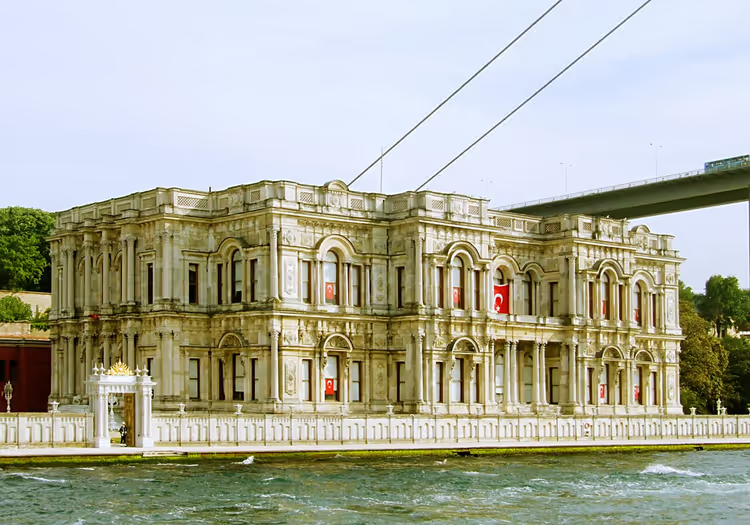 © User:Roweromaniak · CC BY-SAPhoto: User:Roweromaniak, CC BY-SA (https://creativecommons.org/licenses/by-sa/2.5), Wikimedia Commons
Beylerbeyi was built in 1861-1865 by Armenian architects Agop and Sarkis Balyan. The palace's name translates as "lord of lords," a title awarded to the best military commanders and governors of Turkey. Sarkis Balyan designed the building in the Second French Empire style (according to the palace administration, 09/2026).
Compared to Dolmabahce, the palace looks modest. Its main highlight is the reception hall with a pool and fountain. The cold water cools the air and serves as an interior detail. The floors are covered with mats made of Egyptian reed and Hereke carpets, Bohemian crystal chandeliers hang in the halls, and the garden features Japanese, Chinese, and Turkish porcelain vases.
The best way to see the palace is from the water, during a boat tour. From the Bosphorus you can see two bathing pavilions, one for women and one for men, both decorated with floral ornaments. Beylerbeyi hosted distinguished guests: Empress Eugenie visited in 1869, and later the Duke and Duchess of Windsor. From 1912 to 1918, Sultan Abdul Hamid II was held in the palace and died there.
The palace is open from 9 am to 4 pm and closed on Mondays and Thursdays (as of 09/2026, palace schedule). There is a pier nearby served by Bosphorus line 1 ferries.
8. Dolmabahce Palace
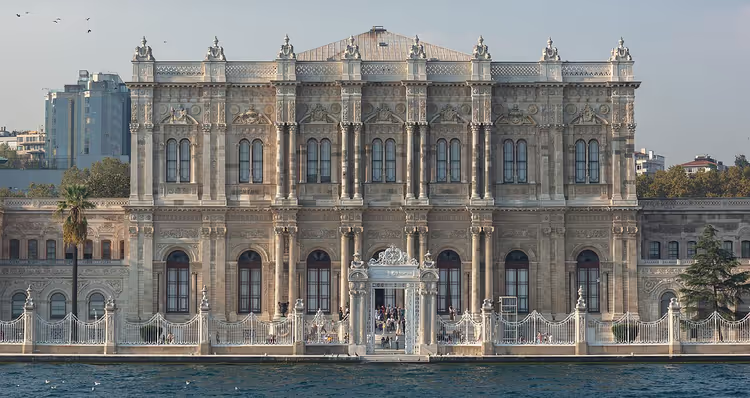 © Diego Delso · CC BY-SAPhoto: Diego Delso, CC BY-SA (https://creativecommons.org/licenses/by-sa/4.0), Wikimedia Commons
Dolmabahce served as the empire's administrative center in 1853-1889 and 1909-1922. It was the first sultan's palace in the European style. Construction took eleven years, from 1842 to 1853, with Karabet Balyan as the chief architect. Contemporaries compared the palace's cost to the price of dozens of tons of gold.
Materials for the palace were brought from all over the world. Marble came from the island of Marmara, alabaster from Egypt, porphyry from Pergamon. The total area reaches 45,000 m², housing 285 rooms, 46 corridors, 6 baths, 68 toilets, and 1,427 windows (according to the palace description, 09/2026).
The hall's main highlight is the Victoria crystal chandelier weighing four tons. The palace holds one of the world's largest collections of candle chandeliers. The halls also display forty Bosphorus landscapes by Ivan Aivazovsky, for which the artist received the Order of Osman.
Eight sultans lived and worked in the chambers, and later Ataturk resided there. The bed on which he died on November 10, 1938, is preserved in the building. All clocks in the palace are stopped at 9:05, the time of his death.
The palace is closed on Mondays. A full ticket costs about 2,000 TL (as of 09/2026, official source). You can get there by ferry to the Besiktas pier.
The palace is divided into two parts: the selamlik for receptions and the harem for the sultan's family. A visit takes several hours, so choose the morning before tour groups fill the halls. From the Besiktas pier to the entrance, you walk along the waterfront, and along the way you will see a mosque and a clock tower. During a break, you can rest by the water and watch the ferries.
9. Maiden's Tower
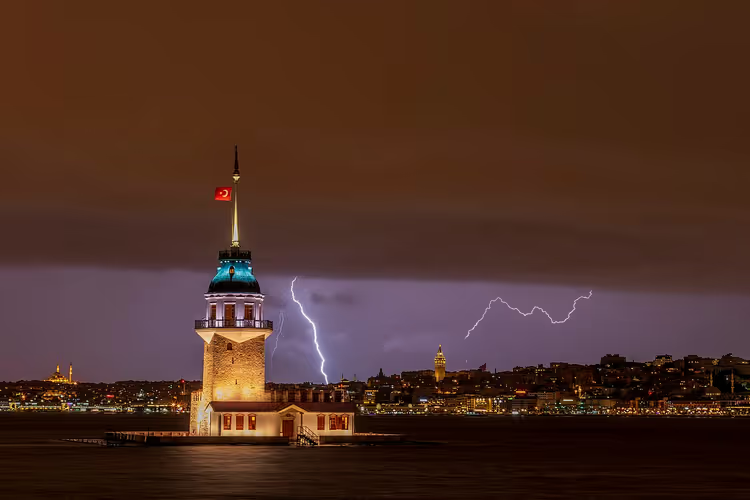 © Melih1969 · CC BY-SAPhoto: Melih1969, CC BY-SA (https://creativecommons.org/licenses/by-sa/4.0), Wikimedia Commons
The Maiden's Tower stands on a tiny island in the Bosphorus, near the Uskudar district on the Asian side. It is one of the city's symbols. Legends are tied to both of its names. According to one, the young man Leander swam across the strait every night, finding his way by the fire that Hero lit. One day the wind blew out the flame, and Leander died.
According to a Turkish tale, a sultan was told that his daughter would be bitten by a snake. The ruler built a tower in the middle of the Bosphorus and hid the girl there. A prince who wanted to marry her disguised himself in women's clothing and brought a bouquet of flowers. A snake crawled out of the bouquet and bit the princess, and the prince sucked out the venom and received permission to marry her.
The tower was built back in Byzantine times as a small fort at the entrance to the Golden Horn. Later it served as a lighthouse, a prison, and an isolation ward. The Maiden's Tower appeared in a painting by Aivazovsky and on the 10-lira banknote that was in circulation from 1966 to 1981 (as of the tower description, 09/2026).
In 1999 the tower was renovated and opened to tourists. Today it houses a restaurant, an observation deck, and a souvenir shop. Boats run from the Katabash and Uskudar piers, so you can reach the tower quickly and without traffic.
In the evening, you get a view of both shores of the Bosphorus, with the city lights reflecting in the water. On the observation deck you stand above the waterline and see the entire strait. Romantics come here at sunset, when the lights come on along both shores.
10. Suleymaniye Mosque
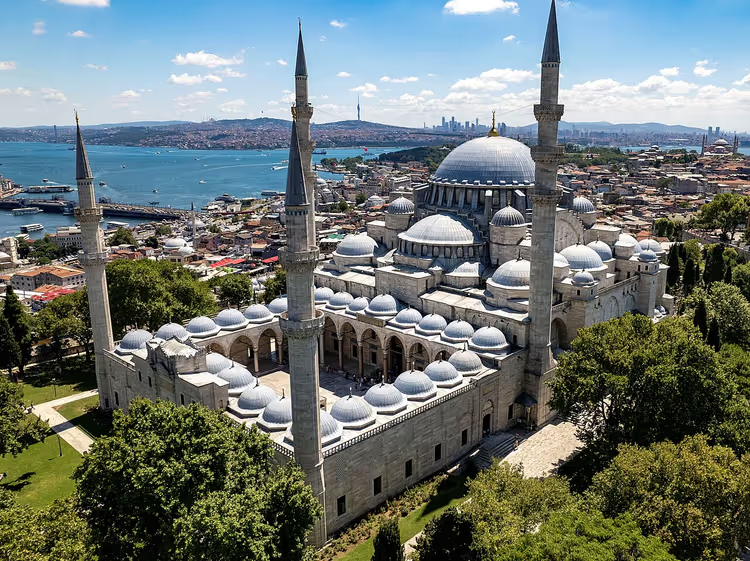
The Suleymaniye Mosque was built in 1550-1557 by order of Suleiman the Magnificent. The construction was led by Sinan, the greatest architect of that era. As a reward he received a golden key, a sign of the ruler's trust (as of the mosque description, 09/2026).
The mosque is surrounded by four minarets. They recall that Suleiman was the fourth sultan after the conquest of Istanbul. The towers have ten balconies, because Suleiman was the tenth ruler of the Ottoman dynasty. According to legend, the Persian shah sent precious stones for the construction, but Sinan set them into the base of a minaret.
The hall, with an area of 4,500 m², holds more than 5,000 people. The complex includes a hammam, a school of theology, a caravanserai, and a medical school. At the rear stands a cemetery with the sarcophagi of Suleiman, his wife Hurrem, and their daughter Mihrimah.
The T1 Eminonu tram stop is nearby, and you can walk to the entrance. Admission is free, but visitors are not allowed inside during prayer times, so choose a time between prayers.
11. Hurrem Sultan Hammam
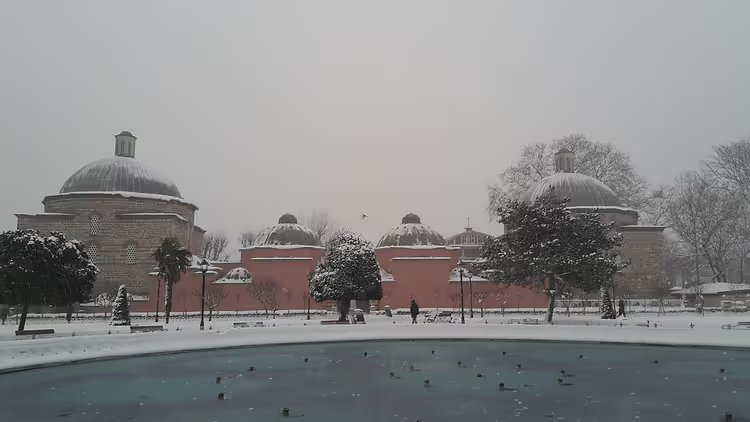 © Maurice Flesier · CC BY-SAPhoto: Maurice Flesier, CC BY-SA (https://creativecommons.org/licenses/by-sa/4.0), Wikimedia Commons
The Hurrem Sultan Hammam was built in 1557 by order of Suleiman the Magnificent for his wife Hurrem. It is a classic Turkish bath designed according to all the canons of Ottoman architecture. Inside there is a hot room with a marble floor, rest rooms, massage rooms, and VIP areas (as of the bath description, 09/2026).
The men's and women's sections operate separately, each with its own entrance, and the layouts are mirror images. After restoration, the bath welcomes guests again: you book a spot in advance, and the prepayment is included in the cost of the treatments. You can get there by tram T1 to the Sultanahmet stop.
12. Ibrahim Pasha Palace
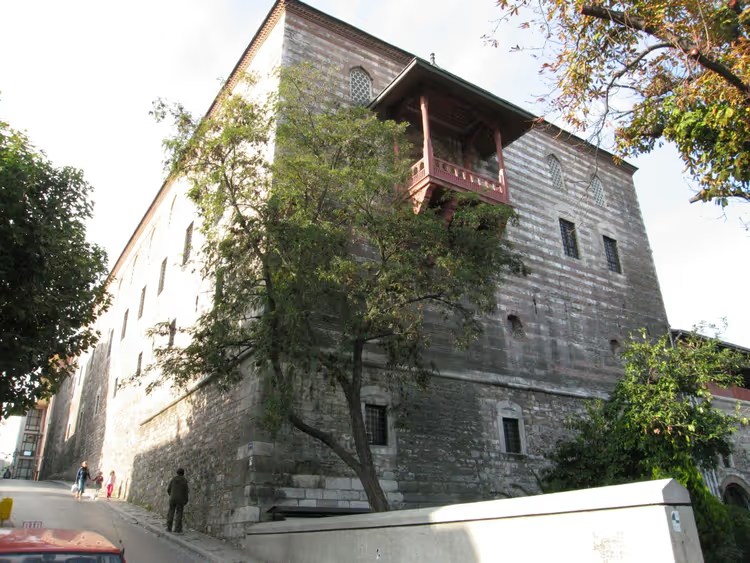
Ibrahim Pasha Palace resembles an ancient fortress. The chambers belonged to Suleiman and later became a gift to his vizier and childhood friend Ibrahim Pasha. Later the building's fate changed: it housed a prison, sewing workshops, and barracks. In 1983 it was restored, and today its walls are home to the Museum of Turkish and Islamic Arts. The collection includes ancient manuscripts, carpets, clothing, jewelry, and objects made of ceramics, wood, and precious metals (as of the museum description, 09/2026).
13. Mihrimah Sultan Mosque
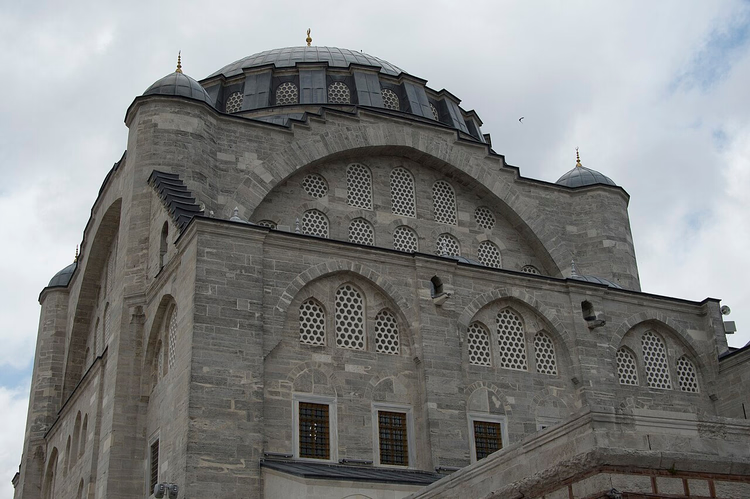 © Dosseman · CC BY-SAPhoto: Dosseman, CC BY-SA (https://creativecommons.org/licenses/by-sa/4.0), Wikimedia Commons
Mihrimah Sultan Mosque stands on the Sixth Hill, the highest point of the city. It was built by the architect Sinan, who was in love with Mihrimah, the daughter of Suleiman and Hurrem. The building became a symbol of the empire's golden age: numerous stained-glass windows fill the hall with light (as of the mosque's description, 09/2026).
The complex includes a madrasa, a hammam, shops, a turbe, and a courtyard with an ablution fountain. The mosque has one minaret. Across from it stands a mosque of the same name in Uskudar. Once a year, on Mihrimah's birthday, March 21, at sunset you can see the moon rise over the mosque.
14. Sehzade Mosque
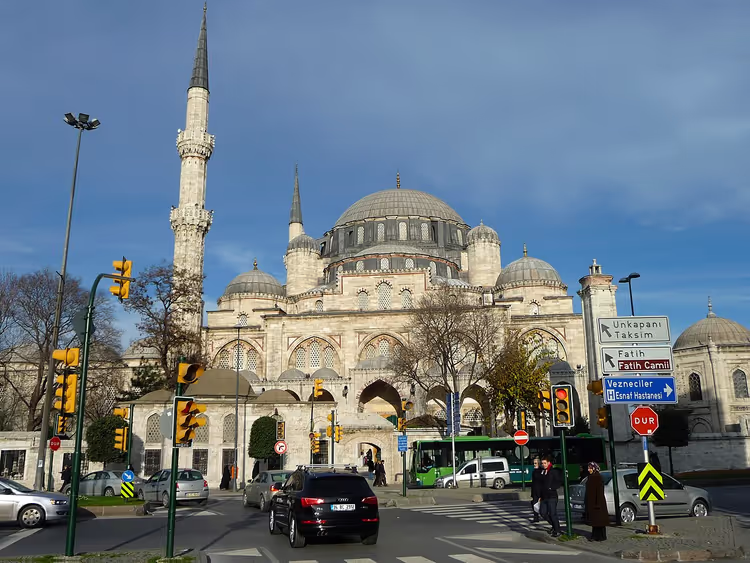 © Ondřej Žváček · CC BYPhoto: Ondřej Žváček, CC BY (https://creativecommons.org/licenses/by/2.5), Wikimedia Commons
Many consider Sehzade Mosque to be Sinan's architectural perfection. In beauty it rivals the Blue Mosque. It was here that the idea of a composite dome was first used: the building is supported by four piers, covered by the main dome and four smaller ones (as of the monument's description, 09/2026).
The mosque was built in 1548 in memory of Suleiman's son, hence its sad name. It stands on a hill and faces the Golden Horn. Under the foundation there is a pool that helped maintain the right temperature, and the interior decoration is made of light-colored tiles.
15. Basilica Cistern
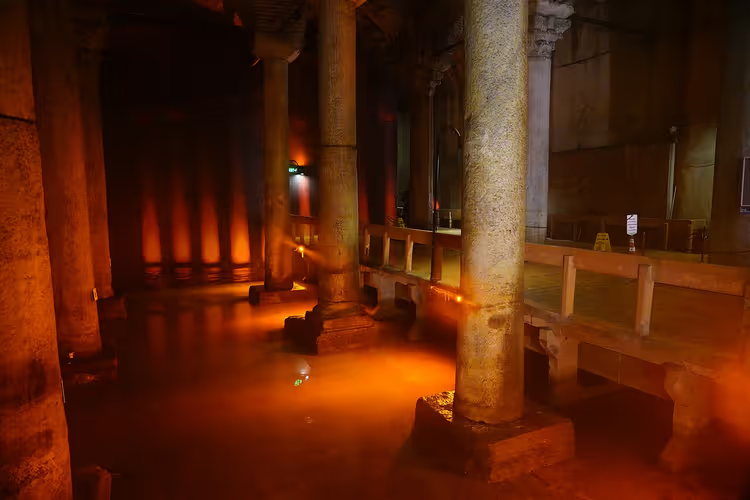 © Ray Swi-hymn from Sijhih-Taipei, Taiwan · CC BY-SAPhoto: Ray Swi-hymn from Sijhih-Taipei, Taiwan, CC BY-SA (https://creativecommons.org/licenses/by-sa/2.0), Wikimedia Commons
The Basilica Cistern is hidden underground at a depth of about 12 meters. The underground reservoir was built in 532 on the site of the Basilica of St. Sophia, hence the name (as of the cistern's description, 09/2026). In ancient times the city had more than a hundred such reservoirs; about forty have now been restored.
Water came here through ancient aqueducts. The cistern was forgotten many times, but it kept coming back to life, and the 1987 restoration turned it into a museum. Inside you will see a forest of columns, two Medusa heads, and you can make a wish by the water.
An adult ticket costs 1,950 TL, and the evening session is more expensive (as of 09/2026, ticket information). The cistern is open daily from 9 am to 10 pm. Address: Yerebatan Caddesi, Sultanahmet. Come at opening time; during the day a long line forms at the entrance. You can book a spot in advance on Tiqets.
16. Golden Horn Bay
 © Zafer · CC BY-SAPhoto: Zafer, CC BY-SA (https://creativecommons.org/licenses/by-sa/4.0), Wikimedia Commons
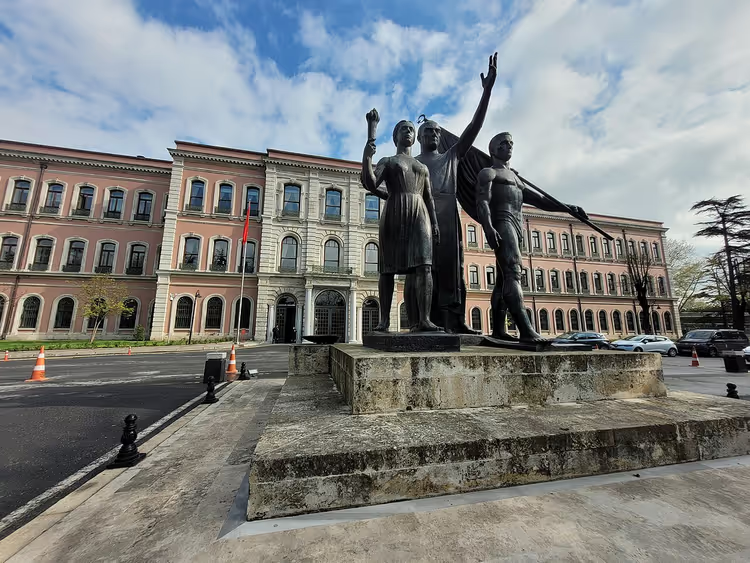
The Golden Horn divides the city into two parts. This inlet was formed by the Alibey and Kagithane rivers, and its waters merge with the Bosphorus. The inlet is 12,200 meters long and 47 meters deep (as of the inlet description, 09/2026).
The Byzantines and Ottomans already valued this spot and built palaces, temples, synagogues, and fortresses here. Merchant ships and warships once anchored in the inlet, and today its shores are lined with parks and recreation areas. The inlet got its name from the sunset: the sun plays on the water and colors it gold. Bridges connect the two shores, and walking across them is a pleasure.
17. Rustem Pasha Mosque
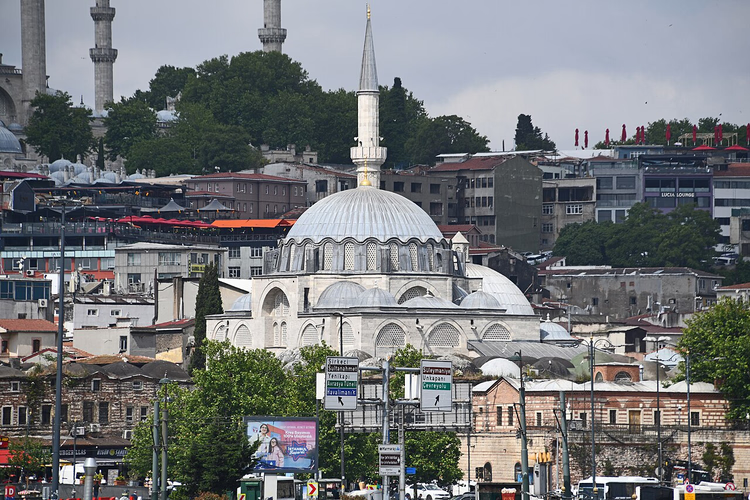
Rustem Pasha Mosque looks modest from the outside, but it is called one of the most beautiful mosques in Europe. The central dome is pierced by 24 windows, and light falls on the blue tiles in soft shades. The decoration was completed by Mihrimah after the death of her husband, Grand Vizier Rustem Pasha (as of the mosque description, 09/2026).
 © Dosseman · CC BY-SAPhoto: Dosseman, CC BY-SA (https://creativecommons.org/licenses/by-sa/4.0), Wikimedia Commons
There is not a single piece of wall, floor, or ceiling without a pattern here. In terms of decorative richness, the mosque is compared to Topkapi Palace. The tiles are made in a unified style with geometric floral designs. You can get there by tram T1; the mosque stands next to the bazaar.
18. Gulhane Park
 © Another Believer · CC BY-SAPhoto: Another Believer, CC BY-SA (https://creativecommons.org/licenses/by-sa/4.0), Wikimedia Commons
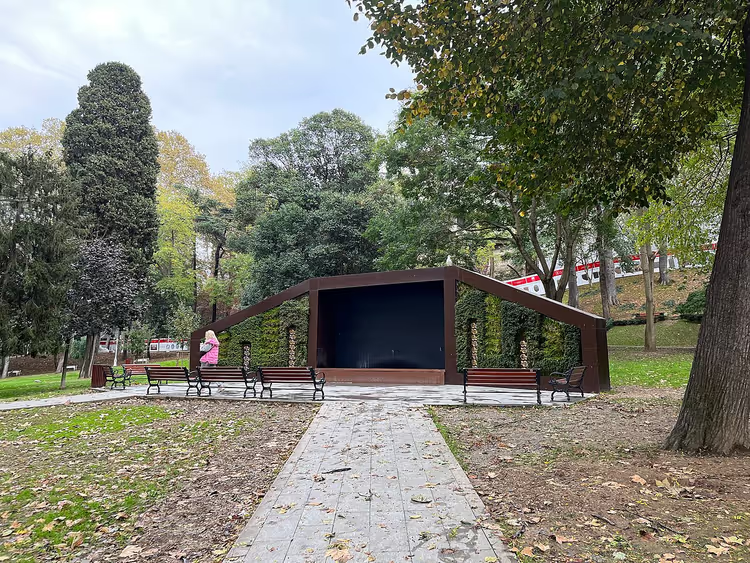
Gulhane Park lies on the site of the garden that once surrounded Topkapi Palace. It is pleasant in any season: the flower beds change their patterns with each blooming period, and the old trees provide shade (as of the park description, 09/2026).
The alleys offer views of the Bosphorus, the Golden Horn, and the palace itself. In spring the park blooms with hyacinths, violets, lilies, and roses, and in April a tulip festival takes place here. Music plays by the fountain, and families with children come here. Admission is free. You can get there by tram T1 to the Gulhane stop.
19. Serpent Column
 © Francesco Bini · CC BY-SAPhoto: Francesco Bini, CC BY-SA (https://creativecommons.org/licenses/by-sa/4.0), Wikimedia Commons
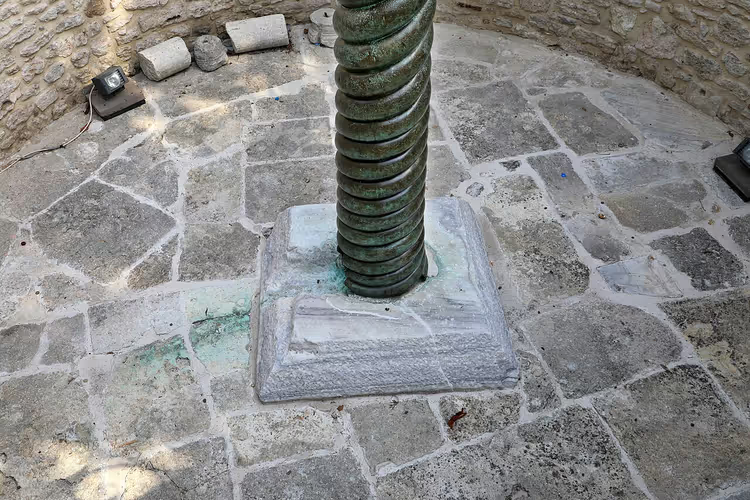
The Serpent Column stands almost in the center of the square, on the site of the ancient hippodrome. It was brought to Constantinople from the Sanctuary of Apollo at Delphi in 324. The column was cast from the bronze shields of fallen Persians to commemorate the Greek victory at Plataea (as of the column description, 09/2026).
At the top of the eight-meter column, three serpent heads with a golden cauldron once rose. Today neither the heads nor the cauldron remain, and legends say that the serpents protected the city from venomous snakes and scorpions. The casting technique itself, "sphyrelaton," is interesting: it allowed large hollow statues to be created. On the shaft, rings of intertwined serpents with the names of Greek cities are visible.
20. Bayezid Mosque
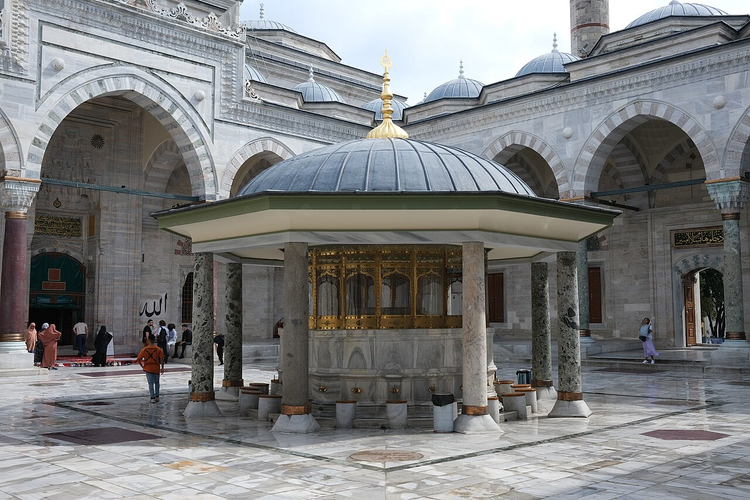 © Dursun Sülük · CC BY-SAPhoto: Dursun Sülük, CC BY-SA (https://creativecommons.org/licenses/by-sa/4.0), Wikimedia Commons
Bayezid Mosque is considered one of the oldest Ottoman mosques in the city. It was built in the late 15th century, modeled on Hagia Sophia (as of the mosque description, 09/2026).
The massive building reflects the Ottoman style of the medieval era. The entrance is decorated with gates featuring ornamentation and old inscriptions, and the semi-domes are supported by columns shaped like an elephant's foot. In total, the building has 25 domes and 20 ancient columns, and two minarets stand one hundred meters apart.
Old trees survive in the courtyard. The complex includes an imaret, a school, a hospital, a hammam, and a caravanserai. The site is in the historic center, next to the Grand Bazaar.
21. Rumelihisari Fortress
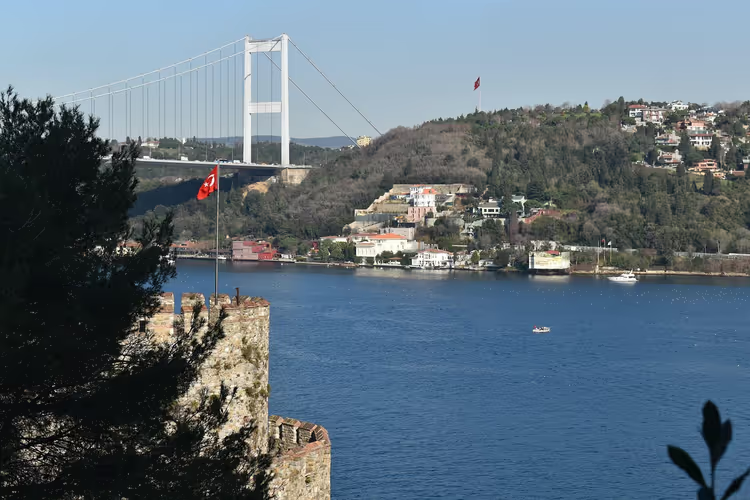
Rumelihisarı was built to control the passage of ships through the Bosphorus and protect the approaches to Constantinople. Opposite it, on the Asian shore, the Anadoluhisarı fortress already stood. Sailing between them was impossible (as of the fortress description, 09/2026).
The fortification has three large towers and thirteen intermediate ones. Inside, a mosque, barracks, and a water reservoir once operated, and after the fall of the city the fortress became a prison. In 1953 it was restored and opened as an artillery museum, summer theater, and park. The walls offer the best view of the Bosphorus. You can get there by bus from the Kabataş pier.
22. Walls of Constantinople
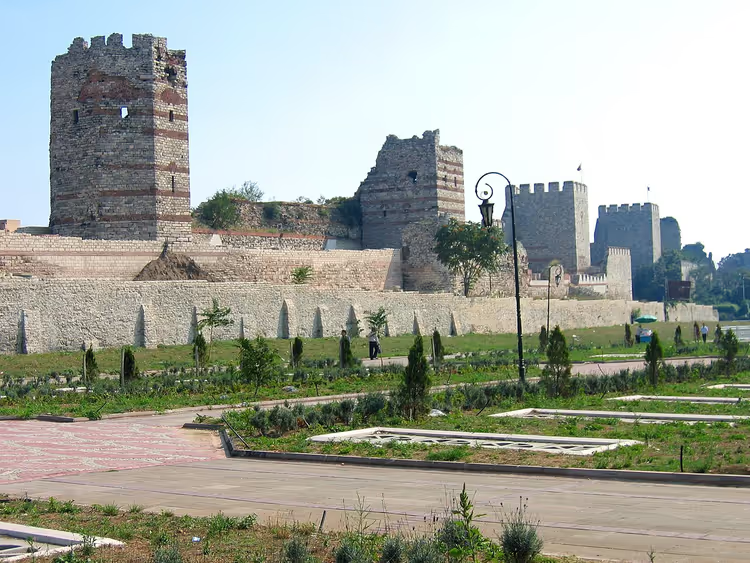 © The original uploader was -jha- at German Wikipedia . · CC BY-SAPhoto: The original uploader was -jha- at German Wikipedia ., CC BY-SA (http://creativecommons.org/licenses/by-sa/3.0/), Wikimedia Commons
The Walls of Constantinople were built in 413 under Emperor Theodosius II, which is why they are called the Theodosian Walls. The fortifications are almost six kilometers long, and the inner wall, 12 meters high, rested on polygonal towers (as of the walls description, 09/2026).
A defensive moat was dug in front of the outer wall, and the Golden Gate with its three arches was considered the ceremonial entrance. The Ottomans took the city through the Middle Walls, and later they built the Yedikule Fortress here. The walls stretch from the Golden Horn to the Sea of Marmara. The most convenient place to see them is near the Yedikule Fortress, which is served by a commuter train from Sirkeci Station.
23. Yedikule Fortress
Yedikule grew up at the end of the Theodosian Walls after the fall of Constantinople. Sultan Mehmed II continued fortifying the city and added new towers to the old walls. The fortress changed its purpose over time: it served as a prison, a girls' school, a treasury, and even a zoo (as of the fortress description, 09/2026).
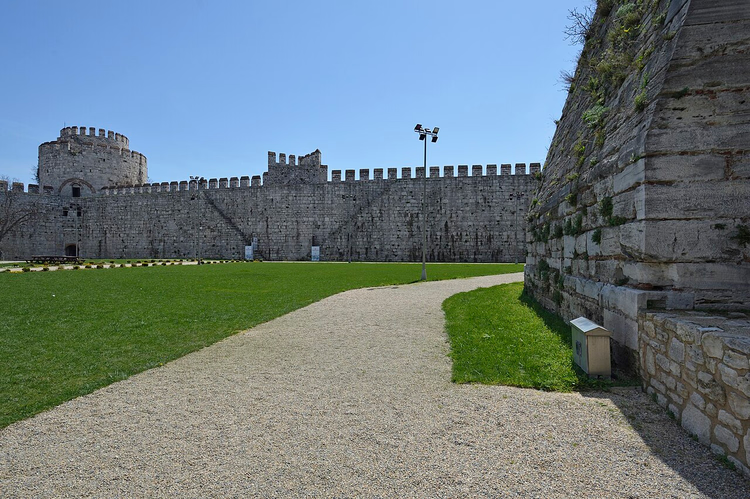 © Dosseman · CC BY-SAPhoto: Dosseman, CC BY-SA (https://creativecommons.org/licenses/by-sa/4.0), Wikimedia Commons
The seven towers have kept their names: the Prison Tower, the Watchtower, the Treasury, the Armory, the Towers of Osman and Ahmet, and the Bloody Well. Kings, sultans, and ambassadors served time in the prison tower, and according to legend, the heads of fallen warriors were placed in the Bloody Well. Since 1895 the fortress has operated as a museum.
24. Grand Bazaar
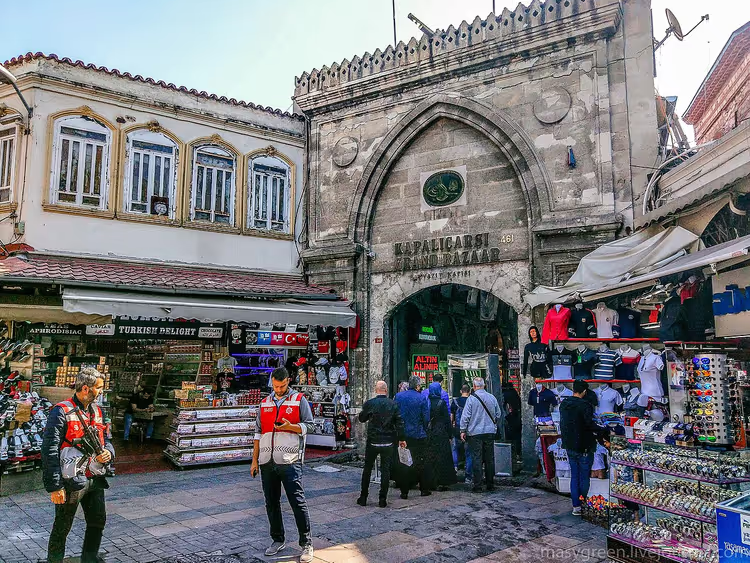 © Masygreen · CC BY-SAPhoto: Masygreen, CC BY-SA (https://creativecommons.org/licenses/by-sa/4.0), Wikimedia Commons
Construction of the Grand Bazaar began in 1453 under Sultan Mehmed the Conqueror. Today it is one of the largest markets in the world: about 70 streets with historic names and roughly 4,000 shops (according to the bazaar description, 09/2026).
Across nearly 31,000 m² you will find everything: carpets, textiles, cosmetics, jewelry, ceramics and souvenirs, plus restaurants, mosques and an old cemetery. Almost 100 million people visit the market every year. The oldest buildings are two bedestens with domed ceilings. You can enter through eighteen gates.
The covered market is open from 9 am to 7 pm and closed on Sundays. It is an easy walk from the tram stop, so you can get here directly from Sultanahmet.
Sellers quote prices with room to negotiate, and haggling is appropriate in almost every shop. If you are looking for a carpet, leather goods or jewelry, compare offers in several rows and do not rush into a purchase. It is easy to get lost here, so remember the number of the gate you entered through.
25. Egyptian Bazaar
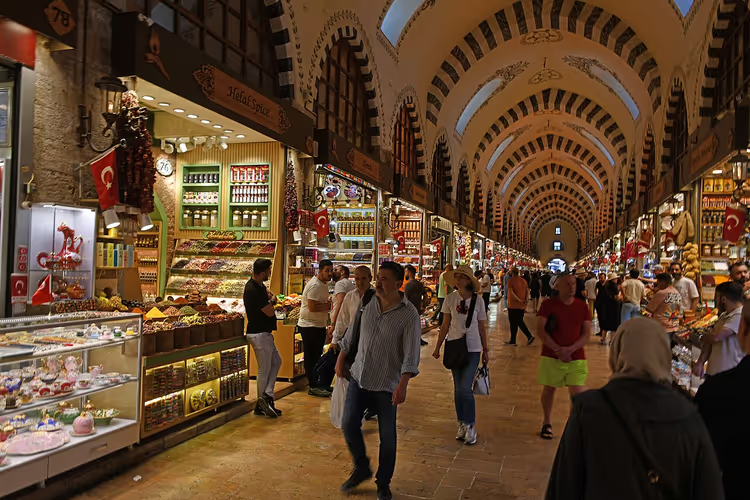 © Dosseman · CC BY-SAPhoto: Dosseman, CC BY-SA (https://creativecommons.org/licenses/by-sa/4.0), Wikimedia Commons
You will recognize the Egyptian Bazaar by the smell of spices, sweets and fresh coffee. Smaller than the Grand Bazaar, it dates back to 1660, when Indian and Egyptian merchants traded spices here (according to the bazaar description, 09/2026).
About a hundred shops now operate in the market. The stalls are filled with spices, perfumes, medicinal herbs, dried fruit, tea and coffee; spices are sold by weight or in packets. The cosmetics sections offer essential oils, henna, rose water and olive oil soap. The Pandeli restaurant, which opened back in 1901, operates on the upper floor. The bazaar is located in the Eminönü district, served by tram.
26. Pertevniyal Valide Sultan Mosque
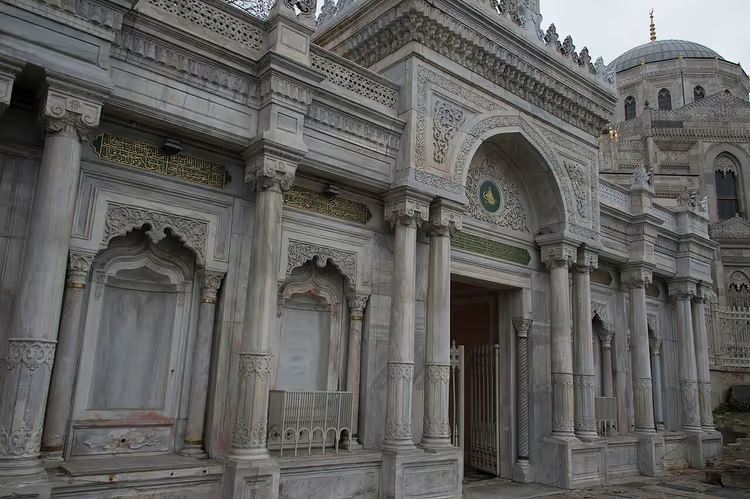 © Dosseman · CC BY-SAPhoto: Dosseman, CC BY-SA (https://creativecommons.org/licenses/by-sa/4.0), Wikimedia Commons
Pertevniyal Valide Sultan Mosque was built in 1871 by order of the mother of Sultan Abdülaziz. It is one of the last structures of the Ottoman period, and it blends Gothic, Renaissance, Rococo and Ottoman styles (according to the mosque description, 09/2026).
A small dome and two minarets adorn the building, and the walls inside and out are finished with patterned marble. The interior is dominated by blue tones with gilding. Above the entrance, a gold monogram of Abdülaziz on a green background has been preserved, and inside is the tomb of Valide Sultan. The mosque stands in the Aksaray district, next to a tram line, so it is easy to add to a route through the European side of the city.
27. Hagia Irene
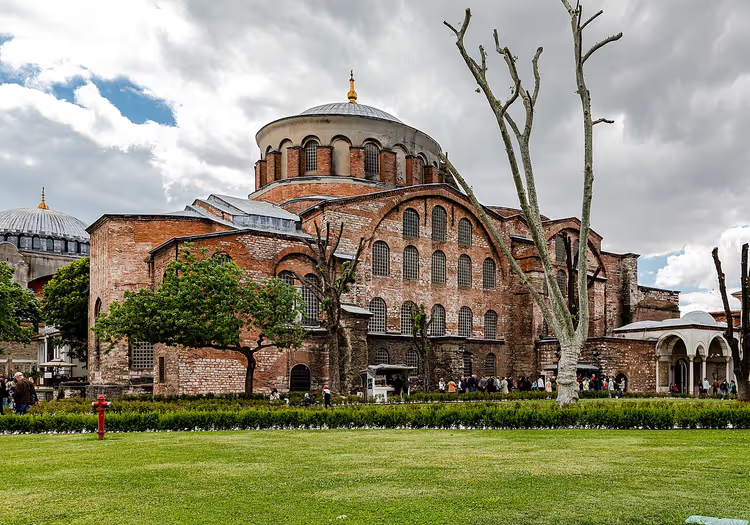 © Ninara · CC BYPhoto: Ninara, CC BY (https://creativecommons.org/licenses/by/2.0), Wikimedia Commons
Hagia Irene stands in the courtyard of Topkapi Palace. It is a cross-shaped Christian basilica built in the 4th century on the ruins of a temple to Aphrodite. Before Hagia Sophia was built, it was the main church of Constantinople (according to the church description, 09/2026).
Inside you will see a mosaic from the time of Justinian and a sarcophagus with the remains of Constantine. Under the Ottomans, it was the only church in the city that did not become a mosque. For a long time weapons were stored here, and in 1846 the Archaeological Museum was opened. Since 1980, concerts and festivals have been held in its halls, and this is its main difference from neighboring churches. You can reach the church through the grounds of Topkapi.
28. Sinan Pasha Mosque
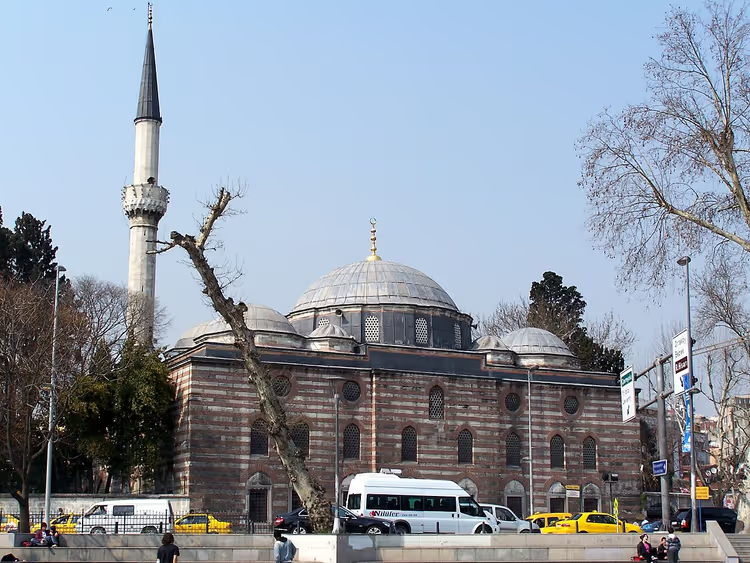 © User:Darwinek · CC BY-SAPhoto: User:Darwinek, CC BY-SA (https://creativecommons.org/licenses/by-sa/3.0), Wikimedia Commons
Sinan Pasha Mosque was built by the architect Sinan, commissioned by the brother of the vizier Rüstem Pasha in honor of Admiral Sinan Pasha. Construction was completed in 1555 (according to the mosque description, 09/2026).
The building has a rectangular shape, a dome and one minaret. The walls are decorated with floral patterns and verses, and the large and small domes are covered with lead. The floor is original in design. The interior suffered when rainwater entered through an opening in the roof: paintings were destroyed and plaster came away. Three Istanbul museums stand nearby: the naval museum, the painting museum and the palace collections museum. The mosque is in Beşiktaş, a short walk from the Bosphorus waterfront, and it is easy to combine with a walk to Dolmabahçe Palace.
29. Emirgan Park
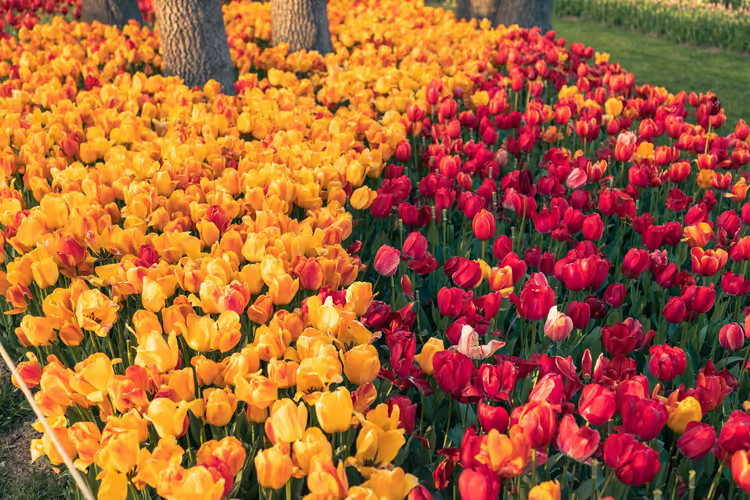
Emirgan Park was laid out on the site of wild forests gifted to the Persian prince Emirkhan for surrendering Yerevan without a fight. Each new owner added something of their own: fountains, gardens, flower arrangements, and lavish villas (as of the park description, 09/2026).
Today the pavilions house museums and institutions, and the park has plenty of cafes and restaurants. Every spring a tulip festival takes place here: more than a hundred varieties are arranged into intricate patterns and ornaments. Flower beds along the paths and on the hills bloom all season, so you will catch different colors at any time of year.
30. Miniatürk Park
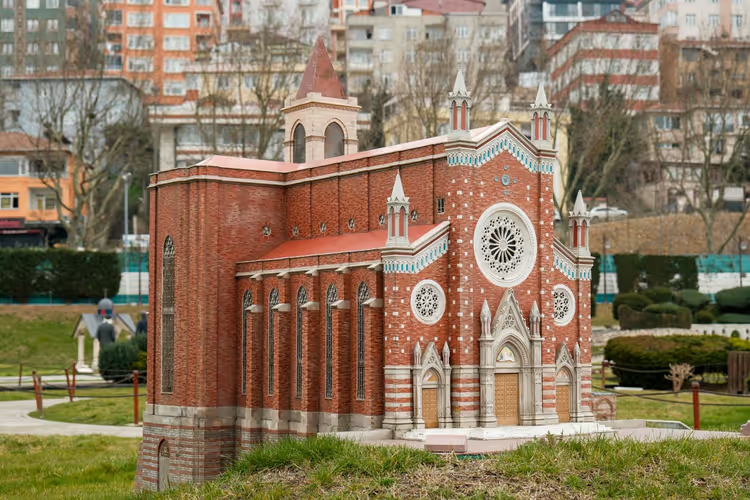
Miniatürk operates as an open-air museum with scaled-down replicas of Turkey's major landmarks. The models accurately reproduce the originals, so in a single visit you can see many places at once and then decide where to actually go (as of the park, 09/2026).
Exhibits include the ancient amphitheater in Aspendos, the Basilica Cistern, Hagia Sophia, towers, the Martyrs' Bridge over the Bosphorus, and the Theodosian Walls. In total the park has more than a hundred miniatures, each with a plaque describing it in three languages. For children there is a play area with a maze, giant chess, and go-karts. The bus stop is right at the park entrance.
Istanbul attractions on the map
All thirty points are easy to view on the map at once. This way you can plan your route by neighborhood and avoid crisscrossing the entire city. Set aside Sultanahmet and Eminönü for one day, and leave Beylerbeyi and Emirgan for the second. You can zoom in on the map and plot your route directly on it, and the labels will help you keep track of the names of the places on the list.
Sights of Istanbul
Places on the map
- 1Haydarpaşa Terminal Neo-Renaissance building of 1906-1908 on the Asian shore in Kadıköy, ferry pier to the Bosphorus nearby
- 2Galata Tower 14th-century Genoese tower, ticket €30, viewing deck open from 8:30 am to 11:00 pm
- 3Blue Mosque Built in 1609-1616, six minarets, free entry outside prayer times
- 4Topkapı Palace Heart of the empire for almost 380 years, over 600,000 exhibits, closed on Tuesdays
- 5Hagia Sophia Temple of 532-537 on the UNESCO list, working mosque again since 2020, free entry
- 6Sultanahmet Square Former hippodrome for 100,000 spectators, with the Serpent Column, obelisk and German Fountain
- 7Beylerbeyi Palace Second French Empire style, 1861-1865, best seen from the water
- 8Dolmabahçe Palace 285 rooms across 45,000 square meters, Victoria chandelier weighing four tons
- 9Maiden's Tower Small island in the Bosphorus near Üsküdar, with a restaurant, viewing terrace and shop inside
- 10Süleymaniye Mosque Sinan's work of 1550-1557, hall for 5,000 people, tombs of Suleiman and Hürrem nearby
- 11Ibrahim Pasha Palace Museum of Turkish and Islamic Art here since 1983, manuscripts, carpets and ceramics
- 12Şehzade Mosque Built in 1548 in memory of Suleiman's son, first use of a composite dome
- 13Basilica Cistern Underground reservoir from 532, 12 meters deep, Medusa heads, ticket 1950 lira
- 14Golden Horn Bay 12,200 meters long, divides the city in two, parks along the shores
- 15Gülhane Park Former garden of Topkapı Palace, Bosphorus view, tulip festival in April, free entry
- 16Serpent Column Eight-meter column from Delphi, brought in 324 to commemorate the victory at Plataea
- 17Bayezid II Mosque One of the city's oldest Ottoman mosques, 25 domes and 20 ancient columns
- 18Rumelihisarı Fortress Three large towers above the Bosphorus, artillery museum, summer theatre and park
- 19Walls of Constantinople Theodosian Walls of 413, almost six kilometers long, inner wall 12 meters high
- 20Yedikule Fortress Seven-towered fortress of Mehmed II, museum since 1895
- 21Grand Bazaar About 70 streets and 4,000 shops, open 9am-7pm, closed on Sundays
- 22Egyptian Bazaar Spice market since 1660 in Eminönü, around a hundred shops, spices sold by weight
- 23Pertevniyal Valide Sultan Mosque Built in 1871 in the Aksaray district, a mix of Gothic, Renaissance, Rococo and Ottoman style
- 24Hagia Irene 4th-century basilica in the Topkapı courtyard, the city's only church never turned into a mosque
- 25Sinan Pasha Mosque Sinan's work of 1555 in Beşiktaş, steps from the Bosphorus waterfront
- 26Emirgan Park Pavilions with museums and cafés, tulip festival every spring with a hundred varieties
- 27Miniatürk Park Open-air museum with over a hundred scaled-down models of Turkish landmarks
Book tickets to popular museums in advance, especially in summer. Below are tours and tickets around the city that will help you sort out the logistics in one evening.
Tours and tickets in Istanbul
Guided tours, skip-the-line tickets and activities — most offers can be cancelled free of charge.
See offers on GetYourGuideThe widget loads once you give your consent.
⁉️🤔 Frequently asked questions
How many days do you need for Istanbul?
Three days is enough for the main attractions. On the first day, cover Sultanahmet: the Blue Mosque, Hagia Sophia, and Topkapi are close together. Dedicate the second day to the Grand Bazaar, the Basilica Cistern, and the Galata Tower. On the third day, head to the Asian side to the Maiden's Tower and Haydarpaşa Station.
Which museum should you visit first?
Start with Topkapi before the line builds up. The palace is closed on Tuesdays, so check the day in advance. The combined ticket covers the harem and the Church of St. Irene, so you won't need to buy separate entries. After the palace, walk down to Hagia Sophia, it is just a short walk away.
Do you need the Museum Pass card?
If you plan to visit three or more paid museums, the card may pay off. It covers some state museums but is not valid at the Basilica Cistern. Check the list and rules on the official museum website and get the card only if you have a packed itinerary.
Which neighborhood should you look for a hotel in?
For a first visit, Sultanahmet is convenient: you can walk to the main mosques and palaces. Eminönü and Beşiktaş are closer to ferries and the tram, while the Galata area will appeal to those who want viewpoints and cafes nearby. Book your hotel in advance, as there are few available rooms in summer.
How do you get around the city?
The most convenient way to get around the city is by the T1 tram and the metro. Buy an Istanbulkart from a vending machine; each ride is charged at a flat rate. The tram connects Sultanahmet, Gülhane, Eminönü, and Kabataş, and from there you can take a ferry to the more distant parks.
In short: what to book
If you have one day: a hotel in Sultanahmet, a Topkapi ticket, and an evening Bosphorus cruise. If you have three days: add the Galata Tower, the Basilica Cistern, and a trip to the Asian side. If you are traveling with children: plan for Miniatürk and Gülhane Park, they offer a break between museums.
Plan your overnight stay in advance and compare options by neighborhood: Istanbul hotels on Trip.com. Tickets to the main museums are easy to book online through Tiqets.
If you want a ready-made route with a guide, check out Istanbul tours on GetYourGuide. Get tickets for the morning, arrive at opening time, and leave time for the bazaars.

A small editorial team writing guides for independent travel. We travel ourselves, but we haven’t been everywhere, so we check prices, opening hours and how to get there against official sources.