
















Twenty places in Innsbruck: tickets, opening hours and how to see everything in two days
In Innsbruck, it's easy to lose half a day to lines and getting around. The imperial center, the cable car, and the Alpine zoo are close to each other, but tickets and opening hours are all different. We've put together twenty places worth seeing, and added practical details to each one: how to get there, how much admission costs, and where it's free.
Many lists simply name the sights and don't answer the main question. What can someone with only two free days actually fit in? Below, Innsbruck is organized by area, so you don't waste time traveling between far-flung points.
Ad: this article contains affiliate links, we earn a commission if you book through them, at no extra cost to you.
Tickets, transport, and the guest card
💡 In short:
- Explore the Old Town on foot: the Hofburg, the Golden Roof, the Hofkirche, and the Cathedral of St. James are all close to each other.
- For going up the Nordkette and visiting the zoo, consider the Innsbruck Card: it covers twenty-two attractions and city transport.
- Ambras Castle prices and opening hours: 09/2026, verified on the official Schloss Ambras website
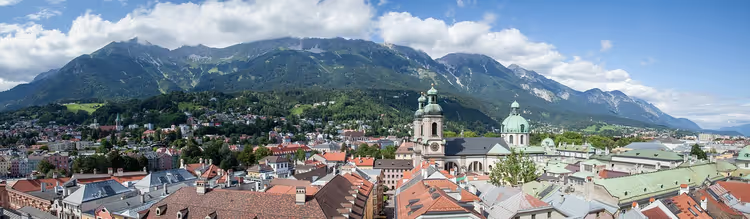
Innsbruck is divided into three areas. The Old Town is home to the Hofburg, the Golden Roof, the Hofkirche, and the Cathedral of St. James. On the southern hill stand the Bergiselschanze, Wilten Basilica, and the Tyrol Panorama. To the north, above the city, hang the Hungerburgbahn funicular, the Nordkettenbahn cable car, and the Alpine zoo. IVB trams and buses take you between the areas.
The Innsbruck Card guest card pays off if you plan to go up the Nordkette and visit several museums: it covers twenty-two attractions and transport. Separate tickets for the Hofburg, the zoo, and the cable car together cost more than a one-day card. Check current rates on the Innsbruck tourist office page.
1. Ambras Castle
 © Andrew Bossi · CC BY-SAPhoto: Andrew Bossi, CC BY-SA (https://creativecommons.org/licenses/by-sa/2.5), Wikimedia Commons
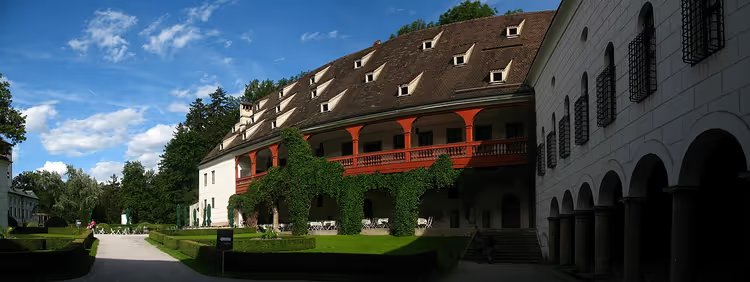
Ambras stands on the eastern edge of Innsbruck and holds the title of the world's oldest museum: the collection is shown in the same halls where it was assembled. In the Upper Castle, you'll find the Habsburg portrait gallery with paintings by Titian, Van Dyck, and Velázquez.
The Lower Castle houses the Chamber of Art and Curiosities and the Armory. Around it lies a park with ponds, flower beds, and peacocks on the shore, and in summer the courtyard hosts Baroque music concerts. The castle is open daily from morning to evening, but it is closed for the entire month of November.
- How to get there: take bus M from the center directly to the Schloss Ambras stop; or take the tram to Philippine-Welser-Straße and then walk 1.2 km, about 10-15 minutes uphill (on the map).
- Cost: adult ticket €16 online instead of €18 on site, children and teenagers up to 19 enter free (as of 09/2026, verified on the official website).
- Who it's for: for those who want to see authentic halls with weapons and paintings, because the exhibition remains in its historic location.
- The catch: the museum is closed in November, and the walk from the tram stop goes uphill.
2. Wilten Basilica and Abbey
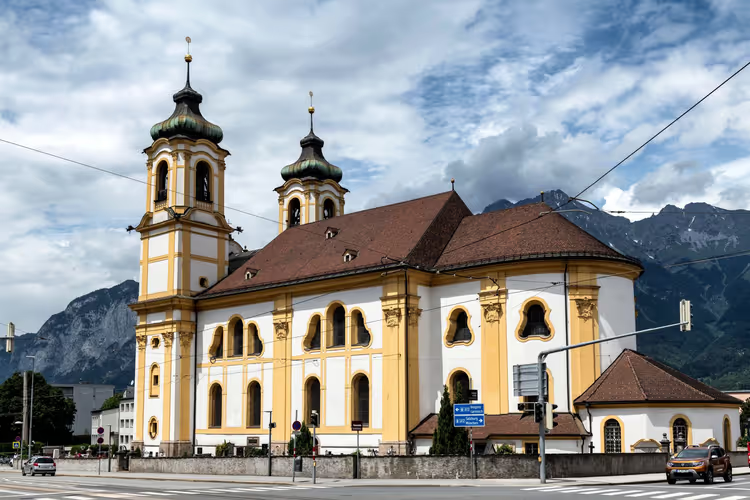
Wilten stands at the foot of the Bergisel hill, on the southern edge of Innsbruck. The abbey and church were founded in the Middle Ages, the buildings were later rebuilt in the Baroque style, and after the destruction of World War II the monastery took on its current appearance.
Inside, you'll see marble floors and pews, stucco work, wall and ceiling paintings, and an altar with a statue of the Virgin Mary. The abbey also runs a museum with a silver statue of the giant Haymon from local legend. Admission is free, donations are welcome.
- How to get there: take the tram from the center to Wilten, then walk a few minutes to the basilica.
- Cost: admission is free, donations are welcome; tourists are not allowed inside during Mass.
- Who it's for: for those looking for a quiet place near the center, because there are few tour groups here.
- The catch: access to the basilica is closed during services.
3. The imperial palace, the Hofburg
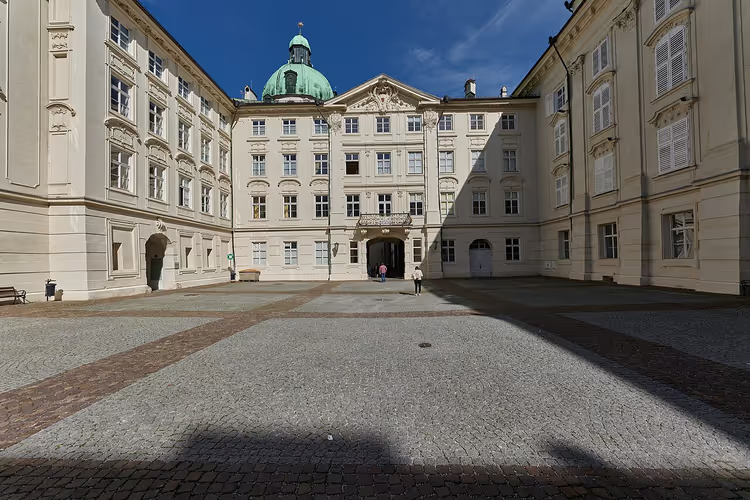
The Hofburg was built in the 15th century as the Habsburg residence, and the palace got its current look after a rebuild under Maria Theresa. Gothic was replaced by Baroque and Rococo at that time. The white facades with turquoise domes are visible from Maria Theresa Street.
The palace's four wings house twenty-five apartments open to visitors. The halls display portraits of rulers, furniture, tapestries, carpets, mirrors and wall frescoes, and a separate room is dedicated to Maria Theresa and her children. Admission is paid; Innsbruck Card holders do not need a ticket.
- Getting there: from Maria Theresa Street, the palace stands at the end of its pedestrian section, about five minutes on foot (see map).
- Cost: an adult ticket is in the city's upper price range, children's tickets are cheaper; free with the Innsbruck Card (as of 09/2026, Innsbruck Card prices).
- Who it's for: lovers of imperial history, because this is the city's main residence.
- Not for: those who came only for views and nature, because inside it is museum halls.
4. Maria Theresa Street
 © böhringer friedrich · CC BY-SAPhoto: böhringer friedrich, CC BY-SA (https://creativecommons.org/licenses/by-sa/2.5), Wikimedia Commons
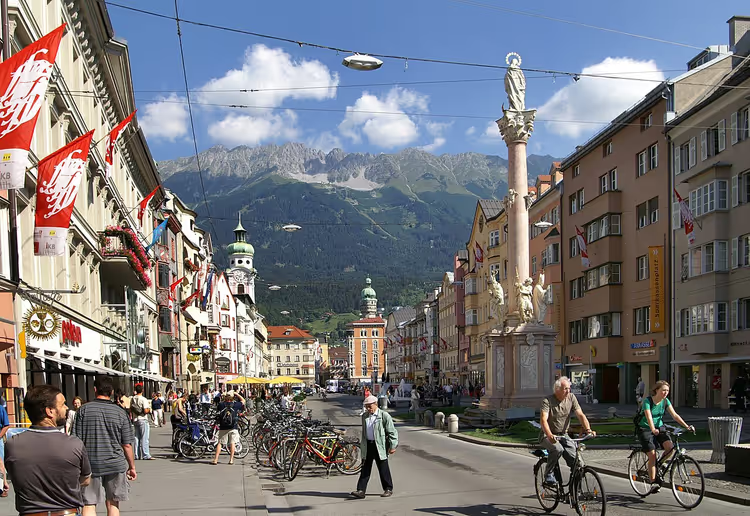
Maria Theresa Street serves as Innsbruck's main pedestrian artery. What was once a modest road to St. Jorgen's Gate turned into a grand street where the local nobility settled. Today it is lined with palaces, shops and cafes.
Pay attention to the Gumpp Palace with the Tyrolean parliament, the Trapp Palace with its inner courtyard, and the Kaufhaus Tyrol and Rathaus Galerien shopping arcades. At the end of the street you will find the Triumphal Arch, St. George's Chapel and St. Anne's Column with angel figures. Viewing is free at any time.
- Getting there: on foot from the main train station, about ten minutes (see map).
- Cost: free, it is a public street.
- Who it's for: those who want to combine a walk and shopping, because everything stands along one line.
5. Helblinghaus
 © Simon Legner ( User:simon04 ) · CC BY-SAPhoto: Simon Legner ( User:simon04 ), CC BY-SA (https://creativecommons.org/licenses/by-sa/4.0), Wikimedia Commons
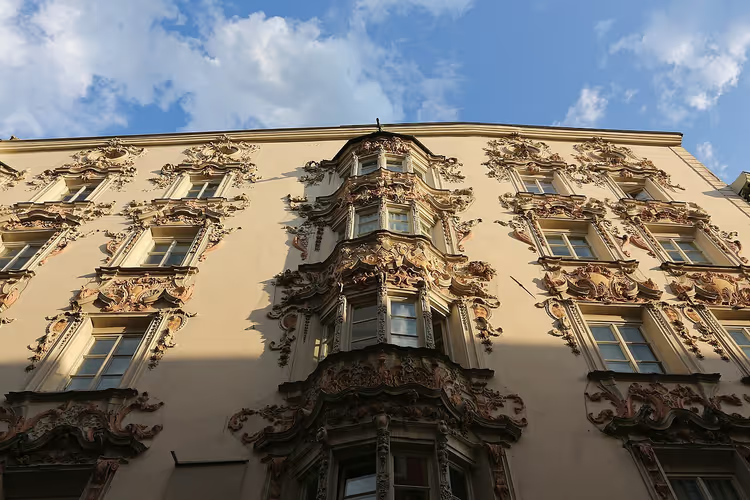
Helblinghaus stands on Duke Frederick Street next to the Golden Roof. Behind its Gothic core lies a facade completely covered in pinkish-gold Rococo stucco patterns. The windows are framed by scrollwork and floral garlands.
It is now a residential building, and tourists are not allowed inside. But from the outside you can examine the details for free at any time of day. Allow a few minutes on your way to the Golden Roof; the building is interesting precisely for its decoration.
- Getting there: Duke Frederick Street in the Old Town, a few steps from the Golden Roof.
- Cost: viewing the facade is free.
- Who it's for: those who love architectural details, because the stucco here lies like a dense carpet.
- The catch: you cannot go inside, the building is residential.
6. Tyrol Panorama Museum
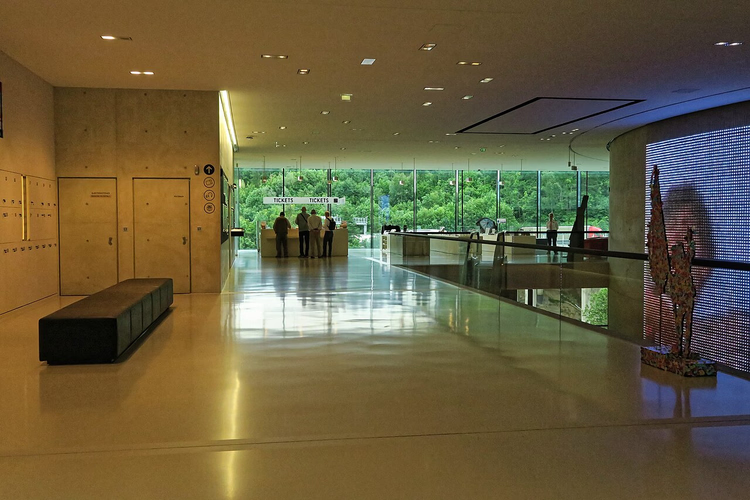
The Tyrol Panorama Museum stands on Bergisel Hill and is dedicated to the battle in which Tyrolean peasants fought against Napoleon's troops. The central part of the exhibition is a huge circular panorama with close combat, an attack by French infantry and episodes of the battle.
 © Burkhard Mücke · CC BY-SAPhoto: Burkhard Mücke, CC BY-SA (https://creativecommons.org/licenses/by-sa/4.0), Wikimedia Commons
Interactive screens stand at each section, and nearby you will find sculptures of battle participants and a monument to Andreas Hofer with the inscription "For God, Emperor and Fatherland". Separate halls tell how Tyrol developed. The museum is open daily, with shorter hours on Sundays, and admission is free with the Innsbruck Card.
- Getting there: by tram toward Bergisel, then walk uphill to the viewing platform.
- Cost: an adult ticket is in the city's mid price range, free for Innsbruck Card holders.
- Who it's for: those interested in the region's history, because the panorama's story is directly tied to Tyrol.
- The catch: on Sundays the museum closes earlier than on other days.
7. City tower
 © Simon Legner ( User:simon04 ) · CC BY-SAPhoto: Simon Legner ( User:simon04 ), CC BY-SA (https://creativecommons.org/licenses/by-sa/4.0), Wikimedia Commons
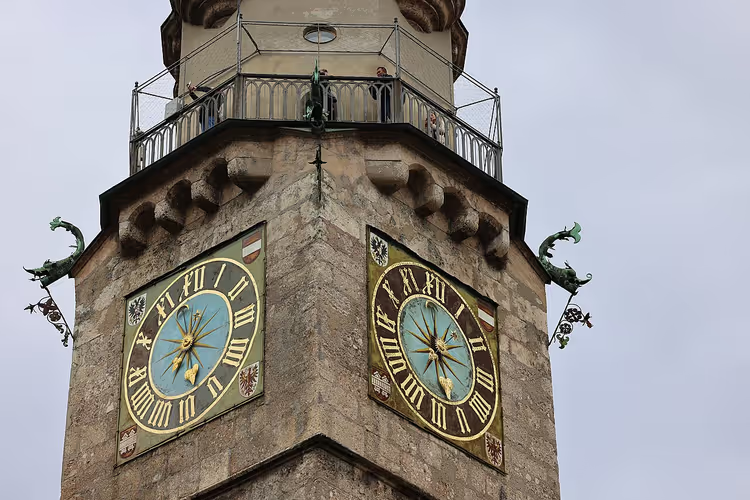
The city tower stands in a tight row of houses on Herzog-Friedrich-Strasse. It was built in the 15th century as a watchtower: from its height, heralds announced the time to residents, warned of danger, and proclaimed events. The gray pyramid is crowned by a round tower with a dome.
The observation deck offers a panorama of tiled roofs and Alpine peaks. Admission is nominal, and with the Innsbruck Card the ascent is free. Hours change by season: in summer the tower stays open longer, in winter it closes earlier.
- Getting there: Herzog-Friedrich-Strasse, between the Golden Roof and the Hofkirche.
- Cost: admission is low, free ascent for Innsbruck Card holders.
- Who it's for: for those who want to see the whole city, because the deck sits in the middle of the Old Town.
- The catch: you have to climb a narrow spiral staircase.
8. Tyrolean folk art museum
 © Burkhard Mücke · CC BY-SAPhoto: Burkhard Mücke, CC BY-SA (https://creativecommons.org/licenses/by-sa/4.0), Wikimedia Commons
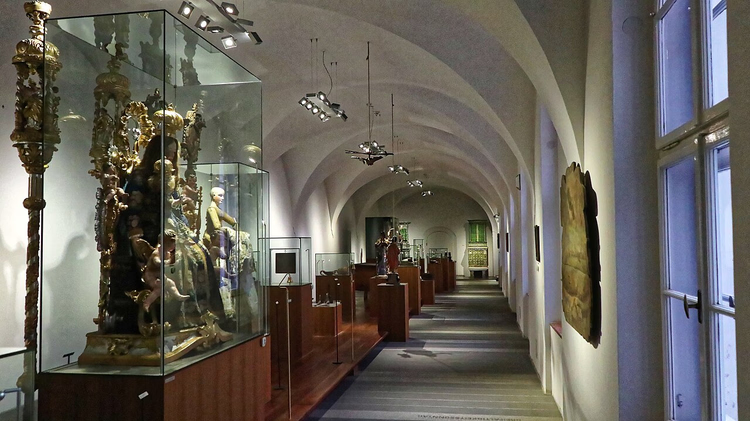
The Folk Art Museum occupies a former Franciscan monastery next to the Hofkirche. The rooms recreate medieval interiors with authentic furniture and household objects, so you see entire rooms rather than individual items.
The exhibition features embroidered Tyrolean costumes, jewelry, musical instruments, ceremonial masks, and examples of historic weapons. The museum is open daily; adult tickets are in the mid range, children's tickets are cheaper.
- Getting there: entrance from the Hofkirche side, two minutes from Herzog-Friedrich-Strasse (on the map).
- Cost: adult ticket around the mid range, children's ticket cheaper; some exhibitions are included in the Innsbruck Card.
- Who it's for: for those who want to understand everyday life in the region, because authentic interiors are gathered here.
9. Ferdinandeum Museum
 © Photographer: User:Mateus2019 · CC BY-SAPhoto: Photographer: User:Mateus2019, CC BY-SA (https://creativecommons.org/licenses/by-sa/4.0), Wikimedia Commons
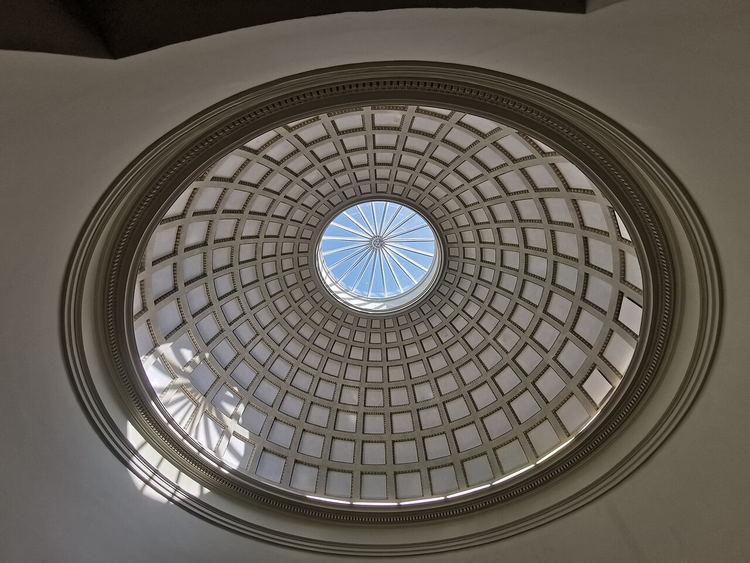
The Ferdinandeum is Tyrol's oldest national museum, named after Duke Ferdinand, who assembled the collection and studied the region's history. The museum opened in the first half of the 19th century, and since then the collection has grown into a complete chronicle of the region.
It displays fossils and mammoth remains, prehistoric tools, manuscripts, medieval household objects, furniture, and musical instruments. Separate rooms are devoted to paintings by European masters and marble sculpture. The museum is closed on Mondays.
- Getting there: the museum is in the Old Town, near Maria-Theresien-Strasse.
- Cost: adult ticket in the mid range, children's ticket cheaper; some collections are included in the Innsbruck Card.
- Who it's for: for those who want to trace Tyrol's history from antiquity to the present, because the collection spans all eras.
- The catch: the museum is closed on Mondays.
10. Golden Roof
 © Michael aus Halle · CC BY-SAPhoto: Michael aus Halle, CC BY-SA (https://creativecommons.org/licenses/by-sa/3.0), Wikimedia Commons
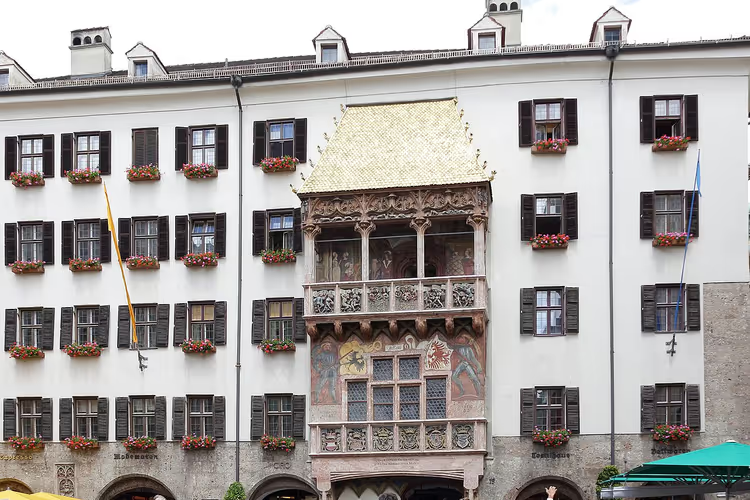
The Golden Roof is a late Gothic oriel on the building of the former residence of Tyrolean rulers. It was built under Archduke Frederick IV and Emperor Maximilian I. The gilded copper tiles cover not the whole house, but only the balcony from which the emperor watched knightly tournaments.
The roof is made of thousands of copper plates, and the balustrade bears the coats of arms of the empire's territories. The exhibition inside tells about key events in Tyrol and about Maximilian himself. In summer the museum is open daily; in winter it is closed on Mondays.
- Getting there: a square in the very center of the Old Town, near Herzog-Friedrich-Strasse.
- Cost: adult ticket in the lower range, free entry for Innsbruck Card holders.
- Who it's for: for those who want the symbol of Innsbruck, because this is the city's main balcony.
- The catch: getting a shot without people in the square during the day is almost impossible.
11. Swarovski Crystal Worlds
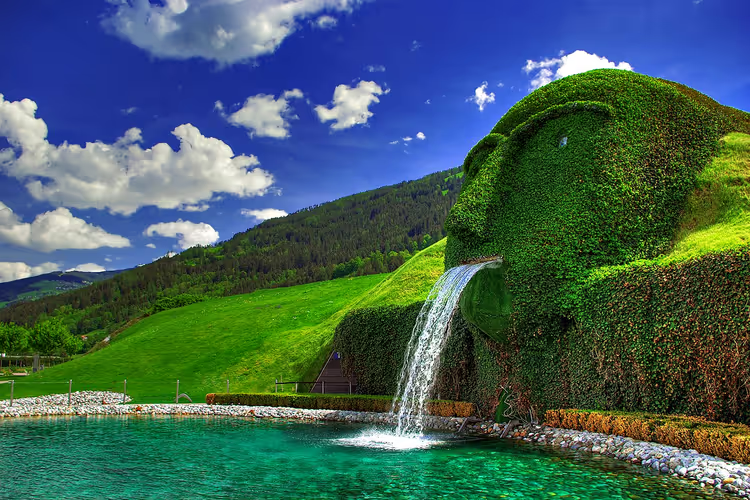
Swarovski Crystal Worlds is located in the suburb of Wattens, reachable by shuttle from Innsbruck. The museum is built inside a rock: the entrance is guarded by a stone giant with a waterfall from its mouth, and a glass tunnel with philosophers' lines about crystal leads to the exhibitions.
Inside are light and mirror installations, and the visit ends at a shop with souvenirs and jewelry. You can get there by bus from the main station or by the official shuttle. For tickets and opening hours, see the official website.
- Getting there: by bus from the main station or by the Kristallwelten shuttle, about half an hour (on the map).
- Cost: paid ticket, children's ticket cheaper; free entry with the Innsbruck Card (as of 09/2026, official website).
- Who it's for: for those traveling with children, because the installations are designed for a vivid impression.
- The catch: on weekends a line forms at the entrance.
12. Cathedral of St. James
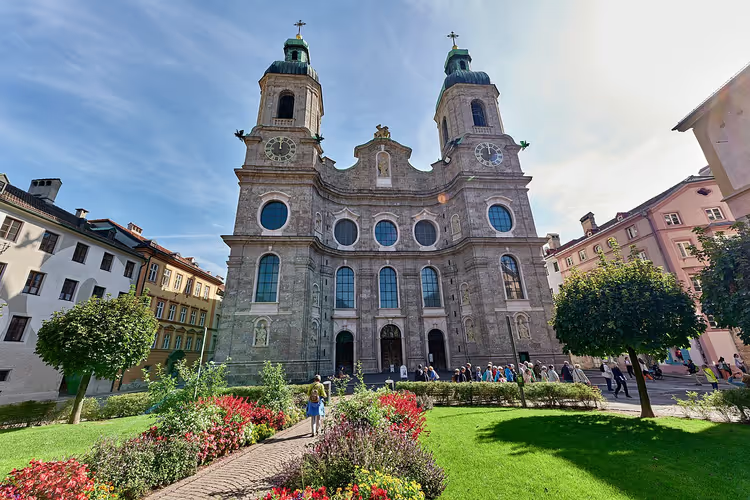
The Cathedral of St. James stands next to the Hofburg and is considered the city's main Baroque church. Two figured domed towers, round windows, and reliefs on the facade create a solemn appearance, and inside you'll find frescoes, stucco, and numerous sculptures.
The cathedral's main treasure is the altar with Cranach's painting "Madonna and Child." A large organ gleaming with gold also stands here. Entry is free, so the cathedral is easy to add to a walk through the Old Town.
- Getting there: next to the Hofburg, a minute's walk from Herzog-Friedrich-Strasse (on the map).
- Cost: free entry, donations welcome.
- Who it's for: for those who want to see Cranach's work without a ticket, because entry to the cathedral is free.
- The catch: viewing is limited during services.
13. Hofkirche
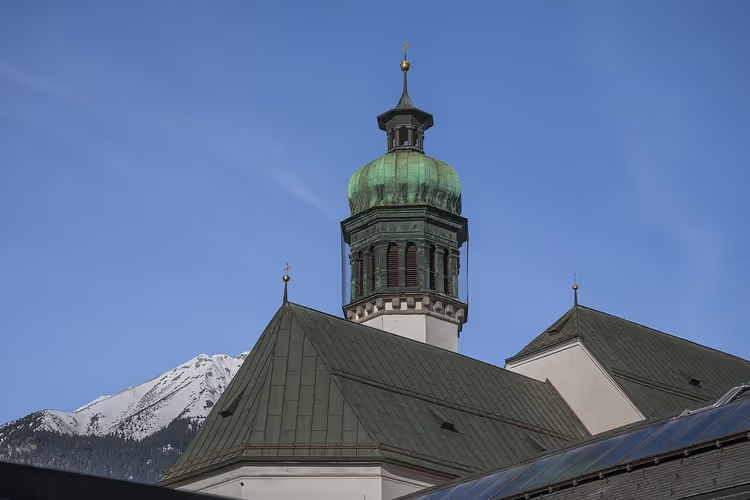
The Hofkirche was built in memory of Emperor Maximilian I, and its appearance combines three styles: a Gothic facade, a Renaissance portal, and a Baroque interior. Construction stretched over decades, so the transitions between styles are especially clear.
At the center stands Maximilian's cenotaph of black marble with bronze reliefs and figures of the emperor's ancestors. The chapel houses a silver altar of the Virgin Mary, and the church's pride is its two organs. Adult tickets are low, with cheaper admission for schoolchildren and students.
- Getting there: next to the Hofburg and the Tyrolean Folk Art Museum.
- Cost: adult ticket is low, cheaper for students and schoolchildren; part of the collection is included in the Ferdinandeum ticket.
- Who it's for: for those who want to see 16th-century bronze figures, because the cenotaph has survived almost completely.
14. Hofgarten park
The Hofgarten adjoins the Old Town and holds six centuries of history. Trees planted under Maria Theresa still grow here, and a pavilion from that era still operates. Entry is free year-round, and the lawns are open to everyone.
The park has ponds with birds, a palm house with hundreds of plant species, playgrounds, and a cafe. It's a rare city garden where you can lie on the grass and look at the Nordkette. Go in the morning, while the shade of the trees lies on the paths.
- Getting there: entrance from Rennweg and from the Hofburg, on foot from the Old Town.
- Cost: park entry is free; the palm house charges a small ticket and is open on weekdays.
- Who it's for: for those who want a break between museums, because you can sit on the lawn here.
- The catch: the palm house is only open on weekdays.
15. Grassmayr Bell Museum
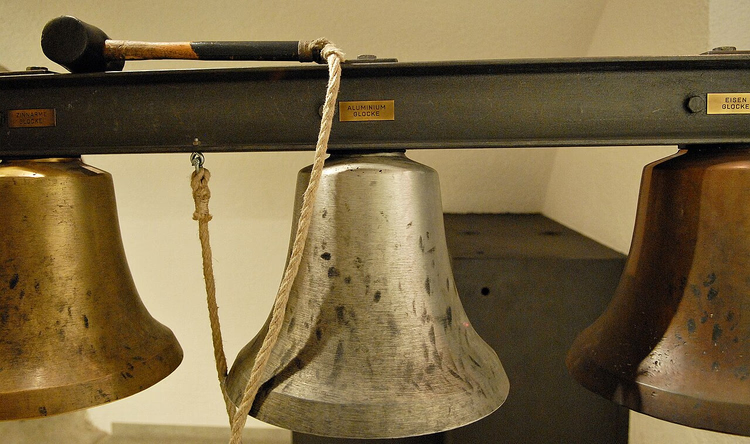
The Grassmayr Bell Museum operates at a working foundry. Fourteen generations of the Grassmayr family have cast bells, and the technology is still kept secret here. So you're looking not only at a collection, but at a working workshop.
 © Loimo · CC BY-SAPhoto: Loimo, CC BY-SA (https://creativecommons.org/licenses/by-sa/3.0), Wikimedia Commons
The exhibition includes hundreds of bells from tiny to giant, as well as tools and professional equipment. In the workshop you can see how a bell is born from copper and steel. The museum is open on weekdays, and from May to October it is also open on Saturdays.
- Getting there: the workshop is on the way out of the center toward Bergisel, about fifteen minutes on foot (on the map).
- Cost: adult ticket is low, children's ticket cheaper; groups get a discount.
- Who it's for: for those who want to see a craft in action, because the workshop is active.
- The catch: the museum is closed on Sundays.
16. Triumphal Arch
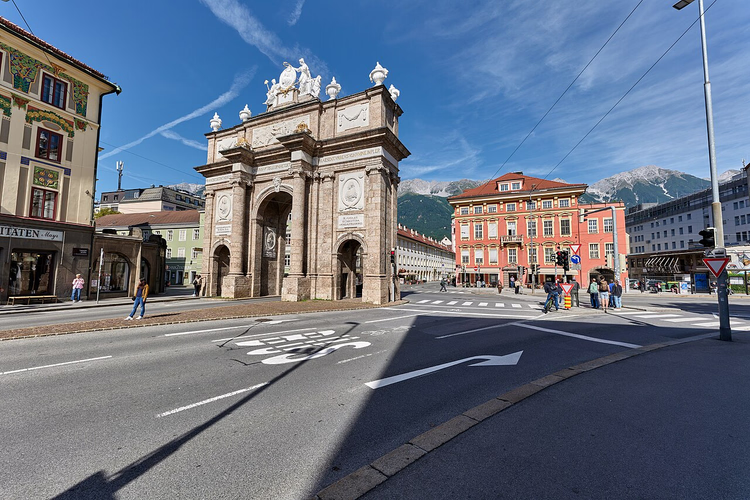
The Triumphal Arch was built by order of Maria Theresa, but not to celebrate a victory. The empress erected it as a sign of mourning for her husband Francis I, who died during the wedding celebrations of their son. That is why one monument combines joy and grief.
The south side is decorated with symbols of love and happiness, while the north side is given over to mourning symbols and sorrowful figures. The arch stands on the border between the Old Town and the newer districts, and you will pass it on your way from Maria Theresa Street.
- How to get there: at the southern end of Maria Theresa Street, on the edge of the Old Town.
- Cost: free, it is a city monument.
- Who it's for: for those walking along Maria Theresa Street, because the arch stands right on the route.
- The catch: there is a busy road nearby, so you won't get a calm shot from both sides.
17. Alpine Zoo
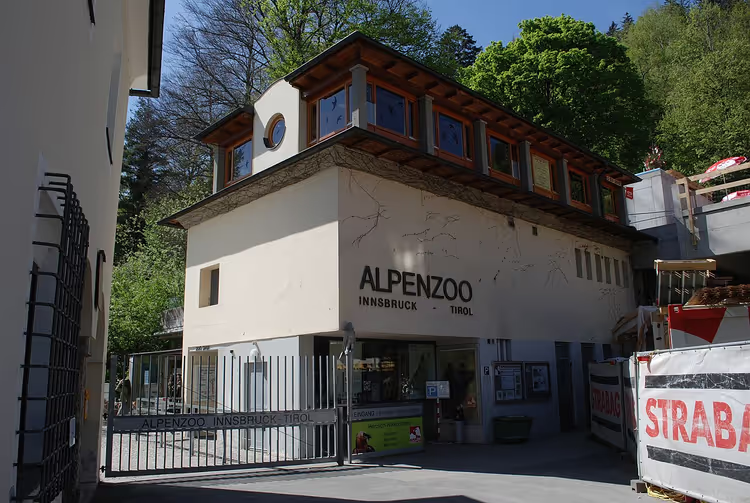 © Hafelekar · CC BY-SAPhoto: Hafelekar, CC BY-SA (https://creativecommons.org/licenses/by-sa/3.0), Wikimedia Commons
The Alpine Zoo lies on the slope of the Nordkette mountain and keeps only local fauna. Alpine animals and birds live here, more than two thousand in total. Because of its high location, the zoo is considered one of the most scenic in Europe.
Open enclosures with walkways let you observe the animals without bars, and the freshwater aquarium is home to local fish and amphibians. A panoramic window gives you a clear view of the underwater world. The zoo is open only during the day, with longer hours in summer than in winter.
- How to get there: take the Hungerburgbahn funicular to the Alpenzoo station or walk uphill from the Old Town.
- Cost: an adult ticket is in the mid-range, children get a discount; with the Innsbruck Card entry is free (as of 09/2026, tourism office page).
- Who it's for: for those traveling with children, because the enclosures are designed for close contact.
- The catch: the path to the zoo goes uphill.
18. Hungerburgbahn Funicular
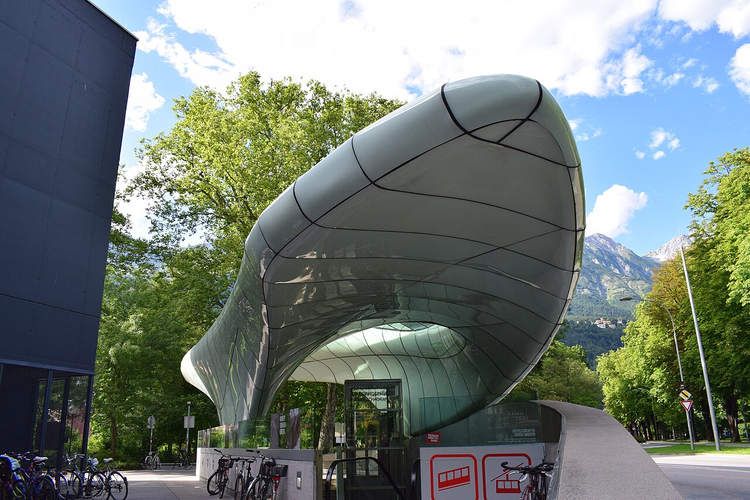 © Mttglsr · CC BYPhoto: Mttglsr, CC BY (https://creativecommons.org/licenses/by/4.0), Wikimedia Commons
The Hungerburgbahn takes you from the Old Town up to the Hungerburg plateau in eight minutes. The funicular leads to a mountain station with unusually shaped pavilions and comes out right at the viewing platforms above Innsbruck.
From the plateau you can transfer to the cable car to Seegrube, and from there continue to the Hafelekar platform. On Friday evenings the funicular runs later than usual. Tickets are sold at the stations, and the ride is free with the Innsbruck Card.
- How to get there: the lower station is in the Old Town near the Congress House, next to the Golden Roof.
- Cost: round-trip tickets are sold at the station, and the ride is free for Innsbruck Card holders.
- Who it's for: for those who want to get above the city quickly, because the ascent takes only a few minutes.
- The catch: on Friday evenings the cars are packed.
19. Nordkettenbahn Cable Car
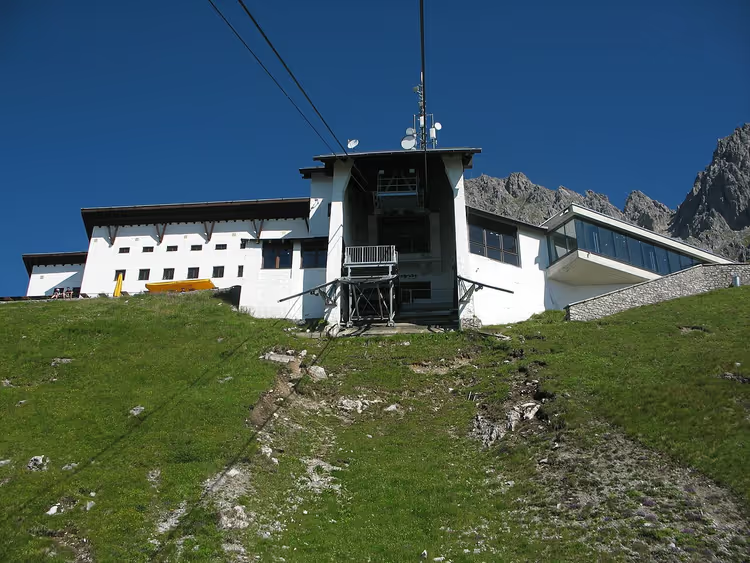 © KlausFoehl · CC BY-SAPhoto: KlausFoehl, CC BY-SA (https://creativecommons.org/licenses/by-sa/3.0), Wikimedia Commons
The Nordkettenbahn runs from the Hungerburg plateau via Seegrube up to the Hafelekar platform. In just a few minutes you rise from the city into the belt of alpine meadows and rock. The views open up immediately, so keep your camera at hand.
At the top there are viewing platforms and trails, and a mountain cafe operates at the middle station. The cable car runs daily during the day, and an adult ticket starts at a low price. Further down the slope, the zoo and the railway museum sit next to the cable car route.
- How to get there: take the Hungerburgbahn funicular to the Hungerburg plateau, then transfer to the cable car.
- Cost: an adult ticket starts at a low price, and the ascent is free with the Innsbruck Card.
- Who it's for: for those who want mountains without a long hike, because the cable car takes you up.
- The catch: in cloudy weather the summit is covered in fog, so it's better to reschedule the trip.
20. Bergiselschanze Ski Jump
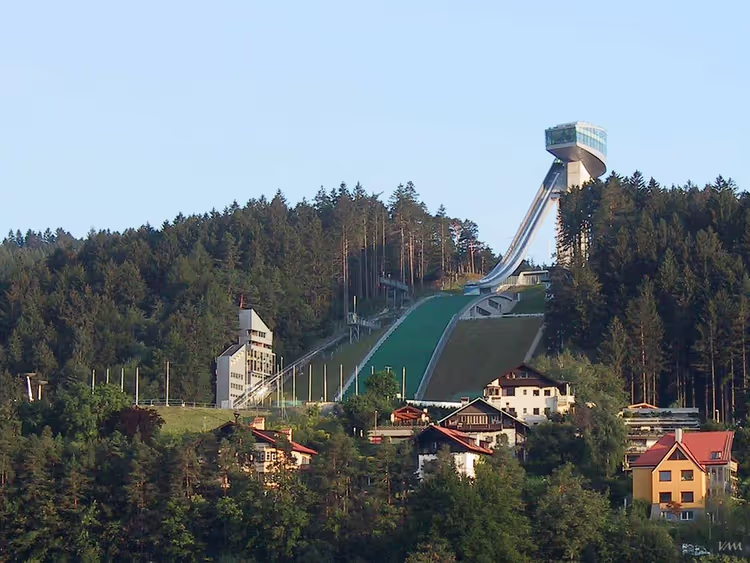 © Veit Mueller · CC BY-SAPhoto: Veit Mueller, CC BY-SA (http://creativecommons.org/licenses/by-sa/3.0/), Wikimedia Commons
The Bergiselschanze stands on Bergisel Hill in a pine forest. The Olympic flame was lit here twice, and after reconstruction the ski jump became a modern sports facility. Its platform resembles a flying saucer.
Regular visitors will also find something to do: there is a cafe and a viewing platform, paths run all around, and from above you can see Innsbruck and the Inn valley. When there are no competitions, you can also visit the service areas of the ski jump. In winter the facility is closed on Tuesdays.
- How to get there: walk from the center up the path to the hill or take the tram to the foot, then continue by elevator.
- Cost: an adult ticket is low, a child ticket is cheaper; entry is free for Innsbruck Card holders.
- Who it's for: for those who want to see Innsbruck from above, because the platform stands high above the city.
- The catch: in winter the ski jump is closed to visitors on Tuesdays.
Tours and tickets in Innsbruck
Guided tours, skip-the-line tickets and activities — most offers can be cancelled free of charge.
See offers on GetYourGuideThe widget loads once you give your consent.
⁉️🤔 Frequently asked questions
How much time do you need for the main sights of Innsbruck?
Allow at least two days. On the first day, see the Old Town: the Hofburg, the Golden Roof, the Hofkirche, St. James's Cathedral, and Maria Theresa Street. On the second, go up the Nordkette and visit the zoo or Ambras Castle. If you have less time, choose the Old Town and one mountain ascent.
Is the Innsbruck Card worth buying?
The card pays off if you go up the Nordkette and visit several museums. It includes twenty-two attractions, lifts, and city transport. For a single day in the Old Town, the card may be unnecessary, because some viewpoints are free to access. Do the math based on your route.
Which Innsbruck sights are free?
You can see Maria Theresa Street, the Helblinghaus, the Triumphal Arch, the Hofgarten park, St. James's Cathedral, and Wilten Basilica for free. The Hofburg and the Golden Roof are accessible from the outside. Museum interiors require a ticket, but some of them are included in the Innsbruck Card. Donations are welcome in the churches.
How do you get to Swarovski Kristallwelten without a car?
From Innsbruck to Wattens, a bus runs from the main station, and there is also the official Kristallwelten shuttle. The trip takes about half an hour. Check the shuttle tickets and schedule on the museum's official website. With the Innsbruck Card, admission to Kristallwelten is included, so you don't need a car.
What to do in Innsbruck on a rainy day?
Take shelter in the museums: the Ferdinandeum, the Tyrolean Folk Art Museum, the Tyrol Panorama museum, and the Hofburg are open in any weather. In the Hofkirche and St. James's Cathedral you can wait out a downpour for free. If you have time, go to Swarovski Crystal Worlds: most of the exhibition is inside the rock.
If you want to see the city in motion before your trip, watch the short overview below.
In short: what to book
Innsbruck fits comfortably into two days. Give the first to the Old Town: the Hofburg, the Golden Roof, the Hofkirche, St. James's Cathedral, and Maria Theresa Street are all close together. Leave the second for the mountains and Bergisel: the Hungerburgbahn, the Nordkettenbahn, the zoo, and the ski jump.
- If you have two days: the Old Town on the first, the Nordkette and Bergisel on the second.
- If you're traveling with children: the Alpine Zoo, Swarovski Crystal Worlds, and the Hungerburgbahn.
- If it's raining: the Ferdinandeum, the Tyrolean Folk Art Museum, and the Tyrol Panorama.
- If you want to save money: the Innsbruck Card instead of separate tickets for museums and lifts.
Book lift tickets and popular museum tickets in advance: lines at the Nordkette and Kristallwelten grow by midday. See tours and tickets for Innsbruck on GetYourGuide.
All twenty points are collected on the map below: it's a convenient way to plan your route by day.
Twenty places in Innsbruck
Places on the map
- 1Ambras Castle The world's oldest museum, a Habsburg portrait gallery and Armoury
- 2Wilten Basilica and Abbey Baroque abbey at the foot of Bergisel, free admission
- 3Hofburg 15th-century Habsburg residence, twenty-five apartments open to view
- 4Maria-Theresien-Strasse The main pedestrian artery with palaces, shops and shopping arcades
- 5Helblinghaus Gothic house with a rococo stucco facade next to the Golden Roof
- 6Tyrol Panorama Circular panorama of the battle against Napoleon's troops on Bergisel hill
- 7City Tower 15th-century watchtower with an observation deck over the Old Town rooftops
- 8Tyrolean Folk Art Museum Former Franciscan monastery with authentic medieval interiors
- 9Ferdinandeum Tyrol's oldest museum, from fossils to European painting
- 10Golden Roof Late Gothic oriel with gilded copper tiles, the city's symbol
- 11Swarovski Crystal Worlds Museum inside a mountain in Wattens with light and mirror installations
- 12St James's Cathedral The city's main Baroque church with an altarpiece by Cranach, free admission
- 13Hofkirche Church with the cenotaph of Maximilian I and 16th-century bronze figures
- 14Hofgarten City park with ponds, a palm house and trees from the era of Maria Theresa
- 15Triumphal Arch Maria Theresa's Arch at the southern end of the main street, north joy, south mourning
- 16Alpine Zoo Only local fauna on the Nordkette slope, open enclosures and an aquarium
- 17Hungerburgbahn Funicular Ride up from the Old Town to the Hungerburg plateau in eight minutes
- 18Bergisel Southern hill with an observation deck over Innsbruck and the Inn valley

A small editorial team writing guides for independent travel. We travel ourselves, but we haven’t been everywhere, so we check prices, opening hours and how to get there against official sources.