
















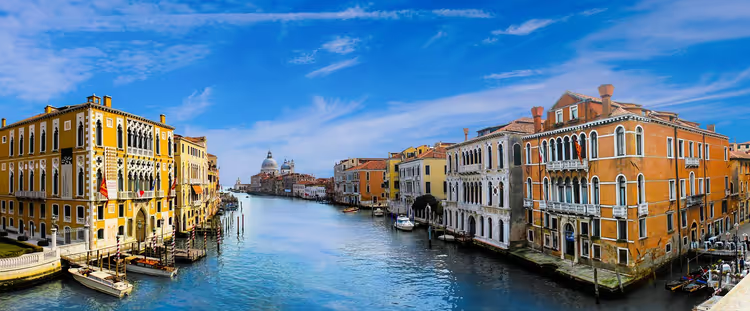
12 Museums in Venice: tickets, hours and what to see in 2026
The line for the Doge's Palace in July can take up to two hours. Tickets at the ticket office cost more than online, and some Venice museums are closed on Mondays and Tuesdays. Without a plan, you'll spend half your time in lines. The order matters.
We've put together twelve museums that are truly worth seeing and checked their prices and hours on the official websites (as of 09/2026, MUVE rates and hours). Below you'll find what's included in the St. Mark's Square combined ticket, where admission is free, and how much time to allow for each museum.
Ad: this article contains affiliate links, we earn a commission if you book through them, at no extra cost to you.
Quick overview: tickets and hours
💡 In short:
- Venice museums fall into three groups: St. Mark's Square museums, MUVE civic museums, and the museums of Murano and Burano.
- The "I Musei di Piazza San Marco" combined ticket covers four sites at once and costs €35 (MUVE rates).
- Prices and hours: 09/2026, verified on the museums' official websites).
It's better to buy tickets online and in advance. In high season, the ticket office is slow, and entry times are tied to a specific slot. Below is a summary table, followed by a breakdown of each museum.
Museum | Admission | Hours | Source |
|---|---|---|---|
Gallerie dell'Accademia | €20, reduced €2 (18-25, EU) | Tue-Sun 9:00-19:00, closed Monday | |
St. Mark's Square museums | €35, €30 online | combined ticket for four sites | |
Peggy Guggenheim Collection | museum rates | daily 10:00-18:00, closed Tuesday | |
Ca' Rezzonico, Ca' Pesaro, Museo Fortuny | MUVE rates | schedule on museum websites | |
Murano and Burano museums | MUVE rates | schedule on museum websites |
1. Gallerie dell'Accademia
 © Congolandia.g · CC BY-SAPhoto: Congolandia.g, CC BY-SA (https://creativecommons.org/licenses/by-sa/4.0), Wikimedia Commons
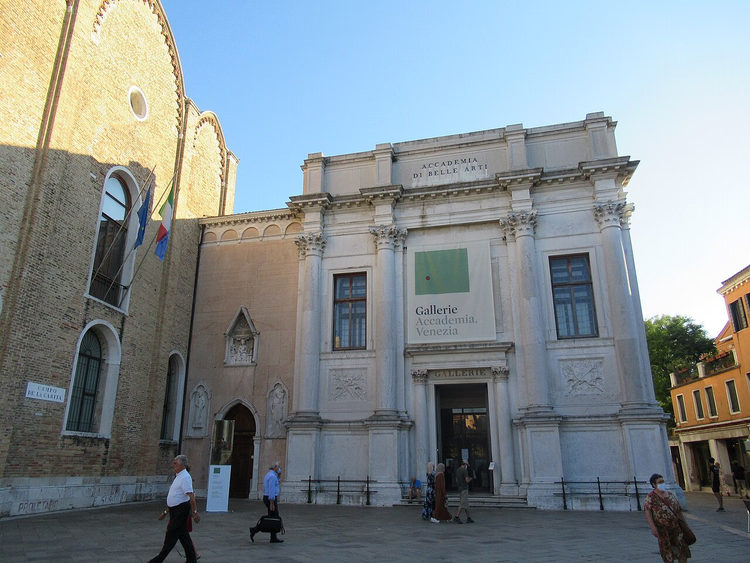
The Gallerie dell'Accademia (Galleria dell'Accademia) holds the largest collection of Venetian painting. The works span the fourteenth through the eighteenth centuries. The building stands on the south bank of the Grand Canal, in the Dorsoduro district, at Campo della Carità, 1050 (as of 09/2026, Accademia hours and tickets).
The Academy of Fine Arts appeared in the mid-eighteenth century and gained museum status in the nineteenth. At first the collection was housed in five rooms; today the exhibition occupies twenty-five spaces of the former monastery and the church of Santa Maria della Carità. Titian, Giovanni Bellini, and Carpaccio hang here.
Take the first slot at nine in the morning. The line is short at that time. Half an hour before opening there are almost no people at the entrance, and you'll get through the main rooms without crowds. The ticket office closes before the museum. Plan a late entry in advance.
- Cost: full ticket 20 €, EU citizens aged 18 to 25 pay 2 €, visitors under 18 enter free (as of 09/2026, Accademia ticket prices).
- Getting there: vaporetto to the Accademia stop, lines 1, 2, and N (as of 09/2026, how to get to the Accademia).
- The catch: the museum is closed on Mondays, and tickets are sold only until 6:00 PM (as of 09/2026, Accademia opening hours).
Once a month admission is free: every first Sunday the museum is open free of charge as part of the "Domenica al Museo" initiative (as of 09/2026, free Sundays at the Accademia). If you don't want to depend on the ticket office, it's convenient to book a time slot in advance: skip-the-line Accademia tickets.
2. Doge's Palace
 © Armin Kleiner · CC BY-SAPhoto: Armin Kleiner, CC BY-SA (https://creativecommons.org/licenses/by-sa/4.0), Wikimedia Commons
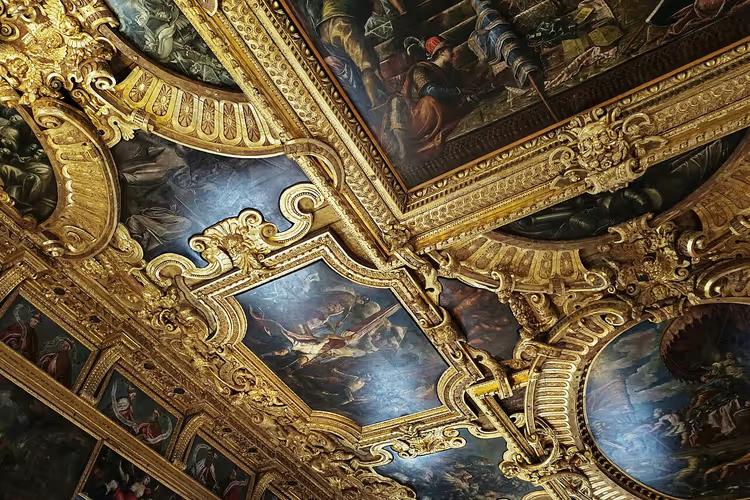
The Doge's Palace (Palazzo Ducale) on St. Mark's Square served as the residence of the rulers of the Venetian Republic. The Gothic building was constructed in the fourteenth century. It housed the Great Council, the Senate and the Supreme Court, as well as administrative offices and the maritime department. The museum opened to visitors in the 1920s (as of 09/2026, official website of the Doge's Palace).
Tour the building along the designated route. First comes the Golden Staircase for important guests, then the Giants' Staircase made of Carrara marble with statues of Mars and Neptune. Next is the Paper Door with the winged lion and the Hall of the Great Council. The latter is home to Tintoretto's "Paradise," one of the largest paintings in the world, and its windows offer a view of the lagoon.
After that come the Hall of Elections, the Compass Room with the "lion's mouth" for denunciations, and the Hall of the Council of Ten, above which the prison cells were located. The state rooms, cells, and the halls of the Scarlatti, Senate and College are all covered by a single ticket.
The palace is included in the combined ticket "I Musei di Piazza San Marco." The standard rate is 35 EUR, the reduced rate is 15 EUR, and if you buy online more than 30 days before your visit, the price drops to 30 EUR (as of 09/2026, official MUVE website). Ticket holders without a time slot enter the palace after 12:00.
St. Mark's Basilica stands nearby. A skip-the-line ticket to the basilica will save you from the longest queue on the square.
3. Marciana Library
 © This Photo was taken by Wolfgang Moroder . Feel free to use my photos, but please mention me as the author and send me a · CC BY-SAPhoto: This Photo was taken by Wolfgang Moroder . Feel free to use my photos, but please mention me as the author and send me a, CC BY-SA (https://creativecommons.org/licenses/by-sa/3.0), Wikimedia Commons
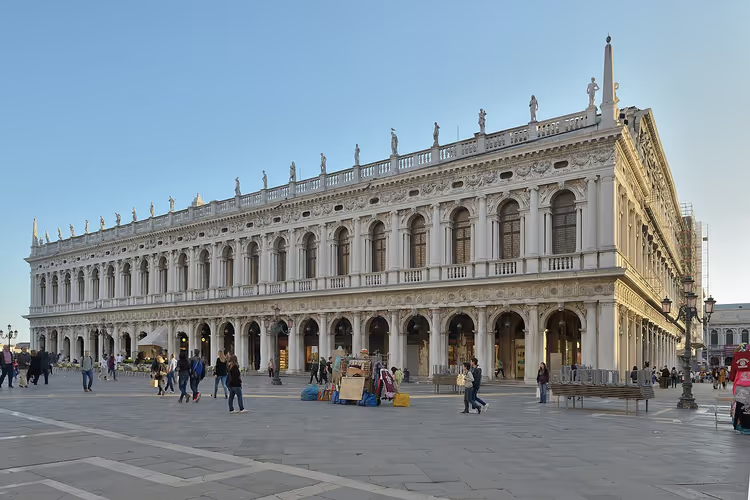
The Marciana Library (Biblioteca Marciana) occupies a Renaissance building with arches, columns and sculptures on the Piazzetta San Marco. The core of the collection was established by Cardinal Bessarion in the late fifteenth century. Today the holdings are considered among the largest in the city: around 13,000 manuscripts, early printed books and sixteenth-century editions (as of 09/2026, combined St. Mark's ticket).
A law passed in the early seventeenth century required a copy of every book published in Venice to be deposited in the library. That is why it holds works by ancient authors, rare scores of early operas and one of the largest collections of classical texts.
The monumental halls were decorated in the mid-sixteenth century by the same masters who worked on the Doge's Palace. You can enter them with the combined ticket for the St. Mark's Square museums; no separate ticket office is needed. In the reading room you will see historic bookcases. The silence here is real.
- Cost: included in the "I Musei di Piazza San Marco" ticket (as of 09/2026, St. Mark's museum rates).
- Getting there: vaporetto to the San Marco or San Zaccaria stop, lines 1 and 2, then a couple of minutes on foot (as of 09/2026, MUVE schedule).
4. Ca' Rezzonico
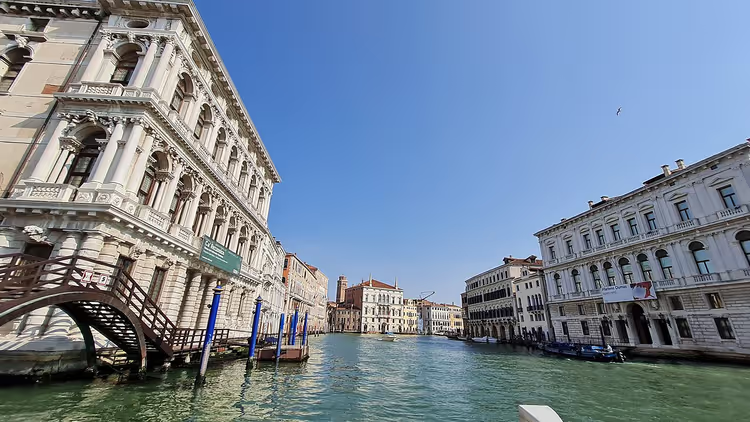 © Derbrauni · CC BYPhoto: Derbrauni, CC BY (https://creativecommons.org/licenses/by/4.0), Wikimedia Commons
Ca' Rezzonico shows how the Venetian nobility lived in the eighteenth century. The palace on the Grand Canal was completed in the mid-eighteenth century for the Rezzonico family. The interiors were decorated by Tiepolo, Guardi, and Pietro Longhi, so the paintings here hang in a historical setting rather than in white halls (As of 09/2026, Ca' Rezzonico palace).
Three floors display furniture made of precious woods, crystal chandeliers, mirrors, and ceiling frescoes. The Throne Room, Ballroom, Lazzarini Hall, Reception Hall, and Tiepolo Hall are open to visitors. The reception area of the palace was once used for trading goods brought in along the canal.
Address: Dorsoduro, 3136, Fondamenta Rezzonico (As of 09/2026, Ca' Rezzonico hours and address).
- Cost: separate MUVE ticket, check the exact price on the official website (As of 09/2026, Ca' Rezzonico tickets).
- Getting there: vaporetto to the Ca' Rezzonico stop, line 1 (As of 09/2026, how to get to Ca' Rezzonico).
5. Museum of oriental art in Ca' Pesaro
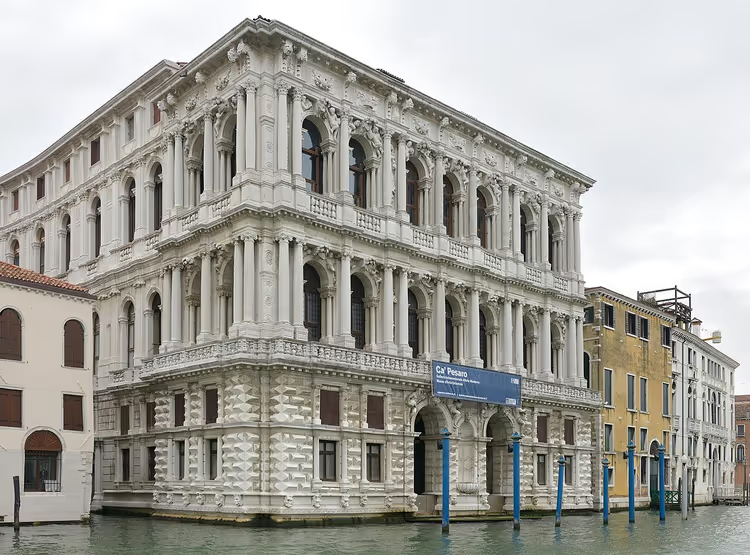 © This Photo was taken by Wolfgang Moroder . Feel free to use my photos, but please mention me as the author and send me a · CC BY-SAPhoto: This Photo was taken by Wolfgang Moroder . Feel free to use my photos, but please mention me as the author and send me a, CC BY-SA (https://creativecommons.org/licenses/by-sa/3.0), Wikimedia Commons
Ca' Pesaro stands in the Santa Croce district. The snow-white palace in Venetian Baroque style was designed by architect Baldassare Longhena. Since the early twentieth century it has housed the International Gallery of Modern Art with works by Chagall, Matisse, Klee, and Klimt (As of 09/2026, Ca' Pesaro palace).
The Museum of Oriental Art is located on the upper floor. The halls display objects from China, Japan, and Indonesia: enamel and porcelain figurines, paintings, swords, and daggers. Address: Santa Croce, 2070 (As of 09/2026, Museum of Oriental Art in Ca' Pesaro).
- Cost: separate MUVE ticket (As of 09/2026, Ca' Pesaro tickets).
- Getting there: vaporetto to the San Stae stop, then walk (As of 09/2026, how to get to Ca' Pesaro).
6. Natural History Museum
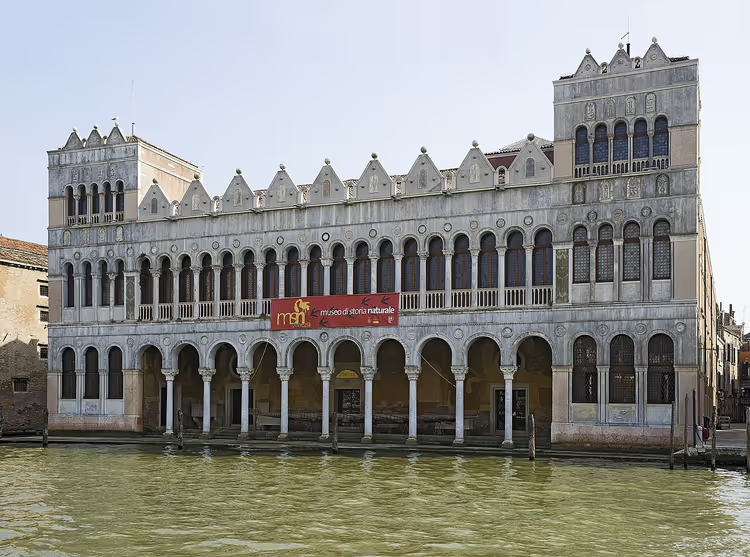 © Didier Descouens · CC BY-SAPhoto: Didier Descouens, CC BY-SA (https://creativecommons.org/licenses/by-sa/4.0), Wikimedia Commons
The Natural History Museum (Museo di Storia Naturale) occupies the historic Fondaco dei Turchi building, built in the thirteenth century for a wealthy merchant family. The museum opened in the 1920s, when the city's scientific collections were brought together here (as of 09/2026, museum in Fondaco dei Turchi).
Families with children come here for the dinosaur skeletons and the huge aquarium. The halls house herbaria, insect and mineral collections, fossils, and Adriatic marine life. A separate section is devoted to ethnography and the daily life of Venetians, and a laboratory restores damaged exhibits.
- Cost: separate MUVE ticket (as of 09/2026, natural history museum tickets).
- Who it's for: families with children who are interested in nature rather than painting (as of 09/2026, natural history museum halls).
- Getting there: vaporetto to the Riva di Biasio stop, then walk (as of 09/2026, how to get to the natural history museum).
7. Fortuny Museum
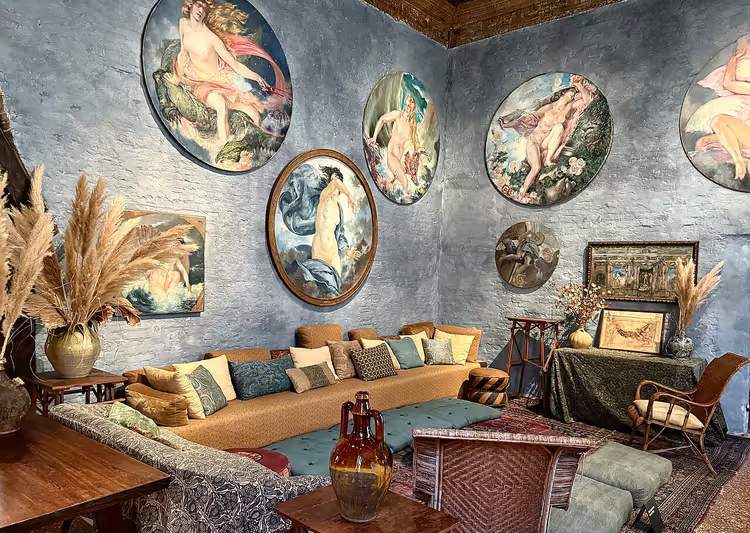 © Nicola Quirico · CC BY-SAPhoto: Nicola Quirico, CC BY-SA (https://creativecommons.org/licenses/by-sa/4.0), Wikimedia Commons
The Fortuny Museum (Museo Fortuny) is located in a Gothic palace that was once the tallest building in the San Marco district. Until the late nineteenth century the house belonged to the Pesaro family, and then it was bought by the artist and designer Mariano Fortuny (as of 09/2026, Fortuny Museum).
The collection brings together around 150 paintings and photographs, fabrics, costumes, and Renaissance velvet ornaments. The most famous part of the collection: long dresses made of pleated silk that still sell at international auctions. Address: San Marco, 3780 (as of 09/2026, Museo Fortuny hours and address).
- Cost: separate MUVE ticket (as of 09/2026, Museo Fortuny tickets).
8. Naval History Museum
 © G.dallorto · CC BY-SAPhoto: G.dallorto, CC BY-SA (https://creativecommons.org/licenses/by-sa/2.5/it/deed.en), Wikimedia Commons
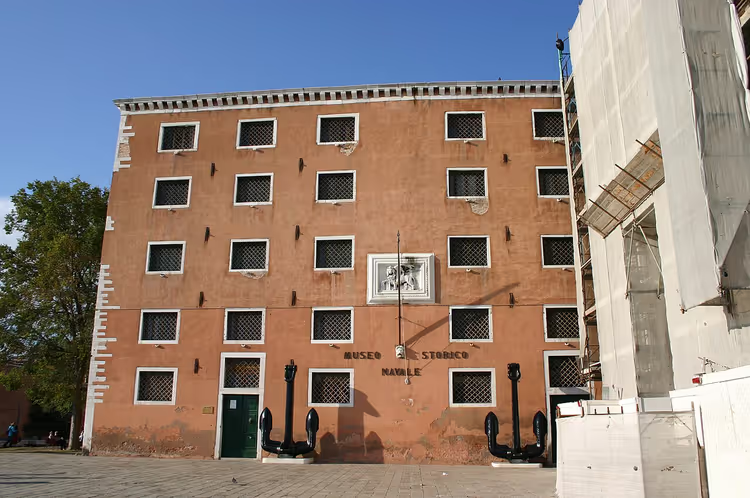
The Naval History Museum (Museo Storico Navale) explains why Venice lived by the sea. It was founded in the early twentieth century, and today it occupies five floors and more than forty halls next to the Arsenale. People come here if they are interested in ships, maps, and weapons rather than painting.
The museum's main exhibit: the ceremonial galley of the doges, the Bucintoro, on which the ruler "married the sea." Only individual ornaments have survived to this day. Besides it, you will see ship models, archival documents, awards, historical uniforms, portraits of admirals, and torpedo samples. The cabinets hold a collection of thousands of shells.
- The catch: the opening hours are unusual, on weekdays the museum closes early, so check the schedule before your visit.
9. Museo Correr
The Museo Correr grew out of the collection of aristocrat Teodoro Correr, who donated paintings and his own home to the city. The permanent exhibitions opened here in the 1830s, and today they occupy thirty-three rooms across three floors. The museum is housed in the Procuratie building on St. Mark's Square, opposite the basilica (As of 09/2026, Museo Correr on St. Mark's Square).
Here you can trace the history of Venice: maps, coins, documents, weapons, and paintings from different eras. The museum is included in the "I Musei di Piazza San Marco" combined ticket, so you don't need a separate ticket (As of 09/2026, Museo Correr hours).
- Cost: included in the St. Mark's Square museums ticket (As of 09/2026, official MUVE page).
10. Lace museum
 © Abxbay · CC BY-SAPhoto: Abxbay, CC BY-SA (https://creativecommons.org/licenses/by-sa/3.0), Wikimedia Commons
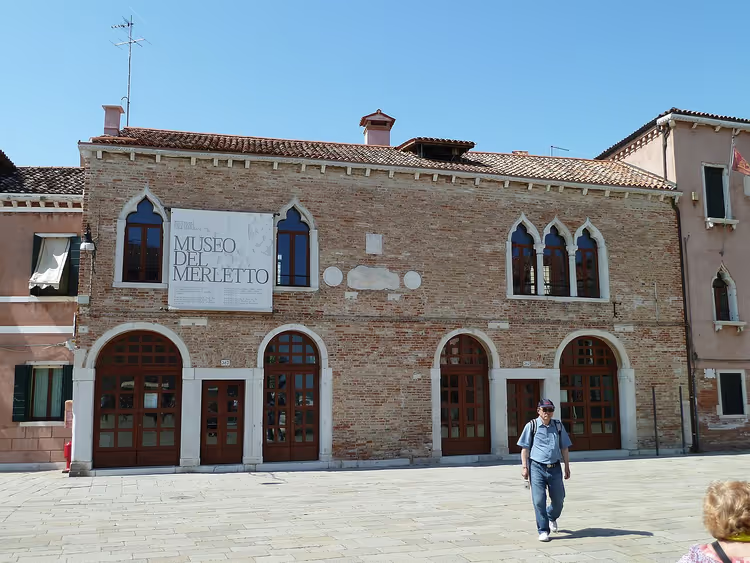
The Lace Museum (Museo del Merletto) has operated on the island of Burano since the early 1980s. The Venetian lace school opened here back in the late nineteenth century, and the lacemaking traditions themselves go back several centuries. The exhibition occupies three floors of the former lace school building (As of 09/2026, Lace Museum on Burano).
In the galleries you'll see lace made from gold and silver threads, created from the sixteenth through the twentieth century. The top floor displays lacemakers' tools, and the collection includes a piece of needle lace without a base, resembling a fine spider web. Address: Piazza Galuppi, 187, Burano island (As of 09/2026, Museo del Merletto address and hours).
You can get there by vaporetto from Fondamente Nove; the route passes through Murano and takes under an hour. The island is nine kilometers from Venice (As of 09/2026, how to get to Burano).
- Cost: separate MUVE ticket (As of 09/2026, Museo del Merletto tickets).
11. Peggy Guggenheim Collection
 © Abxbay · CC BY-SAPhoto: Abxbay, CC BY-SA (https://creativecommons.org/licenses/by-sa/3.0), Wikimedia Commons
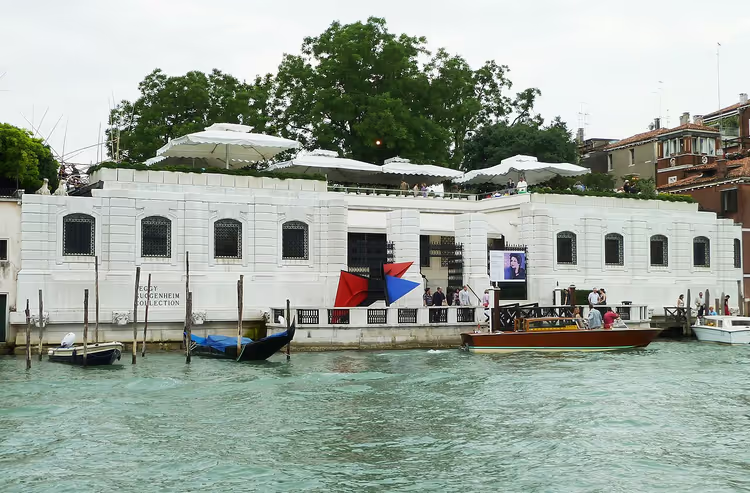
The Peggy Guggenheim Collection is housed in the Palazzo Venier dei Leoni on the Grand Canal. The American heiress collected twentieth-century art and held exhibitions here for thirty years. After her death in the late 1970s, the collection of roughly three hundred works became a museum (As of 09/2026, Peggy Guggenheim collection).
The halls display Picasso, Dali, Kandinsky, and Mondrian, and the inner courtyard has a sculpture garden. The museum is open daily from 10:00 to 18:00, closed on Tuesdays, and the ticket office closes at 17:00 (as of 09/2026, collection hours).
- Getting there: vaporetto to the Accademia or San Basilio stop (as of 09/2026, how to get to the Guggenheim).
If you want to see the Grand Canal from the water, add a gondola ride to your visit.
12. Murano Glass Museum
 © Tajchman Maria · CC BY-SAPhoto: Tajchman Maria, CC BY-SA (https://creativecommons.org/licenses/by-sa/4.0), Wikimedia Commons
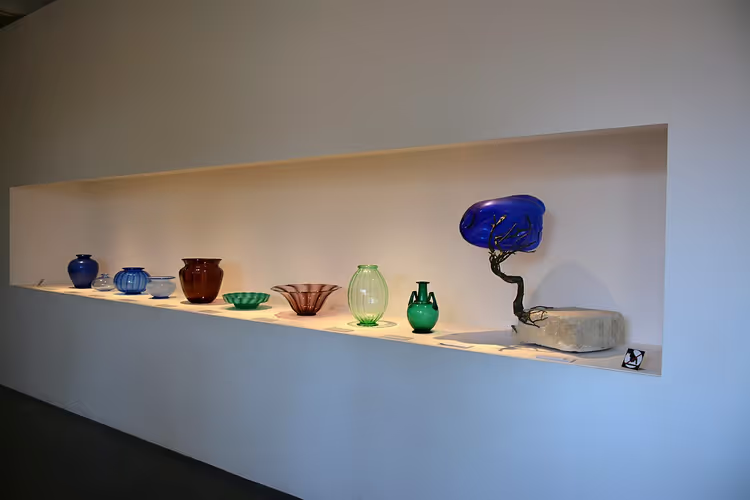
The Murano Glass Museum (Museo del Vetro) tells the story of the craft that made Murano famous. Glassblowing production was moved to the island in the late thirteenth century to protect the city from fires. Master glassmakers kept their techniques secret and passed them down through generations (as of 09/2026, Murano Glass Museum).
Here you'll see how quartz glass was used to make ultra-thin pieces, smalti, aventurine glass with gold threads, and imitation gemstones. The complex hosts lectures on the history of glassblowing, and the shop sells vases and decorative panels. Address: Fondamenta Giustinian, Murano island.
- Cost: separate MUVE ticket (as of 09/2026, Museo del Vetro tickets).
- Getting there: vaporetto from Fondamente Nove, the trip takes about half an hour (as of 09/2026, how to get to Murano).
To see both Murano and Burano in one day, take a boat tour of the islands.
Tickets, combo tickets, and saving money
Prices for Venice museums vary, and it's easy to overpay. The best deal for St. Mark's Square is the combined ticket "I Musei di Piazza San Marco." It costs from 30 to 35 euros depending on the purchase date (as of 09/2026, MUVE foundation rates).
The MUVE foundation also offers other options: themed combo tickets for the Dorsoduro museums, modern art, and the islands, as well as a single Museum Pass. If you plan to visit three or more museums during your trip, this pass is usually cheaper than individual tickets. Check the current list on the foundation's official website.
Free admission exists too. The Gallerie dell'Accademia opens its doors free of charge on the first Sunday of the month, and some city museums participate in Ministry of Culture promotions. Check the museums' official pages for exact dates.
It's not just about museums. If you want some evening variety, get a ticket to La Fenice Opera House with an audio guide.
Tours and tickets in Venice
Guided tours, skip-the-line tickets and activities — most offers can be cancelled free of charge.
See offers on TiqetsThe widget loads once you give your consent.
Venice museums on the map
The museums from this list are marked on the map below. The palaces of St. Mark's Square are close to each other, the Dorsoduro museums are easy to combine into one route, and Murano and Burano require a separate day. Open the map on your phone before heading out so you don't waste time looking for the entrance.
Museums of Venice
Places on the map
- 1Gallerie dell'Accademia The largest collection of Venetian painting from the 14th-18th centuries
- 2Doge's Palace Residence of the rulers of the republic, Tintoretto's Paradise in the Great Council Hall
- 3Biblioteca Marciana Renaissance building with 13,000 manuscripts, entry with a combined ticket
- 4Ca' Rezzonico Life of 18th-century Venetian nobility, interiors by Tiepolo and Guardi
- 5Ca' Pesaro Gallery of modern art and the Museum of Oriental Art
- 6Museum of Natural History Dinosaur skeletons and an aquarium in the Fondaco dei Turchi building
- 7Fortuny Museum Gothic palace with fabrics and pleated Fortuny dresses
- 8Naval History Museum The doges' galley Bucintoro and ship models near the Arsenal
- 9Correr Museum History of Venice: maps, coins and weapons, combined ticket with San Marco
- 10Lace Museum 16th-20th century lace on the island of Burano
- 11Peggy Guggenheim Collection Picasso, Dalí and Kandinsky in the Palazzo Venier dei Leoni
- 12Murano Glass Museum History of the glassblowing craft on the island of Murano
⁉️🤔 Frequently asked questions
How much does it cost to visit the museums of Venice?
A full ticket to the Gallerie dell'Accademia costs 20 €, and the combined "I Musei di Piazza San Marco" ticket costs 35 € and covers four venues at once. Visitors under 18 enter state museums for free, and EU residents aged 18 to 25 pay a symbolic 2 € (as of 09/2026, MUVE museum prices).
What's included in the "I Musei di Piazza San Marco" ticket?
One ticket gives you access to the Doge's Palace, Museo Correr, Museo Archeologico Nazionale, and the monumental halls of the Biblioteca Marciana. You pick your entry time slot at the Doge's Palace, and you can visit the other venues over the following days, so it's easy to spread the route across two visits (as of 09/2026, combined ticket terms).
When are Venice museums free?
The Gallerie dell'Accademia is free on the first Sunday of every month as part of the "Domenica al Museo" initiative. You can enter without a reservation, but the line is longer than usual on those days, so arrive at opening time (as of 09/2026, Domenica al Museo initiative).
What day are Venice museums closed?
Each museum has its own closing day. The Gallerie dell'Accademia is closed on Mondays, the Peggy Guggenheim Collection is closed on Tuesdays, and MUVE museums are usually closed on Mondays. Check the day of the week on the official website before your trip (as of 09/2026, MUVE museum closing days).
How much time do you need for all the museums in Venice?
Allow an hour and a half to two hours for a major museum and about an hour for a smaller one. To see everything on this list, plan for three to four days, because the islands of Murano and Burano take up a full day. You won't see all twelve museums in one day, so pick two or three based on your interests.
In short: what's worth booking
The bottom line is simple. If you have one day, get the combined "I Musei di Piazza San Marco" ticket. Save the Gallerie dell'Accademia for the second day. If you're traveling with kids, put the Natural History Museum on your list. If you love contemporary art, your route is: Peggy Guggenheim and Ca' Pesaro.
- One day in the city: Doge's Palace and Museo Correr with the combined ticket.
- Two days: add the Gallerie dell'Accademia and the Peggy Guggenheim Collection.
- Three days or more: the islands of Murano and Burano with the glass and lace museums.
Get your tickets online: that way you pick a time slot and skip the ticket office line. It's easy to compare options and book skip-the-line entry on GetYourGuide.

A small editorial team writing guides for independent travel. We travel ourselves, but we haven’t been everywhere, so we check prices, opening hours and how to get there against official sources.