
















Nuremberg sights: 15 places from the fortress to the zoo
Nuremberg can be covered in one day if you know in advance where the lines form. The old town is compact, but the fifteen main sights are spread between the castle, the Pegnitz River, and the area around St. Lawrence Church.
Let's start with the most important practical detail. Tickets to Nuremberg Castle are sold only at the ticket office in the outer courtyard; there is no online sales (according to the official Kaiserburg website). Arrive at opening time, because by midday a line already forms at the ticket office.
Next, fifteen sights in order, from the imperial castle to the zoo. For each place you'll find a short history and practical tips for visiting.
Ad: this article contains affiliate links. We earn a commission if you book through them, at no extra cost to you.
1. Nuremberg Castle
💡 In short:
- Start your day with the castle: tickets are sold only at the ticket office in the outer courtyard; there is no online sales.
- Museums are closed on Mondays (Albrecht Dürer's House and the Germanisches Nationalmuseum), so plan those for Tuesday through Sunday.
- Opening hours: 09/2026, verified on the official Kaiserburg website.
 © -wuppertaler · CC BYPhoto: -wuppertaler, CC BY (https://creativecommons.org/licenses/by/4.0), Wikimedia Commons
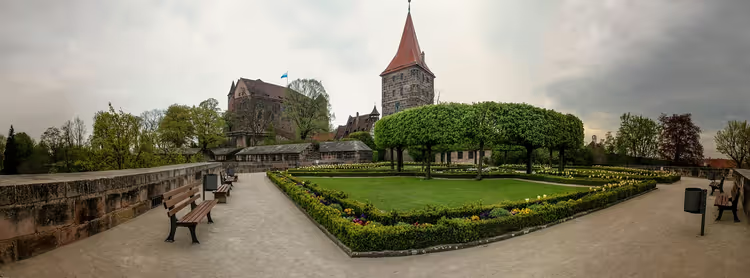
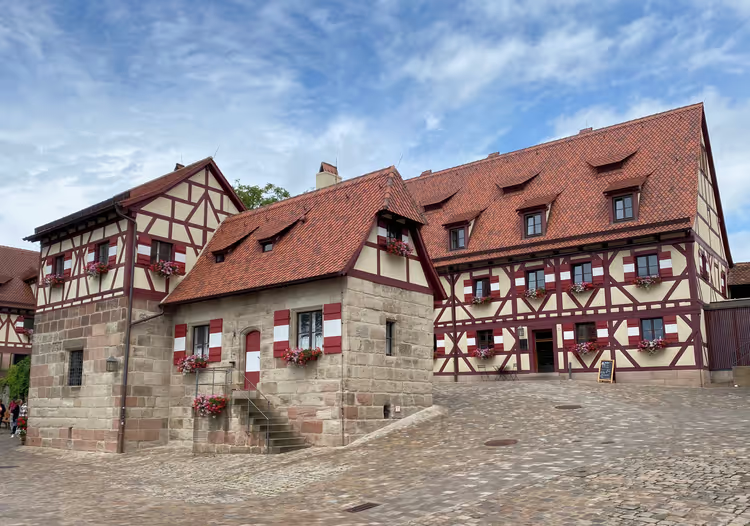
The imperial castle on a sandstone rock is the main symbol of Nuremberg and the city's most prominent landmark. The Kaiserburg grew up in the 11th century at the crossroads of trade routes, which is why the emperors established their residence here and kept it until the mid-17th century. Over the centuries the castle was repeatedly destroyed and rebuilt, most recently on a major scale after World War II.
Today you can visit the Palas with the emperor's private chambers and ceremonial halls, the 13th-century Double Chapel, and the Round Tower. A separate attraction is the deep well that supplied the castle with clean water. The well and the tower can only be seen with a guide, and that is already included in the ticket. The Palas and the Castle Museum are accessible without a tour. Opening hours: from April to September the castle is open 9 to 6, from October to March 10 to 4 (as of: 09/2026, official website). The combo ticket also gives you one entry to the City Museum in the Fembo House. Go in the morning: by midday the viewing platform of the Round Tower gets crowded.
2. Market Square and fairs
 © Nicohofmann · CC BY-SAPhoto: Nicohofmann, CC BY-SA (https://creativecommons.org/licenses/by-sa/3.0), Wikimedia Commons
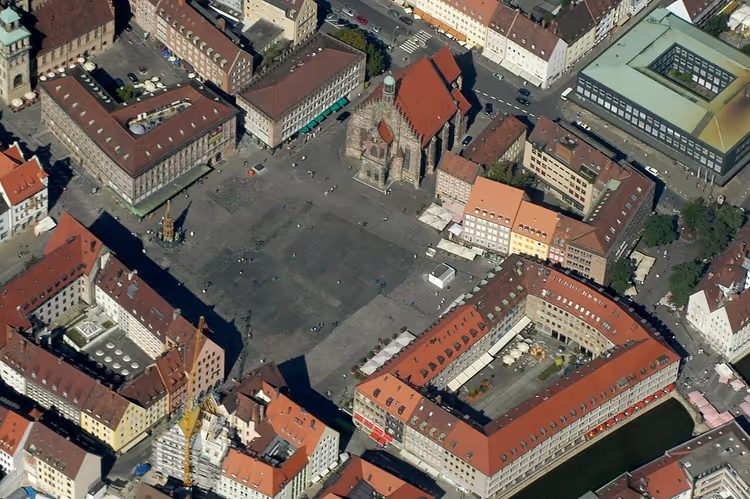
The Market Square has remained the city's main square since the 14th century. At that time it was cleared of the medieval Jewish quarter and was never built on again. Produce is sold here every day, and in December the square turns into the Christkindlesmarkt, one of the most famous Christmas markets in Germany.
In summer the square hosts festivals and street concerts; in winter it smells of mulled wine and gingerbread. From here it's a two-minute walk to the Frauenkirche and to the path up to the castle. Keep the season in mind: by midday the stalls get crowded, so it's better to come in the morning for souvenirs.
3. Frauenkirche on the market
 © Aarp65 · CC BY-SAPhoto: Aarp65, CC BY-SA (https://creativecommons.org/licenses/by-sa/3.0), Wikimedia Commons
The Frauenkirche was built in the 14th century for the emperor's court ceremonies. The sandstone facade is decorated with pointed windows and a portal, and inside there are medieval relics and an organ. The main reason to stop by here is the Männleinlaufen clock: exactly at noon, a procession of figures passes beneath it, depicting the prince-electors swearing allegiance to the emperor. The show lasts a few minutes and children love it.
Entry to the church is free; no ticket is needed. Come fifteen minutes before noon to get a spot in front of the clock. After your visit, you step right out onto the market and continue your walk around the square.
4. St. Lawrence Church
St. Lawrence Church was built starting in the late 13th century over nearly two centuries, and it is the largest church in Nuremberg. The building is made of dark red sandstone, so even from the outside it looks stern and solemn. Walk around the church: the facade reliefs depict scenes from the Bible, from the Nativity to the Massacre of the Innocents.
Inside, two masterpieces await you. The sculptural group "Annunciation" was carved from wood by Veit Stoss, and Adam Kraft's stone tabernacle rises nearly eighteen meters and rests on three figures of atlantes. The carving is so fine that it's hard to believe it survived the bombing of World War II. The church's stained glass windows are also considered among the best in Germany.
The church is active; services are held here on Sundays, and tourists are asked not to disturb parishioners. Entry is free, but a small fee for indoor photography is sometimes requested via the donation box. Also take a look at the treasury with church utensils. Allow about an hour for the whole visit: the church is large, and you'll want to examine every detail.
5. Albrecht Dürer's house museum
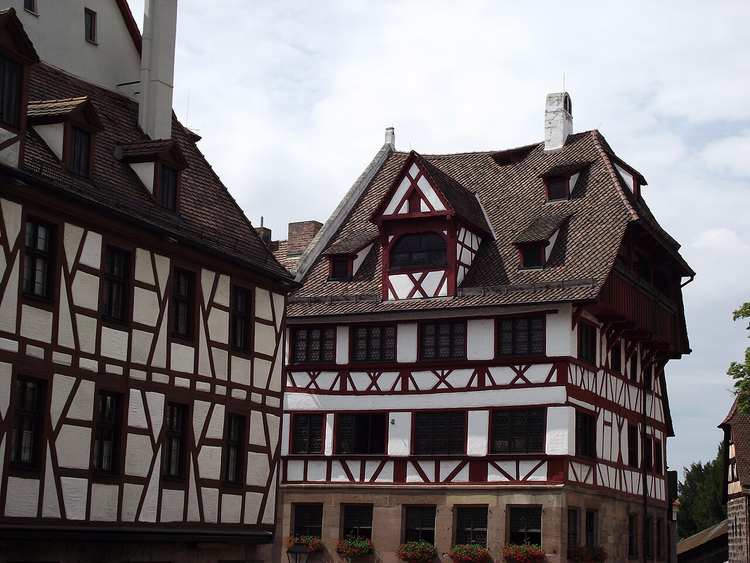
Albrecht Dürer moved into this house in the early 16th century, when the building was already nearly a century old. The artist lived here with his wife, students, and servants for about twenty years, until his death. The dark sandstone house stands at the foot of the castle and has preserved the look of a Renaissance-era burgher's residence.
 © Fred Romero from Paris, France · CC BYPhoto: Fred Romero from Paris, France, CC BY (https://creativecommons.org/licenses/by/2.0), Wikimedia Commons
In the 19th century, the city bought the building and opened a museum here. The original furnishings did not survive, but you get to see the workshop, living quarters, and a gallery with reproductions. The audio guide tells the story in the voice of the artist's wife, and a film about his life is also shown. The museum is open Tuesday through Sunday from 10 to 5, closed on Mondays (as of 09/2026, official website). For tickets and discounts, see the pricing page. Visitors with a ticket receive a small gift in the souvenir shop.
6. Germanisches Nationalmuseum
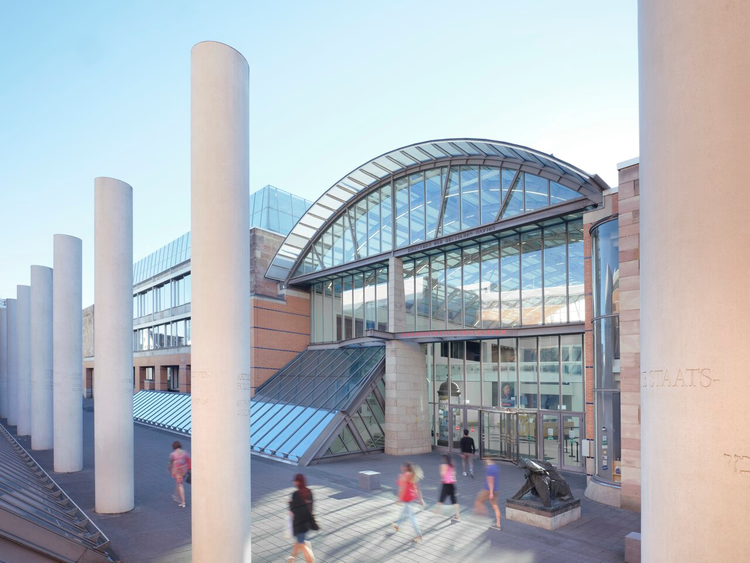
The Germanisches Nationalmuseum grew out of the private collection of Baron Hans von Aufseß. Today it is the largest cultural and historical collection in the German-speaking world. The exhibition takes you from stone axes to contemporary art and covers every era. The museum occupies buildings of a former monastery, which gives the halls a distinctive character.
 © Dirk Messberger · CC BY-SAPhoto: Dirk Messberger, CC BY-SA (https://creativecommons.org/licenses/by-sa/4.0), Wikimedia Commons
Here you will see works by Veit Stoss and Adam Kraft, archaeological finds, historical tools, weapons, and costumes. The display cases with dollhouses and antique toys are especially popular with children. The collection is divided into more than twenty departments, so choose your areas in advance, otherwise your legs will tire before your curiosity does. On Wednesdays the museum stays open later, and Mondays it is closed. Check exact hours and prices before your visit: the schedule changes by season.
7. Marriage Carousel fountain
 © W. Bulach · CC BY-SAPhoto: W. Bulach, CC BY-SA (https://creativecommons.org/licenses/by-sa/4.0), Wikimedia Commons
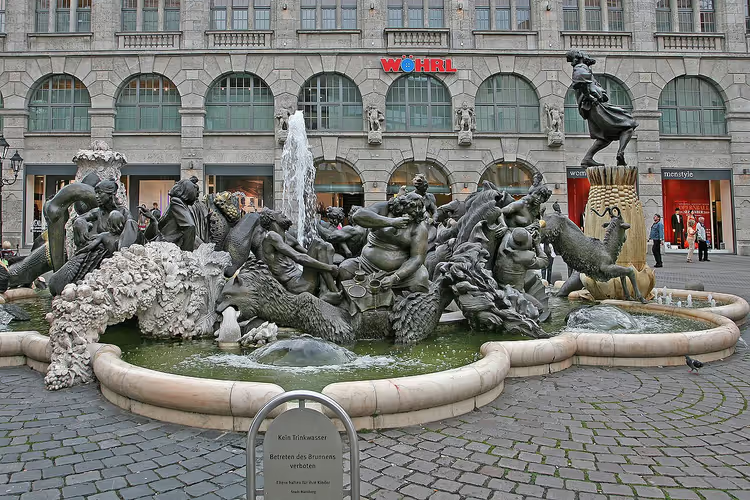
The Marriage Carousel fountain appeared on Ludwigsplatz in the 20th century, and it has an unexpected origin. A metro line was being built under the square, a ventilation shaft was needed, and the city held a competition for the best way to conceal it. The winner was sculptor Jürgen Weber: he proposed covering the shaft with a sculptural composition based on poems by the Nuremberg poet Hans Sachs.
Six bronze groups are arranged around the shaft. They show family life without rose-colored glasses: infatuation, quarrels, a spouse's serious illness, and children. That is why the fountain does not look like typical city fountains and is very memorable. It stands on the way from the train station to the center, so it is convenient to see it first thing after arriving.
8. St. Sebaldus Church
 © Uoaei1 · CC BY-SAPhoto: Uoaei1, CC BY-SA (https://creativecommons.org/licenses/by-sa/4.0), Wikimedia Commons
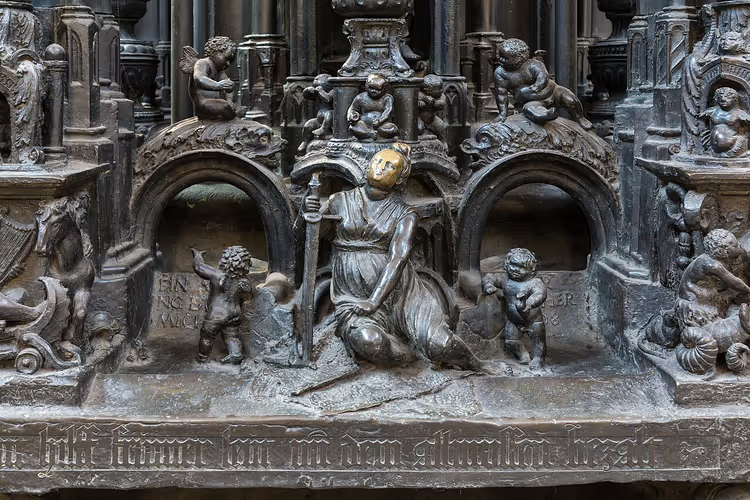
St. Sebaldus Church is the oldest church in Nuremberg. Construction began in the 13th century and took about a century and a half, gradually adding Gothic features to the Romanesque basilica. The church was consecrated in honor of Sebaldus, a hermit and patron saint of the city, and his relics remain here to this day.
Inside, be sure to see the 15th-century altar, the reliefs by Adam Kraft, and wooden sculptures from various periods. Admission is free, no ticket required. The church stands on the way from the castle to the town hall, so it is easy to include it in the same walk as the castle. Allow about half an hour for your visit.
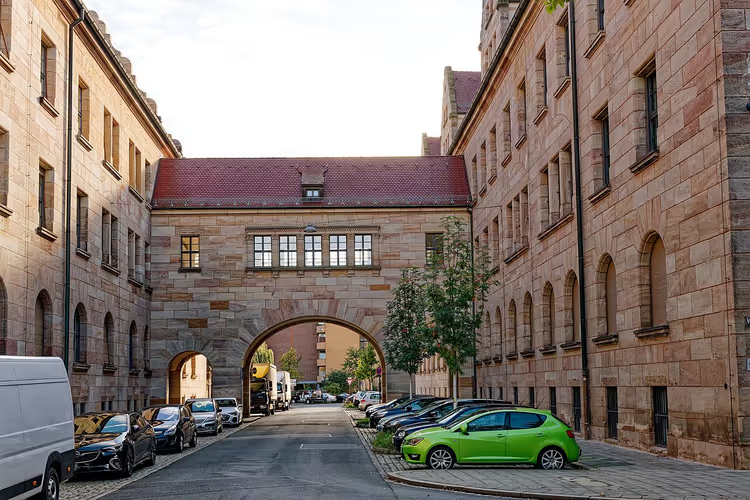
9. Palace of Justice and the Nuremberg trials
 © Tilman2007 · CC BY-SAPhoto: Tilman2007, CC BY-SA (https://creativecommons.org/licenses/by-sa/4.0), Wikimedia Commons
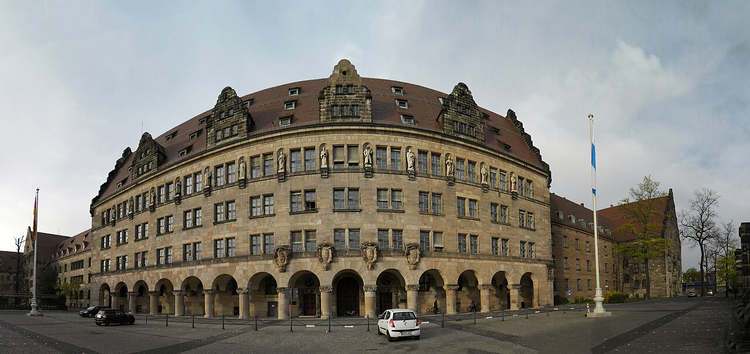
The Palace of Justice is known around the world for one event. In 1945-1946, the Nuremberg trials of Nazi war criminals took place here. The early 20th-century building survived the bombing, and a prison stood nearby, so the Allies chose this exact location for the tribunal.
Today the palace hosts regular court proceedings, and one wing houses the Nuremberg Trials Memorial museum. You can step into the historic courtroom, see the defendants' bench, documents, and photographs. The museum follows seasonal hours, staying open longer in summer than in winter, with the last entry about an hour before closing (as of 09/2026, official website). Buy tickets in advance: weekend lines are long.
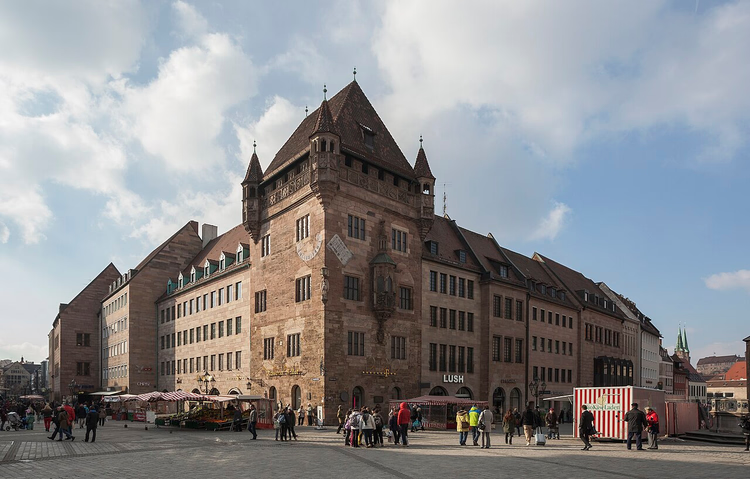
10. Nassau House on Lorenzer Platz
 © Diego Delso · CC BY-SAPhoto: Diego Delso, CC BY-SA (https://creativecommons.org/licenses/by-sa/3.0), Wikimedia Commons
Nassau House on the corner of Lorenzer Platz is the oldest residential building in Nuremberg. It was built from red sandstone back in the 12th century, and the upper floors were added only in the 15th century, so the style shifted from Romanesque to Gothic. The house resembles a tower: such narrow, tall structures were common in medieval Italy.
A distinctive detail is the roof, which has coats of arms of cities, duchies, and even the Pope mounted on its exterior. The best view of them is from the square. The building belonged to noble families, and today it is owned by a foundation and used by the city administration. Tourists are not allowed inside, but the house is fully visible from the outside, and ten minutes is enough to take it in. It stands directly opposite St. Lawrence Church, so you can see both sights in one stop.
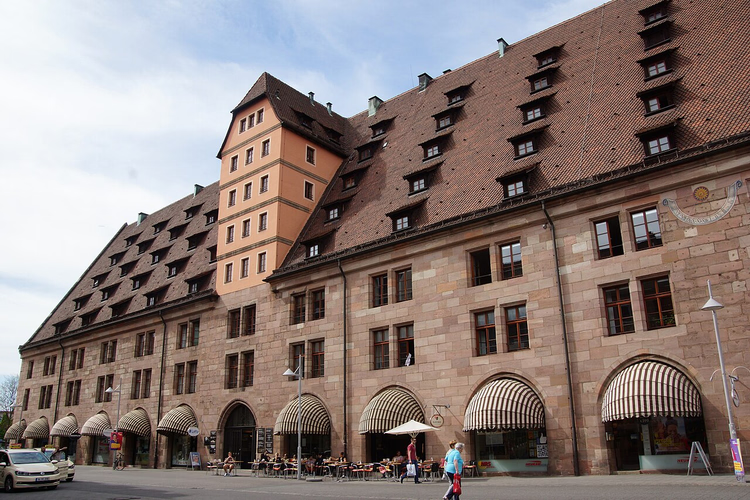
11. Mauthalle building and its cellar
Mauthalle was built in the 15th century as a municipal grain warehouse. Note the many small windows under the roof: they ventilated the grain to keep it from getting damp. Later the building housed a customs office, then a shopping center, and today it holds shops and offices.
 © DALIBRI · CC BY-SAPhoto: DALIBRI, CC BY-SA (https://creativecommons.org/licenses/by-sa/4.0), Wikimedia Commons
The most pleasant surprise awaits in the cellar. It is now a beer hall serving local beer and grilled Nuremberg sausages. The vaulted halls have kept their medieval atmosphere, so people come here for both lunch and dinner. The building stands between the train station and the city center, making it a convenient stop along the way. Mauthalle is easy to recognize by its steep roof and row of dormer windows.
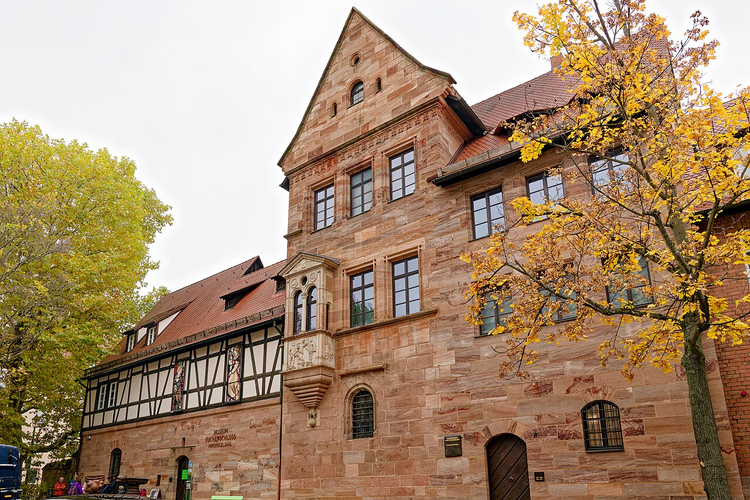
12. Tucherschloss (Tucher Castle)
 © Tilman2007 · CC BY-SAPhoto: Tilman2007, CC BY-SA (https://creativecommons.org/licenses/by-sa/4.0), Wikimedia Commons
Tucherschloss was built in the 16th century for the wealthy Tucher merchants, who intermarried with nearly all the noble families of the city. The massive castle with its garden stood in its original form for four centuries, until World War II bombing left only the western facade.
Today the castle houses the Tucher family museum: antique furniture, household items, clothing, paintings, and sculptures. The lavish wedding dinner service draws particular interest. A Renaissance-era structure has been recreated in the garden, and on Sundays a tour is led by an actress in the costume of the lady of the castle, Frau Tucher, who tells the story in her voice. The museum is open on Mondays, Tuesdays, and Sundays; check exact hours on the city museums website. A park surrounds the castle, so it is easy to spend half a day here.
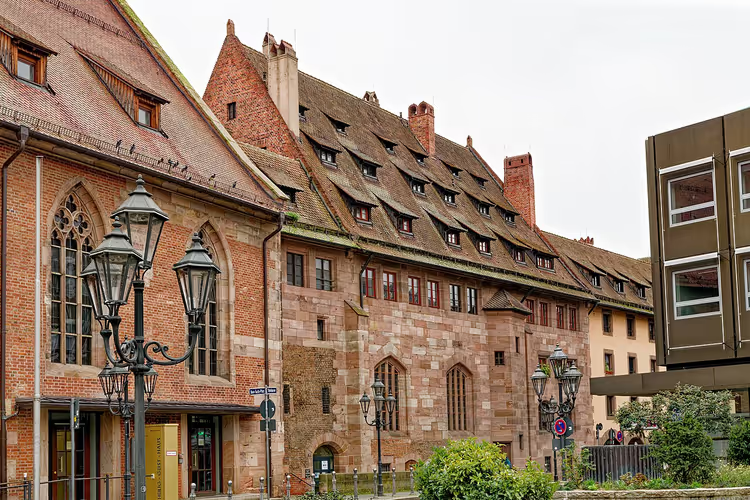
13. Hospital of the Holy Spirit over the river
 © Tilman2007 · CC BY-SAPhoto: Tilman2007, CC BY-SA (https://creativecommons.org/licenses/by-sa/4.0), Wikimedia Commons
The Hospital of the Holy Spirit is one of the oldest buildings in Nuremberg and the city's oldest medical institution. It was already treating patients in the 14th century, and the hospital included an almshouse and separate wards for leprosy patients. For several centuries the hospital played an important role, and today the building is once again a retirement home. The imperial regalia, including the Holy Lance, were once kept here.
One wing overhangs the water, and its arches reflect in the Pegnitz in a way that resembles eyeglass lenses. This is the most photographed view of the old town. Nearby, a wooden gallery from the Middle Ages survives, a rare monument of timber architecture. The building houses a restaurant serving national cuisine with a view of the river. View the hospital from outside and from the bridge: tourists are not allowed into the residential wings.
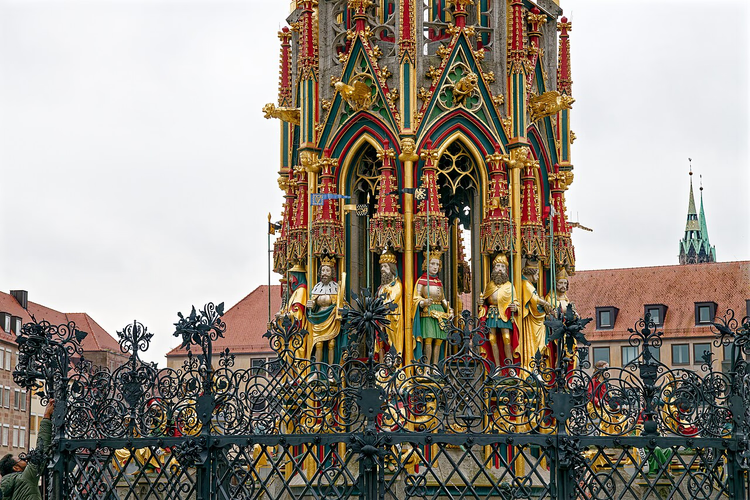
14. The "Beautiful" fountain with the ring
The Beautiful Fountain stands on the Market Square and rises nearly twenty meters. Construction began in the late 14th century, the work took more than ten years, and the master died before finishing it. The fountain's shape echoes the spire of a Gothic cathedral, and the resemblance is not accidental.
 © Tilman2007 · CC BY-SAPhoto: Tilman2007, CC BY-SA (https://creativecommons.org/licenses/by-sa/4.0), Wikimedia Commons
More than forty figures are arranged on its tiers: apostles, kings, scholars, and prophets. The upper level represents justice, while devils hide at the very bottom, warding off evil forces according to old tradition. A brass Wishing Ring is attached to the fence around the fountain. You are supposed to turn it while making only a kind wish. Locals ask visitors to remember: the wish will come true only if it harms no one.
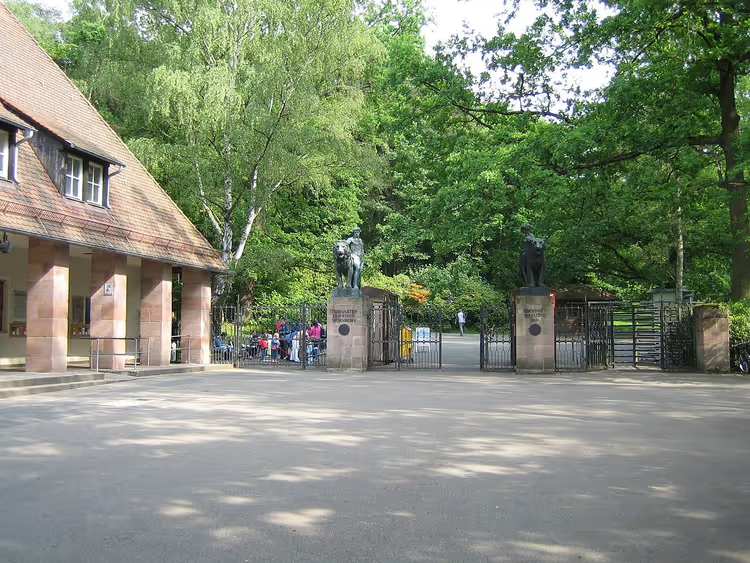
15. Nuremberg Zoo in the woodland park
 © Creando · CC BY-SAPhoto: Creando, CC BY-SA (http://creativecommons.org/licenses/by-sa/3.0/), Wikimedia Commons
Nuremberg Zoo spreads across roughly 67 hectares in the Lorenzer Reichswald forest park near Schmausenbuck hill. It is home to about 280 animal species, many of them rare and endangered (as of 09/2026, official website). This landscape zoo is designed so that animals live in conditions close to their natural habitat, in enclosures with forest and water.
You will see rhinos, giraffes, kangaroos, and animals from every continent. Separate pavilions are dedicated to tropical animals and marine mammals. The zoo is open daily, with hours changing by season and shorter in winter (as of 09/2026, official website). Animal feedings run on a schedule and are worth seeing with kids. Check the pricing page for tickets and discounts: a child ticket is noticeably cheaper than an adult one. Getting there from the center takes about half an hour, so it is best to go in the morning.
Tours and tickets in Nuremberg
Guided tours, skip-the-line tickets and activities — most offers can be cancelled free of charge.
See offers on GetYourGuideThe widget loads once you give your consent.
⁉️🤔 Frequently asked questions
How much time do you need for Nuremberg?
One full day is enough for the old town and the main sights. If you want to visit the Germanisches Nationalmuseum and Albrecht Dürer's House, plan for two days. The zoo is a separate trip: it takes half a day, plus the tram ride from the center.
When are the museums closed?
Albrecht Dürer's House and the Germanisches Nationalmuseum are closed on Mondays. The Palace of Justice operates on a seasonal schedule. Always check the hours on the official website before your trip.
Which sights are free?
You can see the Hauptmarkt, both fountains, and the Frauenkirche, St. Lorenz, and St. Sebald churches free of charge. You need to pay for the castle, Albrecht Dürer's House, the Germanisches Nationalmuseum, the Palace of Justice, and the zoo. A walk through the old town costs almost nothing.
What to see in Nuremberg with kids?
Kids enjoy the mechanical clock with figures at the Frauenkirche, the Marriage Carousel fountain, and the zoo with animal feedings. The Germanisches Nationalmuseum has a hall with antique toys and dollhouses. For very young children, a walk along the Pegnitz and through the castle courtyard works well.
How to get to the castle?
From the Hauptmarkt, the climb to the castle takes about fifteen minutes on foot along a cobbled street. You can take the tram to the old town and walk from there. Note that tickets are sold only at the ticket office in the outer courtyard, so arrive at opening time.
In short: what to book
If you have one day: start with Nuremberg Castle, walk down to the Hauptmarkt, and finish at St. Lorenz Church. If you are interested in museums, take two days and leave the second for the Germanisches Nationalmuseum and Albrecht Dürer's House. If you are traveling with kids, add the zoo and the clock figure show at the Frauenkirche.
Remember the museums' closing days and buy tickets in advance where online sales are available. Find tours and tickets for Nuremberg on GetYourGuide.

A small editorial team writing guides for independent travel. We travel ourselves, but we haven’t been everywhere, so we check prices, opening hours and how to get there against official sources.