
















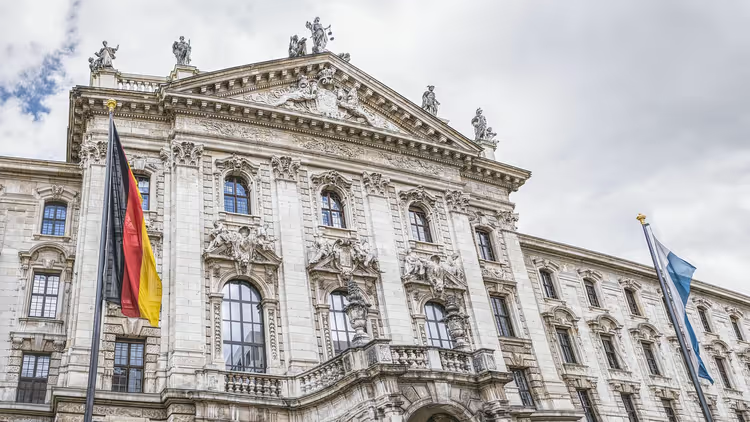
Day trips from Munich: twenty places with tickets and routes
From Munich, you can see the Alps, castles, and old towns in a single day. The main question on the road is what to fit in, where to buy tickets in advance, and how much it costs. We've put together twenty destinations for a trip without an overnight stay.
You don't have to travel far. Schleissheim Palace sits almost within the city limits. Garmisch-Partenkirchen and Zugspitze are one and a half to two hours by train. You can reach Nuremberg by high-speed train in about an hour, and Regensburg and Salzburg in about 1.5 hours. Bamberg and Rothenburg ob der Tauber will take the whole day: the trip one way takes 2-3 hours (DB schedules and fares). An adult ticket to Neuschwanstein costs €21 (as of 09/2026, official castle website), and admission is free for children under 18.
Ad: this article contains affiliate links, we earn a commission if you book through them, at no extra cost to you.
1. Bamberg: an old town on seven hills
💡 In short:
- Buy train tickets in advance: on weekends, trains to Bavaria fill up.
- Half a day is enough for the old town; leave the rest of the time for beer halls and museums.
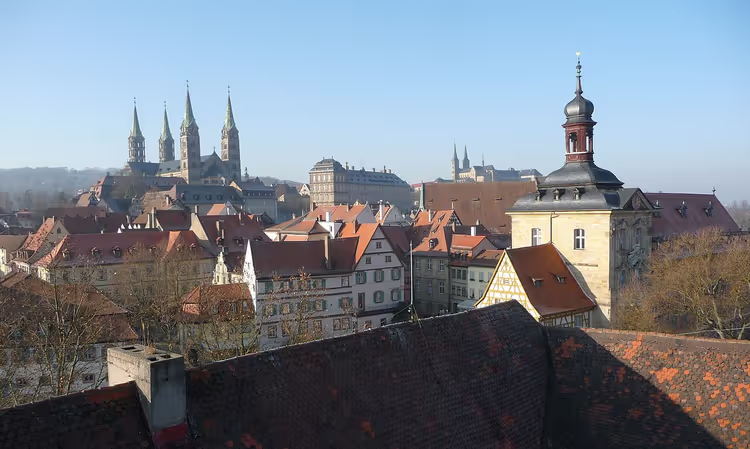
Bamberg grew up on seven hills and two branches of the Regnitz River. Its old town is entirely listed as a UNESCO World Heritage Site, with more than two thousand historic buildings. You'll see a Romanesque cathedral, baroque houses of wealthy citizens, and a fishermen's quarter known as Little Venice.
Walk from Cathedral Square down to the Old Town Hall: it stands on an artificial island in the middle of the river. Then climb up to Michaelsberg Monastery, which offers the best view of the tiled rooftops.
Beer has been brewed here since the city was founded. Bamberg has about fifty varieties, including smoked Rauchbier, and the surrounding area ranks among the world's densest brewing regions. The city has eighteen museums, some of which are closed on Mondays.
- How to get there: train from Munich's main station, about 2 hours with a change in Nuremberg (train schedules).
- Who it's for: for those who want to see a medieval city and try smoked beer.
- The catch: the trip takes almost the whole day, and the early train leaves the station before eight in the morning.
2. Oberammergau: a village with painted houses
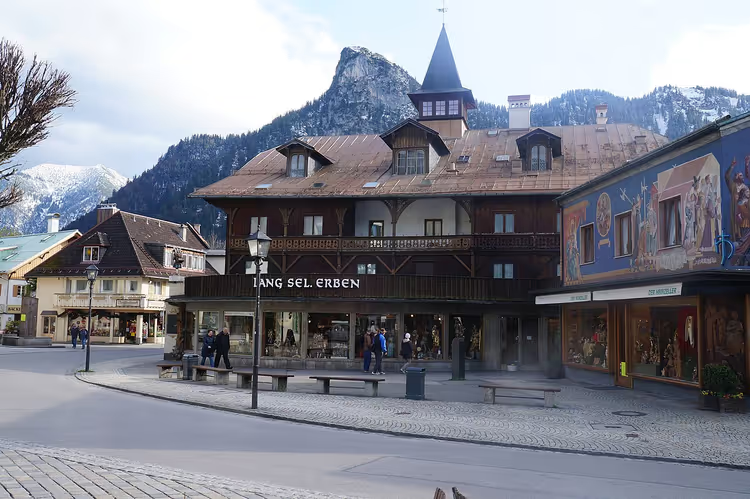 © © Pierre André · CC BY-SAPhoto: © Pierre André, CC BY-SA (https://creativecommons.org/licenses/by-sa/4.0), Wikimedia Commons
Oberammergau sits in a narrow valley, surrounded entirely by the Alps. The houses here are half-timbered, and the walls are painted with scenes from the Bible, German fairy tales, and village life. This style of painting is called Lüftlmalerei. The tradition was started by the artist Franz Zwinck, who lived in the house Zum Lüftl.
Once every ten years, the village performs the Passion Play. The performances date back to the 17th century, and tickets sell out long before the premiere. Between productions, workshops operate here: wood carving, glass painting, and pottery. Local carvers were called "carvers of the Lord God," and their work went to churches and monasteries.
Three hours is enough for the streets, the museum, and the workshops. The train leaves from Munich's main station with a change in Murnau, where you continue on a blue local train. By car, the route is shorter: about 1.5 hours on the A95.
- Cost: the train ticket depends on when you buy it; the lowest fares appear a couple of weeks in advance (Deutsche Bahn fares).
- If you stay overnight: hotel prices in Oberammergau on Trip.com
- The catch: there is no direct train; in Murnau you need to change to a local train.
3. Nuremberg: fortress, fair, and "rose"
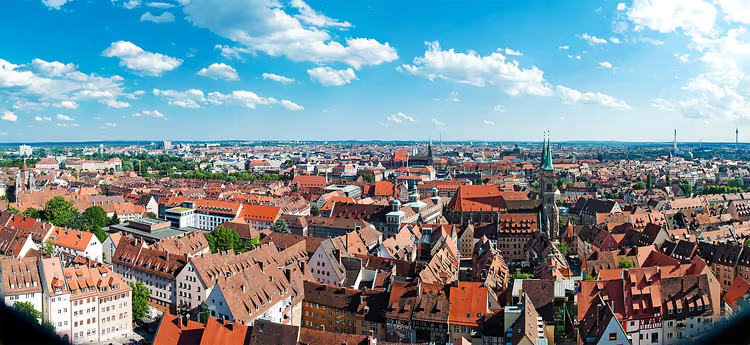 © YuTrofimov · CC BYPhoto: YuTrofimov, CC BY (https://creativecommons.org/licenses/by/3.0), Wikimedia Commons
Nuremberg was long the second-largest city in Bavaria, and its fortress stands on a rock above the Pegnitz River. The city was almost completely destroyed in World War II, but the center was rebuilt according to old plans. This is where the imperial regalia, the symbols of power of the German emperors, were kept.
The city's main church is St. Lawrence Church, with a stained glass window 9 m in diameter (about the church). On the market square stands the Frauenkirche with its Männleinlaufen clock, and nearby is the Schöner Brunnen fountain: touching the golden ring on its gate is said to make a wish come true. In winter, the square hosts the Christkindlesmarkt Christmas market.
A day is enough for the fortress, the churches, and the Albrecht Dürer House museum. A high-speed train runs to the city from the main station, taking about 1 hour (schedule and tickets), or you can drive via the A9 autobahn.
- If you stay overnight: hotel prices in Nuremberg on Trip.com
- The catch: the city was heavily damaged in the war, so it has fewer intact medieval quarters than Bamberg.
4. Zugspitze: Germany's highest point
 © Tuxyso · CC BY-SAPhoto: Tuxyso, CC BY-SA (https://creativecommons.org/licenses/by-sa/4.0), Wikimedia Commons
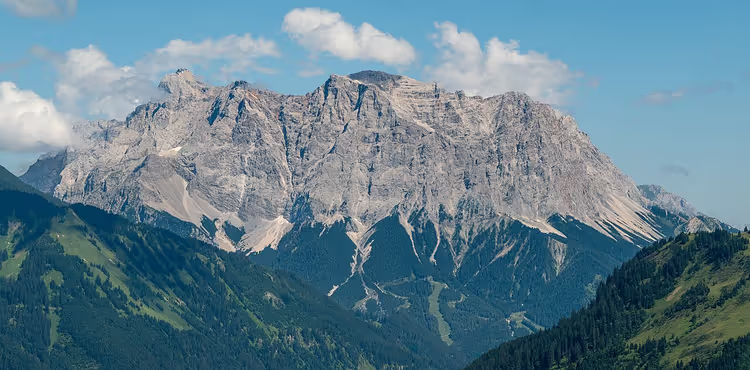
Zugspitze is the highest mountain in Germany, at 2,962 m (about the mountain). On a clear day, you can see four countries from the summit: Germany, Austria, Switzerland, and Italy. The first ascent was made in 1820; today, a rack railway, a cable car, and a funicular all lead to the top.
A weather station has operated at the summit since 1900, so check the forecast in advance. Skiers ride the glaciers from November to May (about the resort). At the top stands a gilded cross, and nearby lie Lake Eibsee and the Tyrolean cable car on the Austrian side.
The rack railway starts in Garmisch-Partenkirchen and runs for 11 km. From Munich, take a train to Garmisch-Partenkirchen or drive via the A95 autobahn (train times).
- Cost: the ascent ticket depends on the route and day of the week; it's cheaper to buy online in advance (official website).
- If you stay overnight: hotel prices in Garmisch-Partenkirchen on Trip.com
- The catch: it's often windy with snowfall at the top, and the ascent may be closed for several hours.
5. Berchtesgaden: salt mines and the Eagle's Nest
 © Nize | Nicolai Schäfer · CC BY-SAPhoto: Nize | Nicolai Schäfer, CC BY-SA (https://creativecommons.org/licenses/by-sa/3.0), Wikimedia Commons
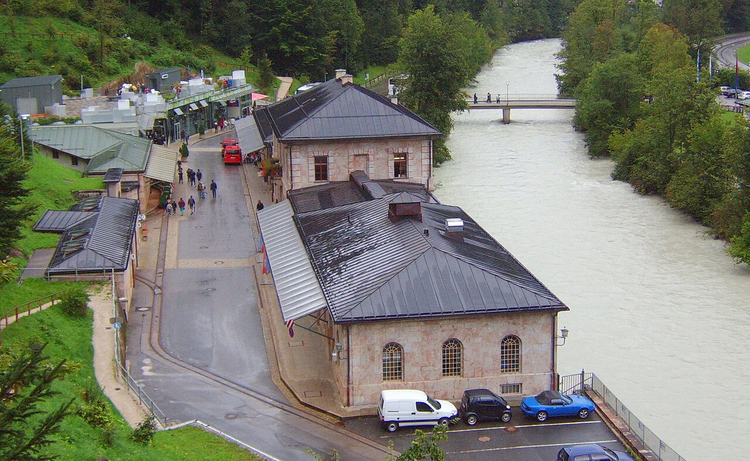
The town sits in a ring of Bavarian Alps, in a valley between mountain ridges. It has salt mines, thermal springs, and the mountain lakes Hintersee, Königssee, and Obersee. The resort operates year-round: in winter you ski, in summer you hike the trails around the lake.
Above the town stands the Kehlsteinhaus, the "Eagle's Nest"; today the building houses a restaurant with panoramic views of the eastern slopes of the Alps. The balneological treatments at the nearby Bad Reichenhall spa help restore your health.
From Munich you take a train with a transfer in Freilassing or via Salzburg, then continue by bus. By car it's more convenient via the A8 autobahn (train trip plan).
- If you stay overnight: hotel prices in Berchtesgaden on Trip.com
- Who it's for: combining mountains, a lake, and a quiet getaway without nightclubs.
- The catch: you can't avoid a train transfer, and the trip takes over two hours.
6. Rothenburg ob der Tauber: the town above the valley
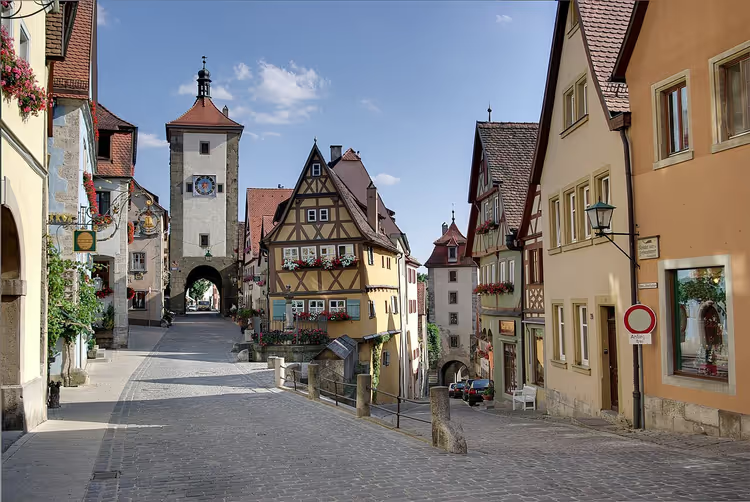
Rothenburg stands above the valley of the Tauber River. The town has preserved its walls, towers, and cobblestone streets, which is why it's often used as a filming location for movies about the Middle Ages. The buildings are made of red stone quarried in the surrounding area.
In the center you'll see the Town Hall with its observation deck, the churches of St. Nicholas and St. James, the Topplerschlösschen house, and the St. George Fountain. Every year the town hosts the costumed Meistertrunk festival commemorating the events of the Thirty Years' War. The Christmas Museum houses trees, ornaments, and hundreds of Santa Claus figures.
In winter the town turns into a set with a Christmas market. In summer, a day is enough for the walls, museums, and a walk through the valley.
- How to get there: train with a transfer, about 3 hours (Bavaria train schedule); by car the route via the A8-A7 autobahns takes 3-4 hours (about the town).
- If you stay overnight: hotel prices in Rothenburg on Trip.com
- The catch: without an overnight stay the day gets long, and the return trip takes just as long.
7. Salzburg: fortress, Mirabell and Mozart
 © Photo: Andreas Praefcke · CC BYPhoto: Photo: Andreas Praefcke, CC BY (https://creativecommons.org/licenses/by/3.0), Wikimedia Commons
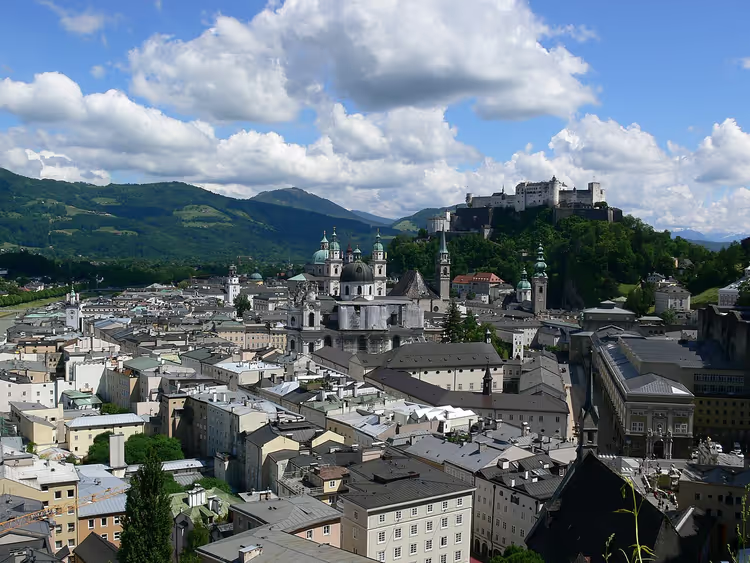
Salzburg sits on the Salzach River, five kilometers from the German border. You can walk the old town on foot: it is compact and has kept almost all of its baroque architecture. Start your walk at Residenzplatz, where the Old and New Archbishop's Residences and the Residenzbrunnen fountain stand.
Hohensalzburg Fortress rises above the city, one of the largest and best preserved in Europe (about the fortress). A funicular and a walking trail lead to the top, and the viewing platforms offer a view of the whole city and the Alps.
The city has a Mozart museum, and nearby is the Mirabell palace park with its Dwarf Garden. On Alter Markt stands Salzburg's narrowest residential building, now a jewelry workshop. The "Mozart" chocolates also have local roots, and the "Man on a Ball" monument has become a photo spot. The mountainous surroundings of the city are known for deposits of salt, silver and copper: these shaped the local economy for centuries. The first Mozart Festival took place here in 1842.
A day is enough for the fortress, the old town and the park. The train from Munich takes about 1.5 hours with no changes (train tickets).
- If you stay overnight: hotel prices in Salzburg on Trip.com
- The catch: in July and August the streets are full of tour groups, buy your fortress ticket online (about tickets).
8. Berchtesgaden National Park: lake and glaciers
 © Diego Delso · CC BY-SAPhoto: Diego Delso, CC BY-SA (https://creativecommons.org/licenses/by-sa/4.0), Wikimedia Commons
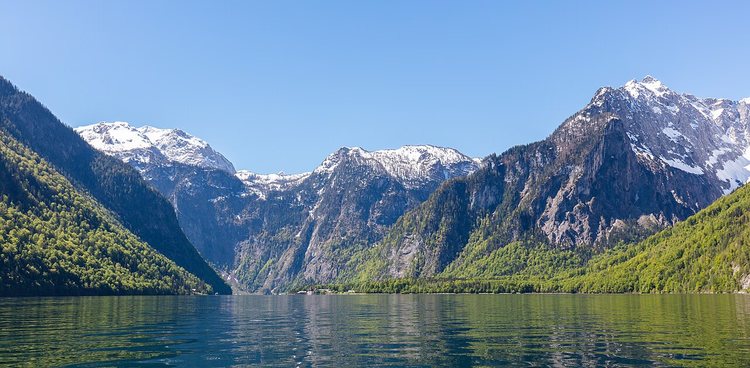
The park brings together all types of alpine landscapes: meadows, cliffs, glaciers and mountain lakes. There is no agriculture or resorts here, and you walk through the valley only on foot. Watzmann and Hochkalter rise above the park, and Lake Funtensee holds Germany's cold pole. Watzmann is Germany's third highest mountain, and you should not climb it alone.
The park's main point is Lake Königssee. Its elongated shape resembles a fjord, and the shores cannot be walked, so see the lake from a boat or a rowboat. One of the easy routes starts at the Schönau landing and leads to the Grünsteinhütte and Archenkanzel huts, and the Malerwinkel viewpoint offers the best view of the water and mountains.
If uphill walks are not for you, a lift to Mount Jenner operates near the landing. You reach the park via Berchtesgaden by train or by car on the A8 highway (about the park).
- Cost: tickets for the Königssee boat are bought at the landing, check prices and season on the park's website (official website).
- The catch: the lake shore cannot be walked, and some trails close in winter.
9. Partnach Gorge: a canyon with 90-meter walls
 © Tiia Monto · CC BY-SAPhoto: Tiia Monto, CC BY-SA (https://creativecommons.org/licenses/by-sa/4.0), Wikimedia Commons
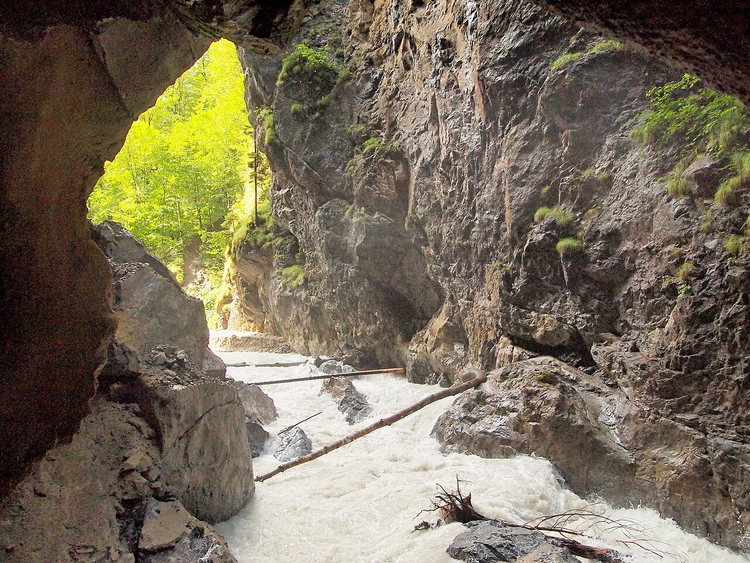
The gorge was cut by glacial water from the Zugspitze: the canyon is about a kilometer long, and the walls rise up to 90 meters (about the gorge). The site received natural monument status at the beginning of the last century, and the first tourists walked the prepared trails in 1912.
Bridges span the gorge. In spring, waterfalls roar here; in summer, grasses bloom on the slopes; in autumn, the foliage burns orange; in winter, ice figures resembling stalactites grow on the walls. Photos inside the canyon come out dark, so you will need to increase the exposure.
The gorge starts near Garmisch-Partenkirchen. From the station you walk about 40 minutes toward Partenkirchen. Entry is paid, and tickets are bought at the entrance or online.
- Cost: check ticket prices and opening hours on the official website, closures are possible in winter (gorge website).
- The catch: in the rain the trail is wet and slippery, you need shoes with good tread.
10. Neuschwanstein Castle: tickets and the best view
 © Cialome · CC BY-SAPhoto: Cialome, CC BY-SA (https://creativecommons.org/licenses/by-sa/4.0), Wikimedia Commons
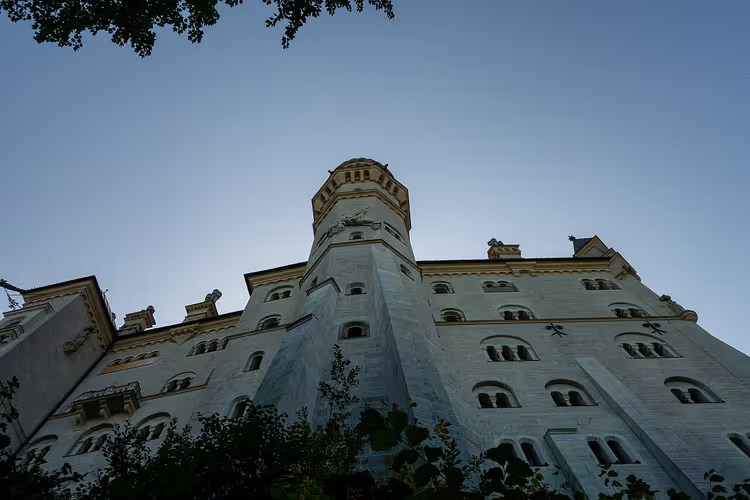
Neuschwanstein was built by order of King Ludwig II, construction began in 1869 and took seventeen years. The castle stands on a rock above a gorge, with views of Lake Alpsee and mountain peaks from the windows. During the king's lifetime, only some of the three hundred sixty rooms were fully completed.
Inside you walk through the Throne Hall, which never got its throne: it was planned to be made of gold and ivory. Concerts are held today in the Singers' Hall, whose walls are decorated with panels based on Holy Grail legends. You will also see the artificial Grotto and the king's bedroom with its wood carvings.
Tickets are sold for a specific time slot, and in high season it is better to buy them online: an adult ticket costs 21 €, children under 18 enter free, and the booking fee is 2.50 € (as of 09/2026, official ticket prices). Nearby are Hohenschwangau and the Museum of the Bavarian Kings, and you can buy a ticket for two sites at once. A bus runs from Füssen to the castle, and some visitors walk up.
- How to get there: train with a change in Buchloe, then on to Füssen (train to Füssen).
- If you stay overnight: hotel prices in Füssen on Trip.com
- The catch: you can only go inside on a scheduled tour, and tickets for popular time slots sell out in advance.
11. Linderhof Palace: the Venus Grotto and mirrored halls
 © Jan Czeczotka · CC BY-SAPhoto: Jan Czeczotka, CC BY-SA (https://creativecommons.org/licenses/by-sa/4.0), Wikimedia Commons
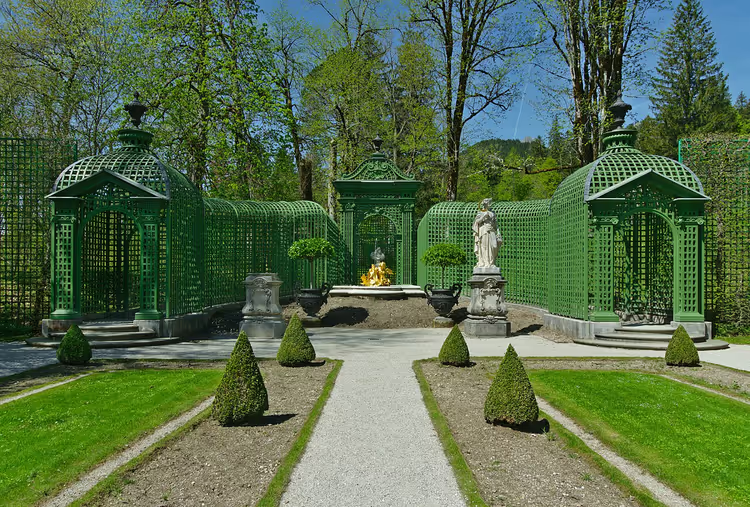
Linderhof is the only castle of Ludwig II that was fully completed during his lifetime. The king built the residence on the site of his father's hunting lodge in the Ammergau Alps nature reserve. Versailles was the model, hence the pavilions, mirrored halls, and gilding.
Ten rooms are open to visitors: the Dining Room, the Hall of Mirrors, the Audience Chamber, and cabinets in different colors. In the park you will find the Venus Grotto pavilion with an artificial cave, a lake, and a waterfall. Musical evenings were held here, with performers floating across the lake in a shell-shaped boat. Peacock figures decorate both the halls and the park's walkways. The walls and ceilings are adorned with gilding, tapestries, mirrors, and porcelain.
The easiest route is via Oberammergau: a bus runs from the village to the palace. Entry tickets are sold on site and online, and opening hours vary by season.
- How to get there: train to Oberammergau and a bus, or drive on the A95 (trains to Oberammergau), tickets and hours on the Bavarian palaces website.
- If you stay overnight: hotels near Linderhof and in Oberammergau on Trip.com
- The catch: there is no direct train to the palace, you need a bus or a car.
12. Hohenschwangau Castle: the Wittelsbach residence
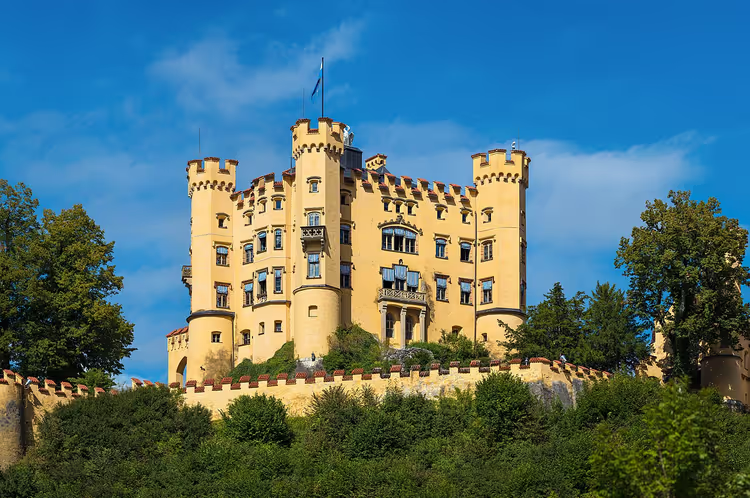 © Thomas Wolf , www.foto-tw.de · CC BY-SAPhoto: Thomas Wolf , www.foto-tw.de, CC BY-SA (https://creativecommons.org/licenses/by-sa/3.0/de/deed.en), Wikimedia Commons
Hohenschwangau stands near Füssen, on the site of the fortress of the Knights of Schwangau. The castle was built by Maximilian II, the father of Ludwig II, and the king himself spent his youth here. It offers views of the Schwansee and Alpsee lakes. The castle's name translates as "High Swan Land." The residence was built by a king who ruled the country for twenty years.
The building is decorated in the Biedermeier style: turrets, murals, and bas-reliefs based on the fairy tales of the Brothers Grimm. The Hall of Heroes, the Hall of the Swan Knight, and Queen Marie's chambers retain their lavish interiors. Today it is a museum, owned by the Royal House of Wittelsbach.
An adult ticket costs €23.50, for children aged 7 to 17 it's €12 (as of 09/2026, castle fares). You take a train from Munich's main station to Füssen, then a bus to the village of Hohenschwangau (trains to the castles). The two castles are close to each other, so it's convenient to see them in one day.
- If you stay overnight: hotels near Hohenschwangau castles on Trip.com
- The catch: tickets are also timed, and without online booking you wait for an open slot.
13. Schleissheim Palace: three palaces and a baroque garden
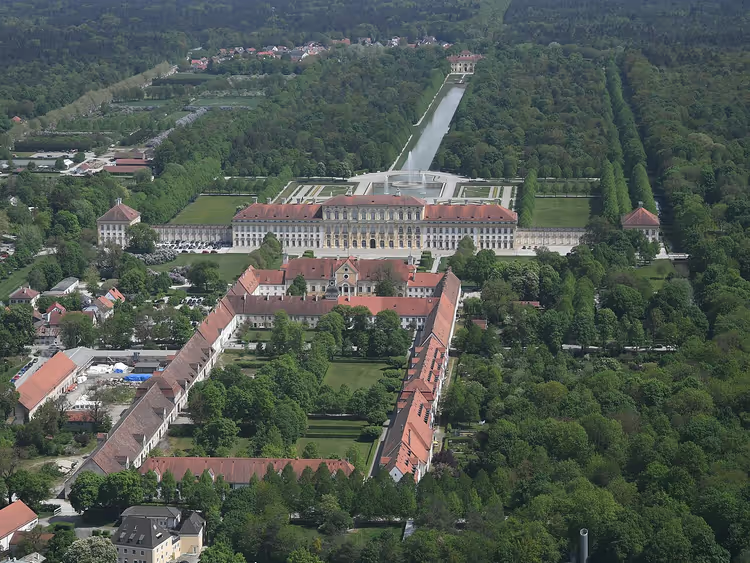 © Carsten Steger · CC BY-SAPhoto: Carsten Steger, CC BY-SA (https://creativecommons.org/licenses/by-sa/4.0), Wikimedia Commons
Schleissheim stands fifteen kilometers from the center of Munich, making it the closest trip on the list. The Old Castle first appeared around 1598, and the palace took its current form in 1617. The complex consists of three palaces and a park:
- Altes Schloss has housed a branch of the National Museum with a collection of religious festival objects since 1970.
- Lustheim at the edge of the park holds a large collection of Meissen porcelain.
- Neues Schloss opened as a gallery palace and now displays paintings.
- The park is laid out in the baroque style and has barely changed since the 18th century.
Half a day is enough if you go at a relaxed pace. The palace is convenient to see on the way to the airport or toward Freising.
- How to get there: S-Bahn to Oberschleißheim, then a bus to the Schloss stop or a 15-minute walk (S-Bahn and buses), tickets and opening hours on the Schleissheim palaces page.
- Where to stay in Munich: Munich hotel prices on Trip.com
- The catch: there is no direct tram; from the S-Bahn you walk or take a bus.
14. Garmisch-Partenkirchen: the town at the foot of the Zugspitze
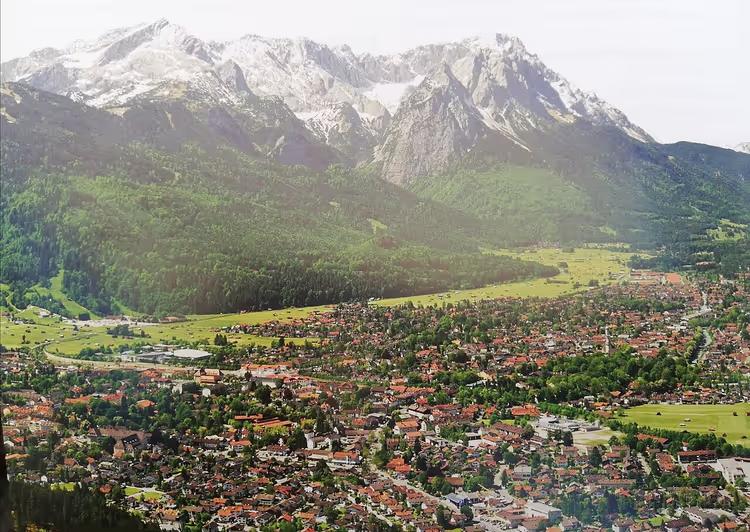 © Milei.vencel · CC BY-SAPhoto: Milei.vencel, CC BY-SA (https://creativecommons.org/licenses/by-sa/4.0), Wikimedia Commons
Garmisch-Partenkirchen grew out of two villages separated by a railway line. The 1936 Winter Olympics were held here. Today it is Germany's main ski resort and the gateway to the Zugspitze.
Walk along the main street, Ludwigstraße: painted houses, the Chapel of St. Sebastian, and the neo-Gothic parish church. In the surrounding area you'll find the Partnach Gorge, Elmau Castle, and mountain lifts. Tunnels run beneath the tracks, so you can explore the town on foot without crossing the rails.
Trains and buses from Munich leave every two hours, and the journey takes about 1.5 hours (train schedule). By car, take the A95.
- If you stay overnight: hotel prices in Garmisch on Trip.com
- The catch: in season, parking in the center fills up fast, so leave your car near the station.
15. Ingolstadt: Audi, the cathedral, and the old center
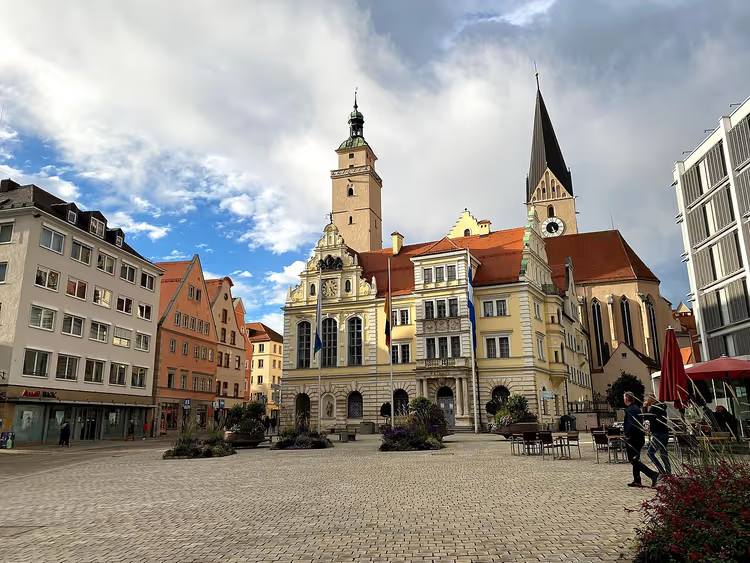 © -wuppertaler · CC BY-SAPhoto: -wuppertaler, CC BY-SA (https://creativecommons.org/licenses/by-sa/4.0), Wikimedia Commons
Ingolstadt received city status in 1457, and the first mention of the settlement dates back to 806 (about the city). Today the city is known worldwide for Audi's headquarters. At the company museum you'll learn the history of the group and see models from different eras.
The center has long been a pedestrian zone. Shops operate in half-timbered houses, and nearby there's an outlet with boutiques of well-known brands. Worth seeing: the Kreuztor gate, the Triva tower, the Old and New Town Halls, the cathedral, and the Church of Mary Victoria with its huge flat fresco. There's also a museum of medical history, and the Bavarian Army Museum is housed in the Old and New Castles.
With kids, visit the small Kleinzoo Wasserstern. The trip from Munich takes about 40 minutes by high-speed train or an hour by car on the A9 (high-speed trains).
- If you stay overnight: hotel prices in Ingolstadt on Trip.com
- The catch: industrial districts take up most of the city, so only the center is worth seeing.
16. Passau: the city of three rivers and a great organ
 © Aconcagua · CC BY-SAPhoto: Aconcagua, CC BY-SA (https://creativecommons.org/licenses/by-sa/3.0), Wikimedia Commons
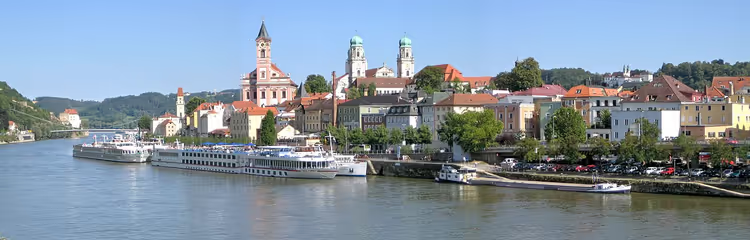
Passau stands where the Ilz, Inn, and Danube meet. A Celtic settlement on this site quickly became a trading center, and today it's a green city with baroque churches. In St. Stephen's Cathedral you'll hear one of the largest organs in the world (about the city).
Climb the 321 steps of the "stairway to heaven" to the Mariahilfkirche church and monastery. In St. Paul's Church there are altars decorated with gold. In St. Michael's Church you'll find an unusual dome and a figure of a fallen angel, and the old Town Hall has an exhibition on the city's history.
A separate outing is the bridges. The Maria Bridge spans the Inn River. From Munich to Passau you travel by train or car (trains to Passau).
- If you stay overnight: hotel prices in Passau on Trip.com
- The catch: high-speed trains don't go here, the trip takes more than two hours.
17. Mount Eckbauer: slopes for skiers
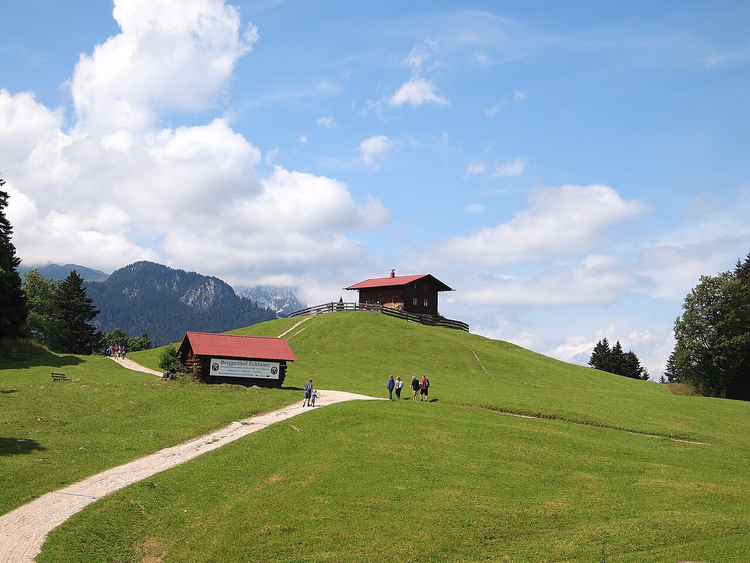
Eckbauer sits next to Garmisch-Partenkirchen, a small ski resort above the town. Wide runs are cut through the forest, so you'll be comfortable skiing even on a sunny day. There are Olympic ski jumps and several dozen kilometers of descents of varying difficulty, from blue to black. Beginners have learning slopes, experienced skiers have long red runs. In summer people hike these trails: the lift takes you up, and you walk down through the forest.
 © Tiia Monto · CC BY-SAPhoto: Tiia Monto, CC BY-SA (https://creativecommons.org/licenses/by-sa/4.0), Wikimedia Commons
A chairlift takes you to the top. You can ski on natural glaciers from November to May, and modern hotels and restaurants sit at the foot of the mountain. The resort's history is tied to the 1936 Olympics, which the town hosted.
From Munich you take a train to Garmisch-Partenkirchen, the trip takes about 1.5 hours (trains to Garmisch).
- Cost: lift prices change by season, a day pass is cheaper to buy online (about the Garmisch region).
- The catch: during thaws some runs close, check slope conditions in the morning.
18. Regensburg: cathedral, Stone Bridge, and a sausage kitchen
 © Grizurgbg · CC BY-SAPhoto: Grizurgbg, CC BY-SA (http://creativecommons.org/licenses/by-sa/3.0/), Wikimedia Commons
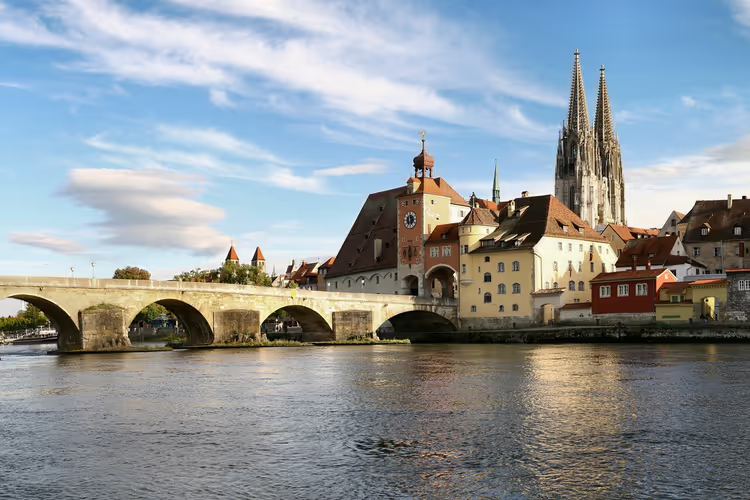
Regensburg was the first capital of Bavaria, where kings, bishops, and dukes built their residences. The city stands at the confluence of the Danube and the Regen, and its old town is a UNESCO World Heritage Site (about the city).
The main attraction is St. Peter's Cathedral on Cathedral Square. Next to the Stone Bridge is Germany's oldest sausage kitchen, Wurstküche, considered the country's first fast food. A descendant of the ancient family still lives in Thurn und Taxis Palace. Wurstküche sits right by the water, and the menu is simple: sausages, sauerkraut, and beer. In the old town you'll also find the Church of the Holy Trinity and the Goliath House, once home to traveling performers, with a mural depicting the battle of David and Goliath.
Four hours is enough to see the city. A regional train runs from Munich, the trip takes about 1.5 hours (regional train), or you drive on the A9 autobahn.
- If you stay overnight: hotel prices in Regensburg on Trip.com
- The catch: the historic center is small, and in season it fills up quickly with tourists.
19. Kelheim: the Danube Gorge and Weltenburg Abbey
 © H.Helmlechner · CC BY-SAPhoto: H.Helmlechner, CC BY-SA (https://creativecommons.org/licenses/by-sa/4.0), Wikimedia Commons
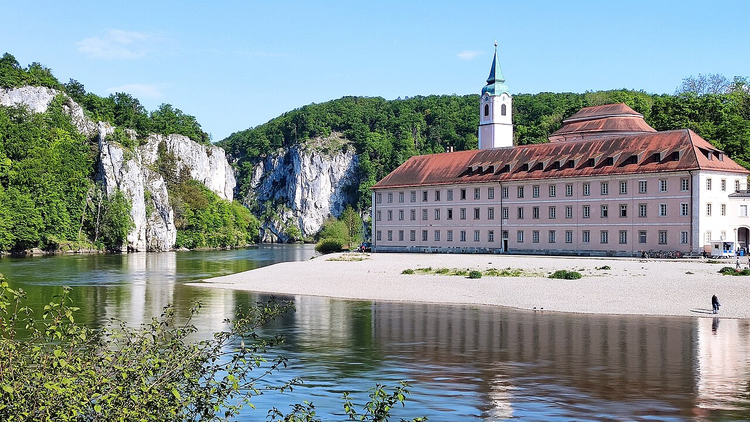
Kelheim sits between Regensburg and Ingolstadt, off the main routes. The main reason to come is the Danube Gorge: the river cut through the Franconian Alb plateau and formed a fjord with sheer cliffs.
The cliffs here have names: "The Kissing Couple", "The Bavarian Lion", "Napoleon's Suitcase", "The Three Quarreling Brothers". From April to late October you board a boat and sail along them to Weltenburg Abbey. The abbey is home to Germany's oldest brewery, which brews several varieties, including a dark beer.
Above the town on Michelsberg hill stands the Befreiungshalle, a round hall with columns and statues built to commemorate the victory over Napoleon. Nearby is the village of Essing with the longest pedestrian bridge in Europe over the Main-Danube Canal.
From Munich, take a train to Saal an der Donau, then a bus; you'll need to make a transfer (trains and buses).
- Cost: check the city's website for boat ticket prices and departure times; the season runs from April through October (about the city).
- If you stay overnight: hotel prices in Kelheim on Trip.com
- The catch: you can't get to the town without transfers and a bus.
20. Stuttgart: Mercedes, Wilhelma, and the old castle
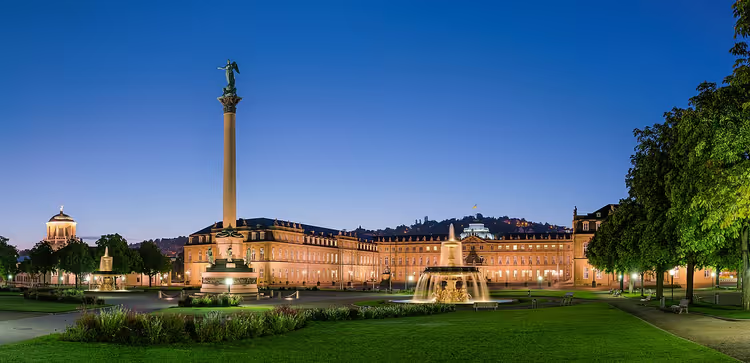 © Julian Herzog ( Website ) · CC BYPhoto: Julian Herzog ( Website ), CC BY (https://creativecommons.org/licenses/by/4.0), Wikimedia Commons
Stuttgart sits in the Neckar river valley and is one of Germany's main industrial centers. It's home to the headquarters of major engineering companies and innovative manufacturing facilities (about the city). The Neckar valley was an important agricultural region as far back as the Roman Empire, and the city later grew wealthy through industry. Universities, colleges, and research institutes operate in the surrounding area, so Stuttgart has a large student and engineering population. At the same time, the city has plenty to see.
The main attractions include the Mercedes-Benz Museum, the Stiftskirche as a symbol of the old town, the Old Castle, and the Wilhelma Botanical Garden. A separate point of interest is the Weissenhofsiedlung estate, built as an exhibition of modern architecture.
From Munich, the train takes about 2.5 hours, driving takes roughly the same (trains to Stuttgart), and there's also a flight option.
- If you stay overnight: hotel prices in Stuttgart on Trip.com
- The catch: the journey takes almost three hours each way, making for a tiring day trip.
⁉️🤔 Frequently asked questions
Can you visit two places in one day?
Yes, if they're close to each other. Neuschwanstein and Hohenschwangau are just a few minutes apart by bus, and Garmisch-Partenkirchen and the Partnach Gorge are also easy to combine. Farther destinations (Bamberg, Rothenburg ob der Tauber, Stuttgart) take the whole day, so plan a single trip for those.
Where do you buy a Neuschwanstein ticket and how much does it cost?
Tickets are sold online and at the ticket office in Hohenschwangau for a specific time slot. An adult ticket costs 21 €, children under 18 enter free, and there's a 2.50 € booking fee (as of 09/2026, castle pricing page). In high season, morning slots sell out in advance, so don't put off buying.
What's the cheapest way to get from Munich without a car?
Regional trains and buses cost less than high-speed ones, and day tickets are a good deal if you're traveling as a couple or family. Check schedules and fares on the Deutsche Bahn website. Book tickets for farther destinations in advance: prices go up closer to the date.
What to see in winter?
Ski resorts operate in winter: Zugspitze, Eckbauer mountain, and the lifts in Garmisch-Partenkirchen. The glaciers on Zugspitze are open from November to May. In cities, Christmas markets open in winter, the most famous one is in Nuremberg, and in Rothenburg the Christmas Museum is open year-round.
Do you need a car for day trips?
In most cases, no: trains run to Nuremberg, Regensburg, Salzburg, and Garmisch-Partenkirchen. A car helps in Kelheim, where you reach Weltenburg Abbey with transfers, and around Berchtesgaden. If you don't have your own car, compare rentals in advance.
All twenty destinations on one map
Below is a map with all the points from the list. It's handy for seeing what's close together and putting together a day route.
Munich 1-day route
Places on the map
- 1Bamberg UNESCO Old Town on seven hills, smoked Rauchbier beer
- 2Oberammergau Village with painted half-timbered houses (Lüftlmalerei)
- 3Nuremberg Fortress above the Pegnitz River, St. Lawrence Church
- 4Zugspitze Germany's highest mountain, four countries visible on a clear day
- 5Berchtesgaden Salt mines, lakes and the "Eagle's Nest" Kehlsteinhaus
- 6Rothenburg ob der Tauber Town above the Tauber valley with preserved walls and towers
- 7Salzburg Hohensalzburg Fortress, Mozart Museum, Mirabell Palace gardens
- 8Berchtesgaden National Park Lake Königssee, the Blaueis glacier and Mount Watzmann
- 9Partnachklamm Gorge Canyon with walls up to 90 meters near Garmisch-Partenkirchen
- 10Neuschwanstein Castle Ludwig II's castle on a cliff, the Throne Hall and Singers' Hall
- 11Linderhof Palace The only fully completed castle of Ludwig II, the Venus Grotto
- 12Hohenschwangau Castle Wittelsbach residence near Füssen in Biedermeier style
- 13Schleissheim Palace Three palaces and a baroque park 15 km from Munich
- 14Garmisch-Partenkirchen Resort of the 1936 Olympics, gateway to the Zugspitze
- 15Ingolstadt Audi headquarters, cathedral and Church of St. Mary Victoria
- 16Passau Town of three rivers with the world's largest cathedral organ
- 17Mount Eckbauer Small ski resort near Garmisch-Partenkirchen
- 18Regensburg Bavaria's first capital, the Stone Bridge and the oldest sausage kitchen
- 19Kelheim Danube gorge with cliffs and Weltenburg Abbey
- 20Stuttgart Mercedes-Benz Museum and the Old Castle in the Neckar valley
In short: what's worth booking
The overall plan is simple. For one day, pick either one farther destination or two nearby ones.
- If you have one free day: go with Neuschwanstein with a morning ticket, or Zugspitze on a clear day.
- If you don't want a long journey: choose Nuremberg, Regensburg, or Salzburg, the train takes 1-1.5 hours.
- If you're traveling with kids: Schleissheim Palace, Ingolstadt with its zoo, and a boat ride on Lake Königssee are good options.
- If you're planning an overnight stay: hotel prices in Bavaria on Trip.com
- Book train and bus tickets in advance: schedules and fares on Trip.com
- If you don't have your own car, compare options: car rental on DiscoverCars

A small editorial team writing guides for independent travel. We travel ourselves, but we haven’t been everywhere, so we check prices, opening hours and how to get there against official sources.