
















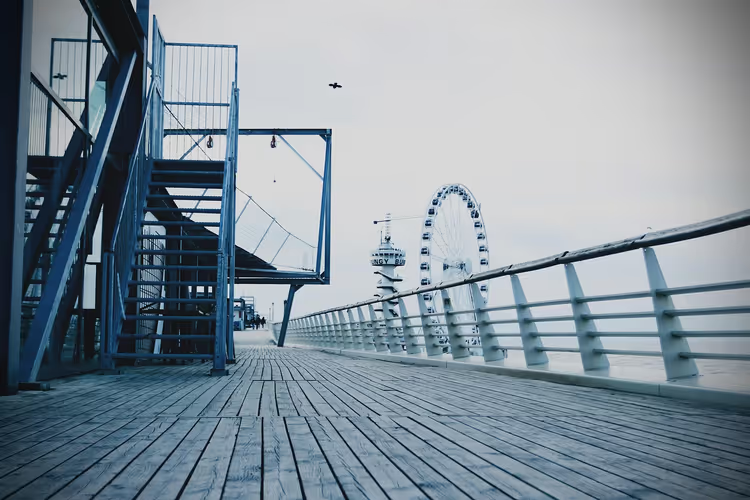
What to see in The Hague: from the Peace Palace to the Scheveningen pier
The Hague combines things that don't usually go together: parliament, the UN court, and a beach.
The government of the Netherlands sits here, the International Court of Justice operates here, and the North Sea is just a short ride away. People come from Amsterdam to The Hague for a day trip. That's not enough.
The city's main complex, Binnenhof, is currently closed for a multi-year renovation (as of 09/2026, official project website). You now need to plan your visit differently. Below are 17 places in The Hague, open and closed to visitors: with tickets, opening hours, and honest catches.
Ad: this article contains affiliate links, we earn a commission if you book through them, at no extra cost to you.
The Hague: key tourist info
💡 In short:
- The center is compact, but the main palace complex is closed for renovation, and some residences are inaccessible.
- Museum tickets should be bought online and in advance: in summer, Mauritshuis and Madurodam fill up by morning.
- Prices and opening hours: 09/2026, verified on the official Madurodam website.
The Hague is easy to split into two parts. You can walk around the historic center with Binnenhof and the museums, and take a ride to the sea in Scheveningen. A tram or a bike will connect the two.
Before your trip, it's worth remembering what's open and what's not.
Site | Entry | Book in advance |
|---|---|---|
Binnenhof and the Ridderzaal | closed for renovation | no |
Peace Palace | guided tour only, Visitor Centre free | yes |
Mauritshuis | paid | yes |
Escher Museum | paid | yes |
Panorama Mesdag | paid | yes |
Madurodam | paid | yes |
Louwman Museum | paid | recommended |
Museon-Omniversum | paid | yes |
Gevangenpoort | paid | recommended |
Noordeinde and Huis ten Bosch | closed to visitors | no |
Pier and Westbroekpark | free | no |
1. Peace Palace
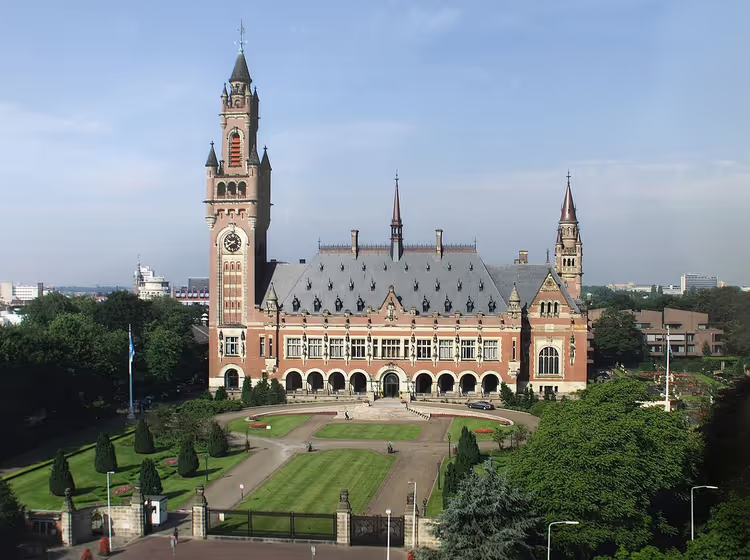
The Peace Palace (Vredespaleis) operates as the seat of the International Court of Justice, not as a museum.
The building of red brick and white sandstone combines Gothic, Romanesque, and Byzantine motifs. The architect took the 17th-century town hall in Calais as his model. The design by Frenchman Cordonnier won a competition among 216 entries, and the construction was funded by American philanthropist Carnegie. One of the two towers is crowned by a carillon of 48 bells.
You can only go inside on a guided tour, and these run a few times a year on weekends. According to the official website (09/2026), you can visit the palace or the garden only as part of a group. Check ticket prices there as well.
On other days, the Visitor Centre is open to you with a free audio guide and video tour. Group visit announcements are published by the Hague tourist office (09/2026).
- How to get there: about 20 minutes on foot from Binnenhof (on the map).
- Who it's for: those interested in the history of international law.
- The catch: tours are rare, and you need to catch the dates well in advance.
2. Ridderzaal
 © Zairon · CC BY-SAPhoto: Zairon, CC BY-SA (https://creativecommons.org/licenses/by-sa/4.0), Wikimedia Commons
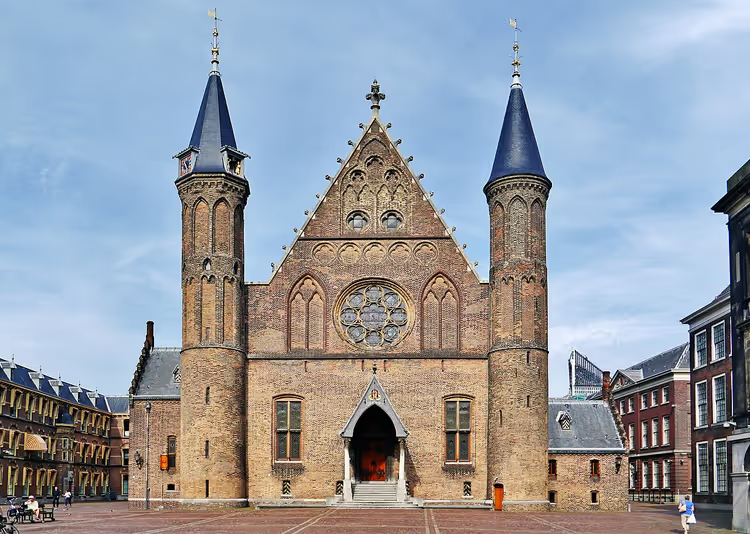
The Ridderzaal (Hall of Knights) occupies the center of the Binnenhof palace complex.
Before the renovation, the 13th-century building hosted royal receptions and ceremonial sessions. The monarch delivered the speech from the throne right here. The building's shape is unusual: a pointed pentagon flanked by towers on two sides. The walls are up to 1.5 m thick, and the facade features a stained-glass window with the coats of arms of the ruling dynasties.
Inside, you won't see the usual columns. An 18 m span is supported by a wooden beam frame, an inverted "ship's hull." The hall contains the throne and the flags of the 12 provinces.
You can only get inside with a group tour. As of the restoration website (09/2026), the Binnenhof is closed for a multi-year renovation, so the hall is opened only a few times a year.
- Who it's for: those interested in the history of the Dutch monarchy.
- The catch: there is no free access even to the inner courtyard.
3. Binnenhof Castle
 © Jesterhat84 · CC BY-SAPhoto: Jesterhat84, CC BY-SA (https://creativecommons.org/licenses/by-sa/3.0/nl/deed.en), Wikimedia Commons
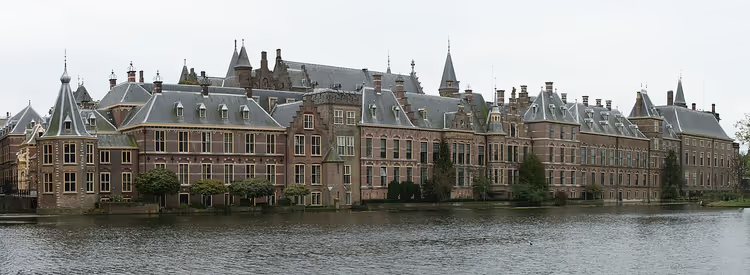
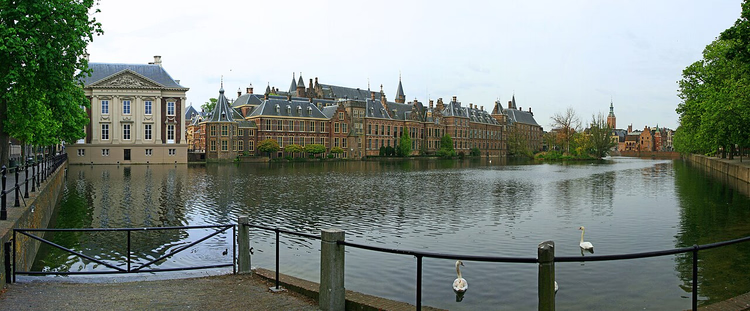
The Binnenhof grew out of a count's hunting lodge and became the country's political center.
Before the restoration, the parliament and government worked here. The complex includes the Ridderzaal (Hall of Knights), the Torentje tower with the prime minister's office, the buildings of both chambers, and the new parliament building. The inner courtyard was accessible through the Grenadierspoort and Regentespoort gates, but now you can't get in due to the renovation.
You can walk around the outside of the complex any day. It is surrounded by a park on three sides, and on the fourth it faces the Hofvijver pond. This is the view that most often appears on postcards and in social media feeds.
A panoramic view of the center is available from the observation platform on the restoration scaffolding: 148 steps and the entire Binnenhof from above (as of 09/2026, binnenhofrenovatie.nl). In 2026, the complex was briefly opened to the public on Construction Day (restoration project website, 09/2026).
- Getting there: about a 10-minute walk from The Hague Central Station (according to the map).
- Who it's for: anyone who wants to see the political heart of the Netherlands.
- The catch: the inner courtyards are closed for years of restoration.
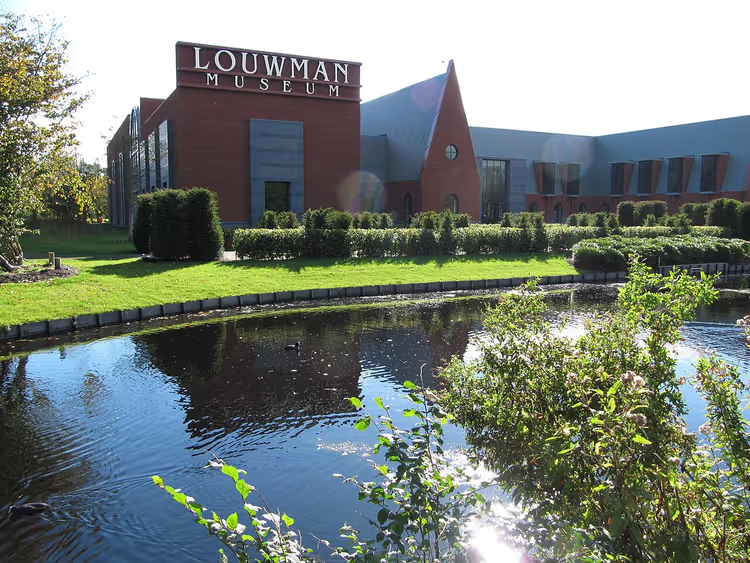
4. Louwman Museum
 © Michiel1972 · CC BY-SAPhoto: Michiel1972, CC BY-SA (https://creativecommons.org/licenses/by-sa/3.0), Wikimedia Commons
The Louwman Museum houses the world's oldest private collection of automobiles.
The first car appeared here in 1934. Two generations of the Louwman family assembled more than 250 vehicles. In 2010, the museum moved to The Hague and took over a purpose-built building with an area of 10,000 m².
In the halls you'll see the Dutch "Eysink," the steam-powered "Bikkers," classic "Spykers," the first "Dodges," and Winston Churchill's "Aston Martin." A standout exhibit is the "Amphicar" amphibious vehicle, which drives and floats. The building has a restaurant and a shop with books, posters, and Millers Oil products.
The museum is open Tuesday through Sunday from 10:00 to 17:00 (as of 09/2026, official website). It is closed on Mondays.
- Who it's for: even those who are indifferent to cars: the exhibition is about design and the era.
- The catch: Monday is a day off, and we recommend buying tickets online.
5. Madurodam Miniature Park
 © Bert Kaufmann from Roermond, Netherlands · CC BYPhoto: Bert Kaufmann from Roermond, Netherlands, CC BY (https://creativecommons.org/licenses/by/2.0), Wikimedia Commons
Madurodam shows the Netherlands at a 1:25 scale: not a copy of one city, but a collective image of the country.
In miniature you'll find Amsterdam, The Hague, Kinderdijk, Utrecht, and Rotterdam. The park opened in 1952 to fund a sanatorium for students with tuberculosis. The first donation came from the Madurodam family, hence the name.
The models have a life of their own. You can control figures, trains, cars, and airplanes, and even act out entire scenes. The park was renovated in 2011, but interactivity remains its core idea.
Madurodam is open every day of the year (as of 09/2026, official website). Day parking costs €14.95 (as of 09/2026, madurodam.nl). Buy tickets online so you don't have to wait at the ticket office.
- How to get there: by tram to the stop near the park, the trip from the center takes about half an hour (according to the map).
- Who it's for: families with children and anyone who wants to see the whole country in a couple of hours.
- The catch: part of the exhibition is outdoors, so rain is a factor.
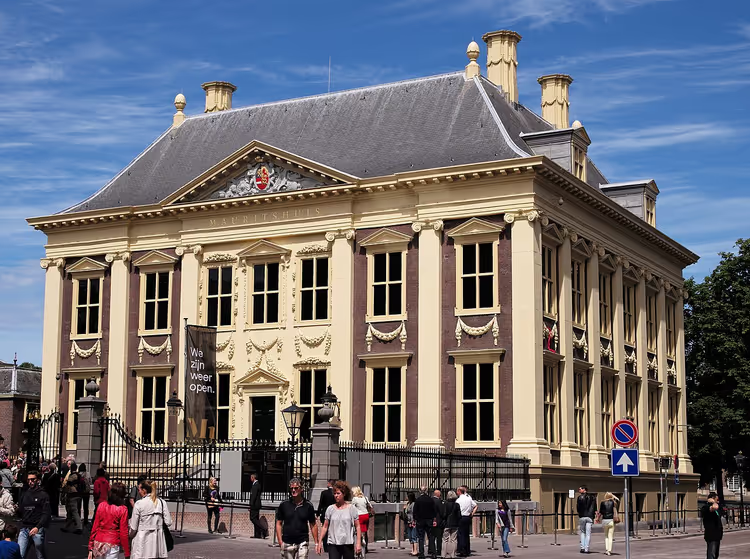
6. Mauritshuis Royal Gallery
 © Roman Boed from The Netherlands · CC BYPhoto: Roman Boed from The Netherlands, CC BY (https://creativecommons.org/licenses/by/2.0), Wikimedia Commons
The Mauritshuis occupies a 17th-century mansion designed by Jacob van Campen next to the Binnenhof.
The gallery opened in 1822 and is considered one of the main museums in the Netherlands. In its 16 rooms you'll find about 250 works by Dutch Golden Age painters: Rembrandt, Vermeer, Potter, Steen, Fabritius, and Hals. A visit usually starts with Vermeer's "Girl with a Pearl Earring."
The mansion itself is also an exhibit. Painted ceilings, silk-covered walls, and elegant chandeliers have survived from the historic interiors. An underground passage connects the gallery to the Royal Wing, where the workshops and library are located.
The museum has a brasserie and a gift shop. Opening hours vary, but Monday here always starts in the afternoon.
- Who it's for: anyone who came for Vermeer and Rembrandt.
- The catch: the rooms are small, and at peak times it gets crowded around the paintings.
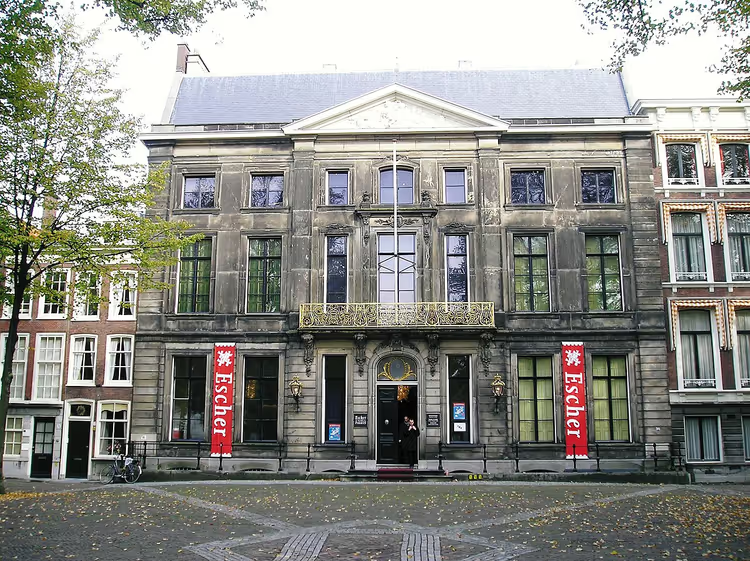
7. Escher Museum
 © Andrew Crump · CC BYPhoto: Andrew Crump, CC BY (https://creativecommons.org/licenses/by/2.0), Wikimedia Commons
The Escher Museum (Escher in Het Paleis) displays the work of Maurits Escher, one of the most recognizable graphic artists of the 20th century.
The museum opened in 2002 in the Lange Voorhout palace, which previously served as the royal family's winter residence. Some rooms have retained their historic interiors. The chandeliers by sculptor Hans van Bentem and the Judd parquet will catch your eye.
The first floor is devoted to early works, from landscapes to the first prints. The second floor holds the later masterpieces: "Belvedere," "Air and Water," "Waterfall." The third floor features a world of optical illusions where visitors love to take photos. The building has a shop and a cafe in Queen Emma's former kitchen.
A good deal: the combined "Panorama Mesdag plus Escher" ticket is sold only through Tiqets, and it's cheaper than two separate tickets (as of 09/2026, museum's official website). You can easily find it through Escher in Het Paleis tickets on Tiqets.
- Who it's for: fans of graphic art and optical illusions.
- The catch: the ticket is for a specific time slot, and arriving late shortens your visit.
8. Scheveningen Pier
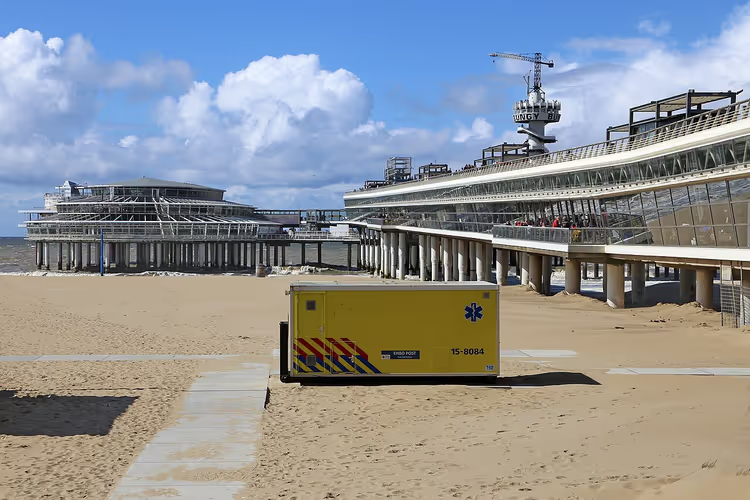 © W. Bulach · CC BY-SAPhoto: W. Bulach, CC BY-SA (https://creativecommons.org/licenses/by-sa/4.0), Wikimedia Commons
Scheveningen is considered the Netherlands' main seaside resort, and its pier (De Pier) has long been a symbol of the area.
The first pier was built in 1901, but it was destroyed during World War II: the Germans stored ammunition here. The current pier, 380 meters long, was built in 1959. The structure has two levels: the lower gallery with glass walls protects you from the wind, while the upper level is open to the sun.
Along the promenade you'll find shops, cafes, bars, and restaurants, as well as a casino. The entertainment caters to different tastes: a Ferris wheel with air-conditioned cabins, a 65-meter tower with bungee jumping, a gym, and seawater pools.
Walking on the pier is free. The pier remains a great spot for sunset and dinner with a sea view.
- Who it's for: those who want the sea without a ticket.
- The catch: in strong winds, the upper level empties out quickly.
9. Noordeinde Palace
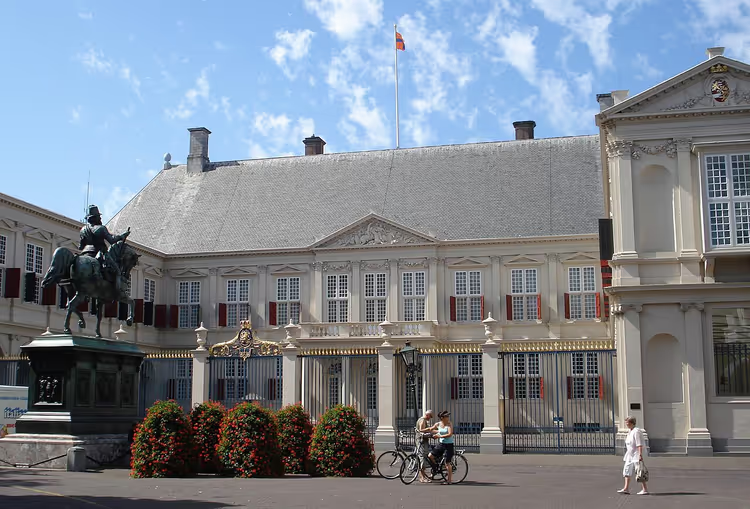
Noordeinde is one of the royal family's four official residences and stands on a shopping street in the center.
The palace grew out of an ordinary farmhouse. From 1609 it was expanded on the orders of Frederick Henry, son of William of Orange. The original stonework is still visible in the cellars. In 1813 the building passed to the state and became a winter residence.
Since 1984 the palace has served as the royal office, and since 2013 King Willem-Alexander has worked here. The building is small, so there is no public access: for a few weeks in summer it is occasionally opened for tours.
What's left for you is a stroll along Noordeinde street. Shop windows, galleries, and cafes line the street, and the palace facade is visible through the gate.
- Who it's for: a quiet walk through the center away from the crowds.
- The catch: you can't go inside, except for rare summer tours.
10. Huis ten Bosch Palace
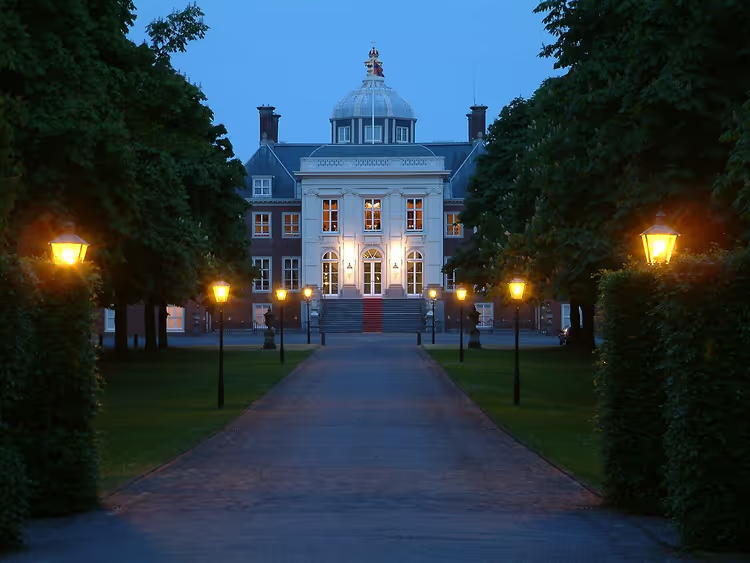 © Ruben de Rijcke · CC BY-SAPhoto: Ruben de Rijcke, CC BY-SA (https://creativecommons.org/licenses/by-sa/3.0), Wikimedia Commons
Huis ten Bosch stands in the middle of the Haagse Bos park and is considered the most luxurious royal residence. The name translates as "house in the woods."
The palace was built by architects Post and van Campen in the mid-17th century for Frederick Henry of Orange. After his death, the building became a monument to the prince. The Hall of Fame, decorated by Honthorst, Bosschaert, and Lievens, serves as a reminder of this.
War and time nearly destroyed the complex. Post-war reconstruction was completed only in 1981. The royal family now lives here, so the palace is closed to tourists. What's left for you is the surrounding park and the facade behind the fence.
- Who it's for: a walk through Haagse Bos park near the palace.
- The catch: no entry inside, only the exterior is visible.
11. Old City Hall
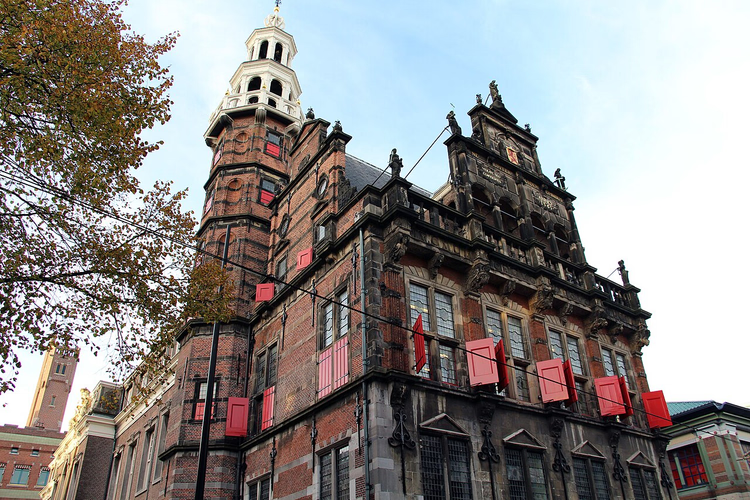 © Fred Romero from Paris, France · CC BYPhoto: Fred Romero from Paris, France, CC BY (https://creativecommons.org/licenses/by/2.0), Wikimedia Commons
Locals call the Old City Hall (Oude Stadhuis) the "ice palace" because of its facade color. The city administration moved to a new building long ago, but marriages are still registered here, and members of the royal family register the births of their children here.
The complex was formed from several buildings that appeared at different times. The most recognizable part, the octagonal tower from the count's castle, has survived since the 16th century. Its bells ring four times a day.
On the facade of the oldest part you'll find statues representing justice, strength, hope, love, and faith. Inside, stained glass windows and 17th-century paintings have survived despite wars and the Protestant Revolution. An atmospheric restaurant operates in the basement.
- Who it's for: those walking through the center and looking at facade details.
- The catch: the halls are only accessible for municipal business.
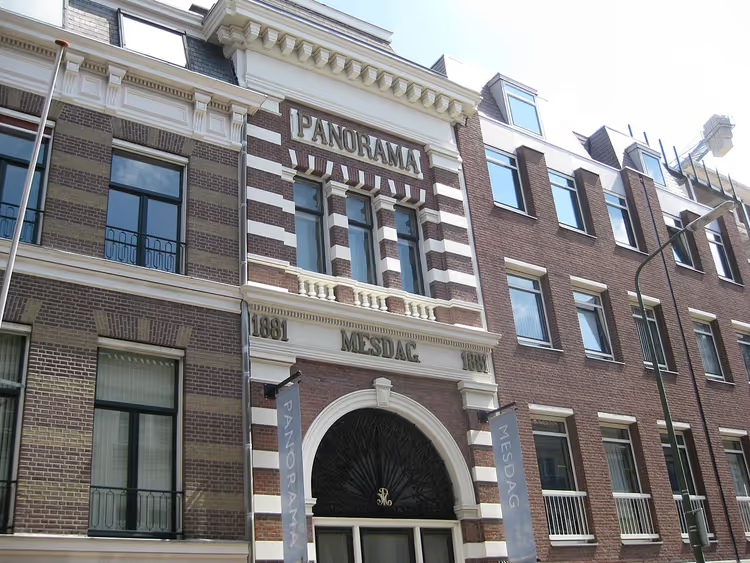
12. Panorama Mesdag
 © Marion Golsteijn · CC BY-SAPhoto: Marion Golsteijn, CC BY-SA (https://creativecommons.org/licenses/by-sa/3.0), Wikimedia Commons
Panorama Mesdag is called a museum of a single masterpiece. The main exhibit: a canvas 120 meters long and about 14 meters high.
The painting offers a 360-degree view and shows the North Sea, dunes, and Scheveningen at the end of the 19th century. You view it from a gazebo 14 meters from the canvas. The space between you and the painting is covered with sand, fishing nets, and dry grass.
The illusion is enhanced by the sounds of the sea and seagulls. A glass dome stands above the panorama instead of a roof, so the colors on the canvas change with the weather. Mesdag and his assistants painted the canvas in four months. Check current ticket prices on the museum's official website (09/2026).
- Who it's for: those interested in unconventional museums.
- The catch: the museum has one room, and a visit takes less than an hour.
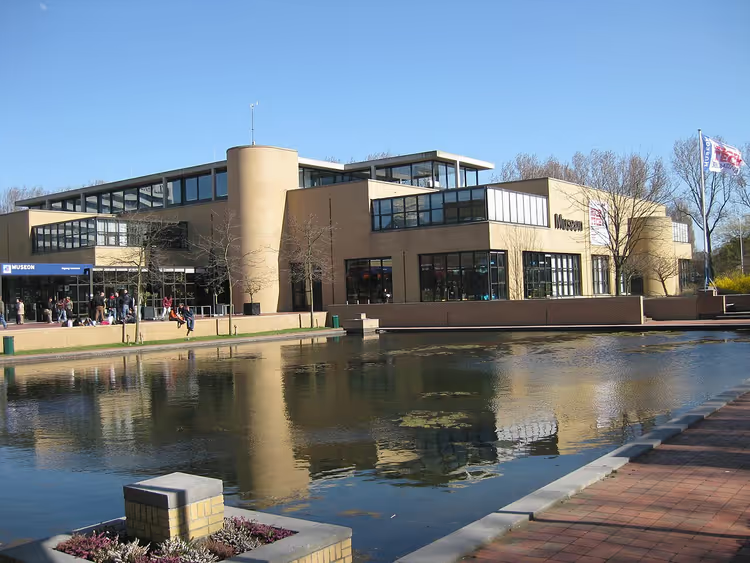
13. Museon-Omniversum
 © Chemical Engineer · CC BY-SAPhoto: Chemical Engineer, CC BY-SA (https://creativecommons.org/licenses/by-sa/3.0), Wikimedia Commons
Museon-Omniversum operates as an interactive museum of science and culture. It used to be called simply Museon.
The story began in 1904 with a "school" museum, where exhibits served as illustrations for lessons. The first director, a geologist, laid the foundation of the collection, and the holdings grew through donations. One special gift to the museum: everyday objects of the Greenlandic Inuit.
Today it houses more than 270,000 exhibits: taxidermy animals, dinosaur bones, tools, and national costumes from around the world. You're allowed not only to look but also to touch many items and act out scenes. A Dome cinema was added to the museum, and one ticket covers a film on the big screen (as of 09/2026, official website).
- Who it's for: families with children and rainy days.
- The catch: during school holidays the halls are packed with groups.
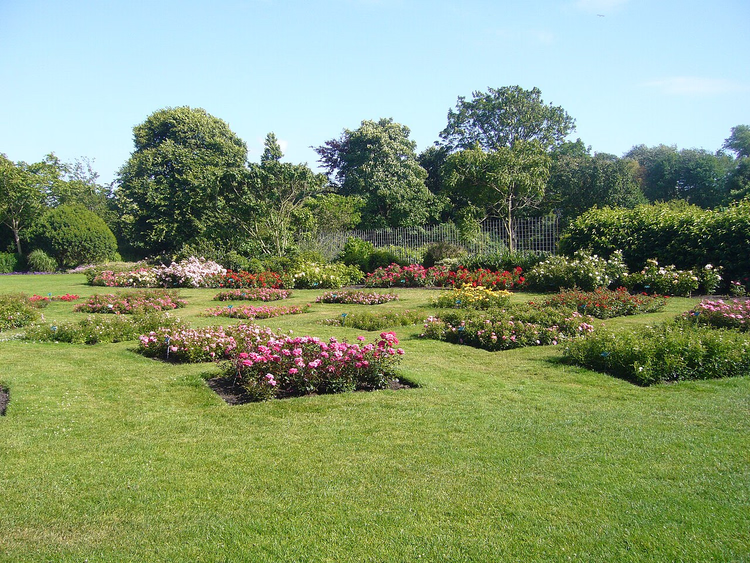
14. Gevangenpoort Museum
Gevangenpoort occupies the former main gate of the Binnenhof castle, and it's one of the city's darkest places.
 © P.L. van Till at nl.wikipedia · CC BY-SAPhoto: P.L. van Till at nl.wikipedia, CC BY-SA (http://creativecommons.org/licenses/by-sa/3.0/), Wikimedia Commons
The gate was built in the 13th century, and two hundred years later it was turned into a debtors' prison. There weren't enough cells, so a courthouse and additional casemates were built nearby. It held the politician Cornelis de Witt, whom Alexandre Dumas wrote about, and the scholar Dirck Coornhert.
After four centuries, the prison became a museum. The exhibition tells about the lives of prisoners, the privileges of the nobility, and the conditions the poor endured. A separate room is dedicated to punishment and torture, with the largest collection of instruments in the Netherlands.
The museum is open on weekdays except Monday, and on weekends it opens only in the afternoon.
- Who it's for: anyone interested in the history of law and punishment.
- The catch: closed on Mondays.
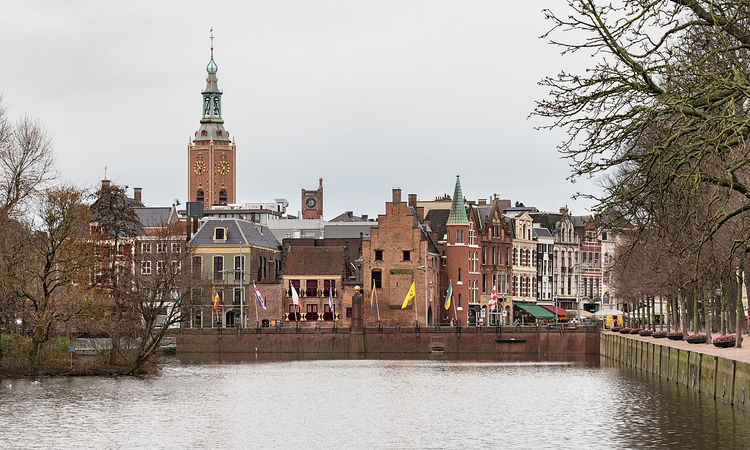
15. Westbroekpark
 © Jorge Franganillo · CC BYPhoto: Jorge Franganillo, CC BY (https://creativecommons.org/licenses/by/4.0), Wikimedia Commons
Westbroekpark was laid out in 1920 to a design by P. Westbroek, and today it's one of the best-kept parks in Scheveningen. It sits close to the beach.
There's something for everyone here. Kids get bright playgrounds, soccer fans get fields, and you get shady paths and a lake with boat rentals. If you get hungry, head to a restaurant serving Eastern cuisine or a tea room with an herb terrace.
The park's main treasure is its rose garden, known far beyond the Netherlands. The collection numbers about 20,000 bushes and 300 varieties. From early July to late October, the rose garden blooms and fills the whole area with fragrance. Park admission is free.
- Who it's for: a quiet day between museums and the sea.
- The catch: the best time for the rose garden is limited to summer and early fall.
16. Grand hotel amrâth kurhaus
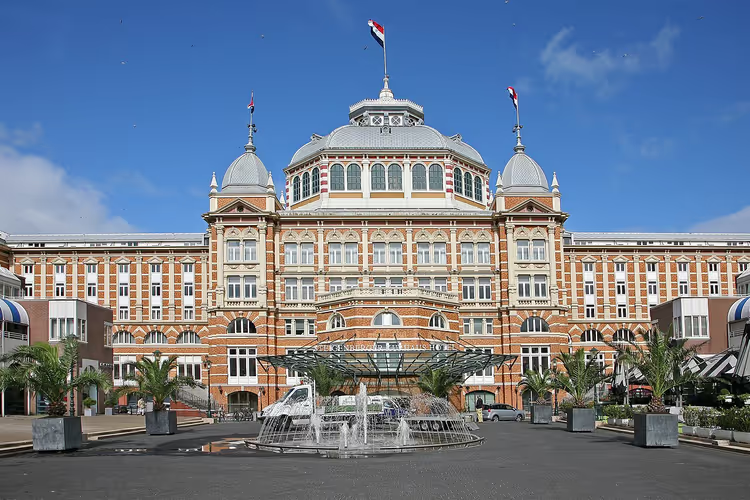 © W. Bulach · CC BY-SAPhoto: W. Bulach, CC BY-SA (https://creativecommons.org/licenses/by-sa/4.0), Wikimedia Commons
Grand Hotel Amrâth Kurhaus sits right on the North Sea promenade, and the scale of the building makes it look like a palace. The building opened in 1885, initially as a concert hall.
The stage and hotel have seen their share of stars. The guest book includes Luciano Pavarotti, Julio Iglesias, pianist Claudio Arrau, Little Richard, Donna Summer, and Helmut Kohl. Even members of royal families have stayed here.
In 1969 the hotel closed and was slated for demolition. The building was added to the list of historic monuments, and in 1979 it reopened.
Today Kurhaus houses a hotel, the Kurzaal hall with rotating exhibitions, and a branch of the Bell'Arte gallery. You'll find the exhibits in the lobby, corridors, and open terraces, and access to the common areas is free.
- Who it's for: for an evening stroll along the promenade and coffee with a sea view.
- The catch: common areas are closed to guests during private events.
17. The UN prison
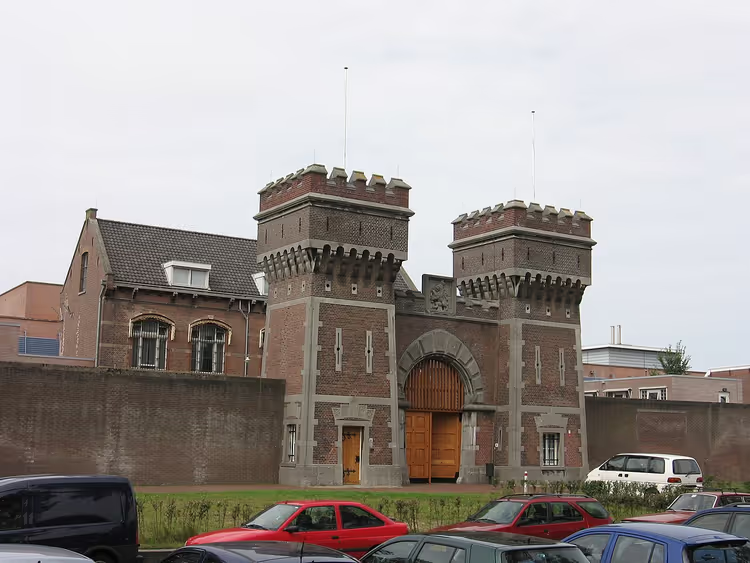 © Michiel1972 · CC BY-SAPhoto: Michiel1972, CC BY-SA (https://creativecommons.org/licenses/by-sa/3.0), Wikimedia Commons
The last item on the list is unusual: a United Nations prison operates in the middle of ordinary residential buildings in Scheveningen. In 1994, a unit of the International Criminal Tribunal for the former Yugoslavia opened here. The tribunal itself closed in 2017.
The facility has capacity for 84 detainees. Conditions of detention are monitored by a commission of the International Red Cross.
The regime is far from the usual idea of a prison. Detainees move freely around part of the building, cook their own food, watch TV, exercise, and use a computer to prepare their defense.
You won't get inside. You can only view the perimeter and the facade, which is easy to do by walking around the block.
- Who it's for: for those interested in the unusual side of an ordinary neighborhood.
- The catch: visiting is impossible, only the facade is visible.
The Hague museums sell timed-entry tickets, and in high season they go fast. Below are three options most often combined with a walk around the center.
Tours and tickets in The Hague
Guided tours, skip-the-line tickets and activities — most offers can be cancelled free of charge.
See offers on TiqetsThe widget loads once you give your consent.
⁉️🤔 Frequently asked questions
Is Binnenhof open to tourists?
The complex is closed for a multi-year renovation, so the inner courtyard and the Ridderzaal are inaccessible. It opens briefly on special days, such as Construction Day. The easiest way to follow the progress and catch open days is on the restoration project website.
How much time do you need for The Hague?
One day is enough for the center and one or two museums. If you also want the sea, add half a day for Scheveningen and the pier. Mauritshuis takes about an hour and a half, Madurodam and the Louwman Museum two hours each, and Panorama Mesdag fits into an hour.
What is closed to visitors?
Noordeinde Palace and Huis ten Bosch are closed to the public, as the royal family lives and works there. Binnenhof is covered in restoration scaffolding, and the UN prison is closed by definition. Mauritshuis, the Escher museum, Panorama Mesdag, Madurodam, and the Louwman Museum, on the other hand, operate on their regular schedules.
Which museums are closed on Mondays?
Monday is a day off at the Louwman Museum and Gevangenpoort. Mauritshuis opens only in the afternoon on that day. Madurodam is open every day of the year. Always check the hours on the official museum websites before visiting.
How much do tickets cost?
There is no combined ticket; each museum sells its own. On average, budget a double-digit amount per adult; children are usually cheaper. Combo tickets are a better deal: the "Panorama Mesdag plus Escher" pairing is easy to book on Tiqets. Check exact prices on museum websites.
How do you get to the sea and the pier?
A tram runs from the center of The Hague to the shore, and in summer many people go by bike. The pier, Kurhaus, and Westbroekpark are close to each other, so they're easy to combine into one day. Parking near the promenade is paid and fills up quickly.
In short: what to book
The Hague works best if you don't try to cover everything at once. Book museum time slots online, because in high season Mauritshuis and Madurodam fill up from the morning.
If you have one day, start with Mauritshuis, walk around Binnenhof from the outside, and finish with dinner in Scheveningen. If you have two days, add the Louwman Museum and Panorama Mesdag. If you're traveling with kids, go for Madurodam and the beach.
Getting around the center without a car is easy: you can walk between the main museums.
Comparing city tours is easy on GetYourGuide.

A small editorial team writing guides for independent travel. We travel ourselves, but we haven’t been everywhere, so we check prices, opening hours and how to get there against official sources.