








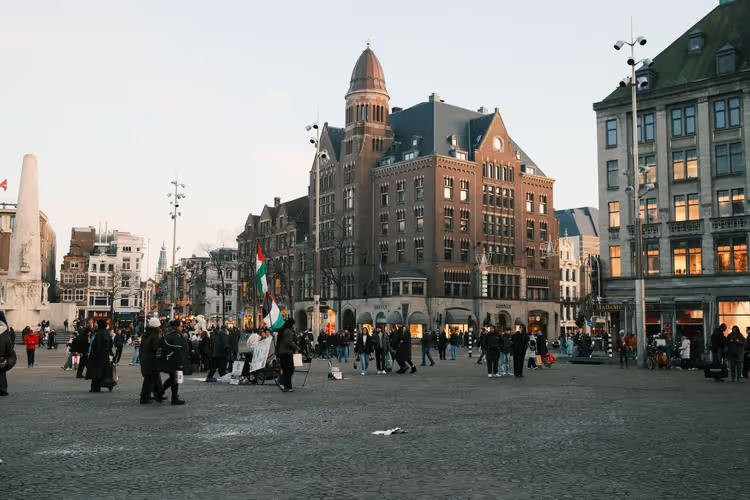
Sinterklaas in the Netherlands: when he arrives and what is given on December 5
The Netherlands buys gifts not at Christmas, but in early December. On the evening of December 5, the country celebrates pakjesavond, the main family holiday of winter. Two to three weeks before that, Sinterklaas arrives in the country by steamboat from Spain, and from that day on, children once again put a shoe by the fireplace.
We gathered the facts about the holiday: where the tradition came from, when Sint arrives, what people give on the main evening, and what sweets they buy for it. We checked dates and details against Sinterklaas.nl (as of 09/2026).
What Sinterklaas is and when it is celebrated
💡 In short:
- Sinterklaas arrives in the Netherlands in mid-November and stays in the country until the first days of December.
- The main evening, pakjesavond, takes place on December 5; in the south of the country and in Belgium, gifts are given on December 6.
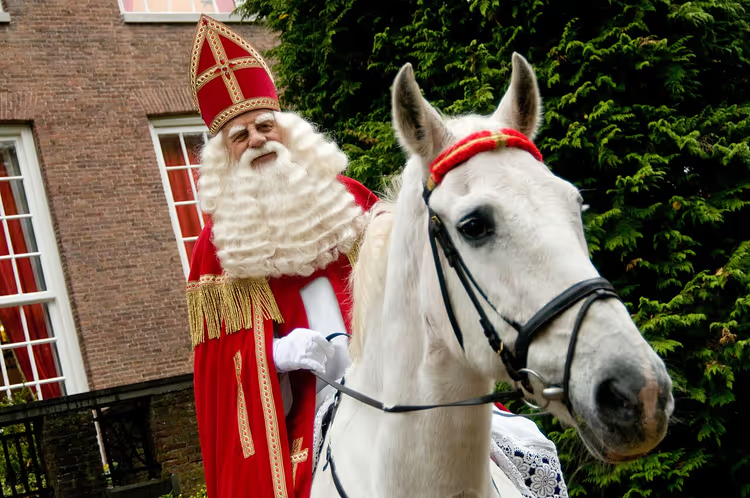
In the Netherlands, Sinterklaas is the name for a white-bearded saint in a red mantle and with a staff. By tradition, he comes from Spain to bring children gifts and sweets. Adults take part too: gifts are exchanged in families, in offices, and among friends.
In terms of importance, this holiday outranks Christmas. In early December, Dutch shops operate on a special schedule, and shelves with chocolate and cookies take up more space than Christmas goods. For children up to seven or eight years old, Sint remains the main hero of winter.
The key dates of the season are convenient to keep in one table.
When | What happens |
|---|---|
November 9 | The children's TV show Sinterklaasjournaal starts |
November 13-25 | Local and national arrival of Sint |
December 5 | pakjesavond: gifts, poems, and sweets |
December 6 | Gifts in the south of the country and in Belgium |
History of the holiday in the Netherlands
The Sinterklaas tradition goes back to the Middle Ages. At first it was a church custom: on the feast day of Saint Nicholas, donations were collected for the poor. From 1427, shoes were placed in the Sint-Nicolaaskerk church in Utrecht by December 5, and wealthy citizens put coins in them for those in need (as of 09/2026, Wikipedia). From the 16th century, children also began putting shoes by the fireplace.
 © R.F. (Roel) Jorna · CC BY-SAPhoto: R.F. (Roel) Jorna, CC BY-SA (https://creativecommons.org/licenses/by-sa/4.0), Wikimedia Commons
After the revolt against the Spanish king Philip II, church circles tried to ban the holiday. They saw too many pagan and Catholic elements in it. The ban did not work. By that time, Sinterklaas had already won over the Protestant majority as well.
Saint Nicholas was born in Patara, in what is now Turkey. The fact that Sint comes specifically from Spain is explained by the transfer of his relics. They were moved to Bari in Italy, which in the 16th century belonged to the Spanish crown. That is how Spain became fixed in the Dutch tradition and in the songs about the saint. Today you will find Sinterklaas all over the country from mid-November.
How Sinterklaas arrives in the country
Every year Sint sails from Spain on the steamboat Pakjesboot 12. With him come the white horse Amerigo and a cheerful retinue of Pieten. The national arrival is held between November 13 and 25, and it has been celebrated annually since 1934 (as of 09/2026, Wikipedia).
In 2026, the national arrival (landelijke intocht) will take place on Saturday, November 14. The steamboat will dock on the Meuse river in the town of Grave, and the NPO Zapp channel will start its live broadcast at 12:00 (as of 09/2026, Sinterklaas.nl). The children's TV show Sinterklaasjournaal starts on November 9 and shows how Sint makes his way from Spain.
Grave is hosting the national arrival for the first time in 26 years for Brabant. Before that, in 2000, it was held in Woudrichem (as of 09/2026, Sinterklaas.nl). If a town has no river or canal, Sint arrives by other transport: in Noordwijk he once arrived on a rescue boat.
A local arrival also takes place in every town. If your own town is more convenient, check the local date: it is usually set for the same day or the weekend after the national one. Crowds of children and parents line the route of Sint.
Why children put a shoe by the fireplace
After Sint arrives, children put a shoe by the fireplace, radiator, or front door in the evening. Inside they place a drawing for the saint or something tasty for the horse. According to legend, Sinterklaas rides over the rooftops, and his helpers come down through the chimney and leave a bag of gifts and sweets.
If you are staying with a Dutch family in November, you may also be asked to put out a shoe. In the morning, it usually contains a mandarin, a cookie, or a small gift. This continues until the main evening.
The shoe is put out not once, but several evenings in a row. All this time, children sing songs about Sinterklaas and wait for December 5.
The evening of December 5: surprises and poems
The main evening of the holiday falls on December 5. It is spent at home with family or friends, and it is called pakjesavond. In the south of the Netherlands and in parts of Belgium, gifts are given on December 6, as on Saint Nicholas Day in Germany.
The custom of evening gifts goes back to a pre-Christian tradition: in autumn, apples and nuts were handed out as symbols of the harvest. In the past, children received homemade gifts and sweets. As prosperity has grown, gifts have become increasingly expensive, and Dutch parents increasingly complain about the rising cost.
Adults have their own custom: surprise and Sinterklaasgedicht. Participants give gifts anonymously, and the pairs of giver and recipient are determined by drawing lots. The gift must be a surprise, so it is hidden in homemade wrapping. Each gift comes with a poem, which the recipient reads aloud. The poem plays on events of the year or the person's character traits. If you are invited to such an evening, prepare a small gift and a short poem.
Zwarte Piet and Roetveegpiet: what has changed
Sint's helpers are traditionally called Zwarte Piet. Until recent years, they were depicted with black paint on their faces, red lipstick, gold earrings, and black curly hair. Critics pointed out that this image repeated 19th-century caricatures of slaves. The debate went on for more than a decade and split the country.
A compromise was found in a new character: Roetveegpiet, or "soot Piet". Only smudges of soot remain on his face, as if he had come down through the chimney. Many schools, cities, and television have switched to this version, although some cities still choose the old image (as of 09/2026, Wikipedia).
The Pieten also have their own roles. Rommelpiet makes a mess, Danspiet dances, Muziekpiet plays music. At the celebration, you will most often meet Pieten with soot smudges on their faces, and together they entertain children and take part in TV broadcasts.
Sinterklaas sweets: pepernoten, kruidnoten, and letters
The Sinterklaas season is worth catching for the shops alone: the range of sweets is nothing like the Christmas one. The core of the selection is known to every Dutch person.
 © Donald Trung Quoc Don (Chữ Hán: 徵國單) - Wikimedia Commons . ( Want to use this image? ) · CC BY-SAPhoto: Donald Trung Quoc Don (Chữ Hán: 徵國單) - Wikimedia Commons . ( Want to use this image? ), CC BY-SA (https://creativecommons.org/licenses/by-sa/4.0), Wikimedia Commons
- chocoladeletter: a large chocolate letter, the recipient gets the first letter of their name.
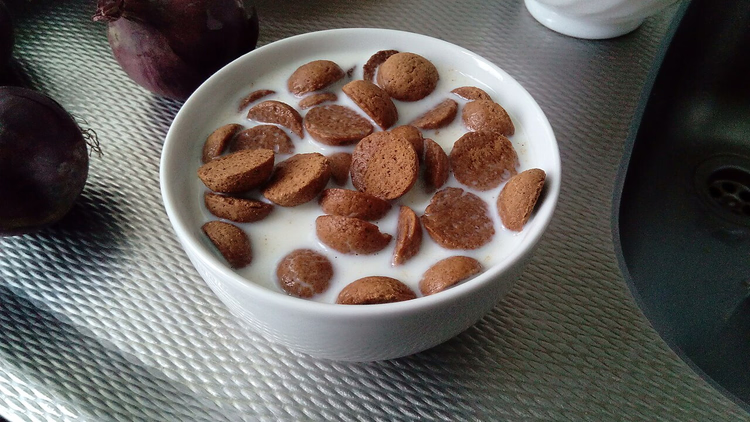
- kruidnoten: small, round, hard cookies made from gingerbread dough. The name comes from the spices (kruiden) in the dough.
- pepernoten: cookies softer than kruidnoten, irregularly square in shape and often with anise. In shops they are often placed next to each other.
- strooigoed: a mix of small sweets that the Pieten "scatter" to children. It includes schuimpjes, taai taai, and kruidnoten.
- amandelstaaf or banketstaaf: a puff pastry roll with almond paste (spijs).
kruidnoten and pepernoten are produced in dozens of flavors: milk and dark chocolate, cinnamon, truffle, salted caramel. There are shops that sell only these cookies, and before the holiday a queue forms outside them.
If you find yourself in the Netherlands in November, go to an ordinary supermarket. The selection is the same, and prices are lower than in tourist confectionery shops. A box of kruidnoten will survive the trip home if you do not open it on the way.
⁉️🤔 Frequently asked questions
When is Sinterklaas celebrated in the Netherlands?
Gifts are given on the evening of December 5, and this evening is called pakjesavond. In the south of the country and in Belgium, they are often given on the morning of December 6, the feast day of Saint Nicholas (as of 09/2026, Wikipedia).
How is Sinterklaas different from Santa Claus?
The American Santa Claus grew largely out of this tradition. Dutch settlers brought the holiday to New Amsterdam, where it turned into a Christmas character.
Who is Zwarte Piet and why was he replaced?
He is Sint's helper, who used to be depicted with a fully black face. Because of the resemblance to caricatures of slaves, the image became a subject of dispute. Today Roetveegpiet with soot smudges on his face is used more often (as of 09/2026, Wikipedia).
What are surprise and Sinterklaasgedicht?
Surprise is the name for the homemade wrapping in which a gift for an adult participant is hidden. A poem is attached to the gift, and the recipient reads it aloud.
What sweets do people buy for the holiday?
The most recognizable ones: chocolate letters chocoladeletter, kruidnoten and pepernoten cookies, the strooigoed mix, and the amandelstaaf roll.
In short: what to book
The national arrival and the main evening take place in different weeks, so it is better to plan your trip around one event. In 2026, the national arrival will take place on November 14 in Grave (as of 09/2026, Sinterklaas.nl). If you want the holiday itself, come for the first week of December.
- Want to see the parade and the steamboat: plan your trip for mid-November, for the national arrival.
- Want to try the sweets and catch the shoe by the fireplace: take the first week of December.
- Want to join a pakjesavond with a Dutch family: arrange it in advance, the evening is spent at home.
Accommodation in Grave for mid-November is booked in advance. The town is small, and on arrival days there are almost no free rooms left. Check dates and city addresses on the national arrival page before your trip.

A small editorial team writing guides for independent travel. We travel ourselves, but we haven’t been everywhere, so we check prices, opening hours and how to get there against official sources.