
















Śmigus-dyngus in Poland: why people get soaked and how to stay dry
The first Monday after Easter in Poland is best spent in a raincoat. On this day, the streets turn into a water battle zone, and absolutely everyone gets doused. The custom itself is called Śmigus-dyngus, or Wet Monday.
In 2026, it fell on April 6, and in 2027 it lands on March 29 (holiday calendar). This date changes your plans more than a weather forecast if you were heading to Krakow, Wroclaw, or Gdansk for Easter.
Below, we break down where the tradition came from, why pussy willow branches come into play, and how to survive the national water battle.
Śmigus-dyngus: the custom and the role of water
💡 In short:
- Śmigus-dyngus is a custom observed on the first Monday after Easter in Poland and among the Polish diaspora.
- On this day, people douse each other with water, and in villages they also lightly swat each other with pussy willow branches.
- Dates and traditions: 09/2026, verified on the Culture.pl portal.
Śmigus-dyngus closes out the Easter holidays and serves as a second day off. Poles call it lany poniedziałek, meaning "Wet Monday." In villages, water starts flying from early morning; in larger cities, the battle heats up after noon.
The custom is several hundred years old. Written sources mention it as far back as the 15th century, and its roots go even deeper (Culture.pl reference). For you, one thing matters: on this day, water flies at passersby and tourists alike.
Where the dousing custom came from
The first version traces the tradition to Slavic spring-welcoming rites. Water marked the end of winter, purification, and health, and dousing was meant to speed up nature's awakening.
The second version ties the custom to the baptism of Poland. Duke Mieszko I adopted Christianity on April 14, 966 (Museum in Lednica). Poles still remember the mass baptisms of that year as the birth of the nation, and water became a symbol of the new rite.
The Church tried to rein in the fun. In 1410, the Bishop of Poznań issued the decree Dingus Prohibetur banning the "dyngus" (history of the custom). The ban didn't work: dousing survived it, the centuries that followed, and reached you six hundred years later.
Śmigus and dyngus: pussy willow and pisanki
Originally, there were two separate rites. Śmigus meant striking with pussy willow branches and dousing with water, while dyngus involved a ransom of decorated eggs. Later, the two merged into a single holiday (history and etymology).
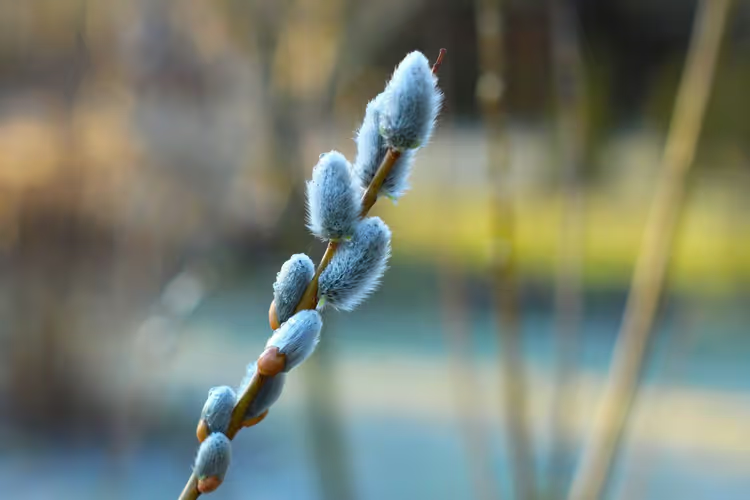
Pussy willow branches are blessed in Polish churches on Palm Sunday. The palm branches common in other countries were replaced in Poland by willow branches with fuzzy buds. On Palm Sunday, girls were lightly swatted with blessed willow branches while people recited: "It's not me striking, the willow strikes, in a week comes the bright day, in six nights comes Easter" (rite on Culture.pl).
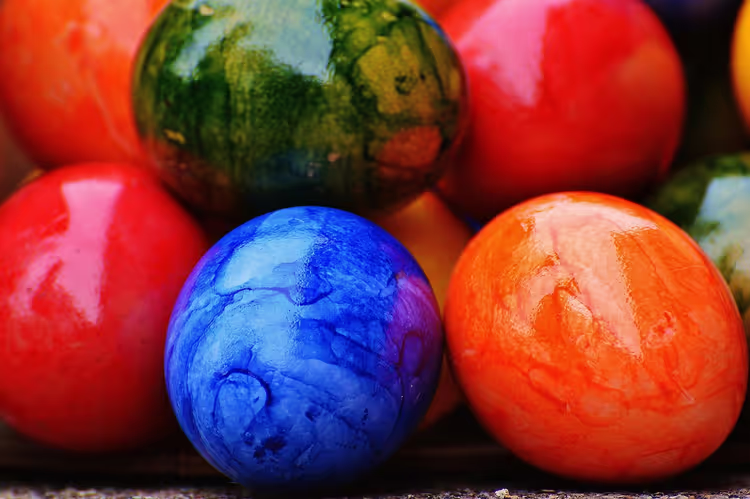
Pisanki helped buy your way out of a dousing. That's the name for painted Easter eggs. They were given to young men as a charm for luck, a good harvest, and health. If you had lived in an old Polish village, eggs would have saved you from a cold bucket of water.
How Wet Monday plays out today
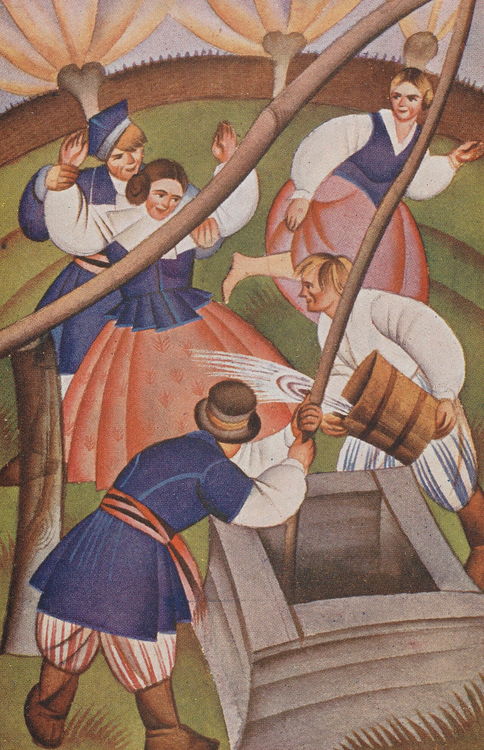
Today, the custom has turned into a full-blown water battle. People use buckets, bottles, water guns, and even fire hoses, and if there's a pond nearby, a soaked person might get pushed into the water fully clothed.
In the past, girls only retaliated on Tuesday. Now they strike back the same day and without warning, so the odds have evened out (modern rites on Culture.pl). You can get doused in the evening too.
Village boys used to go house to house singing. These processions were called chodzenie po dyngusie, meaning "going for dyngus." In some regions, they carried a decorated rooster, and hosts rewarded the guests with eggs and food.
Where else people douse with water: Czechia, Slovakia, Hungary
The custom lives on beyond Poland. In Czechia, boys swat girls with braided willow branches; in Slovakia, they douse and swat at the same time; and in Hungary, they stick to sprinkling with water or perfume.
In Hungary, the rite is called locsolkodás, meaning "sprinkling." In Slovakia, the name oblievačka stuck, meaning "dousing" (parallels in Central Europe).
The meaning is the same everywhere: water and willow bring you health for the whole year. The custom is so resilient that it has survived changes of religion, empires, and borders.
Dyngus Day: the custom among the Polish diaspora
The holiday also made it to the United States. There, the Polish diaspora calls it Dyngus Day. The largest parade takes place in Buffalo, New York, where Poles from across the country gather (Buffalo tourism site).
It's also celebrated in Cleveland and in South Bend, Indiana (list of cities). The format there is far from the Polish one: instead of a bucket of water, you'll find polka music, kielbasa sausage, and beer. Water battles are rare; the custom has become an excuse for a festival.
How to stay dry: tips for tourists
You can't completely avoid the water, but you can limit the damage. If you don't want to get soaked, steer clear of courtyards and squares: those are the most common dousing spots.
Keep your phone in a waterproof case and leave paper maps at home. Light-colored clothing makes you a target, so bring a thick jacket with a hood and shoes you don't mind ruining.
Getting doused is considered a good sign: the more water, the more health. Nobody takes offense here, even if the water is ice cold. Bring a towel and a spare T-shirt if you plan to walk around all day.
⁉️🤔 Frequently asked questions
When is Śmigus-dyngus celebrated?
The holiday always falls on the Monday after Easter. The date depends on Easter and shifts every year, so check the calendar in advance (Easter dates for 2026 and 2027).
Why water specifically?
In Polish tradition, water signifies purification and health. The custom is linked both to Slavic spring rites and to the baptism of Poland (reference on the baptism). Over time, the rite turned into a fun water battle without religious meaning.
What does the name lany poniedziałek mean?
That's what Poles call the second day of Easter; translated, it means "Wet Monday." Śmigus-dyngus combines two earlier rites: striking with willow branches and a ransom of eggs. Both names are used interchangeably in Poland, and you'll hear either one.
Do tourists get doused on this day?
Yes, everyone gets doused without exception. There are no exemptions for visitors, and water flies both day and evening. The only thing that helps is being ready to laugh it off.
Where besides Poland is this custom observed?
Similar rites exist in Czechia, Slovakia, and Hungary. Among Poles in the US, the holiday lives on as Dyngus Day with parades and polka music. One thing unites all versions: water brings luck and health.
In short: what to remember
Śmigus-dyngus is easier to embrace as a local bit of fun than to avoid. If you're going to Poland for Easter, bring a raincoat, a waterproof phone case, and a dry T-shirt in your backpack. If you want a quiet day, pick a museum and stay out of the countryside: there, the dousing starts early in the morning. And remember: a doused tourist is considered a lucky one.

A small editorial team writing guides for independent travel. We travel ourselves, but we haven’t been everywhere, so we check prices, opening hours and how to get there against official sources.