

















19 Day trips from London: routes, tickets and travel time
A day trip from London doesn't require taking time off. Direct trains leave from six stations, and the journey to most cities takes between 45 minutes and two hours (according to National Rail, 09/2026). There are dozens of destinations, and some of them eat up the whole day just in travel. We've put together 19 routes that can realistically be done in one day, with travel times, main sights, and honest catches.
Ad: this article contains affiliate links, we earn a commission if you book through them, at no extra cost to you.
How to choose a day trip
💡 In short:
- Almost every city on the list has a direct train, and off-peak tickets are cheaper than rush-hour fares (according to National Rail, 09/2026).
- Buy tickets for castles, cathedrals, and museums online in advance: they cost more at the ticket office, and there can be lines in summer.
- You can realistically cover two neighboring sights in a day, like Windsor and Eton, but not two cities on opposite ends of the country.
- Schedules, travel times, and fares: 09/2026, verified on the official National Rail website.
First, decide what you want: old architecture, nature, or a big city. For architecture, keep Oxford, Cambridge, Canterbury, and Bath in mind. For chalk cliffs and the sea, go with Dover, Seaford, or Brighton. Large cities like Manchester and Liverpool require a full day, and you can't see them in half a day.
Travel times in the table are approximate, based on National Rail journey times (09/2026). Anything under an hour is easy to combine with an evening in London. A journey longer than two hours is tiring, so for Bristol, Liverpool, and Manchester you'll want to leave in the morning.
Destination | Travel time | Main sight | Book in advance |
|---|---|---|---|
1. Oxford | ~1 hr | University, Covered Market | Tours |
2. Cambridge | ~1 hr | King's College Chapel | Tours |
3. Dover | ~1 hr | Dover Castle, chalk cliffs | Castle tickets |
4. Canterbury | ~1 hr | Canterbury Cathedral | Cathedral tickets |
5. Stonehenge | ~2 hrs | Stone circle near Salisbury | Tours |
6. Greenwich | ~30 min | Observatory, Cutty Sark | Tickets |
7. Windsor | ~1 hr | Windsor Castle | Castle tickets |
8. Stratford-upon-Avon | ~2.5 hrs | Shakespeare's house, theater | Tours |
9. Bath | ~1.5 hrs | Roman Baths, Royal Crescent | Bath tickets |
10. Seaford | ~1.5 hrs | Seven Sisters cliffs | Nothing |
11. Arundel Castle | ~2 hrs | Medieval castle | Castle tickets |
12. Hever Castle | ~1 hr | Anne Boleyn's castle | Castle tickets |
13. Brighton | ~1 hr | Royal Pavilion, pier | Tours |
14. Bibury | ~2 hrs | Cotswolds, Arlington Row | Nothing |
15. Isle of Wight | ~2.5 hrs | The Needles, Osborne House | Ferry |
16. Liverpool | ~2.5 hrs | Albert Dock, The Beatles | Tours |
17. Manchester | ~2.5 hrs | Canals, museums | Tours |
18. Birmingham | ~1.5 hrs | Canals, gallery | Tours |
19. Bristol | ~1.5 hrs | Clifton Bridge, SS Great Britain | Tours |
1. Oxford
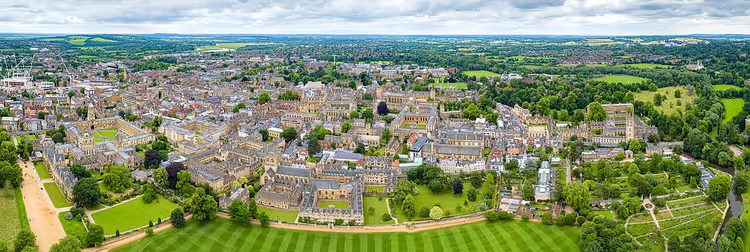
Oxford is the most popular route from London. The direct train from Paddington takes about an hour, and you'll be back by evening (according to National Rail, 09/2026). The old center is compact, and you can walk it in one day.
 © Chensiyuan · CC BY-SAPhoto: Chensiyuan, CC BY-SA (https://creativecommons.org/licenses/by-sa/4.0), Wikimedia Commons
In Oxford, the main draw is the university colleges. Christ Church, Magdalen, and the Bodleian Library admit tourists at set hours, and entry to some of them is paid (according to the University of Oxford, 09/2026). The Ashmolean Museum is free to enter, and its galleries hold works by Raphael, Michelangelo, and da Vinci (according to the Ashmolean Museum, 09/2026).
Don't miss the Covered Market in the center: it's home to shops, confectioners, and hat boutiques. For a view of the spires, climb Carfax Tower, which gives you a view over the whole old town. In spring the squares are in bloom, and in May dozens of hot air balloons rise over the city. In summer, go in the morning before tour groups fill the center.
- How to get there: direct train from Paddington, about an hour (per the Oxford timetable, 09/2026).
- Who it's for: those who want to see university England and be back by dinner.
- Not for: if you're looking for a beach and quiet.
- Tickets and tours: Oxford tours on GetYourGuide.
2. Cambridge
Cambridge sits on the River Cam, and the city's main landmark is King's College Chapel (per Visit Cambridge, 09/2026). The train from King's Cross takes about the same time as to Oxford, so you can easily pick one of the two cities.
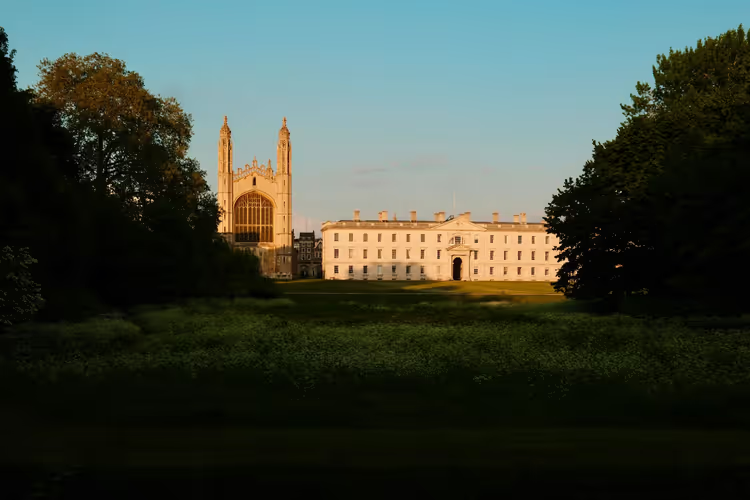
In summer, punts glide along the river, and punting along the Backs is considered a city classic; you buy your ticket right at the landing. In the center, the Fitzwilliam Museum awaits with its paintings and the Sedgwick Museum with geology and minerals, and entry to both is free (per University of Cambridge, 09/2026). The narrow streets of the center have preserved 15th-century houses and courtyards, and they're easy to explore on foot.
- How to get there: train from King's Cross, about an hour (per the Cambridge timetable, 09/2026).
- Who it's for: lovers of architecture and leisurely walks along the water.
- Not for: those who find one university city per trip enough.
- Tickets and tours: Cambridge tours on GetYourGuide.
3. Dover
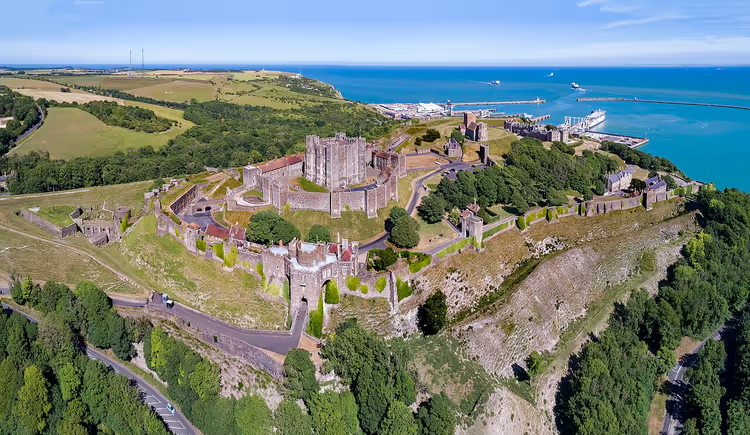
Dover is a port town where the English Channel begins. It's home to one of England's largest medieval fortresses, and buying a ticket online in advance is cheaper than at the gate (per English Heritage, 09/2026).
 © Chensiyuan · CC BY-SAPhoto: Chensiyuan, CC BY-SA (https://creativecommons.org/licenses/by-sa/4.0), Wikimedia Commons
The second reason to go: the chalk cliffs. The walking route along them stretches for 6 kilometers, and along the way you get views of the strait (as of National Trust, 09/2026). If your budget allows, add a boat trip along the coast.
- How to get there: train from St Pancras or Charing Cross, about an hour (as of trains to Dover, 09/2026).
- What to see: Dover Castle, the white cliffs, the secret wartime tunnels.
- The catch: seeing the cliffs is a walking route of several kilometers, so wear comfortable shoes.
- Tickets: Dover Castle tickets on Tiqets.
4. Canterbury
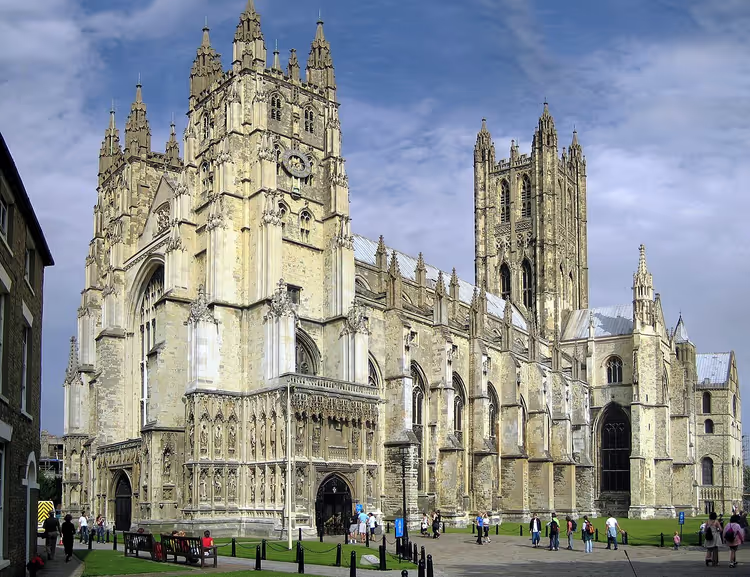
Canterbury is an ancient city with Roman ruins and a Norman castle. The main sight: Canterbury Cathedral from the 12th century, and the ticket works as an annual pass, so you can return with it at no extra cost (as of Canterbury Cathedral, 09/2026). Inside you'll see the tombs of the Black Prince and Henry IV.
 © Hans Musil · CC BY-SAPhoto: Hans Musil, CC BY-SA (https://creativecommons.org/licenses/by-sa/4.0), Wikimedia Commons
Nearby are the ruins of St Augustine's Abbey and St Martin's Church, the oldest church in England (as of English Heritage, 09/2026). Walk along North Holmes Road and St Martin's Lane, where Tudor-era houses have been preserved.
- How to get there: train from St Pancras, about an hour (as of Canterbury schedules, 09/2026).
- Who it's for: those who want history without crowded squares.
- Not for: if you're expecting a large city with a lively nightlife.
- Tickets: Canterbury Cathedral tickets on Tiqets.
5. Stonehenge
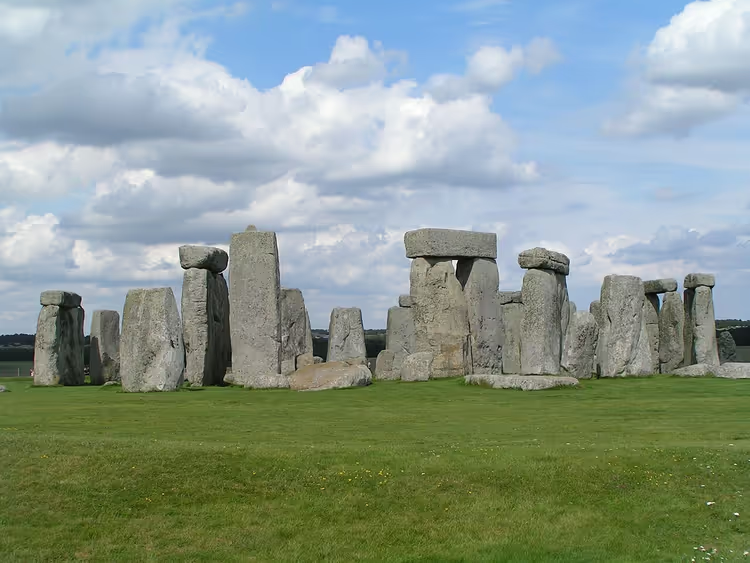
Stonehenge is the most famous archaeological monument in Europe and a UNESCO site. The circle consists of roughly 30 sarsen stones about 4 meters tall and weighing up to 25 tons (as of English Heritage, 09/2026).
 © Stefan Kühn · CC BY-SAPhoto: Stefan Kühn, CC BY-SA (http://creativecommons.org/licenses/by-sa/3.0/), Wikimedia Commons
You won't be allowed inside the circle: visitors cannot get closer than 15 meters to the stones, and this rule is followed by everyone (as of English Heritage, 09/2026). It's easier to travel via Salisbury: train from Waterloo, then a bus to the monument.
- How to get there: train to Salisbury from Waterloo, then a bus (as of train schedules to Salisbury, 09/2026).
- Book tickets in advance: yes, entry slots sell out in season.
- The catch: you can't get close to the stones, everything is viewed from the path.
- Tickets and tours: Stonehenge tours from London on GetYourGuide.
6. Greenwich
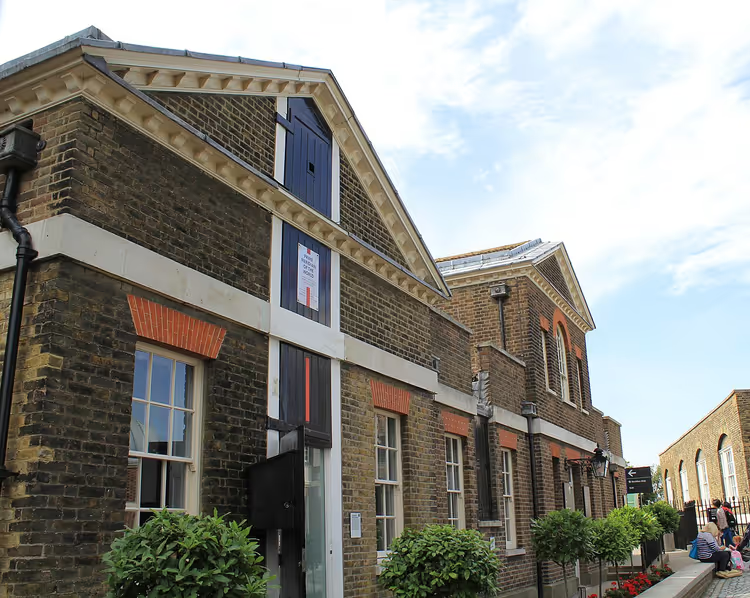
Greenwich is a London neighborhood people visit for the prime meridian. The zero longitude line runs through the center of the Royal Observatory, which also houses a museum of astronomy and navigation (as of Royal Museums Greenwich, 09/2026). You can get there by train, Tube, or riverboat.
 © Katie Chan · CC BY-SAPhoto: Katie Chan, CC BY-SA (https://creativecommons.org/licenses/by-sa/3.0), Wikimedia Commons
Nearby you'll find the tea clipper Cutty Sark and the National Maritime Museum, and a pedestrian tunnel runs under the Thames. Admission to the National Maritime Museum is free, while the clipper and the observatory require separate tickets (as of Royal Museums Greenwich, 09/2026).
- How to get there: train to Greenwich station, Tube, or riverboat (as of Transport for London, 09/2026).
- Who it's for: anyone who wants a short trip without leaving the city.
- Tickets: Greenwich and Cutty Sark tickets on Tiqets.
7. Windsor
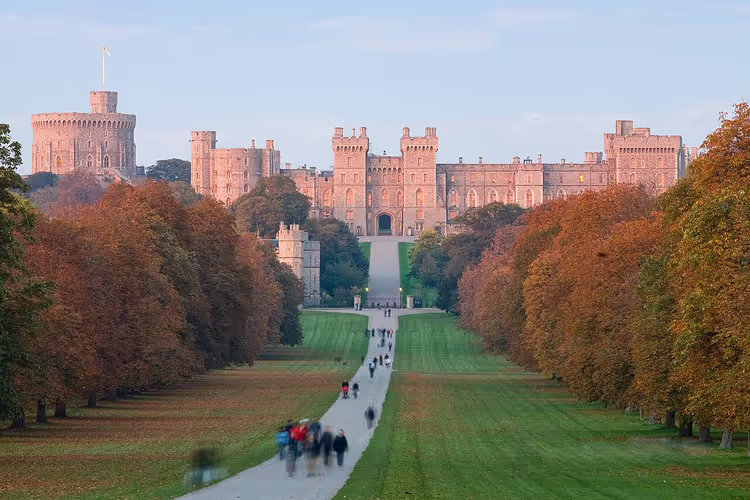
Windsor is a town with a royal castle about an hour from London. Windsor Castle remains a working royal residence, and when the royal family is in, some of the state rooms are closed (as of Royal Collection Trust, 09/2026).
 © Diliff · CC BYPhoto: Diliff, CC BY (https://creativecommons.org/licenses/by/2.5), Wikimedia Commons
Inside you can see the state apartments, the picture gallery, and St George's Chapel, the burial place of monarchs. Near the town there's also Legoland, a theme park with models of European cities built from bricks. The train runs from Waterloo to Windsor & Eton Riverside station, or from Paddington with a change.
- How to get there: train from Waterloo, about an hour (as of Waterloo train schedules, 09/2026).
- Not for: if you want every room open on any given day, there are closure dates here.
- Tickets: Windsor Castle tickets on Tiqets.
8. Stratford-upon-Avon
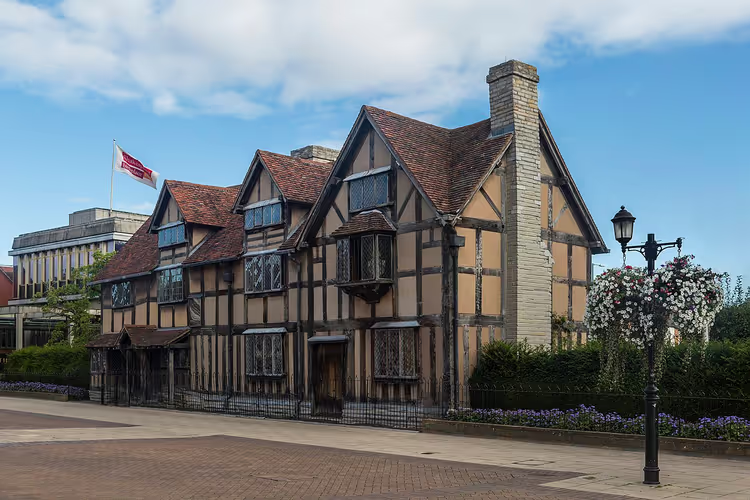
Stratford-upon-Avon is known as the birthplace of William Shakespeare. The house on Henley Street where he was born is now a museum, and King Edward VI School stands nearby (as of Shakespeare Birthplace Trust, 09/2026). At the three theaters of the Royal Shakespeare Company, you can catch his plays year-round.
 © Diliff · CC BY-SAPhoto: Diliff, CC BY-SA (https://creativecommons.org/licenses/by-sa/3.0), Wikimedia Commons
On the banks of the Avon stands the red-brick Royal Shakespeare Theatre, and it's worth booking a ticket in advance. Holy Trinity Church holds the remains of Shakespeare, his wife, and his daughter, and admission is free. A house with a jettied upper floor houses an exhibition of medical instruments from past centuries.
- How to get there: train from Marylebone, about 2.5 hours (as of Marylebone train schedules, 09/2026).
- Who it's for: Shakespeare lovers, theater fans, and those who enjoy leisurely walks.
- Not for: anyone looking for big museums and city bustle.
- Tickets and tours: Stratford-upon-Avon tours on GetYourGuide.
9. Bath
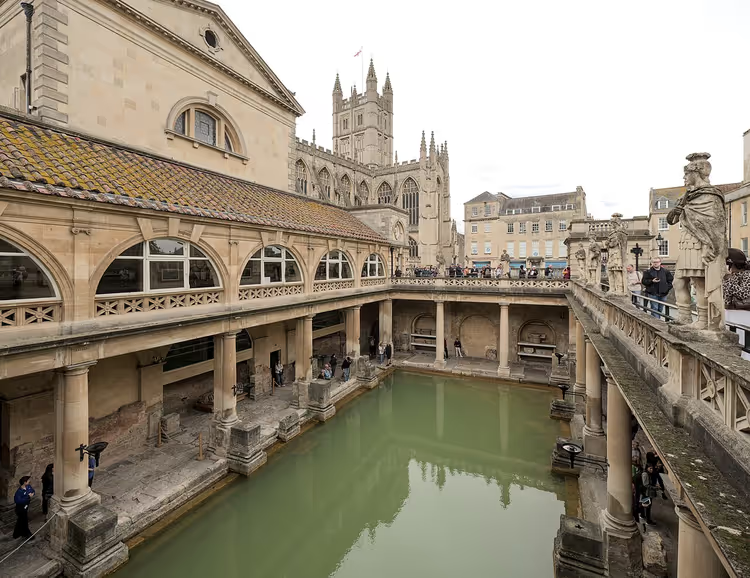
Bath is a thermal spa town whose name means "bath." The Romans built a bathing complex here over the hot springs, and today the Roman Baths remain the city's main museum (as of The Roman Baths, 09/2026). Booking online in advance is £2 cheaper than at the ticket office (as of 09/2026, The Roman Baths).
 © Daniel Lu ( User:dllu ) · CC BY-SAPhoto: Daniel Lu ( User:dllu ), CC BY-SA (https://creativecommons.org/licenses/by-sa/4.0), Wikimedia Commons
From the baths, walk to the Royal Crescent and the Circus: these are two curved streets from the 18th century, and one of them echoes the shape of the Colosseum. The Royal Crescent is made up of 30 houses and forms an amphitheater-like arc. Bath Abbey stands next to the baths, admission is free, and you can leave a donation if you wish (as of Bath Abbey, 09/2026).
- How to get there: train from Paddington, about 1.5 hours (as of trains to Bath, 09/2026).
- The catch: in summer there's a line for the Roman Baths, so book an entry slot in advance.
- Who it's for: those who want architecture and history in a compact city center.
- Tickets: Roman Baths tickets on Tiqets.
10. Seaford
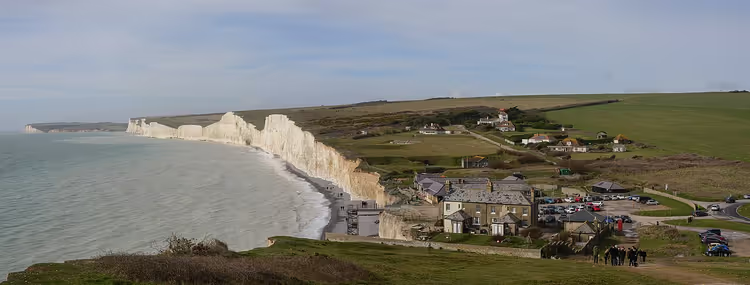
Seaford is a small town by the Seven Sisters chalk cliffs. The white limestone cliffs stretch along the coast and are recognized as a protected natural landscape (according to National Trust, 09/2026). You can't drive right up to the cliffs themselves: parking stays off to the side, and from there you walk.
 © Arild Vågen · CC BY-SAPhoto: Arild Vågen, CC BY-SA (https://creativecommons.org/licenses/by-sa/4.0), Wikimedia Commons
The medieval port is connected to London by rail, so your trip fits into a single day. There's also a golf course right by the cliff edge nearby. The sea gradually erodes the limestone, so parts of the trails are sometimes closed for safety.
- How to get there: train to Seaford, about 1.5 hours (according to train schedules to Seaford, 09/2026).
- The catch: there's no vehicle access to the cliffs, so you'll have a walk ahead of you.
- Who it's for: those who want nature and the sea without the bustle of the city.
11. Arundel Castle
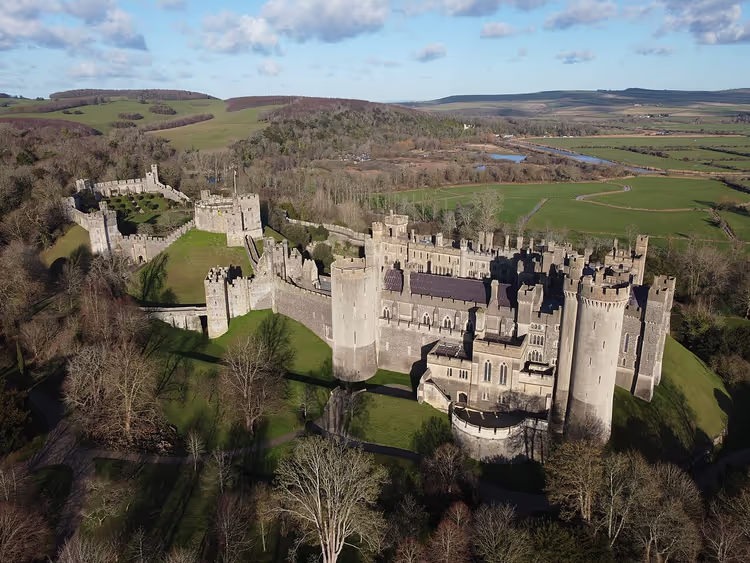
Arundel Castle stands on a hill above the town in Sussex. The 2026 season runs from April 1 to November 1, and the castle is closed on Mondays (according to Arundel Castle, 09/2026). The castle remains the private property of the descendants of the Duke of Norfolk, so check the dates in advance.
 © Tim Sheerman-Chase · CC BYPhoto: Tim Sheerman-Chase, CC BY (https://creativecommons.org/licenses/by/4.0), Wikimedia Commons
Inside you'll see the medieval keep, state rooms, and library, and there's a garden laid out around the walls. The town itself is small, and a walk through it will take you about an hour. The train runs from Victoria station with a change.
- How to get there: train from Victoria with a change, about 2 hours (according to trains to Arundel, 09/2026).
- The catch: the castle is closed on Mondays, and the season runs from April to November.
- Tickets: Arundel Castle tickets on Tiqets.
12. Hever Castle
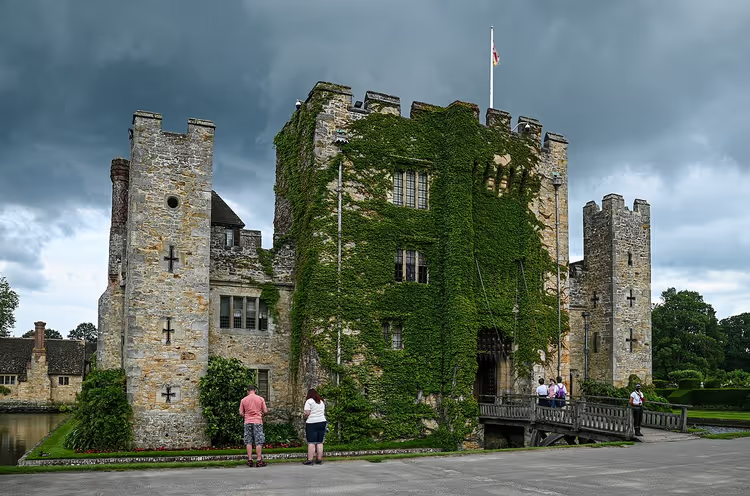
Hever Castle in Kent is linked to Anne Boleyn, the second wife of Henry VIII. The 2026 season is open from February 11 to November 19 (according to Hever Castle, 09/2026). Here you'll see two of Anne's prayer books, a weapons collection, and 16th-century furniture.
 © www.mgaylard.co.uk and thanks for looking · CC BYPhoto: www.mgaylard.co.uk and thanks for looking, CC BY (https://creativecommons.org/licenses/by/2.0), Wikimedia Commons
Around the castle there's a garden with a maze and yew chess pieces, and a summer house stands by the water. Trains run from London to Hever station, and from there you walk or take a taxi.
- Getting there: train to Hever station, about an hour (according to train schedules to Hever, 09/2026).
- The catch: the castle is closed in winter, the season starts only in February.
- Tickets: Hever Castle tickets on Tiqets.
13. Brighton
Brighton is a seaside resort about an hour from London. The Royal Pavilion was built for King George IV, and today it is a museum with oriental interiors (according to Visit Brighton, 09/2026). Brighton Palace Pier stretches out into the sea and is open year-round, with free entry.
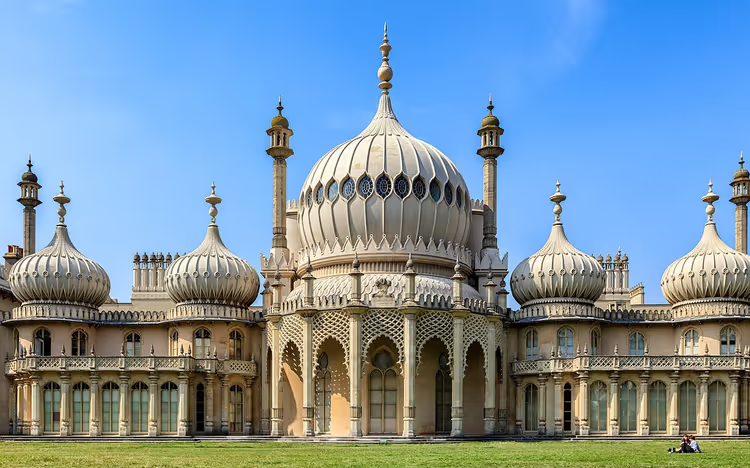 © Qmin · CC BY-SAPhoto: Qmin, CC BY-SA (https://creativecommons.org/licenses/by-sa/3.0), Wikimedia Commons
Another spot: the world's oldest aquarium, SEA LIFE, which opened in 1872 (according to SEA LIFE Brighton, 09/2026). The beach here is pebbly, so it's more comfortable to swim in footwear.
- Getting there: train from Victoria, about an hour (according to trains to Brighton, 09/2026).
- Who it's for: those who want the sea, the pier, and an old resort in one day.
- Tickets and tours: Brighton tours on GetYourGuide.
14. Bibury
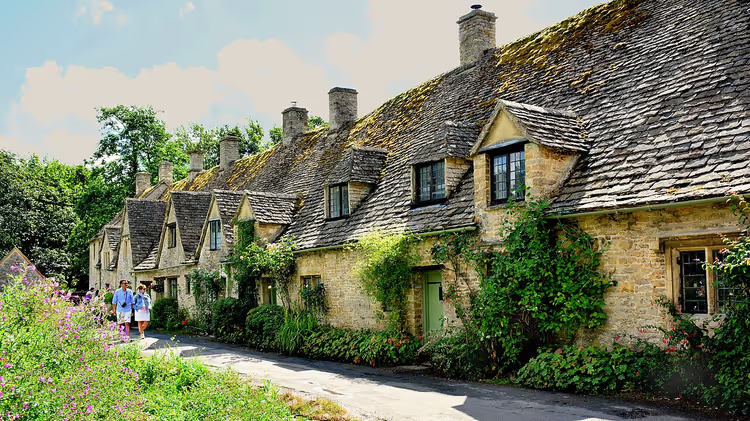
Bibury is a village in the Cotswolds often called one of the most beautiful in England. Its honey-colored stone houses and Arlington Row street have even appeared on the pages of the British passport (according to VisitBritain, 09/2026). The distance from London is about 140 km.
 © Mike McBey · CC BYPhoto: Mike McBey, CC BY (https://creativecommons.org/licenses/by/2.0), Wikimedia Commons
Weavers built the houses of dark Cotswold limestone here back in the 17th century, and they dried wool right at their doorsteps. Traces of a Roman villa are still found in the surrounding area, and the village itself is mentioned in the 11th-century land survey under the name Becheberie. Couples are still married at St Mary's Church, whose history goes back to the early Middle Ages, and the narrow streets have been used as film locations. The River Coln flows through the village, and nearby is England's oldest trout farm, where you can catch the fish yourself (as of Bibury Trout Farm, 09/2026).
- How to get there: train to Swindon or Kemble, then bus or taxi (as of trains to Swindon, 09/2026).
- Who it's for: those who want to see a classic English village.
- Not for: if you're traveling without a car and aren't prepared for transfers.
15. Isle of Wight
The Isle of Wight is the largest island in England, and it lies in the English Channel. You can only get there by ferry from Portsmouth, Southampton, or Lymington (as of Visit Isle of Wight, 09/2026). On the island, you'll find the Needles chalk cliffs with a lighthouse and Queen Victoria's Osborne House.
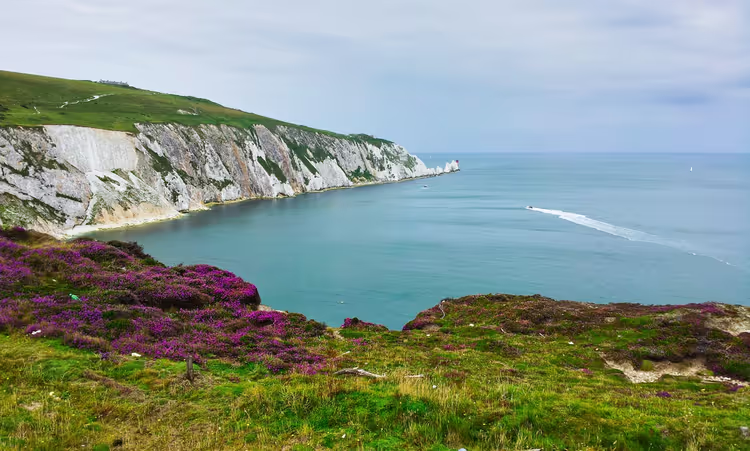
The island has been designated an Area of Outstanding Natural Beauty, and dinosaur remains are excavated on its shores. It was also where Guglielmo Marconi conducted his first radio communication experiments. The island's capital is Newport, where you'll see Carisbrooke Castle with the Chapel of St Peter.
- How to get there: train to Portsmouth or Southampton, then a ferry (as of train schedules to Portsmouth, 09/2026).
- The catch: you can't reach the island without a ferry, and the crossing costs extra.
- Tickets and tours: Isle of Wight tours on GetYourGuide.
16. Liverpool
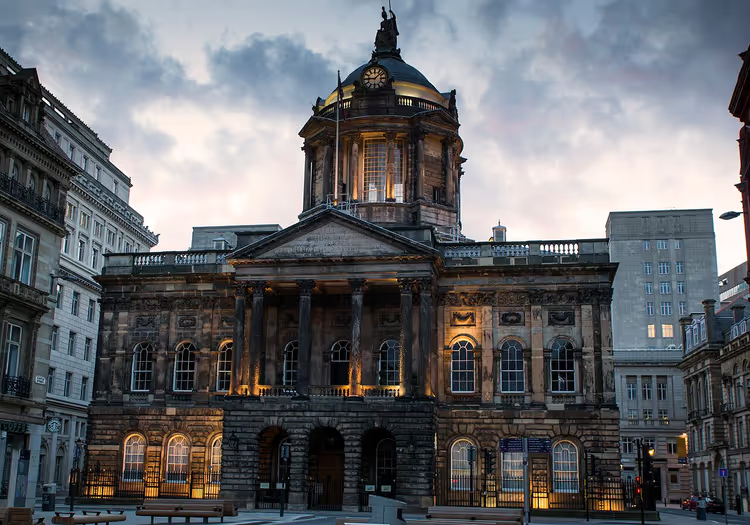
Liverpool is a port city on the River Mersey and the birthplace of The Beatles. The train from Euston takes about 2.5 hours, so leave in the morning (as of National Rail, trains from Euston, 09/2026). The city's main focal point is the Albert Dock complex.
 © Miguel Mendez from Malahide, Ireland · CC BYPhoto: Miguel Mendez from Malahide, Ireland, CC BY (https://creativecommons.org/licenses/by/2.0), Wikimedia Commons
The Albert Dock is home to the Merseyside Maritime Museum and Tate Liverpool, with free admission to some galleries. Start your walk at the Pier Head and the Liver Bird statue, then head to the two cathedrals, the Anglican and the Catholic one. In the evening, add the Cavern Club, where The Beatles got their start.
- How to get there: train from Euston, about 2.5 hours (as of schedules to Liverpool, 09/2026).
- The catch: the journey takes over two hours, so half a day won't be enough.
- Tickets and tours: Liverpool tours on GetYourGuide.
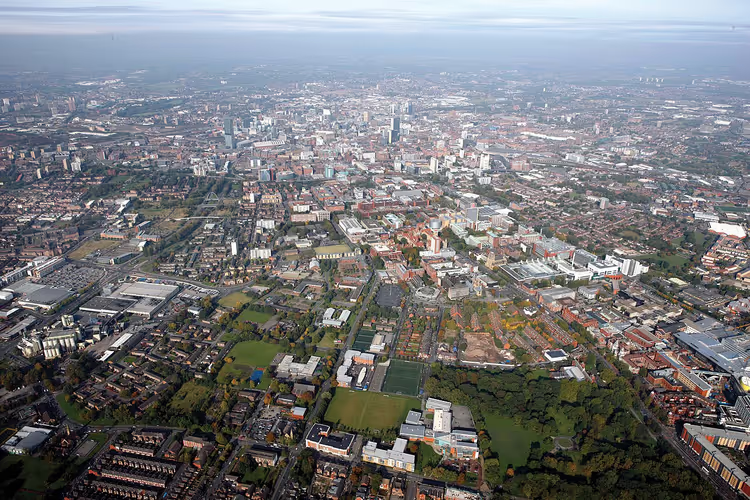
17. Manchester
Manchester grew out of the Roman fort of Mamucium and later became the textile capital of England. The train from Euston to Manchester takes about 2.5 hours (as of National Rail, Manchester, 09/2026). Today it's a city of museums, canals, and two famous football clubs.
 © Daniel Nisbet from Manchester, United Kingdom · CC BYPhoto: Daniel Nisbet from Manchester, United Kingdom, CC BY (https://creativecommons.org/licenses/by/2.0), Wikimedia Commons
Visit the Science and Industry Museum on the site of the old railway station, the John Rylands Library, and the Castlefield quarter with its canals. Add the Gothic Manchester Cathedral and the neo-Gothic town hall, both right in the city center. Football fans head to Old Trafford or the Etihad Stadium, and you can catch stadium tours on days without matches. In the evening, go to the pubs and restaurants of the Northern Quarter, and for shopping head to the Trafford Centre.
- How to get there: train from Euston, about 2.5 hours (as of trains to Manchester, 09/2026).
- Who it's for: fans of industrial history, music, and football.
- Tickets and tours: Manchester tours on GetYourGuide.
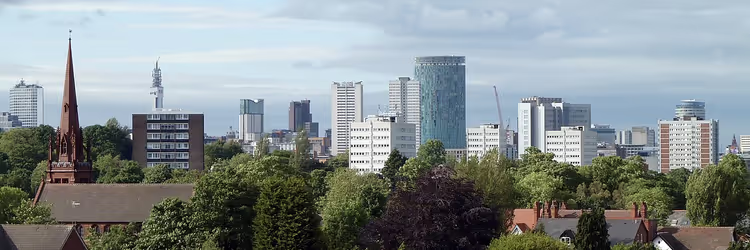
18. Birmingham
Birmingham is England's second-largest city and one of the youngest by average resident age. The train from Euston takes about 1.5 hours (as of National Rail, 09/2026). The city was once the country's industrial capital, and metalworking and jewelry making got their start here.
 © JimmyGuano · CC BY-SAPhoto: JimmyGuano, CC BY-SA (https://creativecommons.org/licenses/by-sa/4.0), Wikimedia Commons
Begin your walk at Victoria Square, next to which stand the Birmingham Museum and Art Gallery, where interactive exhibits tell the city's story. Don't miss the Gas Street Basin canals and The Electric, England's oldest cinema, which still operates today (as of Visit Birmingham, 09/2026). At St Martin's Church you'll find stained glass and a quiet courtyard, and the surviving Aston Hall mansion will take you back to the early 17th century.
- How to get there: train from Euston, about 1.5 hours (as of Birmingham schedules, 09/2026).
- Who it's for: those who want a big city without capital prices.
- Tickets and tours: Birmingham tours on GetYourGuide.
19. Bristol
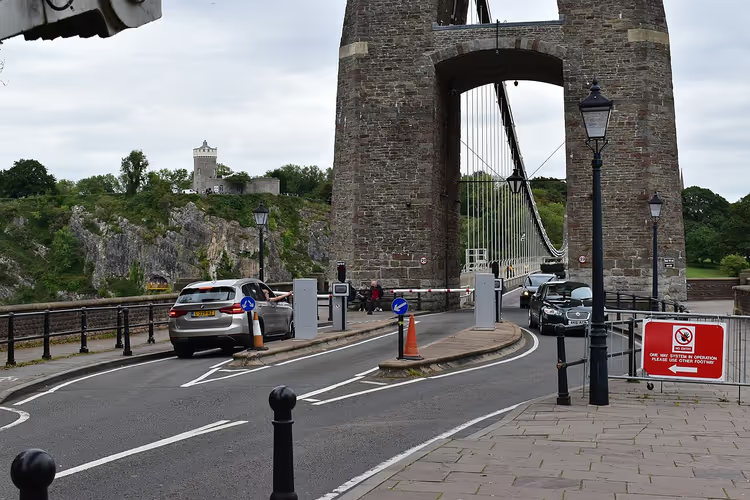
Bristol sits on the River Avon and grew out of a trading port. The train from Paddington takes about 1.5 hours (as of National Rail, 09/2026). The city's main symbol is the Clifton Suspension Bridge, spanning the river gorge.
 © Bärbel Miemietz · CC BY-SAPhoto: Bärbel Miemietz, CC BY-SA (https://creativecommons.org/licenses/by-sa/4.0), Wikimedia Commons
In the Harbourside area, old warehouses have been converted into museums and markets, and on the water sits the SS Great Britain, a museum steamship with an exhibition in its holds. Nearby you'll find Bristol Cathedral and the old observatory, and caves are open in the Clifton Down rocks. In the evening, head down to the waterfront, where you get the best view of the bridge. The walk takes over an hour, so see the bridge, the port, and the museum without long stops.
- How to get there: train from Paddington, about 1.5 hours (according to the Bristol timetable, 09/2026).
- Not for: if you're not ready for a long journey for the sake of a compact center.
- Tickets and tours: Bristol tours on GetYourGuide.
Day trip route from London on the map
Below is a map with all 19 points. Open it on your phone and build a route to suit your station: some cities are connected by direct trains, while for others you add a transfer. Greenwich lies in east London, and Windsor in the west, so they don't combine into one trip. Dover and Canterbury are convenient to combine in the east if you leave on an early train. Plan one trip per day: you can't fit two distant cities into a single day, and you'll spend the whole day on transfers.
One-day route from London
Places on the map
- 1Oxford University city, ~1 h from Paddington, Covered Market and Ashmolean Museum
- 2Cambridge City on the River Cam, King's College Chapel, ~1 h from King's Cross
- 3Dover Port town, Dover Castle and the chalk cliffs, ~1 h from St Pancras
- 4Canterbury 12th-century Canterbury Cathedral, ~1 h from St Pancras
- 5Stonehenge Neolithic stone circle near Salisbury, UNESCO site, ~2 h via Waterloo
- 6Greenwich Prime meridian, the observatory and Cutty Sark, ~30 min
- 7Windsor Windsor Castle, the monarch's residence, ~1 h from Waterloo
- 8Stratford-upon-Avon Shakespeare's birthplace, his house and theatre, ~2.5 h from Marylebone
- 9Bath Roman Baths and the Royal Crescent, ~1.5 h from Paddington
- 10Seaford Seven Sisters chalk cliffs, ~1.5 h by train
- 11Arundel Castle Medieval castle of the Duke of Norfolk, ~2 h from Victoria
- 12Hever Castle Anne Boleyn's castle with a maze garden, ~1 h from Victoria
- 13Brighton Royal Pavilion, the pier and SEA LIFE aquarium, ~1 h from Victoria
- 14Bibury Cotswolds village, Arlington Row street, ~140 km from London
- 15Isle of Wight The Needles chalk cliffs and Osborne House, ferry from Portsmouth
- 16Liverpool The Beatles' hometown, Albert Dock, ~2.5 h from Euston
- 17Manchester Museums, canals and football stadiums, ~2.5 h from Euston
- 18Birmingham Canals and an art gallery, ~1.5 h from Euston
- 19Bristol Clifton Bridge and the SS Great Britain steamship, ~1.5 h from Paddington
⁉️🤔 Frequently asked questions
Where can you go from London for one day without a car?
You can reach almost any city on the list by train, because the railway connects the capital with all these destinations. For Dover, take St Pancras; for Bath and Oxford, Paddington; for Liverpool and Manchester, Euston. For the Isle of Wight, add a ferry (as of 09/2026, National Rail).
Which trip is the shortest in terms of travel time?
The fastest option: Greenwich, you'll get there in half an hour by train, tube, or river boat. The journey to Oxford, Cambridge, Dover, Canterbury, Windsor, Hever, and Brighton takes about an hour. Stratford-upon-Avon, Liverpool, and Manchester take the longest (as of 09/2026, National Rail).
Do you need to book tickets in advance?
Yes, for castles, cathedrals, and the Roman Baths. An online ticket is usually cheaper than at the door, and in season, slots for popular times sell out.
What can you fit into a day in Oxford or Cambridge?
In each city you'll manage the colleges, one museum, and a market or a river walk. In Oxford, add the Covered Market and the climb up Carfax Tower; in Cambridge, add punting on the River Cam and the Fitzwilliam Museum. Both centers are walkable, no in-city transfers needed.
When is the best time to go to avoid crowds?
In summer, go early in the morning, because by midday groups gather at the main sights. In the off-season there are fewer queues, but some sights operate on reduced hours: Arundel Castle is closed from November to March, and Hever Castle is closed from mid-November to February (as of 09/2026, official castle websites).
In short: what's worth booking
If you have one free day and you're in London for the first time, go for Oxford or Cambridge: the journey is about an hour, and you can walk the old center on foot. For royal architecture, head to Windsor, but check the closure dates and get a ticket online in advance. Sea lovers will enjoy Brighton and Dover, and for chalk cliffs and quiet, keep Seaford and the Isle of Wight in mind.
Buy tickets for castles, cathedrals, and the Roman Baths in advance: in summer, slots sell out, and at the ticket office you pay more. Tickets to the main sights on Tiqets.

A small editorial team writing guides for independent travel. We travel ourselves, but we haven’t been everywhere, so we check prices, opening hours and how to get there against official sources.