
















Istanbul in one day: where to go and what to book in advance
Istanbul sits on two continents, but you can't cover it in a day. The old city on the peninsula between the Sea of Marmara and the Golden Horn packs in almost everything people come here for: mosques, palaces, the underground cistern, and noisy bazaars.
We put together a route you can actually walk in one full day. It starts at Sultanahmet Square, leads through the bazaars to the Galata Tower, and ends with an evening Bosphorus cruise. The main sights of the old city are within a ten-minute walk of each other, and the light rail will back you up if your legs get tired.
Ad: this article contains affiliate links, we earn a commission if you book through them, at no extra cost to you.
What to see in Istanbul in one day
💡 In short:
- Start at Sultanahmet Square: the Blue Mosque, Hagia Sophia, and the Basilica Cistern are right next to each other.
- Walk, and only take the tram for long stretches.
- Save the evening for Istiklal, the Galata Tower, and a Bosphorus cruise.
- Topkapi opening hours were checked in 09/2026 on the official palace museums website.
One day fits more than you'd think. In the morning you cover the Sultanahmet monuments, in the afternoon you head down to the bazaars and the Galata Bridge, and by sunset you climb the Galata Tower. Below, each sight has its own section with hours, price, and an honest catch.
This order saves you energy. From Sultanahmet to Eminonu you walk downhill, and there are only two steep climbs: up to Suleymaniye and up to the Galata Tower. The tram and ferry run between points, so you won't have to backtrack. Plan a full day for the whole route, from when museums open until late evening.
Sultanahmet Square
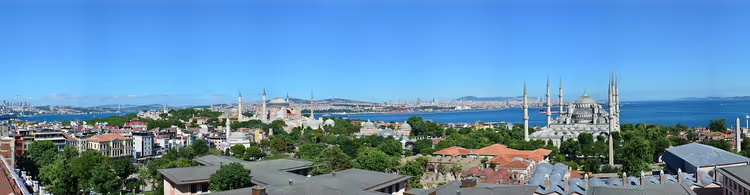
Sultanahmet is called the historic heart of Istanbul. Monuments from different eras are gathered here on one hill, and you can read the city's history through them.
Formally, the square combines two spaces. One lies between Hagia Sophia and the Blue Mosque, the other is the ancient Hippodrome. It was laid out under the Roman emperor Septimius Severus and later expanded by Constantine the Great.
All that remains of the Hippodrome's former splendor are the obelisks. The city's oldest monument, the Egyptian Obelisk, was brought here from Egypt. Nearby rises the Byzantine obelisk known as the Colossus, reaching toward the sky. This is a convenient place to start exploring the city.
Getting there: tram to Sultanahmet stop, then walk.
Who it's for: anyone who wants to see the main monuments in one place.
The catch: by midday in summer there are lots of tour groups here, come at opening time.
Blue Mosque
 © Moonik · CC BY-SAPhoto: Moonik, CC BY-SA (https://creativecommons.org/licenses/by-sa/3.0), Wikimedia Commons
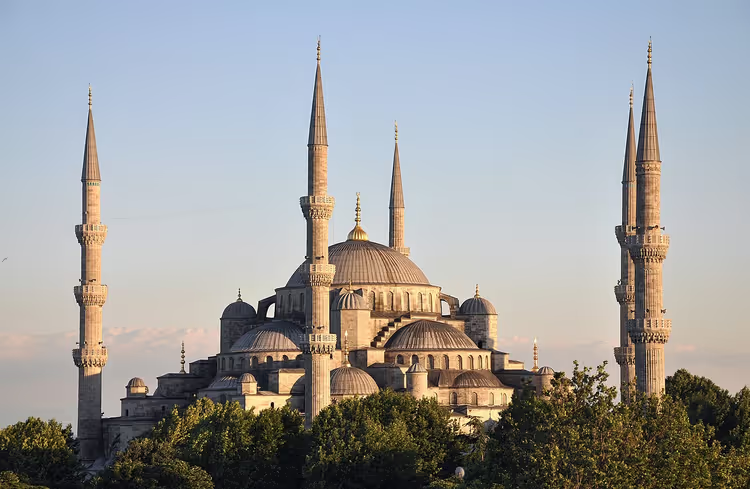
Across from Hagia Sophia you'll see the Blue Mosque. It was built in the seventeenth century under Sultan Ahmed I, who funded the construction of the shrine with his own money.
Construction took seven years. A year after it was completed, Ahmed I died and was buried in a mausoleum next to the mosque. The architecture blends Ottoman and Byzantine traditions.
The Blue Mosque has six minarets, and that's its main distinguishing feature. The sultan wanted his temple to rival Hagia Sophia. Inside, the walls and ceiling are covered with Iznik tiles featuring floral patterns, which gave the mosque its name. A blue glow spreads through the vast hall, and light enters through many windows.
Hours: daily, except during prayer times.
Admission: free, no separate ticket needed.
Dress code: women need a headscarf and covered clothing, men need long trousers.
The catch: on Fridays tourists are not allowed in before noon.
Hagia Sophia
 © Arild Vågen · CC BY-SAPhoto: Arild Vågen, CC BY-SA (https://creativecommons.org/licenses/by-sa/3.0), Wikimedia Commons
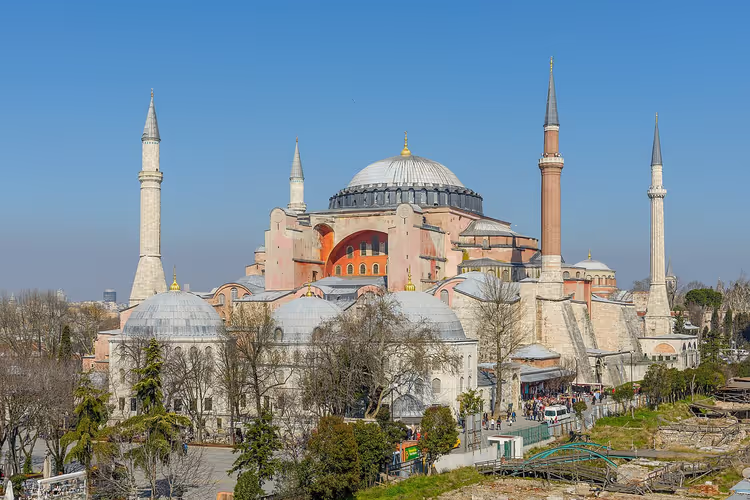
Next to the Blue Mosque stands Hagia Sophia, a masterpiece of Byzantine architecture. It was built by Emperor Justinian, and a legend ties the church to an angel appearing with a ready-made design.
Columns from Ephesus and Lebanon, an altar with precious stones, and mosaics impressed even Russian envoys. After the fall of Constantinople in the fifteenth century, Sultan Mehmed converted the cathedral into a mosque. Minarets were added to the building, and the mosaics were plastered over.
Ataturk turned Hagia Sophia into a museum. Today it is an active mosque again, and visiting rules here change often.
You'll see ancient mosaics of Christ and the Virgin Mary, a marble minbar, and a pulpit. There's often a line at one of the columns: people believe that touching it with your forehead brings healing, as it once did for Justinian.
Admission: tourists use a separate paid entrance, tickets with a time slot.
Tip: go on a weekday morning, the line is longer by midday.
The catch: during prayer times you'll be asked to leave.
Basilica Cistern
 © Ray Swi-hymn from Sijhih-Taipei, Taiwan · CC BY-SAPhoto: Ray Swi-hymn from Sijhih-Taipei, Taiwan, CC BY-SA (https://creativecommons.org/licenses/by-sa/2.0), Wikimedia Commons
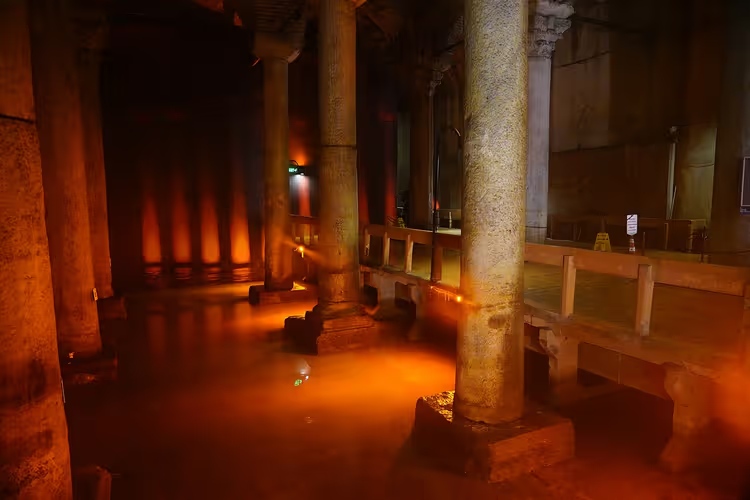
Hidden beneath Sultanahmet Square is the Basilica Cistern, an ancient water reservoir. Construction began under Constantine and was completed in the sixth century under Justinian. Water came here from the Belgrade Forest via aqueducts.
For centuries the cistern stored drinking water for the city. Then it was forgotten, and only in the late eighties was it cleaned up and opened as a museum.
Inside, the vault is supported by more than three hundred columns as tall as a three-story building. Between them stand two Medusa heads that once served as supports. At the Column of Tears you can touch the cool stone, and tourists toss coins into the wishing pool.
Hours: daily, daytime and evening.
Admission: paid, evening sessions cost more than daytime ones.
Who it's for: anyone who wants a short break from the heat.
The catch: a line forms at the entrance, booking a slot online saves you time.
Topkapi Palace
 © Bjørn Christian Tørrissen · CC BY-SAPhoto: Bjørn Christian Tørrissen, CC BY-SA (https://creativecommons.org/licenses/by-sa/3.0), Wikimedia Commons
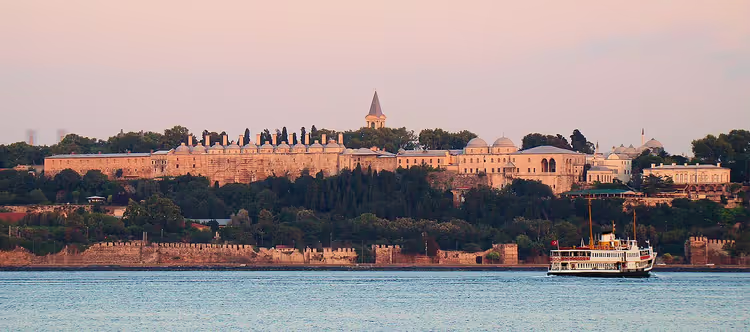
After Hagia Sophia begins Topkapi Palace, the main residence of the Ottoman sultans. It was built by Mehmed the Conqueror on Sarayburnu promontory, where a Byzantine castle once stood.
The palace covers about seven hundred thousand square meters and is divided into four courtyards. The first courtyard is called the Court of the Janissaries. Here stands the Imperial Gate, through which the sultans rode out for Friday prayers. The ancient Church of St. Irene, left over from the Byzantines, also stands here.
In the second courtyard you'll find the Gate of Salutation, the Council building, and the Tower of Justice. The gardens, terraces, and mosques of the complex take time, so allow at least three hours for your visit.
Hours: 09:00-17:30 (as of the official palace museums website).
Admission: paid, the ticket with the harem costs more.
Tip: guided palace tours get you in faster than the ticket line.
The catch: in summer the open courtyards have almost no shade, bring water.
Gulhane Park
 © Another Believer · CC BY-SAPhoto: Another Believer, CC BY-SA (https://creativecommons.org/licenses/by-sa/4.0), Wikimedia Commons
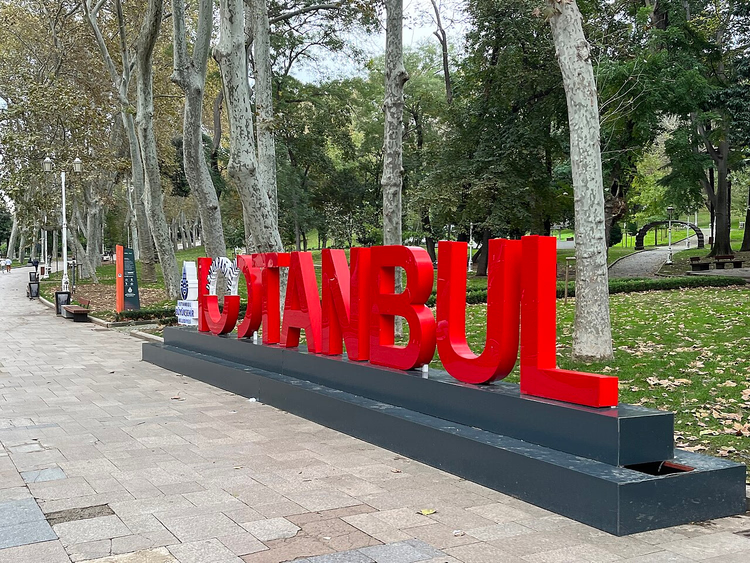
Right behind Topkapi lies Gulhane Park, which translates as "house of roses." It was once part of the palace complex, and only the sultan's family and courtiers were allowed in.
The name is no accident: tens of thousands of roses turn the summer garden into a multicolored carpet. In spring the lawns are covered with tulips, and in winter forget-me-nots bloom. Some of the old pavilions were destroyed by a fire in the nineteenth century.
After the fall of the empire, the park became public, but gradually fell into disrepair and closed. It was restored and reopened for strolling, with its bridges, benches, and terraces brought back.
Hundreds of benches line the paths, and on a hot day it's noticeably cooler here than out on the street. Gulhane borders the palace, so the park is a convenient way to walk from Topkapi to the Eminonu waterfront. If you have an hour before your cruise, spend it right here.
Admission: free.
Who it's for: a relaxed stroll after the museums.
The catch: on weekends the paths are packed with families, come in the morning.
Grand Bazaar
 © Jorge Franganillo · CC BYPhoto: Jorge Franganillo, CC BY (https://creativecommons.org/licenses/by/4.0), Wikimedia Commons
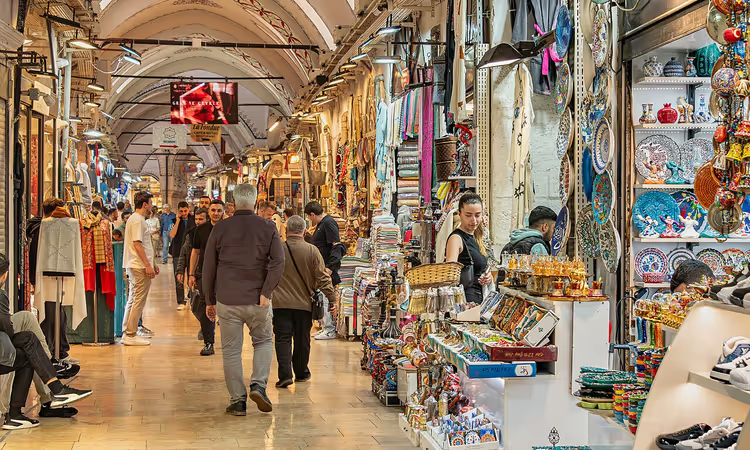
Sultanahmet is a stone's throw from the Grand Bazaar, Istanbul's oldest covered market. It was founded in the mid-fifteenth century and has remained a symbol of local trade ever since.
The covered galleries span about thirty thousand square meters. There are more than sixty streets, dozens of gates, fountains, and mosques, so it's easy to get lost. Grab a map with directions at the entrance.
Unlike Western markets, the Grand Bazaar is closed on Sundays. Over the centuries it has burned down several times, but each time it was rebuilt.
Mosques and fountains hide under its roof, and it's easy to lose track of time among the rows. They sell carpets, ceramics, lamps, and jewelry here. Take a business card from your shop on the way out, otherwise finding it again will be tough.
Hours: weekdays and Saturdays during the day, closed on Sunday.
Admission: free.
Tip: bargain calmly, the first price is almost always inflated.
The catch: on popular streets the sellers are pushy, head deeper inside.
Egyptian Bazaar
 © Dosseman · CC BY-SAPhoto: Dosseman, CC BY-SA (https://creativecommons.org/licenses/by-sa/4.0), Wikimedia Commons
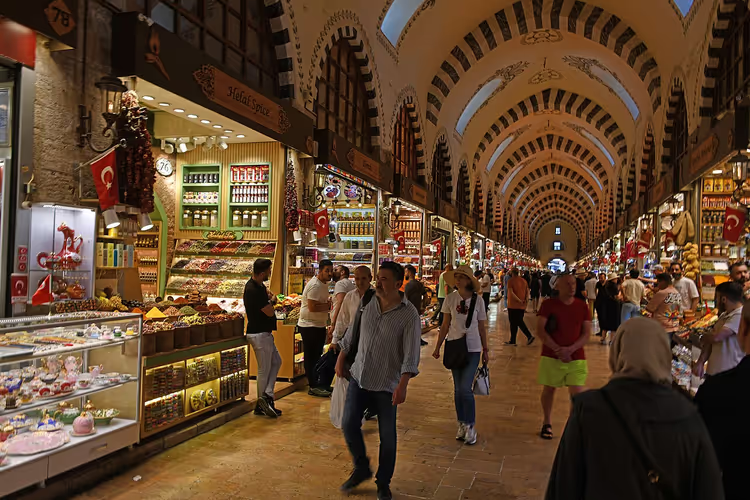
At Eminönü Square, near the Galata Bridge, you'll find the Egyptian Bazaar, or the spice market. A tram from the Blue Mosque gets you here in about fifteen minutes.
The spice market was opened by order of the sultan's mother. The name stuck because Indian spices were brought to Istanbul via Egypt.
The pavilion is L-shaped and holds up to a hundred shops. Near the entrance there are dense rows of saffron, sumac, baklava, and tea, and the smells blend into one thick aroma. Even a simple stroll along the stalls is a pleasure.
Getting there: tram to Eminönü stop.
Hours: daily during the day.
Admission: free.
The catch: prices for tourists are higher, compare across several shops.
Süleymaniye Mosque
 © Giorgio Galeotti · CC BY-SAPhoto: Giorgio Galeotti, CC BY-SA (https://creativecommons.org/licenses/by-sa/4.0), Wikimedia Commons
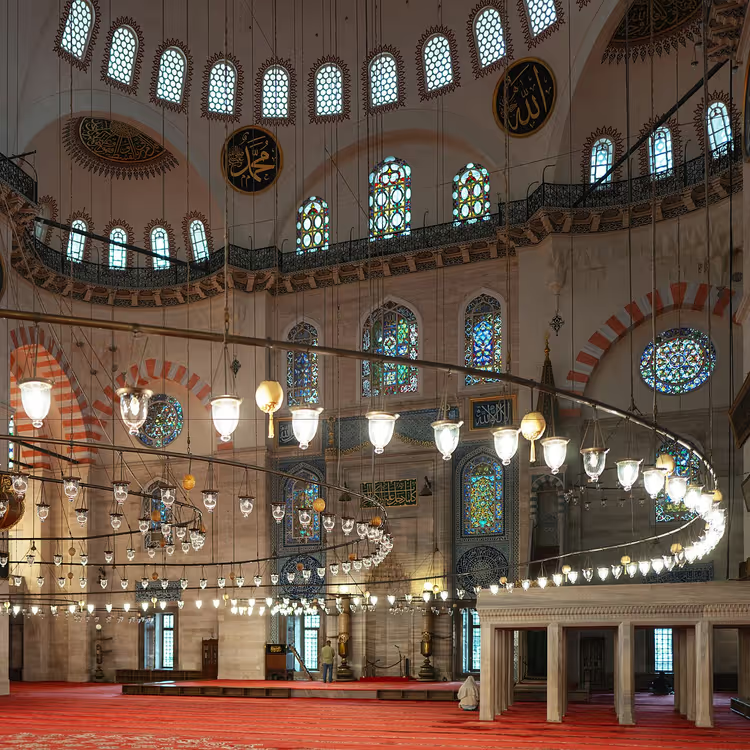
A 10-15 minute walk uphill from Eminönü stands the Süleymaniye Mosque. It was built in honor of Sultan Suleiman the Magnificent, and many consider it the most beautiful in the city.
Construction took seven years, and the design was created by the architect Sinan. He linked the four minarets and ten balconies to the order of the ruling dynasty. The remains of Suleiman himself and his close relatives rest within the mosque's walls.
The building has survived numerous earthquakes and kept its shape. A whole complex was built around it: a madrasa, a library, an observatory, and baths. The mosque is tied to the love story of Suleiman and Hürrem, which you've probably seen in the TV series.
Admission: free, except during prayer times.
Getting there: on foot from Eminönü, 10-15 minutes uphill.
The catch: the viewing terrace in the courtyard is not always open, check on site.
Galata Bridge
 © Bjørn Christian Tørrissen · CC BY-SAPhoto: Bjørn Christian Tørrissen, CC BY-SA (https://creativecommons.org/licenses/by-sa/3.0), Wikimedia Commons
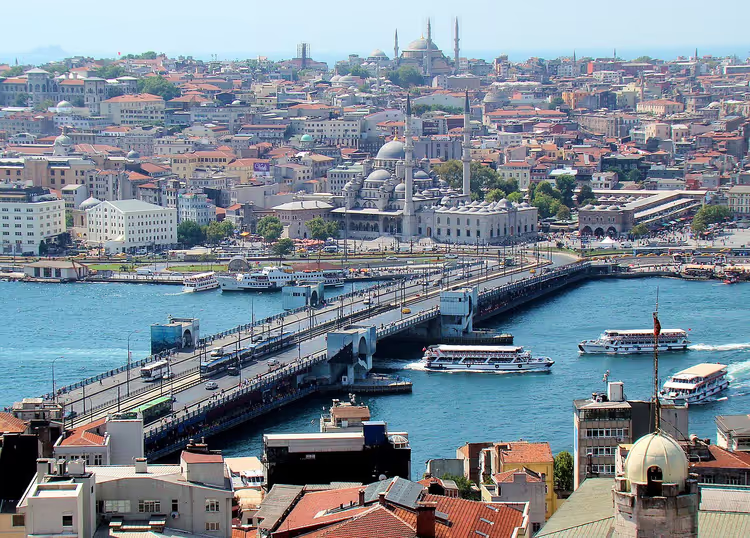
The Galata Bridge connects the north and south of Istanbul's European side. The first crossing over the Golden Horn appeared back under the Byzantine emperor Justinian, and it has been replaced several times since.
A wooden crossing was built in the mid-nineteenth century by order of the sultan's mother. The modern metal bridge was erected in the late twentieth century and rests on two levels. The upper level is for cars and trains, the lower for pedestrians and restaurants.
The bridge is about half a kilometer long and more than forty meters wide. The lower level offers views of the Golden Horn and the waterfront. This is also where people enjoy balık ekmek, a sandwich with fried fish.
Getting there: tram or on foot from Eminönü.
Best time: sunset, when the city lights up.
The catch: at rush hour the bridge is crowded, and the lower level is noisy.
Galata Tower
 © Melih1969 · CC BY-SAPhoto: Melih1969, CC BY-SA (https://creativecommons.org/licenses/by-sa/4.0), Wikimedia Commons
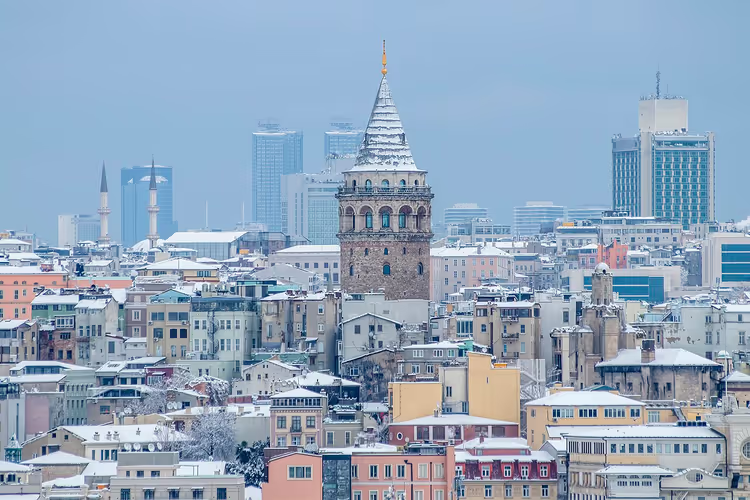
The Galata Tower rises above the bridge. It was built by the Genoese and served as a fire watchtower for many centuries.
Today an elevator takes you to the upper level, where a panorama of all of Istanbul opens up. The tower houses a restaurant and a café.
Hours and admission: 08:30-23:00, entry until 22:00, ticket 30 € (as of 09/2026, official Galata Tower website).
Ticket: book your Galata Tower ticket in advance, slots sell out in season.
Best time: an hour before sunset, so you catch both daylight and the evening lights.
The catch: there can be a line at the elevator, and the observation deck gets cramped.
İstiklal
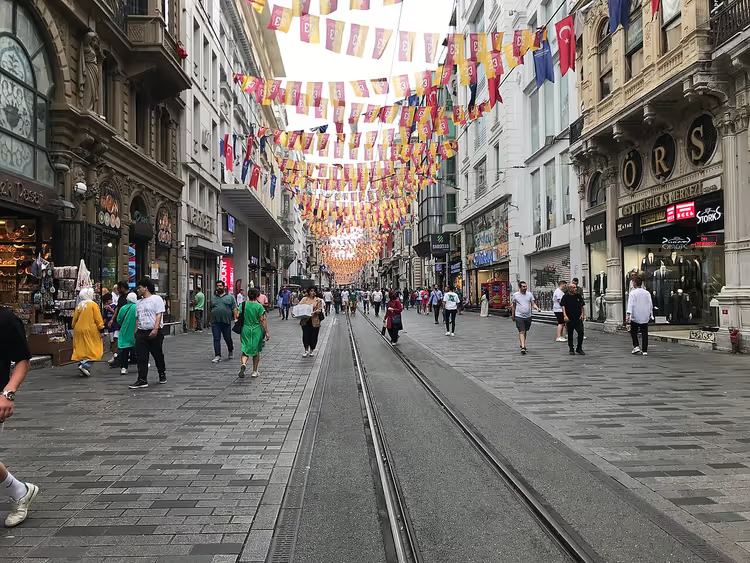 © Antimuonium · CC BY-SAPhoto: Antimuonium, CC BY-SA (https://creativecommons.org/licenses/by-sa/4.0), Wikimedia Commons
Not far from the Galata Tower, near Tünel, begins İstiklal, the city's widest pedestrian street. Its name translates as "independence." The promenade stretches for about one and a half kilometers from Tünel to Taksim Square.
It's always busy here. Tourists and locals stroll leisurely along a solid wall of shops, restaurants, and clubs. European modernity and Eastern old-world charm sit side by side on one street.
Take note of the Flower Passage with its stained glass and gilded stucco. Shops and cafés operate under its glass roof. It's also worth stepping into the Orthodox Church of the Holy Trinity, restored after destruction.
Getting there: on foot from Galata Tower.
Who it's for: an evening stroll and dinner.
The catch: on weekends the street is packed, so you have to walk slowly.
Historic tram
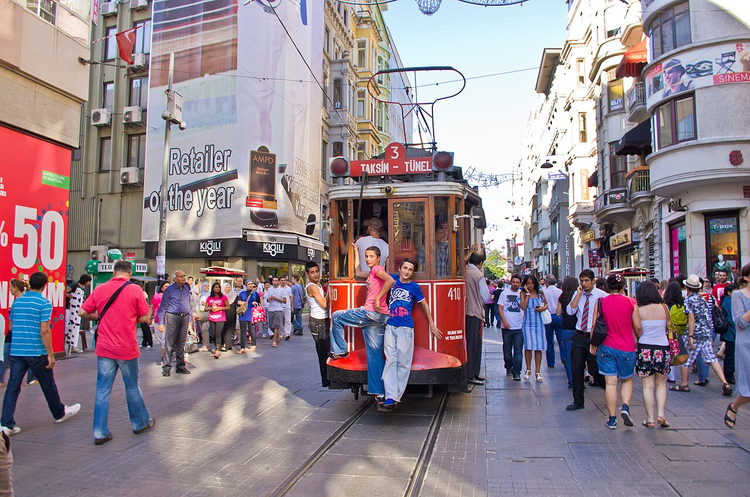 © Antoine Taveneaux · CC BY-SAPhoto: Antoine Taveneaux, CC BY-SA (https://creativecommons.org/licenses/by-sa/3.0), Wikimedia Commons
A nostalgic tram runs along İstiklal. The first tram line here was laid back in the nineteenth century, but it was removed in the middle of the last century. The retro cars were brought back to the street in the late twentieth century.
Today it's more of an attraction than transportation. The cars are styled to look vintage, run infrequently and slowly. But tourists happily ride them and take photos against the retro backdrop.
Route: from Taksim along İstiklal, several stops.
Payment: with an Istanbulkart card.
The catch: in high season there's a line for the car, and walking is faster.
Taksim
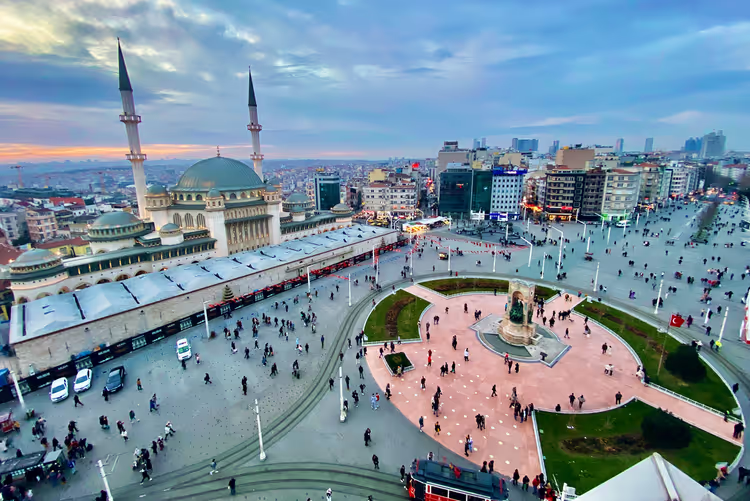 © Fargoh · CC BY-SAPhoto: Fargoh, CC BY-SA (https://creativecommons.org/licenses/by-sa/4.0), Wikimedia Commons
Istiklal leads you to Taksim Square, the main square of the Beyoglu district. In the center stands the Republic Monument. The square is surrounded by historic buildings, hotels, restaurants, and boutiques.
Streets fan out from Taksim in all directions, and a major transport hub converges here. Taksim Gezi Park spreads out nearby. Tragic events took place at this spot in the past, and memorials serve as a reminder of them.
Today Taksim hosts festivals, parades, and city celebrations. From here it's easy to head back to your hotel or go down to the waterfront.
How to get there: tram to the Taksim stop.
Who it's for: for an evening stroll and dinner in the center.
The catch: at rush hour the square is noisy and crowded.
Bosphorus cruise
 © User:Ggia · CC BY-SAPhoto: User:Ggia, CC BY-SA (https://creativecommons.org/licenses/by-sa/3.0), Wikimedia Commons
A logical way to end the day is with a boat trip on the Bosphorus. Cruises depart from several piers, including Eminonu, Kabatas, Besiktas, Kadikoy, and Uskudar.
There are plenty of options: private boats, excursion boats, and large ferries. A group ticket on a public boat costs less than a private tour, and the route is almost the same.
A short trip takes about an hour and a half and goes to the Fatih Bridge and back. From the water you'll see the Galata Bridge and Galata Tower from a different angle and compare the Asian and European shores.
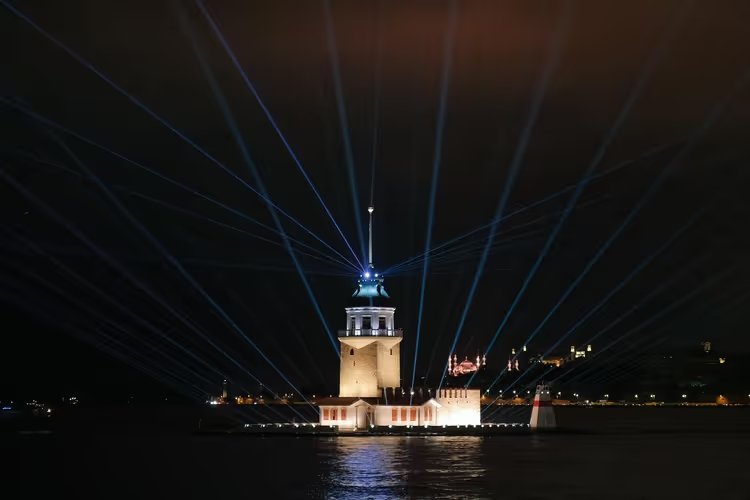
Along the way you pass the Maiden's Tower, the main landmark of the Asian side. The Kadikoy market goes by. On the European shore rise the palaces of Dolmabahce, Beylerbeyi, and Ciragan, and two huge suspension bridges hang over the water.
Sit on the side facing the European shore: the palaces are better visible from there. Evening departures run more frequently, and after sunset the shores are already lit up.
Departure: Eminonu and Kabatas piers, tickets on site and online.
Best time: after sunset, when the city is already lit up.
The catch: it's windy on the open deck, bring a jacket.
Opening hours and tickets
Before your trip, check the schedule, because some museums change their hours by season. Below are the main stops on the route with time and entry guidelines.
Site | Hours | Entry |
|---|---|---|
Topkapi Palace | 09:00-17:30, winter schedule, palace hours and rates | paid, ticket with the harem costs more |
Galata Tower | 08:30-23:00, entry until 22:00, tower opening hours | paid, Galata Tower rates |
Basilica Cistern | daily, daytime and evening | paid, evening session costs more |
Blue Mosque | outside prayer times | free |
Grand Bazaar | daytime on weekdays and Saturdays | free, closed on Sundays |
Book tickets for the top museums in advance, because in summer both the ticket office and the entrance move slowly. A specific time slot saves you an hour, sometimes more.
Tours and tickets in Istanbul
Guided tours, skip-the-line tickets and activities — most offers can be cancelled free of charge.
See offers on GetYourGuideThe widget loads once you give your consent.
How to get from the airport
From the new Istanbul Airport, the metro and buses go to the center. Metro line M11 connects the airport with the European side of the city (according to the Metro Istanbul website).
Havaist buses go to Taksim and Sultanahmet Square.
If you are carrying suitcases and don't want to deal with transfers, booking an airport transfer is easier: the driver will meet you in the arrivals hall.
Metro: line to Gayrettepe, then onward through the city.
Bus: Havaist to Taksim and Sultanahmet.
Payment: Istanbulkart card from a vending machine.
The catch: in traffic, the bus can take noticeably longer than the metro.
One-day Istanbul route on the map
Below is the same route on a map. Open it on your phone and follow the points: from Sultanahmet through the bazaars and Galata Tower to the pier on the Bosphorus.
What to see in Istanbul in 1 day
Places on the map
- 1Sultanahmet Square The city's historic core with monuments from different eras and the ancient Hippodrome
- 2Blue Mosque A 17th-century mosque with six minarets and blue tiles
- 3Hagia Sophia A Byzantine cathedral turned mosque, famous for its ancient mosaics
- 4Basilica Cistern A 6th-century underground reservoir with columns and Medusa heads
- 5Topkapi Palace The main residence of the Ottoman sultans on Sarayburnu point
- 6Gülhane Park A palace park with roses, tulips and shaded avenues
- 7Grand Bazaar Istanbul's oldest covered market with dozens of streets and shops
- 8Spice Bazaar A spice market by the Galata Bridge with saffron and baklava
- 9Süleymaniye Mosque The mosque of Suleiman the Magnificent with the sultan's mausoleum
- 10Galata Bridge A two-tier bridge across the Golden Horn with views and fish sandwiches
- 11Galata Tower The city's oldest tower with a panorama of Istanbul from the top tier
- 12Istiklal Avenue A wide pedestrian street from Galata to Taksim with shops and cafes
- 13Taksim Square The main square of the Beyoğlu district with the Republic Monument
⁉️🤔 Frequently asked questions
How much does entry to Istanbul's main museums cost?
Prices depend on the site. For Galata Tower, see the current tower rates. Topkapi Palace and the Basilica Cistern are more expensive in high season, and evening sessions always cost more than daytime ones. Check exact amounts on official websites before buying, they change every year.
Where to eat along the route?
Near the Galata Bridge they make balik ekmek, a fried fish sandwich. On Istiklal and in the side streets around it there are plenty of cafes and restaurants. Eastern sweets and tea are easy to try at the Egyptian Bazaar. You only need to reserve a table in advance for dinner at popular places; during the day you'll get seated without a problem.
Does a tourist need an Istanbulkart?
Yes, the Istanbulkart makes getting around easier. You buy it from a vending machine at a station or stop and top it up as needed. One card can pay for several people's fares. Without the card, paying for some transport is harder, and cash is far from accepted everywhere.
When should you go to avoid crowds?
Early morning is best: at museum opening time there are almost no lines. Spring and autumn are more comfortable weather-wise than the hot summer. On weekends the bazaars and Istiklal are very crowded, so plan those for a weekday. Book the evening Bosphorus cruise in advance too.
In short: what's worth booking
If you have one day, focus on Sultanahmet and leave the evening for the water. Book tickets for Topkapi Palace and Galata Tower in advance so you don't waste time in lines. Reserve a dinner table near Istiklal during the day as well.
- If you're short on time: take a Sultanahmet tour and don't spread yourself thin.
- If you're with kids: do the museums in the morning, then relax in Gulhane Park.
- If you want a view: go up Galata Tower and take an evening cruise.

A small editorial team writing guides for independent travel. We travel ourselves, but we haven’t been everywhere, so we check prices, opening hours and how to get there against official sources.