
















Istanbul in three days: Hagia Sophia, Topkapi and a Bosphorus cruise
Istanbul is realistic to see in three days. The main thing is to decide in advance what to see in the morning and what in the evening: the city sits on two continents, and getting around eats up time. In three days you can cover Sultanahmet, go down into the underground cistern, and take a ferry along the Bosphorus. You can also try dondurma and bring home a box of baklava. Below is a plan with tickets, opening hours, and prices for September 2026.
Ad: this article contains affiliate links, we earn a commission if you book through them, at no extra cost to you.
Istanbul in three days: what you can fit in
💡 In short:
- Give the first day to Sultanahmet: Hagia Sophia, the Blue Mosque, and Topkapi are right next to each other.
- Start the second day with the Basilica Cistern, and in the evening take a ferry along the Bosphorus.
- Leave the third day for bazaars and sweets.
- Prices and opening hours: 09/2026, verified against current data from Istanbul museums.
Plan by neighborhoods, not by list. The historic center is compact: from Hagia Sophia to the Grand Bazaar is about one and a half kilometers, roughly a twenty-minute walk. That way you spend less time in traffic and get more done.
Site | Ticket | Hours | Closed |
|---|---|---|---|
Hagia Sophia | 25 € (as of 09/2026, Hagia Sophia rates) | 09:00-19:00 | none |
Blue Mosque | free (hours and entry) | 08:30-18:30 | Friday until 14:30 |
Topkapi Palace | about 2,750 ₺ (as of 09/2026, Topkapı tickets) | morning to evening | Tuesday |
Basilica Cistern | from 1,950 ₺ (as of 09/2026, Yerebatan rates) | 09:00-22:00 | none |
Hagia Sophia: a cathedral that became a mosque
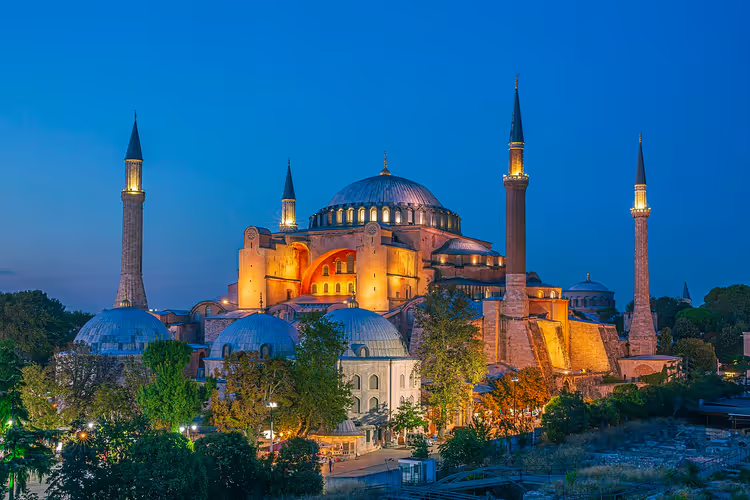
Hagia Sophia has stood on Sultanahmet Square since the 6th century. For over a thousand years it remained the largest church in the Christian world. After the Ottoman conquest, the cathedral was converted into a mosque: icons and frescoes were destroyed, and the mosaics were plastered over.
Today it is an active mosque, so only the upper gallery is open to tourists. The ticket costs 25 € for foreign visitors (as of 09/2026, current prices). Children under 8 enter free with a passport. Shoulders and knees must be covered, and women need a headscarf.
The mosque is open daily from 09:00 to 19:00, with last entry around 18:30 (as of 09/2026, visiting schedule). On Fridays tourists are not allowed in from 12:00 to 14:30 because of prayer.
How to get there: tram T1 to the Sultanahmet stop, then a three-minute walk.
Tip: come at opening or after 17:00, when the lines are shorter.
The catch: from April through October, the entry line stretches to 30-60 minutes (Istanbul Tourist Information).
 © Kecags · CC BY-SAPhoto: Kecags, CC BY-SA (https://creativecommons.org/licenses/by-sa/4.0), Wikimedia Commons
Suleymaniye Mosque and its courtyard
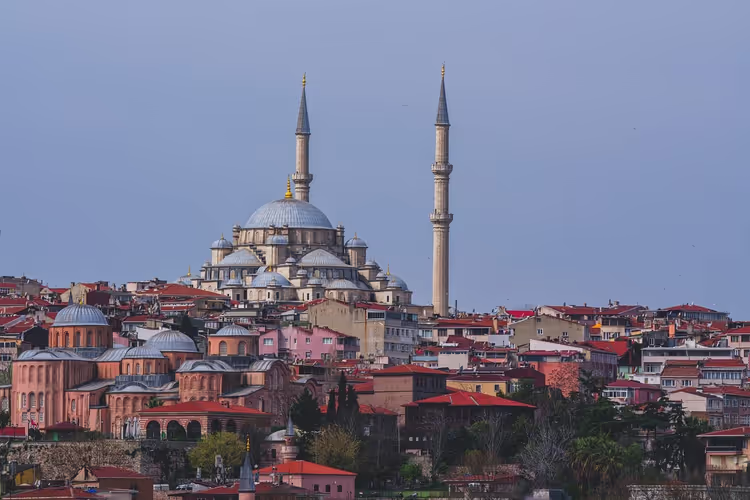
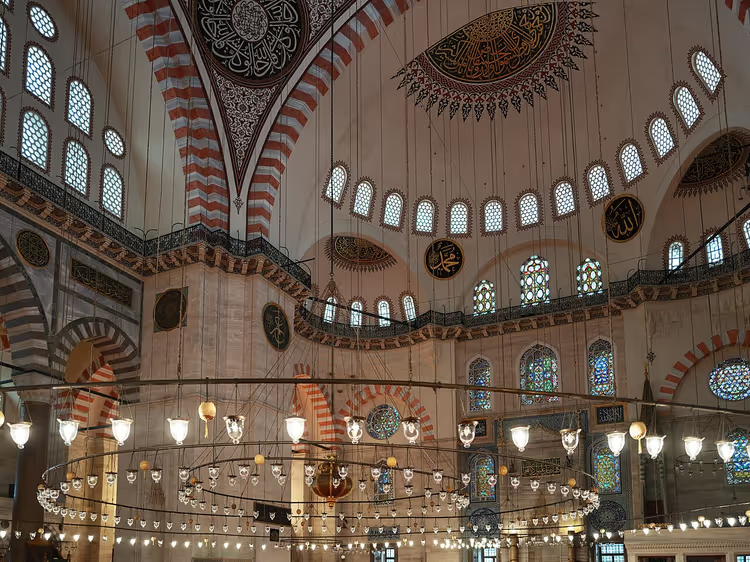
Suleymaniye Mosque was built in the mid-16th century by order of Suleiman the Magnificent. It is one of the largest mosques in the city, and you can see it from the water long before you reach the shore. Four minarets were erected in memory of the sultan: he was the fourth padishah after the conquest of Istanbul.
 © Giorgio Galeotti · CC BY-SAPhoto: Giorgio Galeotti, CC BY-SA (https://creativecommons.org/licenses/by-sa/4.0), Wikimedia Commons
Entry is free, between prayer times. Look not only at the interior, but also at the courtyard. From there you get a panorama of the historic center and the Golden Horn, and you understand how the city lies on the hills around the water.
How to get there: from the Grand Bazaar up through the Vefa neighborhood, about a kilometer.
Who it's for: those who want to see Istanbul without tickets and lines.
Blue Mosque and its tiles
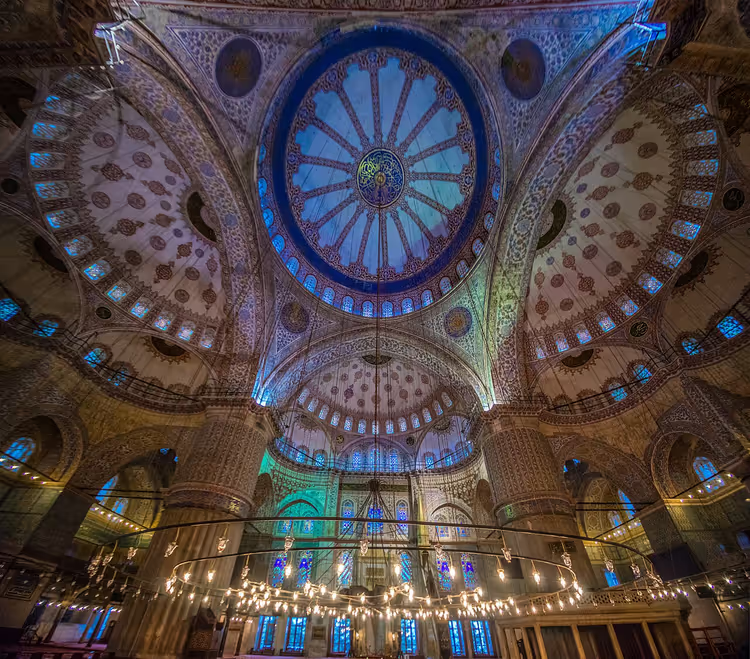
The Blue Mosque was commissioned by Ahmed I. The mosque got its name from the blue Iznik tiles that cover the walls inside.
Entry is free (as of 09/2026, Blue Mosque guide). The mosque is open daily from 08:30 to 18:30, but it closes during the five daily prayers. On Fridays, tourists are allowed in only after 14:30. Your shoulders and knees must be covered, and bring your own headscarf.
 © Pedro J Pacheco · CC BY-SAPhoto: Pedro J Pacheco, CC BY-SA (https://creativecommons.org/licenses/by-sa/4.0), Wikimedia Commons
How to get there: across from Hagia Sophia, through Sultanahmet Square.
Tip: come at 08:30 or after 16:00, when there are fewer groups at the entrance.
Topkapi Palace and a walk through the gardens
Topkapi Palace was begun immediately after the conquest of Constantinople. For four centuries it remained the residence of the sultans, and next to the chambers they laid out a harem and a large garden. On a hot day, a walk through the gardens gives you a break from the crowds in the square. Inside, there is a museum with one of the richest collections in the world: it houses the sword and cloak of the Prophet Muhammad.
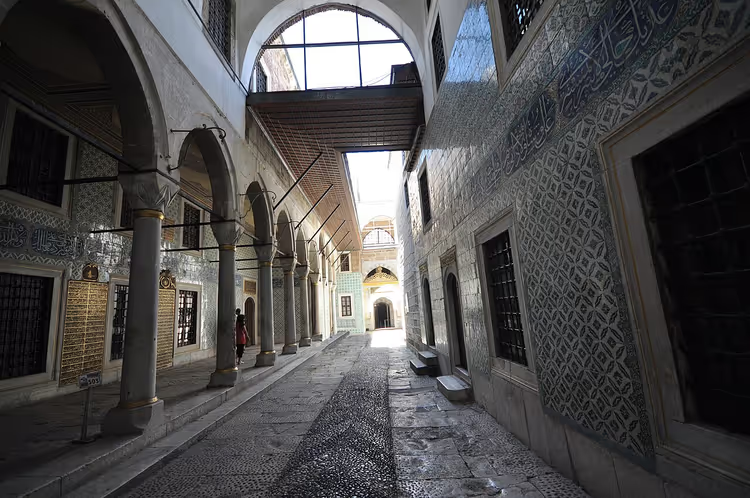 © Jorge Láscar from Australia · CC BYPhoto: Jorge Láscar from Australia, CC BY (https://creativecommons.org/licenses/by/2.0), Wikimedia Commons
Tickets are sold in time slots to spread out the flow of visitors. A combined ticket for the palace, harem, and Hagia Irene costs about 2,750 ₺ for foreign visitors (as of 09/2026, palace rates). The palace is closed on Tuesdays, and check the opening hours before your trip: verified on 13.09.2026 via Istanbul Tourist Information updates.
Tickets with a fixed entry time are easier to get for Istanbul's museum complexes.
How much time: with the harem, the palace takes half a day.
Who it's for: those who love museums and are willing to read the exhibit labels.
The catch: without a time slot, you stand in the general entry line.
Basilica Cistern and its columns
The Basilica Cistern was built in the 6th century under Emperor Justinian I. It served the city as an underground water reservoir. Inside stand 336 marble columns about nine meters tall, rising straight out of the water (cistern description). Two columns in the far corner rest on stone Medusa heads.
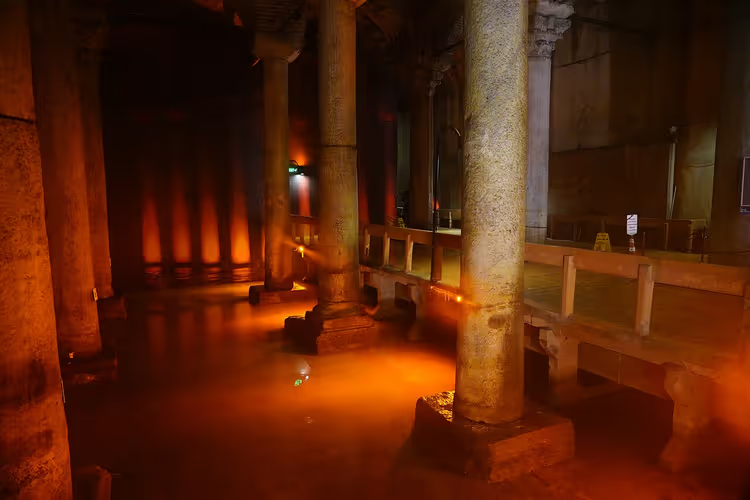 © Ray Swi-hymn from Sijhih-Taipei, Taiwan · CC BY-SAPhoto: Ray Swi-hymn from Sijhih-Taipei, Taiwan, CC BY-SA (https://creativecommons.org/licenses/by-sa/2.0), Wikimedia Commons
Colorful lighting and acoustics have turned the cistern into a concert venue, and the final scene of Inferno was filmed right here. Tickets start at 1,950 ₺ (as of 09/2026, tickets and hours), and the cistern is open daily from 09:00 to 22:00.
Getting there: five minutes on foot from Hagia Sophia, entrance near the Sultanahmet tram stop.
Tip: go at opening time; by midday, group after group gathers at the entrance.
Good to know: it's dark and cool inside, so a light sweater will come in handy.
Bosphorus ferry ride
The Bosphorus divides the city into European and Asian sides. Dozens of tankers and hundreds of pleasure boats pass through the strait every day. A ferry gives you what you can't see from shore: palaces, the Golden Horn, and the Galata Tower from the water, all in one glance.
Board the ferry at the Eminönü pier and grab a spot on the open deck. During the day you'll see Dolmabahçe Palace and wooden yalıs along the shore; in the evening the city lights up. An evening Bosphorus cruise includes dinner and music, but even a regular sailing offers a great panorama.
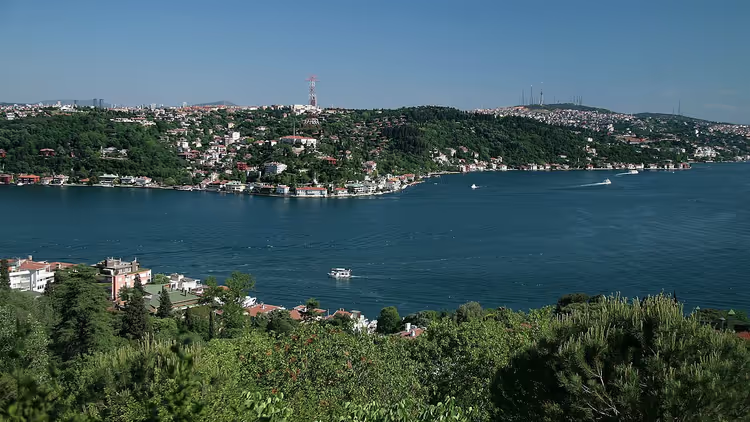 © Jorge Franganillo · CC BYPhoto: Jorge Franganillo, CC BY (https://creativecommons.org/licenses/by/3.0), Wikimedia Commons
How long: a short sailing fits in before lunch; the full route takes half a day.
Who it's for: anyone who wants to see the city from the water and take a break from the streets.
Turkish ice cream, dondurma
Dondurma is not ice cream but a Turkish dessert made with salep and goat's milk. Salep is made from the root of wild orchids, and for three hundred years the recipe was known only to the nobility. Today dondurma is sold on the streets, and vendors turn buying it into a show: they stretch the mass on a stick and toss it around.
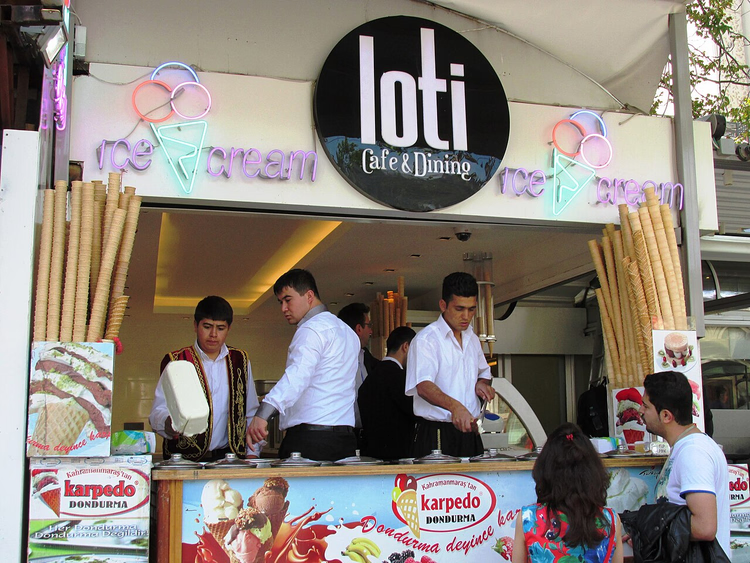 © brewbooks from near Seattle, USA · CC BY-SAPhoto: brewbooks from near Seattle, USA, CC BY-SA (https://creativecommons.org/licenses/by-sa/2.0), Wikimedia Commons
Try it where local kids are standing around the cart. The flavor hints at orchid and goat's milk, and the texture stretches and barely melts. Eat dondurma with a spoon or fork: the mass is sticky and travels upward farther than you expect.
Sweets: künefe, baklava, and lokum
Turkish sweets have long been a national brand. But skip the tourist display cases and look for the tastiest options in modest shops aimed at locals. You'll pay less and get a fresh batch first thing in the morning. Desserts are sold by weight and packed in gift boxes.
Be sure to try künefe: a hot pie made of shredded phyllo dough with a mild cheese, drenched in sugar syrup. Bring home an assortment of baklava, lokum, kadayıf, and şekerpare. Choose pistachio baklava; here it's the standard.
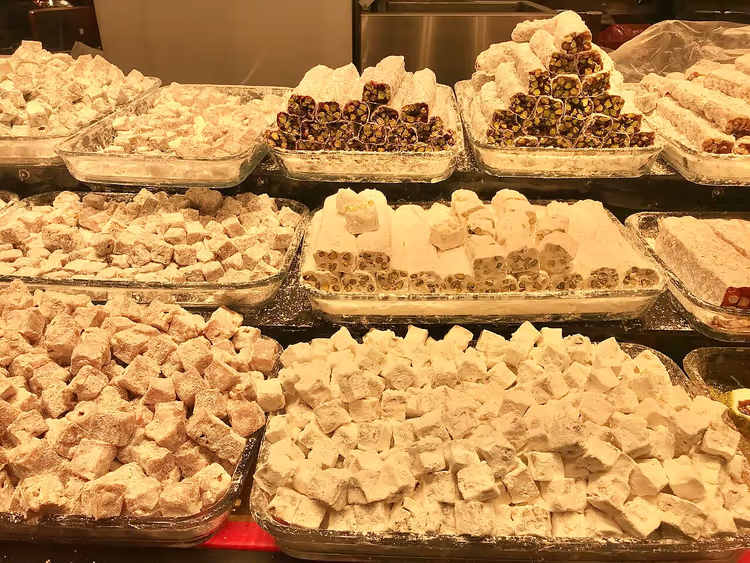 © Maurice Flesier · CC BY-SAPhoto: Maurice Flesier, CC BY-SA (https://creativecommons.org/licenses/by-sa/4.0), Wikimedia Commons
Who it's for: anyone bringing edible gifts to family and friends.
Tip: buy on your last day so the sweets don't go soft in the heat.
Shopping: Istanbul's bazaars and malls
Turkey manufactures clothing and footwear for European brands, so Istanbul is full of factory stores and outlets. Large malls bring hundreds of brands together under one roof, with kids' zones, cinemas, and big food courts. If you need textiles, leather, or carpets, head to the Grand Bazaar and the neighboring Spice Bazaar. At the Grand Bazaar, don't buy at the first stalls by the entrance: go deeper inside, where vendors haggle more calmly and are more willing to lower the price.
Forum Istanbul holds the title of one of the largest shopping centers in Europe. It's located in Bayrampaşa, and it's easy to reach by taking the M1 metro to Kocatepe station.
How to get there: the metro is the most convenient option, about half an hour from the center.
Who it's for: those combining their trip with shopping.
⁉️🤔 Frequently asked questions
How much does Hagia Sophia admission cost in 2026?
For foreign visitors, the ticket costs €25, children under 8 enter free with a passport (as of 09/2026, Hagia Sophia page). The ticket gives access to the second-floor galleries with Byzantine mosaics. The ground floor is reserved for prayer and is not open to visitors.
When is the best time to visit the Blue Mosque?
Admission is free, but the mosque closes during the five daily prayers (as of 09/2026, visiting rules). Arrive by 8:30 AM or after 4:00 PM: fewer groups, and the light on the tiles is softer.
How much time do you need for Topkapi Palace?
Set aside half a day if you want to see the harem and the gardens. Start with the harem while it's still quiet, and save the garden stroll for the end, when the heat subsides.
Do I need a Museum Pass for Istanbul's museums?
Istanbulkart works only for transport; it does not replace museum tickets. Museum Pass Istanbul is not valid at Hagia Sophia (as of 09/2026, Museum Pass terms). The card pays off when you visit several museums in a row. Check the list of sites in your itinerary before buying. Still book timed-entry tickets in advance, otherwise you'll lose time in ticket office lines.
Where should I try dondurma and Turkish sweets?
Dondurma is sold on the streets of Sultanahmet and on Istiklal, where vendors put on a stretching show. For künefe and baklava, go to unassuming shops where locals sit, not the display windows near the square. Buy prepackaged boxes on your last day so the sweets don't get soft in transit.
Tours and tickets in Istanbul
Guided tours, skip-the-line tickets and activities — most offers can be cancelled free of charge.
See offers on TiqetsThe widget loads once you give your consent.
In short: what's worth booking
Three days in Istanbul fly by, so book tickets and flights in advance. Here's what suits different kinds of trips.
If you're traveling with kids: Hagia Sophia in the morning, a Bosphorus ferry in the afternoon, sweets for dessert.
If you came for history: Topkapi with the harem, Basilica Cistern, and Süleymaniye.
If your goal is shopping: Grand Bazaar, then Forum Istanbul, and dondurma on Istiklal in the evening.
Compare timed-entry tickets and city tours: tours and tickets on GetYourGuide.

A small editorial team writing guides for independent travel. We travel ourselves, but we haven’t been everywhere, so we check prices, opening hours and how to get there against official sources.