
















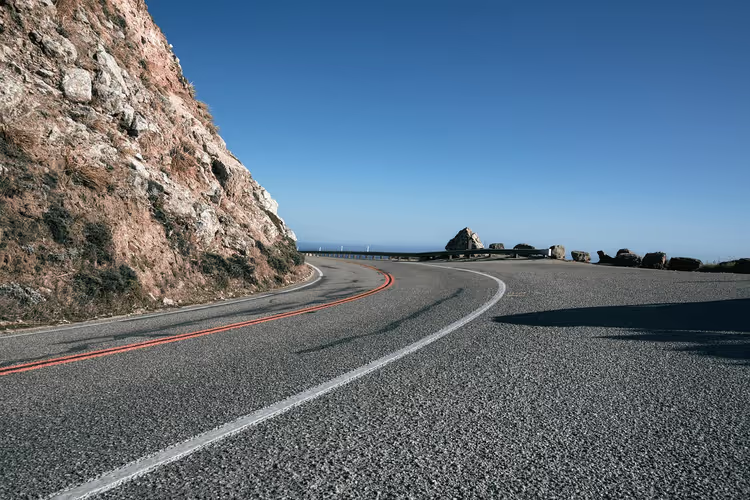
California coast road trip: 6 days from Los Angeles to San Francisco
You're behind the wheel, with a cliff and the ocean on your left and mountains on your right. That's what the best stretch of the Pacific Coast Highway looks like.
The Pacific Coast Highway (officially California State Route 1) is a road that runs along the entire California coast. The section between Los Angeles and San Francisco is considered the most scenic in the country, and that's exactly the route covered below.
The plan is designed for 6 days: two days for Los Angeles and its beaches, one each for Santa Barbara, Big Sur with Monterey, 17-Mile Drive with San Jose, and San Francisco. You'll get specific stops, map distances, and a list of tickets you should book in advance.
Ad: this article contains affiliate links, we earn a commission if you book through them, at no extra cost to you.
What the Pacific Coast Highway is
💡 In short:
- The Pacific Coast Highway connects San Francisco and Los Angeles and runs along the coast.
- The most stunning views are along the Big Sur section, between Monterey and San Luis Obispo.
- The entire route can realistically be driven in 6 days without rushing.
- Prices and hours: 09/2026, verified on the official Griffith Observatory website.
Officially, the road is called California State Route 1, or SR1 for short. Unofficially, it's known as the Pacific Coast Highway. The highway runs along the ocean and connects the northern and southern parts of the state, but the most popular section lies between Los Angeles and San Francisco.
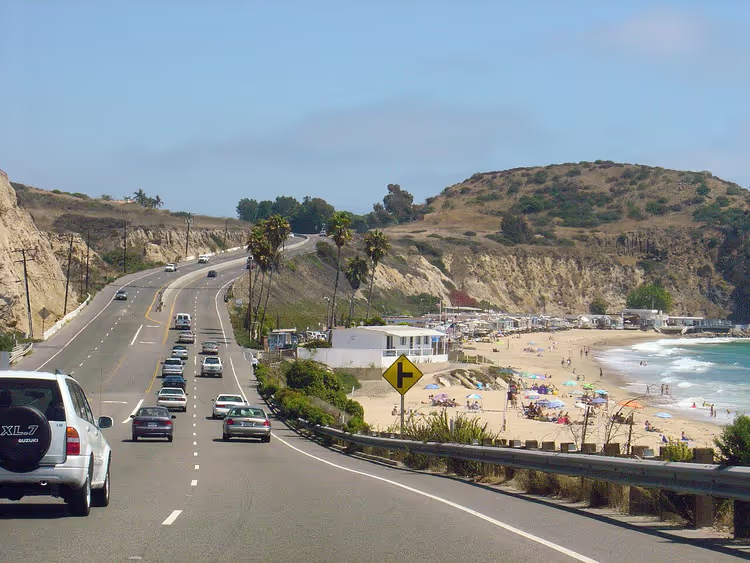
There's no major industry or big cities here. The road winds along cliffs, drops down to sandy beaches, and climbs back up into pine forests. That's exactly why people love this highway: in one window you have the ocean, in the other, mountains.
Route from Los Angeles to San Francisco
The route starts at Los Angeles International Airport (LAX). Pick up your car right there: there's almost no public transportation along the highway, and trains run far from the coast. You can compare rental options on DiscoverCars.
Below is the day-by-day plan. Distances are shown on the map, driving times are without stops.
Day | Highlights | Book tickets in advance | Km on map |
|---|---|---|---|
1 | Los Angeles, Griffith Observatory | Universal Studios | 30 |
2 | Beverly Hills, beaches, wineries | wine tours | 120 |
3 | Santa Barbara, Solvang | none | 200 |
4 | Hearst Castle, Big Sur, Monterey | Hearst Castle tour | 240 |
5 | 17-Mile Drive, San Jose | none | 150 |
6 | San Francisco, Alcatraz | Alcatraz ferry | 120 |
Day 1: Los Angeles and Hollywood
The first day is spent on Los Angeles. The city is huge and heavily car-dependent: neighborhoods are spread far apart, and the freeways are jammed almost all day. You won't stay here long, but a couple of spots are worth checking off.
Griffith Observatory
The main stop of the day: Griffith Observatory. From here you get a view of downtown, Hollywood, and the Pacific Ocean all at once, and the Hollywood sign is visible nearby. Admission to the observatory is free, parking at the building is paid.

Hours: Tuesday through Friday from 12:00 to 22:00, Saturday and Sunday from 10:00 to 22:00, closed Monday (as of 09/2026, official website). The planetarium operates separately, and you buy tickets for it on site. Arrive at opening time or after 18:00: by sunset, a crowd gathers at the building.
Walk of Fame and Universal Studios
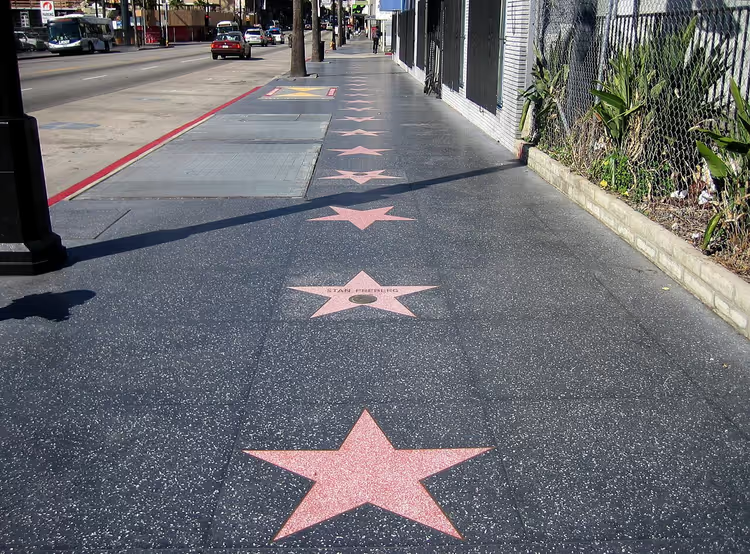
Second point: Hollywood. Walking along the Walk of Fame and looking for your favorite actor's star costs nothing. If you're more interested in the behind-the-scenes side of movies, get a ticket to Universal Studios Hollywood: the price depends on the date, and online is usually cheaper (as of: 09/2026, official park website). Check tickets on GetYourGuide.
Day 2: Beverly Hills, beaches, and wineries
Dedicate the second day to relaxing and your first trips outside the city. The drive is short, but there's enough to fill a whole day.
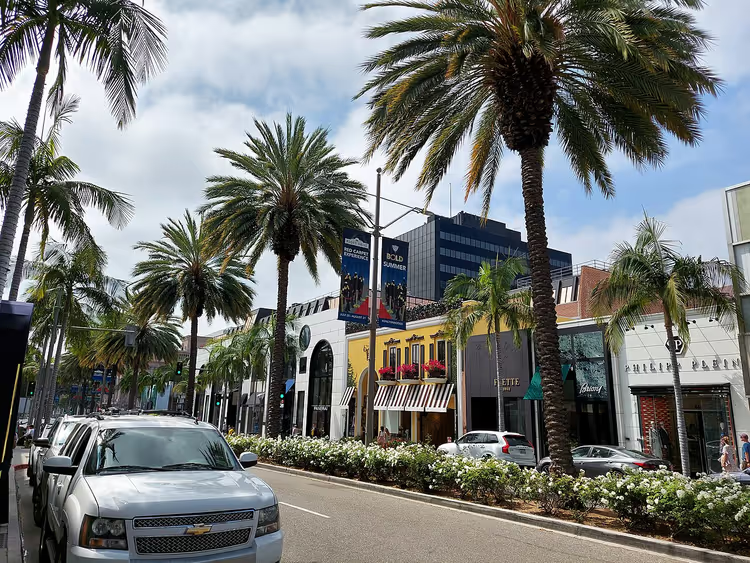
Beverly Hills and Rodeo Drive
Beverly Hills is technically not part of Los Angeles but a separate city. Well-kept streets, manicured lawns, and Hollywood stars' villas. Walking along Rodeo Drive is free, but the boutiques cater to a different budget. On the plus side, you have a chance to spot a celebrity here.
Malibu and Santa Monica beaches
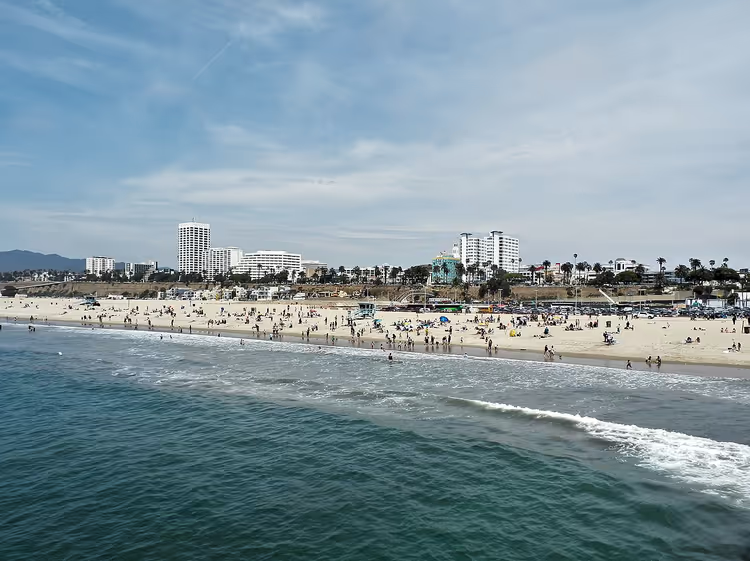
California's most famous beaches lie right next to the city: Malibu, Santa Monica, Laguna. The ocean water is cool even in summer, and it's mostly surfers in wetsuits who swim. Come at sunset: the light is best for photos at that time.
 © Alexander Migl · CC BY-SAPhoto: Alexander Migl, CC BY-SA (https://creativecommons.org/licenses/by-sa/4.0), Wikimedia Commons
- The catch: the water is cold year-round, so you need a wetsuit for a long swim.
Wineries and tastings
There are many wineries with tastings in the Los Angeles suburbs. The selection of glasses and prices vary, so choose a winery based on your route and taste. California is known for zinfandel, cabernet sauvignon, and chardonnay. For lodging in this area, it's easiest to look at Santa Monica hotels on Trip.com.
Day 3: Santa Barbara and Solvang
The third day heads north along the coast. The road itself is already an attraction, so allow time for stops at scenic overlooks.
Santa Barbara
Santa Barbara is lush with greenery and flowers. It's a quiet, well-kept town, far from the bustle of big cities. You can easily spend a couple of hours on the main street and at the mission, and also catch weddings that take place at the local church almost every day.
Solvang
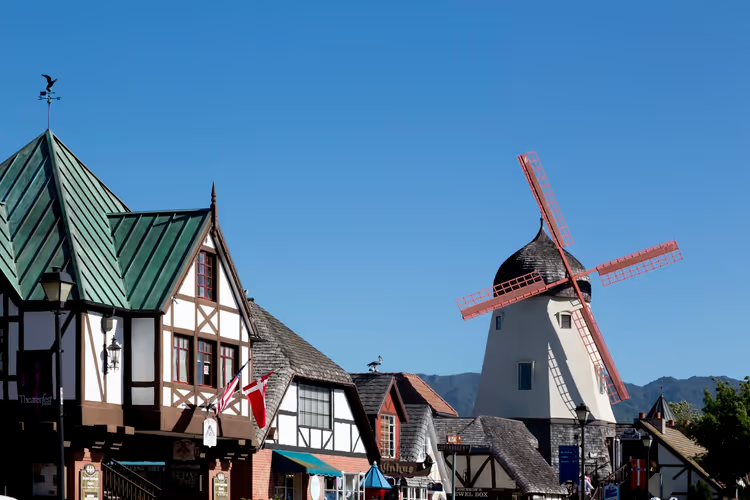
Further on, a completely different California begins. Solvang was founded by Danish settlers, and the buildings here are built in a Scandinavian style. The name translates as "sunny field." The town is very clean and cozy. Many people stay here longer than they planned.
For an overnight stop between Santa Barbara and Big Sur, it's easiest to stay at Santa Barbara hotels on Trip.com.
Day 4: Hearst Castle, Big Sur, and Monterey
The busiest day of the route. Here you'll drive the main stretch of the highway and still make it to the aquarium.
Hearst Castle
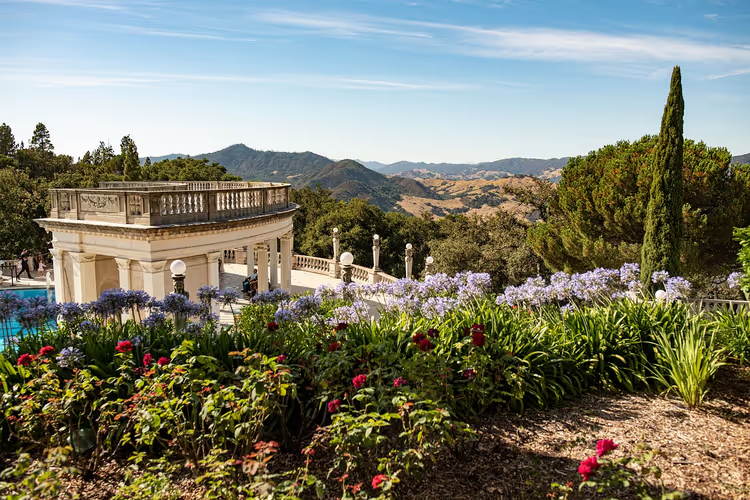
Hearst Castle sits almost halfway between Los Angeles and San Francisco. It is one of the most famous mansions in the US: Charlie Chaplin, Franklin Roosevelt, and Winston Churchill visited, and Lady Gaga filmed a music video here. You can only get inside on a tour, and a ticket costs several tens of dollars (as of 09/2026, official website).
Big Sur and Bixby Bridge
After that, the road narrows into a thin strip along the ocean. This is Big Sur: cliffs and water on the left, a mountain range on the right that keeps trying to slide down. Stop only at designated pullouts: parking on the shoulder is dangerous.

One of the canyons is crossed by Bixby Bridge, the most photographed bridge on the route. There are always cars near it, but the spot is worth it. You will get the best light in the morning, before the fog lifts.
- The catch: the road is narrow, there is almost nowhere to pass, and thick fog hides the views.
Monterey
The day ends in Monterey, the old capital of California. It has one of the best aquariums in the US, historic waterfront buildings, and California's first theater and library. For dinner, go with seafood. Look for a place to stay at Monterey hotels on Trip.com.
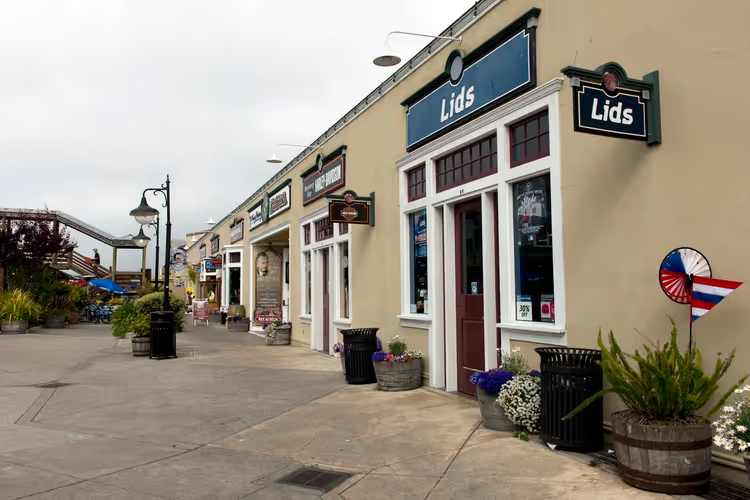
Day 5: 17-Mile Drive and San Jose
The fifth day starts with a short paid detour into a private area and ends in Silicon Valley.
17-Mile Drive
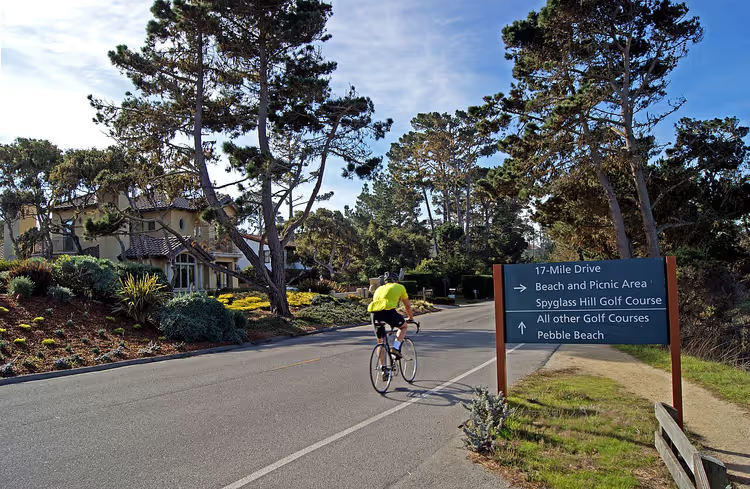
Entering 17-Mile Drive is paid: the road is private and runs between Pacific Grove and Carmel. Along it sit some of the most expensive homes in the state, golf clubs, and scenic overlooks. The highway's symbol, the Lone Cypress, grows at its own pullout. Entry costs $11.25 per car (as of 09/2026, Visit California).
 © Humanoid one · CC BY-SAPhoto: Humanoid one, CC BY-SA (https://creativecommons.org/licenses/by-sa/3.0), Wikimedia Commons
If you want to start your morning right at 17-Mile Drive, stay the night before at Carmel hotels on Trip.com instead of Monterey.
San Jose and Silicon Valley
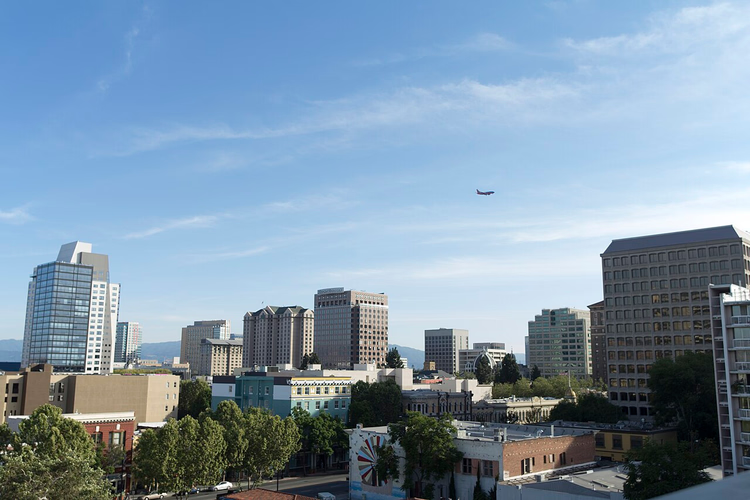
Between the hills of Silicon Valley lies San Jose, a major city in its own right. Here you should check out the Tech Interactive, the Cathedral Basilica of St. Joseph, and the Winchester Mystery House. You can see some company campuses on free routes.
 © Adam Schultz · CC BYPhoto: Adam Schultz, CC BY (https://creativecommons.org/licenses/by/2.0), Wikimedia Commons
Day 6: San Francisco
You'll want at least three or four days in San Francisco, so extend the route if you can.
Lombard Street
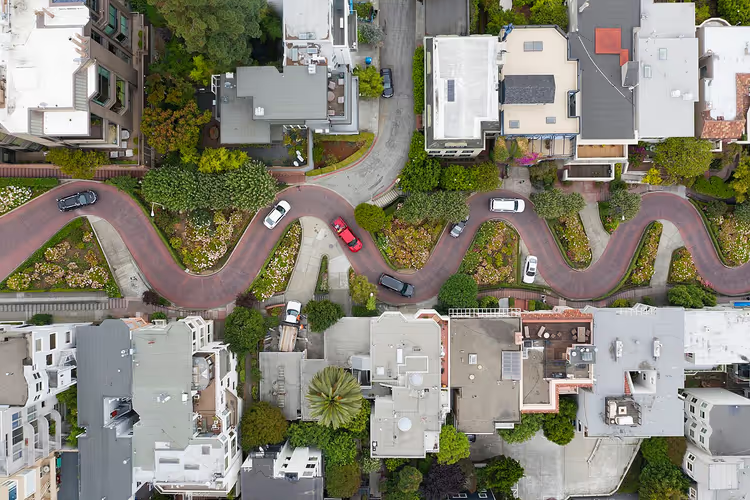
Lombard Street is only 180 meters long, with eight sharp turns along that stretch. Driving it is free, but the line moves slowly. You can also walk up: the views of the bay are worth it.
 © Christopher Michel · CC BY-SAPhoto: Christopher Michel, CC BY-SA (https://creativecommons.org/licenses/by-sa/4.0), Wikimedia Commons
Golden gate bridge and alcatraz
You can spend hours admiring the Golden Gate Bridge and the bay with Alcatraz Island. The island is home to a former prison where Al Capone was held, and ferries run there from Pier 33. Tickets sell out weeks in advance even in the off-season, so book ahead (as of 09/2026, official website). For island tours, check GetYourGuide.
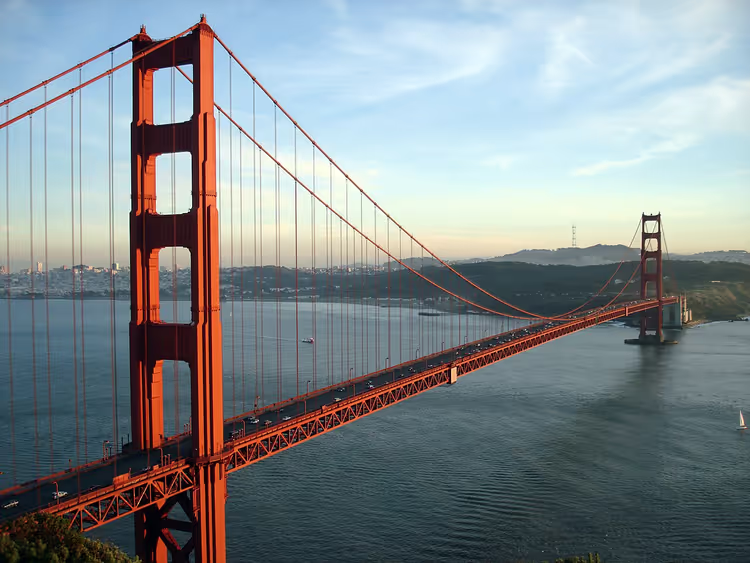 © Rich Niewiroski Jr. · CC BYPhoto: Rich Niewiroski Jr., CC BY (https://creativecommons.org/licenses/by/2.5), Wikimedia Commons
Transamerica pyramid and coit tower
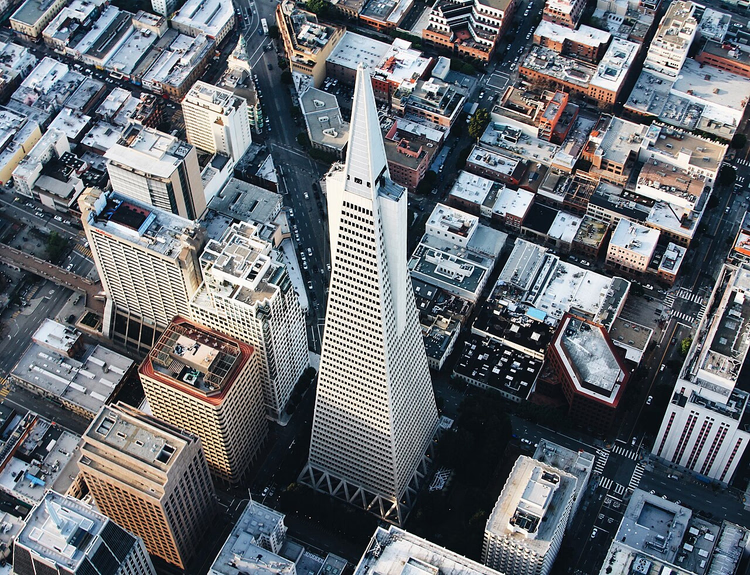
While in the city, find the Transamerica pyramid and coit tower. Together with the Victorian architecture, they create that iconic San Francisco skyline. Go in the morning: by midday the observation decks are already crowded.
What else is worth doing in California
If you decide to drive less around the state and spend more time on activities, here's a basic list to choose from.
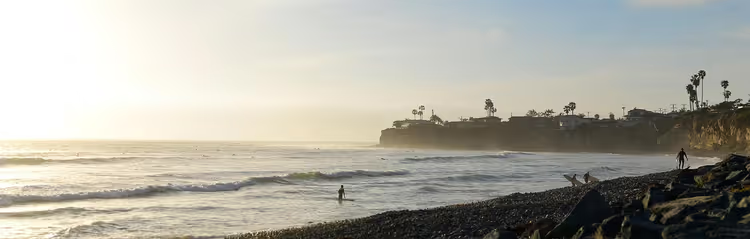
- Learn to surf. If time and budget allow, sign up for group surf lessons: your first wave is waiting.
- Try gold panning. California is famous for the Gold Rush, and gold prospecting courses still operate today.
- Catch a major sporting event. Americans have four great passions: baseball, basketball, hockey, and American football. Hockey tickets in California start at around $80 (as of 09/2026, official NHL website).
- Relax on the beach or visit a national park. California has nine national parks, and that's a whole separate trip.
⁉️🤔 Frequently asked questions
How many days do you need to drive the Pacific Coast Highway?
Allow at least five days for the route between Los Angeles and San Francisco, or six to seven for a comfortable pace. One day goes to Los Angeles, another to beaches and wineries. Set aside a full day for Big Sur and Monterey: there are many stops along the way, and speeds on the winding roads are low.
Where is the best place to stay overnight along the route?
It makes sense to change cities every night: Los Angeles, Santa Barbara, Monterey, San Jose, San Francisco. That way you don't waste time driving back and forth. Hotels near the coast are more expensive, but they save you an hour to an hour and a half a day getting to the route's highlights.
Do you need a car, or are tours enough?
A car is more convenient: there is almost no public transportation along the highway, and the best views are far from the cities. Organized tours do exist, but they run on a schedule and barely stop at the Big Sur overlooks.
When is the best season for the trip?
The calmest time to go is from April through June and from September through October: fewer tourists and mild weather. In summer, fog often sits along the coast, and in winter Big Sur can see landslides and road closures. Before you set out, check the road status on the California Department of Transportation website.
What should you book in advance?
The Alcatraz ferry and the Hearst Castle tour: both places admit a limited number of people per day, and tickets sell out weeks ahead in high season. Also compare car rentals in advance: in July and August prices are higher and the selection of models is smaller.
Find hotels
Compare prices across booking sites and filter for rooms with free cancellation.
Compare prices on Discover CarsThe widget loads once you give your consent.
In short: what to book
The Pacific Coast Highway is most convenient to drive by car with overnight stays in different cities. If you are traveling along the coast, choose hotels on Trip.com and compare cars on DiscoverCars.
What to book in advance: the ferry to Alcatraz and the Hearst Castle tour. For peace of mind, compare insurance options on EKTA.
If you only have three days, take the section from Los Angeles to Santa Barbara. If you have a week, drive the entire route to San Francisco.

A small editorial team writing guides for independent travel. We travel ourselves, but we haven’t been everywhere, so we check prices, opening hours and how to get there against official sources.