
















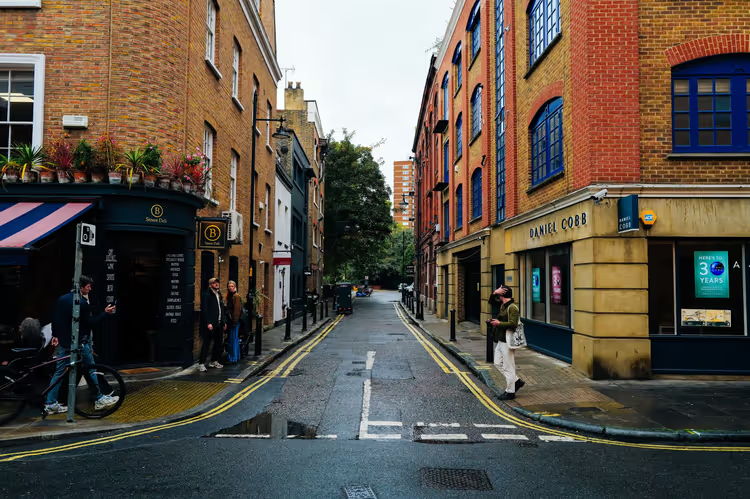
Whitechapel: where Jack the Ripper walked in 1888
The standard London route ends at Tower Bridge. After that, the buses turn around, and you head to Whitechapel. In 1888, Jack the Ripper operated here, and the area has barely changed.
We put together a walking route from the Tower through the East End markets to the sites of the five murders. You'll see the Ten Bells pub and understand why the case remains unsolved to this day. You don't need a tour guide.
Ad: this article contains affiliate links, we earn a commission if you book through them, at no extra cost to you.
From Tower Bridge to Whitechapel
💡 In short:
- Route: Tower, Tower Bridge, Mansell Street, Whitechapel High Street, Spitalfields. Murder sites in order: Durward Street, Hanbury Street, Henriques Street, Mitre Square, Dorset Street.
- Time: 2-3 hours on foot, about 3 km on the map.
- Best day: Sunday, when the markets are open.
- Jack the Ripper Museum: open daily (as of 09/2026, museum page).
The standard tour ends at the Tower. From Tower Hill tube station, you come out to the fortress and Tower Bridge. Then you head east along Mansell Street: this street connects the City and Whitechapel.
The street is about 500 m long on the map. After it, Whitechapel High Street begins, and this was the same route the police and newspaper reporters took in 1888 (case history).
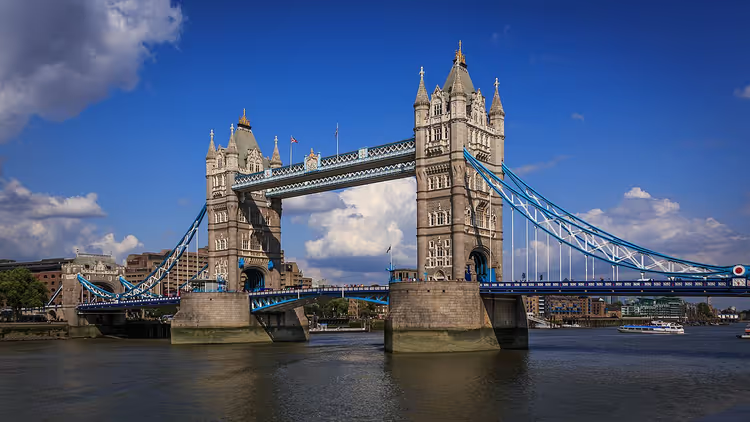 © Barcex · CC BY-SAPhoto: Barcex, CC BY-SA (https://creativecommons.org/licenses/by-sa/3.0), Wikimedia Commons
Unlike Westminster, Whitechapel doesn't pretend to be a postcard. Here you'll find narrow alleys, old brick, and markets where slums once stood. The area remains working-class and multicultural.
First the Irish settled here, then Jewish refugees from Eastern Europe, and now the Bangladeshi community. It was poverty and overcrowding that made Whitechapel the backdrop for the autumn of 1888. There's little room for architectural admiration, but plenty of atmosphere and texture.
The Tower is easy to reach on foot, but tickets to the fortress are best booked in advance. If you want a guide, the London city tourist office has put together walking tour options.
Whitechapel and East End markets
The main reason to come here during the day rather than in the evening is the markets. On Sundays they run all day, and the area turns into one big bustling crowd.
Petticoat Lane Market stretches along Middlesex Street. It's an old cheap clothing market, and the street name translates as "petticoat lane." Underwear was traded here as far back as the late 17th century; today they sell textiles, bags, and shoes. Come before noon: by lunchtime, the best items are gone.
Just nearby is Brick Lane with its vintage shops, Indian restaurants, and street food. Even closer is Spitalfields Market, open seven days a week (official website): artisan and designer stalls sit under the roof, with a food court right next to them.
 © Acabashi · CC BY-SAPhoto: Acabashi, CC BY-SA (https://creativecommons.org/licenses/by-sa/4.0), Wikimedia Commons
For flowers, people head to Columbia Road. It is a small Sunday market selling plants and seedlings. Locals show up by 8 a.m., tourists by 10, and by two o'clock the trading winds down.
The victims of 1888 did not live on Columbia Road, but in neighboring Whitechapel and Spitalfields. Market stalls, pubs, and lodging houses were part of their daily lives, and Spitalfields Market is mentioned directly in the case.
Tours and tickets in London
Guided tours, skip-the-line tickets and activities — most offers can be cancelled free of charge.
See offers on GetYourGuideThe widget loads once you give your consent.
Autumn 1888: a timeline of the murders
The official history of the serial killings begins on August 31, 1888. Early that morning, the body of Mary Ann Nichols was found a hundred meters from the Royal London Hospital. Her throat had been cut and some internal organs removed (case overview).
The police only became seriously concerned after the second incident. On September 8, the body of Annie Chapman was discovered near Spitalfields Market. Then, on September 27, a letter arrived at Scotland Yard. It began with the words "Dear Boss" and promised to "clip the ladys' ears off." The signature was short: "Jack the Ripper."
 © Ilya Grigorik · CC BY-SAPhoto: Ilya Grigorik, CC BY-SA (https://creativecommons.org/licenses/by-sa/3.0), Wikimedia Commons
At first the message was dismissed as a dark joke. But on September 30, the killer committed two murders in a single night. At around one in the morning in Whitechapel, a carter found the body of Elizabeth Stride. The killer had not had time to disembowel her, so he struck again.
The second victim that night was Catherine Eddowes. She was found on Mitre Square in the City (investigation details). This was the only time the killer moved outside the boundaries of Whitechapel. He kept the promise from the letter: he took internal organs and cut off an ear. Increased patrols forced him to lie low.
But he had no intention of being forgotten. On October 16, the Whitechapel Vigilance Committee received a letter "from hell" containing Catherine Eddowes's kidney. The last canonical murder is dated November 9, 1888. Mary Jane Kelly died in her own room, and she was mutilated more severely than the others (1888 timeline).
After that, the letters stopped and the killings ceased. The case was never solved, and that is the main reason Whitechapel still attracts tourists. Other women in the area were attacked around that time, but only five are officially attributed to Jack the Ripper (BBC History).
Who was Jack the Ripper: the theories
Fans of the case, known as Ripperologists, have a favorite theory. The killer was supposedly found, but the police concealed his identity. As early as after the second murder, rumors spread through London about Prince Albert Victor, Duke of Clarence, Queen Victoria's grandson.
Around the same time, the opposite theory emerged. The murders were supposedly the work of socialist revolutionaries who wanted to pin the blame on the prince and stir up unrest. The list of suspects still includes Lewis Carroll, the author of "Alice's Adventures in Wonderland."
The focus on medicine is no accident. The police noted how precisely the bodies had been dissected. The killer appeared to have surgical training. That made a popular suspect of Sir William Gull, the Queen's personal physician, who disappeared from public view in late 1888 and died in 1890.
This theory was cemented by two films: the British TV movie "Jack the Ripper" (1988) with Michael Caine and the Hollywood film "From Hell" (2001) with Johnny Depp (theories and suspects). Historians view both pictures as fiction, not as documentary evidence.
The Dr. Pedachenko theory
Another theory appeared in the early 20th century: the legend of Dr. Alexander Pedachenko, who came to London for surgical practice. He was allegedly an agent of the Russian Empire and committed the murders to draw police attention to the area.
According to this legend, Pedachenko could dress in women's clothing, approach his victims without raising suspicion, and vanished from Whitechapel without a trace. British authorities supposedly sent him to a psychiatric clinic quietly.
There is no documentary evidence for this story. Historians classify it as an urban legend and a newspaper hoax from the early 1900s (case file). We mention it as a curiosity, not as a fact.
The Ten Bells pub and the tabloid press
Two victims are linked to this pub: Annie Chapman and Mary Jane Kelly. The Ten Bells stands on the corner of Commercial Street and Fournier Street, and a building has been recorded on this site since 1753 (pub page).
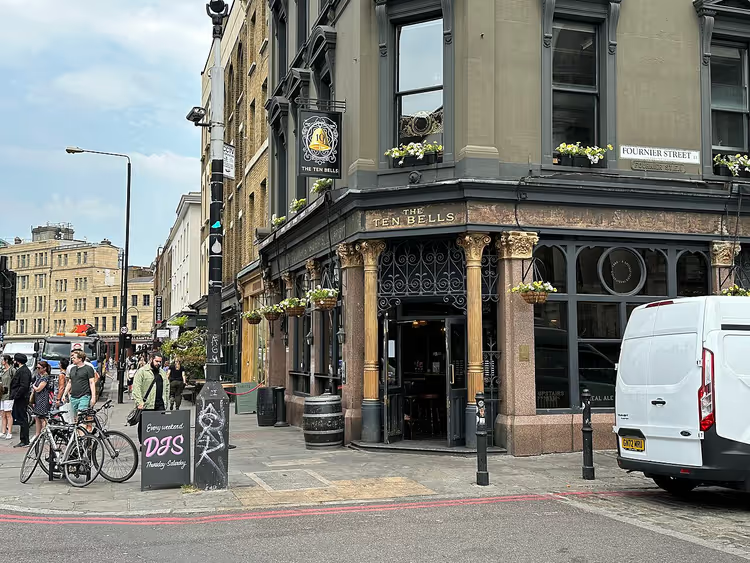 © Matt Brown · CC BYPhoto: Matt Brown, CC BY (https://creativecommons.org/licenses/by/2.0), Wikimedia Commons
The pub still operates today, the interior has barely changed, and crowds of tourists come here. In 1888 it stood at the center of a criminal district: brothels and thieves' dens were all around. Perhaps the women accidentally witnessed someone else's conversation and paid for it with their lives.
There is another theory as well. The journalist Robert Stevenson became a suspect. He was admitted to a Whitechapel hospital before the first murder and discharged after the last one, and he also wrote articles about the series.
It was these articles that sparked the public's interest in the tabloid press. If Stevenson was acting on a newspaper's orders, then Jack the Ripper may have been a major marketing ploy. Today London's tourism business really does profit from his name: tours, souvenirs, and a museum.
Stop by the Ten Bells for a pint and look at the old photographs of the neighborhood on the walls. On weekend evenings it's packed, so aim for the daytime.
⁉️🤔 Frequently asked questions
How long does the Whitechapel route take?
On foot, the whole route takes two to three hours if you don't stop at pubs and the museum. With stops at the markets and lunch, allow half a day. Just seeing the murder sites takes about an hour, and the distance between the farthest points is small. Wear comfortable shoes.
Can you do the route without a guide?
Yes. All the points are in one area, about 3 km apart on the map. Just download a map and take our list of places. With a guide you'll get more stories and details, but the route is clear even without one. The main thing is not to rush and to read the plaques on the buildings.
When is the best time to go: day or evening?
During the day is more convenient and safer. Evening tours give you atmosphere, but some of the markets are already closed. For the markets, choose Sunday and arrive in the morning, before the crowds build up. On weekdays the streets are quieter, but the Sunday market on Columbia Road is closed.
Is the Ten Bells pub open and can you go in?
Yes, the pub on Commercial Street still welcomes guests today. Little has changed inside since Victorian times, and old photographs of the area hang on the walls. The catch: on weekend evenings it's full of tourists. Go during the day, when there are free spots at the bar.
Is there a Jack the Ripper museum in Whitechapel?
Yes, the museum operates near the route. It's open to visitors daily, and walking tours start at 3:30 pm and 6:00 pm (as of 09/2026, Visit London). Book tickets in advance: weekend slots sell out quickly.
In short: what's worth booking
For the walking route, all you need is comfortable shoes. Head out to the Tower in the morning, walk east, and finish at Spitalfields by lunchtime.
If you want a ready-made guided walk through the murder sites, book a Whitechapel tour in advance: evening slots go first.
If you have half a day, add the Jack the Ripper museum and the Ten Bells pub. If you have only one day in London, start in the morning, otherwise the markets will close without you.

A small editorial team writing guides for independent travel. We travel ourselves, but we haven’t been everywhere, so we check prices, opening hours and how to get there against official sources.