
















Vienna: city itinerary, tickets and best season
Five days in Vienna fit almost all the classics. Imperial palaces, museums, the opera, and coffeehouses sit within a half-hour walk of each other, so you spend minimal time getting around. There is only one difficulty: time slots and season.
Schönbrunn admits visitors at fixed times, so buy your ticket in advance. The Classic Pass for five sites with an audio guide costs €49 for adults (as of 09/2026, official Schönbrunn website). In summer, without a slot you will stand in line for over an hour.
Ad: this article contains affiliate links, we earn a commission if you book through them, at no extra cost to you.
When to visit Vienna
💡 In short:
- Best months for the city: May and September.
- The opera runs from September through June; there are no performances in July and August.
- Accommodation is cheaper from October to mid-December and from February to mid-April.
- Prices and opening hours: 09/2026, verified on the official website.
High season runs from May through September, and May and September offer the best balance: the air is already warm, there is no heat, and locals have not yet left on vacation. In July and August, heat and downpours join the crowds, so a hotel with air conditioning becomes a necessity rather than a luxury in summer.
During business weeks, the center is full of corporate travelers, and available rooms get noticeably more expensive. If you are coming for the museums, book accommodation two to three months before your trip.
The music calendar sets its own schedule: the Vienna State Opera performs from September through June, and the hall is closed in July and August. Ball season opens after New Year and runs until Easter, and tickets for premieres and balls sell out months in advance.
Low season falls from October to mid-December and from February to mid-April: during these weeks hotels offer significant discounts and museums have no lines. The catch is the short days and damp weather, so bring a warm jacket and an umbrella.
Spring in Vienna is early and deceptive: March is still windy and rainy, April brings more sun, and in May the lilacs bloom, making it the best time for long walks. Early autumn also pleases with warm, dry weather, although temperatures drop sharply in October and frosts occur in November.
Winter in Vienna is mild, but there is enough snow, so warm footwear matters. Summer brings the most rain, and the midday sun is strong, so a hat will not hurt. Plan at least five days for the city itself, otherwise you will only see the center.
How to save on a Vienna tour
 © Hubertl · CC BY-SAPhoto: Hubertl, CC BY-SA (https://creativecommons.org/licenses/by-sa/4.0), Wikimedia Commons
People buy a package tour to Vienna to save time, not money: the package usually includes flights and a hotel, while excursions are sold separately. Compare the package price with the cost of flights and a hotel booked separately, because independent booking sometimes works out cheaper.
Early booking gives you a discount for committing far in advance, while last-minute deals are cheaper but leave you no choice: you take what is left. New Year and Christmas tours are almost always more expensive because of banquets and holiday programs, so if you are flexible on dates, the price difference will be noticeable.
Book city tours in advance, since popular slots sell out. Tours are easy to compare by date: Find tours and excursions in Vienna. A group walk is cheaper than a private one, but runs on a fixed schedule.
Which hotel to choose in Vienna
Central Vienna is compact, so the neighborhood matters more than the star rating: rooms in the first district cost the most, but you step right out to the sights. A little farther from the ring, prices are lower, and you can reach the center by metro in a few stops.
A hostel works if you are only coming to sleep, while three-star hotels offer the best balance of price and comfort. Look for a place near a metro station, and you will not waste time on travel or money on taxis. Hotel prices in Vienna on Trip.com are easy to compare by date.
How to get to Vienna
Vienna is easy to reach by both plane and train: the airport sits a couple dozen kilometers from the center, and the trip to your hotel takes about half an hour. Trains and buses run between the city and the airport, while a taxi will cost noticeably more.
Direct flights from European cities are short: from Munich and Zurich it is about an hour, from Berlin and Paris about two. Connections make the ticket cheaper but lengthen the trip and add the risk of missing a flight, so evening flights are often a better deal than morning ones.
The train beats the plane because the station is right in the city, and direct services run to Vienna from Budapest and Munich. A ticket bought on the day of travel is expensive, so buy in advance: train schedules to Vienna help you compare options.
Vienna 5-day itinerary
In five days you can cover the center, the imperial palaces, and at least one musical evening, and you only need to plan two or three sights per day, because there is no need to rush here. Below is a day-by-day itinerary with time estimates.
Day 1: Ringstrasse, Hofburg, and pastry shops
The Ringstrasse forms a ring of boulevards around the old town. It is lined with the Parliament, Vienna City Hall, the Vienna State Opera, and the university. Start in the morning and walk the circle on foot.
The Hofburg began as a fortress and became an imperial palace. Today it houses the presidential chancellery, the Silver Collection, and the Treasury. Separately, see the National Library and the Spanish Riding School. On Sundays the Vienna Boys' Choir sings in the palace chapel.
 © C.Stadler/Bwag · CC BY-SAPhoto: C.Stadler/Bwag, CC BY-SA (https://creativecommons.org/licenses/by-sa/4.0), Wikimedia Commons
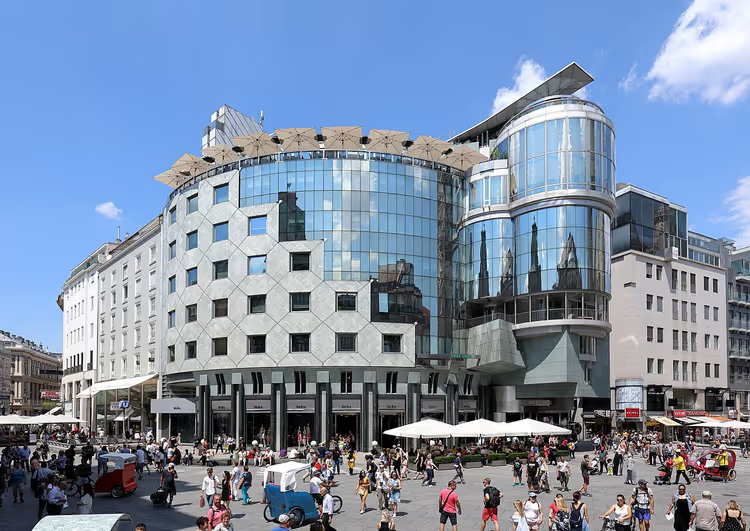
The Demel pastry shop once supplied sweets to the court. Today people come here for pastries and chocolate cake. Tables on the ground floor are almost always taken, so if there is a line, get dessert to go.
Day 2: St. Stephen's cathedral and the MuseumsQuartier
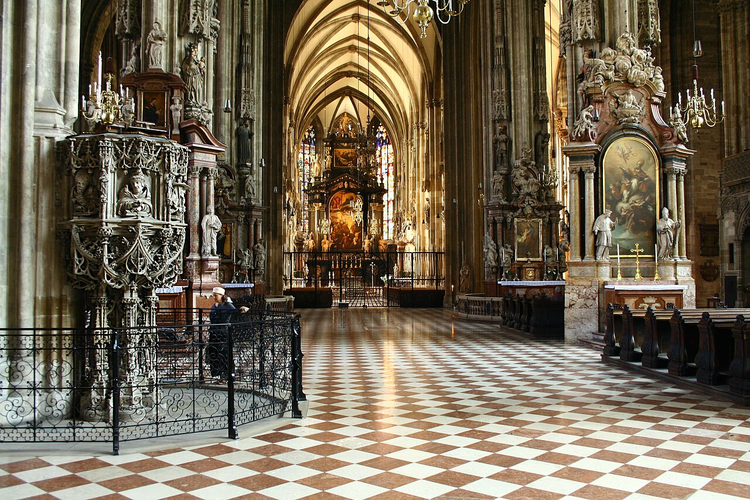
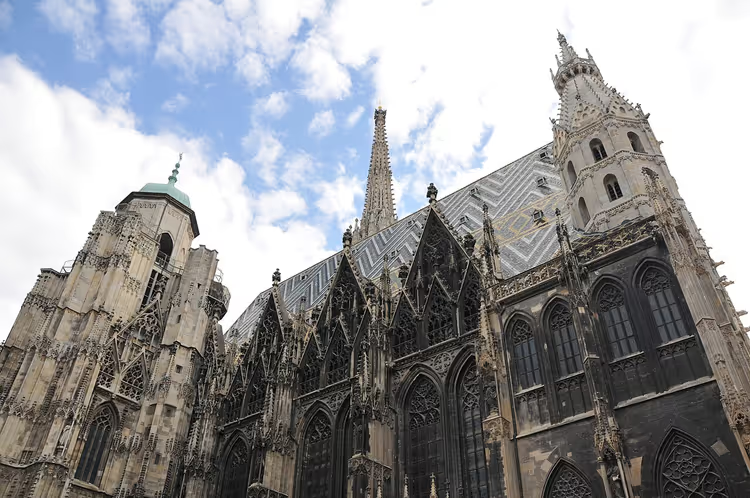
St. Stephen's Cathedral is the city's main symbol and remains one of the tallest churches in Europe. Entry is free; you only pay to climb the towers. Emperor Frederick III is buried in the cathedral.
 © Mario Modesto Mata · CC BY-SAPhoto: Mario Modesto Mata, CC BY-SA (https://creativecommons.org/licenses/by-sa/3.0), Wikimedia Commons
Next you will come out onto Maria-Theresien-Platz. A statue of the empress stands between two identical buildings. The Kunsthistorisches Museum holds paintings by Raphael, Rubens, Titian, and Rembrandt. Fans of curiosities will enjoy the Kunstkammer with its imperial collection.
The MuseumsQuartier occupies the former imperial stables. It brings together museums of modern art, with cafes and restaurants between them. The Vienna Secession is nearby: a small exhibition hall of the early 20th-century artists' association.
Day 3: Belvedere and Stadtpark
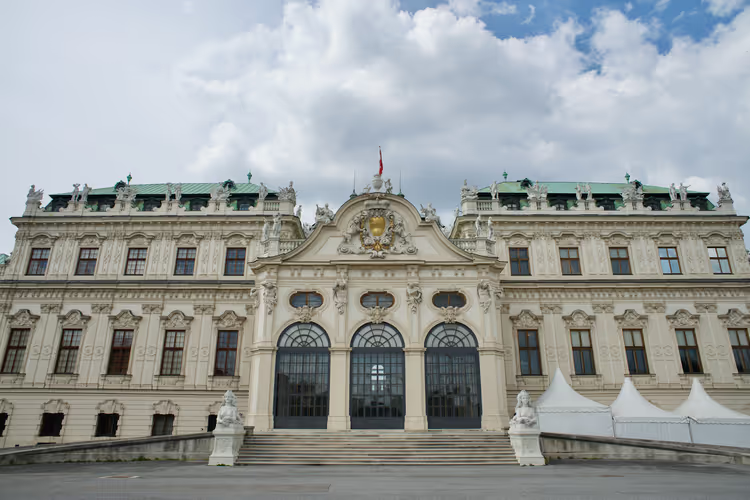
The Belvedere palace consists of two buildings and a large park between them. The halls display works by the Impressionists, and you can stroll the paths with a view of the fountain. Set aside half a day: the palace, garden, and orangeries stretch out the visit.
 © Chris Koerner from St. Louis, USA · CC BY-SAPhoto: Chris Koerner from St. Louis, USA, CC BY-SA (https://creativecommons.org/licenses/by-sa/2.0), Wikimedia Commons
Stadtpark is rich in sculptures. It has monuments to famous Austrians, flower beds, and a large pond. Tourists love taking photos by the statues. Come in the first half of the day, before the tour groups arrive.
Day 4: Schönbrunn
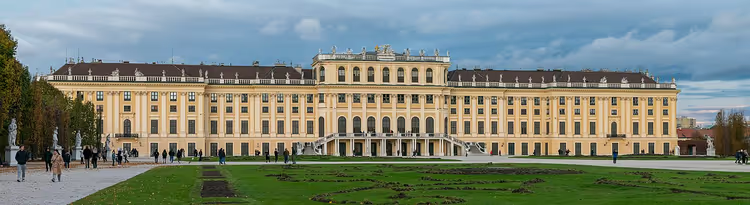
Schönbrunn was the emperors' summer residence and grew into a large palace complex with a park. The Classic Pass ticket includes the palace, the orangery, the maze, the Gloriette, and the private garden, and the visit takes three to four hours, with timed entry (checked on 09/14/2026 on the Schönbrunn ticket page).
 © Tournasol7 · CC BY-SAPhoto: Tournasol7, CC BY-SA (https://creativecommons.org/licenses/by-sa/4.0), Wikimedia Commons
The park is home to one of Europe's oldest zoos, and you can reach the palace by metro and return by tram. Get a morning ticket, because by midday the line at the entrance grows.
Day 5: Prater, market, and Rathausplatz
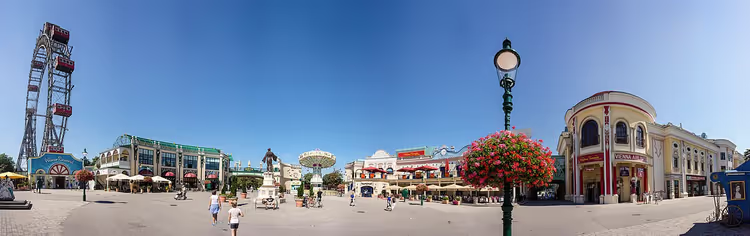
The Prater is known as a large amusement park with rides and the Vienna Giant Ferris Wheel. The cabins here are enclosed, and from the top you can see the entire center and take great photos.
 © Christian Barth · CC BY-SAPhoto: Christian Barth, CC BY-SA (https://creativecommons.org/licenses/by-sa/3.0/at/deed.en), Wikimedia Commons
For souvenirs, head to the Naschmarkt: cheese, sweets, and spices are cheaper here than in the center. Rathausplatz and the Rathauspark host music and city festivals in summer. A tour of the city hall itself is also available, and admission is inexpensive.
Day | Main sights | What to book in advance |
|---|---|---|
1 | Ringstrasse, Hofburg, Demel | Hofburg and Treasury |
2 | St. Stephen's Cathedral, Kunsthistorisches Museum | Kunsthistorisches Museum |
3 | Belvedere, Stadtpark | Belvedere |
4 | Schönbrunn | Classic Pass |
5 | Prater, Rathausplatz | Vienna Giant Ferris Wheel |
If this is your first visit, this plan covers the palaces, the old town, and the parks. Leave one evening free.
Tours and tickets in Vienna
Guided tours, skip-the-line tickets and activities — most offers can be cancelled free of charge.
See offers on TiqetsThe widget loads once you give your consent.
How to save money in Vienna
Vienna is expensive, but saving here is easy: a multi-day transit pass pays off if you ride more than twice a day, and you can buy it in the app or at a station ticket machine. Walk instead, because the center is compact and you see more that way.
Many museums offer free admission on certain days of the month, so check the calendar on the museum's website before your trip.
Viennese coffee and strudel are cheaper in pastry shops away from the tourist streets, and a lunch menu at a restaurant costs less than an evening dinner. Shops are closed on Sunday, so buy gifts in advance.
Plan the Belvedere for half a day and Schönbrunn for the morning, and book the opera months ahead, because weekend slots sell out. For museums, choose Tuesday or Wednesday mornings, when there are fewer groups.
 © Manuel Velazquez · CC BYPhoto: Manuel Velazquez, CC BY (https://creativecommons.org/licenses/by/3.0), Wikimedia Commons
The Ringstrasse is beautiful in the evening too: the lights come on around sunset. Entry to most Vienna parks is free. A blanket and a thermos of coffee will come in handy on a cool evening.
Vienna on the map
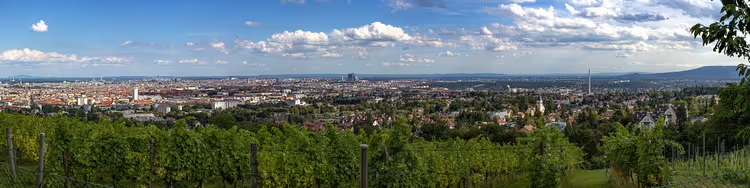
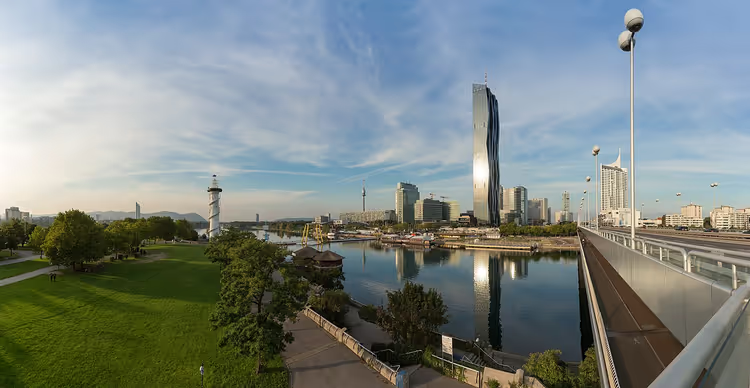
Vienna sits on the Danube, and its center is walkable. If you are getting around the city by metro, save an offline map: cell service does not work everywhere. Below is an interactive map of the city.
⁉️🤔 Frequently asked questions
How much does a 5-day trip to Vienna cost?
The total depends on the season and the hotel. Transport is cheaper with a travel pass, and museums are cheaper in the low season. You can calculate the exact amount based on your own itinerary.
When is the best time to fly to Vienna?
May and September offer the best balance of weather. In summer it is hot, crowded, and rainy; in winter the days are short and damp. To save money, choose October or February.
How long is the flight to Vienna?
A direct flight from European cities takes between one and two and a half hours. Connections are cheaper, but the journey is longer. Traveling by train from neighboring countries is more convenient.
What to see in Vienna in 5 days?
The essential minimum: Schönbrunn, the Hofburg, St. Stephen's Cathedral, the Belvedere, and the Vienna State Opera. Add the Kunsthistorisches Museum, the Prater, and the Stadtpark. Plan two or three sights per day, otherwise you will get tired.
The first district is expensive, but everything is nearby. Accommodation outside the Ringstrasse is a better value: prices are lower, and you can reach the center by metro in a few minutes. Choose a hotel near a metro station.
In short: what is worth booking
If you are short on time, book a hotel near the metro and a three-day travel pass. If you are going for the music, book the opera in advance. If you want to save money, choose October or February and plan Schönbrunn for the morning.
Buy tickets for the main sights before your trip: time slots sell out first. Check hotels in Vienna on Trip.com right after you choose your dates.

A small editorial team writing guides for independent travel. We travel ourselves, but we haven’t been everywhere, so we check prices, opening hours and how to get there against official sources.