
















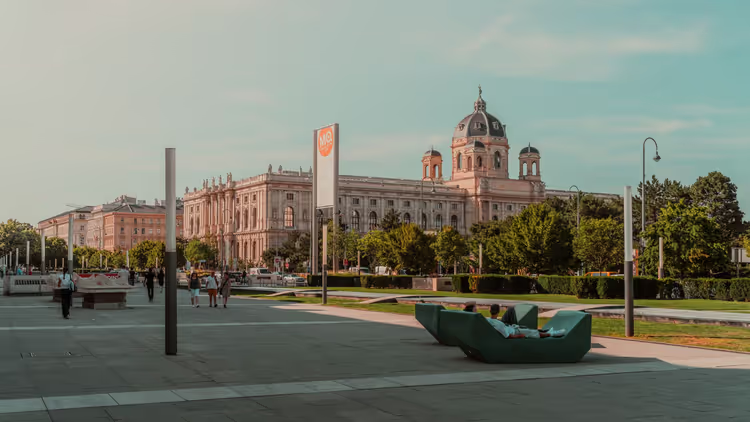
Green Vienna: 17 parks and gardens for walks and picnics
Vienna keeps its green spaces within walking distance.
You came for three days and want to see the city, not spend them inside museums. A park route saves energy: between two palaces there is almost always a lawn or an avenue for a breather. We put together 17 green spots in Vienna, from imperial gardens to a ropes course in the hills.
Below we have organized them by district and added practical details: hours, admission, directions, and an honest catch. We verified the information on 09/15/2026 on official websites.
How to choose a park in Vienna
💡 In short:
- Center: Burggarten, Rathauspark, and Stadtpark are in the first district, Sigmund Freud Park lies nearby in the 9th district.
- With kids: Schönbrunn Zoo, Prater, Donaupark, and Kahlenberg Ropes Course.
- For quiet: Vienna Woods, Lainzer Tiergarten, and Kurpark Oberlaa.
- Hours and admission: 09/2026, verified on the official website of the City of Vienna.
Our picks by type of visit:
Goal | Parks |
|---|---|
Imperial gardens and architecture | Schönbrunn, Belvedere, Burggarten |
Nature and quiet | Vienna Woods, Lainzer Tiergarten, Kurpark Oberlaa |
Activities with kids | Schönbrunn Zoo, Prater, Donaupark, Kahlenberg Ropes Course |
Flowers and landscape | Hirschstetten, Augarten |
Japanese garden | Setagaya Park |
1. Schönbrunn Zoo
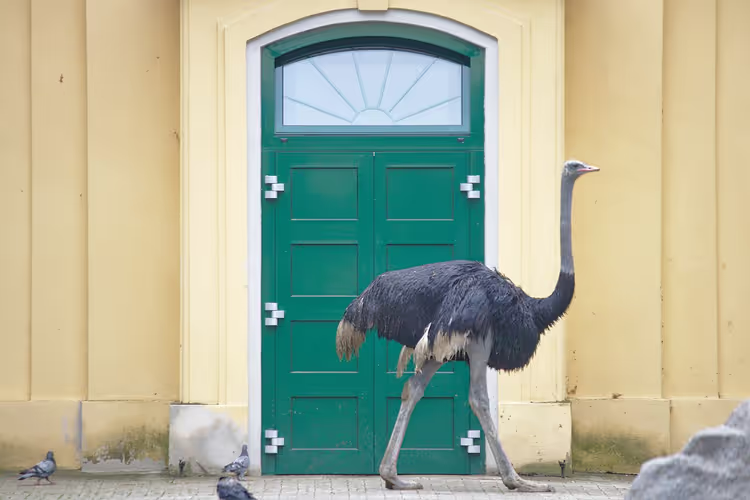 © Paul Korecky · CC BY-SAPhoto: Paul Korecky, CC BY-SA (https://creativecommons.org/licenses/by-sa/2.0), Wikimedia Commons
Schönbrunn Zoo (Tiergarten Schönbrunn) opened in 1752 and is considered the oldest zoo in the world still in operation. It occupies part of the Schönbrunn Palace park, so a walk along the imperial avenues is easy to combine with viewing the enclosures. Today it houses animals of more than 500 species, from giant pandas to polar bears (as of: 09/2026, official website).
The zoo is open daily from 9:00, including weekends and holidays. Closing time varies by season and stays between 4:30 PM and 6:30 PM, ticket offices close half an hour before closing (as of: 09/2026, zoo visit page). Come at opening. By midday the largest crowd gathers at the panda pavilion.
- Getting there: take the U4 to Hietzing station, then about 15 minutes on foot to the main entrance (see map).
- Cost: buy your ticket online in advance, check the price on the official website.
- Who it's for / Not for: for families with children and animal lovers; for those coming only for architecture, the zoo will take up extra time.
- The catch: the attraction is very popular, in summer the main entrance gets crowded.
2. Schönbrunn Palace
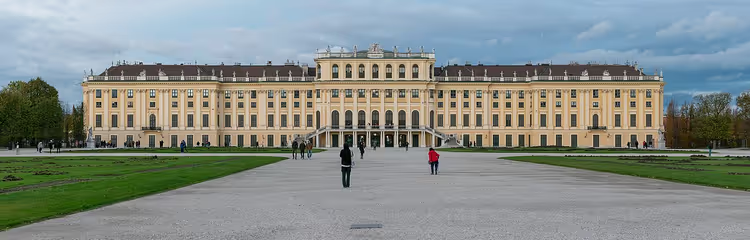 © Tournasol7 · CC BY-SAPhoto: Tournasol7, CC BY-SA (https://creativecommons.org/licenses/by-sa/4.0), Wikimedia Commons
Schönbrunn Palace served as the summer residence of the Habsburgs, and together with its park it is a UNESCO World Heritage Site. The Baroque ensemble was built in the mid-18th century, today the state rooms house a museum (as of: 09/2026, official website). Come in the morning: by lunchtime a line forms at the ticket offices.
The park itself is free. The gates open at 6:30 and close at dusk (as of 09/2026, park opening hours). An avenue climbs from the palace up to the Gloriette, which offers a panoramic view of the city. Along the way you pass the Roman ruins, a hedge maze, and a palm house.
- How to get there: take the U4 to Schönbrunn station; the palace is about a five-minute walk from the metro (see map).
- Cost: the park is free; the palace, maze, and palm house are paid separately.
- Who it's for / Not for: for those who want to see a palace and a large garden in one visit; not for those who only want to stroll along the avenues.
- The catch: the path to the Gloriette climbs uphill; bring water in hot weather.
3. Burggarten palace park
 © Base · CC BY-SAPhoto: Base, CC BY-SA (https://creativecommons.org/licenses/by-sa/4.0), Wikimedia Commons
Burggarten lies between the Hofburg and the Albertina museum, right in the city center. The garden was laid out as a private park for Emperor Francis I and opened to the public only in 1919 (as of 09/2026, Vienna tourist portal). Today it is a quiet English-style green space with lawns, linden trees, and chestnuts.
A monument to Mozart stands in the center of the park, with a treble clef planted in flowers in front of it. Deeper in you will find a marble monument to Franz Joseph, and the pond is adorned with a fountain featuring a sculpture of Hercules. Among the buildings, the Art Nouveau Palm House stands out: under its iron frame is a collection of exotic plants across three climate zones.
- How to get there: about a ten-minute walk from Stephansplatz through the Hofburg (see map).
- Cost: free entry.
- Who it's for / Not for: for a break in the center; not for those looking for a long walk in nature.
- The catch: the green space is small; a leisurely walk around takes about half an hour.
4. University of Vienna botanical garden
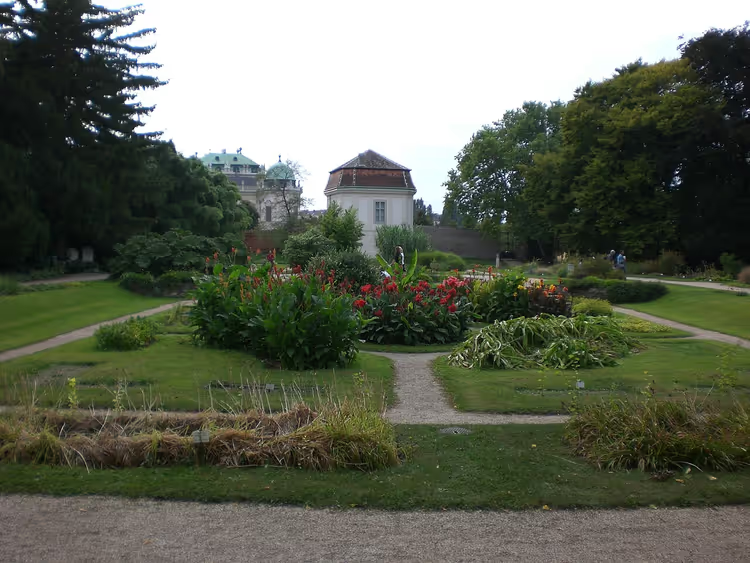
The Botanical Garden of the University of Vienna was founded by Empress Maria Theresa in the mid-18th century. At first, medicinal plants were grown here for medical students. Today more than ten thousand species from around the world are cultivated outdoors: centuries-old trees, alpine meadows, a bamboo grove, cacti, and agaves.
The garden is in the third district, next to the Belvedere palace. You can walk through it in an hour and see vegetation from several climate zones without a ticket. The grounds are open during daylight hours, and entry is free.
- How to get there: take the tram to Rennweg stop, then a few minutes on foot (see map).
- Cost: free entry.
- Who it's for / Not for: for botany lovers and those who enjoy quiet walks; not for those expecting attractions.
- The catch: the garden is compact; less than an hour is enough.
5. Augarten park
 © C.Stadler/Bwag · CC BY-SAPhoto: C.Stadler/Bwag, CC BY-SA (https://creativecommons.org/licenses/by-sa/4.0), Wikimedia Commons
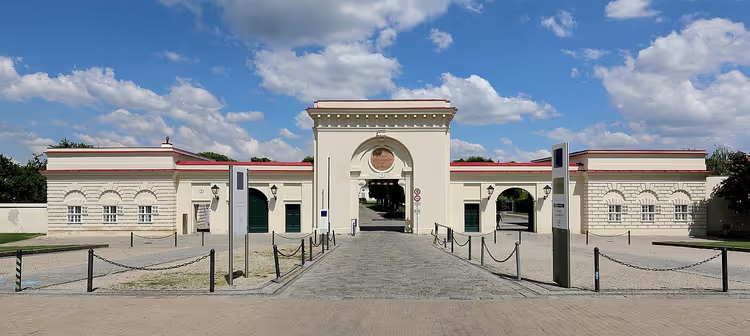
Augarten is considered Vienna's oldest public garden. Its broad chestnut avenues and gravel paths were opened to townspeople of all classes at the end of the 18th century, making the park the city's first recreational space of its kind. Mozart, Beethoven, and Strauss gave concerts in the baroque Augarten Palace.
Other halls of the palace housed workshops of the Vienna porcelain manufactory. Today a porcelain museum operates here and is worth a separate visit. Two massive World War II flak towers rise above the avenues; ammunition was stored inside them.
- How to get there: take the U2 to Taborstraße station, then about a ten-minute walk (see map).
- Cost: park entry is free; the porcelain museum is paid.
- Who it's for / Not for: for those who want to see a historic garden away from the crowds; not for those looking for flashy attractions.
- The catch: the two flak towers stand right among the lawns and clash with the park scenery.
6. Hirschstetten Botanical Garden
 © Invisigoth67 · CC BY-SAPhoto: Invisigoth67, CC BY-SA (https://creativecommons.org/licenses/by-sa/3.0), Wikimedia Commons
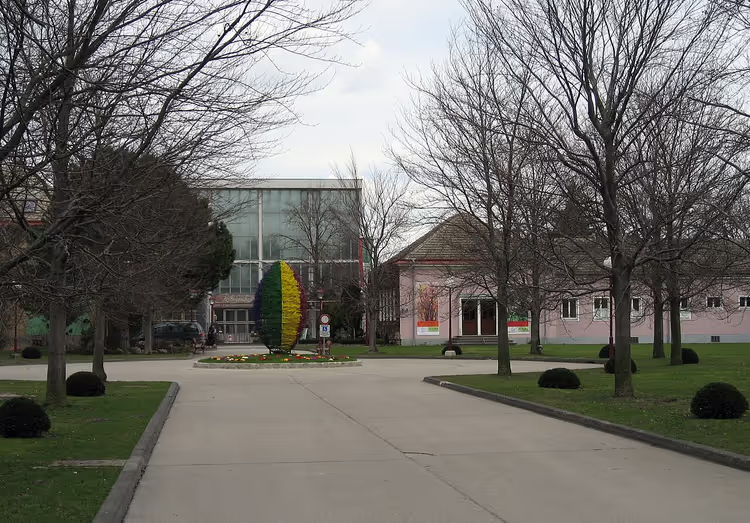
Hirschstetten Botanical Garden is entirely devoted to flowers. It was established to grow plants for greening all of Vienna, and today the grounds are divided into themed zones: English, Indian, Asian, Mexican, palm, and even a primeval garden. The site covers about six hectares.
In spring and summer, tens of thousands of flowering plants are on display here, including around a million tulips. People come here specifically for the flower beds and landscape compositions, not for architecture.
- How to get there: the garden is in the 22nd district; from the center it takes about half an hour by metro and bus (see map).
- Cost: free entry.
- Who it's for / Not for: for those who love garden design; not for those whose plans cover only central Vienna.
- The catch: getting to the garden from the center takes noticeably longer than reaching the parks in the first district.
7. Belvedere
 © Chris Koerner from St. Louis, USA · CC BY-SAPhoto: Chris Koerner from St. Louis, USA, CC BY-SA (https://creativecommons.org/licenses/by-sa/2.0), Wikimedia Commons
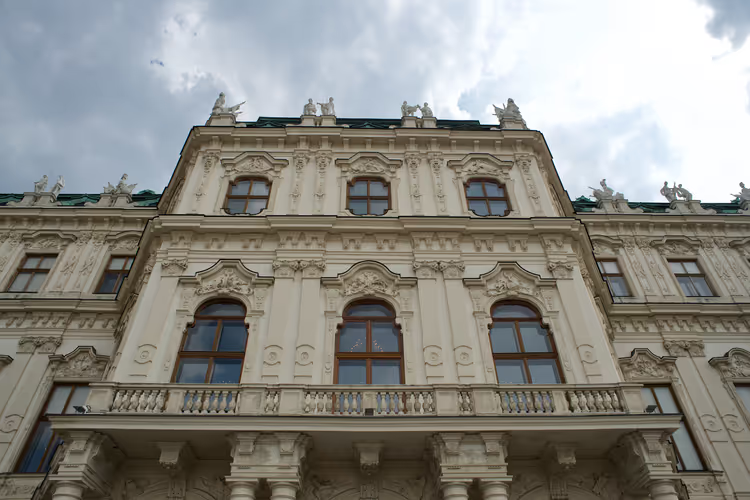
The Belvedere was built as the residence of Prince Eugene of Savoy in the 18th century. The complex consists of two Baroque palaces with a formal French-style garden between them. The paths run in strict straight lines, the terraces are connected by staircases, and the garden is decorated with fountains and sculptures.
The park stretches along the slope for about a kilometer. At every step you come across marble nymphs, muses, and sphinxes that adorn the terraces. After your walk, go inside: the Upper Belvedere houses Austrian paintings, including works by Klimt (as of 09/2026, official website).
- How to get there: by tram to the Unteres Belvedere stop, then on foot (see map).
- Cost: the garden between the palaces is open free of charge, tickets are required for the museums (as of 09/2026, Belvedere museum tickets).
- Who it's for / Not for: for those who want to combine gardens and art; not for those who only want flower beds.
- The catch: the garden is long and open, with little shade on the paths on a hot day.
8. Kurpark Oberlaa
 © HeinzLW · CC BY-SAPhoto: HeinzLW, CC BY-SA (https://creativecommons.org/licenses/by-sa/3.0/at/deed.en), Wikimedia Commons
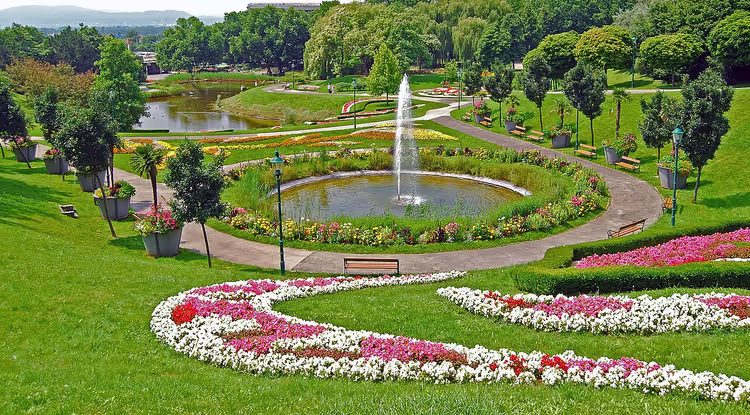
Kurpark Oberlaa was laid out in the 1970s for the Vienna International Garden Show. Today it is a large arboretum park of about one square kilometer in the south of the city. It has lawns with loungers, ponds with fountains, palm planters, and groves of exotic trees.
The park sits on hills, so the paths rise and fall. Between them are flower labyrinths and shrubs, and the trunks of tall trees are covered with ivy. The result is a walk through what feels almost like a forest, just with well-kept paths.
- How to get there: take the U1 to Oberlaa station, then walk to the entrance (see map).
- Cost: free entry.
- Who it's for / Not for: for a long, peaceful walk; not for those looking for a short stop in the center.
- The catch: getting to Kurpark Oberlaa from the center takes about half an hour by metro (see map).
9. Vienna Woods
 © by myself in june 2005 · CC BY-SAPhoto: by myself in june 2005, CC BY-SA (http://creativecommons.org/licenses/by-sa/3.0/), Wikimedia Commons
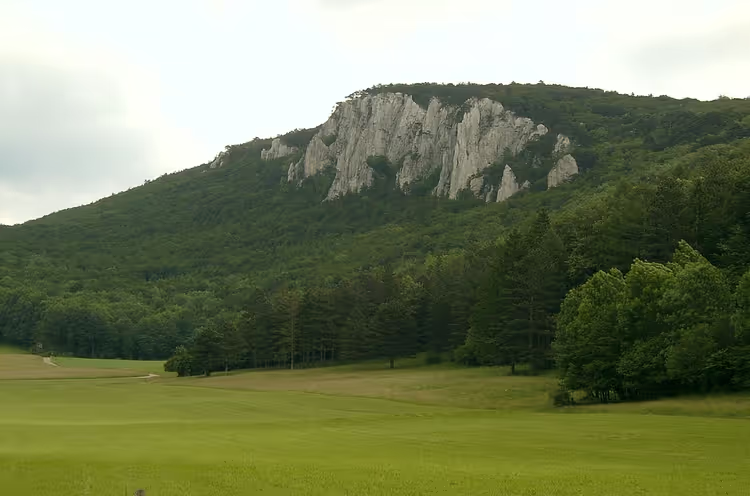
The Vienna Woods begin just beyond the city limits and stretch south in a wide semicircle. The area covers more than a thousand square kilometers and spans seven districts of Vienna, which is why locals call it the city's green lungs. Here you will find vineyards, villages, monasteries, and medieval fortresses.
The best views open up from the Leopoldsberg and Kahlenberg hills. From there you can see all of Vienna as far as the Danube. Marked routes let you go on foot or by bike, and trails lead deeper into the forest to Liechtenstein Castle on a mountaintop.
- How to get there: by suburban train or bus to stations near the city limits (see map).
- Cost: walks are free.
- Who it's for / Not for: for those who want a full day in nature; not for those who only have half a day.
- The catch: the forest is huge, and without a map and a plan you can easily lose extra hours on the way.
10. Stadtpark city park
 © Paul Korecky · CC BY-SAPhoto: Paul Korecky, CC BY-SA (https://creativecommons.org/licenses/by-sa/2.0), Wikimedia Commons
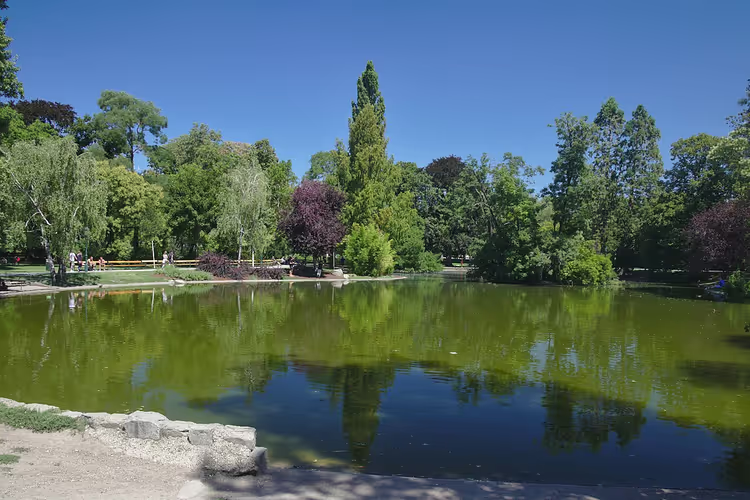
Stadtpark was established in the second half of the 19th century near the historic center. The park draws visitors with its lawns, vine-covered pavilions, flower beds, and a pond with ducks. Here you can stroll along shady paths, rest on a bench, and have a picnic without the city noise.
Monuments to Austrian composers, artists, and writers are placed throughout the park. The most famous one depicts Johann Strauss with a golden violin in his hands. Nearby stands the Kursalon in the Italian Renaissance style, where classical concerts still take place.
- How to get there: take the U4 to Stadtpark station, the exit leads directly to the park (see map).
- Cost: free entry.
- Who it's for / Not for: for a break between the Ring and the Belvedere; not for those expecting large open spaces.
- The catch: the park stretches along the Ring as a narrow strip, so finding solitude here is difficult.
11. Prater amusement park
 © Christian Barth · CC BY-SAPhoto: Christian Barth, CC BY-SA (https://creativecommons.org/licenses/by-sa/3.0/at/deed.en), Wikimedia Commons
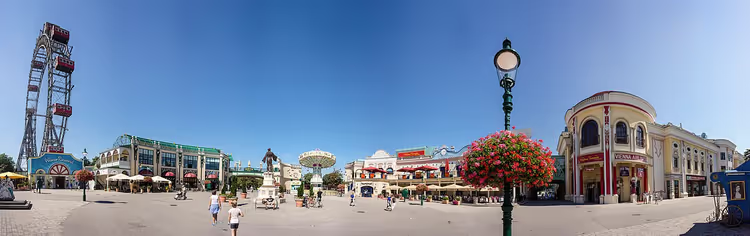
The Prater is considered one of the oldest amusement parks in the world. Green wooded areas, shady paths, and lawns sit alongside it, while the amusement zone buzzes at its center. The grounds feature go-karts, carousels, trampolines, mazes, and sports areas, so both children and adults will find something to do.
The Prater's recognizable symbol, the Wiener Riesenrad Ferris wheel, was built in 1897 (as of 09/2026, official website). It stands about 65 meters tall, and its fifteen red cars resemble streetcars from a bygone era. Inside the cabins there are wooden benches.
- How to get there: take the U1 or U2 to Praterstern station, then a few minutes on foot (see map).
- Cost: park entry is free, each ride is paid separately.
- Who it's for / Not for: for families and ride enthusiasts; not for those seeking quiet and nature.
- The catch: on weekends and in the evening, the amusement area is very busy.
12. Setagaya Park
 © Robot8A · CC BY-SAPhoto: Robot8A, CC BY-SA (https://creativecommons.org/licenses/by-sa/4.0), Wikimedia Commons
Setagaya Park was designed by Japanese landscape architect Ken Nakajima in 1992 (as of 09/2026, official website of the City of Vienna). The garden became a symbol of friendship between Austria and Japan and received a Japanese design. Here you can see a tea house, a pond with a waterfall, stone boulders, and delicate bridges.
The garden is located in the 19th district and occupies a small area. In spring it turns into a kaleidoscope of bright colors, but autumn here is also peaceful. Near the main entrance stands a stone monument with a Japanese inscription.
- How to get there: by tram to the 19th district, a few minutes' walk from the stop (see map).
- Cost: free entry.
- Who it's for / Not for: for lovers of Japanese gardens and quiet; not for those looking for scale.
- The catch: the garden is small, a visit takes less than an hour.
13. Kahlenberg Rope Park
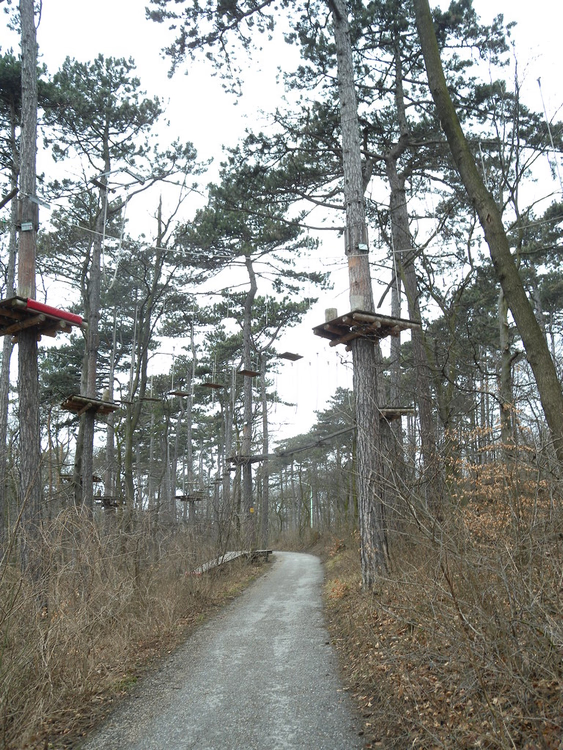 © Tauralbus · CC BYPhoto: Tauralbus, CC BY (https://creativecommons.org/licenses/by/2.0/), Flickr
Kahlenberg Rope Park operates among the hills of Kahlenberg and Leopoldsberg. It is a forest rope course with routes of varying difficulty, from simple children's routes to athletic ones. The courses are set at heights from one to twenty meters above the ground.
The obstacles require agility and endurance, so before you start you go through a short briefing. Instructors supervise you, and a safety system works along the entire route. The courses suit both adults and children.
- How to get there: by bus from Heiligenstadt station to the Kahlenberg area (see map).
- Cost: entry by ticket, check the price on site.
- Who it's for / Not for: for active recreation and families; not for those who are afraid of heights.
- The catch: the subway does not go to the park, you will have to take a bus.
14. Donaupark
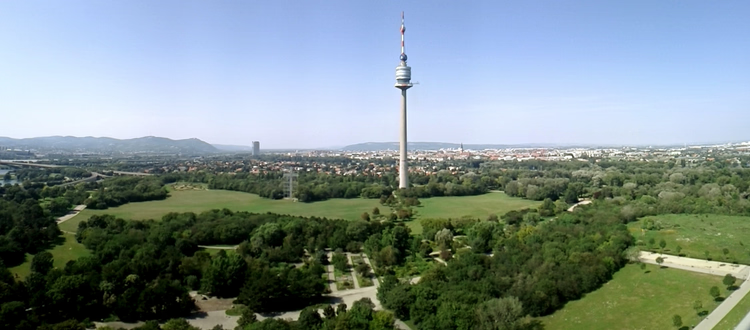 © BambooBeast · CC BY-SAPhoto: BambooBeast, CC BY-SA (https://creativecommons.org/licenses/by-sa/3.0), Wikimedia Commons
Donaupark spreads between the branches of the Danube and is considered Vienna's second largest green area. The park was laid out in the 1960s on the site of a former landfill, so it also became an environmental project. Today there are meadows with roses and irises, picnic lawns, and a pond with swans.
The infrastructure is designed for active recreation: playgrounds, sports and children's areas, running and skating paths, courts, and chess tables. The Danube Tower, Vienna's tallest structure, rises above the park. Inside there is an observation deck and two revolving restaurants.
- How to get there: take U1 to Kaisermühlen station, then walk to the park (see map).
- Cost: free entry.
- Who it's for / Not for: for sports and picnics with children; not for those looking for old architecture.
- The catch: the Danube lies between the center and the park, so the trip takes time.
15. Rathauspark
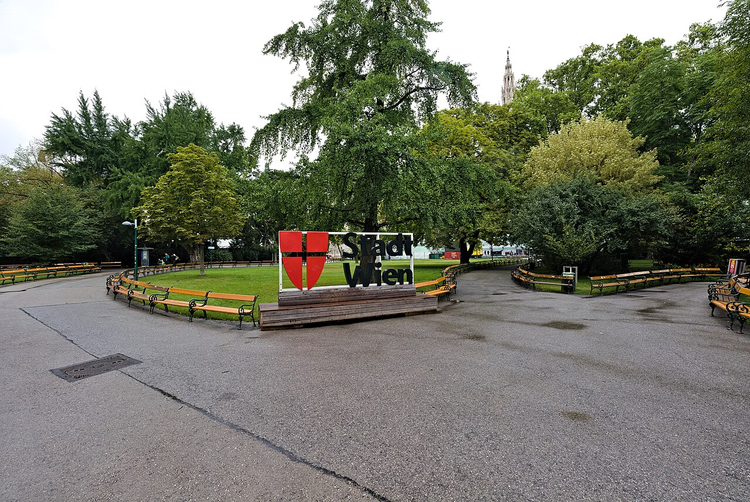
Rathauspark opened in 1873 next to the neo-Gothic building of Vienna City Hall (as of 09/2026, official website of the City of Vienna). The park is laid out in the style of an English garden and is divided into two symmetrical parts. Century-old beeches, plane trees, metasequoias, and ginkgoes grow here.
Benches arranged in long rows stand along both sides of the paths. Two identical fountains with stone islands shoot high jets of water. In winter, a Christmas market operates on the square in front of the city hall, and in summer concerts and festivals take place here.
- How to get there: take U2 to Rathaus station, the exit leads to the park (see map).
- Cost: free entry.
- Who it's for / Not for: for a walk in the center and the winter market; not for those seeking solitude.
- The catch: the square in front of the park is constantly occupied by events, and in summer it is crowded here.
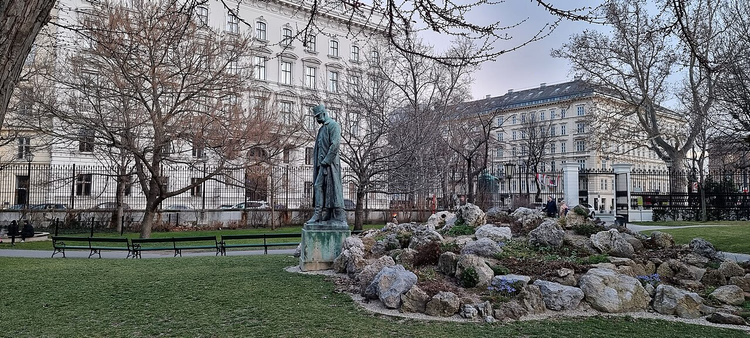
16. Sigmund Freud Park
Sigmund Freud Park lies between the University of Vienna and the Gothic Votivkirche church. It's a small green corner in the center, known for its summer relaxation. From June, loungers are brought here every morning, and both tourists and locals relax on them for free (as of 09/2026, Vienna tourism portal).
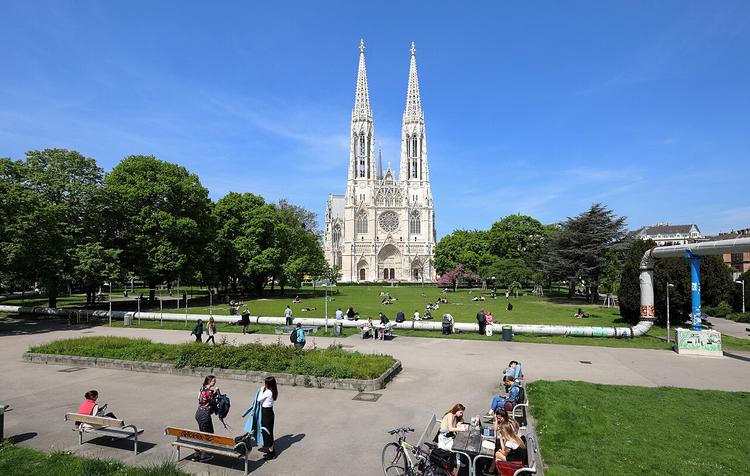 © C.Stadler/Bwag · CC BY-SAPhoto: C.Stadler/Bwag, CC BY-SA (https://creativecommons.org/licenses/by-sa/4.0), Wikimedia Commons
Paths and sprawling trees create a calm atmosphere even next to a busy avenue. In the center stands an unusual sculpture: a massive granite table with square chairs. The monument is dedicated to the expansion of the European Union.
- How to get there: take the U2 to Schottentor station, then a couple of minutes on foot (see map).
- Cost: free entry, free loungers.
- Who it's for / Not for: for a short break in the heat; not for those coming for sightseeing.
- The catch: the park is small and squeezed between streets, there's nothing to keep you here for long.
17. Lainzer Tiergarten nature reserve
 © Valentin Panzirsch · CC BY-SAPhoto: Valentin Panzirsch, CC BY-SA (https://creativecommons.org/licenses/by-sa/3.0/at/deed.en), Wikimedia Commons
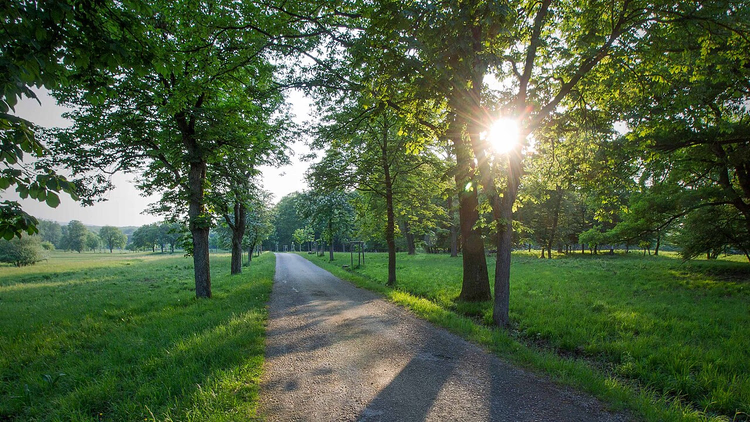
The Lainzer Tiergarten nature reserve begins on the approaches to the Vienna Woods, still within the city limits. This was once imperial hunting grounds, and since 1919 the area has been open to everyone. Today the reserve is home to wild boar, hares, deer, and alpine newts.
The forest is crisscrossed by a network of walking trails that are pleasant to explore with children. A separate section has a playground with swings and wooden slides for them. The reserve's main building, Hermes Villa, appeared in the late 19th century for Empress Elisabeth.
- How to get there: take a bus from Hietzing station to the reserve entrance (see map).
- Cost: free entry.
- Who it's for / Not for: for forest walks and wildlife watching; not for those short on time.
- The catch: the reserve is large, and without a map it's easy to wander far from the exit.
Vienna parks on the map
We've marked all 17 parks on a single map. Open it on your smartphone and plan your route by district.
Parks of Vienna
Places on the map
- 1Schönbrunn Zoo Oldest working zoo in the world, over 500 animal species
- 2Schönbrunn Palace Summer residence of the Habsburgs, a UNESCO site
- 3Burggarten Quiet English-style square with a Mozart monument
- 4Botanical Garden of the University of Vienna Over ten thousand plant species from different climate zones
- 5Augarten Vienna's oldest public garden with a baroque palace
- 6Hirschstetten Botanical Garden Themed garden zones, about a million tulips
- 7Belvedere Residence of Prince Eugene of Savoy with a formal park
- 8Kurpark Oberlaa Dendrological park in the south of the city, about 1 km² in area
- 9Vienna Woods Forest area beyond the city limits, views from the Kahlenberg
- 10Stadtpark Lawns, a duck pond and a monument to Johann Strauss
- 11Prater The 1897 Wiener Riesenrad Ferris wheel
- 12Setagaya Park Japanese garden with a teahouse and waterfall
- 13Donaupark Park between the arms of the Danube with the Danube Tower
- 14Rathauspark English garden by the town hall, winter Christmas market
- 15Sigmund Freud Park Small square with free summer sun loungers
- 16Lainzer Tiergarten Former imperial hunting grounds, wild boar and deer
⁉️🤔 Frequently asked questions
When is the best time to visit Vienna's parks?
The best time for Vienna's parks starts in late spring and early summer. In this season, tulips bloom in Hirschstetten, and Schönbrunn's avenues are full of greenery. July and August bring heat, so you choose mornings or the shade of the Vienna Woods. In autumn there are fewer tourists, and walks are more peaceful.
Is entry to Vienna's parks paid?
Most of Vienna's parks are free. Burggarten, Stadtpark, Augarten, Rathauspark, and Sigmund Freud Park are open to everyone without a ticket. You only pay for entry to major attractions: Schönbrunn Zoo, the Belvedere museums, Prater rides, and the Ferris wheel. The cable car up Kahlenberg is also paid.
How do you get to the Vienna Woods without a car?
You can reach the Vienna Woods by city railway or bus. It's convenient to get off at stations on the city's edge and continue along marked routes. The viewpoints on Leopoldsberg and Kahlenberg hills are accessible by bus from Heiligenstadt station. You don't need to take a private car for this.
What can you do in Vienna's parks with children?
With children, choose parks with playgrounds and rides. At Schönbrunn Zoo, kids watch pandas and polar bears; at the Prater, they ride carousels. Donaupark offers play and sports areas, and the Lainzer Tiergarten nature reserve has wooden slides and swings. The Kahlenberg rope park has courses of varying difficulty.
Can you visit Vienna's parks in winter?
Yes, most of Vienna's parks are open year-round, but Setagaya Park operates seasonally. In winter, gardens look more modest, but you walk without summer crowds. A Christmas market operates on the square in front of the city hall, and Schönbrunn Zoo welcomes guests even during the holidays. Bring warm clothing; it's windy in the Vienna Woods in winter.
In short: what's worth booking
- If you have one day: Schönbrunn, with the palace, park, and zoo nearby.
- If you're with children: the Prater and Donaupark.
- If you're looking for quiet: the Vienna Woods, Lainzer Tiergarten, and Kurpark Oberlaa.
- If you love painting: Upper Belvedere and its garden.
Check opening hours before heading out; they change by season. Bring comfortable shoes and plan your route by district.

A small editorial team writing guides for independent travel. We travel ourselves, but we haven’t been everywhere, so we check prices, opening hours and how to get there against official sources.