
















One day in Vienna: a route through the main sights without rushing
Twenty-four hours in Vienna is genuinely enough time to make the trip worthwhile. The historic center is compact, and the metro gets you to the palaces in 15 to 20 minutes. The palace parks are free to enter, and you can walk through them during daylight hours.
A free day in an unfamiliar city can easily turn into running between ticket offices. We put together this route using official museum websites and arranged the stops so you don't zigzag through the center twice.
Below are Vienna's main sights, from the emperors' summer residence to the Ferris wheel in the Prater.
Ad: this article contains affiliate links, we earn a commission if you book through them, at no extra cost to you.
What to see in Vienna in one day
Vienna fits its main landmarks into one long day on foot and by metro. In the morning you head out to the palaces, in the afternoon you walk through the center, and in the evening you return to the Prater.
💡 In short:
- Start with Schönbrunn at opening time: by midday it's already crowded.
- In the afternoon, walk through the center from Hofburg to St. Stephen's Cathedral.
- Buy palace and museum tickets online, ticket offices eat up time.
- Prices and opening hours: 09/2026, verified on the official Schönbrunn website
Schönbrunn Palace
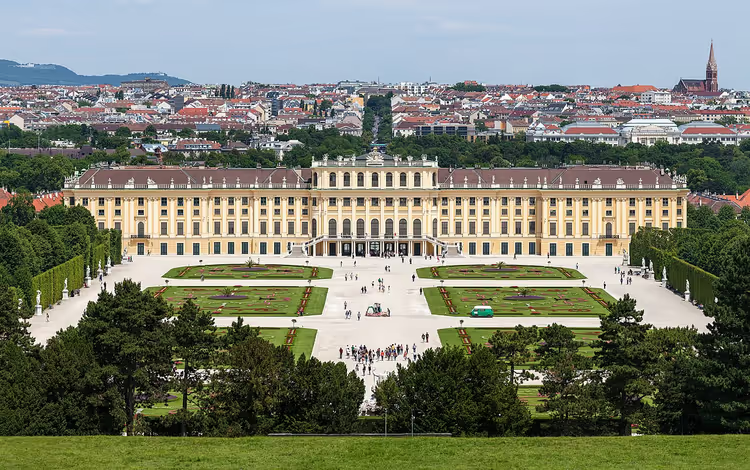
The Habsburgs' summer residence stands in the western part of the city. The palace was built in the late 17th century, and under Maria Theresa it became the main imperial residence. The renovation under Maria Theresa was led by the architect Pacassi.
 © Thomas Wolf , www.foto-tw.de · CC BY-SAPhoto: Thomas Wolf , www.foto-tw.de, CC BY-SA (https://creativecommons.org/licenses/by-sa/3.0/de/deed.en), Wikimedia Commons
The state rooms are open to tourists, but entry is by timed slots. Get a morning ticket: by midday a line forms at the entrance. You can walk the park area with the Neptune Fountain and the Gloriette for free, park entry is open (as of: 09/2026, schoenbrunn.at).
- Price: book palace tickets in advance, the ticket office is slower and more expensive.
- Not for: if you only want the park, you don't have to pay for the palace.
If you want to get in without waiting, a tour with fast-track palace entry is a good fit.
Belvedere palace complex
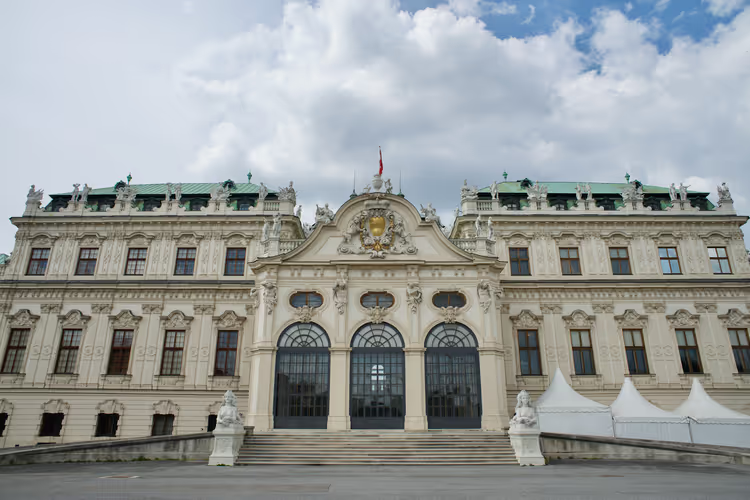
Belvedere was built for Prince Eugene of Savoy by the architect Johann Lukas von Hildebrandt. The complex consists of two palaces: the Upper for receptions and the Lower for living quarters. The park between them was laid out in the 18th century.
 © Chris Koerner from St. Louis, USA · CC BY-SAPhoto: Chris Koerner from St. Louis, USA, CC BY-SA (https://creativecommons.org/licenses/by-sa/2.0), Wikimedia Commons
Today the Upper Belvedere houses Gustav Klimt's "The Kiss" and Austrian art from the Middle Ages to modernism. Entry is by timed admission. You can enter the park freely.
- Price: a ticket to the Upper Belvedere is 23 € (as of: 09/2026, official website).
- Who it's for: if you're interested in Klimt and Viennese modernism.
St. Stephen's Cathedral
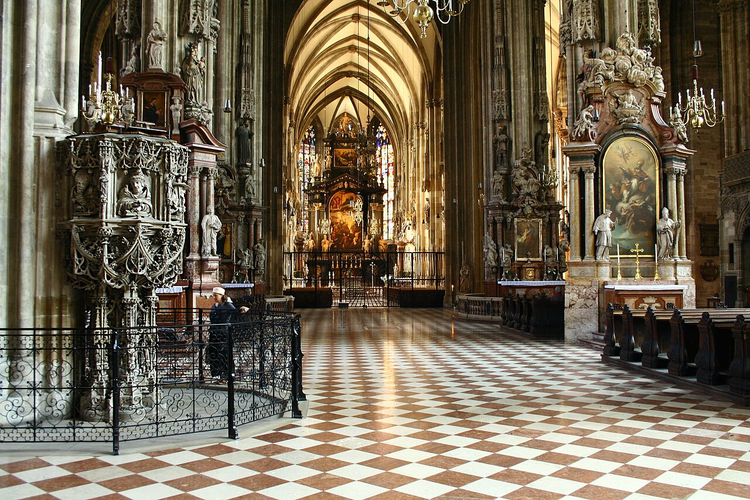
Stephansdom stands in the very center, and its south tower is visible from almost everywhere. The cathedral was built starting in the 12th century, and the Pagan Towers were made from stone taken from old Roman structures. The Pummerin bell was cast from a captured Turkish cannon.
 © Mario Modesto Mata · CC BY-SAPhoto: Mario Modesto Mata, CC BY-SA (https://creativecommons.org/licenses/by-sa/3.0), Wikimedia Commons
You climb the South Tower via 343 steps, and from there you get a view of the tiled roof and the whole city. The tower is open from 9:00 to 19:00, with the last ascent at 18:15 (as of 09/2026, stephanskirche.at). Entry to the cathedral itself is free, but during mass tourists are asked not to disturb the service.
- Price: South Tower climb 8 € (as of 09/2026, cathedral's official website).
- The catch: 343 steps with no elevator; there is a lift only on the North Tower.
Hofburg palace complex
For centuries the Hofburg served as the Habsburg residence, which is why it has no single architectural style. Each emperor added to the complex to suit his own needs. Today the palace houses museums: the Imperial Apartments, the Silver Collection, and the Treasury.
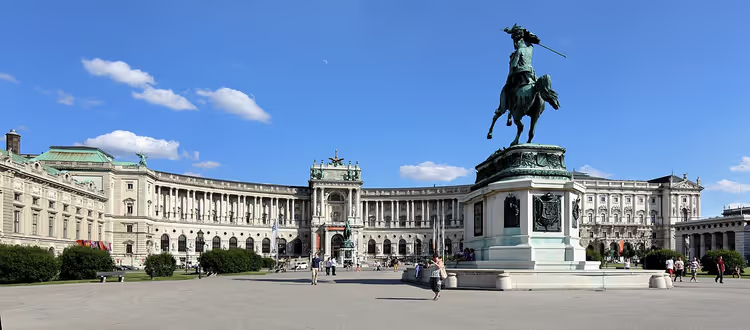 © C.Stadler/Bwag · CC BY-SAPhoto: C.Stadler/Bwag, CC BY-SA (https://creativecommons.org/licenses/by-sa/3.0/at/deed.en), Wikimedia Commons
You won't be able to see everything in one day, so pick one area: the apartments or the Treasury with the crown of the Holy Roman Empire. Tickets for different sections are sold separately, and opening hours vary by season (as of 09/2026, hofburg-wien.at).
- Who it's for: if you want to see the imperial crown and the silver tableware.
- Not for: if you're short on time, the Hofburg can easily eat up your whole day.
For guided tours of the palace, see GetYourGuide.
Hundertwasser House
The Hundertwasser House residential building was completed in 1985 based on the ideas of the artist Friedensreich Hundertwasser. He rejected straight lines and geometry, so the facade turned out uneven and multicolored. The architect Josef Krawina is recognized as a co-author of the project.
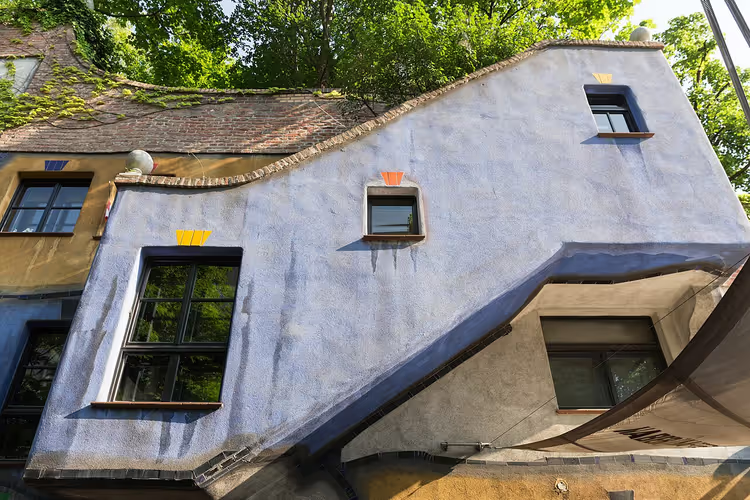 © Pymouss · CC BY-SAPhoto: Pymouss, CC BY-SA (https://creativecommons.org/licenses/by-sa/4.0), Wikimedia Commons
The building has around fifty apartments, and the roof features a garden with trees. Outsiders are not allowed inside: people live there, and the law protects their privacy. You have to view the building from outside, and there is usually a crowd of tourists at the facade. On a one-day itinerary, the house is an optional stop if you have time left.
- Who it's for: those who want to see unusual architecture.
- The catch: you can't go inside; only the facade is accessible.
Vienna City Hall
The City Hall was built in the 1870s-1880s to a design by the architect Friedrich von Schmidt. The building combines neo-Gothic style with eclectic elements. The 105-meter tower is topped by the figure of the standard-bearer Rathausmann (as of 09/2026, Vienna tourist office).
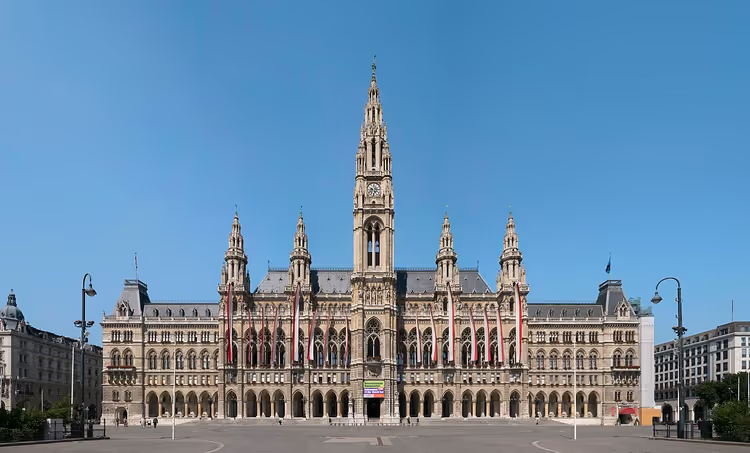 © Thomas Ledl · CC BY-SAPhoto: Thomas Ledl, CC BY-SA (https://creativecommons.org/licenses/by-sa/4.0), Wikimedia Commons
Entry is free, and the ceremonial hall is open to visitors during daytime hours. Guided tours run on Mondays, Wednesdays, and Fridays, starting at 13:00 (as of 09/2026, City Hall page). In front of the City Hall there is a park, and in summer concerts and a festival take place here.
- Who it's for: if you want to peek inside a historic building for free.
- Not for: if you're strictly focused on museums, the City Hall is not a must.
Natural history museum and museum of fine arts
Two twin museums stand opposite each other on Maria Theresa Square. The buildings were constructed in the late 19th century to designs by Gottfried Semper and Karl von Hasenauer. The Museum of Fine Arts houses works by Titian, Rembrandt, Velázquez, and Bruegel.
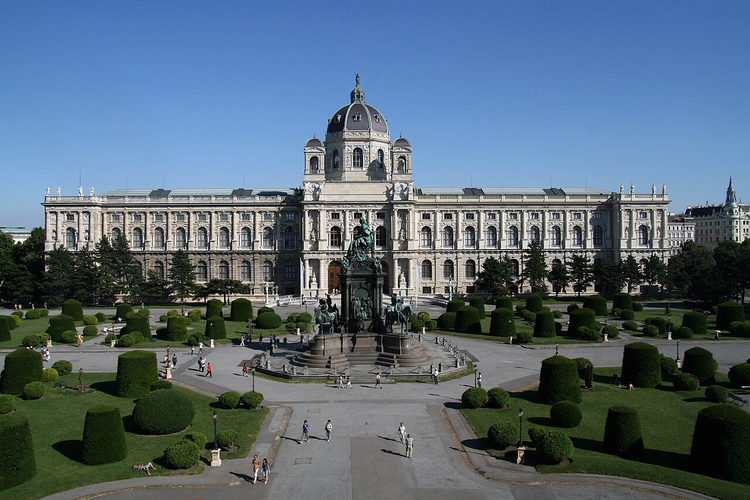 © Manfred Werner - Tsui · CC BY-SAPhoto: Manfred Werner - Tsui, CC BY-SA (https://creativecommons.org/licenses/by-sa/3.0), Wikimedia Commons
Kunsthistorisches is open Tuesday through Sunday, on Thursdays it stays open until 9:00 PM (as of 09/2026, khm.at). The museum is closed on Mondays. The neighboring Natural History Museum awaits with dinosaur skeletons and a mineral hall.
- Price: admission to Kunsthistorisches from 22 EUR (as of 09/2026, official museum website).
- Who it's for: fans of Bruegel, antiquity, and natural history.
Both museums are in the GetYourGuide tour selection.
Vienna Opera
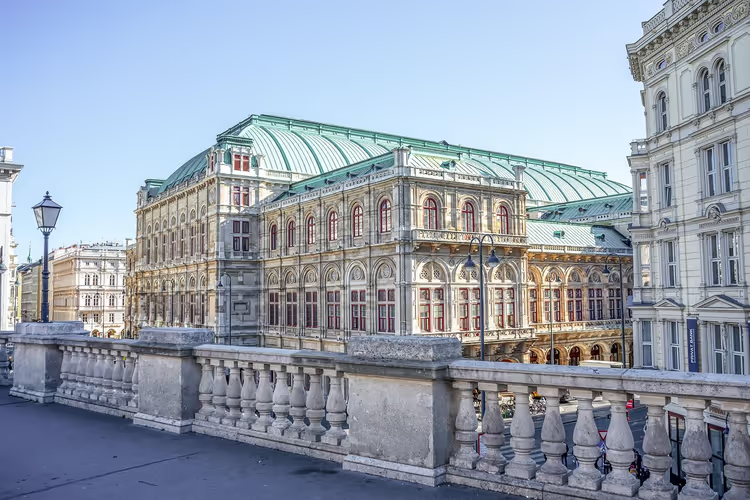
The Vienna State Opera opened in 1869 with Mozart's opera Don Giovanni. The Renaissance-style building was heavily damaged during the war and reopened in 1955. Today performances take place here almost every evening.
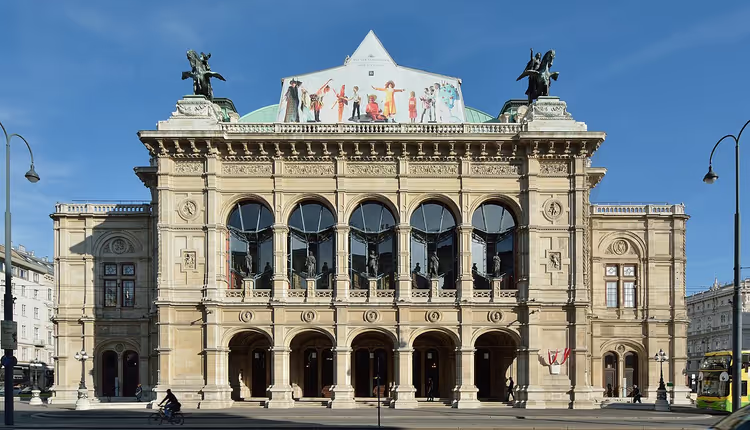 © P e z i · CC BY-SAPhoto: P e z i, CC BY-SA (https://creativecommons.org/licenses/by-sa/3.0/at/deed.en), Wikimedia Commons
During the day, the opera offers a 40-minute guided tour (as of 09/2026, wiener-staatsoper.at). Tickets for evening performances depend on the production and seat, the cheapest option is standing room in the orchestra level.
- Price: book the tour on the official website, check performance ticket prices there as well.
- The catch: evening tickets sell out in advance, they may be gone on the day of the performance.
Vienna Philharmonic
The Vienna Philharmonic performs in the Golden Hall of the Musikverein. The building was constructed in the second half of the 19th century to a design by Danish architect Theophil Hansen. The facade is neoclassical, with columns, pilasters, and sculptures.
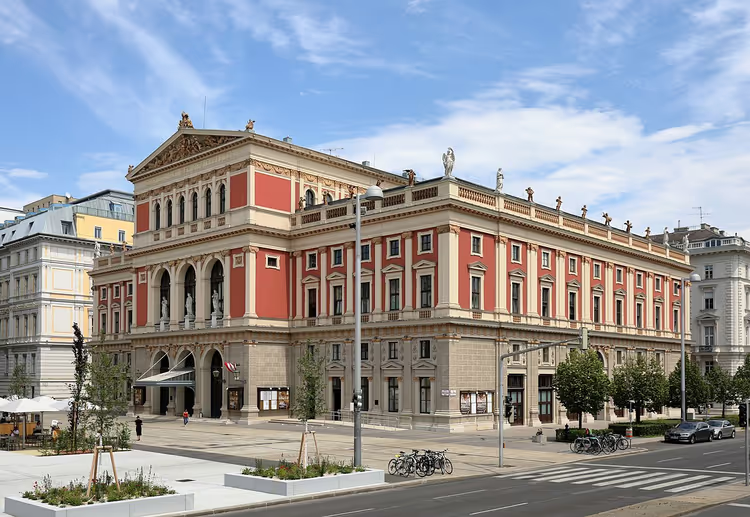 © C.Stadler/Bwag · CC BY-SAPhoto: C.Stadler/Bwag, CC BY-SA (https://creativecommons.org/licenses/by-sa/4.0), Wikimedia Commons
The hall seats over a thousand people, and its image has appeared on an Austrian coin. The box office is open on weekdays and closed on holidays (as of 09/2026, musikverein.at). Even without a concert, it's worth stepping into the foyer.
- Who it's for: those who want to hear classical music in a historic hall.
- Not for: if you've already had your fill of music after the opera.
Mozart concert in the Golden Hall.
Kärntner Strasse
Kärntner Strasse serves as Vienna's main pedestrian street. It connects Karlsplatz and St. Stephen's Cathedral and forms part of the golden semicircle together with Graben and Kohlmarkt. The route has been mentioned in documents since the 13th century.
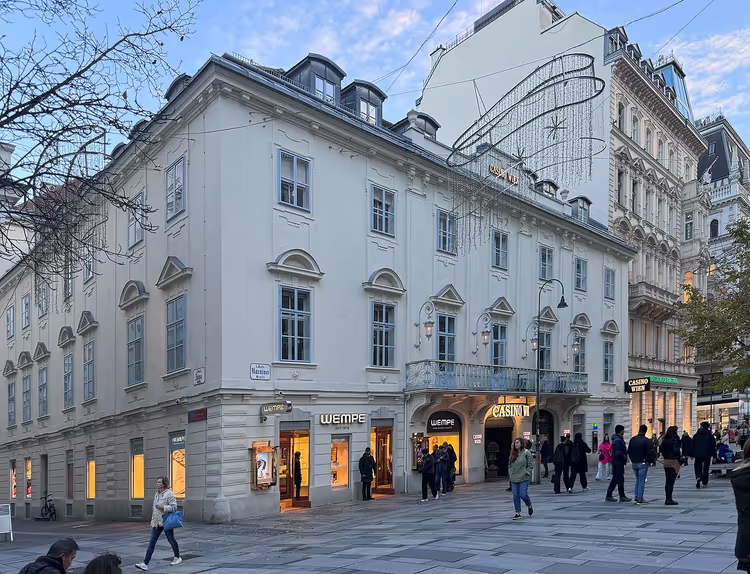 © Dguendel · CC BYPhoto: Dguendel, CC BY (https://creativecommons.org/licenses/by/4.0), Wikimedia Commons
Shops, cafes, and hotels line the street, so it's always crowded. The Esterházy and Todesco palaces stand along the street, and the opera house is visible at the far end. This is a convenient place to buy souvenirs, right on the way between two points of the route.
- Who it's for: if you want to combine a walk with shopping.
- The catch: it gets crowded on weekends, and navigating with a stroller is harder.
Neuer Markt
Neuer Markt, or New Square, served as the city market in the old days. Flour was traded here, hence the old nickname Flour Square. In the first half of the 20th century, a tram depot operated on the square.
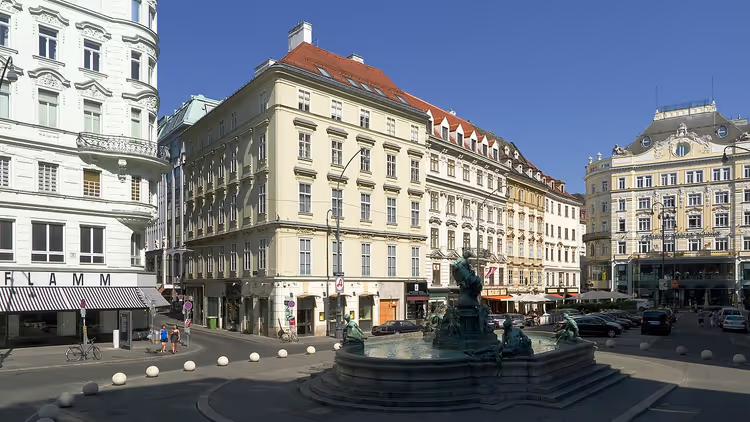
The square is adorned by the Donnerbrunnen fountain with allegorical figures of the rivers of Austria. At the center of the composition stands a sculpture of Providence. The square is small, and people usually see it in passing on the way to Graben.
- Who it's for: those walking from the Hofburg to Graben.
Plague Column
Graben Square in central Vienna served for centuries as a venue for festivals and processions. In 1679 the city survived a plague epidemic, and in gratitude for deliverance a Holy Trinity column was erected here. Locals call it the Plague Column.
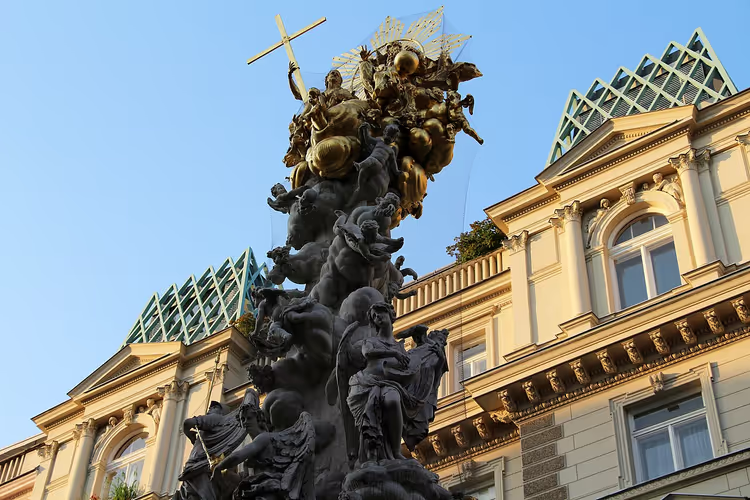 © Fred Romero from Paris, France · CC BYPhoto: Fred Romero from Paris, France, CC BY (https://creativecommons.org/licenses/by/2.0), Wikimedia Commons
The wooden marker was later replaced by a marble column with gilded angels. Johann Bernhard Fischer von Erlach and Lodovico Burnacini worked on it. The column is visible from any point on Graben, with the cathedral and Kärntner Strasse nearby.
- Who it's for: if you want to see a baroque square just steps from the cathedral.
Ferris wheel
The Ferris wheel stands at the entrance to the Prater park. Emperor Joseph II opened the Prater to the public in the 18th century, and the ride itself was built toward the end of the 19th century. The project was designed by English engineer Walter Basset.
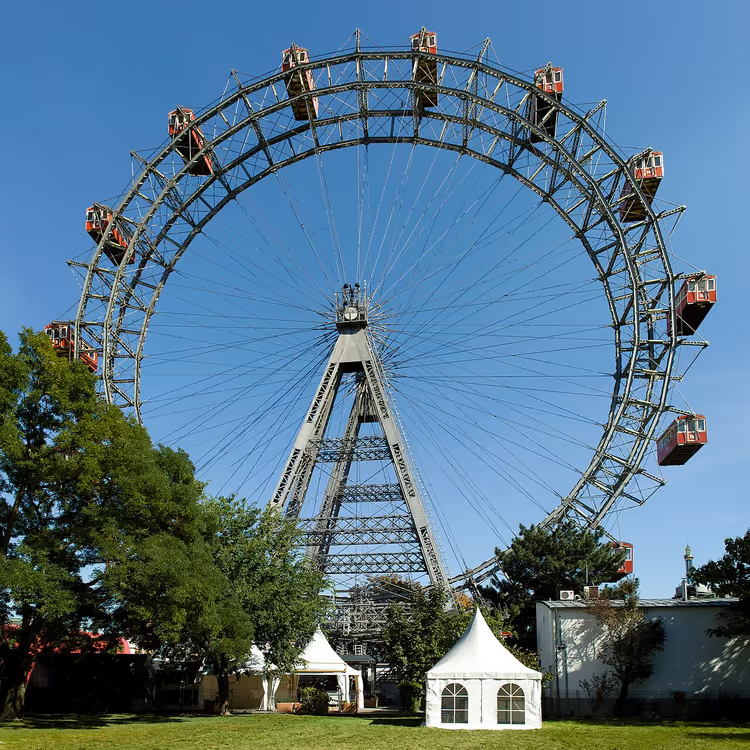 © Robert F. Tobler · CC BY-SAPhoto: Robert F. Tobler, CC BY-SA (https://creativecommons.org/licenses/by-sa/4.0), Wikimedia Commons
The wheel is 65 meters high, and one rotation takes about 20 minutes (as of 09/2026, wienerriesenrad.com). From the cabin you can see the whole city. The ride was destroyed during the war and rebuilt in 1947.
- Price: an adult ticket costs under twenty euros (as of 09/2026, official website).
- Who it's for: if you want to see Vienna from above without climbing stairs.
MuseumsQuartier
The MuseumsQuartier occupies the Neubau district next to Maria-Theresien-Platz. The quarter's axis is formed by the former imperial stables from the 18th century, converted into exhibition halls. Today it is one of the largest cultural complexes in Europe.
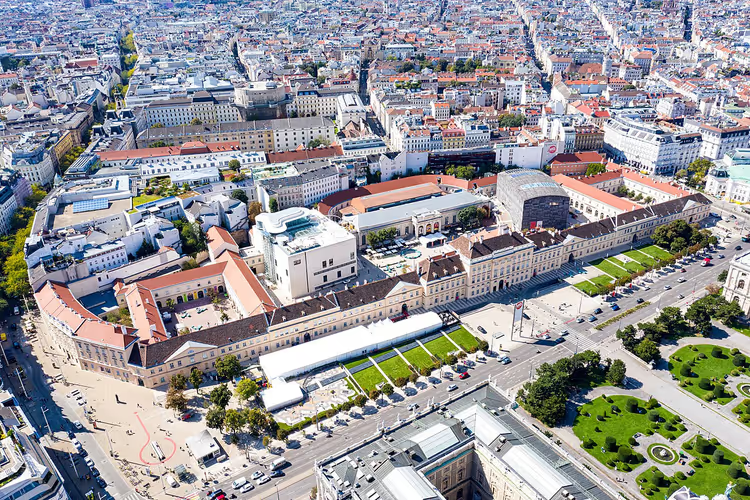 © Kasa Fue · CC BY-SAPhoto: Kasa Fue, CC BY-SA (https://creativecommons.org/licenses/by-sa/4.0), Wikimedia Commons
Inside you'll find the Leopold Museum, Kunsthalle, and the Museum of Modern Art. Their hours vary, and many stay open late on Thursdays (as of 09/2026, mqw.at). In summer, lounge chairs are set up in the courtyard, and street musicians play on the grounds. On a one-day itinerary, the quarter remains an option for free time.
- Who it's for: if you want contemporary art and a break between museums.
- Not for: if you've already had your fill of paintings for the day.
Liechtenstein Palace
The Garden Palace of the Liechtenstein family was built in the late 17th century for Prince Johann Adam Andreas I. The design was chosen through a competition that included Domenico Rossi and Domenico Martinelli. It was originally a suburban residence with a garden.
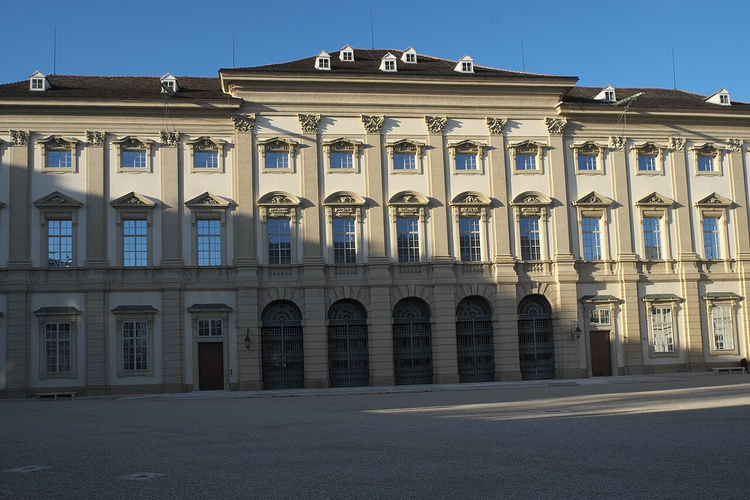 © GFreihalter · CC BY-SAPhoto: GFreihalter, CC BY-SA (https://creativecommons.org/licenses/by-sa/3.0), Wikimedia Commons
Inside there is a hall with paintings of the labors of Hercules. The palace is open to the public on a limited basis, tours are by prior arrangement, and hours vary (as of 09/2026, palace page). Check the schedule before visiting so you don't leave empty-handed. In the one-day itinerary, the palace is only an option.
- Who it's for: those who have already seen the center and want fewer tourists.
Votivkirche
Votivkirche was built in gratitude for saving Emperor Franz Joseph after the assassination attempt of 1853. His brother Maximilian made a vow to build the church. Construction ran from 1856 to 1879, designed by Heinrich von Ferstel.
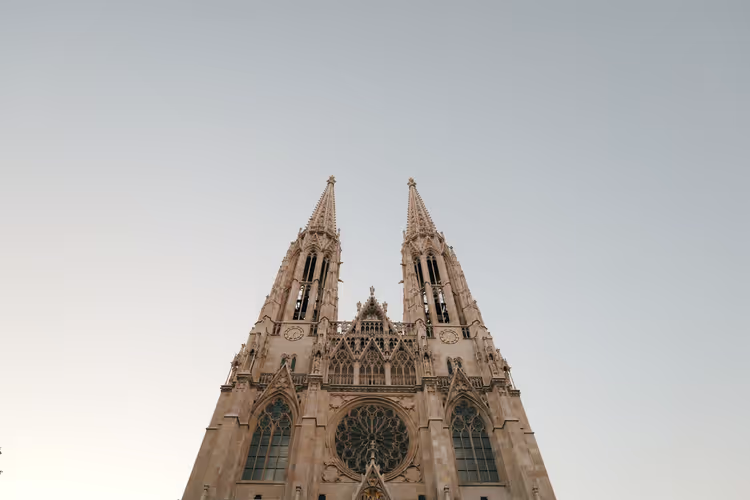
The church is neo-Gothic, with three naves inside and two 99-meter towers rising on the sides (as of 09/2026, votivkirche.at). The church is active, admission is free, and during services tourists are asked to keep quiet. Once a month on Saturdays there is a free tour. In the one-day itinerary, the church remains an option for free time.
- Who it's for: if you like Gothic architecture but don't want the line at St. Stephen's Cathedral.
One-day Vienna itinerary on the map
To avoid running in circles around the center, keep this order: morning at Schönbrunn, then Belvedere, midday the central part with the Hofburg and the cathedral, evening at the Prater. Between the palaces it's easier to take the metro; in the center, walk. Leave the Hundertwasser House, the MuseumsQuartier, the Liechtenstein Palace, and Votivkirche as options if you have time left.
What to see in Vienna in one day
Places on the map
- Schönbrunn The Habsburgs' summer residence, park with the Gloriette, park entry is free
- Belvedere Upper Belvedere with Klimt's 'The Kiss', adult ticket 23 euros
- St. Stephen's Cathedral St. Stephen's Cathedral from the 12th century, 343 steps to the South Tower
- Hofburg Habsburg residence, imperial apartments and the Treasury
- Hundertwasser House Colourful 1985 apartment building, viewing only from outside
- Vienna City Hall Neo-Gothic 1880s building with a 105 m tower, free entry
- Kunsthistorisches Museum Titian, Rembrandt, Velázquez and Bruegel on Maria-Theresien-Platz
- Natural History Museum Dinosaur skeletons and a mineral hall opposite the art museum
- Vienna State Opera 1869 state opera house, 40-minute daytime tours
- Vienna Musikverein Golden Hall of the Musikverein, façade by architect Hansen
- Kärntner Straße The main pedestrian street from Karlsplatz to the cathedral
- Neuer Markt Square with the Donnerbrunnen fountain, former flour market
- Graben and the Plague Column Holy Trinity column on Graben square marking a plague epidemic
- Giant Ferris Wheel 65 m tall wheel in Prater park, one turn takes 20 minutes
- MuseumsQuartier Former imperial stables, the Leopold Museum and modern art museum
- Votive Church 19th-century Neo-Gothic church commemorating the emperor's rescue
From Belvedere to the Hofburg you can walk through the center (see map). If you don't want to plan the connections yourself, there is a hop-on hop-off bus.
Below you can put together tickets and city tours for your day.
Tours and tickets in Vienna
Guided tours, skip-the-line tickets and activities — most offers can be cancelled free of charge.
See offers on GetYourGuideThe widget loads once you give your consent.
⁉️🤔 Frequently asked questions
Is one day enough for Vienna?
One day is enough for the essentials: Schönbrunn, Belvedere, the center with the Hofburg and the cathedral, and the Prater in the evening. Pace yourself and don't try to cover all the museums at once. Go inside one palace and one major museum; see the rest from outside. Leave the rest for your next visit.
Do I need to buy tickets in advance?
For palaces and popular museums, it's better to buy tickets online. Schönbrunn and Upper Belvedere use timed entry, and at the ticket office you lose an hour or more. St. Stephen's Cathedral and Votivkirche have free admission; you only pay to climb the tower.
What can I see in Vienna for free?
The parks of Schönbrunn and Belvedere, Graben with the Plague Column, Kärntner Strasse, and the inner courtyards of the Hofburg are free to access. Admission to St. Stephen's Cathedral is also free if you don't climb the towers. A walk through the Prater costs nothing either.
How do I get around the city?
The center of Vienna is easy to cover on foot: from the Hofburg to the cathedral is about fifteen minutes (see map). To Schönbrunn and the Prater, take the metro; to Belvedere you can walk from the center. A single transport ticket is valid for one trip; check fares with the operator.
Where can I eat in the center?
Around Graben and Kärntner Strasse there are many cafes, but prices are touristy. Walk a couple of blocks toward Neuer Markt or in the direction of the MuseumsQuartier. There you'll find more places where locals eat and a smaller markup for the view.
In short: what to book
If you have only one day, book only what saves time: timed entry to Schönbrunn and Upper Belvedere, the Ferris wheel ride, and, if you like, a concert at the Musikverein.
- If you want to cover the center without rushing: tours and tickets on GetYourGuide.
- If you're looking for a place to stay in the center: hotels in Vienna on Trip.com.
- If you're flying in and don't want to deal with transport: airport transfer.
Choose what covers your weak spot, and leave some buffer time for coffee near Graben.

A small editorial team writing guides for independent travel. We travel ourselves, but we haven’t been everywhere, so we check prices, opening hours and how to get there against official sources.