
















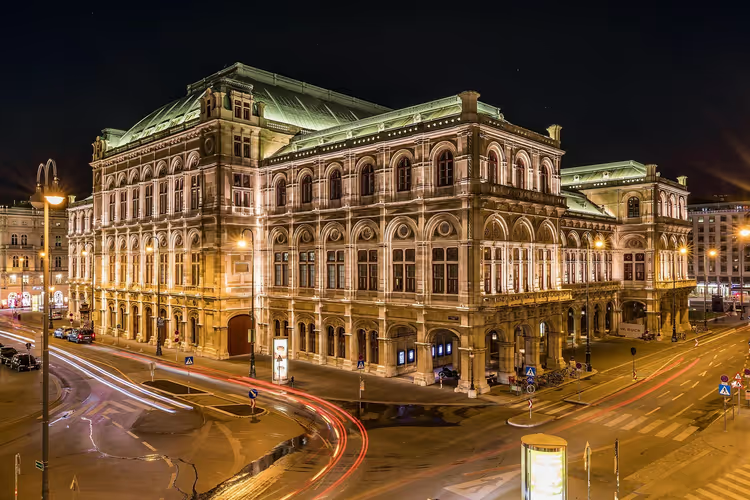
Vienna in 2 days: a walking route through the center and Schonbrunn
Two days in Vienna seems too short. The city is big, there are a lot of tickets, and half the time can easily be lost in lines. We put together a route you can walk: with addresses, distances, and entrance prices. On the first day you'll cover the imperial center, on the second you'll go to Schönbrunn, the Danube, and the Prater. The sights are listed in the order of a walk through the neighborhoods, and the map at the end will help you combine nearby points.
Ad: this article contains affiliate links. We earn a commission if you book through them, at no extra cost to you.
How to get from the airport to the center
💡 In short:
- From Schwechat Airport to the center, the S7 train runs for €5.40 (as of 09/2026, S7 schedule), and the City Airport Train runs nonstop.
- You spend the first day in the center, and give the second to Schönbrunn, the Danube, and the Prater.
- Get Schönbrunn tickets, Belvedere, and Ferris wheel tickets online with a time slot.
- Prices and opening hours: 09/2026, checked on the cathedral's official website
Vienna's Schwechat Airport is 18 km southeast of the city (as of 09/2026, fares and line map). The cheapest way to get there is by train: the S7 suburban train arrives at Wien Mitte station, from where you can walk to St. Stephen's Cathedral in ten minutes. The City Airport Train runs nonstop and costs more, but it saves time if you arrive late in the evening.
A taxi from the airport will take you right to your hotel door, but it costs several times more than the train. A transfer is more convenient to book in advance: the driver waits in the arrivals hall with a sign, and you don't waste time looking for a car. We've listed transfer options at the end of the route.
From there, you'll walk almost everywhere in the city, and for longer trips a transit ticket in the center will be enough. A day pass pays for itself from the third ride; check current fares with the city transit operator.
Day 1: Old town and imperial palaces
The first day fits entirely within the old town. You walk from the cathedral along Graben and Kohlmarkt to the Hofburg, then along the Ringstrasse to the museums, city hall and theater. Distances are short: the route from the cathedral to the Burgtheater is easily walkable in one day. Comfortable shoes matter more here than a transit pass.
Start around nine in the morning. Until eleven the center is still half empty, and ticket office lines are only starting to form, so by noon you will have covered the main sights without the crowds.
St. Stephen's Cathedral
 © Mario Modesto Mata · CC BY-SAPhoto: Mario Modesto Mata, CC BY-SA (https://creativecommons.org/licenses/by-sa/3.0), Wikimedia Commons
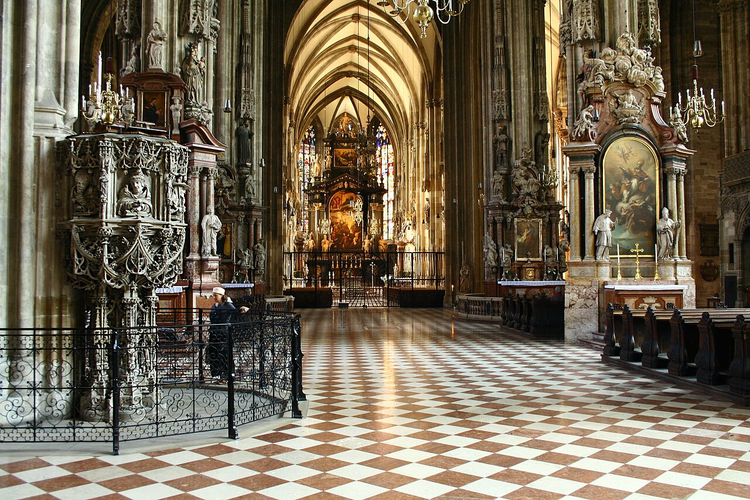
St. Stephen's Cathedral stands in the very center, and almost every city route starts here. The Gothic church was built over centuries, so several eras are mixed in one building. The cathedral is about one hundred and seven meters long, and the main tower rises above one hundred and thirty meters. The roof is covered with hundreds of thousands of glazed tiles arranged in bright patterns.
Enter through the Giant's Door: behind it are stained glass windows, a carved 15th-century pulpit, eighteen altars, the icon of Our Lady of Pötsch and a reliquary with the remains of Saint Valentine. The South Tower is reached by three hundred and forty-three steps, the North Tower has an elevator, and to save energy the second option is better. The climb and the catacombs are paid, check current prices and hours on the official Domkirche website. Come at opening time: by noon the line at the entrance stretches for a block.
- The catch: the South Tower has no elevator, you have to climb a narrow spiral staircase.
If you plan to visit many museums over two days, calculate the discounts in advance: the Vienna Card tourist pass on GetYourGuide includes transport and gives discounts on admission.
Graben street
 © C.Stadler/Bwag · CC BY-SAPhoto: C.Stadler/Bwag, CC BY-SA (https://creativecommons.org/licenses/by-sa/4.0), Wikimedia Commons
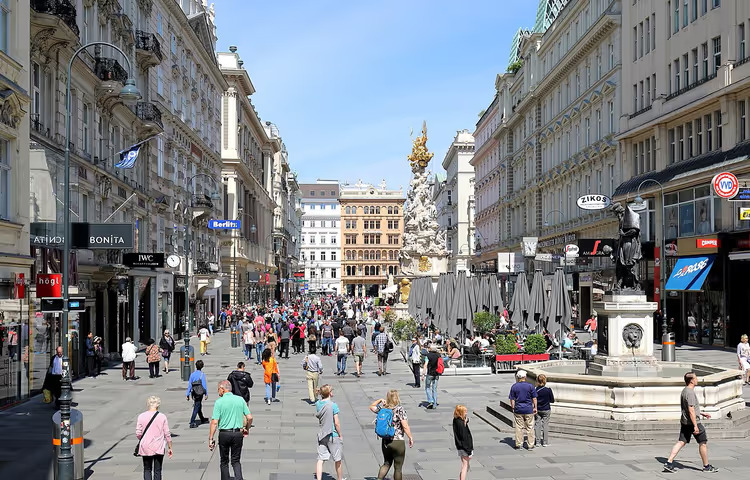
Graben follows the line of the old Roman moat and remains the main pedestrian street of the center. It is lined with jewelry shops, boutiques, historic cafes and the Meinl gourmet store, known for its delicacies. In the middle of the street you will see the plague column, erected in the late 17th century after an epidemic that claimed tens of thousands of lives. The marble composition of angels, clouds and human figures is crowned with a gilded cross.
You will walk Graben in ten minutes if you do not go into shops. Grab a coffee in one of the old pastry shops and linger: in the morning there are still few tour groups here, and the shop windows look good in the soft light.
St. Peter's Church
 © HGT64 · CC BY-SAPhoto: HGT64, CC BY-SA (https://creativecommons.org/licenses/by-sa/4.0), Wikimedia Commons
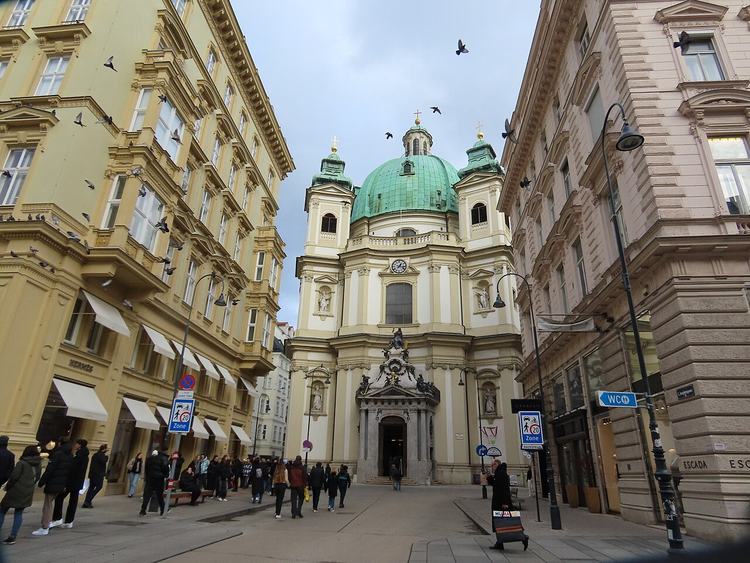
Tucked right by Graben is the Baroque St. Peter's Church (Peterskirche). A Christian church stood on this spot as far back as Roman times, and the current building was constructed in the first half of the 18th century. The facade is framed by two angled columns, and above it rises a green dome. Inside there is plenty of gilding, stucco, sculptures and paintings.
Organ concerts are held here daily, tickets are sold at the entrance. Go inside even if you are tired of churches: the interior of St. Peter's Church is brighter and more theatrical than that of neighboring churches, and the 1904 organ still sounds at services and concerts.
Kohlmarkt street
 © Fred Romero from Paris, France · CC BYPhoto: Fred Romero from Paris, France, CC BY (https://creativecommons.org/licenses/by/2.0), Wikimedia Commons
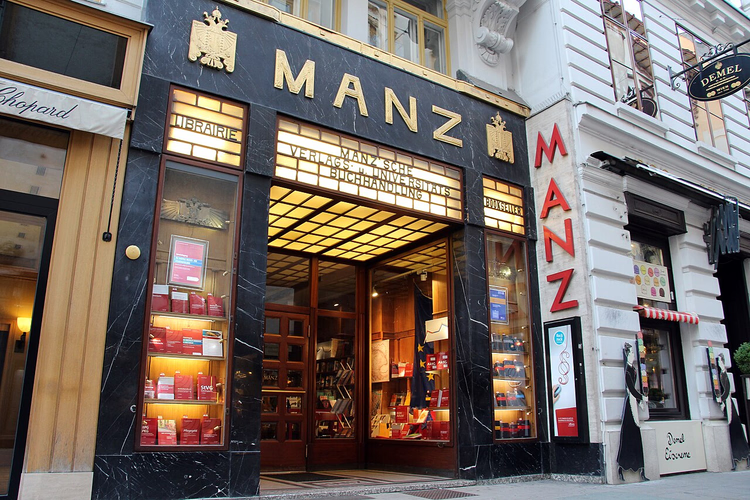
The upscale Graben leads into Kohlmarkt. Coal used to be traded here, and after the Hofburg was built the street was taken over by suppliers to the imperial court. Today the shop windows belong to Bulgari, Cartier, Armani, Chanel and Louis Vuitton. At the end of the street is the Demel pastry shop, which supplied desserts to the court for more than two hundred years.
Demel's menu includes apple strudel, gingerbread, candied violets and Sachertorte. The catch is obvious: the line at the counter can take half an hour, so get sweets to go and eat them on the way to the palace.
Hofburg and imperial museums
 © Jorge Láscar from Australia · CC BYPhoto: Jorge Láscar from Australia, CC BY (https://creativecommons.org/licenses/by/2.0), Wikimedia Commons
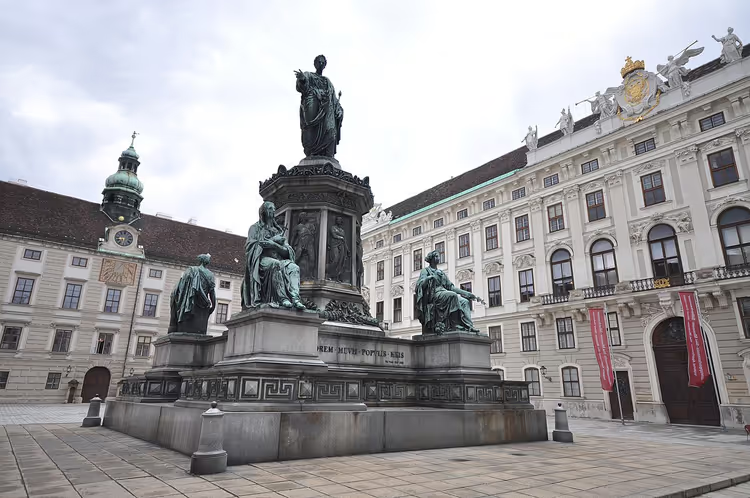
Kohlmarkt leads you to the Hofburg, the winter residence of the Habsburgs. The complex consists of two dozen buildings and palaces, so you cannot cover it in one visit. Through the semicircular gate you enter Michaelerplatz, where the fiacres stand, and then the inner courtyard In der Burg with the presidential residence.
The route then continues past the Swiss Court, the royal stables, the National Library and Amalia's Castle. You will peek into the court churches and the Butterfly House, and finish at Heldenplatz. Inside the palace, choose the Sisi Museum, the Silver Chamber and the Imperial Apartments. The Imperial Treasury with the crown and regalia is housed in a separate museum, and it is more convenient to get a ticket in advance: Imperial Treasury at the Hofburg on GetYourGuide. You can walk the courtyards and Heldenplatz on foot, and tickets are only needed for the museums.
Kunsthistorisches Museum
 © Andrzej Otrębski · CC BY-SAPhoto: Andrzej Otrębski, CC BY-SA (https://creativecommons.org/licenses/by-sa/3.0), Wikimedia Commons
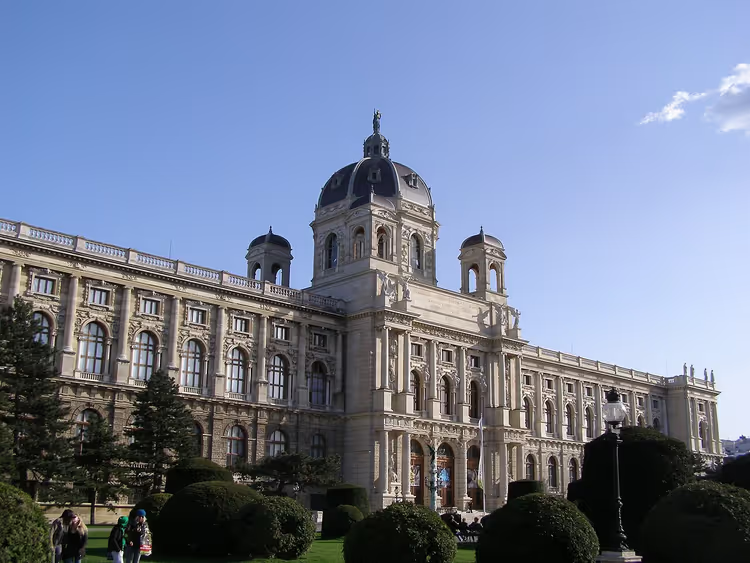
Across Maria-Theresien-Platz from the Hofburg stand two identical buildings: the Natural History Museum and the Kunsthistorisches Museum. The Kunsthistorisches Museum opened in the late 19th century and holds the Habsburg collections: weapons, coins, orders, musical instruments, ancient sculpture, Egyptian and Oriental relics. Part of the collection came from the Kunstkammer, where rarities and hunting trophies were kept.
The main draw here is the picture gallery with paintings by Titian, Velázquez, Dürer, Raphael and Bruegel the Elder. You will need at least three hours to see it, so book your Belvedere slot for the second half of the day. It is easier to buy a ticket online: Kunsthistorisches Museum admission on GetYourGuide, so you do not wait at the ticket office.
Volksgarten park
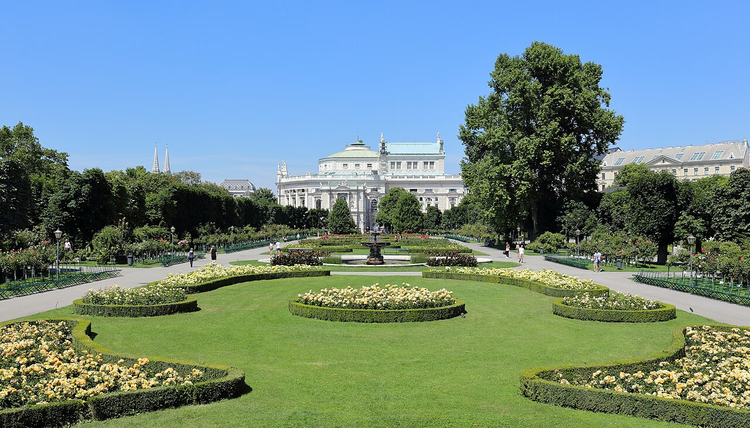
The Volksgarten park sits right next to Heldenplatz. It was laid out in the early 19th century on the site of demolished fortifications and opened to the public a few years later. Here you will find neat lawns, beds of roses and irises, a fountain and a monument to Empress Sisi.
 © C.Stadler/Bwag · CC BY-SAPhoto: C.Stadler/Bwag, CC BY-SA (https://creativecommons.org/licenses/by-sa/4.0), Wikimedia Commons
Stay in the park for half an hour: it's a convenient pause between the Hofburg and the Ringstrasse. Benches sit in the shade, and the cafe at the entrance has a view of the fountain.
City hall
 © Thomas Ledl · CC BY-SAPhoto: Thomas Ledl, CC BY-SA (https://creativecommons.org/licenses/by-sa/4.0), Wikimedia Commons
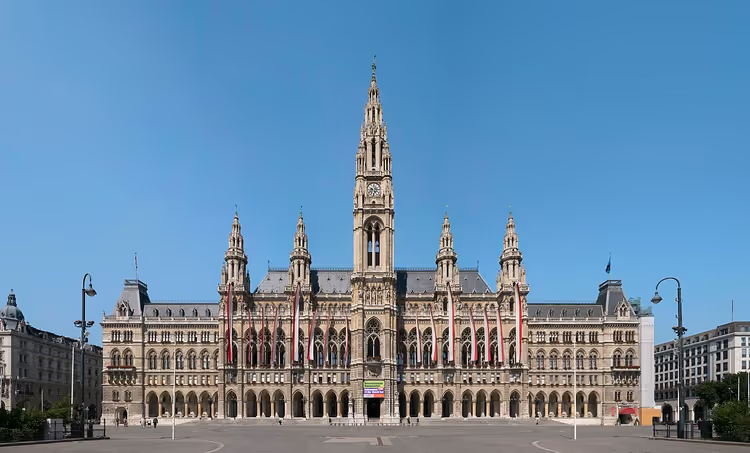
The City Hall looks like a Gothic cathedral, although it was built only toward the end of the 19th century. Friedrich von Schmidt's design was selected in a competition, and construction took about twenty years. A tower nearly a hundred meters high rises above the central section, topped with a figure of a guardian in copper armor. Inside there are more than fifteen hundred rooms, and the ceremonial hall with gilded walls holds a chandelier weighing about three tons.
Around eight hundred events take place here every year, from balls to music festivals. You don't have to tour the interior: the facade, the tower, and the park in front give you a full sense of the building. From here you can walk to the Burgtheater in five minutes.
Burgtheater
 © C.Stadler/Bwag · CC BY-SAPhoto: C.Stadler/Bwag, CC BY-SA (https://creativecommons.org/licenses/by-sa/4.0), Wikimedia Commons
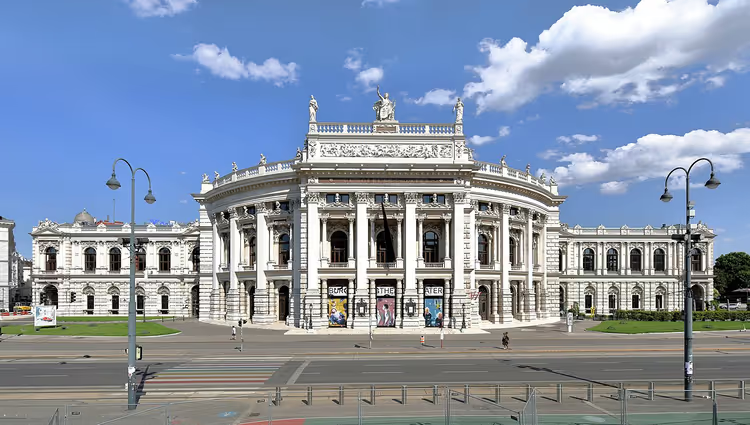
Across from the City Hall stands the Burgtheater, the former court theater of the Habsburgs. The company was founded in the mid-18th century, and it got its own building on the Ringstrasse at the end of the following century. Architect Gottfried Semper echoed motifs from the Dresden opera house: a balustrade, statues of gods and muses, a light stone facade.
The interiors are finished in French Baroque style, with paintings, marble, and gilding. Around a hundred actors perform on its stage, and shows run almost every evening, so it's better to book tickets for evening dates in advance.
Herrengasse
Herrengasse was the boundary of the Roman camp, and in the 16th century it was taken over by palaces of the city's nobility. Almost every second building here is a landmark: for example, the Mollard-Clary Palace at number nine served as the residence of Emperor Joseph II.
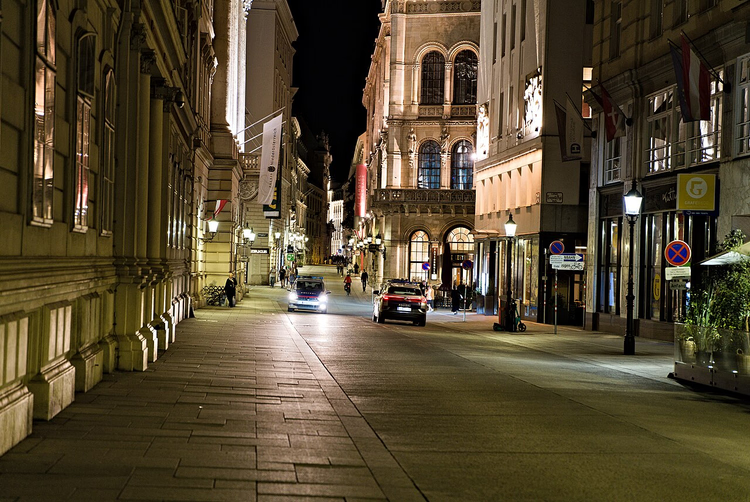
The neighboring building houses Cafe Central, which opened at the end of the 19th century. Freud and other guests of the early last century sat at its tables, and today tourists do. There is almost always a line at the entrance, but it moves quickly: you'll be seated within half an hour.
Freyung square
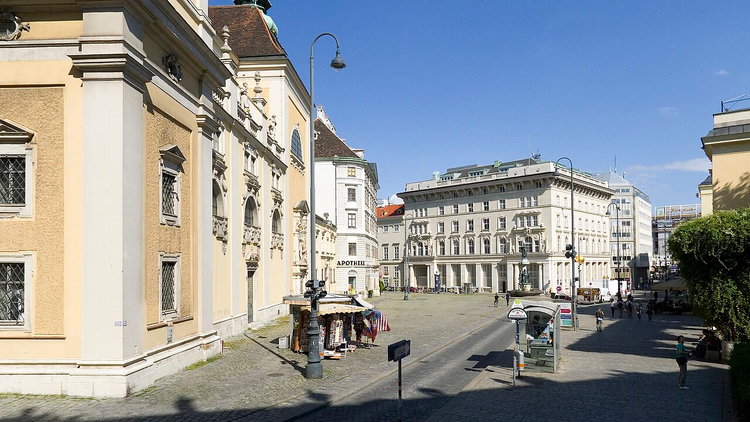
Freyung lies a couple of minutes from Cafe Central. The square took shape back in the 12th century, when the Schottenkloster monastery appeared here. Besides the monastery, the square is dominated by the Baroque Harrach Palace, the Renaissance-style Porcia Palace, and the Kinsky Palace, whose facade has been preserved since the 18th century.
You've probably seen this triangular square on postcards of Christmas markets. In December, wooden stalls line up here, and artisans sell handmade Christmas ornaments, glass, ceramics, and textiles. At Easter, a tower made of tens of thousands of painted eggs is set up on Freyung.
Am Hof square
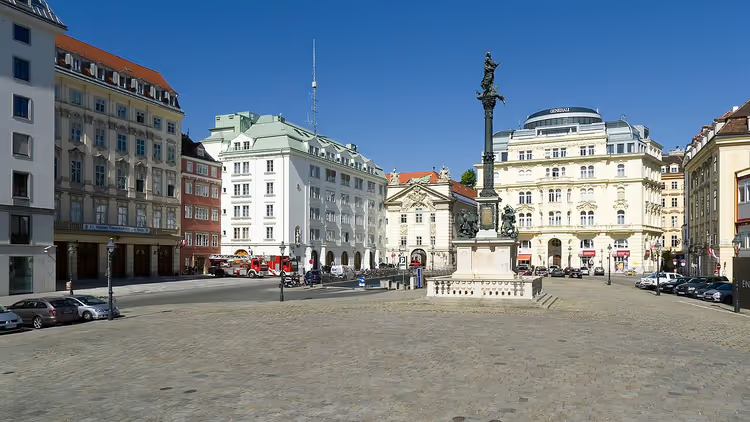
In the first century, the site of Am Hof square was home to the Roman outpost Vindobona, a military camp on the empire's frontier. In the 12th century, a residence with a market in its inner courtyard was built here, and trade wasn't even deterred by the nearby execution block for public beheadings.
In the mid-17th century, when the Swedish army approached the city, Emperor Ferdinand III vowed to erect a ceremonial column in honor of the Virgin Mary. The troops withdrew, and the Mariensaule column appeared in the center of the square. Nearby you'll see the Baroque Zeughaus, a former armory, and the Church of the Nine Choirs of Angels.
Maria am Gestade church
 © Herbert Frank from Wien (Vienna), AT · CC BYPhoto: Herbert Frank from Wien (Vienna), AT, CC BY (https://creativecommons.org/licenses/by/2.0), Wikimedia Commons
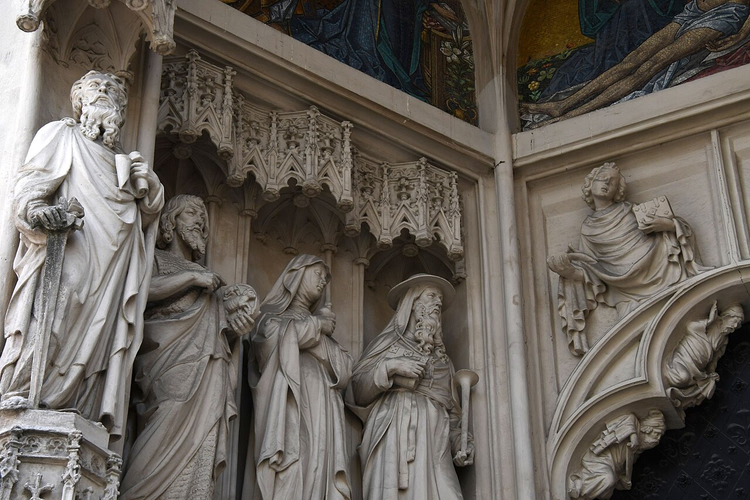
Maria am Gestade is considered one of the oldest Gothic churches in the city. The first mention of a wooden chapel dates back to the 12th century, and the current church was built in the early 15th century. Fishermen and sailors prayed here: a branch of the Danube ran nearby, later converted into a canal.
The church survived the Turkish siege and Napoleon's warehouses, and after repairs it was consecrated anew. The austere stone walls are almost devoid of decoration, but the church is crowned by a delicate openwork bell tower with a golden cross. Inside you'll find pointed vaults, stained glass, sandstone sculptures, and neo-Gothic finishing.
Hoher Markt square
Hoher Markt square grew up on the site of the Roman forum of Vindobona. Near building number three, at a depth of several meters, ruins of military commanders' dwellings survive, and in the center of the square stands the Baroque Wedding Fountain with a marble scene of the marriage of the Virgin Mary and Joseph.
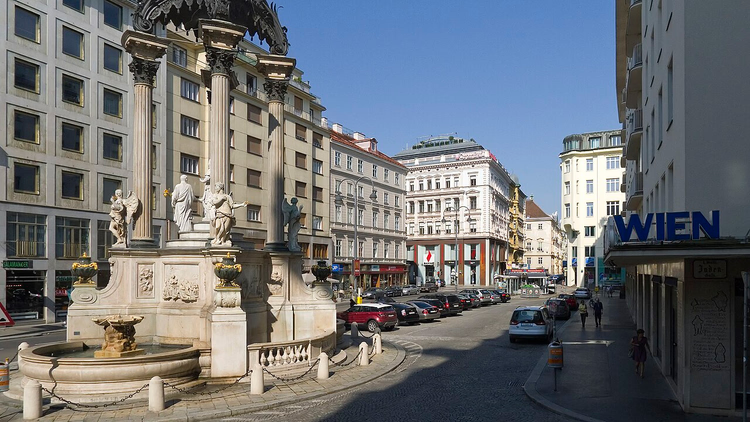
At exactly noon, tourists gather here: on a gallery between two buildings, the "dancing" Ankeruhr clock puts on a show. Twelve figures representing significant figures of Austrian history pass across the dial to music. The scene is visible from the square for free, but arrive ten minutes before it starts, otherwise you'll end up in the second row.
St. Rupert's church
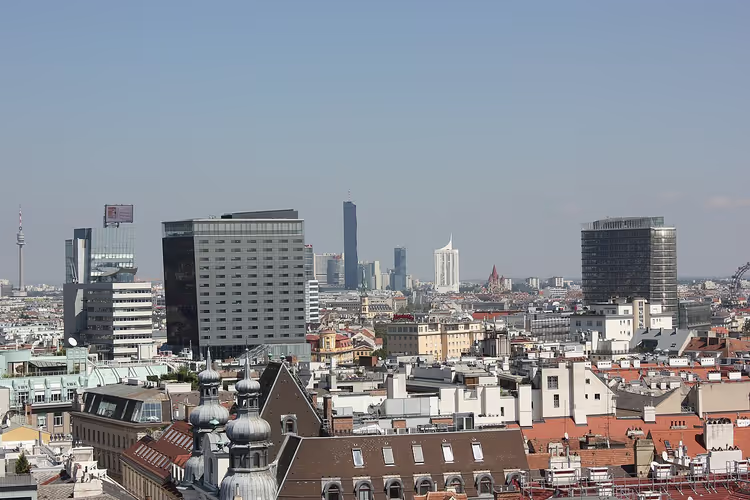
The exact construction date of Vienna's oldest church is unknown. Archaeologists believe that St. Rupert's Church, dedicated to the patron saint of salt merchants, appeared in the 8th century, and chronicles mention it from the 13th century. In the Middle Ages, the Salt Office was located here, and in the 13th century a major fire swept through the walls.
 © Andrzej Otrębski · CC BY-SAPhoto: Andrzej Otrębski, CC BY-SA (https://creativecommons.org/licenses/by-sa/4.0), Wikimedia Commons
Over the centuries, the Romanesque church, which resembles a knight's castle, was rebuilt several times. The lower parts of the tower survive from its ancient appearance. Inside you'll see 13th-century bells and stained glass depicting the Crucifixion and the Virgin and Child.
Naschmarkt
 © C.Stadler/Bwag · CC BY-SAPhoto: C.Stadler/Bwag, CC BY-SA (https://creativecommons.org/licenses/by-sa/4.0), Wikimedia Commons
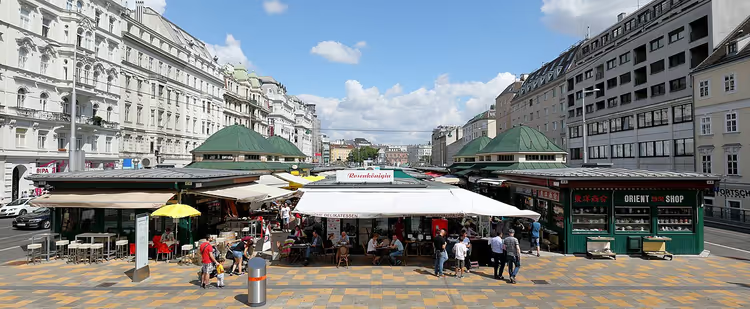
Near the Karlsplatz metro station stretch the rows of the open-air Naschmarkt, which dates back to the 18th century. Vienna residents come here to shop, and hungry tourists hurry here too. The stalls offer fruit, cheese, sausages, seafood, and wine, and vendors are happy to let you taste their goods.
- Who it's for: those who want to grab a bite midway through the route and take food with them.
- Not for: those seeking quiet: by lunchtime it's noisy and crowded here.
Small restaurants serving cuisine from different countries operate on the market grounds, and live music comes from the speakers. On Saturdays, the Naschmarkt is joined by a flea market: you can find antiques, ceramics, old clocks, and vintage jewelry. Haggling is welcome here, so you can bring the price down.
Vienna State Opera
 © P e z i · CC BY-SAPhoto: P e z i, CC BY-SA (https://creativecommons.org/licenses/by-sa/3.0/at/deed.en), Wikimedia Commons
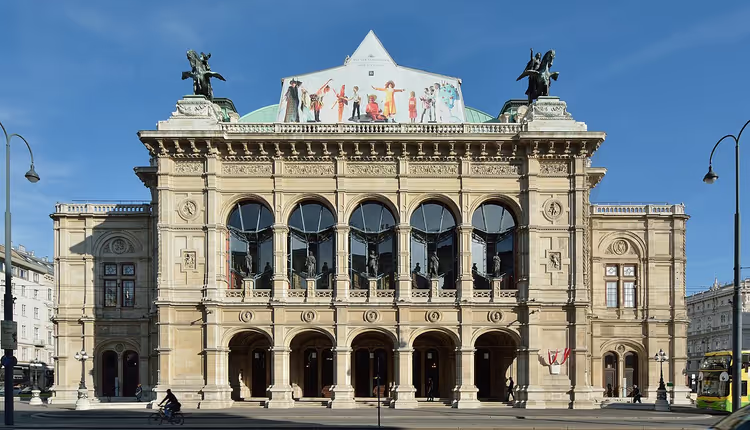
The Vienna State Opera is considered one of the best opera houses in Europe. The building on the Ringstrasse was constructed in the second half of the 19th century to a design by August Sicard von Sicardsburg and Eduard van der Nüll. The premiere coincided with a scandal: critics tore apart the neo-Renaissance facade, and the story remains part of the city's lore to this day.
Today the repertoire includes around sixty productions a year, from classics to world premieres. Even without a ticket, it's worth stopping by in the evening: the facades are illuminated, and the audience gathers outside long before the bell.
Karlskirche
 © C.Stadler/Bwag · CC BY-SAPhoto: C.Stadler/Bwag, CC BY-SA (https://creativecommons.org/licenses/by-sa/4.0), Wikimedia Commons
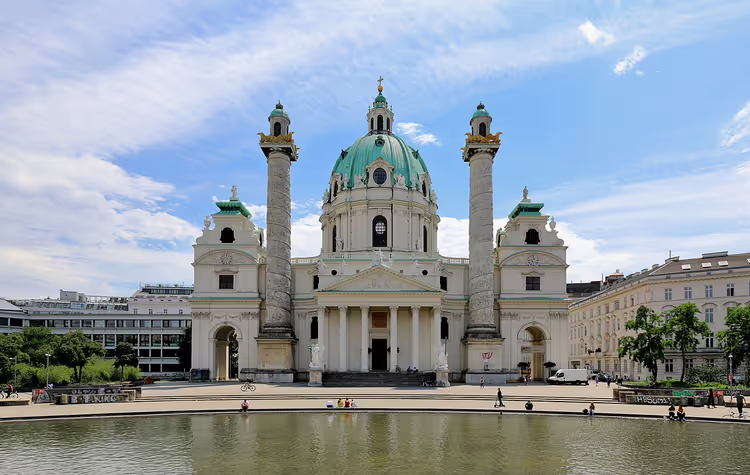
Karlskirche came about as a result of a vow by Emperor Charles VI: during a plague outbreak, he promised the city a new church if the epidemic subsided. Construction began in the first quarter of the 18th century and took more than twenty years. The architecture brings together elements from different eras: the relief portico recalls ancient buildings, the two columns echo the Roman columns of Trajan, and the building is crowned by a Baroque dome about seventy-two meters high.
Inside, vivid frescoes and sculptures celebrate Saint Charles Borromeo. In the evenings, concerts are held in the church, and the sound in the dome works as an acoustic instrument: Vivaldi's Four Seasons concert at Karlskirche on GetYourGuide. Plan your visit for the evening so you can hear the church, not just see it.
Belvedere
 © Sandor Somkuti from Wien, Österreich · CC BY-SAPhoto: Sandor Somkuti from Wien, Österreich, CC BY-SA (https://creativecommons.org/licenses/by-sa/4.0), Wikimedia Commons
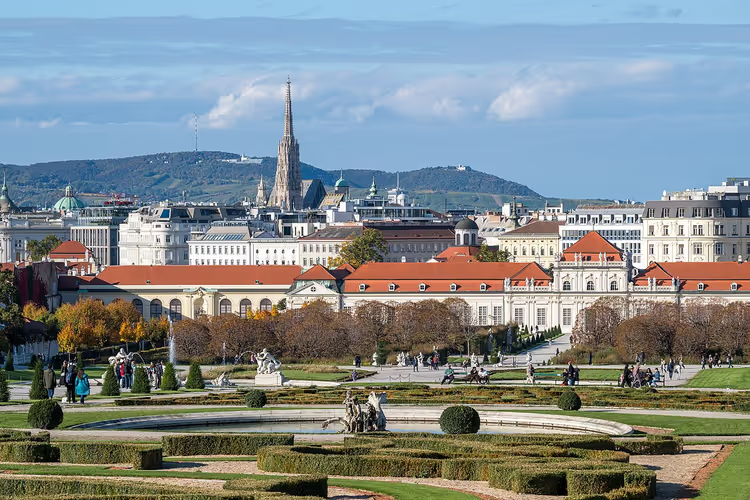
The Belvedere consists of two Baroque palaces, the Upper and Lower, and a park between them. The ensemble was built in the early 18th century by architect Johann Lukas von Hildebrandt for Prince Eugene of Savoy. The clean lines of the facade and the elaborate decoration reveal the hand of a master who had previously worked on cathedrals.
In the Upper Palace you'll see Austrian and French masters, and the main draw here is the paintings of Gustav Klimt, including The Kiss. The Lower Palace shows art of the 20th and 21st centuries. Between the palaces runs an avenue with sphinxes and views of the city center, so the walk is a pleasure in itself. Get a timed-entry ticket online: Belvedere entrance tickets on GetYourGuide.
Tours and tickets in Vienna
Guided tours, skip-the-line tickets and activities — most offers can be cancelled free of charge.
See offers on GetYourGuideThe widget loads once you give your consent.
Day 2: Schönbrunn, the Danube, and the Prater
Day two starts outside the historic center. You take the metro to Schönbrunn, explore the palace and park, then head down to the Danube and finish the evening at the Prater. The metro is the easiest way to reach Schönbrunn, and after that you walk through the park, so the day stays relaxed.
Schönbrunn Palace
 © Tournasol7 · CC BY-SAPhoto: Tournasol7, CC BY-SA (https://creativecommons.org/licenses/by-sa/4.0), Wikimedia Commons
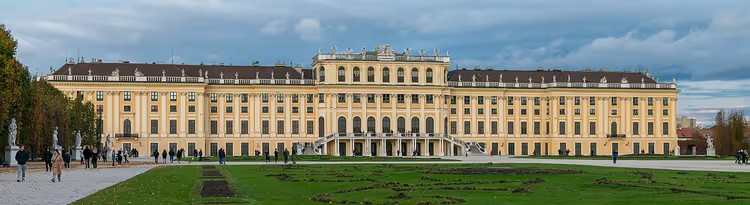
Schönbrunn was the summer residence of the Habsburgs, and it got its name from a spring that Emperor Matthias found here while hunting. The palace took its current form in the 18th century under Maria Theresa. Inside there are almost 1,500 rooms decorated with frescoes, gilding, and expensive fabrics: a six-year-old Mozart played in the state rooms, and Napoleon later stayed here.
To see the interiors, you need a ticket with a fixed entry time. To avoid waiting at the ticket office, buy in advance on the official Schönbrunn Palace website. The combined Classic Pass for five attractions costs €49 for an adult (as of 09/2026, same website). You can walk through the park behind the palace without a ticket: it covers an area comparable to two hundred football fields, and it is home to the Gloriette, the zoo, and the Roman ruins.
- The catch: entry is time-slotted, so missing your slot can mean waiting in line again.
- Who it's for: first-time visitors to Vienna who want to see the residence in full.
If you want to add some food to your visit, book the strudel show with tasting at Schönbrunn Palace on GetYourGuide.
Roman ruins
 © Falk2 · CC BY-SAPhoto: Falk2, CC BY-SA (https://creativecommons.org/licenses/by-sa/4.0), Wikimedia Commons
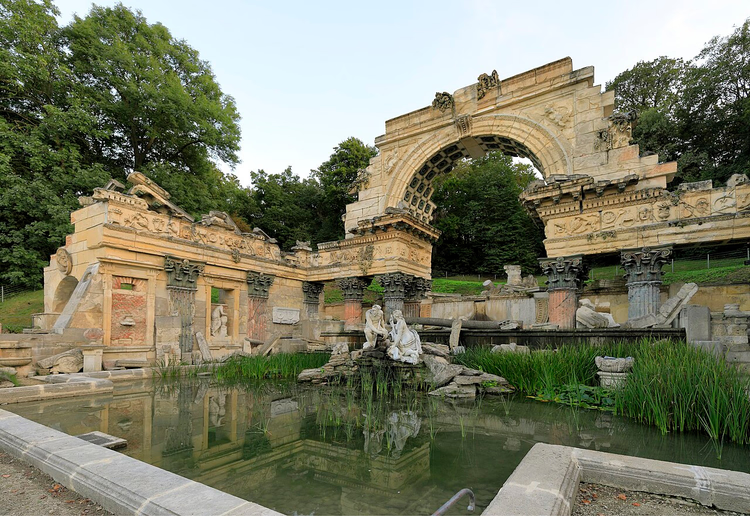
While walking through the park, you will come across the Roman ruins at the foot of the hill. These are not ancient remains but a decorative structure built as a reminder of Habsburg power. The ruins of the temples of Titus and Vespasian served as the model.
The center of the composition is a rectangular pool, framed on the hill side by an arch standing on the remains of Ionic columns. Bas-reliefs and niches create the illusion of weathered masonry, and in the center stand sculptures of the river gods Enns and Danube. Higher up the slope you can make out the figure of Hercules fighting evil.
Neptune Fountain
 © Dietmar Rabich · CC BY-SAPhoto: Dietmar Rabich, CC BY-SA (https://creativecommons.org/licenses/by-sa/4.0), Wikimedia Commons
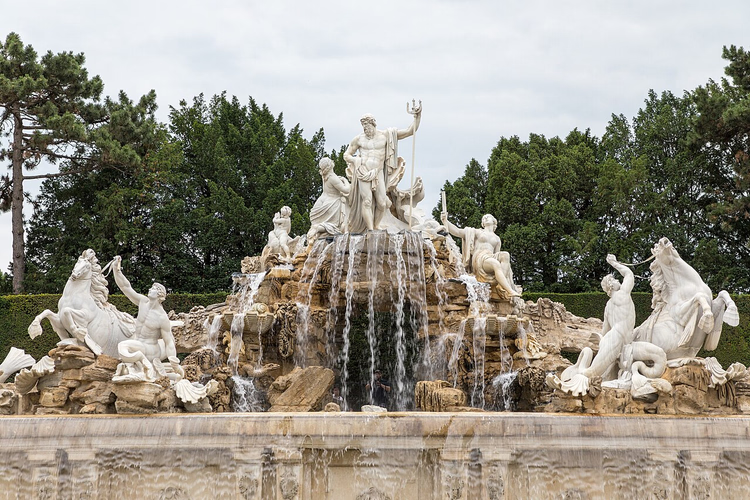
The Neptune Fountain closes off the Great Parterre of the palace park. The sculptural group was created in the second half of the 18th century: Wilhelm Beyer worked on the figures, and Johann Ferdinand Hetzendorf prepared the design.
In the huge pool you will see a rocky grotto, and on top of it Neptune himself with his shell chariot. Next to him the nymph Thetis bows her head, on the right sits another daughter of the sea with a cornucopia, and tritons tame the sea horses. In summer, the fountain is a pleasant spot to rest in the shade.
Gloriette
 © Thomas Wolf , www.foto-tw.de · CC BY-SAPhoto: Thomas Wolf , www.foto-tw.de, CC BY-SA (https://creativecommons.org/licenses/by-sa/3.0/de/deed.en), Wikimedia Commons
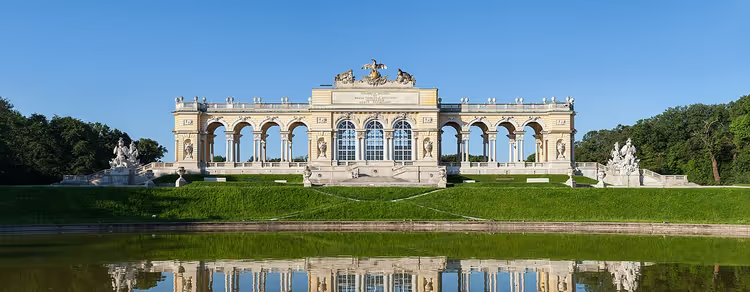
From the Schönbrunn hill you get the best view of the palace and the red roofs of the old town. At the top, the Gloriette welcomes you, a pavilion built to commemorate the victory over Prussia in the Seven Years' War. The white and yellow structure gets its ceremonial feel from the colonnades, statues of warriors in armor, and an eagle with a golden crown.
There is a cafe in the central part of the pavilion. Here you can rest after the climb, listen to waltzes, and try apple strudel. Then take the spiral staircase up to the viewing platform: the view is worth the effort.
Schönbrunn Zoo
 © Paul Korecky · CC BY-SAPhoto: Paul Korecky, CC BY-SA (https://creativecommons.org/licenses/by-sa/2.0), Wikimedia Commons
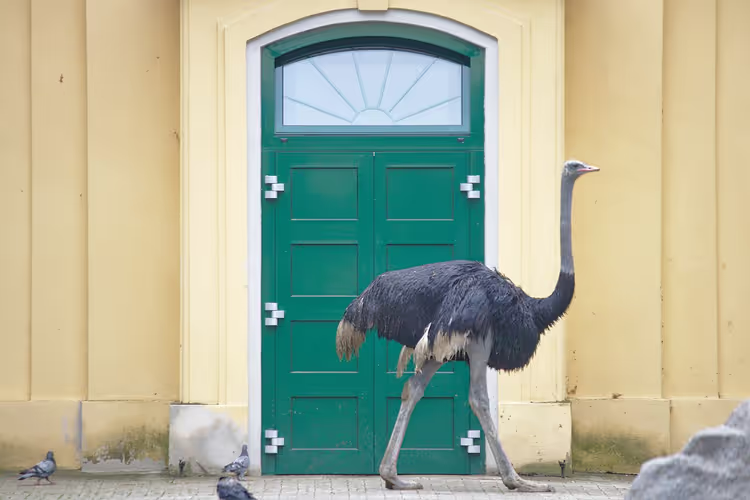
Next to the palace, the world's oldest zoo has been operating since the mid-18th century. It was founded by Emperor Francis I Stephen, who was passionate about the natural sciences, and at first only the nobility were admitted. Later the gates were opened to everyone.
Today, 8,500 animals live on seventeen hectares. There are almost no cramped cages: enclosures are separated by moats, natural barriers, and glass, and multiple levels let you observe the animals from different angles. Be sure to visit the panda pavilion, the polar bears, and the big cat house.
- Who it's for: families with children and anyone willing to give the zoo three hours.
- Not for: those who have only one day in Vienna.
For skip-the-line tickets, see the official Schönbrunn Zoo page or get Schönbrunn Zoo tickets on GetYourGuide.
Old Danube
 © User:My Friend · CC BY-SAPhoto: User:My Friend, CC BY-SA (http://creativecommons.org/licenses/by-sa/3.0/), Wikimedia Commons
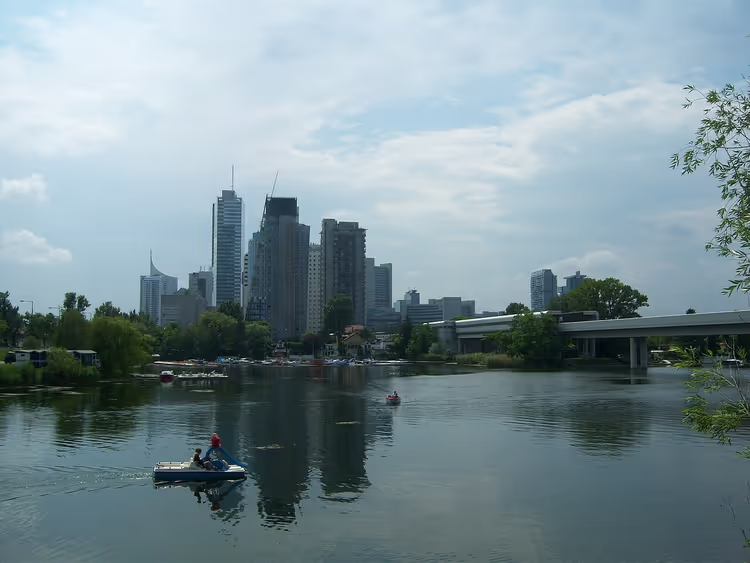
The Danube flows through Vienna, and the best way to get to know the river is at the Alte Donau, the Old Danube. People come here for a non-touristy Vienna: tree-lined paths, meadows, cafe terraces, and swans on the water.
In warm summers, people swim here and go boating. Swimming enthusiasts will find four outdoor pools and a two-kilometer beach, there are sports facilities and surfing schools, and you can rent pedal boats and electric motorboats. A couple of hours is enough to walk along the shore and have lunch by the water. Sightseeing boats do not depart from the Old Danube but from the pier at the Reichsbrücke bridge on the main channel: one-hour Danube Canal cruise on GetYourGuide.
Boat tour
 © ImagePerson · CC BYPhoto: ImagePerson, CC BY (https://creativecommons.org/licenses/by/4.0), Wikimedia Commons
The water portion is worth adding to your itinerary if you want to relax to music and see the city from the water. Boats depart from the Reichsbrücke bridge and end their route at the Schwedenplatz embankment. Check the fleet's website for schedules and prices before your trip.
From the deck you will see the Ferris wheel, the Urania Observatory, the Kunsthaus, and the Church of St. Francis of Assisi on route A. The second route goes through the modern Donau City district with the Millennium Tower. Lunch on board is included in the cruise price: sightseeing boat tour with lunch on GetYourGuide.
Hundertwasser House
 © Pymouss · CC BY-SAPhoto: Pymouss, CC BY-SA (https://creativecommons.org/licenses/by-sa/4.0), Wikimedia Commons
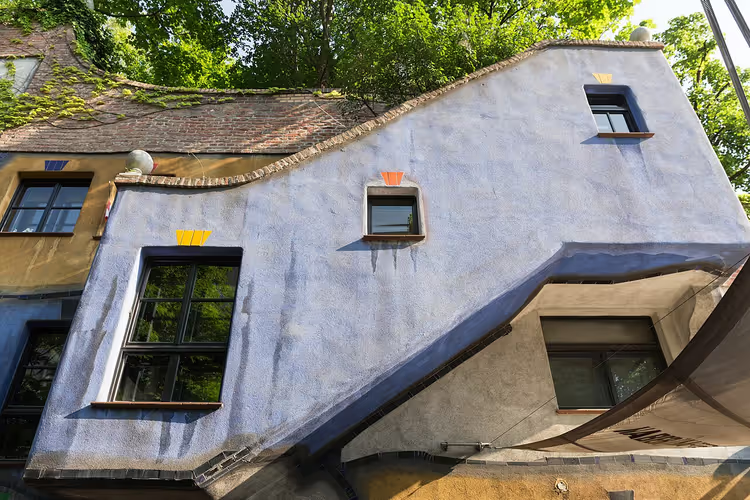
Hundertwasser is called Vienna's Gaudi, and his house on Kegelgasse street challenges any architecture textbook. The artist rejected straight lines, flat roofs, and identical details. The facade is covered with glazed tiles, the windows vary in shape and size, and some apartments are reached by staircases that look like forest paths.
The building is residential, with several offices and more than fifty apartments inside, so you cannot go in. But the facade and the inner courtyard are worth seeing up close, and five hundred meters away on Untere Weißgerberstraße there is another project by the master, the Kunsthaus Wien.
Prater Park
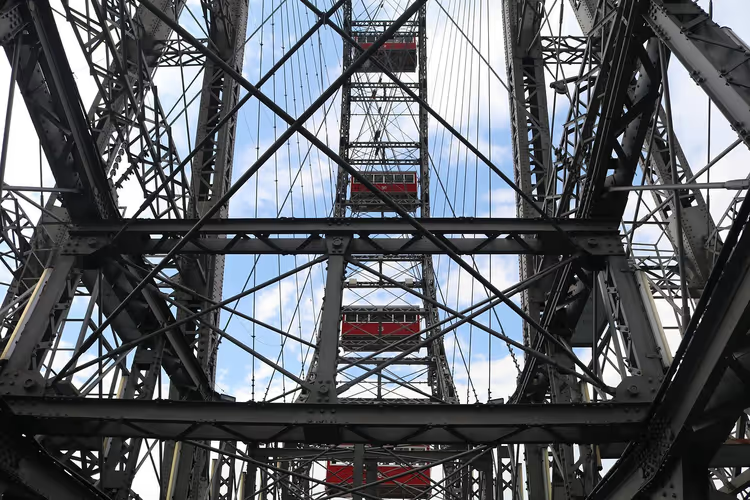
The Prater began as imperial hunting grounds, and today it is a green zone and amusement park. The main avenue is lined with centuries-old chestnut trees, with bike paths, boat rental stations, and horseback riding areas nearby. Here you will find a planetarium, Madame Tussauds, and Austrian cuisine restaurants.
The main attraction of the Prater is the Riesenrad Ferris wheel. The cabins lift visitors above the city rooftops, a full rotation takes about twenty minutes, and in good weather you can make out the old town and the hills of the Vienna Woods. In the evening the park is illuminated, and the wheel becomes the focal point of postcard-perfect photos. The ticket line is long, so book a time slot online: ride on the giant Ferris wheel without queuing on GetYourGuide.
Tickets, transport and practicalities
What to book in advance
Schönbrunn Palace admits visitors at fixed entry times, so a ticket without a time slot turns into waiting at the ticket office. Belvedere sells timed tickets for the Upper Palace, and in high season the morning slots go first. Entry to St. Stephen's Cathedral is free, but climbing the towers and visiting the catacombs are paid separately.
Buy tickets two or three days ahead: the price difference is minimal, and you save time. Links to the official palace websites are collected in the route table below.
Getting around the city
Vienna's metro, trams and buses use unified tickets, and fare zones start right at the city limits. A 24-hour pass pays for itself from the third ride, and a weekly pass is worth it if you are staying longer. Current fares and the zone map are published by Wiener Linien.
If you are tired of walking, take the sightseeing tram around the Ringstraße. Two routes pass the main attractions, and you can rest without leaving the city behind.
Where to stay and eat
For two days, look for a hotel inside the Ringstraße. Getting in from the suburbs will eat an hour a day, and the price difference between the center and the outskirts is not that big. Small three-star hotels sit on the side streets of the center: hotels in central Vienna on Trip.com.
For cheap food, try Bitzinger near the Albertina: a snack chain with sausages and fried bratwurst. For schnitzel and baked ribs, go to Ribs of Vienna on Weihburggasse. The place is popular, so book a table in advance. Airport transfer makes sense to sort out here too: see transfer options on Kiwitaxi.
Vienna in 2 days route on the map
What to see in Vienna in 2 days
Places on the map
- St. Stephen's Cathedral Gothic cathedral, the starting point of almost every city route
- Graben Main pedestrian street with the Plague Column
- St. Peter's Church Baroque church with daily organ concerts
- Kohlmarkt Upscale street with boutiques and the Demel confectionery
- Hofburg Winter residence of the Habsburgs, the Sisi Museum and Treasury
- Kunsthistorisches Museum Habsburg collections, paintings by Titian and Velázquez
- Volksgarten Park with rose beds and a monument to Empress Sisi
- Vienna City Hall Neo-Gothic building from the late 19th century
- Burgtheater Former Habsburg court theatre on the Ringstraße
- Herrengasse Palaces of the city nobility and Café Central
- Freyung Square with palaces and a Christmas market
- Am Hof Square Mariensäule column and the Zeughaus arsenal
- Maria am Gestade One of the city's oldest Gothic churches
- Hoher Markt Wedding fountain and the Ankeruhr clock
- St. Ruprecht's Church Vienna's oldest church, Romanesque architecture
- Naschmarkt Open-air market since the 18th century, flea market on Saturdays
- Vienna State Opera One of Europe's finest opera houses
- Karlskirche Baroque church built as a vow by Emperor Charles VI
- Belvedere Two Baroque palaces, Klimt's 'The Kiss'
- Schönbrunn Palace Summer residence of the Habsburgs, almost 1,500 rooms
- Roman Ruins Decorative ruins in Schönbrunn Park
- Neptune Fountain Sculptural group at the end of the Great Parterre
- Gloriette Pavilion on a hill with the best view of the palace and the city
- Schönbrunn Zoo World's oldest zoo, panda pavilion
- Old Danube Non-touristy Vienna: paths, a beach and swans on the water
- Hundertwasser House Residential building without straight lines, the Viennese Gaudí
- Prater Amusement park with the Riesenrad Ferris wheel
The map combines both parts of the walk into one line: the points go in order, from St. Stephen's Cathedral to the Ferris wheel in the Prater. Some of the first day's points are close to each other, so check the map and combine neighboring sights.
Day | Highlights | Book ahead | On foot |
|---|---|---|---|
Day 1 | St. Stephen's Cathedral, Graben, Kohlmarkt, Hofburg, Kunsthistorisches Museum, City Hall, Belvedere | about six kilometers | |
Day 2 | Schönbrunn Palace, zoo, Old Danube, Ferris wheel | about five kilometers |
On the first day you barely use public transport; the second is built around the metro and one trip to the Danube. Both parts of the route fit into daylight hours if you start before 10 a.m. and leave the evening for dinner and a concert.
Airport transfer is convenient to arrange in advance, especially if you are arriving with children or late in the evening.
Tours and tickets in Vienna
Guided tours, skip-the-line tickets and activities — most offers can be cancelled free of charge.
See offers on KiwitaxiThe widget loads once you give your consent.
⁉️🤔 Frequently asked questions
How long does the two-day route take?
The first day is about six kilometers on foot and six hours with stops. The second day is shorter in distance, but requires a trip to Schönbrunn and back. If you only have one day, keep just the center and move Schönbrunn and the zoo to your next visit.
Do I need Schönbrunn tickets in advance?
Yes, palace entry works on fixed times, and in high season free slots run out by morning. Tickets and the combined Classic Pass for €49 (as of 09/2026) are sold on the official palace website. The park stays open longer than the palace, so you can walk it without a time slot.
How to get from the airport cheapest?
The S7 train goes to Wien Mitte station and costs €5.40 (as of 09/2026, S7 train and fares). This is the cheapest option: a taxi will cost several times more. With luggage, compare the price of a transfer, the driver waits for you in the arrivals hall.
What to see in Vienna on a rainy day?
Head to the museums: the Kunsthistorisches Museum, the Belvedere with Klimt's "The Kiss," the Hofburg with the Imperial Apartments. Timed-entry tickets save time at the ticket office, and tours and tickets on GetYourGuide are easy to compare in advance. Some museums are closed on Mondays, so check the day of your visit.
Where to eat cheaply in the center?
Grab a sausage at Bitzinger near the Albertina or walk around Naschmarkt: there are small restaurants with cuisines from different countries and prices lower than on Graben. For schnitzel and ribs, go to Ribs of Vienna on Weihburggasse, but book a table in advance.
In short: what to book in Vienna
The itinerary is laid out by day, and all you have left is to lock in your tickets. If you have one free evening, go for a concert at Karlskirche. If you're traveling with kids, add Schönbrunn Zoo. If it's your first time in Vienna, start with St. Stephen's Cathedral and Schönbrunn, and save the Ferris wheel for the finale.
Plan your trip in advance: booking a hotel in central Vienna and tickets and tours on GetYourGuide will take one evening of planning.

A small editorial team writing guides for independent travel. We travel ourselves, but we haven’t been everywhere, so we check prices, opening hours and how to get there against official sources.