

















ARWU 2026 ranking: 10 strongest universities on the planet and their profiles
Every year ARWU names the best universities on the planet.
The ranking is run by ShanghaiRanking Consultancy, the former center for world university studies at Shanghai Jiao Tong University. In the release dated August 19, 2026, more than 2,500 institutions were reviewed and the top 1,000 were published (as of 09/2026, ShanghaiRanking). The top ten is again almost entirely American: eight out of ten spots.
We put together these ten universities: year founded, country, strongest faculties, and what makes each school useful. You will see how to tell a strong university from one that is merely famous.
1. Harvard University
💡 In short:
- Look at the ranking position, year founded, and profile of the strongest faculties.
- Check program requirements on the university's official website, not in third-party reviews.
- Positions and founding years: 09/2026, verified on the official ranking website.
Summary of the 2026 top ten:
# | University | Country | Founded | ARWU 2026 |
|---|---|---|---|---|
1 | Harvard University | USA | 1636 | 1 |
2 | Stanford University | USA | 1891 | 2 |
3 | Massachusetts Institute of Technology | USA | 1861 | 3 |
4 | University of Cambridge | UK | 1209 | 4 |
5 | University of California, Berkeley | USA | 1868 | 5 |
6 | Princeton University | USA | 1746 | 6 |
7 | University of Oxford | UK | 1117 | 7 |
8 | Columbia University | USA | 1754 | 8 |
9 | University of Chicago | USA | 1890 | 9 |
10 | California Institute of Technology | USA | 1891 | 10 |
Founding years and positions verified against ShanghaiRanking (ARWU 2026) and official university websites (as of 09/2026).
 © chensiyuan · CC BY-SAPhoto: chensiyuan, CC BY-SA (https://creativecommons.org/licenses/by-sa/4.0), Wikimedia Commons
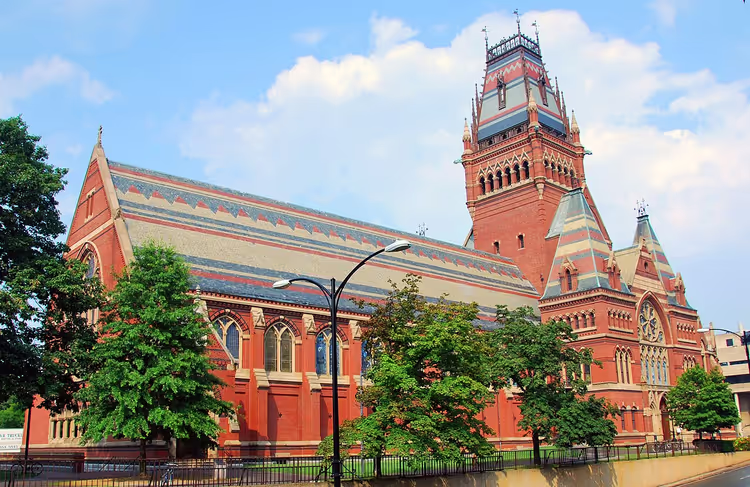
Harvard was founded in 1636 in Massachusetts and is named after clergyman John Harvard, who bequeathed his library to the university (official Harvard website). In ARWU 2026 it is again first (full ranking).
It comprises twelve schools and faculties. It is strongest in medicine, law, and economics. The Harvard Library is the largest academic library in the world: millions of volumes, rare books, and manuscripts.
Its alumni include dozens of Nobel laureates and several US presidents. Admission here is among the most competitive in the world, so the diploma is valued no less than the education itself. If you need a reputation in medicine or law, Harvard has held the bar for decades.
- Strong fields: medicine, law, economics.
- Known for: the largest academic library in the world.
- Who it's for: those ready for intense competition and seeking a diploma with a world-class name.
2. Stanford University
 © King of Hearts · CC BY-SAPhoto: King of Hearts, CC BY-SA (https://creativecommons.org/licenses/by-sa/3.0), Wikimedia Commons
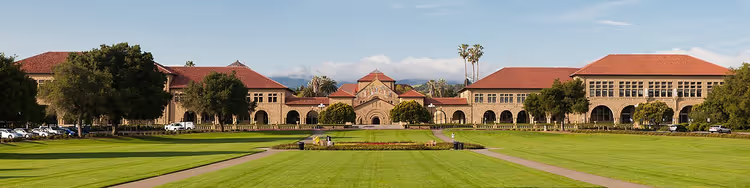
Stanford opened in 1891 in California. It was founded by Governor Leland Stanford and named after his son, who died in his teens (Stanford University). In ARWU 2026 the university ranks second (ARWU 2026 ranking).
Part of the campus land is leased long-term to technology companies. That is how Silicon Valley grew up around the university. Its strongest areas are the business school and the MBA program.
- Strong fields: business, technology, engineering.
- Known for: alumni have founded dozens of major Valley companies.
- Who it's for: for those who want to study close to the startup market.
3. Massachusetts Institute of Technology
 © Fcb981, this edited version by Thermos · CC BY-SAPhoto: Fcb981, this edited version by Thermos, CC BY-SA (http://creativecommons.org/licenses/by-sa/3.0/), Wikimedia Commons
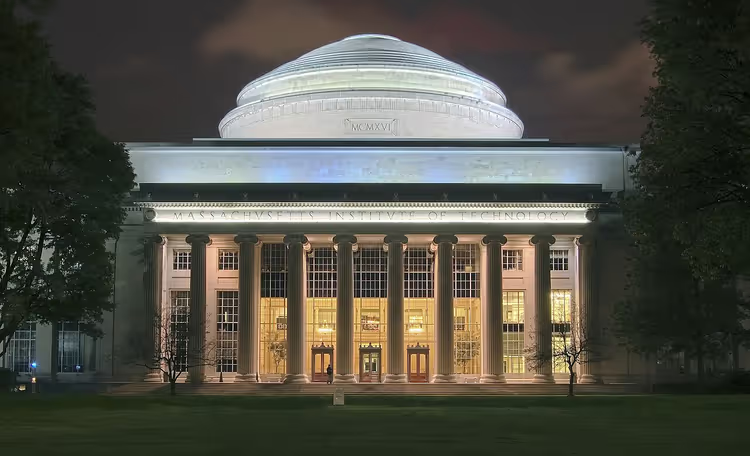
MIT was founded in 1861 in the United States. The institute emerged as a response to the industrial rise of the 19th century, when classical education could no longer keep up with science (official MIT website). In ARWU 2026 it ranks third (ARWU ranking).
It houses a research center, the Computer Science and Artificial Intelligence Laboratory, Lincoln Laboratory, and the Sloan School of Management. Practice is valued above theory here.
MIT is considered the birthplace of many fields, from artificial intelligence to robotics. Dozens of Nobel laureates are among its alumni and faculty. It is worth a close look if you are drawn to engineering and the exact sciences.
- Strong fields: engineering, computer science, economics.
- Known for: early work in artificial intelligence and robotics.
- Who it's for: for those who prefer practice over theory.
4. University of Cambridge
 © Peter S · CC BY-SAPhoto: Peter S, CC BY-SA (https://creativecommons.org/licenses/by-sa/2.0), Wikimedia Commons
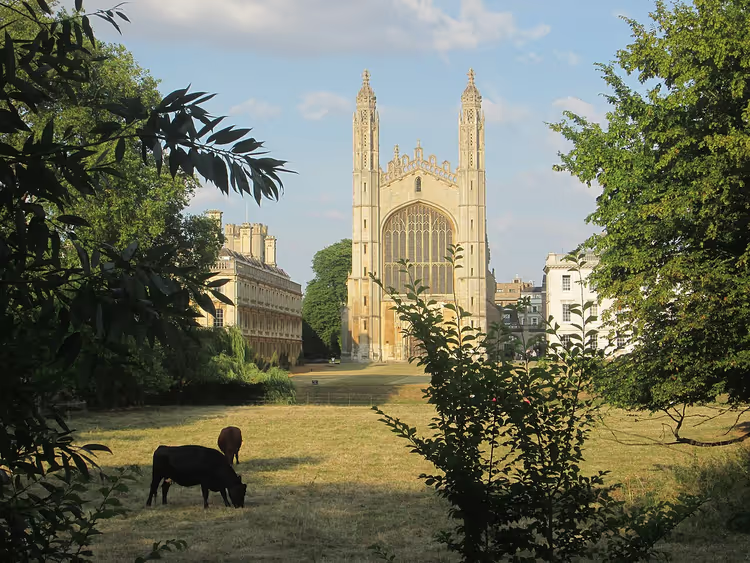
Cambridge emerged in 1209 in England. According to legend, it was founded by scholars who left Oxford after a conflict with the townspeople (University of Cambridge). In ARWU 2026 the university ranks fourth (ShanghaiRanking data).
Today it consists of thirty-one colleges and more than a hundred departments. Two colleges admit only women. Classes are taught in small groups, so the workload on students is high.
In the number of Nobel laureates among alumni, Cambridge is surpassed by few universities in the world. It is useful to know that its mathematics requirements are among the strictest in Europe.
- Strong fields: mathematics, physics, medicine.
- Known for: the college system and research laboratories.
- Who it's for: for those ready for tough selection and an intensive program.
5. University of California, Berkeley
 © Daniel Koenig · CC BY-SAPhoto: Daniel Koenig, CC BY-SA (https://creativecommons.org/licenses/by-sa/4.0), Wikimedia Commons
Berkeley was founded in 1868 and is part of the University of California system (UC Berkeley). In ARWU 2026 it ranks fifth (full list).
Physicists who worked on the atomic and hydrogen bombs worked here. The cyclotron and the BSD operating system were created within these walls. Berkeley was one of the first universities to make its lectures available on YouTube.
Engineering, physics, and computer science are strongest here. If you need labs and Silicon Valley startups, Berkeley gives you both.
- Strong fields: physics, engineering, computer science.
- Known for: open access to lectures and strong science.
- Who it's for: those who want to combine study and work in the Valley.
6. Princeton University
 © Kenneth C. Zirkel · CC BYPhoto: Kenneth C. Zirkel, CC BY (https://creativecommons.org/licenses/by/4.0), Wikimedia Commons
Princeton was founded in 1746, and its first head was the clergyman Jonathan Dickinson. The university received its modern status in 1896 (Princeton University). In ARWU 2026 it ranks sixth (ARWU 2026 data).
Classes follow individual plans and are closely tied to research. Students follow an honor code: cheating must be reported, and a violation leads to expulsion.
Princeton is known for its sports traditions, with dozens of student teams. If you want a small university with strong mathematics and physics, this is a good choice.
- Strong fields: mathematics, physics, economics.
- Known for: the honor code and individual study plans.
- Who it's for: those looking for a small and close-knit academic environment.
7. University of Oxford
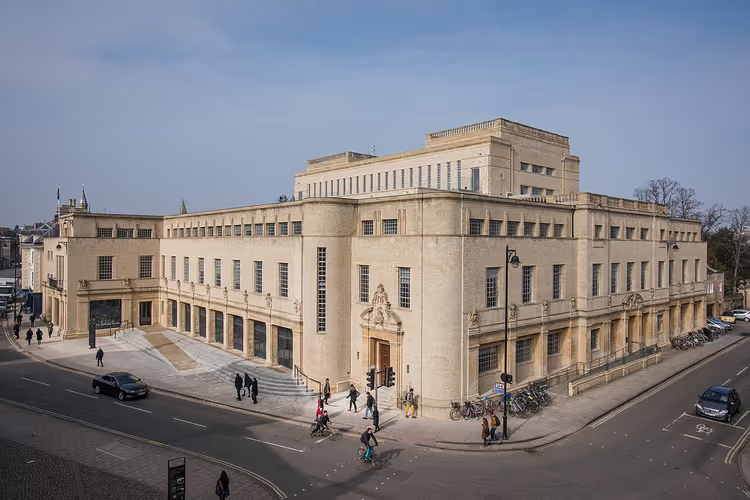 © John Cairns photography , work commissioned by the Bodleian Libraries · CC BY-SAPhoto: John Cairns photography , work commissioned by the Bodleian Libraries, CC BY-SA (https://creativecommons.org/licenses/by-sa/4.0), Wikimedia Commons
Oxford is located in England and is considered the oldest university in the English-speaking world. Teaching has been conducted here since 1096, and the university has no exact founding date (University of Oxford). In ARWU 2026 it ranks seventh (ARWU 2026 table).
It comprises thirty-nine colleges and seven religious educational institutions. Women were first admitted to Oxford only in the 1920s, and single-sex education was abolished in the 1970s.
Lewis Carroll and John Tolkien taught here. Among its graduates are many British prime ministers and several kings. You should remember that Oxford requires a single application through UCAS. It is sent to one college or submitted as an open application.
- Strong fields: humanities, medicine, law.
- Known for: its system of independent colleges and long history.
- Who it's for: those who want a classical education with a world-renowned name.
8. Columbia University
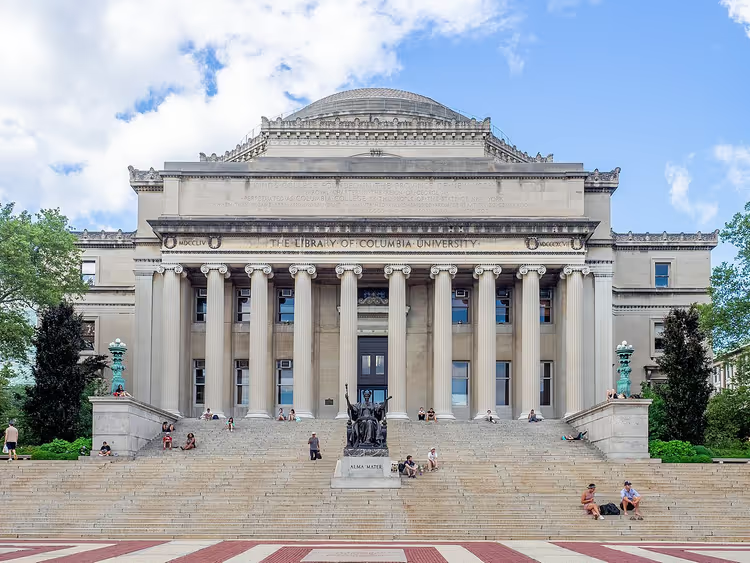 © Ajay Suresh from New York, NY, USA · CC BYPhoto: Ajay Suresh from New York, NY, USA, CC BY (https://creativecommons.org/licenses/by/2.0), Wikimedia Commons
Columbia University was founded in 1754 with the permission of King George II and became a private institution in 1787 (Columbia University). In ARWU 2026 it ranks eighth (full data).
The university is known for educating the US political elite. It houses the Bakhmeteff Archive with materials on Russian emigration. The journalism school, opened at the beginning of the last century, is considered one of the oldest in the country.
Among its alumni are many presidents, ministers, and Nobel laureates. It's useful to know that the campus is in Manhattan, and that's a separate line item in your budget.
- Strong fields: politics, journalism, law.
- Known for: the Bakhmeteff Archive and the journalism school.
- Who it's for: those who value connections and a career in New York.
9. University of Chicago
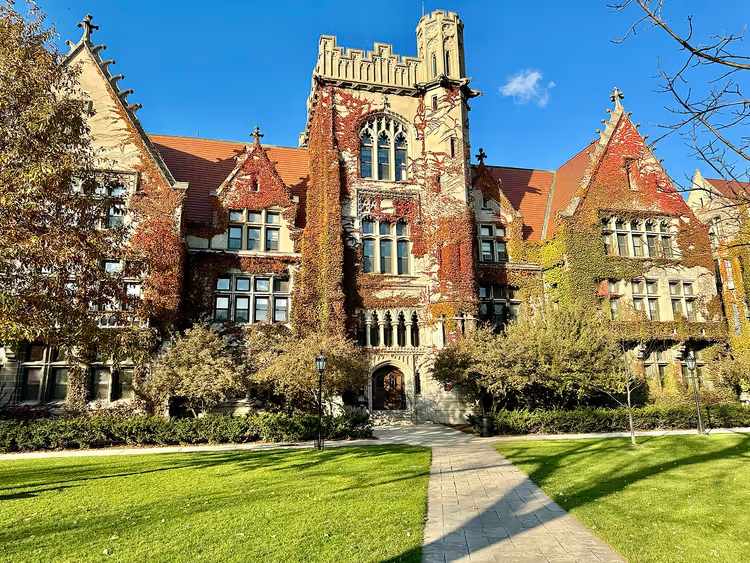 © Warren LeMay from Chicago, IL, United States · CC BY-SAPhoto: Warren LeMay from Chicago, IL, United States, CC BY-SA (https://creativecommons.org/licenses/by-sa/2.0), Wikimedia Commons
The University of Chicago was founded in 1890 with support from oil magnate John Rockefeller and the American Baptist Education Society (University of Chicago). The first classes were held in 1892. In ARWU 2026 the university ranks ninth (ARWU results).
The library has been operating almost since the university's founding and holds millions of books and manuscripts. The strongest fields here are economics, law, physics, and sociology. The Chicago school of economics has influenced global financial policy.
Among its alumni and faculty are dozens of Nobel laureates. If you're interested in an academic career in economics, Chicago offers one of the best foundations in the world.
- Strong fields: economics, physics, sociology.
- Known for: the Chicago school of economics.
- Who it's for: those aiming for research and an academic career.
10. California Institute of Technology
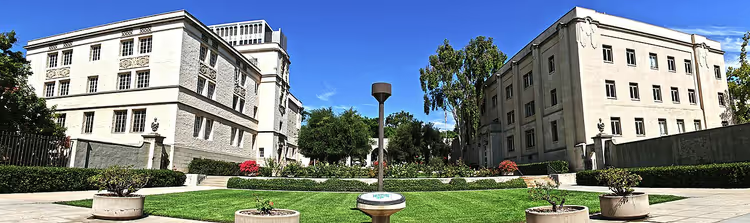 © Canon.vs.nikon · CC BY-SAPhoto: Canon.vs.nikon, CC BY-SA (https://creativecommons.org/licenses/by-sa/3.0), Wikimedia Commons
The California Institute of Technology was founded in 1891 in Pasadena as Amos Throop's small school (Caltech). The university received its current name in 1920 (official website). In ARWU 2026 it ranks tenth (ARWU results).
Traditions are taken seriously here. On Halloween, students drop a pumpkin frozen with liquid nitrogen from the library roof. On "ditch day," seniors leave campus and set up puzzles and traps in their rooms. The challenge for underclassmen is to solve them and get into those rooms.
- The catch: studying is hard, and students joke about choosing two out of three things.
- Strong fields: physics, astronomy, engineering.
- Who it's for: those ready to take on the workload for the sake of science.
⁉️🤔 Frequently asked questions
Which university is currently first in the ARWU ranking?
Harvard holds first place, Stanford is second, and MIT is third. This order has not changed since the previous release, and Harvard has topped the list every year since 2003 (as of 09/2026, official ARWU website). They are followed by Cambridge, Berkeley, and Princeton.
How does ARWU differ from other rankings?
ARWU is calculated using objective indicators: the number of Nobel laureates among alumni and staff, articles in Nature and Science, and citation impact. That is why the ranking measures research strength rather than campus life quality or student reviews (methodology). For choosing a program, that alone is not enough.
How many universities make the ranking in total?
The figures from the 2026 release are given in the introduction (as of 09/2026, published list). Among Asian universities, China's Tsinghua rose the highest.
How many Nobel laureates does Cambridge have?
The university publishes the exact number on its website (Cambridge page). Cambridge consistently ranks among the leaders in the number of laureates among alumni. Some of the prizes were awarded for work done specifically in Cambridge laboratories, not in other countries.
Which of these universities is the oldest?
Oxford: teaching has been conducted there since 1096 (Oxford page). Cambridge appeared in 1209, so it came later, although it is still considered one of the oldest universities in Europe. Harvard was founded in 1636 and is therefore the oldest only in the US.
Is it possible to get into a top-ten university?
Yes, but competition is high, and each school has its own exams and language requirements. Check the conditions on the program's official website, not in third-party reviews. For example, compare two pages: Caltech page and MIT.
In short: what to consider when choosing
A ranking only gives you a first point of reference. For your studies, the program's focus, the city, and the cost of living matter more.
- Science and labs: MIT, Caltech, Berkeley, Princeton.
- Business and technology: Stanford, Columbia.
- Classical humanities school: Oxford, Cambridge.
- Medicine and law: Harvard, Columbia.
- Economics and sociology: Chicago, Harvard.
Compare the full list and methodology on the ARWU 2026 page, and check the requirements on your chosen university's website.

A small editorial team writing guides for independent travel. We travel ourselves, but we haven’t been everywhere, so we check prices, opening hours and how to get there against official sources.