
















Vienna: 30 places from St. Stephen's Cathedral to the Danube Tower
Vienna is compact. The historic center is enclosed by the Ringstrasse, and most places on this list are within walking distance of each other. In one day you can fit in St. Stephen's Cathedral, the Hofburg, and one museum. In three days you can add Schönbrunn, Belvedere, and the Prater.
The cathedral welcomes visitors daily (as of 09/2026, visiting schedule). That means you can put the tower climb and the interior tour on any day of your trip. We've put together thirty places on a "from the center to the outskirts" basis: first the Ring, then palaces, museums, and green spaces. Check prices and opening hours before you leave, seasonal schedules change.
Ad: this article contains affiliate links, we earn a commission if you book through them, at no extra cost to you.
1. St. Stephen's Cathedral
💡 In short:
- Start in the center: the cathedral, the Hofburg, and the Ringstrasse can be walked in half a day.
- Buy Schönbrunn tickets, Belvedere, and zoo tickets in advance, lines are shorter in the morning.
- Prices and opening hours: 09/2026, verified on the official website
 © Mario Modesto Mata · CC BY-SAPhoto: Mario Modesto Mata, CC BY-SA (https://creativecommons.org/licenses/by-sa/3.0), Wikimedia Commons
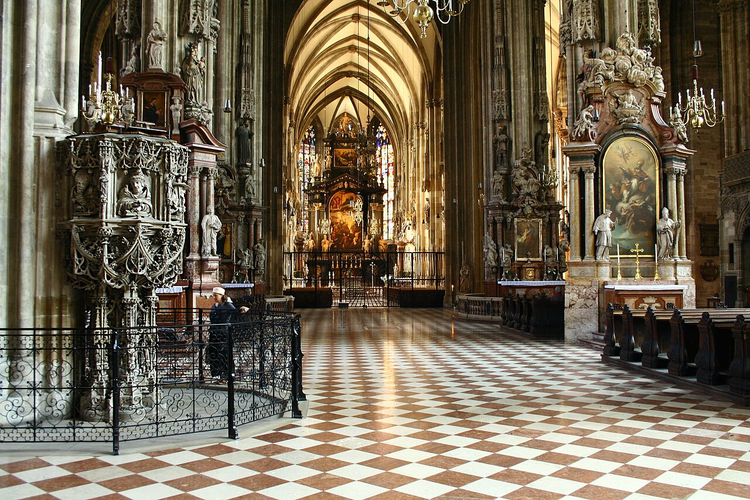
St. Stephen's Cathedral (Stephansdom) stands on Stephansplatz in the very center of the city. It is the country's main church and a convenient starting point for a walk through the old town. You'll see the spires long before you reach the entrance.
Inside, linger at the main altar, the stained glass, and the organ: organ concerts take place here year-round. Beneath the cathedral are the Habsburg burial vaults, which are accessible by guided tour. The south tower is climbed on foot, while the north tower has an elevator (as of 09/2026, official website).
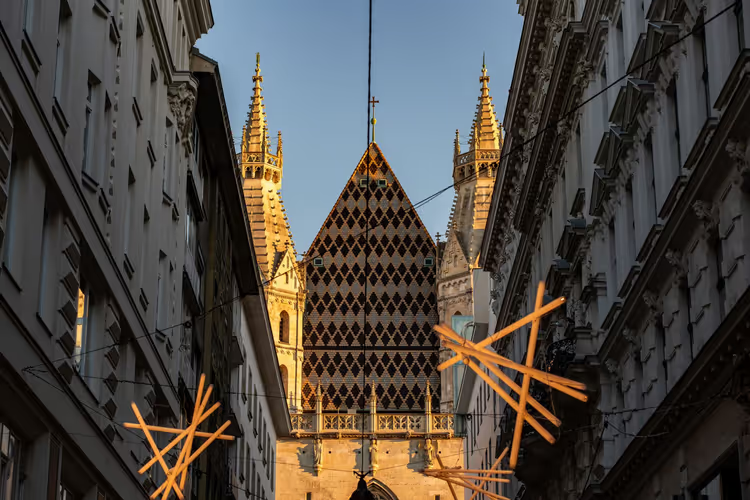
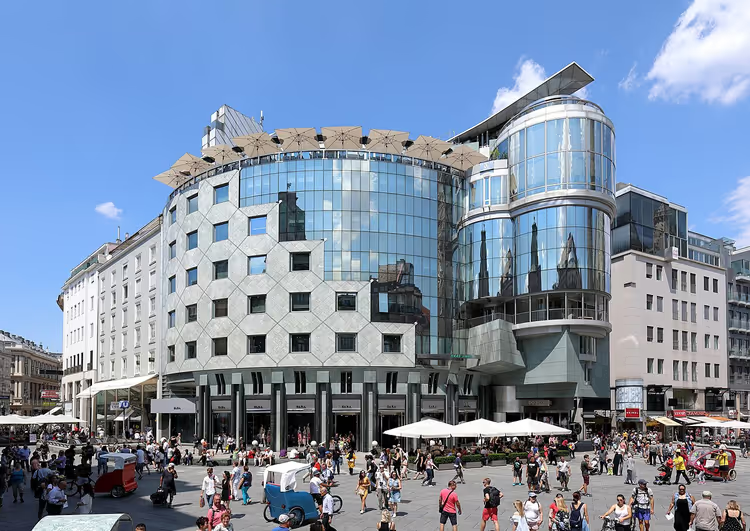
The cathedral was built over several centuries, so the interior combines elements from different eras. Note the tiled roof: you can make out the mosaic pattern with coats of arms from the tower or from the windows of neighboring buildings. Inside there is a small exhibition about the construction and restoration of the church. Across from the entrance stands the glass Haas House, and from the square begins Kärntner Straße with its shops.
- Getting there: metro to Stephansplatz station, exit toward the square (see map)
- Cost: entry to the cathedral is free, you pay for the towers and catacomb tours
2. Albertina Museum
 © C.Stadler/Bwag · CC BY-SAPhoto: C.Stadler/Bwag, CC BY-SA (https://creativecommons.org/licenses/by-sa/4.0), Wikimedia Commons
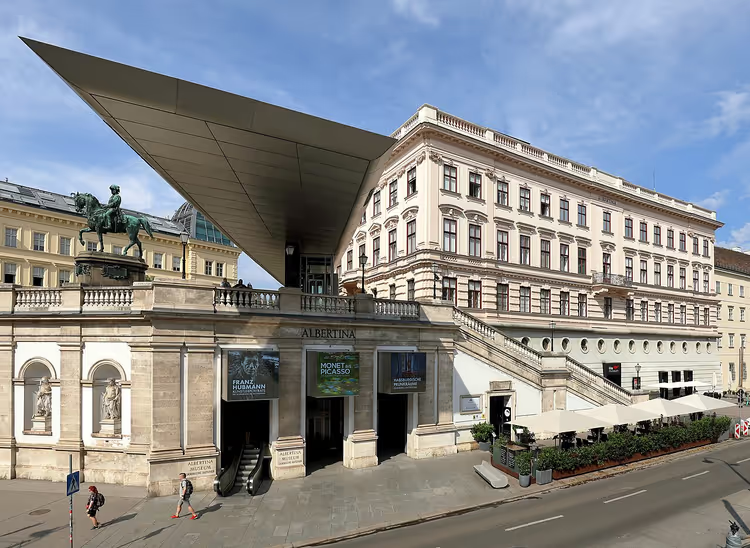
The Albertina holds one of the world's largest graphic art collections: drawings, watercolors, and prints from the late Middle Ages to the present day (as of 09/2026, official website). The permanent exhibition features Impressionists and modern art, while temporary exhibitions change several times a year.
The building stands next to the Hofburg, on Albertinaplatz. A titanium canopy juts out over the entrance, making the museum instantly recognizable.
The collection was started by Duke Albert, and the museum opened to the general public only in the 20th century. Some rooms are given over to the permanent exhibition, while the rest change: several traveling projects pass through here each year. If you want to catch a specific exhibition, check the museum's program before your trip, and get your ticket for the morning: by midday the galleries fill up.
3. Vienna State Opera
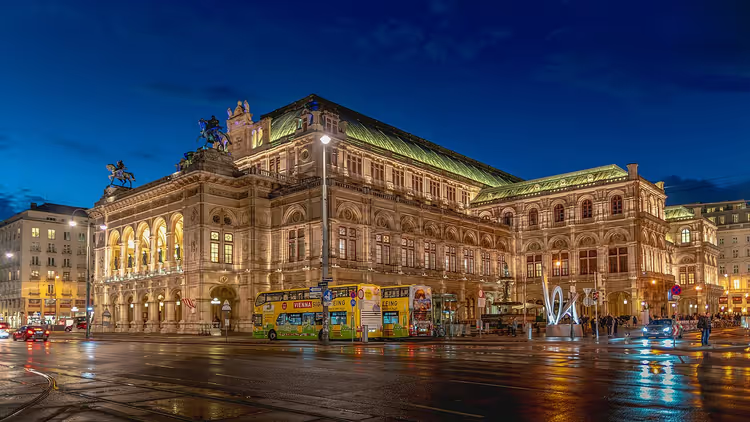
The Vienna State Opera opened in 1869 and has staged performances almost every evening since then (as of 09/2026, official website). It hosts the Vienna Opera Ball, for which the hall is redecorated from scratch.
Tickets for evening performances sell out in advance, but some seats become available on the day of the show. If you are not prepared to stand by the wall, buy seats on the day sales open. Building tours run during the day, and tickets for those are easier to get: they work even for people who are far from opera fans.
In February, the opera hall turns into the venue for the Vienna Opera Ball, and tickets for it sell out well in advance. For regular evenings, the box office has standing-room tickets: they are cheaper, but you have to choose from what is left. On the daytime tour, you will see the stage, the auditorium, and the backstage area that the public is not allowed into in the evening.
4. Schönbrunn Palace
 © Tournasol7 · CC BY-SAPhoto: Tournasol7, CC BY-SA (https://creativecommons.org/licenses/by-sa/4.0), Wikimedia Commons
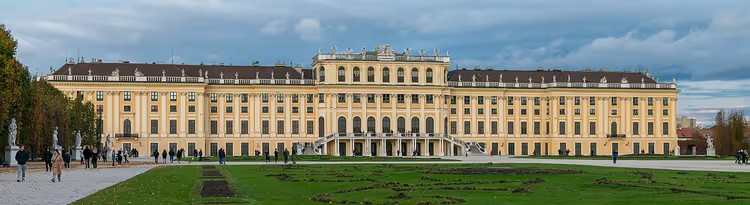
Schönbrunn Palace served as the summer residence of the Habsburgs. It is the largest palace complex in the city, and the rooms plus the park will take you a full day. The rooms are open daily, but the schedule changes by season (as of 09/2026, official website).
Inside, you will see the private apartments of Franz Joseph and Elisabeth, the dining room, and the state rooms with period furniture and tapestries. Tickets come in several formats, which differ in route length (as of 09/2026, ticket options).
The park is open year-round and free of charge. You will find the main avenues on both sides of the palace, and the climb up to the Gloriette pavilion deserves a separate hour.
The park offers more than just avenues: there is a maze, a palm house, and a courtyard with succulents. In summer, the flower beds change several times per season, and in spring wisteria blooms along the paths. For the park alone, without the rooms, allow at least two hours, otherwise you will be rushing and will miss the panorama of the city from the Gloriette hill.
5. Hofburg Palace
 © Jorge Láscar from Australia · CC BYPhoto: Jorge Láscar from Australia, CC BY (https://creativecommons.org/licenses/by/2.0), Wikimedia Commons
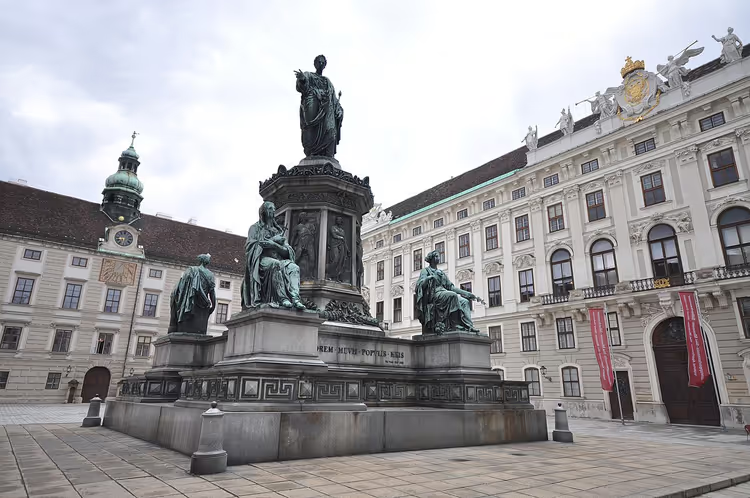
The Hofburg was the winter residence of the Habsburgs and remains the official residence of the President of Austria. The complex consists of several wings and courtyards, so you choose your own route: the Imperial Apartments, the Sisi Museum, the Silver Collection (as of 09/2026, official website).
The Treasury (Schatzkammer) holds the imperial crown and regalia, and it also houses a reliquary containing a fragment of the True Cross (as of 09/2026, official website). For the Hofburg alone, allow at least half a day, otherwise you will be rushing through the rooms.
You will approach the Hofburg through Michaelerplatz, where fiacres stand in front of the main entrance: a horse-drawn ride through the center is available year-round. Behind the gates begins the old courtyard, a convenient starting point for your visit. The inner courtyards are open freely, and you only need a ticket for the museums, so you can simply stroll around the grounds.
6. Belvedere
 © C.Stadler/Bwag · CC BY-SAPhoto: C.Stadler/Bwag, CC BY-SA (https://creativecommons.org/licenses/by-sa/4.0), Wikimedia Commons
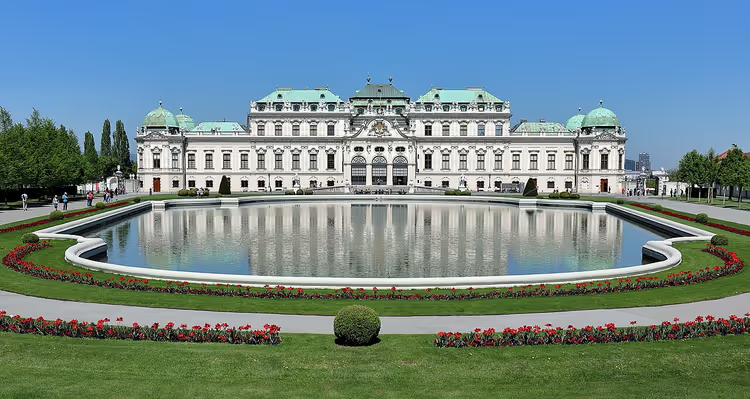
The Belvedere was built as the summer residence of Prince Eugene of Savoy, and the name translates as "beautiful view." Today it is two palaces, the Upper and Lower Belvedere, with a shared garden between them.
The Upper Belvedere houses Austria's most famous painting, Gustav Klimt's "The Kiss," and a large collection of Egon Schiele (as of 09/2026, official website). The Lower Palace is dedicated to temporary exhibitions, and concerts are held in the orangery. From the main entrance you walk up the avenue, so start with the Upper Belvedere and leave the garden for the way back.
Tickets and group tours are easy to book online: Belvedere architecture and art on GetYourGuide. The museum is open daily; check exact hours and prices on the official website before you go.
7. Liechtenstein Palace Museum
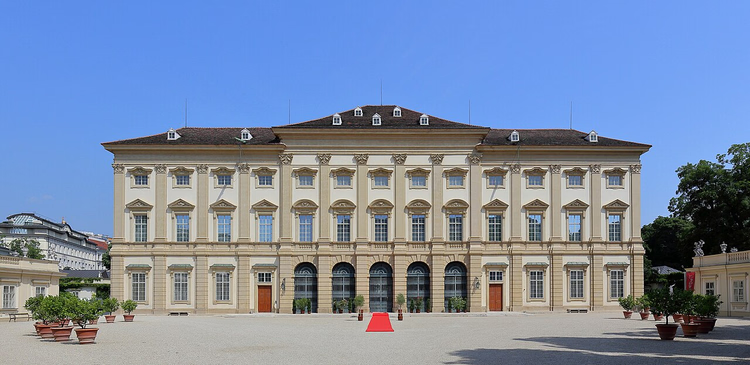
Liechtenstein Palace belongs to the princely family that collected art for several centuries. The collection includes paintings by Rubens, van Dyck, and Rembrandt, Baroque furniture, porcelain, and hand-woven tapestries.
 © C.Stadler/Bwag · CC BY-SAPhoto: C.Stadler/Bwag, CC BY-SA (https://creativecommons.org/licenses/by-sa/4.0), Wikimedia Commons
The building in the 9th district is surrounded by a garden, and the main Baroque hall is used for concerts and ceremonies. There is no permanent museum access to the rooms; the collection is shown at temporary exhibitions, so check the visiting schedule before your trip.
8. The Tower of Fools
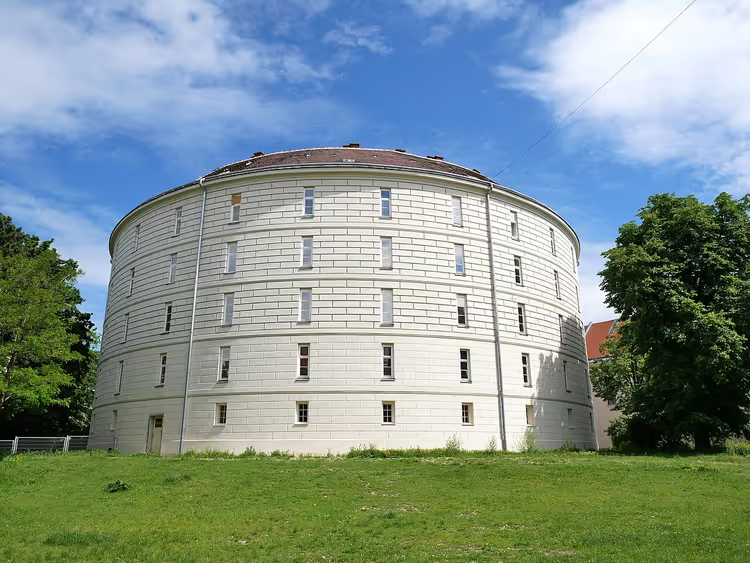 © Herbert Ortner · CC BYPhoto: Herbert Ortner, CC BY (https://creativecommons.org/licenses/by/4.0), Wikimedia Commons
The Tower of Fools (Narrenturm) stands in the courtyard of an old hospital on university grounds. The round five-story building was constructed as an asylum for the mentally ill, and today it houses a pathology collection: organ specimens, wax models, and historical instruments (as of 09/2026, official website).
The tower is not open every day; check the schedule and tours on the museum's website. Bring adult companions: the exhibition is not for the faint of heart.
- The catch: the displays are intended for an adult audience; it's not worth going with children
9. Burgtheater
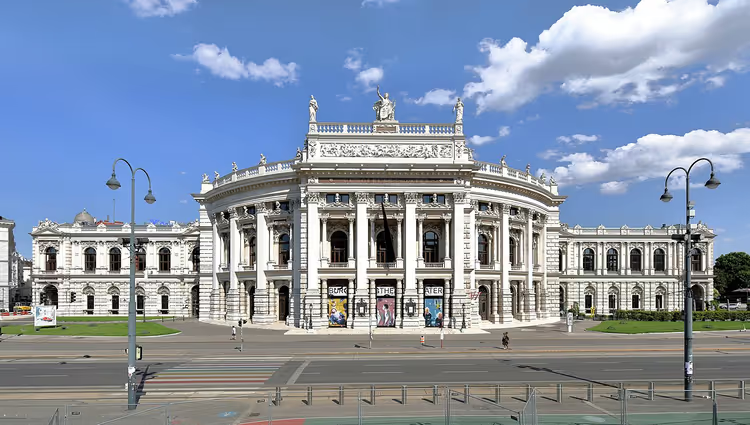 © C.Stadler/Bwag · CC BY-SAPhoto: C.Stadler/Bwag, CC BY-SA (https://creativecommons.org/licenses/by-sa/4.0), Wikimedia Commons
The Burgtheater was founded as the court theater of Maria Theresa (as of 09/2026, official website). Today it is the country's main drama stage, and performances are in German.
The theater's facade faces the Ringstrasse, and you'll walk past it in any case. If you want an evening without language barriers, choose musical productions: the text takes a back seat there.
10. Vienna Konzerthaus
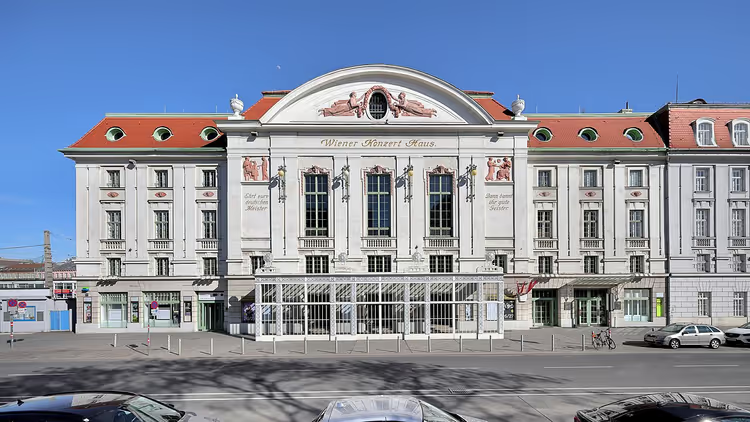 © C.Stadler/Bwag · CC BY-SAPhoto: C.Stadler/Bwag, CC BY-SA (https://creativecommons.org/licenses/by-sa/4.0), Wikimedia Commons
The Vienna Konzerthaus opened in 1913 and remains one of the city's main concert venues (as of 09/2026, official website). Its halls host symphony orchestras, jazz ensembles, and soloists, with programming year-round.
An evening of classical music is easy to add to any day of your trip: tickets for a concert in the Great Hall on GetYourGuide. Take seats in the stalls if you want to see the orchestra, or on the balcony if acoustics matter more to you.
The program mixes symphony performances, chamber evenings, and jazz, so it's easy to pick an evening without opera. Tickets for the main hall sell out in advance, while seats for daytime concerts remain available longer. If you're going with children, look at the daytime programs: they're shorter than the evening ones and start earlier.
11. Vienna Woods
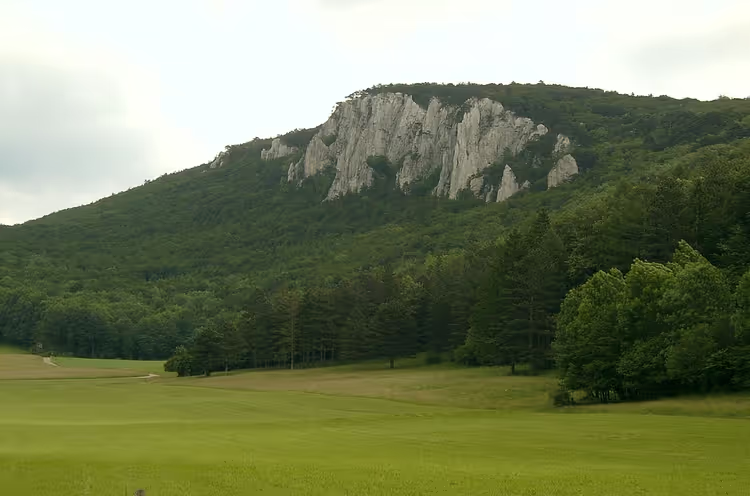 © by myself in june 2005 · CC BY-SAPhoto: by myself in june 2005, CC BY-SA (http://creativecommons.org/licenses/by-sa/3.0/), Wikimedia Commons
The Vienna Woods (Wienerwald) begin on the western outskirts of the city, and you can reach them by public transport. These are hills with oak and beech forests, vineyards, and viewpoints; locals call the woods "Vienna's lungs" (as of 09/2026, Vienna tourist office website).
You can walk here all day: there are plenty of marked walking and cycling trails, with benches along the way. The most visited spot in the woods is the underground lake at Hinterbrühl. Bring water and comfortable shoes, the climbs here are long.
12. Hundertwasserhaus
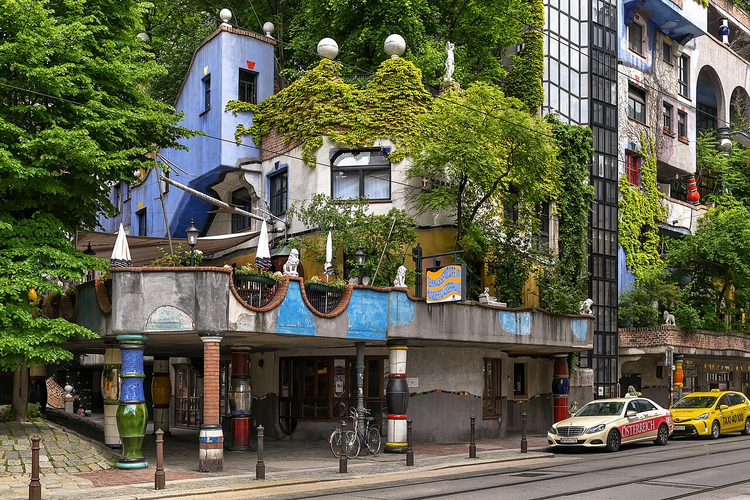 © Jorge Franganillo · CC BYPhoto: Jorge Franganillo, CC BY (https://creativecommons.org/licenses/by/2.0), Wikimedia Commons
The Hundertwasserhaus was built to a design by the artist Friedensreich Hundertwasser. The facade is painted in uneven color fields, no two floors in the building are alike, and trees grow out of the windows. The architect called the building ecological because shrubs and trees live right in the walls.
The building is residential, so you won't be allowed inside: the apartments are occupied. You should view the facade from Löwengasse, ideally in the morning before tour groups gather at the wall. Next door, the Kunst Haus Wien houses a museum of the same architect with temporary exhibitions (as of 09/2026, Kunst Haus Wien page on the tourist office site).
If you want to cover the center and outlying districts in one day, take a hop-on hop-off bus tour of Vienna.
- The catch: you can't go inside, the building is residential, and groups photograph the facade all day
13. Kreuzenstein Castle
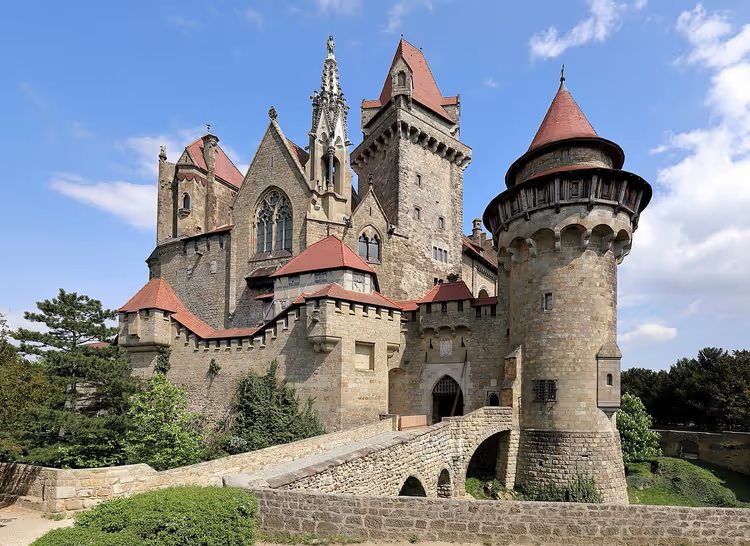 © C.Stadler/Bwag · CC BY-SAPhoto: C.Stadler/Bwag, CC BY-SA (https://creativecommons.org/licenses/by-sa/4.0), Wikimedia Commons
Kreuzenstein stands on a hill among forests north of Vienna, about half an hour away by car. The fortress grew on the site of a Roman fortification, and the castle got its current appearance when Count Wilczek restored it: he assembled the complex based on old engravings and drawings.
Inside, there's a weapons museum: knight's armor, a collection of edged weapons and firearms, old books, and household items. A separate daytime program, falconry, is shown in the courtyard. The castle and courtyard will take you a couple of hours.
The halls are accessible only with a guided tour, and groups are assembled on a schedule.
- The catch: you can't explore the halls on your own, you're with a group the whole time
14. Liechtenstein Castle
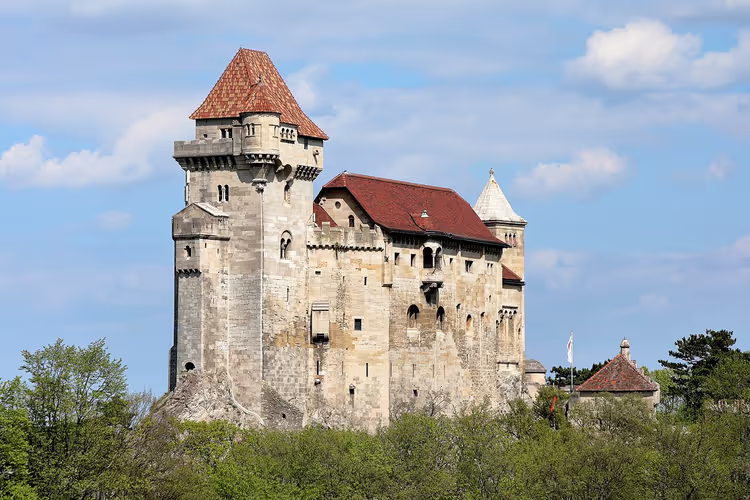 © C.Stadler/Bwag · CC BY-SAPhoto: C.Stadler/Bwag, CC BY-SA (https://creativecommons.org/licenses/by-sa/4.0), Wikimedia Commons
Liechtenstein Castle (Burg Liechtenstein) stands in the Vienna Woods on a rocky outcrop. It's a medieval fortress with narrow arrow-slit windows and thick walls: the lower-floor rooms are carved directly into the rock, which gives the whole structure its strength.
The main treasure is inside, the Chapel of St. Pancras with a crucifix made of red chalk. Services are held in the chapel, bells ring, and in summer the castle hosts festivals. It's open on a seasonal schedule, with shorter hours in winter.
The road here winds through forest switchbacks, so without a car it takes longer to reach.
15. Kunsthistorisches Museum
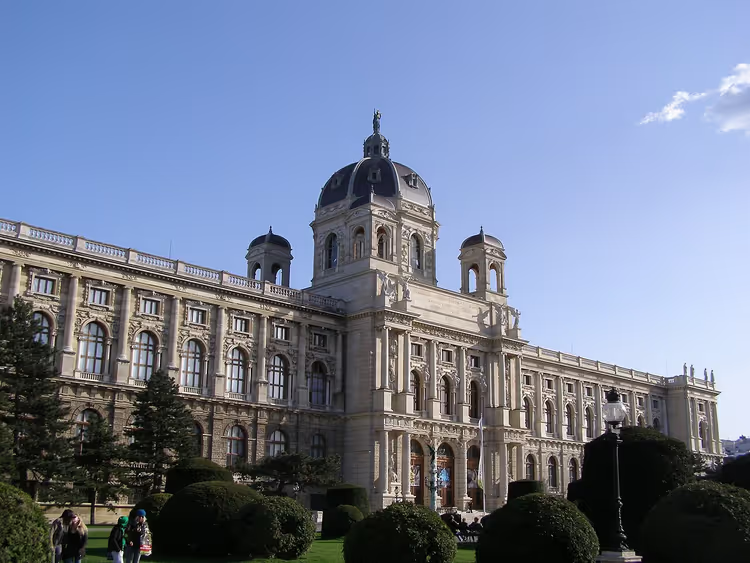 © Andrzej Otrębski · CC BY-SAPhoto: Andrzej Otrębski, CC BY-SA (https://creativecommons.org/licenses/by-sa/3.0), Wikimedia Commons
The Kunsthistorisches Museum occupies a building on Maria-Theresien-Platz, directly opposite the identical-looking Natural History Museum. The lower floor is given over to the Kunstkammer: musical instruments, gold and ivory objects, and artifacts from Ancient Egypt, Greece, and Rome.
One floor up hangs the European painting collection: Bruegel, Titian, Rubens, Velazquez. At the top is the numismatic collection, one of the largest in Europe.
Set aside half a day for your visit: the galleries are long and there are few benches. Take a guided tour of the galleries if you want to understand the subjects: Vienna museum tours on GetYourGuide.
Between the Kunsthistorisches Museum and the Natural History Museum stands the Maria Theresa monument, and the square itself is a good spot for a coffee break. If you are traveling with children, the second museum will take more time: it has dinosaurs, minerals, and an old model of the Earth. Both buildings are open until evening one day a week, which is convenient if your days are filled with tours.
16. Prater Park
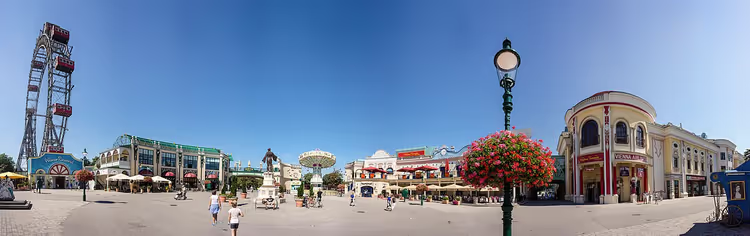 © Christian Barth · CC BY-SAPhoto: Christian Barth, CC BY-SA (https://creativecommons.org/licenses/by-sa/3.0/at/deed.en), Wikimedia Commons
The Prater is divided into two parts. The Wurstelprater has rides, cafes, and beer halls, while in the Green Prater you walk along paths under old trees. Park entry is free; you pay only for rides and rentals.
The main attraction is the Wiener Riesenrad Ferris wheel, built in 1897 (as of 09/2026, opening hours). From a height of nearly 65 meters, you get a panorama of the center and the Danube. The cabins are enclosed, so wind and rain will not bother you.
In the Green Prater, people rollerblade, cycle, run, and simply stroll with their families. The place is popular with locals, and it gets busy in the evening. It is convenient to buy a wheel ticket in advance: Riesenrad ticket on GetYourGuide.
17. City Hall
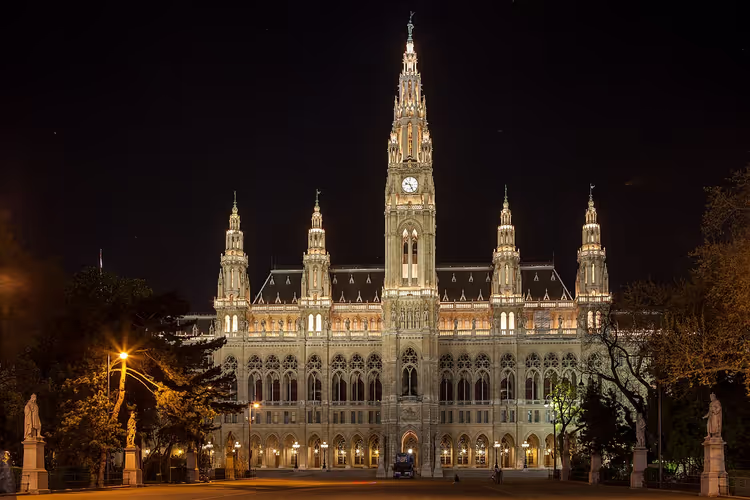 © Herbert Weber, Hildesheim · CC BY-SAPhoto: Herbert Weber, Hildesheim, CC BY-SA (https://creativecommons.org/licenses/by-sa/4.0), Wikimedia Commons
The neo-Gothic City Hall (Rathaus) opened in 1883 and still serves as the seat of the city government (as of 09/2026, official website). The facade with its tower and the figure of the "iron guardian" faces a park where concerts and a film festival take place in summer, and a Christmas market operates in winter.
The observation deck on the tower is open on a schedule, and you reach it by stairs. You can walk around the inner courtyards for free, but book a tour of the halls in advance: groups are small.
A metro station is nearby, so City Hall is easy to fit in between the Burgtheater and the museums of the MuseumsQuartier.
On the facade you will find statues, a balustrade with the coats of arms of the federal states, and the guardian figure with a flag on the tower. Inside there are two libraries, and exhibitions and concerts take place in the main hall.
18. Karlskirche
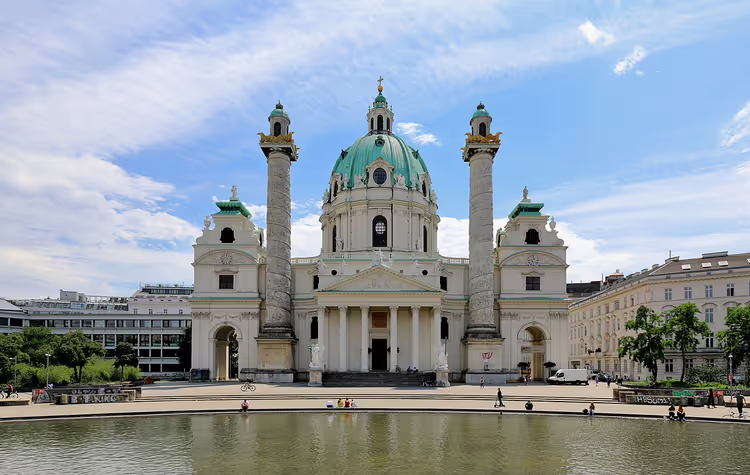 © C.Stadler/Bwag · CC BY-SAPhoto: C.Stadler/Bwag, CC BY-SA (https://creativecommons.org/licenses/by-sa/4.0), Wikimedia Commons
Karlskirche stands on Karlsplatz and is visible from all sides thanks to its enormous dome and two columns. The church was consecrated in 1737 in honor of Saint Charles Borromeo, protector against the plague, in gratitude for Vienna's deliverance from the epidemic (as of 09/2026, official website).
The facade is decorated with reliefs depicting scenes from the epidemic, and inside there are many frescoes and stucco work. The climb to the dome goes up a spiral staircase, and from above you can see the paintings up close. A small museum dedicated to Carlo Borromeo operates on a separate floor.
You need a ticket for entry and the climb; tourists are not admitted to the church during services. Address: Kreuzherrengasse, Vienna's fourth district.
19. Votivkirche
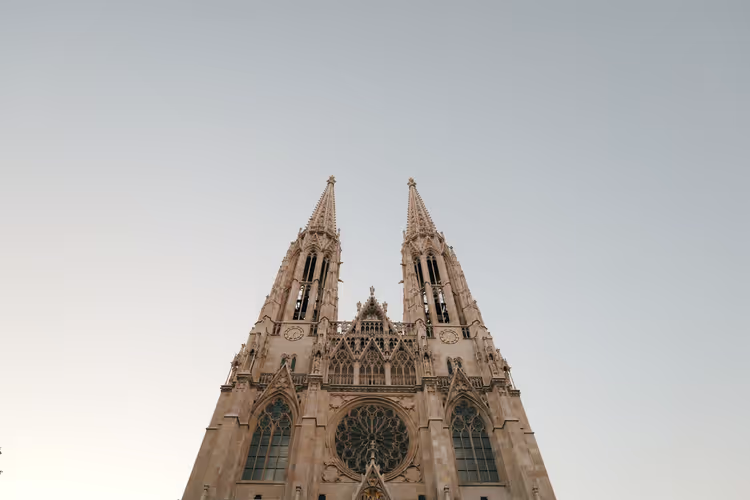
Votivkirche was consecrated in 1879 (as of 09/2026, official website). The church was built with donations from citizens in gratitude for Emperor Franz Joseph surviving an assassination attempt, hence its second name, the "votive church."
Inside you will hear a large organ and see the Antwerp Altar, an example of Flemish wood carving. The interiors are neo-Gothic: high vaults, stained glass windows with biblical scenes, individual chapels.
Outside, the church stands on the Ringstrasse by a park, and it is visible from the city hall. Getting inside is trickier: tours are held on a schedule, in groups with advance registration.
- The catch: on a weekday you will more often see the church from the outside, so check the schedule in advance
20. St. Peter's Church
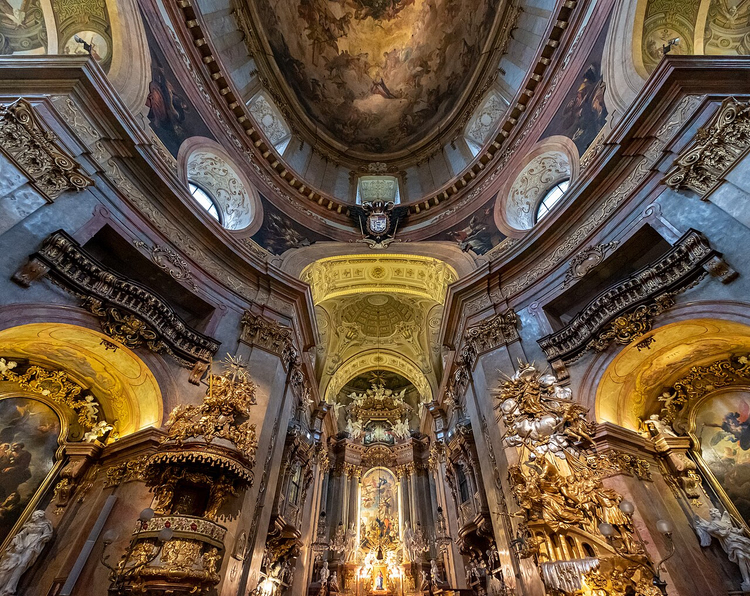 © Jules Verne Times Two · CC BY-SAPhoto: Jules Verne Times Two, CC BY-SA (https://creativecommons.org/licenses/by-sa/4.0), Wikimedia Commons
St. Peter's Church (Peterskirche) hides in an alley near Graben, and from the street you will only see part of the facade. Inside, a baroque hall awaits you with frescoes, stucco, and gilding, while the dome outside is painted green (as of 09/2026, official website).
Services are held in the church, and in the evenings organ and classical music concerts are given. A visit will not take much time: the hall is small, and half an hour will be enough for you, including photos.
A short alley leads here from Graben, so the church is easy to add to a route through the center.
21. Mozart's house museum
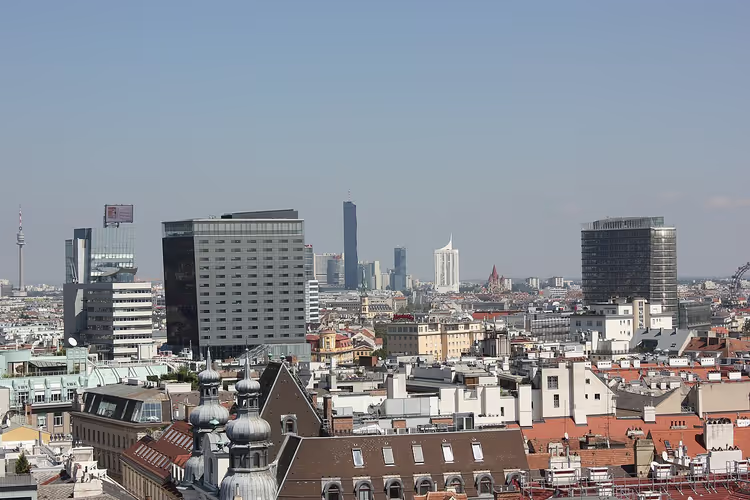 © Andrzej Otrębski · CC BY-SAPhoto: Andrzej Otrębski, CC BY-SA (https://creativecommons.org/licenses/by-sa/4.0), Wikimedia Commons
In the house on Domgasse in the first district, Mozart lived for several years and it was here that he wrote The Marriage of Figaro (as of 09/2026, official website). The museum occupies several floors, and the composer's apartment has been restored based on documents from that time.
The exhibition is interactive: you listen to excerpts from his works, watch concert recordings, and learn how the composer earned and spent money. Of all Mozart's Viennese addresses, only this house has survived, so you won't find any other authentic apartments in the city.
The museum tour is accompanied by melodies from Figaro, so even those who don't know the biography well can understand what it's all about.
22. Albertina gallery
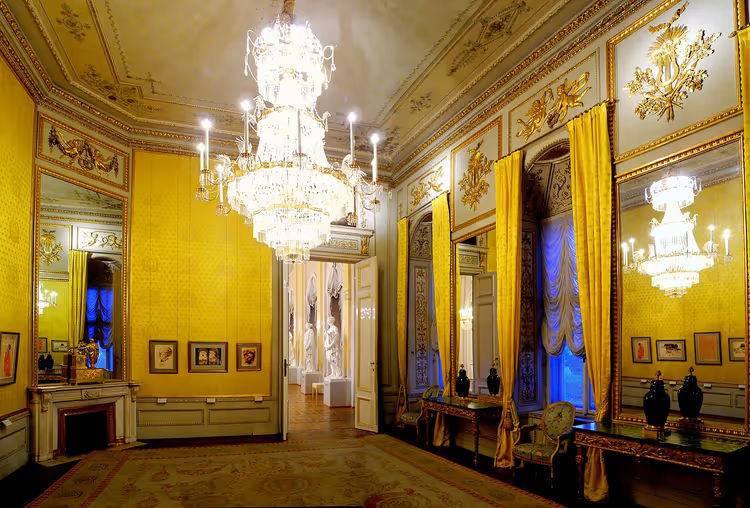 © Schölla Schwarz · CC BYPhoto: Schölla Schwarz, CC BY (https://creativecommons.org/licenses/by/3.0), Wikimedia Commons
The Albertina building was a Habsburg palace and later passed to Duke Albert, who began assembling the collection. Today the museum holds over nine hundred thousand graphic works and tens of thousands of watercolors and drawings (as of 09/2026, museum website).
On the upper floors you'll find Leonardo da Vinci, Raphael, Dürer, Rubens, and Picasso, as well as a photography collection. Downstairs there's a library, gift shop, restaurant, and jewelry store.
The palace stands right next to the Hofburg, so the Albertina is convenient to visit on the same day. Allow two to three hours for the galleries, plus another hour for a temporary exhibition.
23. Sigmund Freud museum
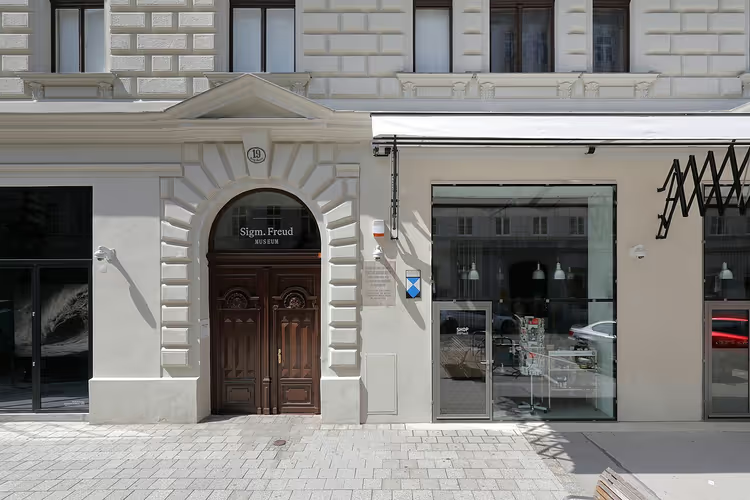 © C.Stadler/Bwag · CC BY-SAPhoto: C.Stadler/Bwag, CC BY-SA (https://creativecommons.org/licenses/by-sa/4.0), Wikimedia Commons
The Sigmund Freud Museum occupies the house on Berggasse in the ninth district, where the founder of psychoanalysis lived and saw patients for many years. You'll see the waiting room, study, living quarters, and original furniture (as of 09/2026, official website).
A particular source of pride for the museum: its psychoanalysis library, one of the largest in Europe. Figurines of ancient gods stood on Freud's desk during sessions, and you'll find some of them in their original place.
Freud took the main artifacts, including the couch, to London when he fled the Nazis. The catch: a significant portion of the original items is kept in London, so the Vienna exhibition is more modest than visitors expect.
24. Leopold museum
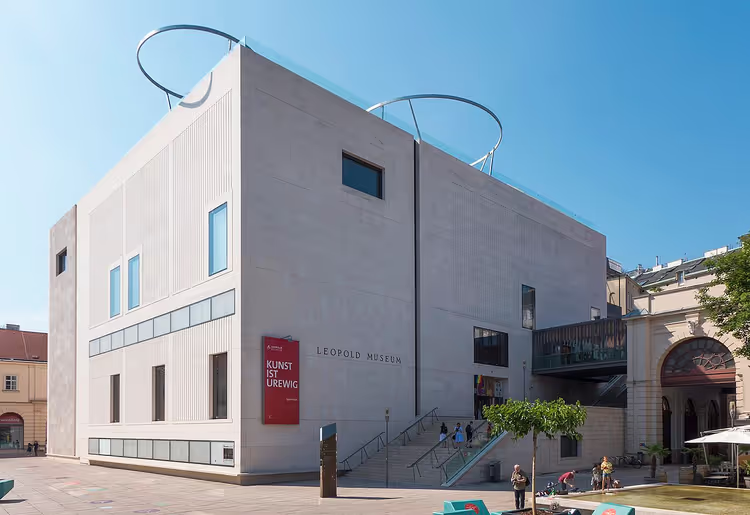
The Leopold Museum stands in the MuseumsQuartier, and its windows offer views of Maria-Theresien-Platz and the Hofburg. The building is clad in white shell limestone, and inside you'll find oak parquet floors and brass details.
The core of the collection is the private holdings of the family of physician Rudolf Leopold. It houses the world's largest collection of Egon Schiele and works by Gustav Klimt (as of 09/2026, museum website). Alongside the permanent exhibition, special exhibitions take place, and there's a cafe and shop in the courtyard.
The MuseumsQuartier is next to Maria-Theresien-Platz, so after the Leopold you can walk to the neighboring galleries without transport.
25. Danube tower
 © C.Stadler/Bwag · CC BY-SAPhoto: C.Stadler/Bwag, CC BY-SA (https://creativecommons.org/licenses/by-sa/4.0), Wikimedia Commons
The Danube Tower (Donauturm) was built in 1964 for a horticultural show and has since been considered the tallest building in Austria (as of 09/2026, official website). From the observation deck at a height of one hundred and fifty meters, you can see the old town, the Vienna Woods, and the Danube.
A high-speed elevator takes you to the top, and on the upper level there's a revolving restaurant. For thrill-seekers, there's a slide whose descent starts near the upper deck.
The tower stands in Donaupark, between the Kaisermühlen and Alte Donau metro stations. Come at sunset: there'll be enough light for both the city and the Danube panorama.
From the observation deck you can see more than just the center: below lies Danube Island with its beaches, and across the way stand the high-rise buildings of Donau City. In the evening the lighting comes on, and the panorama reads differently. Get a ticket for a specific time slot: with it you skip the elevator line, and the observation deck is small.
26. Ringstrasse
 © Andrew Nash from Vienna, Austria · CC BY-SAPhoto: Andrew Nash from Vienna, Austria, CC BY-SA (https://creativecommons.org/licenses/by-sa/2.0), Wikimedia Commons
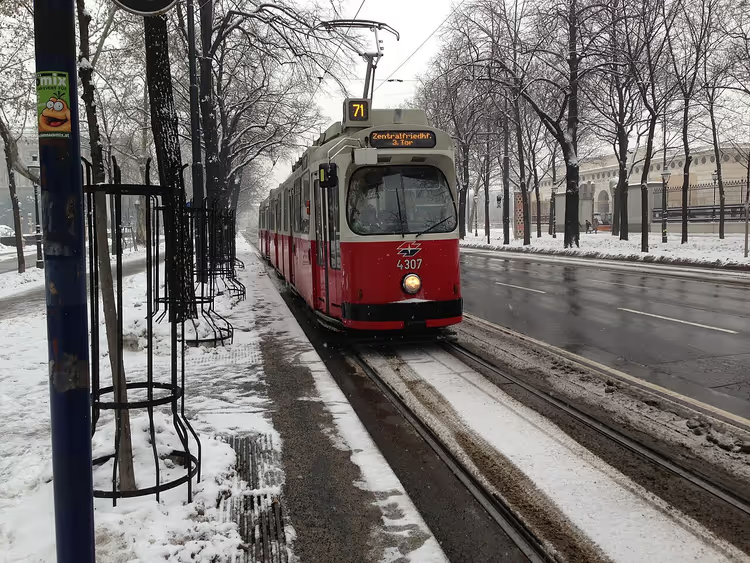
Ringstrasse closes off the center with a ring about five kilometers long. The street was laid out in the mid-19th century, and the country's main buildings rose along it: the opera house, Hofburg, city hall, parliament, university, Burgtheater, and museums.
The boulevard's appearance was shaped by renowned architects of the time, so the styles of neighboring buildings never repeat. Today it is also a traffic artery: trams run along the ring, and people stroll and shop along the sidewalks.
You can walk the entire ring in three to four hours. If you want to save your energy and get museum discounts, get the Vienna Card with transport and discounts on GetYourGuide.
27. Café Sacher
 © Tobias Kleinlercher / Wikipedia · CC BY-SAPhoto: Tobias Kleinlercher / Wikipedia, CC BY-SA (https://creativecommons.org/licenses/by-sa/4.0), Wikimedia Commons
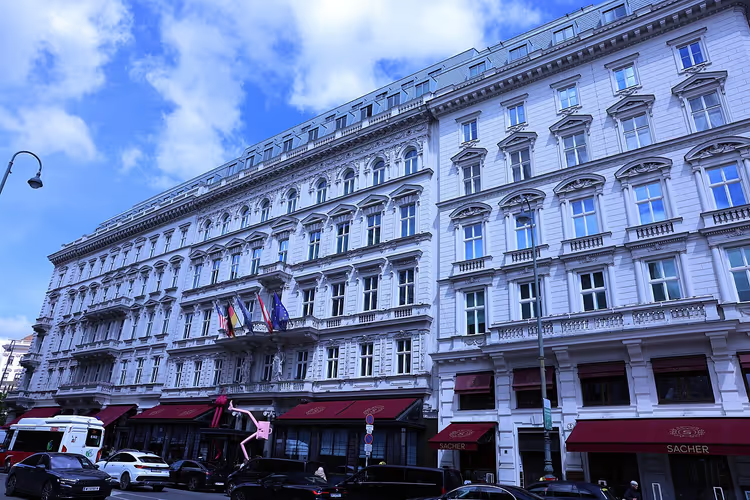
Café Sacher sits behind the Vienna State Opera, on Philharmonikerstrasse. This is where they serve the Sacher-Torte, whose recipe has been kept secret since 1832 (as of 09/2026, official website).
The menu has dozens of coffee varieties, from Melange to Schwarzer, plus classic strudel. In summer, tables are set out on the terrace, and you drink coffee with a view of the opera house.
The café is open from morning until late evening, but in season it is better to book a table.
The cake is also sold by the box, so it is easy to take home as a souvenir. Next to the café stands the Hotel Sacher, where they serve the same version of the cake in a quieter setting. If you only want dessert, come at opening time: in season the room fills up by midday.
28. Schönbrunn Zoo
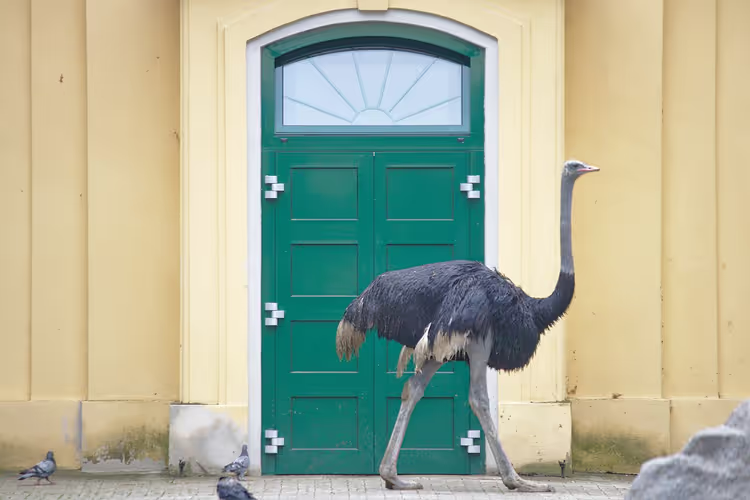 © Paul Korecky · CC BY-SAPhoto: Paul Korecky, CC BY-SA (https://creativecommons.org/licenses/by-sa/2.0), Wikimedia Commons
Schönbrunn Zoo has been operating since 1752 and is considered the oldest zoo in the world (as of 09/2026, official website). It is open every day of the year, including holidays.
The enclosures are built to mimic natural conditions, and hundreds of species live here: giraffes, elephants, koalas, rhinos, polar bears, and giant pandas. Separate pavilions are dedicated to the tropics, orangutans, and Arctic animals. Animal feedings run on a schedule and are worth watching.
The zoo is located in Schönbrunn Park; you can walk there from the palace or take the train to Hietzing station. Buy tickets online to avoid the ticket office line: zoo tickets on the zoo's website.
Pandas remain the main reason for the lines, so head to their pavilion first. In the tropical pavilion you will see birds and plants under one roof. Feeding times are announced at the entrance, and some shows draw large crowds.
29. University of Vienna botanical garden
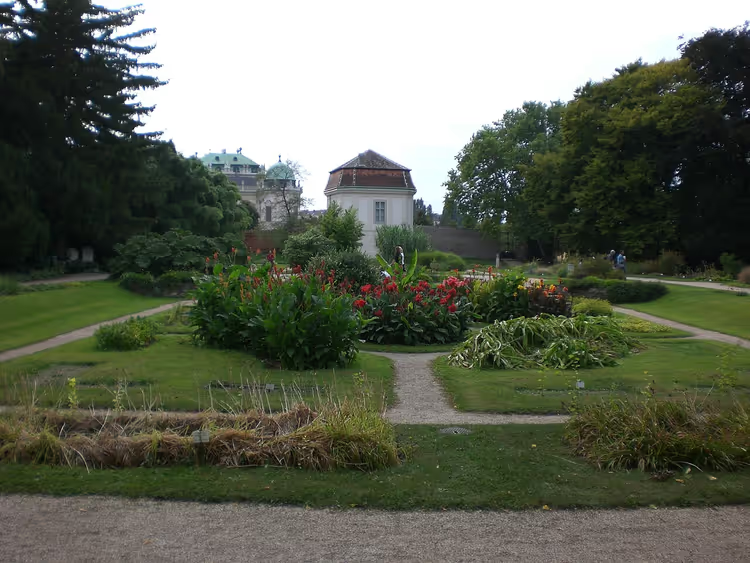
The University of Vienna Botanical Garden came into being at the request of Maria Theresa, who needed a site for medicinal plants. Today several hectares are home to thousands of species from different countries (as of 09/2026, university website).
The garden looks like a well-kept park: rare trees, a collection of cacti and orchids, Australian plants in the open air. Next to each plant stands a label with its name in Latin and in the language of the species' homeland.
You can walk the entire garden in an hour and rest on benches in the shade. Scientists work in the greenhouses, and small pots with plants are sold here as a memento of your visit. Address: Rennweg, Vienna's third district, Rennweg tram stop.
30. Museum of Military History
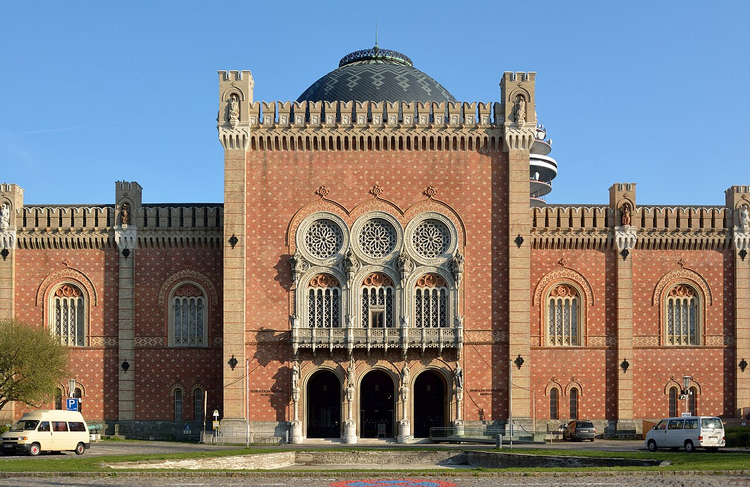 © P e z i · CC BY-SAPhoto: P e z i, CC BY-SA (https://creativecommons.org/licenses/by-sa/3.0/at/deed.en), Wikimedia Commons
The Museum of Military History (Heeresgeschichtliches Museum) opened in 1869 in the Arsenal complex (as of 09/2026, official website). The idea came from Emperor Franz Joseph, and the building was designed by architect Hansen.
In the halls you will see weapons and uniforms from the Thirty Years' War to World War I, a naval hall with ship models, and a hall with frescoes. A separate exhibition is dedicated to the Napoleonic Wars, and it also displays a hot air balloon captured in the late 18th century.
The most famous exhibit is the car in which the heir to the throne, Franz Ferdinand, was assassinated. Allow two to three hours for the museum, the collection is large.
You can get there by tram to the Heinrich-Drimmel-Platz stop; the museum is located away from the center.
The museum is closed on Fridays, so plan your visit for another day. The generals' hall features statues of military commanders, and the hall of fame is decorated with frescoes.
Tours and tickets in Vienna
Guided tours, skip-the-line tickets and activities — most offers can be cancelled free of charge.
See offers on GetYourGuideThe widget loads once you give your consent.
⁉️🤔 Frequently asked questions
How many days do you need for Vienna?
Two days are enough for the center with the Ring and the Hofburg. For the palaces, museums, and parks on this list, allow five to seven days, otherwise you will be rushing between districts. If you are short on time, pick three or four sights and do not try to cover everything at once.
When is the best time to visit Vienna?
May and September are the most relaxed: warm, but without the summer heat. In summer, groups gather at the palaces and museums, and it gets hot in the Schönbrunn park. In winter, the Christmas markets are open, but the days are short, and you spend half your route indoors.
How much do museum tickets cost?
Prices vary widely, and combined passes pay off starting with the third museum. Check exact prices on official websites: a lot depends on whether a temporary exhibition is on. Students and seniors get a discount almost everywhere with an ID.
Is one transit pass enough for the trip?
In the center you can get around on foot, and you need transit for Schönbrunn, the Prater, and the Danube Tower. A multi-day pass pays off if you use it every day (as of 09/2026, operator). Tickets are sold at machines in metro stations.
What to do on a rainy day?
Head to the museums: the Albertina, the Kunsthistorisches Museum, the Leopold Museum, and the Sigmund Freud Museum are open all day. In the rain, the Hofburg and the Treasury are also convenient, you can spend half a day there under a roof.
In short: what to book
If you have one day, go for St. Stephen's Cathedral, the Hofburg, and the Ringstrasse. If you are traveling with children, add Schönbrunn Zoo and the Ferris wheel in the Prater. If you are interested in painting, plan your route through the Albertina, the Kunsthistorisches Museum, and the Leopold Museum.
When planning your trip, start with accommodation near the Ring: Vienna hotels on Trip.com. If you plan to visit many museums, calculate in advance whether a multi-day Vienna Pass will pay off.
From the airport to the center, you can get there in half an hour by train or with a Kiwitaxi transfer, which is more convenient if you arrive with luggage late in the evening.

A small editorial team writing guides for independent travel. We travel ourselves, but we haven’t been everywhere, so we check prices, opening hours and how to get there against official sources.