
















Oxford, Cambridge and Edinburgh: three UK universities worth seeing
Oxford, Cambridge, and Edinburgh are among the oldest universities in the UK. Their campuses are open to tourists, and each deserves a full day. We've put together the history of the three universities and practical tips for visiting: how to get there, what to see, and where you can save time.
Most colleges charge a small entrance fee, and opening hours change with the academic calendar. Check them before your trip.
Ad: this article contains affiliate links. We earn a commission if you book through them, at no extra cost to you.
Three universities: what to compare
💡 In short:
- Oxford: teaching since the late 11th century, colleges open to visitors.
- Cambridge: founded in 1209, museums and a botanical garden right on campus.
- Edinburgh: founded in 1583, the old town within walking distance of the lecture halls.
The difference between them comes down to scale and pace. Oxford and Cambridge are built around old colleges with inner courtyards, while Edinburgh is spread across a large city. Before you go, compare the three campuses using the table.
University | Known for | What to see | Who it's for |
|---|---|---|---|
Oxford | the first university in the English-speaking world | colleges and Christ Church Meadow | a leisurely walk through the center |
Cambridge | traditions and museums | campus, museums, botanical garden | museums and a walk by the river |
Edinburgh | Scottish science | the old town and campus | a day trip in the city |
1. University of Oxford
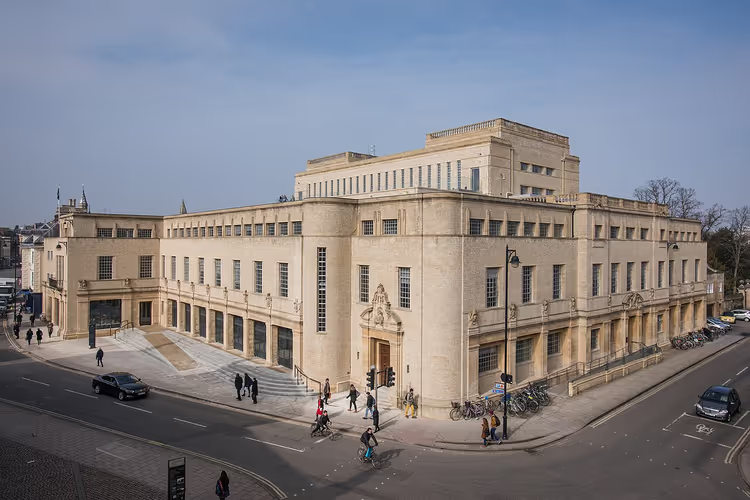 © John Cairns photography , work commissioned by the Bodleian Libraries · CC BY-SAPhoto: John Cairns photography , work commissioned by the Bodleian Libraries, CC BY-SA (https://creativecommons.org/licenses/by-sa/4.0), Wikimedia Commons
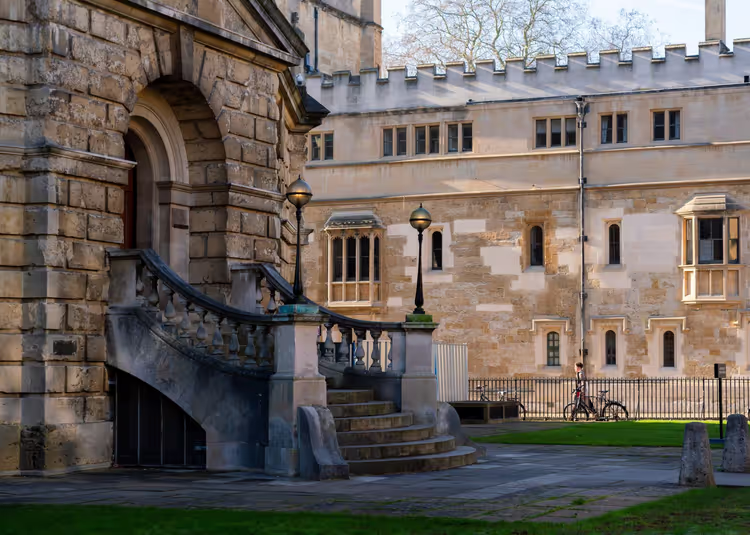
Oxford became one of the first English-speaking universities in the world. The exact founding date is hard to pin down, but teaching has been going on here since the late 11th century. The city was first mentioned in written sources in 912, when a nunnery stood on the site. The name translates rather plainly: "ox ford."
Oxford is easy to add to a trip to London. Tens of thousands of students live in the city, and the university occupies almost the entire historic center. You can walk from one college to another on foot, with no need for transport.
The faculty includes thousands of scholars with advanced degrees and prize winners. Oxford produced Jonathan Swift of "Gulliver's Travels," Oscar Wilde of "The Picture of Dorian Gray," and Lewis Carroll of "Alice's Adventures in Wonderland."
English kings Edward VII and Edward VIII studied here. University alumni include British prime ministers William Gladstone, Harold Wilson, Tony Blair, David Cameron, and Margaret Thatcher.
Christ Church college stands apart: it is the only college in Oxford and Cambridge with a large collection of old masters. Christ Church Meadow is open to everyone free of charge all year round, except December 25 (as of 09/2026, official website).
- Founded: teaching since the late 11th century; in 1117 the country's first university for clergy was organized here.
- How to get there: about 90 km from London (on the map), direct trains run from the capital.
- Who it's for: you enjoy colleges, courtyards, and leisurely walks through the center.
- Not for: you expect one large campus and modern architecture.
- The catch: colleges are partly closed during services and private events, and courtyards are not always open in summer. Check known closures in advance.
- Tours: Oxford tours on GetYourGuide.
2. University of Cambridge
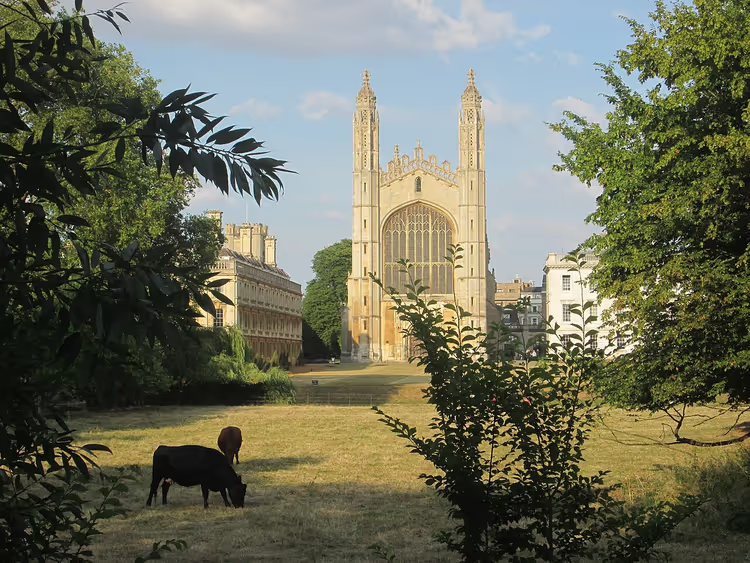 © Peter S · CC BY-SAPhoto: Peter S, CC BY-SA (https://creativecommons.org/licenses/by-sa/2.0), Wikimedia Commons
Cambridge rivals Oxford in age and academic standing. The university was founded in 1209 and preserves the spirit of the Middle Ages along with English traditions (as of 09/2026, official website). From the 13th century onward, it had faculties of arts, theology, medicine, and law.
The university is associated with the names of Erasmus of Rotterdam, Charles Darwin, Isaac Newton, and Ernest Rutherford. You'll also see the everyday side: students still wear black gowns and caps during formal ceremonies.
In addition to academic buildings, the grounds include several university museums and a beautiful botanical garden. That's another reason to spend a full day in the city. Among the colleges, King's College stands out with its 15th-century chapel: it's one of the most recognizable views in Cambridge.
- Founded: 1209, one of the oldest universities in the world.
- How to get there: direct trains from London, the station is about 2 km from the center (on the map).
- Who it's for: you're interested in museums, the river, and university traditions.
- Not for: you want to see one compact campus in a single place; the buildings are spread across the city.
- Tours: Cambridge tours on GetYourGuide.
3. University of Edinburgh
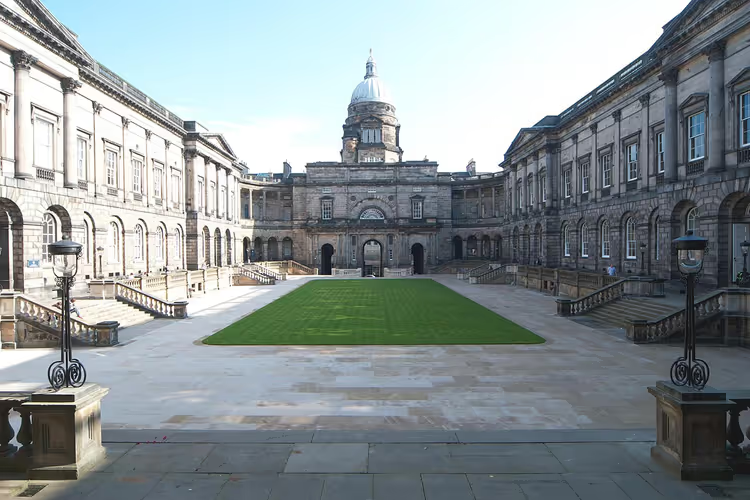 © Theoden sA · CC BY-SAPhoto: Theoden sA, CC BY-SA (https://creativecommons.org/licenses/by-sa/3.0), Wikimedia Commons
The University of Edinburgh was founded in 1583. Along with Oxford and Cambridge, it ranks among the country's most prestigious universities, attracting thousands of applicants. The campus sits in the very heart of the old town, so studying here happens surrounded by historic landmarks.
The university's history is linked to the inventor Alexander Graham Bell, who gave the world the telephone. Winston Churchill, the future British prime minister, served for a time as the university's rector.
Notable Edinburgh alumni
University alumni include the world literary classics Walter Scott, Arthur Conan Doyle, and Robert Louis Stevenson. British politicians Gordon Brown and Robin Cook also received an excellent education here.
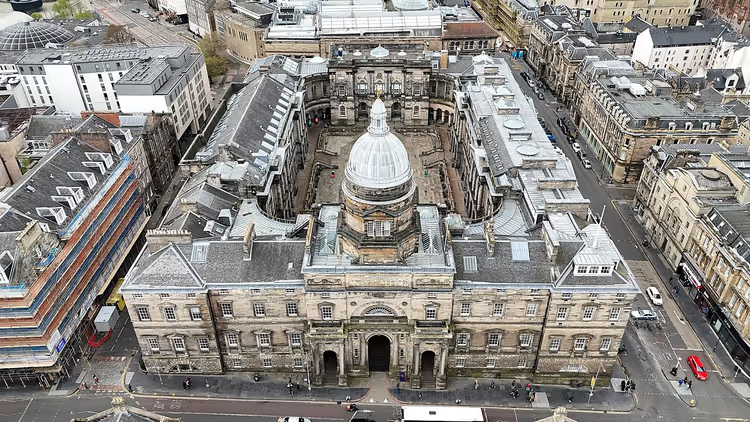 © 瑞丽江的河水 · CC BY-SAPhoto: 瑞丽江的河水, CC BY-SA (https://creativecommons.org/licenses/by-sa/4.0), Wikimedia Commons
The academic core consists of three large colleges with many departments. The university also hosts research institutes and centers where students and graduates work. For tourists, the university runs free tours led by students, but you need to book in advance (as of 09/2026, official website).
- Founded: 1583.
- Getting there: the campus is in central Edinburgh, and you can walk to the main buildings from the central streets.
- Who it's for: you want to combine studying, architecture, and a trip around Scotland.
- Not for: you're looking for a single campus outside the city.
- Tours: guided tours of Edinburgh.
Tours and tickets
Guided tours, skip-the-line tickets and activities — most offers can be cancelled free of charge.
See offers on GetYourGuideThe widget loads once you give your consent.
⁉️🤔 Frequently asked questions
Can you go inside the Oxford and Cambridge colleges?
Yes, many colleges are open to visitors and charge a small entrance fee. Some areas are closed during services and classes, so it's best to check opening hours in advance (as of 09/2026, official website).
How much time do you need for each university?
Allow a full day for Oxford: the colleges are scattered around the center. A day is enough for Cambridge, including its museums. In Edinburgh, combine the campus with the old town, which is also a full day. There's no need to rush; what matters here is the atmosphere, not the number of sights.
When is the best time to visit Oxford and Cambridge?
Late spring and early autumn bring mild weather and fewer organized groups. In summer the center gets crowded, and some courtyards are closed. In winter the days are short, but there are almost no lines. The shoulder season is more convenient if you want relaxed photos.
How do you get there from London?
Direct trains run from London to Oxford and Cambridge. Buses are usually cheaper but slower. For Edinburgh, flying or taking the train is more convenient. Check schedules and tickets on the national carrier's website.
Is the University of Edinburgh open to tourists?
Yes, the campus is open for walking around, and the university has museums and galleries. The campus is spread across the city, and you'll see some of the buildings just by walking around.
In short: what's worth booking
If you're going to Oxford, set aside a day for the colleges. In Cambridge, plan for museums and a walk by the river. In Edinburgh, leave time for the old town and the campus.
Hotels in Oxford and Cambridge are easy to find on Trip.com. The easiest way to travel between the cities is by train, and for guided tours of either campus, check GetYourGuide.
Book tickets and tour spots in advance: groups fill up quickly in summer. That way you won't lose a day waiting around.

A small editorial team writing guides for independent travel. We travel ourselves, but we haven’t been everywhere, so we check prices, opening hours and how to get there against official sources.