
















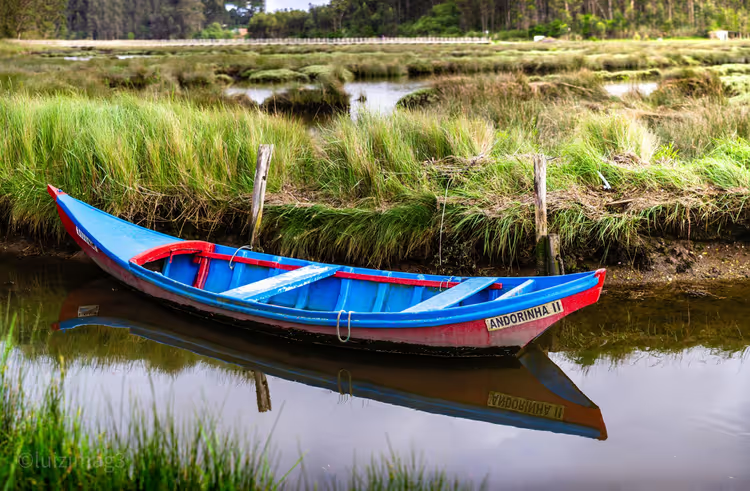
Aveiro in one day: a route along the canals and three beaches nearby
Aveiro is often called Portugal’s Venice, and the comparison is not an empty one. Canals run through the city center, and painted moliceiro boats glide along them. Getting here is easy: it is only 70 km from Porto and 250 km from Lisbon by highway (see map). Trains and buses run from Porto and Lisbon every day.
The city spreads across the Ria de Aveiro lagoon, right by the ocean. From here it is a stone’s throw to the long sandy beaches that stretch along the entire coast. Next to one of them sits a bright little village with striped houses. We put together a walking route through the center and added three coastal towns worth visiting.
You can reach the beaches by bus or car in about half an hour. We checked all prices, hours, and schedules in September 2026 against official sources.
Ad: this article contains affiliate links, we earn a commission if you book through them, at no extra cost to you.
Aveiro
💡 In short:
- The route through the center is almost 4 km, allow 3 to 4 hours.
- A moliceiro ride along four canals lasts 45 minutes.
- Prices and opening hours: 09/2026, verified on the official Aveiro tourism portal.
The city’s architecture is authentically Portuguese, with bright art nouveau facades. Canals divide the center into blocks, and bridges connect them into short walking links. A convenient place to start the walk is the pier at Praça do Rossio, where the moliceiros line up.
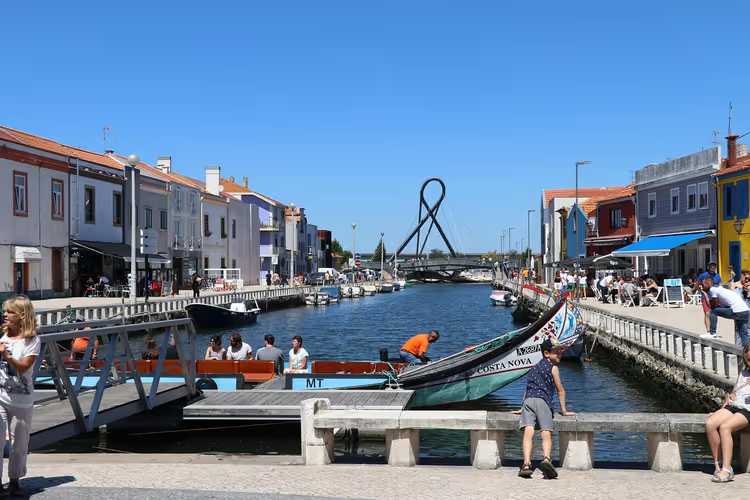
Moliceiros used to harvest seaweed from the lagoon floor. Today they carry tourists. The bows of the boats are decorated with playful paintings, sometimes with an erotic undertone. On one trip the boat passes through four central canals: Canal Central, Canal do Côjo, Canal das Pirâmides, and Canal de São Roque.
A ticket costs about €15 per person (as of 09/2026, moliceiro tour operator). Book your spot online in advance; in summer the line at the pier can stretch for an hour.
From here the route continues through the old town. The points are marked with letters from A to J, so follow them in order. That way you will cover the center without unnecessary backtracking and see everything in one pass.
A. Praça da República
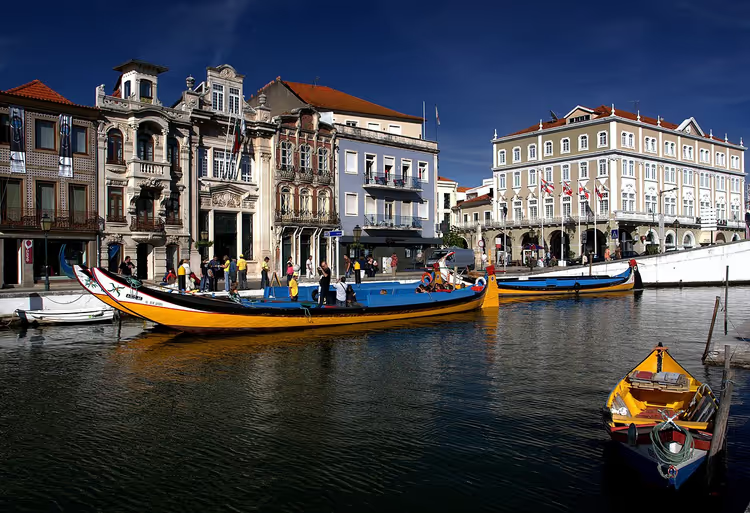
Let’s start with the square where Aveiro’s city hall stands. The municipal administration occupies an 18th-century town hall. Nearby rises Igreja da Misericórdia with a facade of azulejo. Portuguese tiles also cover many of the surrounding houses, and you will notice their patterns at every step.
 © Joaomartinho63 · CC BY-SAPhoto: Joaomartinho63, CC BY-SA (https://creativecommons.org/licenses/by-sa/3.0), Wikimedia Commons
These tiles are not just decoration. Azulejo protects walls from damp and mold, which are hard to fight in Aveiro’s humid climate. Take a closer look at the patterns on the facades: every house has its own ornament.
B. Praça General Humberto Delgado
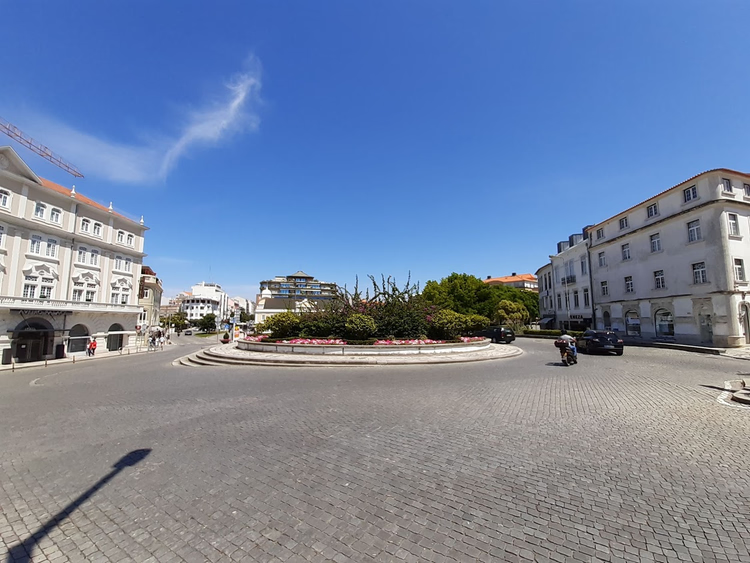
This square serves as a roundabout. It was built to replace two separate bridges. Four bronze statues in traditional local costumes stand on the railing.
 © JonJon86 · CC BY-SAPhoto: JonJon86, CC BY-SA (https://creativecommons.org/licenses/by-sa/4.0), Wikimedia Commons
The beige building with arch-shaped piles was erected in the 15th century as a tidal mill. Later it housed an auxiliary workshop of a porcelain factory. In the 20th century the building became the residence of the port captain, hence the name Edifício Antiga Capitania. Today it houses a gallery with temporary exhibitions.
C. Museu de Arte Nova
The center of Aveiro has many art nouveau buildings. Rich colors, curved lines, floral motifs, and wrought-iron details give the center a special charm.
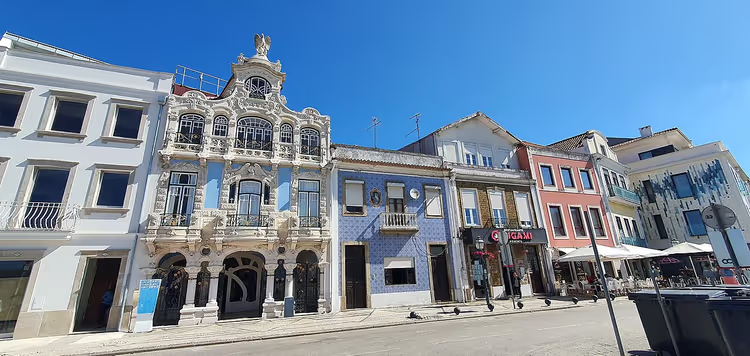 © Hugo Ferreira · CC BY-SAPhoto: Hugo Ferreira, CC BY-SA (https://creativecommons.org/licenses/by-sa/4.0), Wikimedia Commons
The Museu de Arte Nova is housed in a bright blue building from the turn of the 19th and 20th centuries. Museum admission costs €5 (as of 09/2026, Aveiro municipality). The house belonged to a wealthy pharmacist who produced coffee and cocoa. Art nouveau details survive in the interiors of the rooms. A cozy tea room operates on the ground floor, and in the evenings it turns into a bar with live music.
D. Praça do Peixe
In the early 20th century this was the main unloading point for fish and sea salt. A large fish market bustled nearby. Seafood trading has recently moved to Mercado Manuel Firmino in the center. The square itself has become a leisure area with restaurants and a stage. In the evenings the waterfront by the market is crowded.
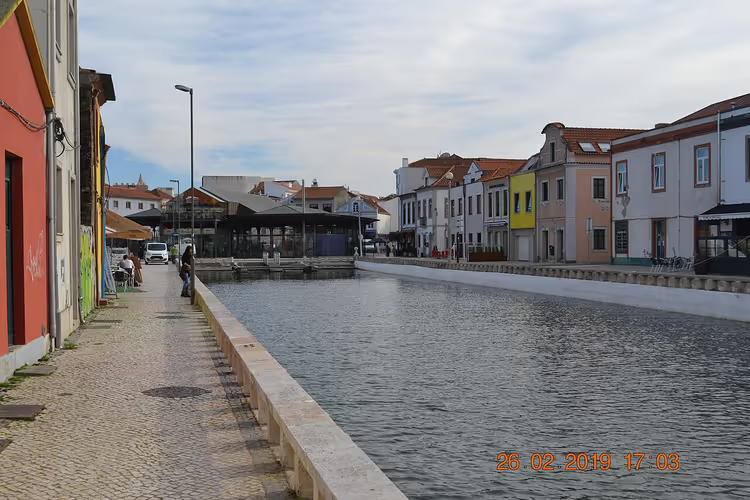 © CardosoSousa1988 · CC BY-SAPhoto: CardosoSousa1988, CC BY-SA (https://creativecommons.org/licenses/by-sa/4.0), Wikimedia Commons
E. Ponte dos Botirões
This circular pedestrian bridge over the Botirões and São Roque canals opened in 2006. The steel structure is supported by a mast and rests on three edges. Like any suspension bridge, it sways slightly underfoot. This piece of modernity stands out sharply against the old buildings.
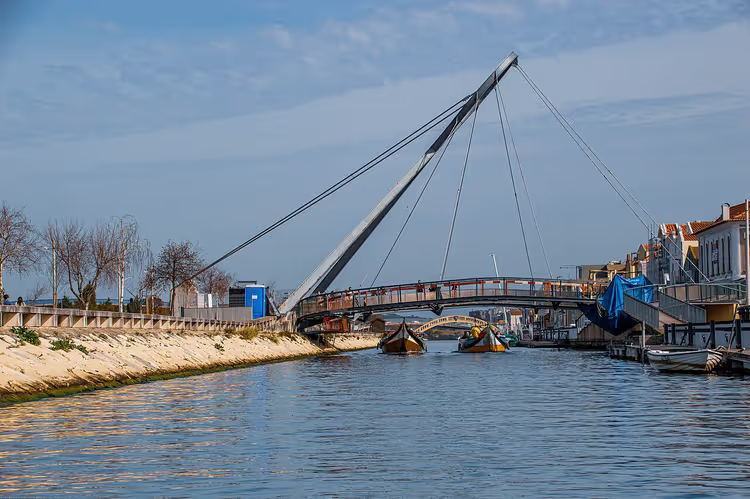 © Michael Gaylard from Horsham, UK · CC BYPhoto: Michael Gaylard from Horsham, UK, CC BY (https://creativecommons.org/licenses/by/2.0), Wikimedia Commons
F. Ponte dos Carcavelos
Until the mid-20th century, another bridge with the same name stood here. The wooden structure collapsed along with people who had climbed onto it to watch an event. Workers used this bridge to walk from the city to the salt mines, so a new one had to be built. It turned out steep, with steps instead of a walkway.
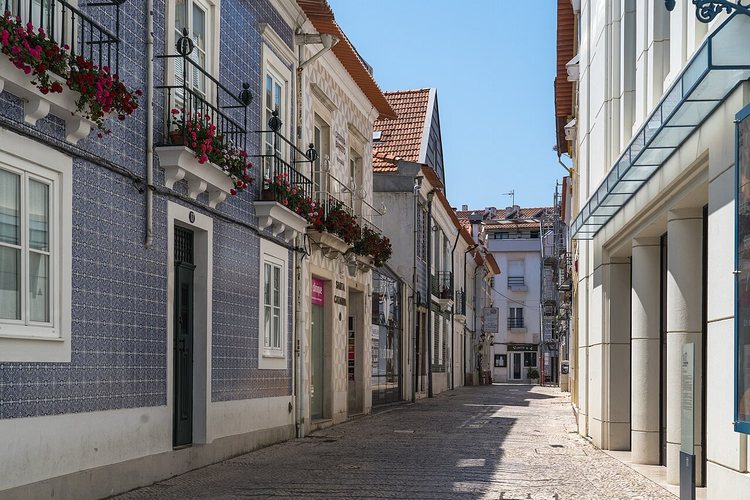
Now you can simply wander through the old town streets. Admire the houses, peek into the churches along the way, browse the souvenir shops. Underfoot lies Portuguese cobblestone laid in patterns.
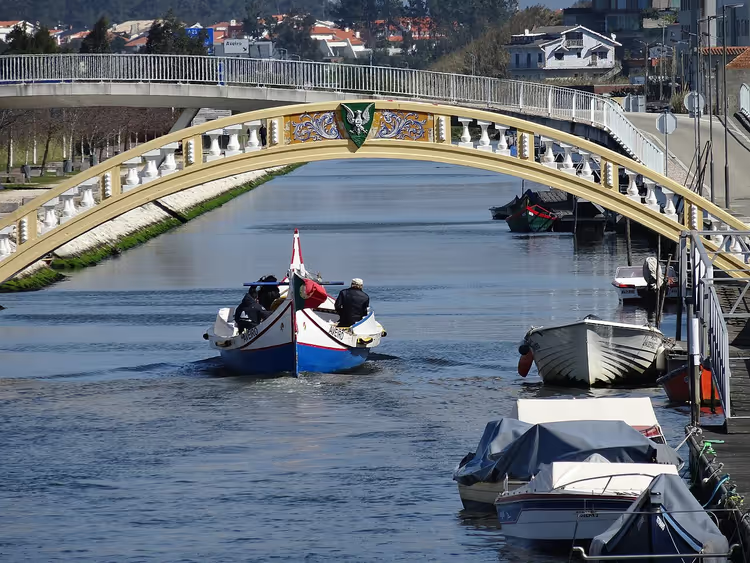 © LukaszKatlewa · CC BYPhoto: LukaszKatlewa, CC BY (https://creativecommons.org/licenses/by/3.0), Wikimedia Commons
Be sure to try the most famous local dessert, Ovos moles. It is made from egg yolks and sugar, then covered with rice paper. In one of the pastry shops, the sweet has been made by hand using the original recipe for over a century. You can also find it in any other café in Aveiro.
From Galeria Edifício Antiga Capitania, walk along Canal do Côjo. Here the bridges are hung with colorful ribbons. Locks used to be attached to the railings, but that tradition was abandoned to preserve the bridges. Students began tying their ties, and over time these were replaced by ribbons. On the embankment there are boxes where, for a coin, you take a ribbon, write a message, and tie it to the bridge.
G. Monumento ao Ovo Mole
At the end of the canal stands a monument to the traditional sweet. The yellow center represents the egg yolk and sugar filling, the white shells the rice paper casing. The monument looks striking.
 © Alexkom000 · CC BYPhoto: Alexkom000, CC BY (https://creativecommons.org/licenses/by/4.0), Wikimedia Commons
The huge red-brick building ahead is a former ceramics factory. It was built in the early 20th century, and in the late 60s the plant relocated. The buildings were handed over to municipal services, exhibitions, and conference halls.
H. Sé Catedral de Aveiro
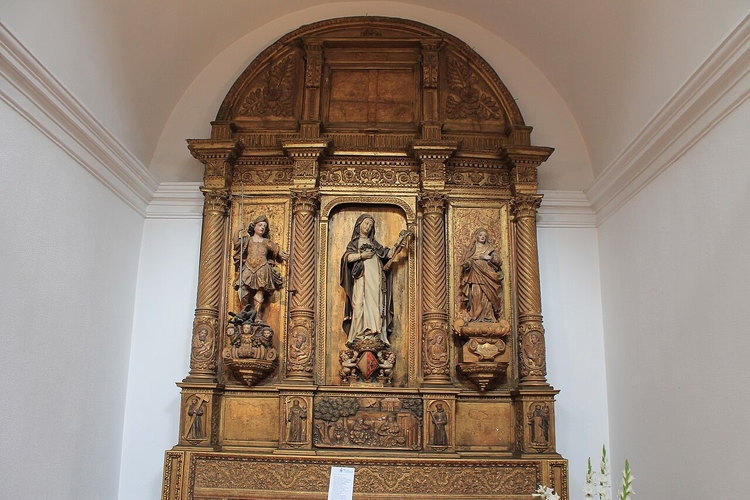
The cathedral is named Nossa Senhora da Misericórdia and was built in the 15th century. A monastery stood nearby, but it did not survive a fire, while the church partially withstood it. Take a look inside. There is a huge modern organ, and the skylights are shaped like eggs.
 © John Samuel · CC BY-SAPhoto: John Samuel, CC BY-SA (https://creativecommons.org/licenses/by-sa/4.0), Wikimedia Commons
Next door is the Museu de Aveiro in the former Convento de Jesus. This is where Ovos moles were invented. The halls now house a collection of paintings, antique furniture, ceramics, and baroque sculpture. The museum is open Tuesday through Sunday, admission is paid (as of 09/2026, municipal museum).
Adjacent to the museum is a church whose decor features a great deal of carved wood. One of the chapels contains the mausoleum of Princess Saint Joana. It is considered a 17th-century masterpiece: the walls are inlaid with Italian marble mosaics.
I. Parque dom pedro infante
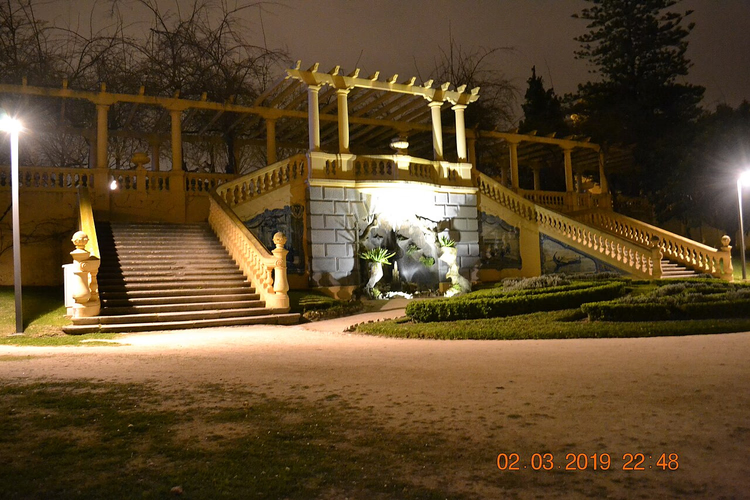
In the city center there is a cozy park where you can escape the sun. The public garden was laid out here back in the 19th century, which is why it has so many old trees. You can have a picnic or simply rest in the shade. The place is quiet even in the middle of the day.
 © CardosoSousa1988 · CC BY-SAPhoto: CardosoSousa1988, CC BY-SA (https://creativecommons.org/licenses/by-sa/4.0), Wikimedia Commons
J. Marinha da Troncalhada
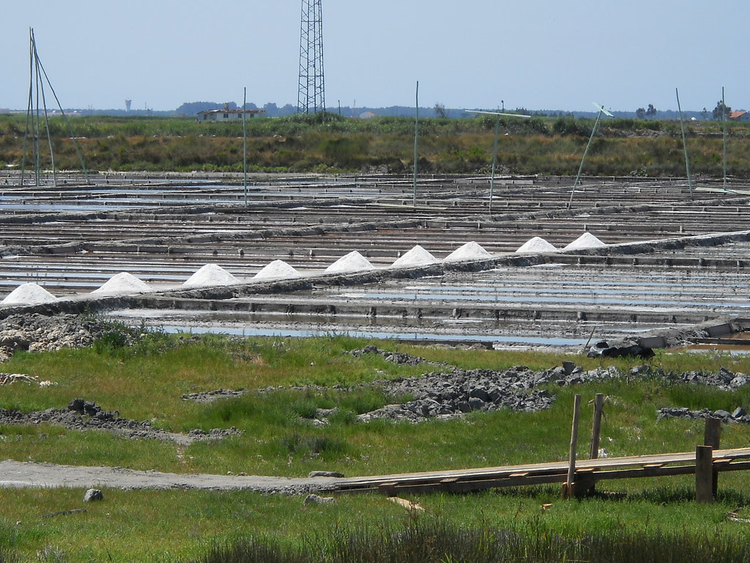
If you still have energy, walk to the salt pans. This part of the route is about 1.5 km long and goes through the city streets or Santo António Park, whichever you prefer. Marinha da Troncalhada operates in the open air and shows how salt is evaporated naturally using the sun.
 © endless autumn · CC BY-SAPhoto: endless autumn, CC BY-SA (https://creativecommons.org/licenses/by-sa/2.0/), Flickr
Sea salt was once the local gold. It made the port of Aveiro the richest in Europe.
Tickets and transport
A bus runs from the city center to Praia da Barra and Costa Nova, and the trip takes about 20 minutes. Praia de Mira is easier to reach by car, another 20 km along the coast. Book museum tickets and tours online in advance; in summer the ticket lines are long. Trains from Porto and Lisbon in high season are also best booked several days ahead.
Tours and tickets in Aveiro
Guided tours, skip-the-line tickets and activities — most offers can be cancelled free of charge.
See offers on GetYourGuideThe widget loads once you give your consent.
Praia da Barra
Barra beach starts at the pier of the Aveiro port. The tallest lighthouse in Portugal, Farol da Barra, stands here. It was built in the late 19th century and still operates today. On Wednesdays from 2:00 PM to 5:00 PM you can go up on a first-come, first-served basis (verified 09/13/2026 on the official Aveiro tourism website).
 © Vitor Oliveira from Torres Vedras, PORTUGAL · CC BY-SAPhoto: Vitor Oliveira from Torres Vedras, PORTUGAL, CC BY-SA (https://creativecommons.org/licenses/by-sa/2.0), Wikimedia Commons
A long spit with sand dunes stretches along the shore. Wooden boardwalks with benches are set up, and several bars operate nearby. The weather here is often windy, so people come for kitesurfing, surfing, bodyboarding, sailing, and sport fishing. Open on map.
Costa Nova
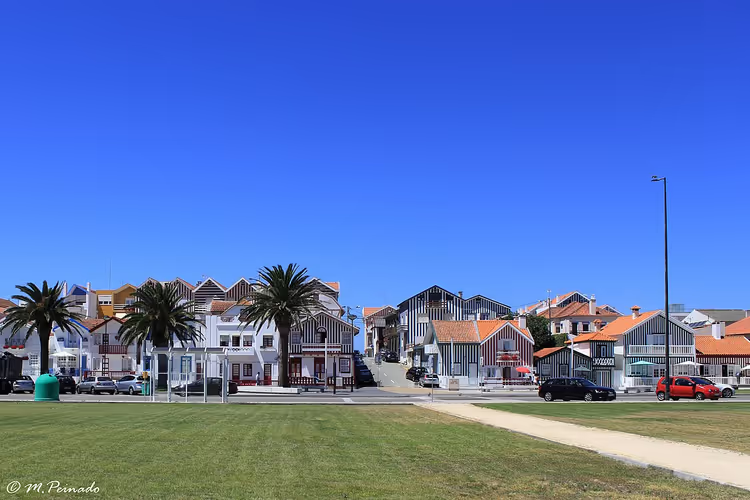
Just two kilometers along the shore and you will find yourself in a colorful little village. The white-striped houses are arranged in several rows. Open on map.
 © M.Peinado from Alcalá de Henares, España · CC BYPhoto: M.Peinado from Alcalá de Henares, España, CC BY (https://creativecommons.org/licenses/by/2.0), Wikimedia Commons
The story behind these facades is practical. In the 18th century, fishermen built wooden sheds by the ocean to store their gear. To spot their shed from the water, each one painted it a bright color different from the neighbors.
Over time, wealthy Portuguese fell in love with Costa Nova. They bought and rebuilt the fishermen's houses and put up new ones. The rich liked the bright color idea, and today's residents are required to keep the houses looking this way. The fish market here is considered one of the best: it sells fresh fish and seafood from local waters. The village has many restaurants where all of it is cooked.
Two churches stand near the beach. A small 19th-century chapel and a spacious modern church opened in 2000. Both are worth seeing on the way to the ocean.
Praia de Mira
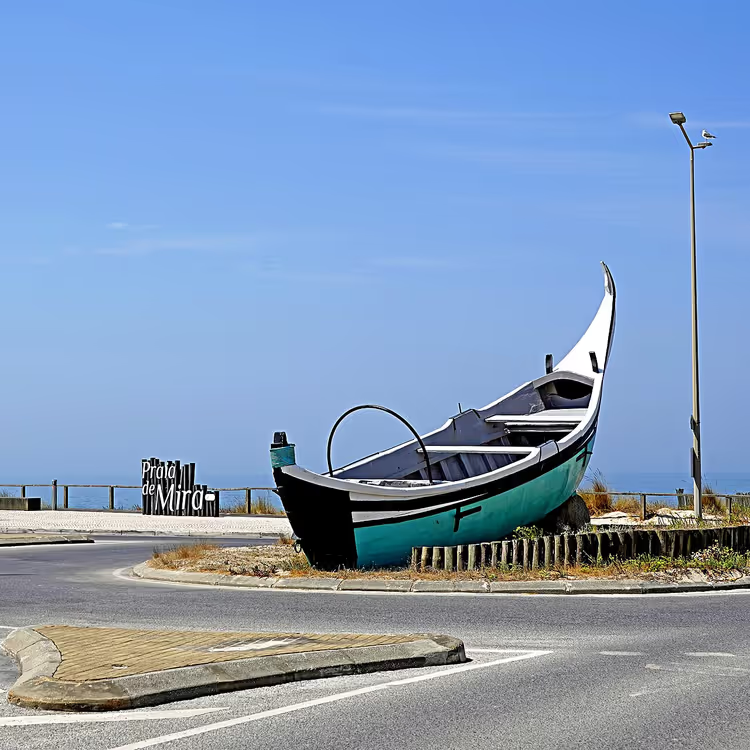
Twenty kilometers from Costa Nova is another fishing village that became a resort. It used to be called Palheiros de Mira after the typical stilted fishermen's houses. You will see such structures in the local ethnographic museum.
 © Pom' from France, European Union · CC BY-SAPhoto: Pom' from France, European Union, CC BY-SA (https://creativecommons.org/licenses/by-sa/4.0), Wikimedia Commons
The museum stands by the Barrinha reservoir. It is a natural freshwater lake, a rarity so close to the ocean. A walking route runs along the waterfront, introducing visitors to the local flora and fauna.
On Praia de Mira beach you can see traditional fishing. Crescent-shaped boats are used for it. Oxen used to pull them out of the ocean, now tractors do. Flocks of seagulls gather at the landing spots and wait for small fish after the nets are cleaned.
A small 19th-century chapel stands right by the ocean. In this simple church with nautical decor, fishermen and their families asked for protection from the dangers of the water.
⁉️🤔 Frequently asked questions
How much time do you need to see Aveiro?
Allow 3 to 4 hours for the walking route through the center. If you also want to walk to the salt pans, add an hour. A trip to Barra and Costa Nova beaches and back will take about half a day.
How much does a moliceiro ride cost?
A ticket costs about €15 per person (as of 09/2026, moliceiro operator). The ride lasts 45 minutes.
How do you get to the beaches without a car?
A bus runs from the city center to Praia da Barra and Costa Nova, and the trip takes about 20 minutes. Public transport to Praia de Mira runs less frequently, so it is more convenient to go there by car. In summer, buses fill up, so arrive at the stop early.
When is the Farol da Barra lighthouse open?
The lighthouse climb is offered on Wednesdays from 2:00 PM to 5:00 PM, entry is free and on a first-come, first-served basis (verified on 09/13/2026 on the Aveiro tourism portal). In rain and strong wind they don't let you go up, so wait for the next Wednesday.
What to try in Aveiro?
The city's most famous dessert is called Ovos moles, and it's sold in many coffee shops and pastry shops in the center. For dinner, check out the restaurants on the waterfront near Praça do Peixe, where they serve fresh fish and seafood.
In short: what's worth booking
If you only have half a day, go for a moliceiro ride and a walking route through the center to the salt pans. If you're planning to stay overnight by the ocean, choose a hotel in Costa Nova or closer to Barra Beach, from where it's easy to walk to the lighthouse. With kids, it's more convenient to stay in the center of Aveiro: canals, a park, and cafes are nearby.

A small editorial team writing guides for independent travel. We travel ourselves, but we haven’t been everywhere, so we check prices, opening hours and how to get there against official sources.