
















Caribbean: which island to choose for a vacation
The Caribbean only seems like an easy choice at first glance. There are hundreds of islands here, and each has its own character, season, and budget.
We put together 26 Caribbean destinations and organized them by region, from Havana to tiny Statia. The Atlantic hurricane season officially runs from June 1 to November 30 (as of 09/2026, US National Hurricane Center), and that date is what determines where you go and how much you pay. Below you'll find how the islands differ and what to see on each one.
Ad: this article contains affiliate links, we earn a commission if you book through them, at no extra cost to you.
When to go to the Caribbean
💡 In short:
- High season: December - April. Dry, sunny, and expensive.
- Low season: July - October. Rain, hurricanes, and the lowest hotel prices.
- Shoulder season: May, June, and November.
- Season and weather: 09/2026, verified on NHC NOAA
The Caribbean Sea has three distinct seasons, and the cost of your trip depends on them. In winter, from December to April, dry and hot weather sets in: this is the best time for beaches, snorkeling, and diving. It's also the most expensive period, when hotels raise prices and flights fill up.
In summer and fall, rain and tropical storms arrive on the islands. Hurricane season peaks in mid-August and September. But that's when accommodation prices drop, and you'll see the islands without the crowds.
In the shoulder season, meaning May, June, and November, the weather is still warm and there are noticeably fewer people. If you want to see humpback whales, plan for the Dominican Republic. Samana Bay holds at least 300 individuals in winter (as of 09/2026, Visit Dominican Republic). Take a boat tour in the morning: the sea is calmer, and you'll be back before the heat.
How to choose an island for your vacation
The Caribbean archipelago is divided into the Greater and Lesser Antilles, and nearby in the Atlantic lie the Bahamas, which don't border the Caribbean Sea. The larger islands offer cities, history, and direct flights. The Lesser Antilles arc from the Virgin Islands to Trinidad: fewer cities there, but more quiet coves. Aruba, Curacao, and Bonaire, along with Trinidad and Tobago, are classified as the Southern Antilles. Choose based on what you want to see outside your window in the morning.
Region | Islands | Best for |
|---|---|---|
Greater Antilles | Cuba, Haiti, Dominican Republic, Jamaica, Puerto Rico, Cayman Islands | Cities, history, diving |
Lesser Antilles | Anguilla, Antigua, St. Kitts, St. Lucia, Barbados, Grenada | Quiet beaches and nature |
Southern Antilles | Aruba, Curacao, Bonaire, Trinidad and Tobago | Dry climate, shopping, reefs |
French Antilles | Guadeloupe, Martinique, St. Barts, St. Martin | Cuisine and European service |
Virgin Islands and Bahamas | St. Thomas, Tortola, Harbour Island | Resorts, families, entertainment |
Greater Antilles
This is the largest part of the archipelago: capitals are here, international airports operate here, and most flights arrive here. Look here if cities, music, and history matter to you.
Cuba
Cuba draws you in with salsa, vintage cars, and local rum tastings. The easiest way to get acquainted with the island is to start from the capital: Havana has preserved colonial squares and fortresses. It's better to plan the trip with an organized tour, because food and lodging outside resorts can be inconsistent. Hotels in Havana on Trip.com will help you compare options in advance.
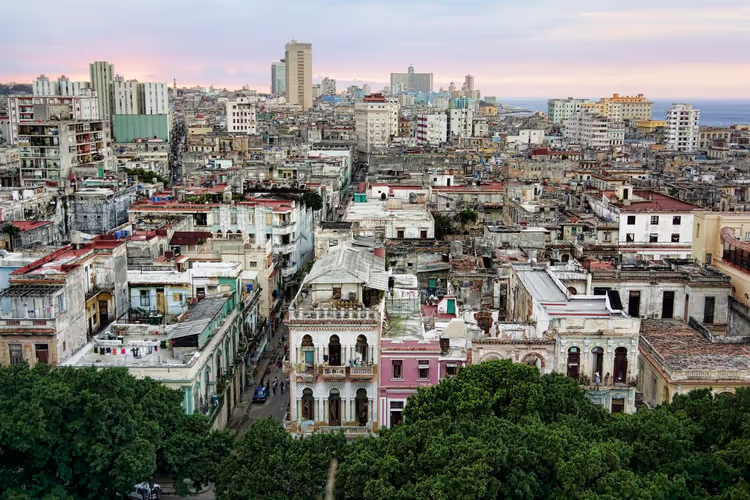 © Christopher Michel · CC BYPhoto: Christopher Michel, CC BY (https://creativecommons.org/licenses/by/2.0), Wikimedia Commons
- The catch: outside resorts, supplies are unreliable, so don't count on the service you're used to.
Haiti
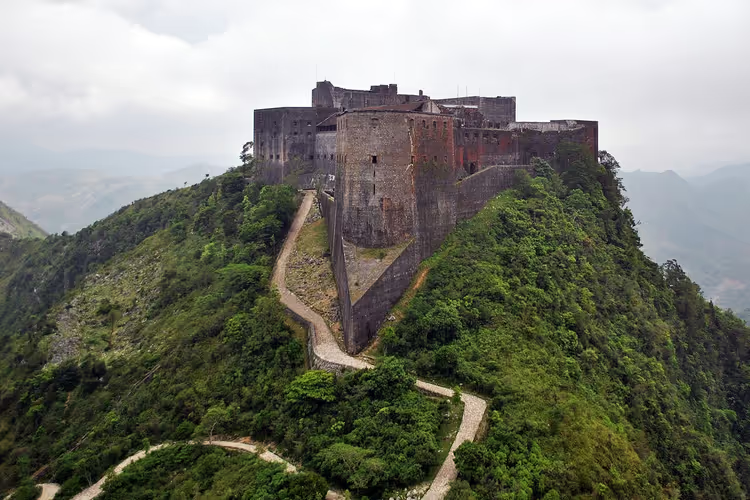
People go to Haiti for history, and the main site here is the Citadelle Laferriere. It's printed on the country's banknotes and stamps. Nearby lie the half-ruined royal palace of Sans-Souci, which locals consider cursed. Besides these, the island has Pic Macaya and La Visite national parks and the salt lake Trou Caiman, where you can watch birds.
Dominican Republic
The Dominican Republic occupies almost two-thirds of the island of Hispaniola and is considered one of the most accessible destinations in the region. It has Latin American flavor, merengue rhythms, and is the birthplace of bachata. Excursions to sugarcane, coffee, and banana plantations are popular here, so Dominican Republic tours on GetYourGuide are worth checking out before your trip.
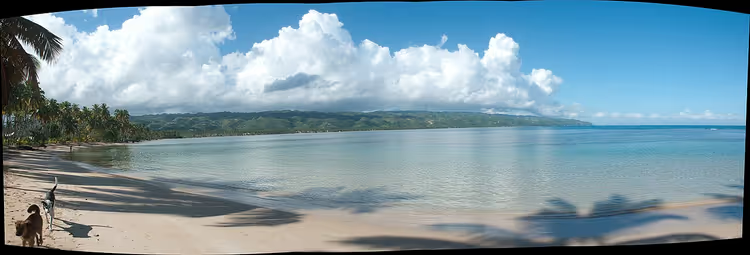 © https://www.flickr.com/photos/mbosio/ · CC BYPhoto: https://www.flickr.com/photos/mbosio/, CC BY (https://creativecommons.org/licenses/by/2.0), Wikimedia Commons
- The catch: the local population lives modestly, so it pays to be more careful outside the resorts.
Jamaica
Jamaica has its own style that you recognize from the first minutes. The island offers good beaches, golf courses, ecotourism, and hotels in all price categories. Newlyweds from North America often come here, and Caribbean tour packages frequently include several days in Jamaica.
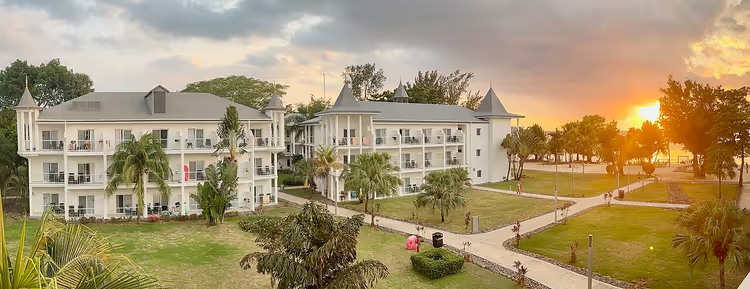 © This picture has been taken by Oleg Yunakov . Contact e-mail: yunakov gmail.com . Image can be used in accordance with t · CC BY-SAPhoto: This picture has been taken by Oleg Yunakov . Contact e-mail: yunakov gmail.com . Image can be used in accordance with t, CC BY-SA (https://creativecommons.org/licenses/by-sa/4.0), Wikimedia Commons
Puerto Rico
Inland Puerto Rico rises into tropical forests and volcanic mountains, while sandy beaches stretch along the coast. San Juan has preserved Spanish colonial quarters with fortresses and museums. It is a convenient entry point to the Caribbean because many flights from the US land here.
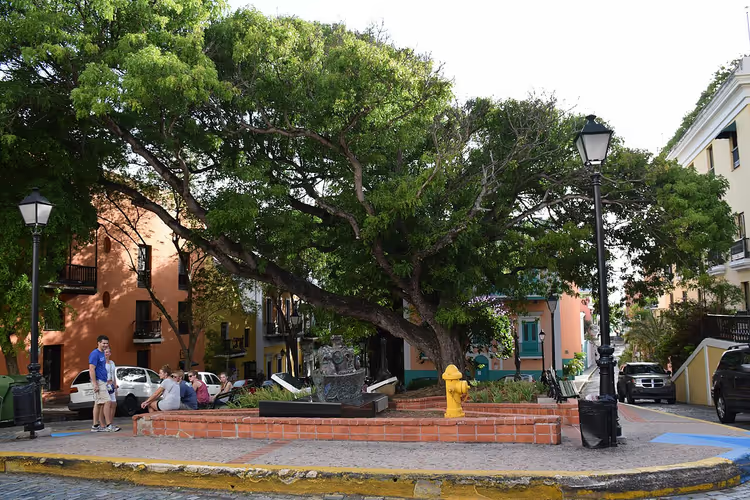 © Todd Van Hoosear · CC BY-SAPhoto: Todd Van Hoosear, CC BY-SA (https://creativecommons.org/licenses/by-sa/2.0), Wikimedia Commons
- The catch: in San Juan and larger cities, keep an eye on your belongings in tourist areas.
Cayman Islands
The three islands live off finance and taxes, so they look well kept and expensive. The landscape here is marshy and dry, but the water is crystal clear. Snorkeling and diving take center stage, since the marine life around the reefs is rich. This is a destination for those who come for the sea and quiet rather than excursions.
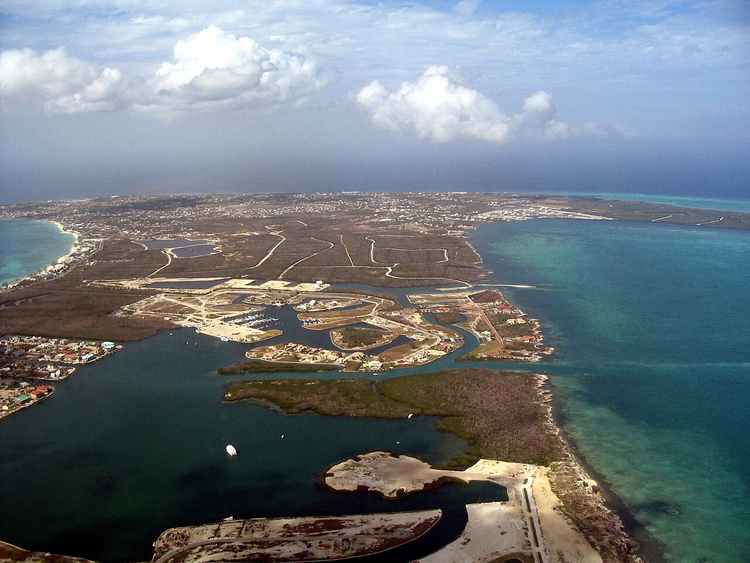 © Salvatore Freni Jr · CC BYPhoto: Salvatore Freni Jr, CC BY (https://creativecommons.org/licenses/by/2.0), Wikimedia Commons
Lesser Antilles
An arc of small islands from the Virgin Islands to Trinidad, together with the southern islands of Aruba, Curaçao and Bonaire: fewer cities, more bays and beaches. It is easier to find a quiet getaway and a hotel right by the water here.
Anguilla
Anguilla is an island of fishermen who still catch lobsters for sale. The destination is expensive, and there is little entertainment: people lie on the beach and eat well here. The island suits you if you need peace and quiet rather than a packed itinerary.
Dominica
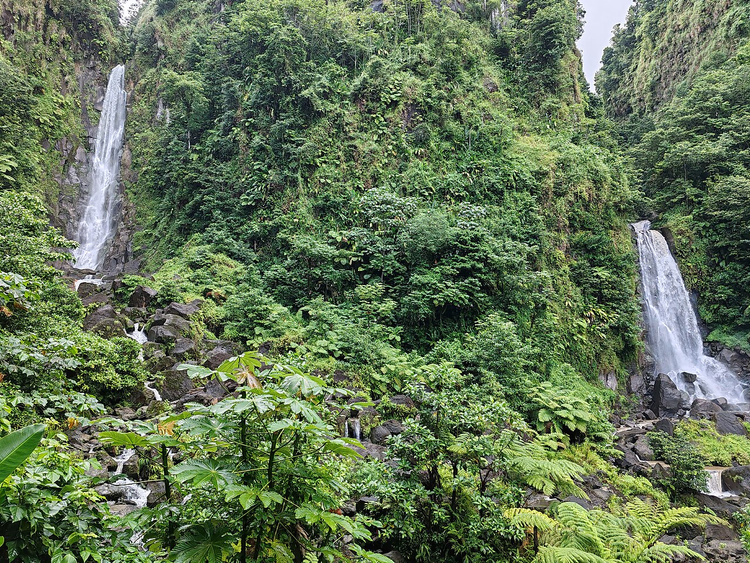
A land of waterfalls and tropical rainforests. There are few beaches here, and most of them are covered with black volcanic sand. The capital, Roseau, is considered one of the smallest in the Caribbean and feels more like a village. The island lies directly in the hurricane belt, so storms are likely here from June through November.
Antigua and Barbuda
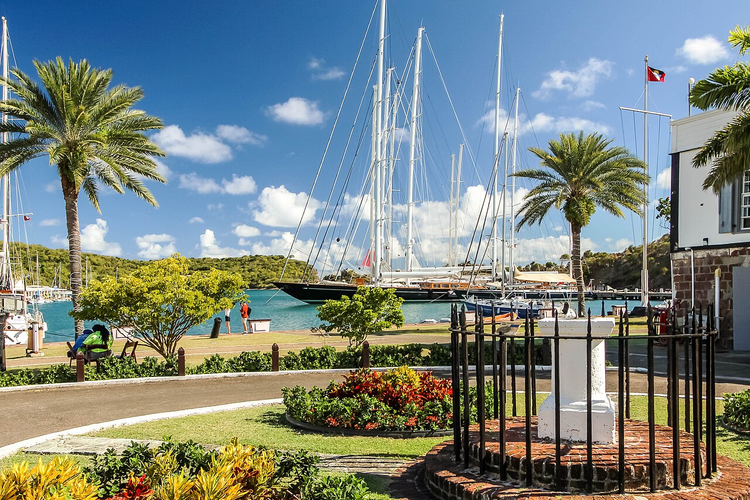
The resort side of Antigua looks glamorous, and the main attractions are tied to naval history. The island is politically linked with tiny Barbuda, which has just two upscale hotels. Together they make a calm beach destination without the bustle.
 © Dr. Thomas Liptak · CC BYPhoto: Dr. Thomas Liptak, CC BY (https://creativecommons.org/licenses/by/4.0), Wikimedia Commons
Saint Kitts and Nevis
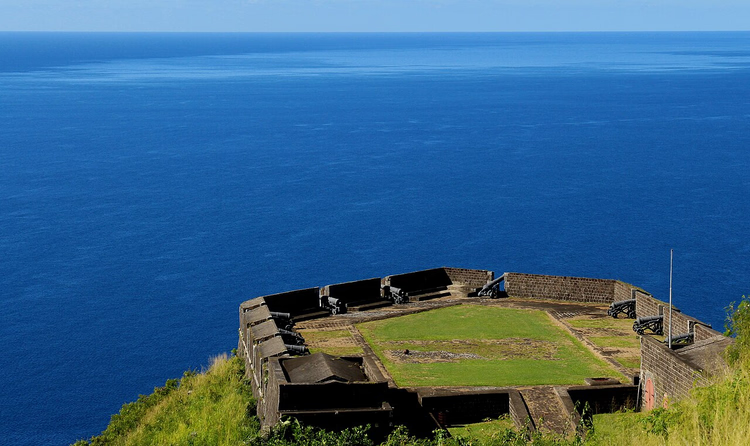
Saint Kitts sits away from the main routes and is therefore uncrowded. It is a fertile island with rainforest, waterfalls and the dormant volcano Mount Liamuiga. The main sight here is Brimstone Hill Fortress, which people climb for the panorama. Travelers come for plantation houses, horseback riding and hiking.
 © Thank You (23 Millions+) views · CC BYPhoto: Thank You (23 Millions+) views, CC BY (https://creativecommons.org/licenses/by/2.0), Wikimedia Commons
Saint Lucia
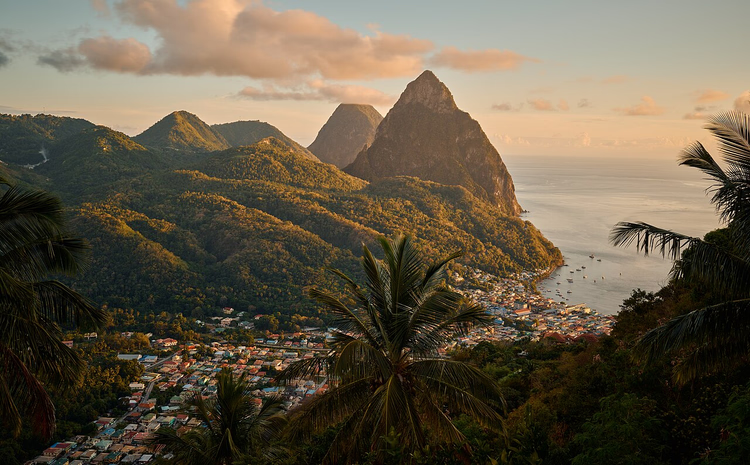
Saint Lucia is a volcanic island that gets a lot of rain. In return, nature is generous: beaches with white and black sand, sulfur springs and mountain views. The best time to visit is the dry season from December through April, when the sea is calm.
 © Jim Vajda · CC BYPhoto: Jim Vajda, CC BY (https://creativecommons.org/licenses/by/2.0), Wikimedia Commons
Saint Vincent and the Grenadines
The archipelago is great for yachting and diving. Saint Vincent is large and fertile, while the small islands are home to boat-building communities. Hotels sit in the shade of palm groves, making this a quiet destination for those tired of cities who want to spend time by the water.
Grenada
A mild climate and fertile soil have made Grenada a major spice producer in the Western Hemisphere. The capital, St. George's, sits on a volcanic bay, its colorful houses climbing the hillside. Walk along the waterfront in the morning before the heat builds, and stop by the spice market.
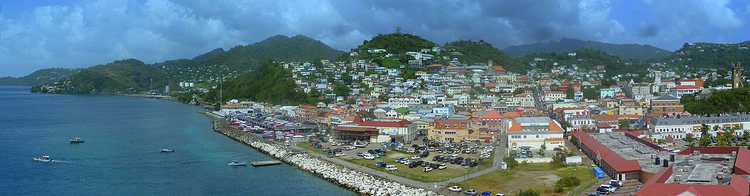 © giggel · CC BYPhoto: giggel, CC BY (https://creativecommons.org/licenses/by/3.0), Wikimedia Commons
Barbados
Barbados grew out of a large coral reef and is surrounded by golden-sand beaches. It is one of the most densely populated islands in the region, with mid-size hotels and consistent service. It appeals to those who love history and architecture. Barbados hotels on Trip.com are easy to compare by area of the island.
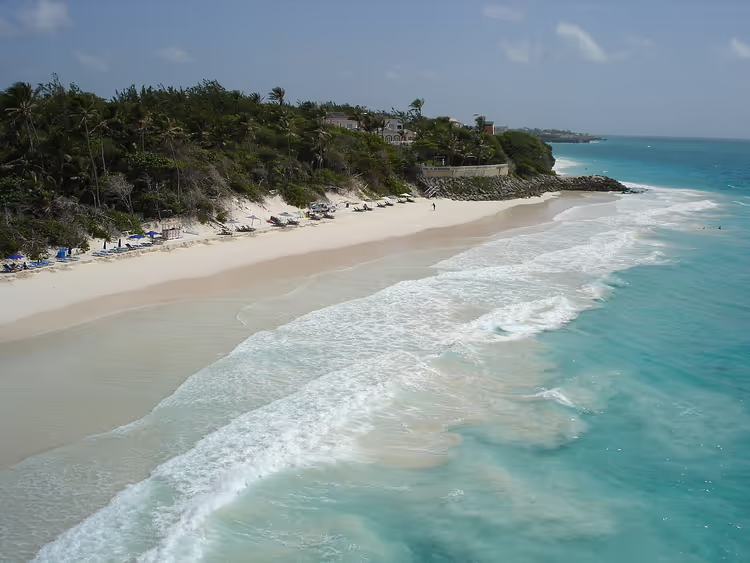 © Patdoy at en.wikipedia · CC BY-SAPhoto: Patdoy at en.wikipedia, CC BY-SA (http://creativecommons.org/licenses/by-sa/3.0/), Wikimedia Commons
Trinidad and Tobago
Trinidad greets you with the bustling capital Port of Spain and wildlife reserves. The good beaches are far from the city, so you go to Tobago for white sand. This is an option for those seeking coral reefs, rainforests and solitary walks.
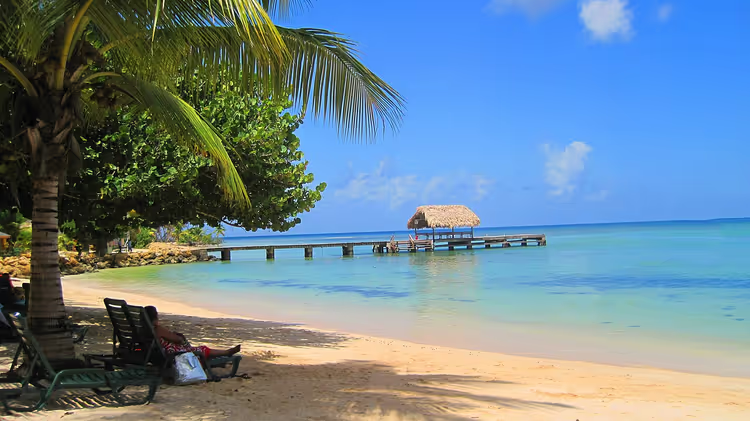 © Kp93 · CC BY-SAPhoto: Kp93, CC BY-SA (https://creativecommons.org/licenses/by-sa/3.0), Wikimedia Commons
Aruba
Aruba hardly ever sees rain, so people choose it for guaranteed sunshine. High-rise resort hotels line the coast, casinos operate, and guests are treated with tolerance regardless of nationality or faith. The landscape is dry and desert-like, while the sea near the shore is calm. Aruba rooms on Trip.com come in handy if you are traveling in high season.
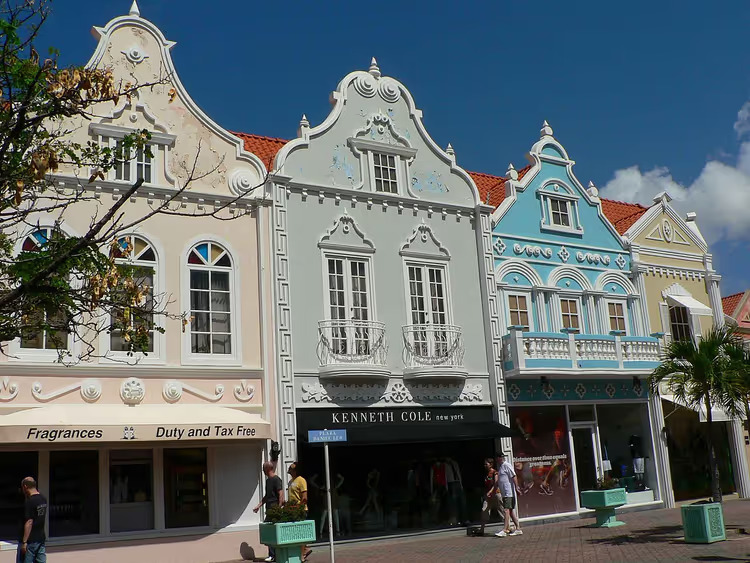 © David Stanley from Nanaimo, Canada · CC BYPhoto: David Stanley from Nanaimo, Canada, CC BY (https://creativecommons.org/licenses/by/2.0), Wikimedia Commons
Curaçao
People go to Curaçao for small beaches in secluded coves, shopping, and Dutch culture with a Caribbean twist. The coastline is broken up into dozens of little bays, and the water near shore is clear. Rent a car to reach the more remote beaches that have no public transport.
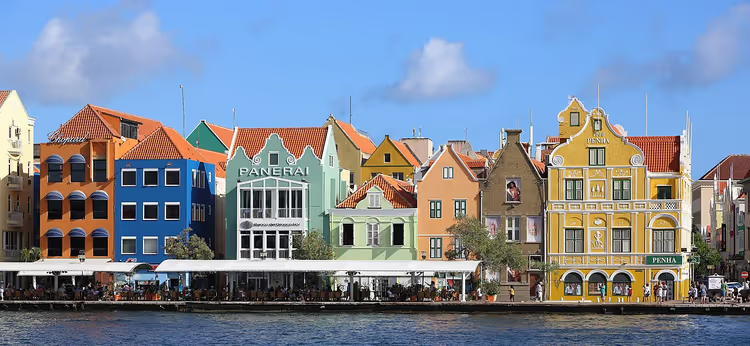 © Martin Falbisoner · CC BY-SAPhoto: Martin Falbisoner, CC BY-SA (https://creativecommons.org/licenses/by-sa/4.0), Wikimedia Commons
Bonaire
Bonaire is as dry as Aruba and Curaçao, and just as sparse in greenery. But the surrounding sea is full of life: people come here to watch fish and birds. It is a quiet destination for snorkeling, parks, and unhurried days by the water.
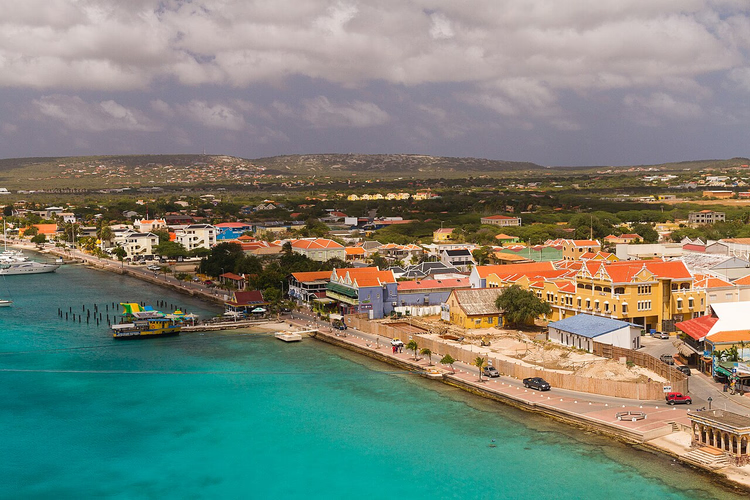 © Chris Favero from USA · CC BY-SAPhoto: Chris Favero from USA, CC BY-SA (https://creativecommons.org/licenses/by-sa/2.0), Wikimedia Commons
French and Dutch Antilles
Part of the Lesser Antilles belongs to France and the Netherlands. Here you get European cuisine, roads, and reliable service.
Guadeloupe
Guadeloupe is shaped like a butterfly, although it is actually two islands separated by a channel. The French influence shows up in the food, the language, and the order on the roads. In the national park you will find coffee trees, wild orchids, and vanilla winding up the trunks.
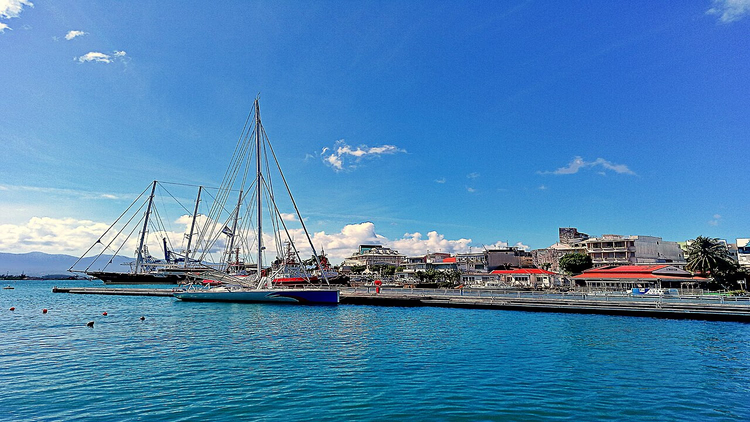 © Filo gèn' · CC BY-SAPhoto: Filo gèn', CC BY-SA (https://creativecommons.org/licenses/by-sa/4.0), Wikimedia Commons
Martinique
Martinique is the cultural center of the French Antilles with a tropical character. The beaches here are good, and the cuisine is considered some of the most interesting in the region. In the town of Saint-Pierre you can still see traces of the early 20th-century eruption of Mount Pelée.
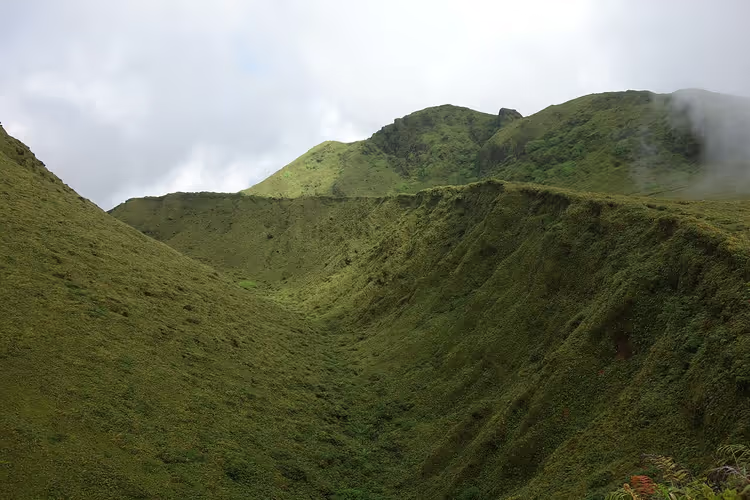 © Vincent B ( https://www.geodiversite.net/auteur466 ) · CC BY-SAPhoto: Vincent B ( https://www.geodiversite.net/auteur466 ), CC BY-SA (https://creativecommons.org/licenses/by-sa/3.0), Wikimedia Commons
Saint Barthélemy
Saint Barthélemy is an expensive, exclusive destination for well-off travelers. People come here to get away from the bustle and are willing to pay for it. The island is small and has few hotels, so it is worth booking in advance.
Saint Martin
The Dutch side of Saint Martin has the big airport, shops, and tourist facilities. The French side holds the best hotels and restaurants. Nightlife and casinos are concentrated on both sides, so you need to keep a close eye on your wallet and documents. Hotels in Saint Martin on Trip.com will help you choose which side of the island to stay on.
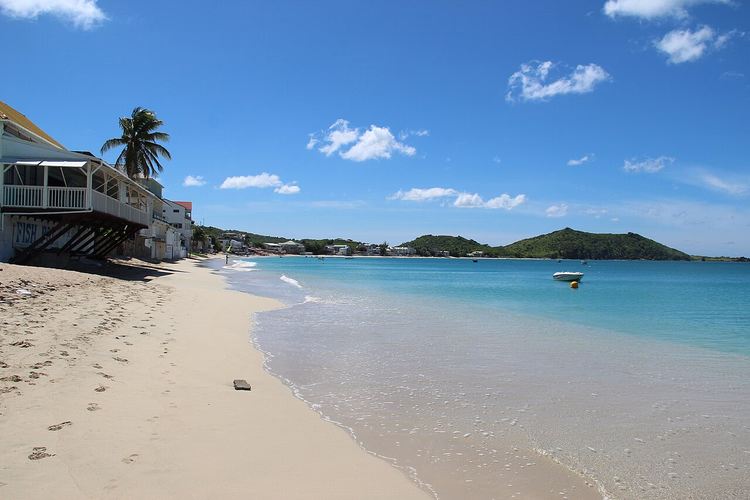 © Clavius66 · CC BY-SAPhoto: Clavius66, CC BY-SA (https://creativecommons.org/licenses/by-sa/3.0), Wikimedia Commons
- The catch: crime is a real issue on the island, especially in the evenings.
Sint Eustatius (Statia)
Statia is a place for people interested in the history of the American Revolution. The island is small, with informal local guesthouses and pools. It works well as a day trip: see the historic sites, have lunch, and head back.
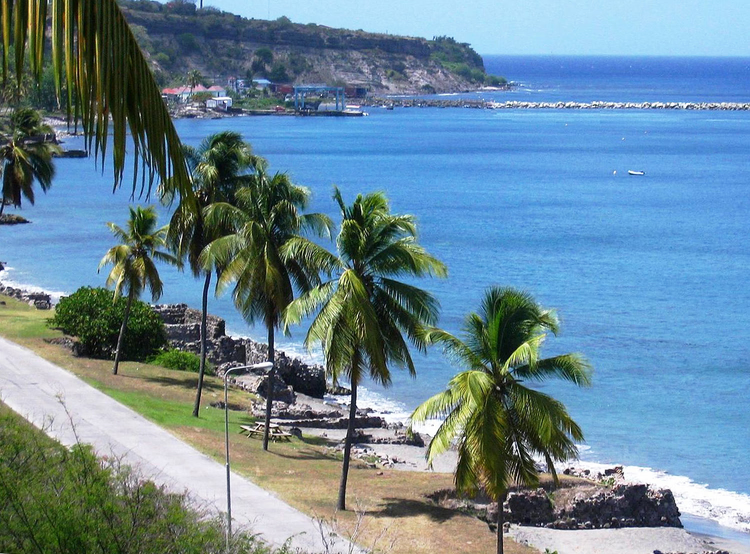 © Walter Hellebrand · CC BY-SAPhoto: Walter Hellebrand, CC BY-SA (https://creativecommons.org/licenses/by-sa/3.0), Wikimedia Commons
US and British Virgin Islands
The Virgin Islands are split between the United States and the United Kingdom. If you are after sailing and upscale marinas, this is where to look.
US Virgin Islands
The islands once belonged to Denmark and passed to the United States in the early 20th century. They offer gorgeous beaches, diving, and sailing. Saint Thomas is the region's shopping hub with brand-name stores, while part of the island of Saint John became a national park.
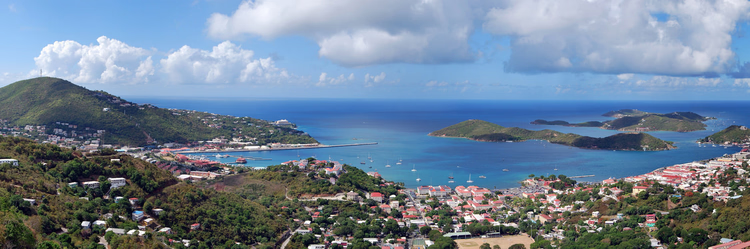 © This image or media was taken or created by Matt H. Wade . To see his entire portfolio, click here . @ thatmattwade This · CC BY-SAPhoto: This image or media was taken or created by Matt H. Wade . To see his entire portfolio, click here . @ thatmattwade This, CC BY-SA (https://creativecommons.org/licenses/by-sa/4.0), Wikimedia Commons
- The catch: the islands have a high crime rate, so don't walk around the outskirts after sunset.
British Virgin Islands
This is a group of several dozen small islands that still belong to the British Crown. The main island of Tortola and neighboring Virgin Gorda offer some of the most expensive hotels in the region. Yachtsmen choose Anegada, and local guesthouses keep a laid-back atmosphere.
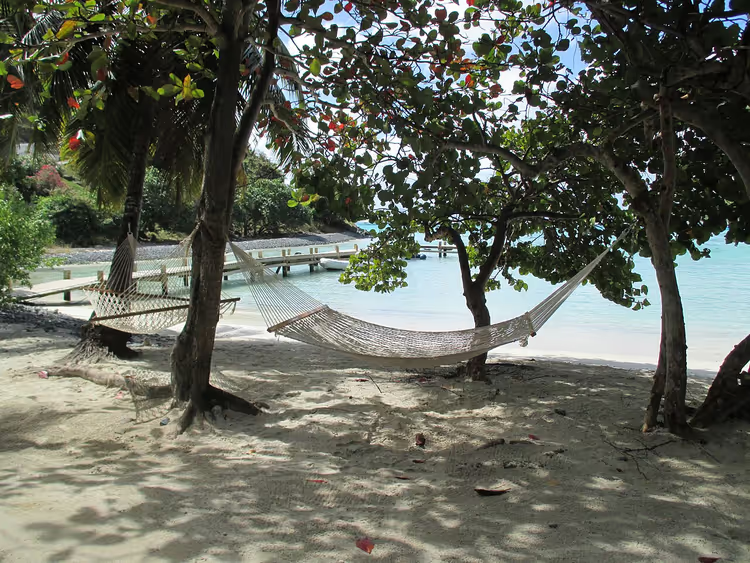 © User:Mattes · CC BYPhoto: User:Mattes, CC BY (https://creativecommons.org/licenses/by/2.0/de/deed.en), Wikimedia Commons
The Bahamas: beaches and natural wonders
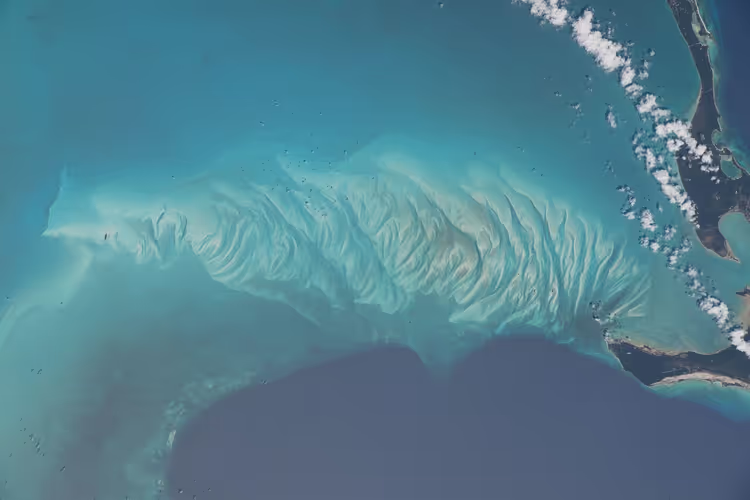
The Bahamas lie in the Atlantic Ocean and do not border the Caribbean Sea. Long Island is home to a deep karst sinkhole, and Cat Island has the Boiling Lake, which comes alive during high tides. Harbour Island has a pink sand beach, and Paradise Island has long served as a backdrop for 007 films. Hotels in the Bahamas on Trip.com will come in handy if you're traveling with the whole family.
The Atlantic side: what to keep in mind
The Bahamas also lie in the Atlantic hurricane zone, so storm season is felt here. Plan your trip for December to April, when the sea is calm and the air is dry. For families with children, choose islands with large resorts: they have more entertainment and make dining easier.
⁉️🤔 Frequently asked questions
Do I need a visa for the Caribbean?
EU citizens do not need a visa for most islands or for the Dutch part of the kingdom (as of 09/2026, Netherlands Worldwide). A passport valid for the entire duration of your trip is enough. For Puerto Rico and the US Virgin Islands, you need an ESTA, just like for a trip to the US. For Cuba, you also need a tourist card. Rules for citizens of other countries should be checked separately for each island.
How do I get to the Caribbean islands?
There are few direct flights from Europe, so most of the time you fly with a connection through Madrid, Lisbon, Paris, Istanbul, or the US. There are direct flights to the French Antilles from Paris (as of 09/2026, Martinique tourism portal). The second option is a cruise ship: in a week you will see several islands at once.
Is the Caribbean safe?
The situation varies. Barbados, Antigua, and Bonaire are calm, while in Jamaica, Saint Martin, and the Virgin Islands, stick to well-lit streets. Keep money and documents in the hotel safe, and do not leave your belongings unattended on the beach. Before traveling, check your country's foreign ministry travel advisories.
How much does a trip to the Caribbean cost?
Prices depend on the season. In winter, hotels are the most expensive; in the summer low season, accommodation is noticeably cheaper. The flight from Europe is usually the most expensive part of the travel budget. Check current prices with carriers and on Trip.com before choosing your dates.
When is the best time to go for a beach vacation?
From December to April: dry, sunny, and calm seas. This is the high season, so hotels and flights cost more. If you want to save money, choose May or November. For a longer trip, avoid the hurricane peak in August and September.
In short: what to book
The Greater Antilles offer cities and history, the Lesser Antilles quiet coves, the French Antilles cuisine and service, and the Bahamas family resorts. Choose based on your priority.
If you want cities and history: Cuba, Puerto Rico, Haiti.
If you are looking for empty beaches: Anguilla, Bonaire, Saint Vincent and the Grenadines.
If you are traveling with kids: the Bahamas, Aruba, the Dominican Republic.
If you want European cuisine: Martinique, Guadeloupe, Saint Martin.
If guaranteed weather matters: Aruba and Curaçao.
It is more convenient to book hotels in advance while low-season prices last. Find a hotel on Trip.com or book tours on GetYourGuide right now.

A small editorial team writing guides for independent travel. We travel ourselves, but we haven’t been everywhere, so we check prices, opening hours and how to get there against official sources.