
















The world's first underwater sculpture park: how to see it in Grenada
Underwater off the west coast of Grenada, there are people made of concrete. They hold hands, sit at a desk, and gaze out into the open sea. This is not a decoration for divers, but an artificial reef that becomes covered in coral year after year.
The world's first underwater sculpture park opened in Molinere Bay in 2006 (as of 09/2026, the project's official page). 75 works occupy 800 m² at a depth of 5-8 m, between sandy areas and natural rocks.
Below, you'll find out who created these figures, what exactly you'll see underwater, and how to get to Molinere Bay.
Ad: this article contains affiliate links, we earn a commission if you book through them. At no extra cost to you.
The world's first underwater sculpture park
💡 In short:
- The park lies in Molinere Bay, in the Molinere-Beauséjour Marine Protected Area off the west coast of Grenada.
- The idea and most of the works are by British sculptor Jason de Caires Taylor.
- You can view it with a mask, with scuba gear, or from a glass-bottom boat.
The sculptures were conceived not as an exhibition, but as a working reef. Concrete is pH-neutral, the surface of the figures is rough, and coral polyps find it easier to attach to such a base. According to the Grenada Tourism Authority, the figures have been on the seabed since 2006 and have already become part of the local ecosystem.
 © Boris Kasimov · CC BYPhoto: Boris Kasimov, CC BY (https://creativecommons.org/licenses/by/2.0), Wikimedia Commons
The Molinere-Beauséjour Marine Protected Area came into being largely because of this project. Visitor fees help pay for rangers who monitor fishing quotas and the flow of tourists. This is reported on the sculptor's website.
History: the sculptor and Hurricane Ivan
The project's creator, Jason de Caires Taylor, is from the UK. He is a sculptor and a diving instructor, so he moved his studio to the seabed. The idea was supported by Grenada's Ministry of Tourism and Culture and the country's Ministry of Fisheries.
The site was chosen after a natural disaster. In 2004, Hurricane Ivan passed directly over the west coast and destroyed part of the reefs. The concrete figures gave marine life a new foundation. Another goal was practical: to draw tourists away from the surviving corals of neighboring Flamingo Bay, which is always crowded (as of 09/2026, Pure Grenada).
 © P. Hughes · CC BY-SAPhoto: P. Hughes, CC BY-SA (https://creativecommons.org/licenses/by-sa/4.0), Wikimedia Commons
The first set of works was installed in 2006. Since then, the park has been expanded and refreshed: some figures were replaced, some were moved to avoid overcrowding one section of the seabed and to avoid hindering coral growth.
Vicissitudes: a ring of 26 children
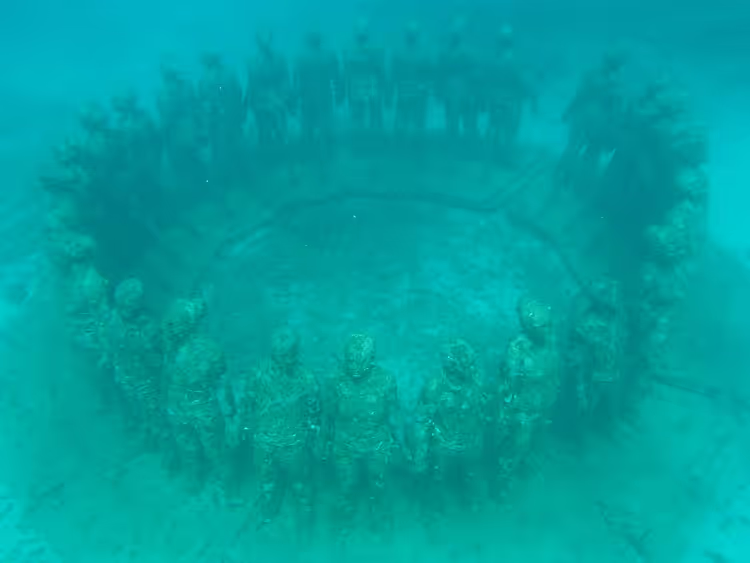
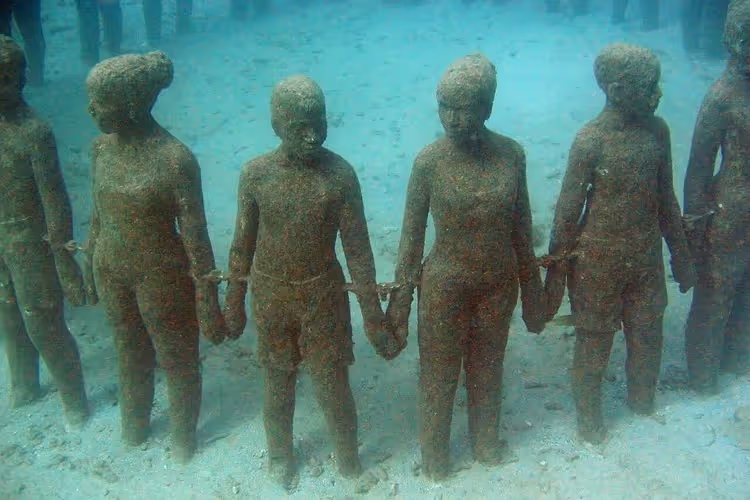
The park's most famous work is called Vicissitudes. It consists of 26 boys and girls holding hands and standing in a circle at a depth of about 5 m. The figures were cast from real children of different backgrounds, and the artist calls the group a symbol of unity and resilience (as of 09/2026, GTA sculpture page).
The circle faces outward, toward the current. Over time, the figures darken, become covered in growth, and marine organisms settle on them. The sculptor describes this as a metaphor for how the environment shapes and gradually changes a person.
Locals have their own interpretation. Because of the proximity to the Atlantic and details resembling shackles, the circle is often seen as a reminder of slavery and the transport of enslaved people across the ocean. This interpretation is cited by the project's creator.
 © SunCat · CC BYPhoto: SunCat, CC BY (https://creativecommons.org/licenses/by/2.0), Wikimedia Commons
When the first version of the ring was replaced, the old figures were used to form three groups of Sentinels, seven people in each. These are not guards but observers: they look in all directions and also mark the boundaries of the park.
The Lost Correspondent and other works
The second recognizable sculpture, The Lost Correspondent, depicts a man at a desk with a typewriter. The desk is covered with newspaper clippings from the 1970s, some of which tell about Grenada before the revolution. The work is not found immediately: it stands in a narrow natural gorge, so it is discovered rather than shown.
Other artists also worked on the park. Troy Lewis made several figures based on Grenadian folklore: La Diablesse, Mama Glo, and the Belair Dancer. A separate sculpture depicts a leatherback turtle, which grows up to 1.8 m and weighs up to half a ton (as of 09/2026, Grenada Tourism Authority).
 © SunCat · CC BYPhoto: SunCat, CC BY (https://creativecommons.org/licenses/by/2.0), Wikimedia Commons
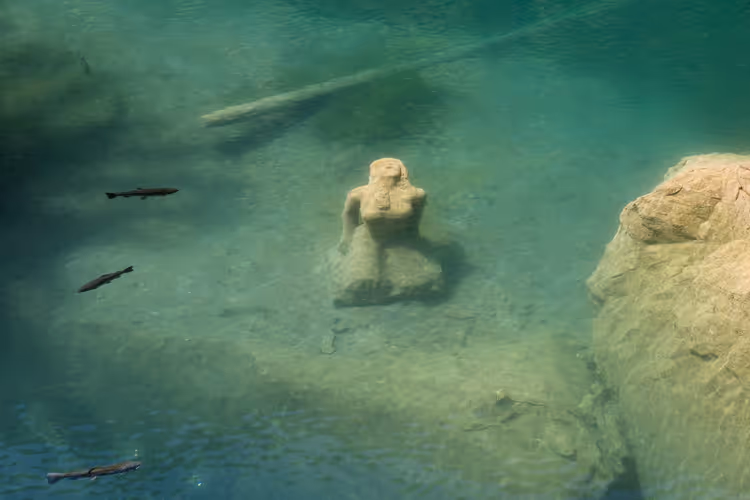
The list also includes calmer works: the mystical The Silent Cry, the mermaid Mermaid, and the children's book heroine Nutmeg Princess. There are even stone petroglyphs: ten enlarged copies of indigenous rock carvings, with the originals dated to around 600 AD.
What changed in 2023 and 2024
The park has not remained frozen at its 2006 set. In 2023, it was expanded with 27 new works. The main one, The Coral Carnival series, consists of 25 figures: masks and characters from the Spicemas carnival, which takes place in Grenada every August (as of 09/2026, project page on the artist's website).
The material of the figures has not changed for years: cement and stainless steel.
In 2024, Hurricane Beryl destroyed some structures on the neighboring island of Carriacou. Separately, in the same 2024, Carriacou opened its first underwater park, A World Adrift. This is how one project turned into a network of marine galleries across two islands of Grenada.
How to get there and when to go
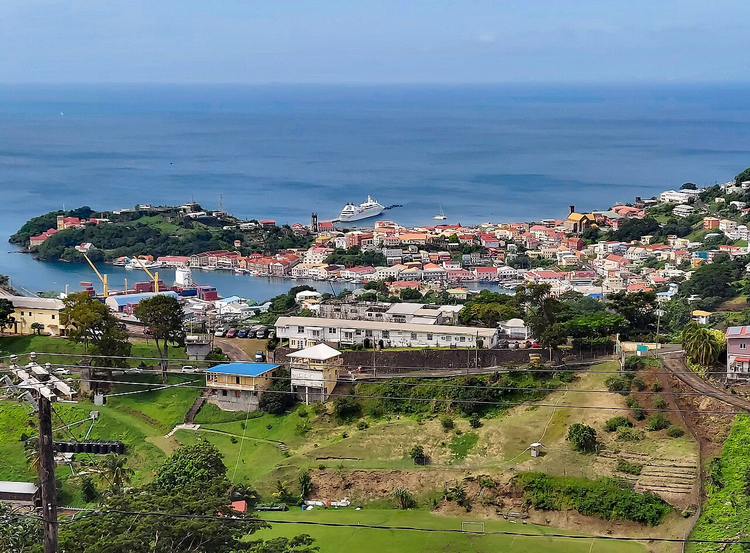
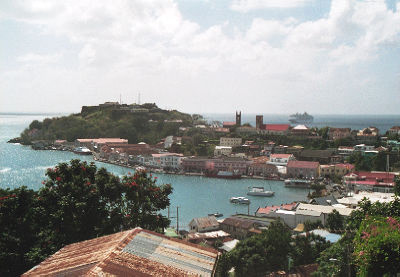
Molinière Bay is located on the west coast of Grenada. Boats to the sculptures depart from St. George's and from Grand Anse Beach, and the trip across the water is short. The park has no dock of its own, so you pick up your gear at a dive center in advance or get it on board (as of 09/2026, sculptor's website).
The depth of 5 to 8 m suits not only divers. You can swim part of the route with a mask and snorkel, and if you do not want to get in the water, choose a glass-bottom boat: the figures are visible right through the viewing window.
 © Unknown author · CC BY-SAPhoto: Unknown author, CC BY-SA (http://creativecommons.org/licenses/by-sa/3.0/), Wikimedia Commons
Visibility depends heavily on waves and currents, so do not leave your dive for the last day of the trip and keep an eye on the forecast. Mornings are usually calmer than the second half of the day.
Tickets and marine fee
There is no separate ticket office in the bay. The park is inside a marine protected area, so entry is paid. You usually arrange the purchase through the tour operator together with the boat and gear (as of 09/2026, GTA park description).
Boat trips to the sculptures should be booked in advance, especially in high season. Options across Grenada are available from operators: see marine tours on GetYourGuide.
Tours and tickets in Grenada
Guided tours, skip-the-line tickets and activities — most offers can be cancelled free of charge.
See offers on GetYourGuideThe widget loads once you give your consent.
⁉️🤔 Frequently asked questions
Can you see the park without scuba gear?
Yes. Most of the works are visible from the surface. With a mask and snorkel, you can easily swim over the Vicissitudes circle and The Lost Correspondent desk.
Who created the sculptures?
The main artist is Jason de Caires Taylor, a British sculptor and diving instructor. Individual works were made by Troy Lewis, Rene Froehlich, and Lene Kilde. All the figures share one thing: they are both works of art and artificial reefs for marine life.
How much does it cost to visit the park?
There is no separate ticket sold in the bay. The park is part of a marine protected area, so a marine fee applies. The total cost depends on the operator and the type of trip. Check the price and what the tour includes with the specific company before paying.
How is the park different from an ordinary reef?
The figures do not just lie on the bottom; they work as a base for corals. Over time, the sculptures darken and become colonized by marine organisms, so the underwater picture is a little different every year.
What is new in the park?
In 2023, 27 works were added, including The Coral Carnival series of 25 figures inspired by the Spicemas carnival. The Lost Correspondent and Un-still Life were also refreshed at that time. In 2024, the first underwater park opened on the neighboring island of Carriacou.
In short: what is worth booking
Grenada offers a rare chance to see art and reef in one place. If you are going for snorkeling, choose a morning trip to Molinere Bay, when the water is calmer. If you are a diver, plan your dive for the morning and keep an eye on the wave forecast. If you are traveling with kids or do not want to get wet, take a glass-bottom boat.
One last tip: check in advance whether the marine park fee is included in the tour price, so you do not have to look for a ticket office on shore. Find a boat tour in Grenada.

A small editorial team writing guides for independent travel. We travel ourselves, but we haven’t been everywhere, so we check prices, opening hours and how to get there against official sources.