
















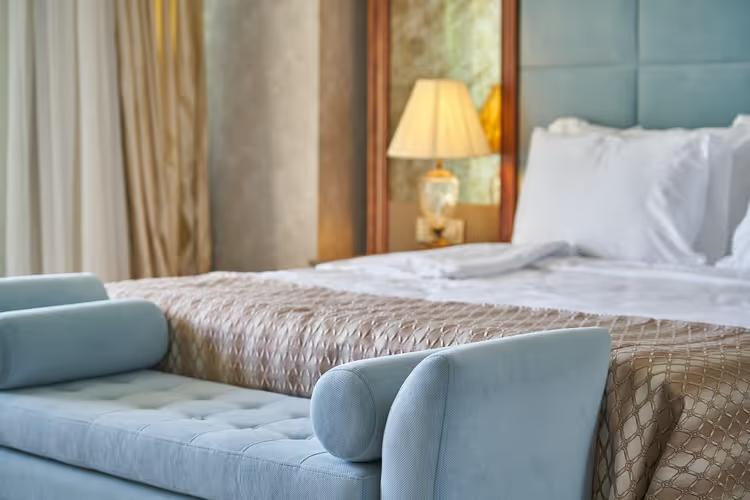
Five stars do not guarantee luxury: seven checks before booking a hotel
Choosing a luxury hotel rarely ends with one successful booking. In Germany, only 77 hotels out of thousands currently hold the maximum five stars, and they are awarded not for marble in the bathroom but according to a catalog of seven sections (as of 09/2026, Condé Nast Traveller breakdown). Price and stars on the sign say less about comfort than the neighborhood, rate, and cancellation policy.
Below are seven checks worth doing before booking. They cover budget, neighborhood, style, reputation, room, dining, and family services.
Ad: this article contains affiliate links, we earn a commission if you book through them, at no extra cost to you.
Planning your budget
💡 In short:
- First determine your overall trip budget, then the share for accommodation, and only then choose specific hotels.
- Compare rates by the final total: breakfast, city tax, and cancellation terms change the price more than a discount.
- Take a rate with free cancellation if your travel dates might shift.
- Category criteria and booking rules: 09/2026, verified against the official Hotelstars Union catalog
Budget matters more than category. The higher the class, the more mandatory criteria and the higher the price per night. Plan two amounts: one for accommodation and one for meals outside the hotel.
The order is this. First the overall trip budget, then the share for accommodation, and only then specific hotels. If you spend almost all your time at the hotel, it makes sense to allocate most of the budget to it.
Before paying, read the cancellation, prepayment, and no-show policy.
What actually changes the final total: breakfast, city tax, paid parking, and cancellation flexibility. A non-refundable rate is cheaper, but if the trip falls through, you won't get your money back. If you often stay with one chain, collect points: they can be redeemed for nights and upgrades.
If the destination isn't a priority, look at Southeast Asian countries such as Thailand or the Philippines. For the same money, you can often get a higher level of service and extra amenities there. Hotels run promotions regularly, but calculate the benefit by the final total, not by the percentage size.
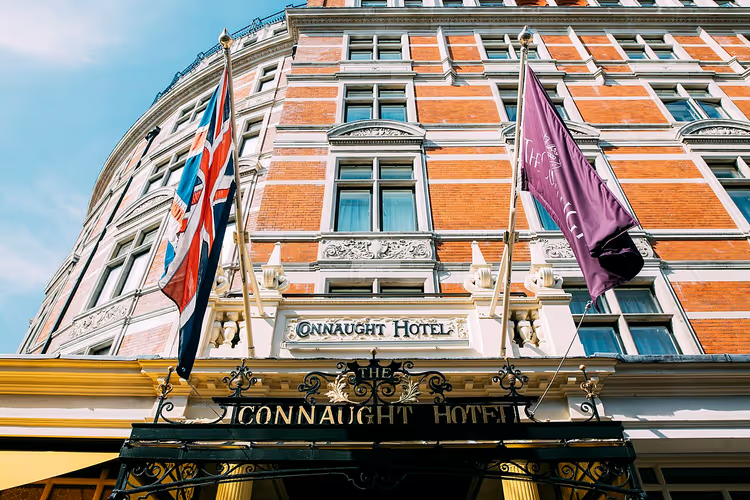 © Liam Smith Photography · CC BY-SAPhoto: Liam Smith Photography, CC BY-SA (https://creativecommons.org/licenses/by-sa/2.0), Wikimedia Commons
Choosing the location
Those who love quiet will appreciate a standalone cottage on a remote island. If you plan trips into the city, the address is what matters: how long it takes to get to the beach, theme parks, and shops. Every trip eats into hours of rest.
The method is simple. Open the map, find the hotel, and see what is around it and at what distance. Or work backwards: mark the places you want to visit and build a route to the hotel. You'll also see what interesting things lie along the way.
A telling example: Bali is a small island, but its areas differ radically. Ubud is quiet, surrounded by rice fields and green forests, while Canggu is loud and trendy, a surfing hub. A hotel in Ubud and a hotel in Canggu give you two different vacations at the same price.
Separately, assess the trip from the airport. A transfer along winding roads is more exhausting than it seems at the time of booking, and a late check-in eats up the first evening. Check with the hotel about front desk hours if your flight arrives at night.
Once the area is chosen, all that remains is to pick a specific hotel and dates: browse hotels on Trip.com. Compare two or three options in the same area; the price difference is usually explained by the view and room size.
Defining the hotel style
Some people dislike vintage furniture and ornate decor, while others look for designer interiors. What matters is not the style direction itself but the feeling of comfort. The hotel website should show rooms, not just the lobby.
 © Basile Morin · CC BY-SAPhoto: Basile Morin, CC BY-SA (https://creativecommons.org/licenses/by-sa/4.0), Wikimedia Commons
Unusual concepts are more common among boutique hotels. They belong to the premium segment and remain small: restored historic buildings, interiors by renowned designers, a restaurant by a Michelin-starred chef. Such hotels are usually pet-friendly.
- Who it's for: couples and guests who value design, quiet, and a small hotel size.
- Not for: families who need a kids' club and a large pool.
- The catch: in a historic building, room sizes are usually smaller than in newer wings.
The second line: eco-hotels. Ecotourism is gaining popularity, and there are more and more of these hotels. They usually cost more than regular hotels of the same level. Check certifications like Green Key or EU Ecolabel on the hotel's official website: the word "eco" without a document proves nothing.
In appearance, eco-hotels are simple and resemble huts: they use indigenous building techniques and local materials, wood, stone, or bamboo. Don't confuse this with cutting corners, it's really about the concept.
Checking reputation and reviews
A hotel's official website says a lot about it. A good sign is when there's a clear search with filters and booking takes just a couple of steps. A bad sign is when the final price is only shown on the last screen.
Next, check the reputation on independent platforms. Read recent reviews from the last few months and look at guest photos: they show what the rooms, food, and pool actually look like. Your idea of luxury may differ from someone else's, so look at the overall tone rather than one angry review.
A high rating with a large sample of guests does mean something: if thousands of guests are happy, that's a strong argument. One glowing review proves nothing. Look for recurring themes in the text: renovations, noise, breakfast, front desk staff.
It's also useful to watch video reviews. Search YouTube for videos about the specific hotel and check the publication date: in a couple of years, a hotel may have changed managers, closed its restaurant, or undergone renovation.
Choosing a room
Premium hotels offer a choice of a dozen categories. Decide in advance what you actually need: bed size, mattress type, view from the window, balcony, robe and slippers. According to the Hotelstars Union catalog, a double bed in a five-star hotel has a mattress width of at least 180 cm, a single bed at least 90 cm (as of 09/2026, room criteria).
If the item you need isn't in the filters, contact the hotel through the form on the website or call the front desk. Ask which side the windows face: rooms facing the courtyard are usually quieter than those facing the street. Ask for photos of the specific category, not a picture from the website's cover.
Food and drinks
Make the decision about meals at home, not on site. The all-inclusive rate is convenient, but not always worth it: if you're out all day, breakfast will be enough. Tours and tickets are convenient to book in advance: tours on GetYourGuide.
Luxury hotels usually have a restaurant with a well-stocked bar and a chef. The dishes are beautiful and tasty, but expensive: not every guest is ready to eat like that three times a day. Check the menu and prices on the hotel's official website so you know the check level in advance.
According to the Hotelstars Union catalog, a five-star hotel must keep its restaurant open seven days a week, serve breakfast with table service, and provide room service around the clock (as of 09/2026, breakdown of category criteria). If some of these points aren't met, the category should be double-checked on the classification website.
Family and pet amenities
With children, luxury hotels offer a nanny and sometimes a kids' club. Before booking, check which services are included in the rate and which cost extra: hourly childcare is more expensive than it seems.
Pet policies for dogs vary: some places accept animals at no extra charge, others require a deposit and don't allow them in the restaurant. Ask about walking, feeding, and in-room pet rules. Even if you're traveling alone, this policy matters: barking and children's laughter through the wall can easily ruin the quiet.
Check the rest of the infrastructure too: spa, fitness center, gym, yoga space. Some hotels provide a car with a driver, a secretary, or a concierge. Five-star hotels have a longer list of services: according to the catalog, such a hotel must have a concierge, valet parking, luggage service, evening turndown service, and a transfer or limousine (as of 09/2026, Hotelstars Union catalog).
If the hotel is outside the city, sort out transportation in advance: car rental on DiscoverCars. A car saves you from waiting for the shuttle and lets you leave for excursions whenever it suits you.
⁉️🤔 Frequently asked questions
Do I need to book a luxury hotel in advance?
It depends on the season and events in the city. In high season, during exhibitions and holidays, rooms at premium hotels are booked out months ahead, and the choice of categories narrows. In low season, prices are lower and you can comfortably wait for a flexible rate. Compare prices for your dates a few months before the trip and a couple of weeks before check-in.
What does the "Superior" label mean in a hotel category?
In the Hotelstars Union catalog, points are awarded for criteria: from 49 points for one star to 940 for five stars with the "Superior" label (as of 09/2026, Hotelstars Union criteria). The more criteria a hotel meets, the higher its category. The label does not mean an extra star: the hotel stays in its category.
Can I cancel a booking without losing money?
There is no cooling-off period for accommodation bookings, and cancellation fees depend on the rate: cancellation, prepayment, and no-show terms are set by the hotel itself (as of 09/2026, ECC-Net guidance on bookings). Choose a flexible rate if your dates might shift. A non-refundable rate is cheaper, but if you cancel, the money is usually not returned.
Do I need to pay a deposit when booking?
No, a deposit is not required to enter into a contract. A booking is valid once you have agreed on the room type, price, and dates, regardless of whether you sent a prepayment or not (as of 09/2026, ECC-Net rules for guests). That said, the hotel may ask for a prepayment under the terms of a specific rate, so read the rules of your booking.
How do I know if a hotel is dog-friendly?
Ask about the pet policy in writing: whether dogs are accepted, whether there's an extra charge, whether you can leave the animal alone in the room, and where it's allowed to go. Ask whether there's a walking area and who will feed the dog if you're away for a long time. Written confirmation will protect you on site.
In short: what to book
The check takes one evening and saves your whole vacation. Put together a short list of hotels, compare final prices including breakfast and city tax, then read recent reviews and look at guest photos.
- If you're on a budget: choose a hotel a category lower, but with a good breakfast and a central location.
- If you're traveling with kids: look for a hotel with a nanny, kids' menu, and pool.
- If you're traveling with a dog: choose a hotel with a confirmed pet policy.
- If you're out on excursions all day: stick to breakfast only and don't overpay for all-inclusive.
- If quiet matters: ask for a room facing the courtyard or a separate cottage.
The first step is one thing: search for hotels on Trip.com for your dates and chosen area.

A small editorial team writing guides for independent travel. We travel ourselves, but we haven’t been everywhere, so we check prices, opening hours and how to get there against official sources.