
















Why millions of tourists choose Japan
Japan has long stopped being exotic for a select few. Today the country ranks among the world's most popular destinations, and interest in it shows no sign of fading. Let's look at what draws millions of tourists here and what to consider before your first trip.
In 2025, Japan welcomed 42.68 million foreign tourists, a historic record and a 15.8% increase over the previous year (As of 01/2026, JNTO statistics). Below are five reasons that explain this flow: temples and megacities, cuisine, festivals, calm streets, and the shinkansen. We add practical details: when to go, how long travel between cities takes, and what to book in advance.
What awaits you in Japan
💡 In short:
- Cherry blossom season: first bloom in Tokyo is expected in late March, see the forecast in the temples section.
- Tokyo and Kyoto are connected by shinkansen, travel time is listed in the transport section.
- Major winter festival: the nighttime Chichibu takes place in early December, dates in the festivals section.
1. Kyoto temples and Tokyo neon
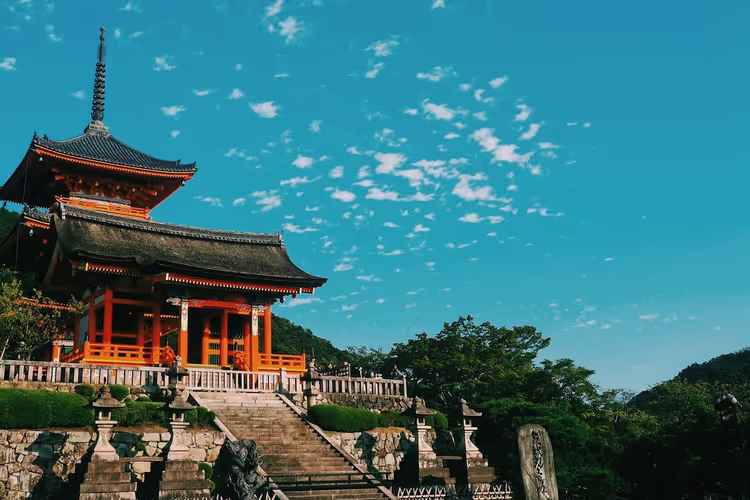
Kyoto preserves old Japan: wooden temples, tea houses, stone gardens. In Tokyo, about 450 km from Kyoto, you'll find skyscrapers, robots, and wall-sized advertising screens. Both sides of the country are easy to combine in one trip.
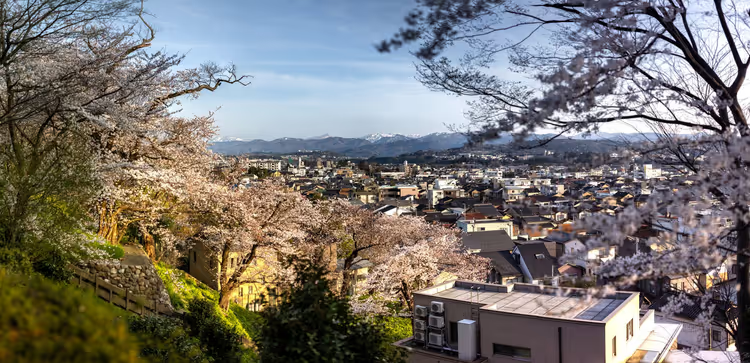
In spring, hanami begins here. In late March and April, Japanese people and tourists alike head to parks to view cherry blossoms. Tokyo lives by the bloom forecast. The forecast is published by the Japan Meteorological Corporation, and for 2026 the first bloom in Tokyo was expected around March 19 (As of 09/2026, JMC report). Dates shift every year, so book tickets with a few days of buffer.
You'll save time if you stay near stations: in Kyoto, that means areas around Kyoto Station and Gion; in Tokyo, the Yamanote line.
- The catch: at peak bloom, parks in Tokyo and Kyoto are packed, and tour groups are already there by opening time.
2. Cuisine: sushi, takoyaki, and okonomiyaki
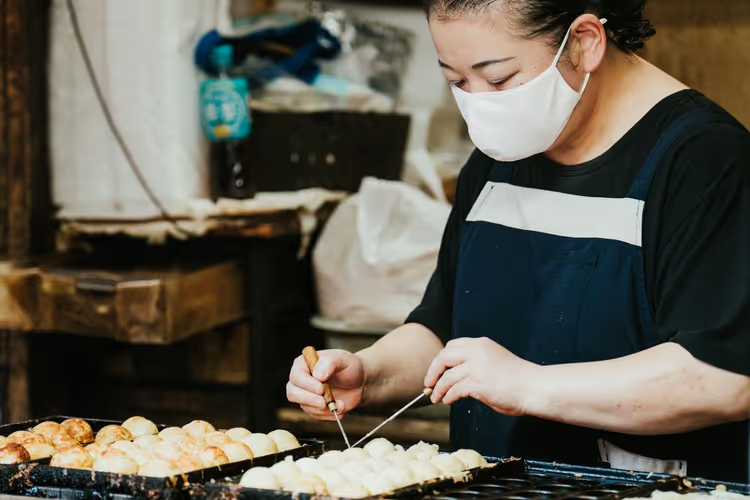
Japanese cuisine is prepared by season and served as a performance. Osaka is called the country's kitchen: here takoyaki and okonomiyaki are everywhere, and a line at a food stall surprises no one.
Sushi is served in different formats, from fast conveyor belts to small bars. In these bars, the chef works right in front of you and hands over each piece directly. In Kyoto, try kaiseki, a multi-course meal where each course showcases a seasonal ingredient.
For Nishiki Market in Kyoto, go in the morning: by lunchtime it gets crowded.
- The catch: at popular bars in Osaka and Kyoto, without a reservation you'll only get in right at opening.
3. Festivals and holidays all year round
The Japanese calendar has a holiday for almost every month. Spring brings hanami, summer features fireworks and dance matsuri, autumn opens fairs and chrysanthemum exhibitions, winter hosts fire ceremonies.
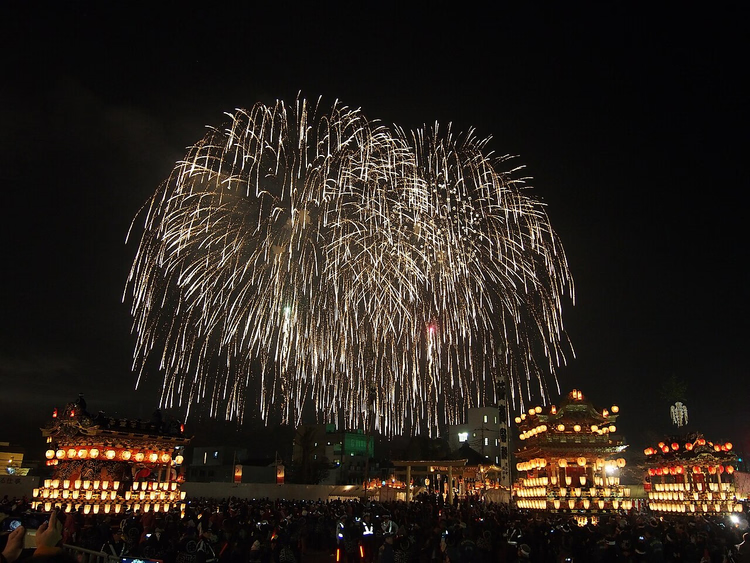
The most famous winter festival, the nighttime Chichibu, takes place in the city of Chichibu (Saitama Prefecture) on December 2 and 3 (As of 09/2026, JNTO description). The festival is about 300 years old and ranks among Japan's top three float festivals. Six floats take part in the procession, two of them shaped like flower umbrellas (As of 09/2026, Chichibu Matsuri Hall).
In early December, the Akibasan fire festival takes place in Odawara. Both events draw large crowds, and accommodation in Chichibu for these dates sells out months in advance.
Choose a hotel near Chichibu Station so you can return after the fireworks without a late-night taxi.
 © ちちびあん · CC BY-SAPhoto: ちちびあん, CC BY-SA (https://creativecommons.org/licenses/by-sa/4.0), Wikimedia Commons
4. Calm and safety on the streets
Japan has ranked among the countries with the lowest crime rates for years. It shows in the details: a lost wallet here is often returned to a police station, and evening streets are calm even in megacities.
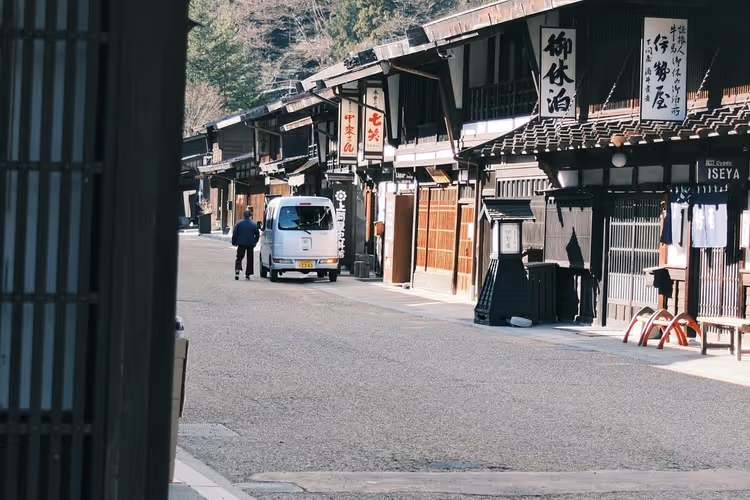
It's calm here at any travel pace. In bustling Tokyo, you'll find the subway, neon districts, and bars open until midnight. Quiet Takayama offers wooden old-town quarters, morning markets, and surrounding mountains. Both are safe, so the two options are easy to combine in one trip.
Practical tip: Japan lives with earthquakes, so at your hotel, ask where the exit is and what to do during a tremor. Keep a hotel card with the address in Japanese on you.
- The catch: in popular Kyoto districts and Tokyo, evenings are full of tourists; look for quiet in the side streets.
5. Shinkansen and city transport
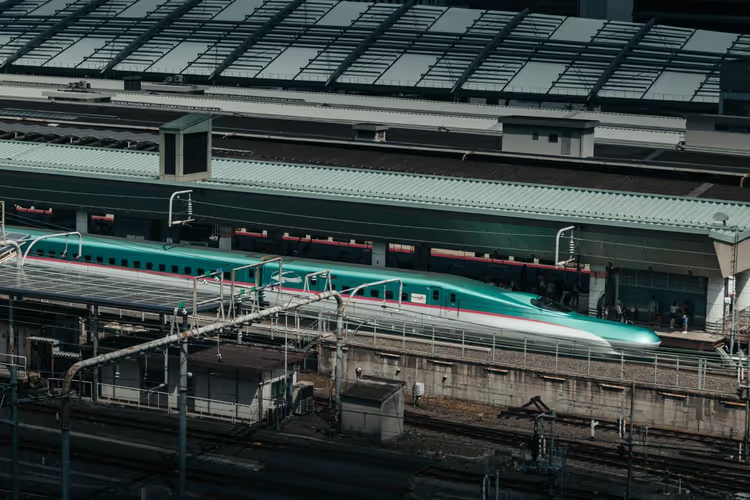
The shinkansen connects the country's major cities. From Tokyo to Kyoto, you'll arrive in about 130 minutes (As of 09/2026, JR Central official website), and from Kyoto to Osaka the trip is even shorter.
Trains depart frequently. It's convenient to build your route day by day: Tokyo in the morning, Kyoto in the evening. In cities, you'll find subways, commuter trains, and buses that run to the minute.
Suica and Pasmo cards can be topped up at machines and work on subways, buses, and in stores. Practical tip: the shinkansen takes up a noticeable part of your trip budget, so plan long transfers in advance.
Book seats before your trip, especially during cherry blossom season and the New Year holidays.
- The catch: during rush hour, Tokyo subway cars are packed; schedule transfers with luggage for early morning.
⁉️🤔 Frequently asked questions
When to go to Japan to catch the cherry blossoms?
The bloom forecast is published by the Japan Meteorological Corporation. For the Tokyo date, see the section on Kyoto temples and Tokyo neon. Kyoto usually blooms a few days later (As of 09/2026, updated forecast). Book dates with buffer and check the forecast before departure.
How long is the trip from Tokyo to Kyoto?
The exact shinkansen travel time is listed in the transport section. Trains depart several times an hour, so you can build your day freely. A morning departure leaves you half a day for Kyoto's temples and gardens.
Is it safe to walk around in the evening?
Japan regularly ranks among the countries with the lowest crime rates. Evening districts of Tokyo and Kyoto are calm, and transport runs until midnight. Tourist areas are crowded in the evening, so watch your belongings in crowds and don't leave your bag open.
What food should you definitely try?
In Osaka, get takoyaki and okonomiyaki; in Kyoto, order kaiseki, a multi-course seasonal meal. Look for sushi in small bars where the chef works right in front of you. Go to Nishiki Market in Kyoto in the morning, before the tour groups arrive.
Should you book accommodation and trains in advance?
During cherry blossom season, New Year's days, and the Chichibu festival in early December, it's best to book accommodation and trains in advance. Outside holidays, there are enough places in Japan, but popular Kyoto hotels sell out quickly.
If you want to see the country on video first, watch the short overview below.
In short: what to book
If this is your first trip to Japan, take Tokyo and Kyoto and add one rural town like Takayama. If you're going for food, set aside two days for Osaka. If you want a festival, plan December around the nighttime Chichibu.
For trains and accommodation, the rule is simple: during cherry blossom season, New Year's days, and festival dates, book in advance. Before buying tickets, check the bloom forecast and festival calendar on the official JNTO website.

A small editorial team writing guides for independent travel. We travel ourselves, but we haven’t been everywhere, so we check prices, opening hours and how to get there against official sources.