
















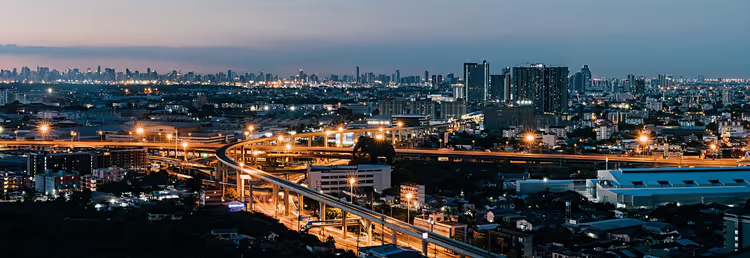
Nine destinations near Bangkok: short flights and what to see
Bangkok is a convenient base for trips across Asia. Low-cost carriers and major airlines fly from Suvarnabhumi and Don Mueang airports to dozens of cities in the region. With a couple of free days, you can see a second country.
Below are nine destinations near Bangkok: flights without long layovers, the main sights, and practical details that will help you plan.
Ad: this article contains affiliate links, we earn a commission if you book through them, at no extra cost to you.
Where to fly from Bangkok: a quick overview
💡 In short:
- Compare flights: Cambodia takes about an hour, Bali about four hours.
- Check visa rules for your passport a month before departure.
- Book your hotel in advance if you're traveling in high season.
- Tickets and facts: verified on 09/14/2026 on the official Angkor Enterprise website.
All nine destinations are in Southeast and South Asia. Direct flights from Bangkok are available almost everywhere, and low-cost carriers keep prices within a day's budget. If you're flying for a short trip, take carry-on luggage only: it's cheaper and faster.
Destination | Flight from Bangkok | Main attraction |
|---|---|---|
Angkor (Siem Reap) | about an hour | Angkor Wat and Angkor Thom |
Singapore | about two and a half hours | Marina Bay and the botanic garden |
Kuala Lumpur | about two hours | Petronas Towers and Menara |
Bali | about four hours | Uluwatu and Tanah Lot temples |
Nepal (Kathmandu) | about three hours | the Himalayas and Lumbini |
Vietnam (Hanoi) | about two hours | Halong Bay and old Hanoi |
Philippines (Manila) | about three and a half hours | islands and diving |
Hong Kong | about three hours | Victoria Harbour and the Avenue of Stars |
Macau | about three hours | historic heritage and casinos |
1. Angkor: the temples of Siem Reap and the jungle
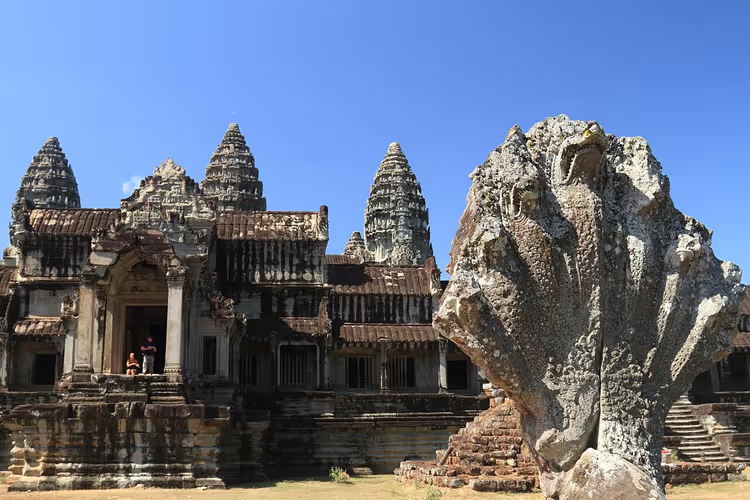 © Harald Hoyer from Schwerin, Germany · CC BY-SAPhoto: Harald Hoyer from Schwerin, Germany, CC BY-SA (https://creativecommons.org/licenses/by-sa/2.0), Wikimedia Commons
Angkor was the capital of the Khmer Empire in the 10th and 11th centuries. Today hundreds of temples stand here, and the main one, Angkor Wat, is considered the largest religious structure in the world. Its silhouette even appears on the flag of Cambodia. Nearby is the city of Siem Reap, a convenient starting point for your route.
If you have two days, start with Angkor Wat at sunrise. Then see Bayon with its stone faces of Buddha and Angkor Thom, which served as the city's citadel. The temples of Phnom Bakheng and Ta Prohm stand in the jungle, where established trails are laid out. It's hard to get lost.
- How to get there: direct flight from Bangkok to Siem Reap, about an hour in the air.
- Ticket: a one-day Angkor Pass costs $37 (as of 09/2026, Angkor Enterprise).
- Who it's for: lovers of ancient architecture, because there is no other concentration of temples like this near Bangkok.
- Where to stay: compare hotels in Siem Reap on Trip.com.
2. Singapore: a city of the future and contrasts
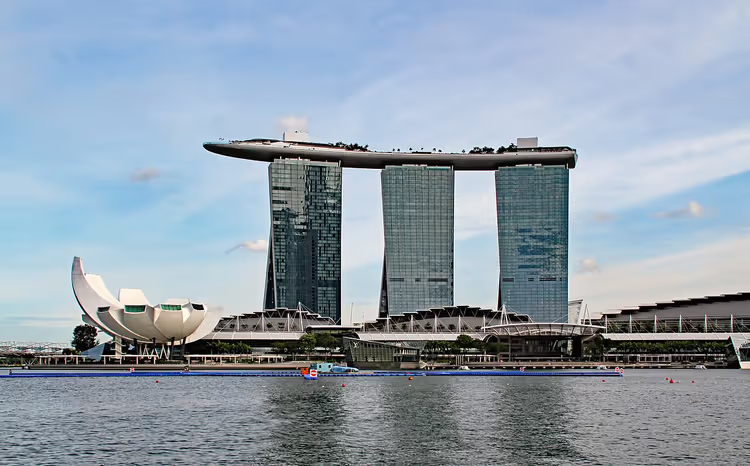 © Tony Hisgett from Birmingham, UK · CC BYPhoto: Tony Hisgett from Birmingham, UK, CC BY (https://creativecommons.org/licenses/by/2.0), Wikimedia Commons
Singapore surprises with its contrasts. The colonial Raffles Hotel sits next to futuristic towers, and right by the business district is the oldest botanic garden. It was founded in 1859 and is listed by UNESCO (according to the National Parks Board).
You'll enjoy it if you like sightseeing and architecture: temples of four religions coexist in a small area, along with a zoo and a giant observation wheel. Plan your beach time in another country. Even on Sentosa, the sea is murky and the shore doesn't compare to Thai beaches.
- How to get there: from Suvarnabhumi or Don Mueang, the trip takes about two and a half hours.
- Who it's for: for those who want a city and great food, because the infrastructure here is among the best in Asia.
- The catch: the beaches are weak, so if you want sea and sand, it's better to fly farther.
- Where to stay: compare hotels in Singapore on Trip.com.
3. Kuala Lumpur: Petronas towers and parks
 © Smuconlaw · CC BY-SAPhoto: Smuconlaw, CC BY-SA (https://creativecommons.org/licenses/by-sa/4.0), Wikimedia Commons
Kuala Lumpur combines parks, old mosques, and glass towers. Locals call it simply KL. A logical place to start is the square by Masjid Jamek, where the city was founded. The capital's main symbol, the Petronas Towers, rises 452 meters and has 88 floors (according to Petronas Towers).
Inside the towers there are panoramic restaurants, a gallery, and boutiques, and an observation deck operates on the 86th floor. The Menara tower is shorter than its neighbors, but it has a revolving restaurant with a city view. There are many flights from Bangkok, so you can pick a convenient time.
- How to get there: direct flight from Bangkok, about two hours.
- Who it's for: for fans of city walks and shopping, because it's easy to combine both here.
- The catch: the city is noisy and chaotic in places, so don't expect quiet.
- Where to stay: compare hotels in Kuala Lumpur on Trip.com.
4. Bali: temples, rice terraces, and the ocean
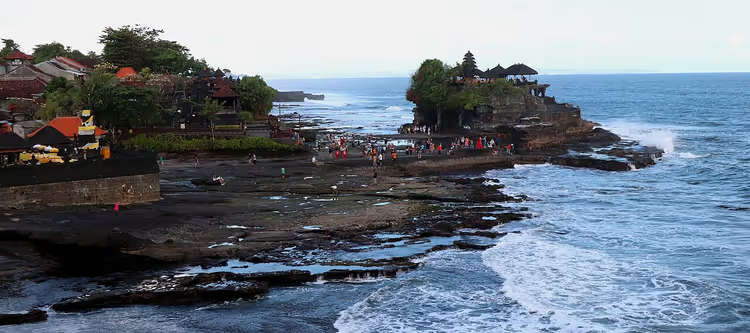 © Thank You (25 Millions ) views from Fresno, USA · CC BYPhoto: Thank You (25 Millions ) views from Fresno, USA, CC BY (https://creativecommons.org/licenses/by/2.0), Wikimedia Commons
Bali is often compared to Thailand, and many people wonder why they should trade one set of beaches for another. The answer is simple: the island is interesting for its culture. The temples, the massage, and the architecture are different here, unlike even the rest of Indonesia.
The island is compact. Rent a car with a driver and spread the main sights over several days: the Uluwatu and Tanah Lot temples, the rice terraces, the capital Denpasar, the artisan town of Ubud, and Lake Bratan. Leave time for a sunset by the ocean, one of the most striking in the region. Keep in mind the tides, which in places dramatically change the shoreline.
- How to get there: from Suvarnabhumi to Denpasar airport, about four hours; with a layover it's longer and cheaper.
- Who it's for: for surfers and nature lovers, because the ocean and volcanoes are close by here.
- The catch: strong tides, so swimming is inconvenient in places.
- Where to stay: compare hotels in Bali on Trip.com.
5. Nepal: the Himalayas, pagodas, and Lumbini
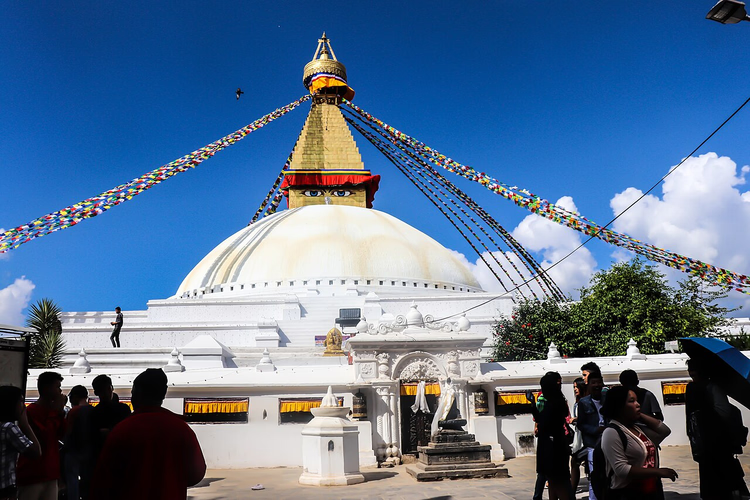 © Nabin K. Sapkota · CC BY-SAPhoto: Nabin K. Sapkota, CC BY-SA (https://creativecommons.org/licenses/by-sa/4.0), Wikimedia Commons
Nepal draws people with its mountains and unhurried pace of life. It is home to 8 of the world's 14 eight-thousanders, including Everest (according to Nepal Tourism Board). Without basic physical fitness, the mountains can be tough. So choose a route that matches your abilities.
The architectural program is modest: ancient pagodas and temples, of which there are truly many. It's worth making the trip to Lumbini, the birthplace of Buddha. The cuisine here is simple, and there are few flashy entertainments, apart from elephant safaris in the southern parks. People come here for the atmosphere, nature, and meditation, not for nightlife.
- How to get there: from Bangkok to Kathmandu, just over three hours.
- Who it's for: for those seeking calm and mountains, because this is Asia's spiritual center.
- The catch: few entertainments, and the cuisine is simple.
- Where to stay: compare hotels in Kathmandu on Trip.com.
6. Vietnam: Halong bay and old Hanoi
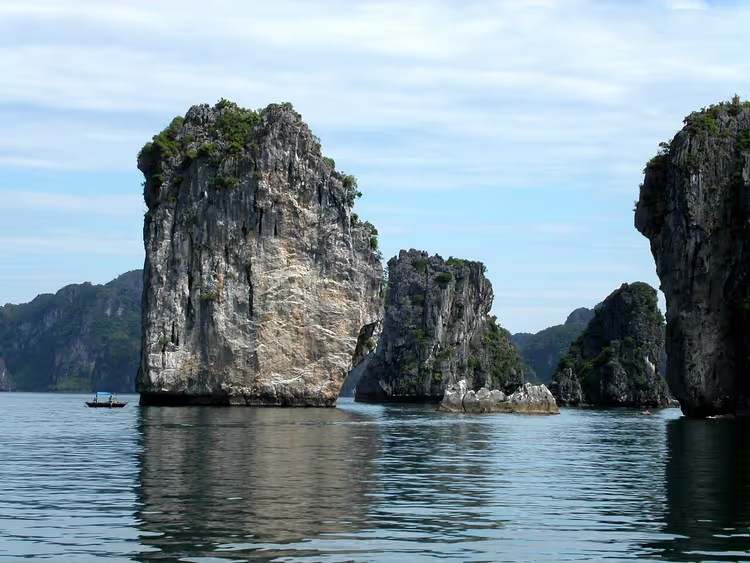 © Thomas Hirsch / User:Ravn · CC BY-SAPhoto: Thomas Hirsch / User:Ravn, CC BY-SA (http://creativecommons.org/licenses/by-sa/3.0/), Wikimedia Commons
Vietnam surprises with its variety. It has ancient temples, a long coastline, and big cities. Start with Halong Bay: its landscapes are on the UNESCO list (according to UNESCO World Heritage Centre).
Then check out old Hanoi and the water puppet theater by Hoan Kiem Lake. Diving in Vietnam is among the most affordable in the region. The local beaches are easy to compare with Thailand's and decide which you like more.
- How to get there: direct flight to Hanoi or Ho Chi Minh City, about two hours.
- Who it's for: for those who want more than Thailand, because Vietnam shows a different Asia within a short flight.
- Where to stay: compare hotels in Vietnam on Trip.com.
7. Philippines: seven thousand islands
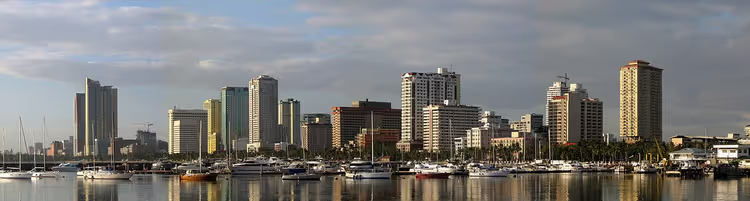 © Mike Gonzalez ( TheCoffee ) · CC BY-SAPhoto: Mike Gonzalez ( TheCoffee ), CC BY-SA (https://creativecommons.org/licenses/by-sa/3.0), Wikimedia Commons
Manila, the capital of the Philippines, sits on the large island of Luzon. The archipelago itself has 7,641 islands (according to the Philippines article on Wikipedia). It has skyscrapers, ancient temples, and diving.
The nature and hotel service are also up to par. Plan at least a week for the trip. For far-flung islands, allow for a domestic flight, otherwise you'll lose a day on the road.
- How to get there: direct flight to Manila, about three and a half hours.
- Who it's for: for divers and island lovers, because the choice of beaches here is huge.
- Where to stay: compare hotels in Manila on Trip.com.
8. Hong Kong: Victoria Harbour and skyscrapers
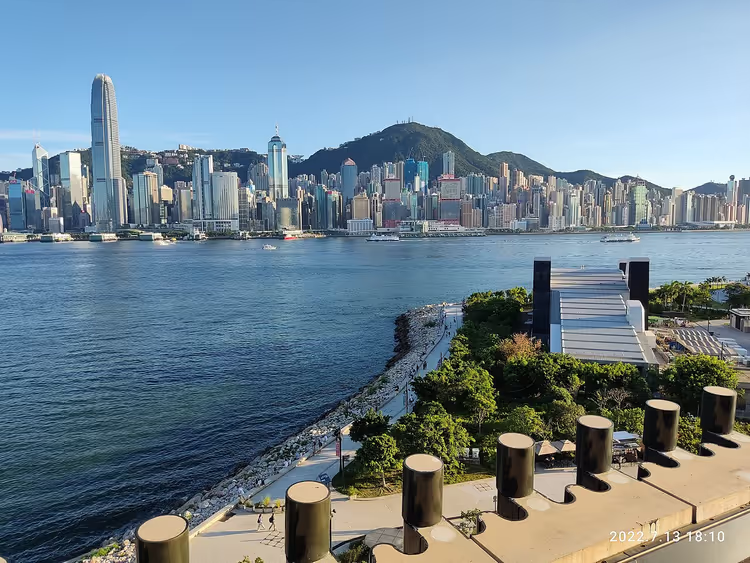 © Bkemaoe HOMA · CC BY-SAPhoto: Bkemaoe HOMA, CC BY-SA (https://creativecommons.org/licenses/by-sa/4.0), Wikimedia Commons
Hong Kong, a special administrative region of China, occupies the Kowloon Peninsula and many islands, including Lamma, Lantau, and Hong Kong Island itself. Lamma has no gasoline-powered transport and plenty of seafood restaurants, while Lantau is home to the AsiaWorld-Expo exhibition center.
Start with Hong Kong Island. It's worth seeing the Buddhist temples in the Chinese tradition and the antique shops on Cat Street and Hollywood Road. Then cross over to Kowloon: the Tsim Sha Tsui waterfront is home to the Avenue of Stars with the names of Asian film actors. Skyscrapers rise above the city, where major deals are made. There are plenty of flights from Bangkok every day.
- How to get there: direct flight, about three hours.
- Who it's for: urban travelers, because Asia and the Western business world meet here.
- Where to stay: compare hotels in Hong Kong on Trip.com.
9. Macau: casinos and Portuguese heritage
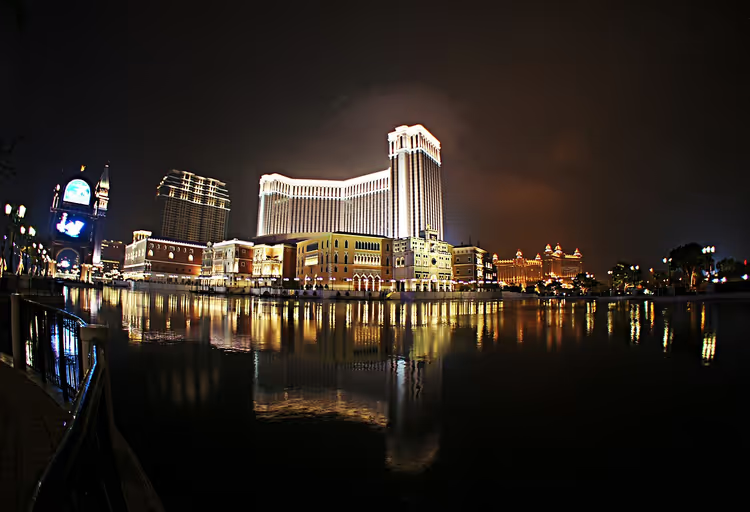 © soeperbaby · CC BYPhoto: soeperbaby, CC BY (https://creativecommons.org/licenses/by/2.0), Wikimedia Commons
Macau is called the gambling capital of Asia and is often compared to Las Vegas. By the number of major casinos, the city is indeed ahead: the Venetian Macao stands here, with Sands and MGM nearby. But it's not just about the gambling houses.
Macau was a Portuguese colony for a long time and returned to Chinese administration only in the late nineties. In the center, European facades sit next to Chinese temples, and you barely feel the ocean around you. The city has its own currency, the pataca, its own executive council, and a special visa regime. Both scheduled and charter flights operate from Bangkok, so book your tickets in advance.
- How to get there: direct flight, about three hours.
- Who it's for: those who want to combine history and casinos, because both are right next to each other here.
- The catch: flights are popular, so it's worth buying tickets in advance.
- Where to stay: compare hotels in Macau on Trip.com.
⁉️🤔 Frequently asked questions
How much does a ticket to the temples of Angkor cost?
The price of a one-day Angkor Pass is listed above, in the Angkor section. Current rates are available on the Angkor Enterprise website. Multi-day passes are more expensive, and they're worth it if you plan to visit the temples several days in a row. Buy your pass in advance on the official website or at the ticket office in Siem Reap.
Where can you fly from Bangkok if you only have a weekend?
For a short weekend, choose Angkor or Vietnam: the flight takes about one hour and about two hours respectively. In two days you can see the main temples or old Hanoi. Bali and the Philippines need at least a week.
When is the best time to fly to these countries?
On the Southeast Asian mainland, the dry season runs from November to April. This is the best time for beaches and temples. Bali's dry season is different: from April to October. During the rainy season, hotels and tickets are cheaper, but short downpours happen almost every day. For the mountains of Nepal, choose spring or autumn.
Do you need a visa for these destinations?
Entry rules depend on your passport and change every year. Check the requirements on the official website of your country's embassy or consulate at least a month before departure. Don't rely on forums and old articles.
Where should you stay in these cities?
Each of the nine cities has hotels for different budgets. In Siem Reap and Kathmandu prices are lower, in Singapore and Hong Kong higher. Compare options in advance and book through a trusted service: that way you'll get a discount and choose a neighborhood that fits your plans.
Nine destinations on the map
All nine points are marked on the map below. This makes it easier to plan your route: from Bangkok they form an arc from Cambodia to Hong Kong and Macau.
Where to fly from Bangkok
Places on the map
- 1Angkor Wat The world's largest religious monument, capital of the Khmer empire in the 10th-11th centuries
- 2Singapore UNESCO botanical garden, futuristic towers and temples of four religions
- 3Kuala Lumpur Petronas Towers 452 m, observation deck on the 86th floor
- 4Bali Uluwatu and Tanah Lot temples, rice terraces and Ubud
- 5Nepal The Himalayas, Everest and the birthplace of Buddha in Lumbini
- 6Vietnam Halong Bay on the UNESCO list, old Hanoi and the water puppet theatre
- 7Philippines 7,641 islands of the archipelago, diving and ski slopes
- 8Hong Kong Victoria Harbour, the Avenue of Stars and the antique shops of Cat Street
- 9Macau Asia's gambling capital, the Venetian Macao and Portuguese heritage
In short: what's worth booking
If you only have two free days, go for Angkor: an hour's flight and the region's most impressive temples. If you want city life and modernity, choose Singapore or Kuala Lumpur. Bali is good for beaches and surfing, Nepal for mountains and quiet, the Philippines for diving. Hong Kong and Macau are easy to combine in one trip.
It's best to book a hotel in any of these cities in advance. Compare accommodation options on Trip.com.

A small editorial team writing guides for independent travel. We travel ourselves, but we haven’t been everywhere, so we check prices, opening hours and how to get there against official sources.