
















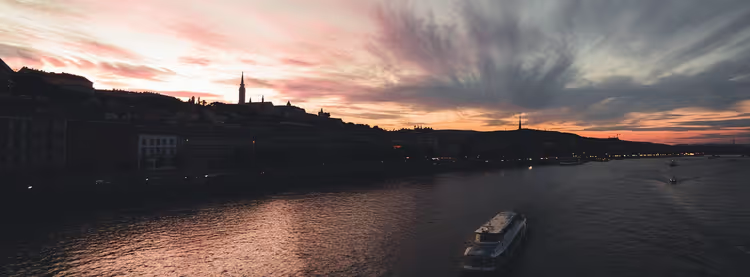
What to see in Budapest: 30 places and opening hours 2026
Budapest spreads across both banks of the Danube, and you can't see it all in one day. Most visitors make it to the Parliament building and Fisherman's Bastion, and then their route comes to an end. That's how the city gets remembered as a set of postcard views, even though baths, markets, and quiet Buda courtyards are hidden in between.
We've put together 30 places worth seeing in Budapest: from thermal baths to museums and viewpoints. For each one you'll find the location, approximate time to allow, and a practical detail people usually only learn once they're there.
Opening hours vary by attraction. Széchenyi Baths welcomes guests from morning to evening, and the House of Terror is open daily except Mondays, from 10:00 to 18:00 (as of 09/2026, official website). The ticket office closes at 17:30, so the last hour isn't suitable for a visit.
Ad: this article contains affiliate links. We earn a commission if you book through them, at no extra cost to you.
Budapest: what to see on your first trip
💡 In short:
- Split your trip: one day for Pest, a second for Buda, and leave half a day for the baths.
- Visit baths and museums in the morning, when lines are shorter.
- Buy museum and bath tickets online in advance; in high season the ticket office draws a queue.
- Opening hours: 09/2026, verified on the official Széchenyi Baths website.
1. Andrássy Avenue
 © Elekes Andor · CC BYPhoto: Elekes Andor, CC BY (https://creativecommons.org/licenses/by/4.0), Wikimedia Commons
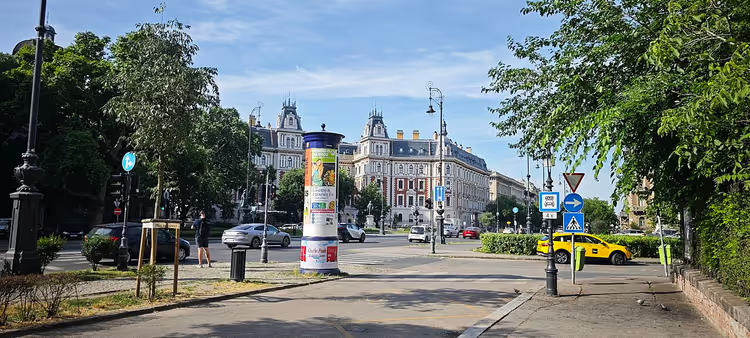
Andrássy Avenue connects the center of Pest with Heroes' Square and is considered the city's main ceremonial boulevard. You'll walk along at least part of it if you're exploring the center. The architecture here is remarkably cohesive: neo-Renaissance, eclecticism, and a wide boulevard reminiscent of Paris.
The avenue's main building, the Hungarian State Opera House (Magyar Állami Operaház), stands almost halfway along. The hall is praised for its acoustics, and the facade is decorated with sculptures of composers. The oldest line of continental metro runs beneath the avenue, so going down into the underground here is also worth doing.
Further along, palaces and squares drift past: Oktogon, Ferenc Liszt Square, the Zoltán Kodály Memorial Museum, and the House of Terror. The avenue's architecture is protected by UNESCO, so facades are kept largely unchanged. You'll see the Drechsler Palace, the Hungarian University of Fine Arts building, and the puppet theater. Each building deserves its own look, so don't try to cover the whole street in an hour. Better to pick two or three spots and take them in at a relaxed pace. If you prefer seeing the city from a window, a hop-on hop-off bus in Budapest runs along the avenue with stops at Andrássy and Heroes' Square.
2. Buda embankment
 © Paul Colin Hennig firstdorsal.eu · CC BY-SAPhoto: Paul Colin Hennig firstdorsal.eu, CC BY-SA (https://creativecommons.org/licenses/by-sa/4.0), Wikimedia Commons
Buda and Pest are separated by the Danube, and the river embankment has become the best place for a stroll. It's part of the UNESCO World Heritage list, and you'll understand why within the first kilometer. After World War II the look of the riverbank changed: some buildings were rebuilt from scratch.
The character of the embankment shifts. In some places traffic hums nearby, while elsewhere pedestrian stretches with cafes begin. The most beautiful part runs between Erzsébet Bridge and Széchenyi Chain Bridge, but it's worth continuing past the Chain Bridge too.
There you'll see the "Little Princess," a sculpture of a girl in a crown, and the entrance to the bridge with lions. The embankment also has a tragic spot: the "Shoes on the Danube Bank" memorial marks the site of mass executions. In the evening the riverbank is best viewed from the water: a Danube cruise with dinner and live music passes by the Parliament building and Buda Castle.
3. Shoes on the Danube Bank
 © Nan Palmero from San Antonio, TX, USA · CC BYPhoto: Nan Palmero from San Antonio, TX, USA, CC BY (https://creativecommons.org/licenses/by/2.0), Wikimedia Commons
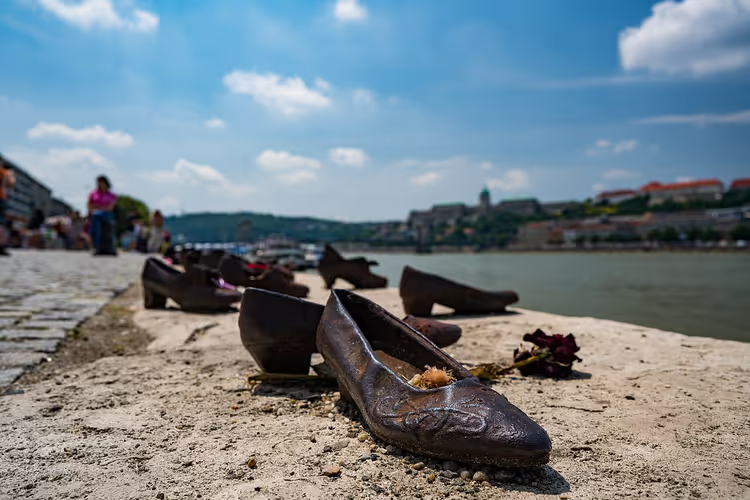
Cast iron shoes are lined up right at the water's edge. Men's, women's and children's pairs stand frozen on the stone, commemorating the victims of the Holocaust. The memorial appeared decades after the war and has become one of the most poignant places in the city.
Before execution, people were forced to take off their shoes, and they were shot right at the water's edge. Passersby often don't notice the small figures until they get closer. If you're walking along the embankment, stop here for a few minutes: this is not a place for a quick photo.
The composition stretches along the parapet and is clearly visible from the water. In the evening there are almost no people here, so you can calmly examine the details. Walks along the embankment usually start at the parliament and end at the Chain Bridge.
4. Buda Castle
 © Jakub Hałun · CC BY-SAPhoto: Jakub Hałun, CC BY-SA (https://creativecommons.org/licenses/by-sa/4.0), Wikimedia Commons
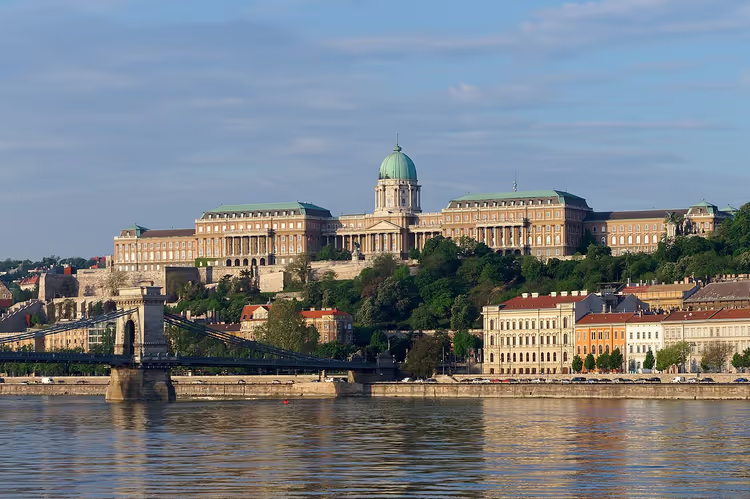
Buda Castle spreads across a hill above the Danube. You should set aside a whole day for it, because a city within a city hides inside. You'll pass through the fortress gates and immediately find yourself in dense development from different eras.
The Royal Palace, the former residence of Hungarian rulers, occupies the upper part of the hill. The building was rebuilt over centuries, so it grew out of several wings connected by terraces and inner courtyards. Today it houses the National Gallery, the Castle Museum and the national library.
Below stretch the royal gardens with an arcade, pavilions and galleries. In the southern part you'll see the Mace Tower and the Main Bastion, which locals call the Rondella. The bastion walls are so thick that entire casemates were hidden inside, so the place impresses even without a guided tour.
Along the embankment runs a long arcade called the Bazaar. It's a pleasant place to walk in the shade and take in the city from above. Walking up takes a long time, so many people use the funicular or the bus. Several museums operate inside the castle, and it's easy to spend the whole day on them.
5. Hungarian National Museum
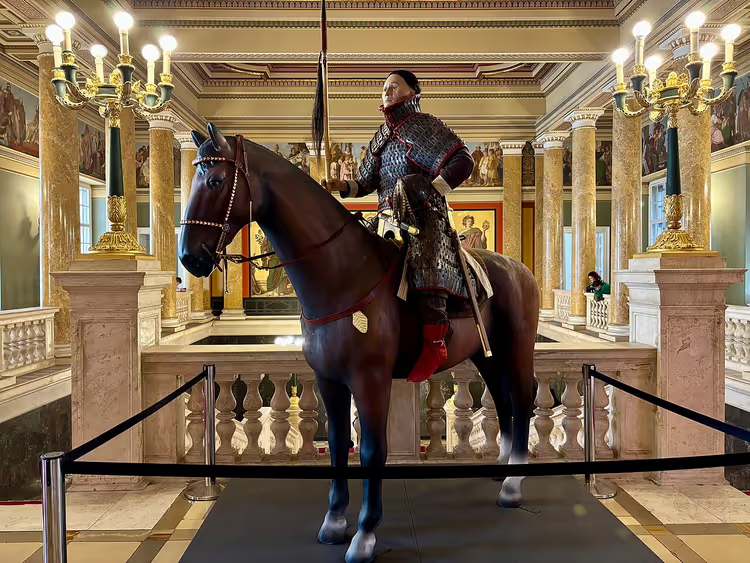
The country's main museum presents the history of Hungary from antiquity to the 20th century. The collection grew out of the private holdings of Count Széchenyi, who donated it to the state. A separate neoclassical building resembling a palace was built for it.
Permanent exhibitions run across three floors. A separate hall is dedicated to the coronation mantle of Stephen I, the first king of Hungary: the garment is made of Byzantine silk and embroidered with gold and pearls. Nearby, finds from the Roman era and objects from different periods are on display, according to the museum.
Buy your ticket online: Hungarian National Museum tickets will save you from waiting in line at the ticket office.
6. Museum of Fine Arts
 © Szilas · CC BYPhoto: Szilas, CC BY (https://creativecommons.org/licenses/by/4.0), Wikimedia Commons
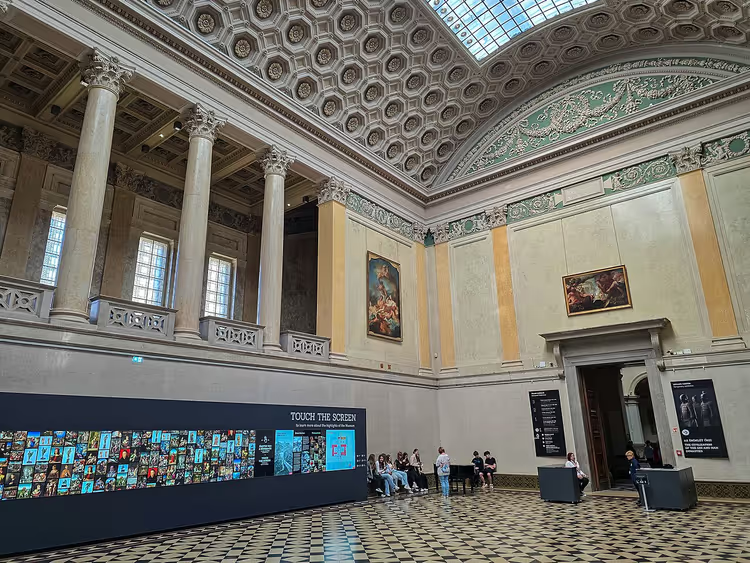
The Museum of Fine Arts stands on Heroes' Square and holds the country's largest collection of foreign art. Here you'll find old masters, ancient sculpture and graphic art. The collection includes drawings by Rembrandt, Goya and Leonardo, so the visit will take more than one hour.
The Old Masters' Gallery occupies separate halls, and the Egyptian collection was started by the museum's first director, an Egyptologist. The museum survived the war and renovations, so part of the exhibition is now shown in an updated form. Check the schedule before your visit: some museums are closed on Mondays.
Tickets for the permanent exhibition and temporary shows are easier to get online: Museum of Fine Arts tickets.
7. Hungarian National Gallery

The National Gallery occupies a wing of Buda Castle and collects Hungarian art. The first floor is dedicated to Gothic and Baroque, while the second floor displays paintings and sculptures from the modern and contemporary periods. The collection is enormous, and the oldest works go back to the Middle Ages.
Tivadar Csontváry deserves special attention: during his lifetime he was not recognized at home, but now he is considered a national treasure. His painting "The Old Fisherman" is especially famous. The building's upper floor has an observation deck with a view of all of Budapest, so set aside time for the view as well.
Those who want to skip the line should get tickets in advance: Hungarian National Gallery tickets.
8. Museum of Ethnography
 © Guy Delsaut · CC BY-SAPhoto: Guy Delsaut, CC BY-SA (https://creativecommons.org/licenses/by-sa/4.0), Wikimedia Commons
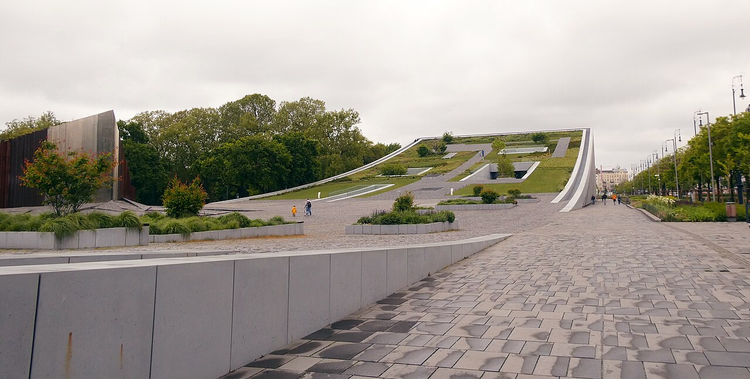
The Museum of Ethnography tells the story of everyday life and culture of different peoples. Its collection grew out of the private collection of János Xántus, which was supported by the minister of education. Today it displays jewelry, national costumes, tools, furniture, and musical instruments.
There are also unusual exhibitions: one is dedicated to smuggling and features confiscated items from different eras. The building itself on Lajos Kossuth Square previously housed the Palace of Justice. It is decorated with statues, stained glass windows, and two towers, so the tour begins right at the facade.
More than two hundred thousand objects show the history of humanity from primitive society to the present day. In addition to Hungarian everyday life, there are artifacts from other peoples, which makes comparing eras and cultures especially interesting.
Tickets are easy to book online: Museum of Ethnography tickets.
9. Széchenyi Thermal Bath
 © Marc Ryckaert ( MJJR ) · CC BYPhoto: Marc Ryckaert ( MJJR ), CC BY (https://creativecommons.org/licenses/by/3.0), Wikimedia Commons
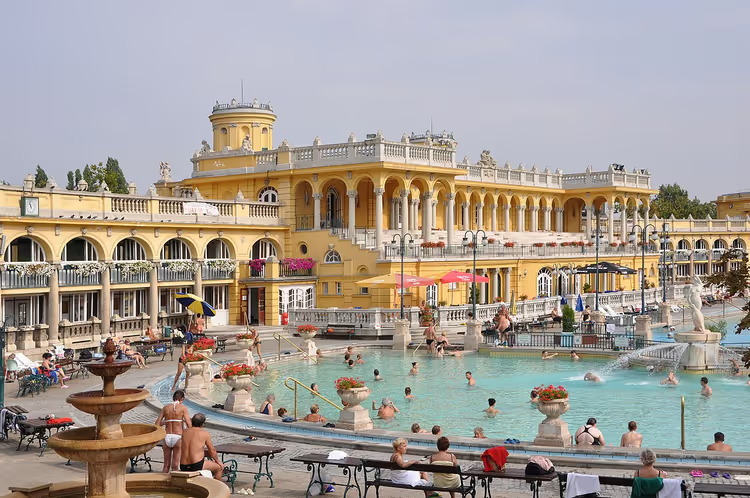
Széchenyi Thermal Bath spreads across City Park and is considered the largest thermal complex in Europe. The pavilions are open-air, and the water comes from springs deep underground. You can bathe here year-round, and it is especially pleasant in winter.
In addition to the pools, there are therapeutic mud baths and salt rooms. Guests come both for treatment and simply to relax: some pools are warm, others cool. If you are visiting for the first time, go on a weekday morning, as a line forms at the entrance by midday.
The complex occupies a large building with domes and statues, and from the outside it already looks like a palace. Inside, you move from pool to pool through corridors, so bring a towel and slippers. On Fridays the bath extends its hours, and you can bathe until dark.
It is worth getting a skip-the-line ticket in advance: Széchenyi Bath full-day ticket.
10. Lukács Thermal Bath
 © Christo · CC BY-SAPhoto: Christo, CC BY-SA (https://creativecommons.org/licenses/by-sa/4.0), Wikimedia Commons
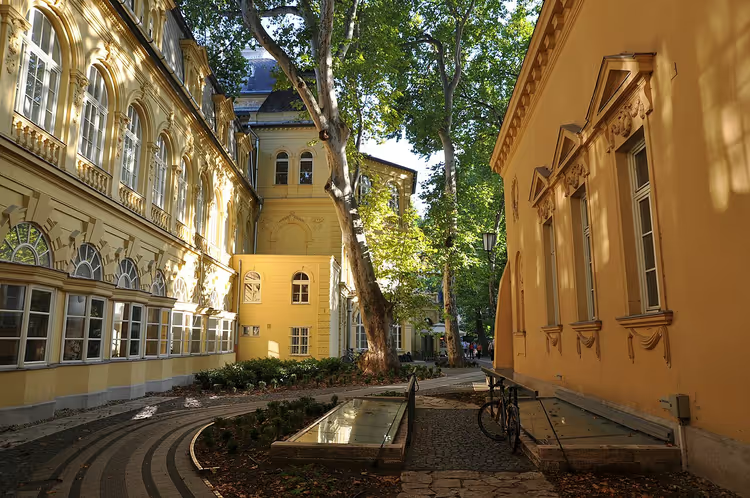
Lukács Thermal Bath operates more quietly and calmly than Széchenyi, which attracts those tired of crowds. The springs here were known as far back as the Middle Ages, and the Knights Hospitaller were the first to use them for healing. Later the water was favored by a Turkish pasha, and a full hydrotherapy center opened in the 20th century.
Today the complex includes seven pools, some of them open-air. There are saunas and steam rooms, an ice plunge pool, massage rooms, and mud wrap treatments. You will also find a salt room here, and there are usually fewer people than in the center.
11. Gellért Thermal Bath
 © Nan Palmero from San Antonio, TX, USA · CC BYPhoto: Nan Palmero from San Antonio, TX, USA, CC BY (https://creativecommons.org/licenses/by/2.0), Wikimedia Commons
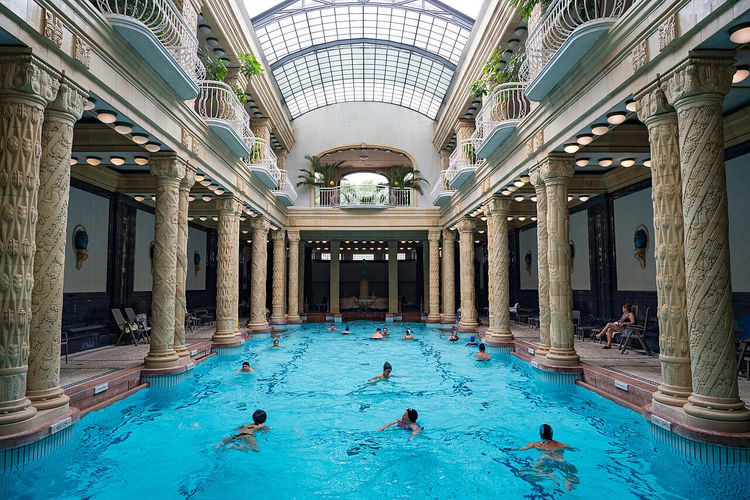
Gellért Thermal Bath is located in the building of the hotel of the same name and is considered the most luxurious in the city. As of 10/2025 the bath is closed for renovation, so check the official website for the reopening date. The Art Nouveau facade and interiors with marble columns, stained glass, and mosaics make it look like a museum. Therapeutic treatments here go hand in hand with an architectural tour.
Thirteen pools of different types, carbonated and pearl baths, mud therapy, a salt room, and massages attract both tourists and locals. There is a sun terrace on the roof where you can sunbathe between baths. The water in the Gellért springs is considered among the most healing in the city.
The bath opened at the beginning of the last century as part of the hotel, and it has remained a landmark of Buda ever since. After bathing, it is worth going up to the terrace and looking at the Danube: from here you get a view of the whole city.
Once it reopens, skip-the-line tickets are easy to get online: Gellért Bath full-day ticket.
12. Margaret Island
 © Ralf Roletschek · CC BY-SAPhoto: Ralf Roletschek, CC BY-SA (https://creativecommons.org/licenses/by-sa/1.0/fi/deed.en), Wikimedia Commons
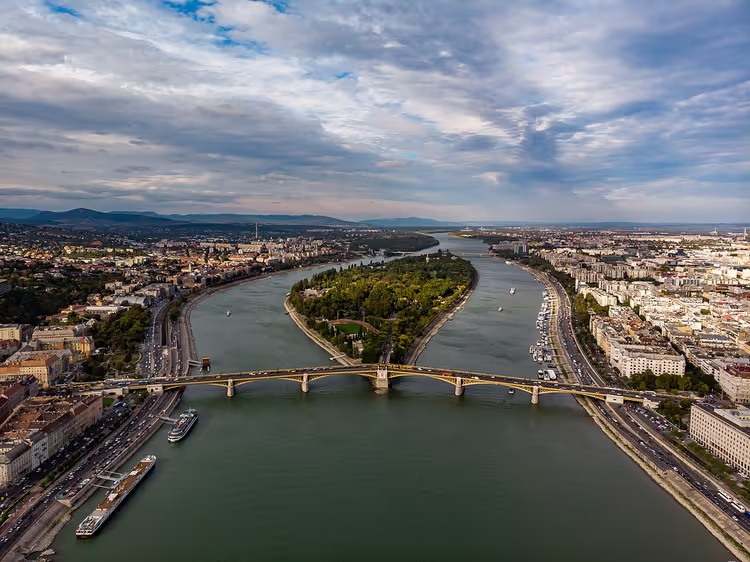
Margaret Island lies in the middle of the Danube and works as a huge park. Locals come here on weekends to walk, bike, and relax by the water. For a tourist, it is a calm pause between museums: you step out of the city noise and find yourself among trees.
The island has sports grounds, courts, and cafes, and in the warm season performances are held on the beaches.
13. City Park
 © Jakub Hałun · CC BY-SAPhoto: Jakub Hałun, CC BY-SA (https://creativecommons.org/licenses/by-sa/4.0), Wikimedia Commons
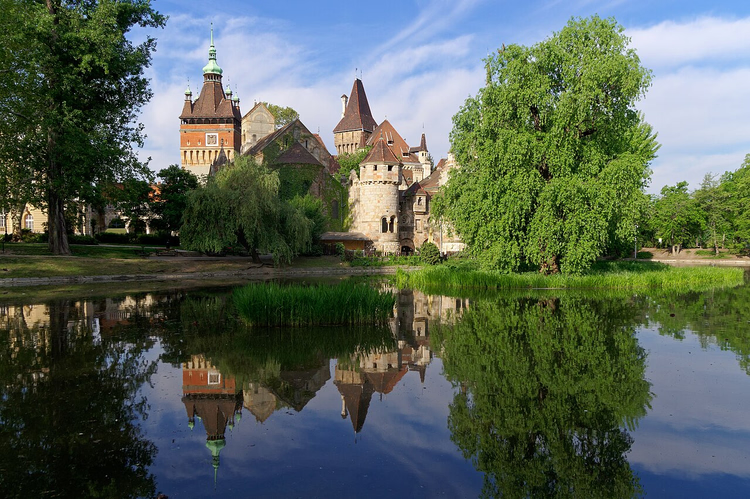
City Park, the city's main park, began as marshland and hunting grounds. In the 18th century the area was drained, trees were planted, and it was turned into a city park. Today you will find both walking paths and several attractions here.
Vajdahunyad Castle rises above the pond, and nearby are Heroes' Square with museums and the zoo. As you stroll, you will pass the Jáki kápolna chapel and the statue of Anonymous, a mysterious figure with a covered face. Széchenyi Thermal Bath is also located here, so it makes sense to combine them in one day.
The Romanesque Jáki kápolna chapel is decorated with sculptures of Christ and the disciples. In summer the park is crowded, but on a weekday morning you can walk almost alone.
14. Vajdahunyad Castle
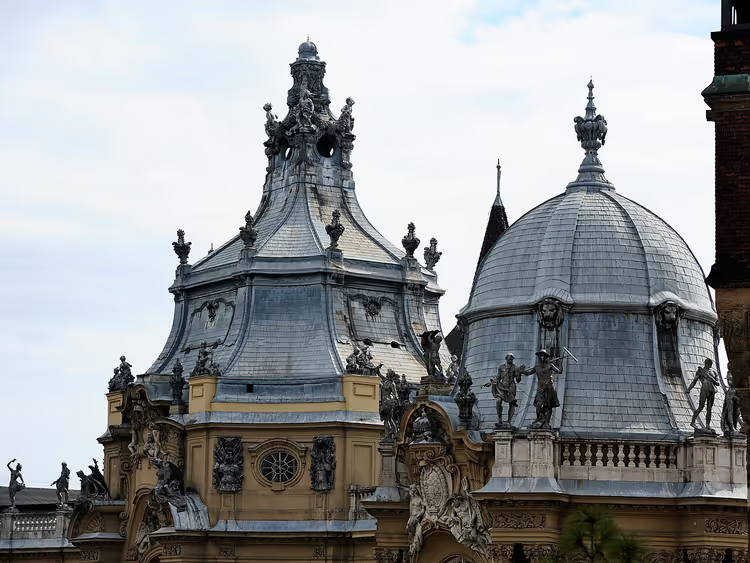 © Vsatinet · CC BY-SAPhoto: Vsatinet, CC BY-SA (https://creativecommons.org/licenses/by-sa/4.0), Wikimedia Commons
Vajdahunyad Castle was built in City Park for Hungary's millennium celebrations. At first it was a set piece made of wood and plywood, but locals liked it so much that it was rebuilt in stone. Its appearance mixes Gothic, Baroque, Renaissance and Romantic styles, so the building looks like a palace assembled from different eras.
The castle is surrounded by a moat, with a wide bridge across it. Behind the gates with towers and spires you will see a palace complex with bas-reliefs, columns and arched windows. Inside there is an agricultural museum, so it is worth checking admission details on the official website.
Tickets for the castle exhibitions are easy to book online: Vajdahunyad Castle tickets.
15. Hungarian Parliament Building
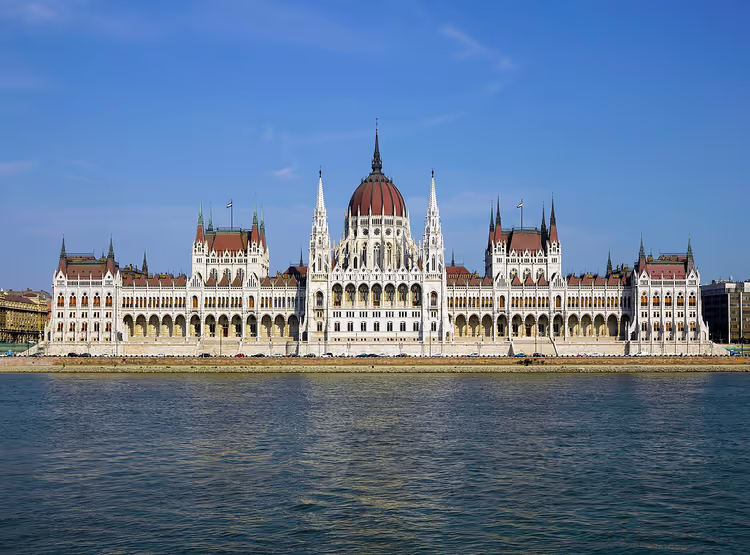 © Source: User:Godot13 Derivative: User:MathKnight · CC BY-SAPhoto: Source: User:Godot13 Derivative: User:MathKnight, CC BY-SA (https://creativecommons.org/licenses/by-sa/4.0), Wikimedia Commons
The Hungarian Parliament stands on the Pest bank of the Danube and has long been a symbol of the city. The neo-Gothic palace is striking in its scale, and it is a convenient starting point for a walk along the embankment. Spires, towers and a pointed dome give the building the look of a medieval castle.
Sculptures of kings line the main facade, while inside the halls are decorated with gilding and painted vaults. You can only enter on a guided tour, which should be planned in advance. The tour lasts 45 minutes with an audio guide or a guide (as of 09/2026, official Parliament website).
- The catch: you can only go inside as part of a tour, so tickets for popular time slots sell out quickly.
It is convenient to book a Parliament tour in advance: Hungarian Parliament building tour in Budapest.
16. Central Market Hall
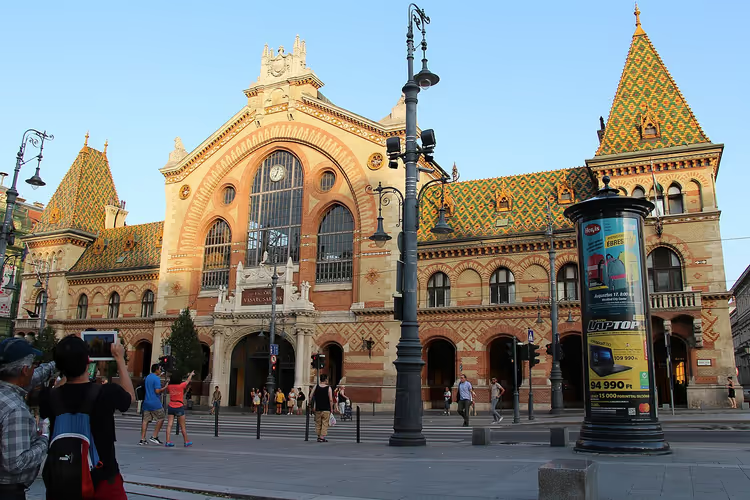 © Fred Romero from Paris, France · CC BYPhoto: Fred Romero from Paris, France, CC BY (https://creativecommons.org/licenses/by/2.0), Wikimedia Commons
The Central Market Hall occupies a two-story building with multicolored roof tiles and small towers. The market is often linked to the name of Gustave Eiffel, but that is a myth. The building itself is still worth a look. It is equally busy with locals and tourists.
On the first floor you will find meat delicacies, vegetables, spices and wines. The main local product, Pick salami, is sold in several varieties. On the second floor they sell souvenirs: scarves, tableware, magnets and wooden toys.
Its location by Liberty Bridge makes the market a convenient stop on the way from Buda to Pest. The second floor is not only for souvenirs: there are cafes and spots serving local food. If you are hunting for produce, come in the morning, when the stalls have just opened and the selection is better. On weekends it is especially crowded, so bring your patience.
17. St. Stephen's Basilica
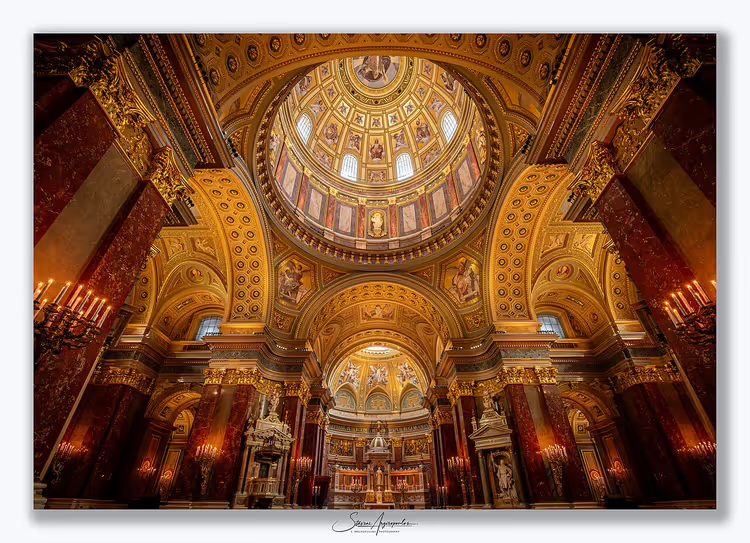 © Stavros Argyropoulos · CC BY-SAPhoto: Stavros Argyropoulos, CC BY-SA (https://creativecommons.org/licenses/by-sa/2.0), Wikimedia Commons
St. Stephen's Basilica is considered the country's main church, and its dome is visible from afar. The cathedral was consecrated in honor of the first king of Hungary, and inside it holds a reliquary with his hand. The elegant light-stone facade, two bell towers and marble columns make the interior feel solemn.
Inside, the dome is painted with scenes of the creation of the world, and the vaults are covered with gilding and stucco. The observation deck under the dome is worth climbing for the panorama: you will see all of Pest from above. In the evenings, organ concerts are held here, and the cathedral has excellent acoustics.
Tickets for organ concerts should be bought in advance: organ concert at the basilica.
18. Chain Bridge
 © Alireza Javaheri · CC BYPhoto: Alireza Javaheri, CC BY (https://creativecommons.org/licenses/by/3.0), Wikimedia Commons
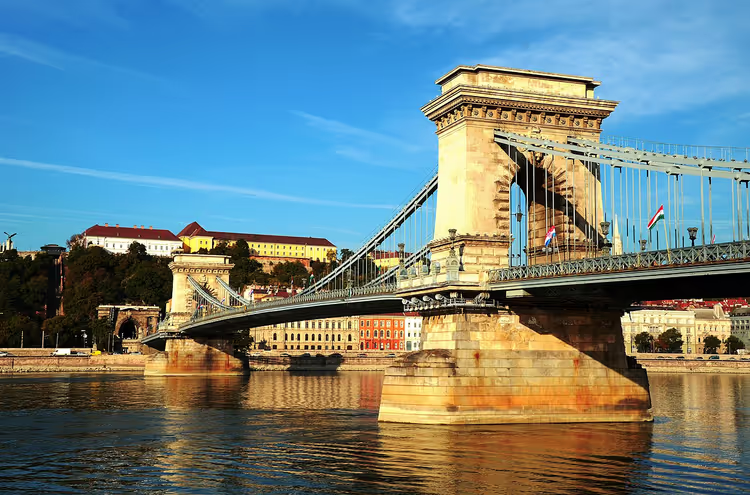
The Chain Bridge, the first permanent bridge across the Danube in this area, connected Buda and Pest. It was built under Count Istvan Szechenyi and immediately became a symbol of the city. Massive iron chains support the deck, and stone lions guard the entrances.
During the war the bridge was blown up, and its restoration took years. Today it is an easy walk from one bank to the other. In the evening, when the lights come on, it offers the best view of the Parliament and Buda Castle.
19. Fisherman's Bastion
 © Natalia Semenova · CC BYPhoto: Natalia Semenova, CC BY (https://creativecommons.org/licenses/by/3.0), Wikimedia Commons
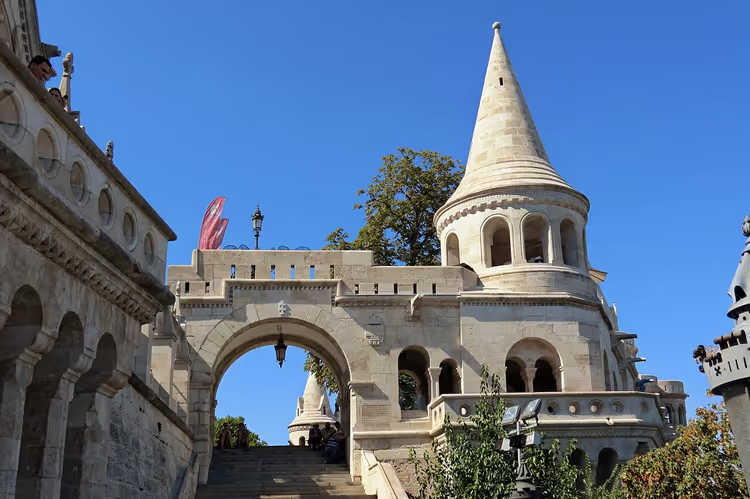
Fisherman's Bastion rises on Castle Hill in Buda and is built of white limestone. In the Middle Ages, a fish market bustled on this spot, and fishermen defended this strategic part of the city. The ensemble was opened for the millennium of the Hungarian state, which is why it looks so ornate and ceremonial.
The complex consists of a wall with seven conical towers. Walking along the galleries, you will see arches, columns, loopholes, and terraces. From here you get one of the best panoramas of Pest and the Parliament, so come at opening time or at sunset.
20. Ervin Szabo Metropolitan Library
 © desperado · CC BYPhoto: desperado, CC BY (https://creativecommons.org/licenses/by/2.5/hu/deed.en), Wikimedia Commons
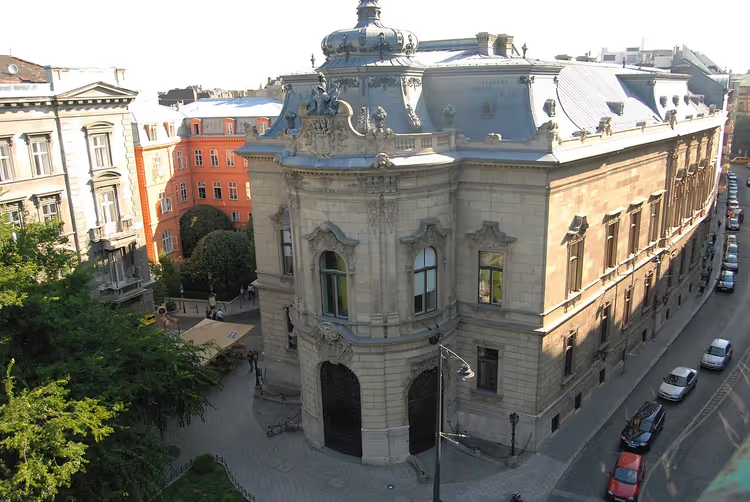
The Ervin Szabo Library occupies a palace that once belonged to a noble family. Today it is the country's largest book repository, and visitors are not limited to registered readers. Tourists come for the lavish halls: stucco, gilded ornamentation, wood carvings, and crystal chandeliers.
Marble staircases are covered with red carpets, and bookshelves stand right in the palace halls. The library was named after its first director, Ervin Szabo. If you are tired of museums, stop by here: it is quiet, beautiful, and almost free of crowds.
The library was founded at the beginning of the last century. It is best to visit on a weekday, when the reading rooms operate at a calm pace. Exhibitions are held here regularly, so check the schedule before your visit.
21. Matthias Church
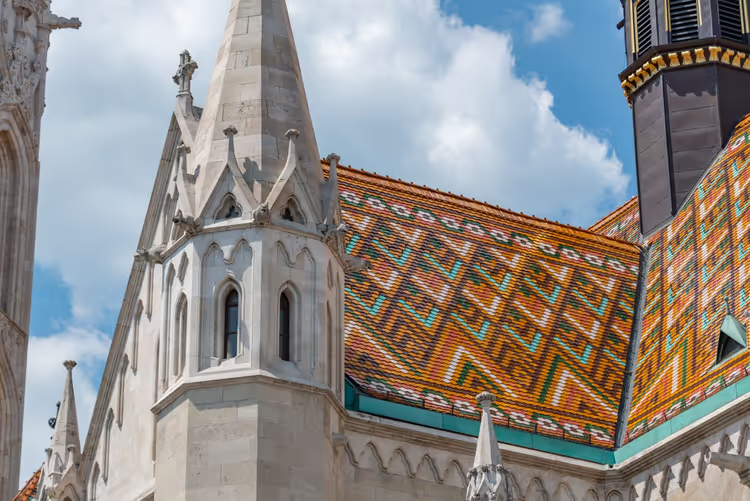
Matthias Church stands in Buda next to Fisherman's Bastion and is considered one of the most beautiful in the city. The church was named after King Matthias Hunyadi, and it was destroyed and rebuilt more than once. The cathedral got its current appearance after a major reconstruction at the end of the 19th century.
The white stone walls are decorated with tall windows and stucco, while spires and towers rise into the sky. The roof is covered with colored ceramic tiles, which makes the cathedral look festive from a distance. Inside you will see ancient frescoes, stained glass, and chapels with sculptures, and the bell tower rises high above the hill.
Entry to the church is paid; buy tickets online: Matthias Church tickets.
22. Nagyteteny Palace Museum
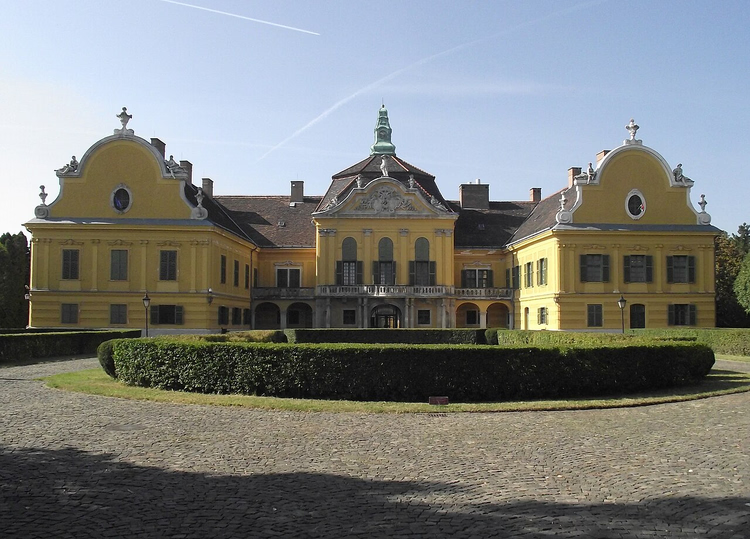
Nagyteteny Palace stands on the southern outskirts of Buda and dates back to the Baroque era. It belonged to the noble Szaraz-Rudnyanszky family, and today it houses a museum of furniture and applied arts. It is a quiet place far from the center, worth the trip if you are interested in the daily life of past centuries.
 © Hermann Tamás · CC BY-SAPhoto: Hermann Tamás, CC BY-SA (https://creativecommons.org/licenses/by-sa/3.0), Wikimedia Commons
The estate's facade is adorned with an arcaded gallery, columns, and a balustrade, and the building is crowned with a mansard roof with a pediment. The halls display antique furniture sets, draperies, chandeliers, carpets, and art glass. It takes about an hour to see the two dozen halls.
23. Zoo
 © August Dominus · CC BY-SAPhoto: August Dominus, CC BY-SA (https://creativecommons.org/licenses/by-sa/4.0), Wikimedia Commons
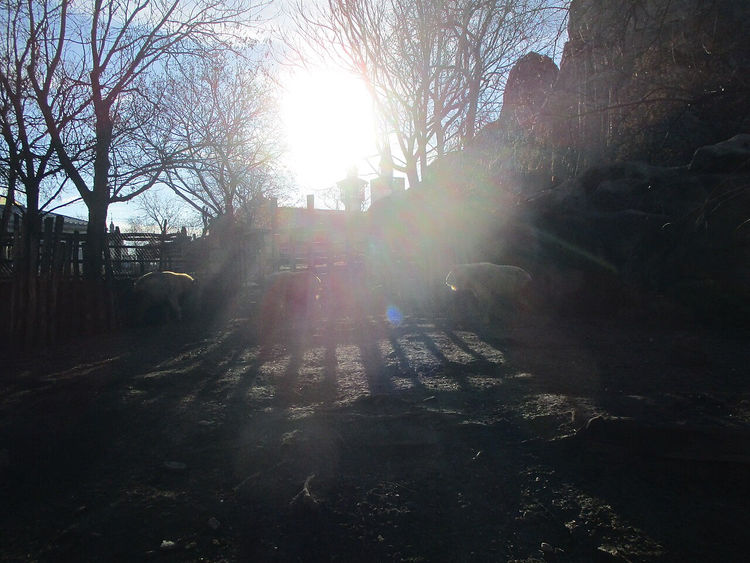
Budapest Zoo opened back in the 19th century and is one of the oldest in Europe. The grounds are divided into zones with different climates, and the enclosures replicate natural conditions. Here you will see giraffes, elephants, hippos, gorillas, lemurs, tigers, and many birds and reptiles.
Beyond the animals, the pavilions themselves are worth seeing: some of them are genuine architectural landmarks. The zoo is located in Varosliget Park, next to the Szechenyi Baths and Vajdahunyad Castle. With children, plan at least half a day, otherwise you will not cover even half of it.
The zoo is considered one of the most beautiful in Europe because its pavilions were built like actual palaces. Animals from different climate zones live here, and suitable conditions were created for each species. Near the large enclosures there are cafes and rest areas, so the day will fly by.
Buy tickets online: Budapest Zoo tickets.
24. House of Terror
 © Derzsi Elekes Andor · CC BY-SAPhoto: Derzsi Elekes Andor, CC BY-SA (https://creativecommons.org/licenses/by-sa/3.0), Wikimedia Commons
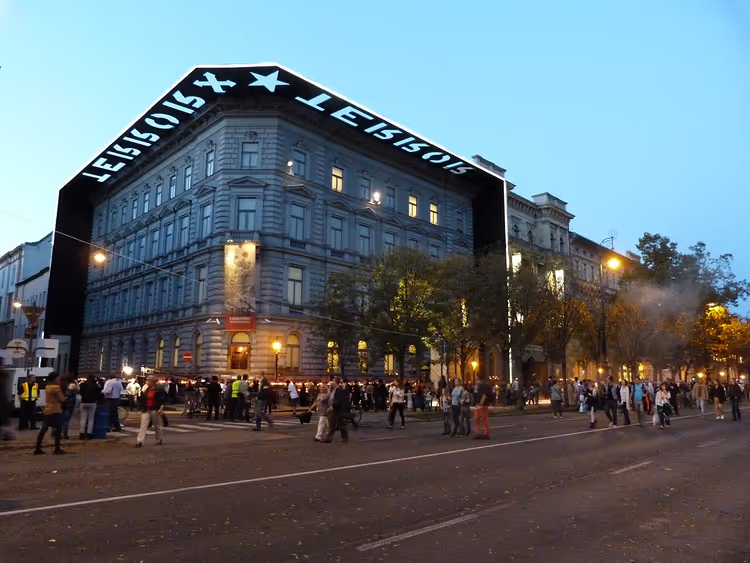
The House of Terror stands on Andrassy Avenue and is dedicated to the victims of 20th-century political regimes. After the war, the building housed the state security directorate, and the museum has preserved the basement cells. The visit is emotionally difficult, but it explains two pages of Hungarian history at once.
On the roof you can see a wide canopy with the word TERROR, and in sunny weather the letters cast a shadow on the facade. Inside, the museum shows prison cells, interrogation rooms, torture instruments, and documents. Open daily except Monday, from 10:00 to 18:00 (as of 09/2026, House of Terror website), the ticket office closes at 17:30.
It is convenient to get tickets in advance: House of Terror tickets.
25. Aquincum Ruins
 © Sudika · CC BY-SAPhoto: Sudika, CC BY-SA (https://creativecommons.org/licenses/by-sa/3.0), Wikimedia Commons
Aquincum, the ruins of a Roman city, lies on the site of the former capital of the province of Pannonia. The ruins were discovered during the laying of city utilities, and now an archaeological park operates here. Across a large wooded area you will see building foundations, columns, remains of baths, and amphitheaters with Latin inscriptions.
Most of the site is open air, while the finds are housed in a museum. It displays tools, coins, statues, jewelry, and pottery. If you are interested in antiquity, this place is worth a dedicated trip: it is quiet and almost deserted.
Tickets to the Aquincum Museum are easy to buy online: Aquincum tickets.
26. Stalin monument
 © Paul Colin Hennig firstdorsal.eu · CC BY-SAPhoto: Paul Colin Hennig firstdorsal.eu, CC BY-SA (https://creativecommons.org/licenses/by-sa/4.0), Wikimedia Commons
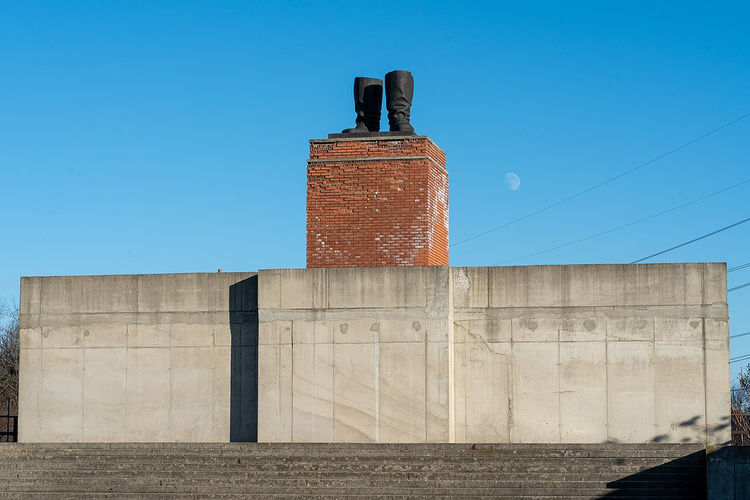
Memento Park displays sculptures from the socialist era. The most famous exhibit, a replica of Stalin's boots, stands on a brick pedestal. The huge statue of the leader was erected in the city for his anniversary, and during the uprising it was toppled and smashed.
Only the boots remained from the monument on the pedestal, and their replica now stands in the park. Nearby you will see other dismantled Soviet-era monuments, each a reminder of difficult chapters in history. The exhibits are outdoors, so visit in dry weather.
27. Memento Park
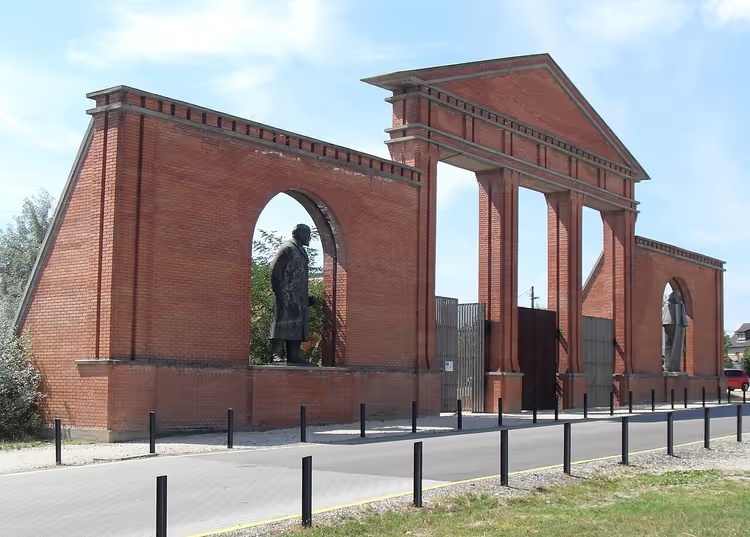 © Ferran Cornellà · CC BY-SAPhoto: Ferran Cornellà, CC BY-SA (https://creativecommons.org/licenses/by-sa/3.0), Wikimedia Commons
Memento Park brings together sculptures and monuments that were removed from the streets of Budapest after the change of regime. The authorities set aside a site outside the city and created an open-air museum. Here you will find statues of communist leaders, memorial plaques, and monuments to heroes of socialism.
The exhibition hall screens documentaries about the era. The park is large, so take your time walking: some exhibits are tucked away off the main path. You can get there by bus, and the journey takes a while, so allow half a day for the trip.
The park opened after the change of regime to preserve the monuments that were being removed from the streets. The exhibits are arranged along paths and thematic zones, with explanatory plaques placed beside them. Some sculptures stand away from the main path, so walk the entire complex, otherwise you will miss a lot.
28. Kerepesi Cemetery
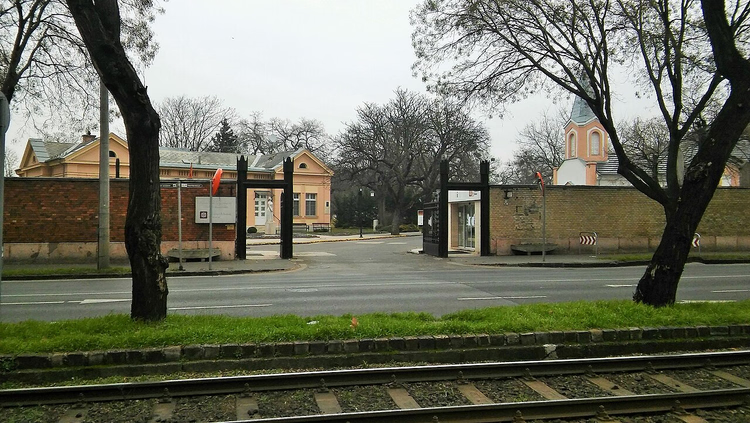 © 12akd · CC BY-SAPhoto: 12akd, CC BY-SA (https://creativecommons.org/licenses/by-sa/4.0), Wikimedia Commons
Kerepesi Cemetery feels more like an open-air museum than a place of mourning. Writers, politicians, actors, doctors, and artists are buried along its shady paths. The gravestones and mausoleums are decorated with sculptures, domes, and columns, so people come here as if to an exhibition.
The World War II military section leaves a particularly strong impression: thousands of soldiers and officers who died in the battle for the city are buried here. The walk takes at least an hour, and admission is free. If you are interested in Hungarian culture, this is an unexpected and very peaceful route.
The cemetery was founded in a parkland area on the outskirts of the city, and over time it turned into an open-air museum. Here you will find mausoleums of prominent families, sculptures, and gravestones by renowned artists. Take a map, because the grounds are large and confusing, and the shady paths easily lead you astray.
29. Great Synagogue
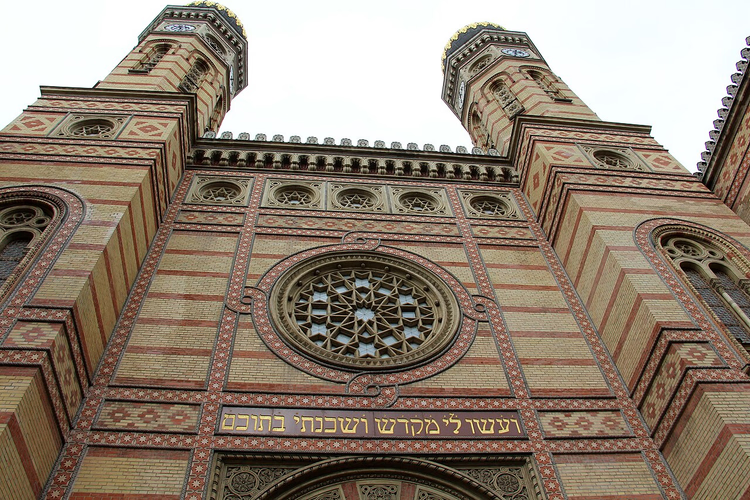 © Fred Romero from Paris, France · CC BYPhoto: Fred Romero from Paris, France, CC BY (https://creativecommons.org/licenses/by/2.0), Wikimedia Commons
The Great Synagogue on Dohany Street, the largest in Europe, seats about three thousand people. The building is made of red-and-white brick in the Moorish style, so it is easy to recognize by its patterned ornaments and colored ceramics. A rose stained-glass window sits above the entrance.
Two towers with onion domes rise above the building, and the roof is decorated with a crenellated parapet. Next to it lies a memorial park to Holocaust victims, where a metal weeping willow stands. The names of Budapest's murdered Jews are engraved on its leaves, and it is one of the most powerful places in the complex.
Book tickets with a guided tour in advance: Great Synagogue tickets.
30. Franz Liszt Academy of Music
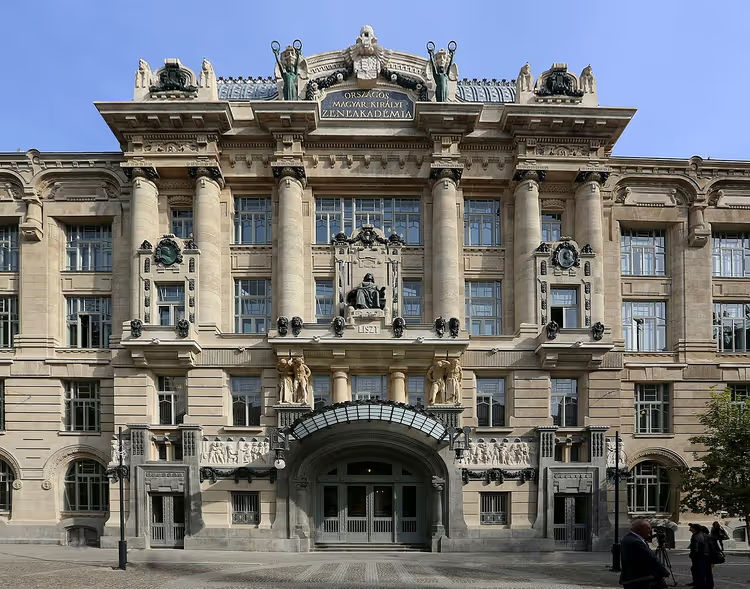 © Thaler · CC BY-SAPhoto: Thaler, CC BY-SA (https://creativecommons.org/licenses/by-sa/3.0), Wikimedia Commons
The Franz Liszt Academy, the country's main conservatory, is named after the great composer. The building is decorated with columns and bas-reliefs, and sculptures of musicians stand on the facade. For classical music lovers, this is a must-stop on Andrassy Avenue.
Inside, the halls and foyers are finished with stained glass, stucco, frescoes, and gilding. Students study here, orchestras perform, and the acoustics of the halls are considered among the best. If you get to a concert, your evening in Budapest will be memorable for a long time.
Get concert tickets in advance: concerts and tours at the Liszt Academy.
Tours and tickets in Budapest
Guided tours, skip-the-line tickets and activities — most offers can be cancelled free of charge.
See offers on GetYourGuideThe widget loads once you give your consent.
Budapest attractions on the map
All sights are conveniently divided by riverbank: Pest is marked by Andrassy Avenue, the basilica, and the parliament, while Buda holds the castle, Fisherman's Bastion, and St. Matthias Church. Open the map below to plan a route that fits your itinerary.
⁉️🤔 Frequently asked questions
How many days do you need to see the main sights in Budapest?
For a first visit, two full days are enough. On the first day, you cover Pest: Andrassy Avenue, the basilica, the parliament, and the Central Market Hall. Give the second day to Buda: the castle, Fisherman's Bastion, and St. Matthias Church, and in the evening stop by a bath. If time allows, add a third day for the baths, the zoo, and Varosliget Park.
Which baths should you choose: Szechenyi, Gellert, or Lukacs?
Szechenyi, the largest and busiest complex, offers a full range of pools and saunas. Gellert has been closed for renovation since 10/2025, so don't plan on it for now. Lukacs is chosen for its calm atmosphere and medicinal water. Szechenyi and Lukacs are open year-round; check the schedule on the official websites.
Are attractions open on Mondays?
Some museums are closed. The House of Terror and the Museum of Fine Arts are closed on Mondays, so plan them for another day. Baths and parks usually operate seven days a week, and church hours depend on services. Before visiting, check the official website of the attraction, because opening hours change by season.
Can you see Budapest on foot?
The center is compact, and you can walk most of Pest. Andrassy Avenue, the basilica, the parliament, and the Central Market Hall are close to each other. Between Buda and Pest, it's convenient to cross via the Chain Bridge. For farther points like Aquincum or Memento Park, it's better to take public transport.
How much do tickets to museums and baths cost?
Prices vary and change by season, so check the exact amounts on the official websites before purchasing. Baths are usually more expensive than museums, and most attractions offer family and student rates. Buy tickets to museums, baths, and concerts online, so you don't wait in line at the ticket office.
In short: what to book
Budapest has two rhythms: the grand Pest with its museums and embankment, and the calm Buda with its castle and panoramas. Start with Andrassy Avenue and the parliament, and on the second day climb up to Fisherman's Bastion.
The choice matrix is simple. If you're short on time, get museum and bath tickets on Tiqets. If you're going to relax and take the waters, plan for Szechenyi Bath or Lukacs. If you want to see the city from the water, take an evening cruise on the Danube.
Prices and schedules change, so check them on the official websites before your trip. Arrange the sights into a route along the riverbanks, and you'll see Budapest as a whole, not just the postcard views.

A small editorial team writing guides for independent travel. We travel ourselves, but we haven’t been everywhere, so we check prices, opening hours and how to get there against official sources.