










Vienna on a budget: what to see for free and how to save on your trip
Vienna can pull more money out of you than you planned. Museum tickets cost as much as dinner at a restaurant, hotels in the center get more expensive on weekends, and a taxi from the airport costs more than the train. And yet the trip pays off in impressions if you know a few rules.
At the same time, you can see half of the city's main sights for free, and lunch at an inexpensive place costs less than 15 € per person (as of 09/2026, Vienna tourist office). Saving money in Vienna isn't about compromises, it's about the order in which you do things.
We've put together the tricks that work right now: where to stay within walking distance of the Prater, which observation decks don't charge a cent, how to get from the airport without overpaying, and how much three days cost. We checked fares, opening hours, and prices in September on official websites.
Ad: this article contains affiliate links, we earn a commission if you book through them, at no extra cost to you.
1. Vienna for free: main sights without a ticket
💡 In short:
- Stay near the Prater: five minutes to the U-Bahn station and a short walk to the Ferris wheel.
- See the free sights: the Gloriette, Nussberg hill, open-air opera, the Ring on foot.
- Eat for under 15 €: Naschmarkt, Yppenplatz, sausage stands near the Opera.
- Prices and opening hours: 09/2026, verified on the official Vienna tourist office website.
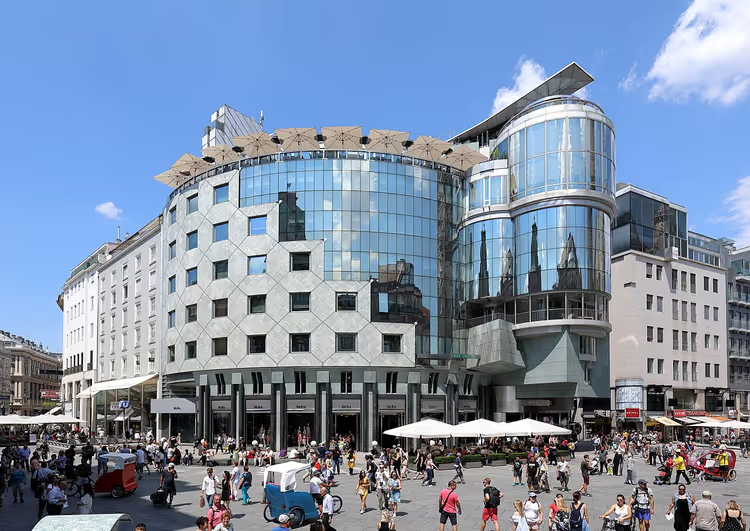 © C.Stadler/Bwag · CC BY-SAPhoto: C.Stadler/Bwag, CC BY-SA (https://creativecommons.org/licenses/by-sa/4.0), Wikimedia Commons
The best things in Vienna don't cost a single euro: the city panorama, old courtyards, and the main cathedral are open to everyone, and here are five places where you won't pay for entry and that are just as good as paid observation decks.
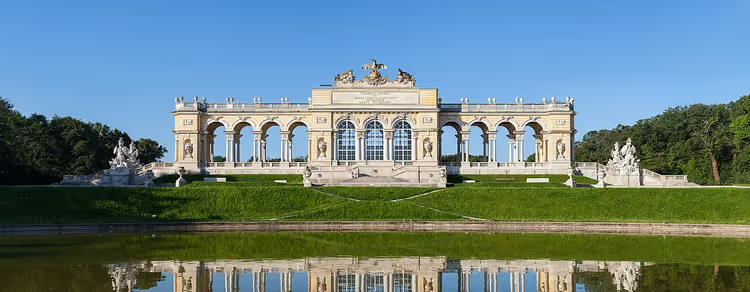
The Gloriette above Schönbrunn
The Gloriette sits on a hill above Schönbrunn Palace and doesn't charge for entry. You only pay for the palace itself, while the park and colonnade are open to everyone. The climb from the palace takes about fifteen minutes. At the top you stand above the city and can see almost the entire historic center.
In summer, the terrace gets crowded after midday. Come at park opening: the light is soft and the viewing area is empty. Garden hours change by season, check the boards at the entrance for current times.
 © Thomas Wolf , www.foto-tw.de · CC BY-SAPhoto: Thomas Wolf , www.foto-tw.de, CC BY-SA (https://creativecommons.org/licenses/by-sa/3.0/de/deed.en), Wikimedia Commons
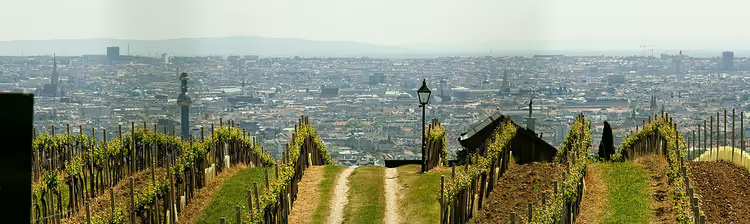
Nussberg: vineyards within the city limits
On Nussberg, grapes grow right inside Vienna. Trails run along the slopes, and you walk between the vines up to a panoramic viewpoint. Entry is free at any time of year, there's nothing to pay for here.
 © Nachthimmel · CC BY-SAPhoto: Nachthimmel, CC BY-SA (https://creativecommons.org/licenses/by-sa/3.0), Wikimedia Commons
From the tram stop, the climb takes about half an hour on foot. Bring water and shoes without heels: the paths are rocky. If you want quiet, come in the morning on a weekday; by evening, groups gather on the hill.
Open-air opera
In April, May, June, and September, a big screen is set up in front of the Vienna State Opera. Evening recordings are shown for free, right on the street. Come half an hour before the start, otherwise you'll be standing in the back rows.
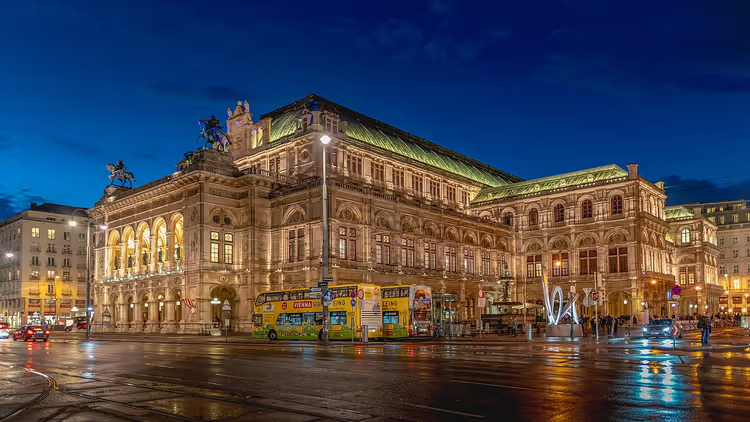
This isn't a tour or a tourist attraction, just a normal city habit. Bring something to put over your shoulders: it gets chilly near the Opera after sunset.
The Ring on trams 1 and 2
The Ringstraße is cheaper to circle on a regular tram than on the tourist Vienna Ring Tram. The route is simple. Get on line 1 at Karlsplatz station near the Opera and ride toward the Prater. At Schwedenplatz, get off and transfer to line 2 toward Dornbach. Five stops later you're back at Karlsplatz.
The ride costs the same as one trip on a city ticket. If you want to be closer to the facades, walk the same loop: it's about five kilometers. On foot you'll see the city's most beautiful buildings from the outside and pay nothing.
Vienna's parks
Entry to Vienna's parks is also free. The Volksgarten is full of flowers, the Burggarten adjoins the Hofburg, and in the Lainzer Tiergarten you can disappear into the forest for a whole day. The Belvedere palace and the Schlosspark Belvedere garden are connected to the center by a walking path, and you don't need to pay for that part.
That covers half your itinerary without tickets. What makes you pay are the museums and palaces. That's what comes next.
2. What costs money in Vienna
Good museums cost as much as a train ticket. Schönbrunn Palace and its zoo are sold as separate tickets, and a palace ticket with an audio guide costs more than 20 € (current fares: official Schönbrunn website). If you do five classic sights in a row, the total adds up fast.
Schönbrunn Palace and the zoo
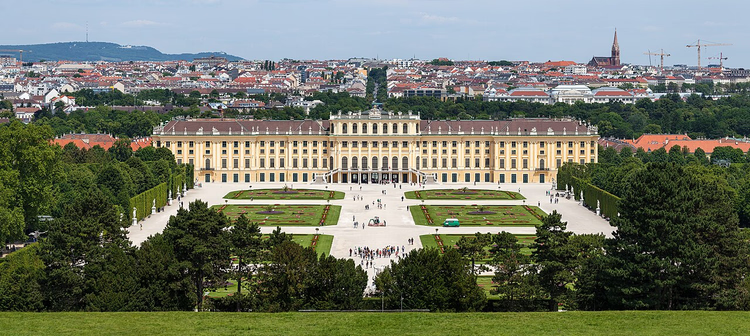
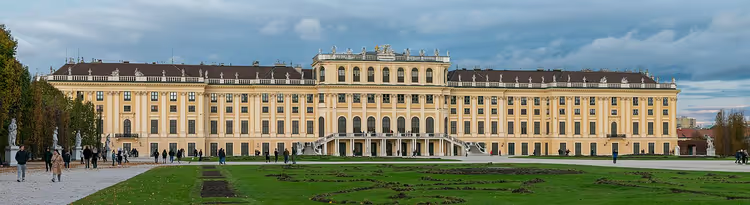
Schönbrunn Palace takes the most money and time. A ticket with an audio guide costs more than 20 €, and that's without the gardens. Choose your ticket type in advance: the long route includes more rooms and costs more, the short one is cheaper.
 © Thomas Wolf , www.foto-tw.de · CC BY-SAPhoto: Thomas Wolf , www.foto-tw.de, CC BY-SA (https://creativecommons.org/licenses/by-sa/3.0/de/deed.en), Wikimedia Commons
Plan for half a day. The palace rooms take about two hours, the rest of the time goes to the park and the walk up to the Gloriette. Schönbrunn Zoo is right next door and ticketed separately, so decide in advance whether you want both or the park is enough.
 © Tournasol7 · CC BY-SAPhoto: Tournasol7, CC BY-SA (https://creativecommons.org/licenses/by-sa/4.0), Wikimedia Commons
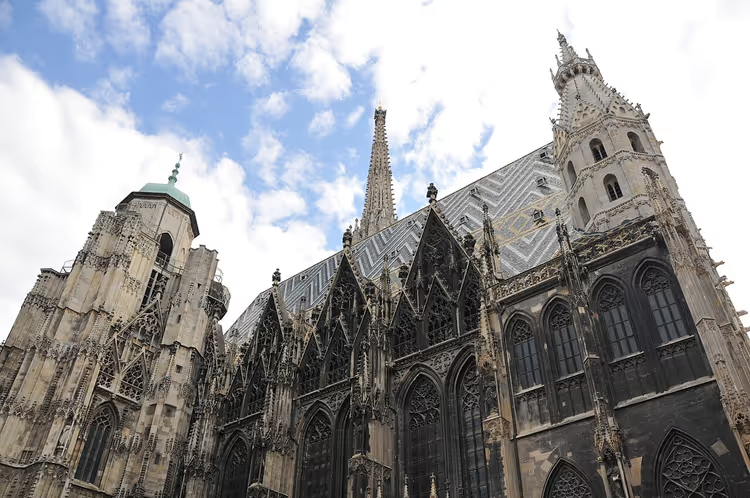
St. Stephen's Cathedral: towers and catacombs
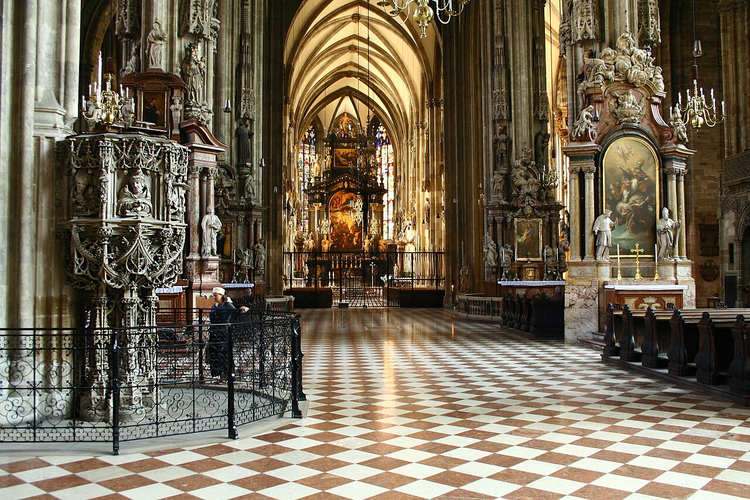
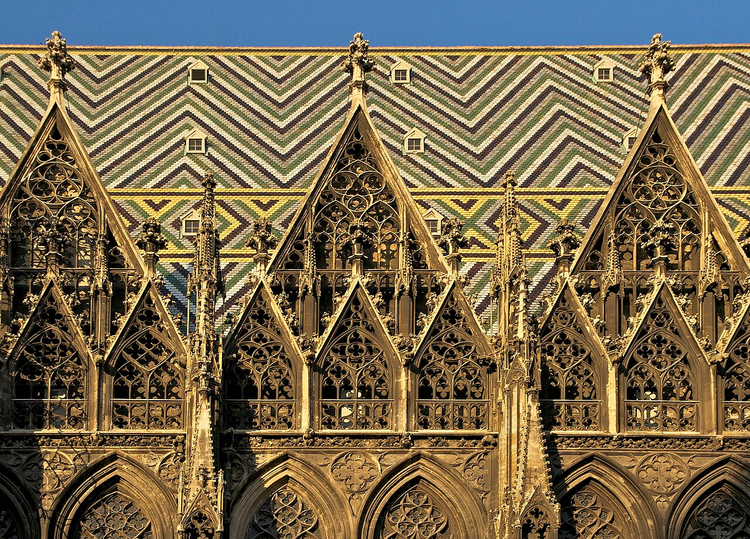
You can visit St. Stephen's Cathedral (Stephansdom) itself for free. You pay for the towers, the catacombs, and the treasury. The south tower has 343 steps, while the north tower has an elevator up to the Pummerin bell. A combined ticket covers both towers, the catacombs, and the Dom Museum Wien (as of 09/2026, cathedral's official website).
Get your ticket in advance and arrive at opening time. By midday there's a line for the climb, especially in summer. You can cover the Dom Museum in an hour.
 © Mario Modesto Mata · CC BY-SAPhoto: Mario Modesto Mata, CC BY-SA (https://creativecommons.org/licenses/by-sa/3.0), Wikimedia Commons
Vienna Pass: when it pays off
If you're planning to visit a lot of paid attractions, do the math in advance. The Vienna Pass gets you into dozens of museums and palaces, but Wiener Linien public transport is not included. The pass pays off with three or four major attractions per day.
Add up the individual tickets first, and only then compare with the pass price. For a single trip to Schönbrunn, the pass isn't worth it.
Compare the Vienna Pass on GetYourGuide
If you need tickets with time slots for a specific date, pick them below. Prices and options update automatically.
Tours and tickets in Vienna
Guided tours, skip-the-line tickets and activities — most offers can be cancelled free of charge.
See offers on GetYourGuideThe widget loads once you give your consent.
3. Where to stay in Vienna on a budget
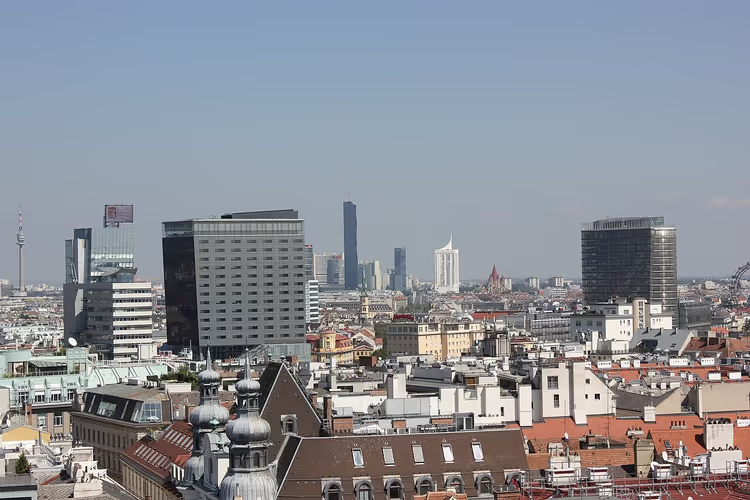
The hotel night is the biggest part of the budget. Our benchmark for price and location: Superbude Wien near the Prater. The hotel sits on the edge of the park, and you can walk to the Riesenrad Ferris wheel. The rooftop restaurant NENI looks out over the Prater.
 © Andrzej Otrębski · CC BY-SAPhoto: Andrzej Otrębski, CC BY-SA (https://creativecommons.org/licenses/by-sa/4.0), Wikimedia Commons
The nearest U-Bahn station is about a five-minute walk, and the center is just a few stops away. A double room starts at €79 per night (as of 09/2026, Superbude official website). Prices are higher on weekends, so book early.
- Who it's for: travelers who want to pay less than in the center and be near the Prater.
- Not for: those who need an address in the first district.
- Location: on the edge of the Prater, about five minutes on foot to the U-Bahn station.
- Price: from €79 per night (as of 09/2026, source).
View prices for Superbude Wien on Trip.com
4. Food and drinks: affordable Vienna restaurants
Restaurants in Vienna have gotten more expensive, but a meal under €15 is still realistic: below are spots from different neighborhoods, from street sausages to Vietnamese food, where you can eat well without overpaying.
Deewan
Deewan operates on a pay-as-you-wish model: you pay what you think is fair. The cuisine is Pakistani, moderately spicy. You grab a plate and serve yourself from a small buffet, with unlimited refills. Only drinks have fixed prices.
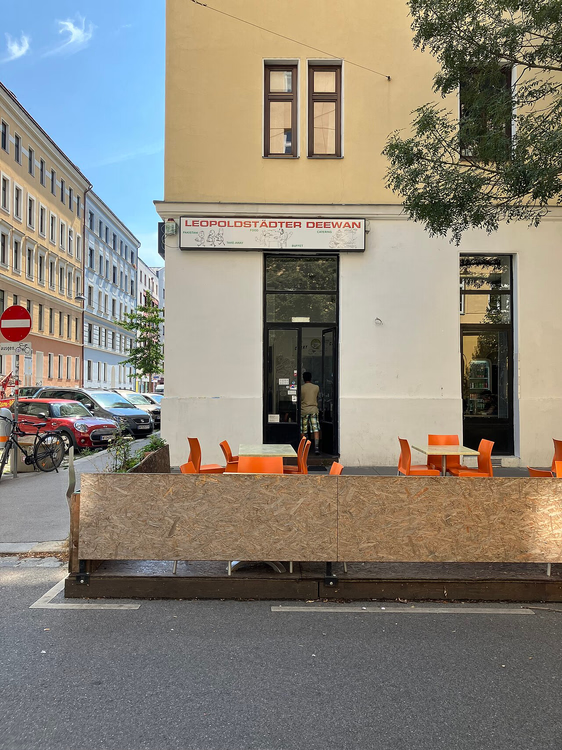
The model has worked for years, so this isn't a one-off promotion. Get drinks separately: their price is fixed and low, while the food is up to you.
Swing Kitchen
Swing Kitchen is a vegan fast food chain. Burgers and fries cost the same as at a regular fast food joint, but the entire menu is plant-based. A simple option: order takeout at the Schwedenplatz location and eat it on the Danube Canal embankment.
 © Manuel Velazquez · CC BYPhoto: Manuel Velazquez, CC BY (https://creativecommons.org/licenses/by/3.0), Wikimedia Commons
There are several locations around the city, so find the one closest to your hotel. Prices stay at the level of regular fast food, which is rare for vegan cuisine.
Ammerling Beisl
Ammerling Beisl is in the 7th district, in the Spittelberg quarter. The menu combines Austrian cuisine with Eastern dishes: alongside schnitzel, they serve Middle Eastern food. The combination sounds odd, but once you're there, you see it works.
In summer, tables are set up in a green inner courtyard. After lunch, take a walk through the Spittelberg alleys: it's one of the coziest quarters in the city.
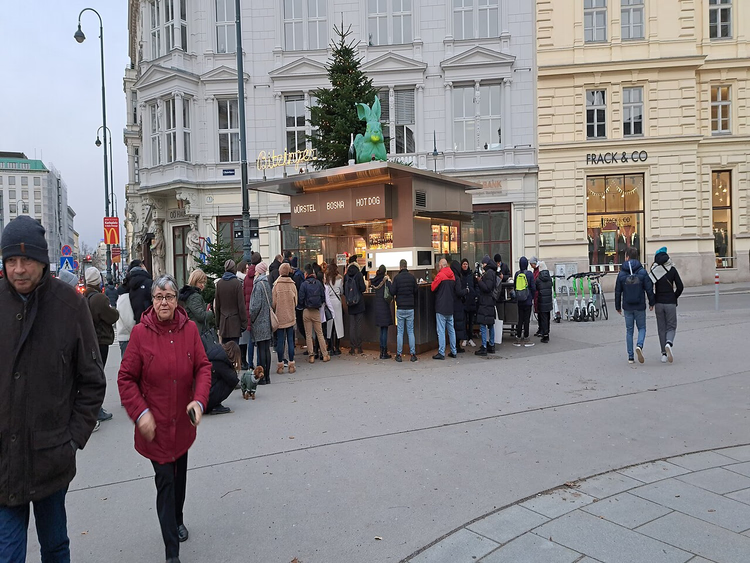
Würstelstand near the Opera and in the 8th district
Vienna's Würstelstände sausage stands stay open late and feed you cheaper than any restaurant. They're part of the cityscape, and you can have dinner here for little money.
 © Bybbisch94 · CC BYPhoto: Bybbisch94, CC BY (https://creativecommons.org/licenses/by/4.0), Wikimedia Commons
Near the Opera you'll find Bitzinger: get the Käsekrainer here. For vegans, Wiener Würstelstand on the corner of Pfeilgasse and Strozzigasse is a good fit. Try their vegan bosna with oyster mushrooms.
- The catch: Bitzinger has almost no vegetarian options.
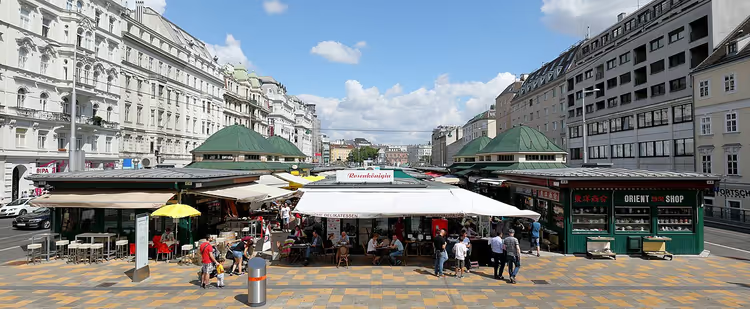
Naschmarkt
Every tourist knows Naschmarkt, but eating here really is affordable. Look for breakfast and lunch menus at Orient & Occident, Tewa, and Do An. These three spots keep prices below the market average. NENI has the best food, but it's the most expensive place on the list.
 © C.Stadler/Bwag · CC BY-SAPhoto: C.Stadler/Bwag, CC BY-SA (https://creativecommons.org/licenses/by-sa/4.0), Wikimedia Commons
Come before noon: lines are shorter and the breakfast selection is wider.
- The catch: this isn't a quiet spot, it's one of the city's most famous markets.
Yppenplatz
Tourists skip Yppenplatz, and that's its advantage. The square is home to Ando, CAY, and Dhaka Bistro with Indian cuisine, and almost all of them are affordable. During the day, Brunnenmarkt runs along Brunnengasse: a regular city market with no souvenirs.
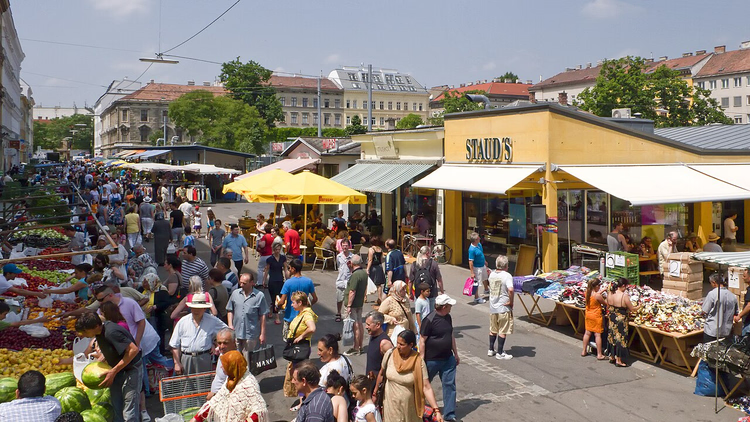
In summer, tables are set up right on the square, and dinner here is cheaper than the same dish in the center. It's worth coming here if Naschmarkt feels too crowded.
Nguyen's Pho House
Nguyen's Pho House in the 8th district serves Vietnamese food at low prices. Tables are packed tightly and the interior is simple, but the pho and vegetarian dishes are cheap. In summer, they open a small Schanigarten out front: you sit by the road, but in summer it's actually quite cozy.
The bottom line is simple: if you want affordable Vietnamese food, this is the place.
- The catch: a cramped dining room and tables next to the roadway.
5. Getting from the airport and getting around the city
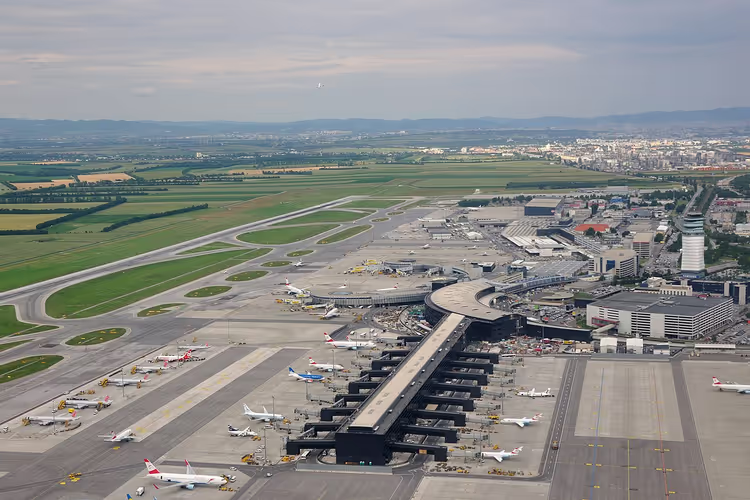
The trip from the airport and transit tickets eat up a noticeable chunk of your budget if you don't know two details. First: don't take the CAT. Second: some ticket types were discontinued this year.
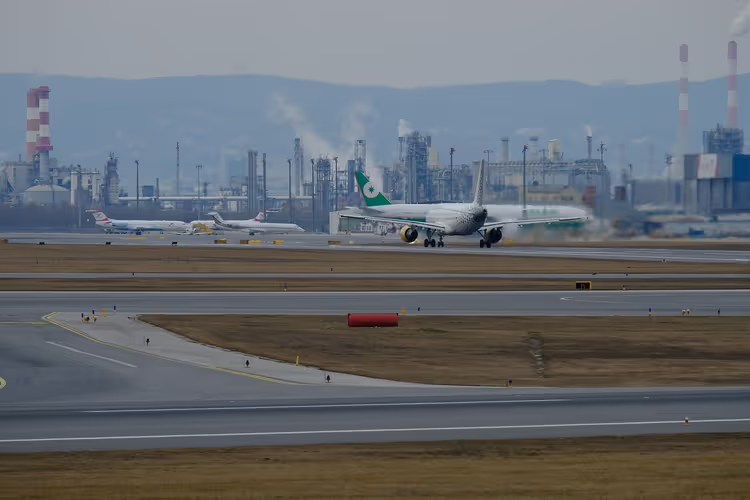
 © Hansueli Krapf This file was uploaded with Commonist . · CC BY-SAPhoto: Hansueli Krapf This file was uploaded with Commonist ., CC BY-SA (https://creativecommons.org/licenses/by-sa/3.0), Wikimedia Commons
From the airport: S-Bahn instead of CAT
Two trains run between Schwechat Airport and the city. The City Airport Train (CAT) takes 12 minutes and costs significantly more. It's cheaper to take the S-Bahn S7 or the REX7 regional train: the trip takes about 25 minutes, and trains run roughly every 30 minutes (as of 09/2026, S7 schedule from the Vienna tourist office).
The ticket consists of two zones: from the airport to the Vienna city boundary and within the city. If you already have a city transit pass, just buy the segment to the city boundary (Stadtgrenze), and the trip costs almost half the price of a full ticket.
Buy your ticket at the machine on the platform before boarding: that way you don't depend on the line at the counter in the arrivals hall.
Wiener Linien tickets: what changed in 2026
An important change: as of January 1, 2026, Wiener Linien discontinued 48-hour and 72-hour tickets (as of 09/2026, carrier fares and news). For two or three days, get two 24-hour tickets or a 7-day pass, because the latter often works out cheaper.
Tickets are valid on the U-Bahn, tram, bus, and S-Bahn within city limits, transfers are included, and the number of rides is unlimited. Validate your ticket on your first trip and keep it until it expires.
Vienna's public transit network is dense: intervals are short, and you can reach almost any point in the city without a taxi.
Vienna City Card and the official app
Vienna City Card costs a few euros more than a regular ticket and adds discounts on admissions and tours. If you're going for three days and planning to visit a lot of sights, do the math on whether the discounts will pay off. Tickets are sold at U-Bahn station machines and in the official Wiener Linien app.
Compare the Vienna City Card on GetYourGuide
With luggage from the airport, a fixed-price transfer is more convenient: the total is known in advance, and the car waits for you in the arrivals hall.
Tours and tickets in Vienna
Guided tours, skip-the-line tickets and activities — most offers can be cancelled free of charge.
See offers on KiwitaxiThe widget loads once you give your consent.
6. How much a trip to Vienna costs: a rough estimate
Below is a rough estimate for two people for three nights. The figures are approximate: they're higher in season and on weekends.
Expense item | Example for two | Source |
|---|---|---|
Accommodation, three nights in a double room | around 300 € | |
Food at inexpensive places | around 200 € | |
Paid sights | around 70 € | |
City transport | two 24-hour tickets | |
Round-trip train from Munich | around 200 € | |
Total | around 800 € | editorial example |
This total includes everything listed: nights, food, transport, and sight tickets. If you're fine with simple accommodation and walk a lot, it comes out cheaper. The main savings come from two things: a hotel outside the center and free viewpoints.
7. ⁉️🤔 Frequently asked questions
How much money do you need for three days in Vienna?
For two people with accommodation, food, transport, and tickets, it comes to around 800 €. This is a rough estimate, not a minimum amount. You'll see some sights for free.
Do Wiener Linien 72-hour tickets still work?
No. As of January 1, 2026, 48- and 72-hour tickets were discontinued (as of 09/2026, carrier's ticket page). Tickets are valid on U-Bahn, tram, bus, and S-Bahn within city limits.
What's the cheapest way to get from the airport to the center?
Take the S-Bahn S7 or the REX7 train; the trip takes about 25 minutes (as of 09/2026, tourist office airport page). With a city ticket, you only pay extra for the section up to the Vienna city boundary.
What can you see in Vienna for free?
The Gloriette and Schönbrunn Park, St. Stephen's Cathedral, Nussberg hill with its vineyards, summer screenings at the Vienna Opera, and the Ringstrasse on foot. Entry to city parks is also free; you only pay for museums and palaces.
Is the Vienna Pass worth buying?
Only if you're doing three or four paid sights a day. Transport is not included in the pass. First add up individual tickets and compare the total with the pass price: for Schönbrunn alone, the pass isn't necessary.
8. In short: what's worth booking
The trip plan is simple. Look for accommodation near the Prater, pay for transport with a Wiener Linien ticket for your whole stay, and put free sights first in your itinerary.
If you're going for the first time for three days, get a hotel near the Prater and 24-hour tickets. If you want to cover a lot of museums and palaces, do the math on the Vienna Pass. If architecture matters to you, free sights and a tram ride around the Ring will be enough. Before your trip, check opening hours on official websites: fares changed recently.

A small editorial team writing guides for independent travel. We travel ourselves, but we haven’t been everywhere, so we check prices, opening hours and how to get there against official sources.