
















Express route through Warsaw: 15 places in one or two days
Warsaw can be walked across in one day.
Low-cost airlines fly here from dozens of European cities, so the Polish capital often becomes a short stopover along the way. The historic center is compact: from the Barbican to the Palace of Culture it's about four kilometers on the map.
We put together a route through fifteen points in the Old Town and right-bank Praga. Below: what to see and where you'll save time.
Ad: this article contains affiliate links, we earn a commission if you book through them, at no extra cost to you.
What you need to know about Warsaw
💡 In short:
- Walk the Old Town in the morning, before tour groups arrive: by eleven, Castle Square is already crowded.
- The main central sights stand close together, everything is walkable.
- Buy museum tickets online for a specific time slot: ticket offices keep shorter hours, and you'll wait longer in line.
- Prices and opening hours: as of 09/2026, verified on the museum's official website.
Warsaw sits on the Vistula, and the river cuts the city almost in half. The historic core remains on the left bank, while the Praga district on the right bank increasingly finds its way into short itineraries. About two million people live in the city, which has dozens of palaces, parks, and museums.
For a one-day trip, the left bank and one crossing to Praga will be enough. If you have a second day, add the farther points: Lazienki Park and Wilanow Palace.
The route is designed so you walk in a straight line, without backtracking. It makes sense to start at the Barbican and finish at the Palace of Culture and Science.
Where the city's name came from
There is no single version of the name's origin; there are three, and you'll encounter all three in guidebooks.
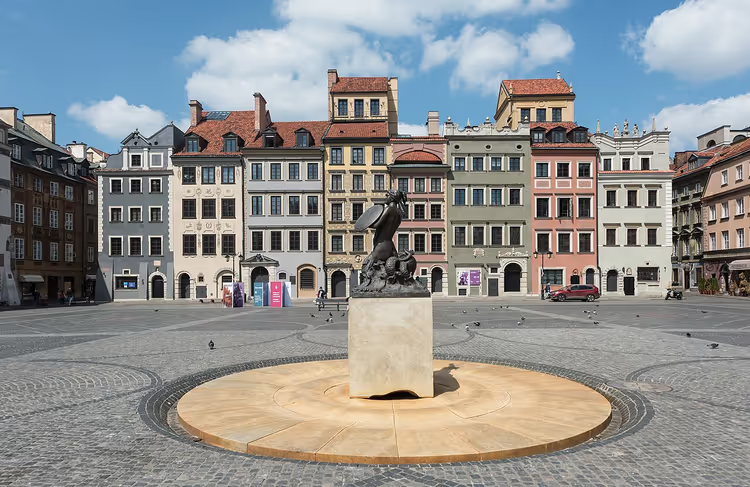
The best-known one tells of a fisherman named Wars and a mermaid named Sawa. The siren tangled fishermen's nets, and a wealthy merchant ordered her captured: he wanted to display the half-woman at the market to lure buyers. The fisherman heard the mermaid's cries, called his friends for help, and they freed her. In gratitude, Sawa promised to protect the city. Now Syrenka, as locals call her, appears on Warsaw's coat of arms.
The second version derives the name from the Hungarian word "varos," meaning "fortified city." The third traces it to the name Wartislaw, common in the Middle Ages.
 © Adrian Grycuk · CC BY-SAPhoto: Adrian Grycuk, CC BY-SA (https://creativecommons.org/licenses/by-sa/3.0/pl/deed.en), Wikimedia Commons
A few historical facts
- Chronicles first mention the city in the 14th century, although settlements on these lands have been known since the 9th century.
- Warsaw became the capital in the late 16th century: the king moved here after a fire at his Krakow residence. Official status was only secured by the constitution of the late 18th century.
- The city was destroyed many times, most severely during World War II. Only a small part of the Old Town remained. The center was rebuilt from prewar photographs, drawings, and blueprints, and the work took decades.
1. Warsaw Barbican
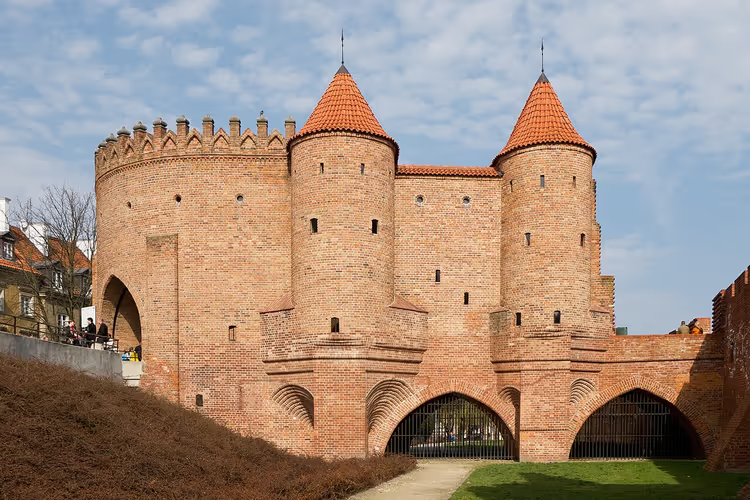
The Barbican (Barbakan Warszawski) separates the New Town from the Old Town. A mighty wall once surrounded the entire historic center; now you'll see only the barbican itself. The four-tower defensive structure proved useless against artillery, which developed faster than fortresses. In the 17th century, part of the wall was dismantled to widen the gates for trade caravans.
Behind the fortress wall in the 15th century, a separate settlement grew up with its own town hall, market, and churches. The New Town and Old Town were merged only in the 18th century.
 © Carlos Delgado · CC BY-SAPhoto: Carlos Delgado, CC BY-SA (https://creativecommons.org/licenses/by-sa/3.0/pl/deed.en), Wikimedia Commons
2. Old town market square
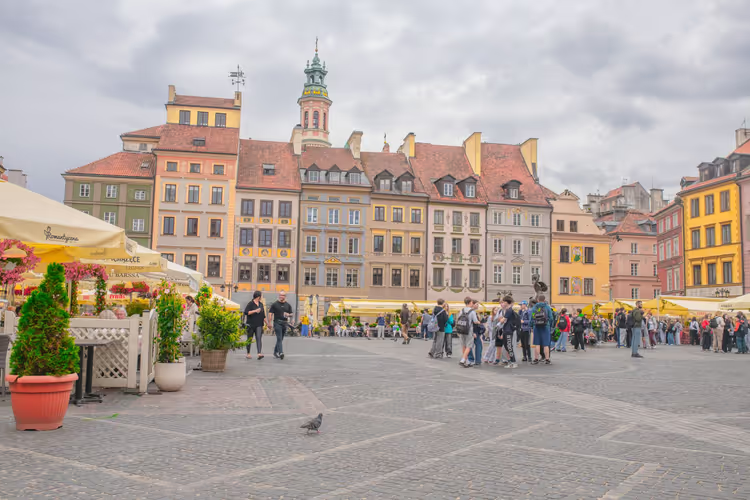
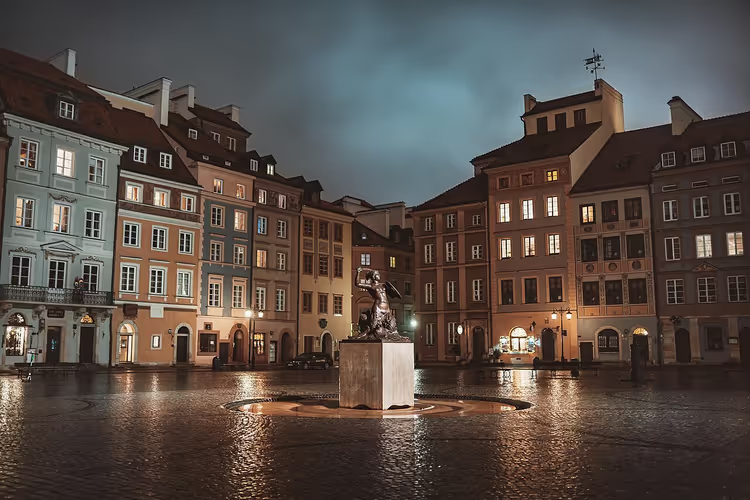
The square was founded in the late 13th century: fairs and city festivals were held here. In the 15th century, a town hall was built on the main square; in the 17th it was destroyed by a great fire, and in the 20th century the buildings were ruined by war. Locals raised the square from the rubble.
Today life bustles here: restaurants and small shops operate, street musicians perform, artists sell their work. In the center stands the statue of the Mermaid from the legend above. Make a wish about love: according to tradition, it will come true.
 © Aneta Pawska · CC BY-SAPhoto: Aneta Pawska, CC BY-SA (https://creativecommons.org/licenses/by-sa/4.0), Wikimedia Commons
3. St. John's Archcathedral
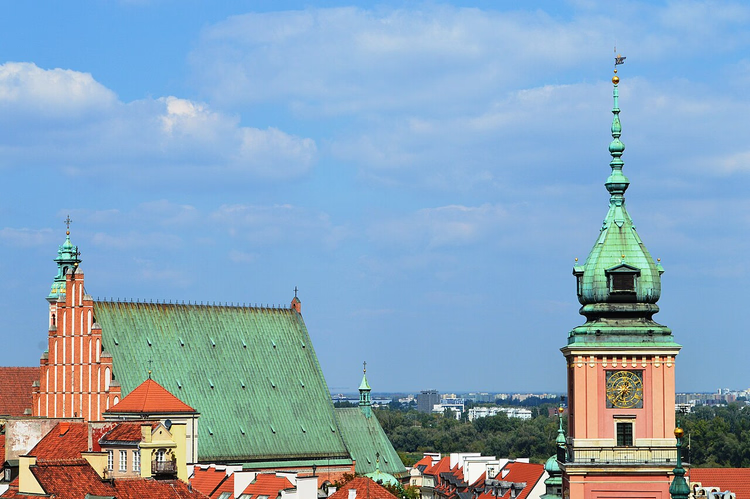
This is Warsaw's main Catholic church. It was built in the late 14th century and completely destroyed in World War II. The brick Gothic exterior was restored almost to its original form, but the interior could not be brought back.
 © Scotch Mist · CC BY-SAPhoto: Scotch Mist, CC BY-SA (https://creativecommons.org/licenses/by-sa/4.0), Wikimedia Commons
The cathedral crypt holds the tombs of famous Poles, including the last king and the first president of Poland.
- The catch: the interior was not fully restored after the war; inside, the church is more modest than outside.
4. Canon Square and the silent bell
Behind the cathedral hides a small triangular square. The houses along its perimeter belonged to the canons, the cathedral's priests, hence the name. There used to be a cemetery on this small patch.
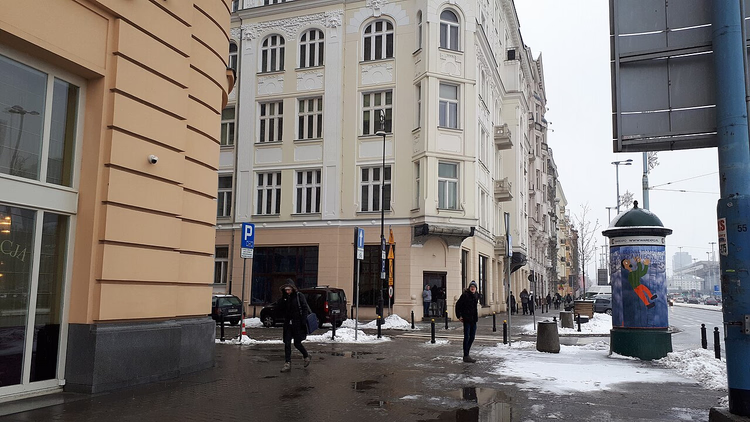
The square has a covered passage that led from the castle to the cathedral: nobles used it to enter the church unnoticed. The passage was built in the 16th century after an assassination attempt on the king in a nearby alley.
Take a look at the "thin house": its facade is only as wide as a window, which is how the owner reduced his property tax. In the center of the square stands a 17th-century bell. It was cast for a church in Jarosław, Poland, but never made it there: a casting error left a crack in the metal, and the bell became "mute." It could not ring, but according to legend, it grants wishes. Walk around it three times and make a wish.
5. Castle Square
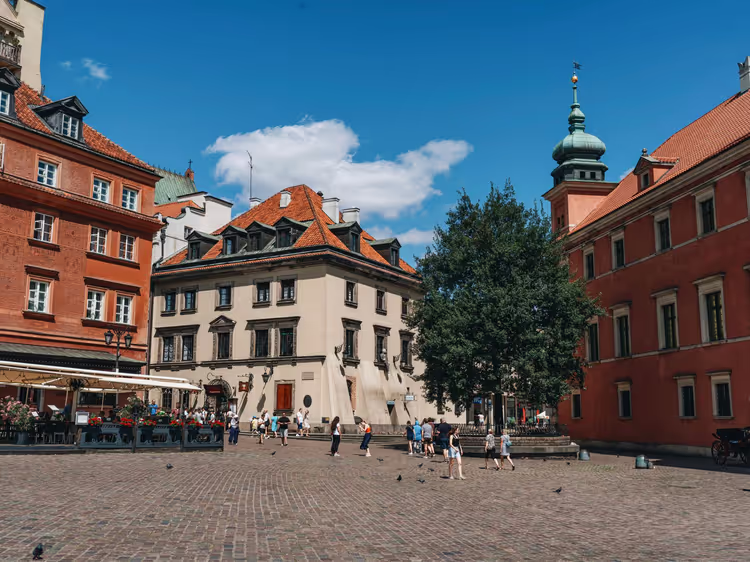
The castle on the square marks the spot where the city began. In the early 17th century, King Sigismund III moved the capital to Warsaw and rebuilt the palace for himself. A column with his bronze statue stands nearby.
Today the royal castle houses a museum: an archive, a painting exhibition, and decorative and applied arts. Tickets are cheaper to buy online, and lines are shorter on weekdays.
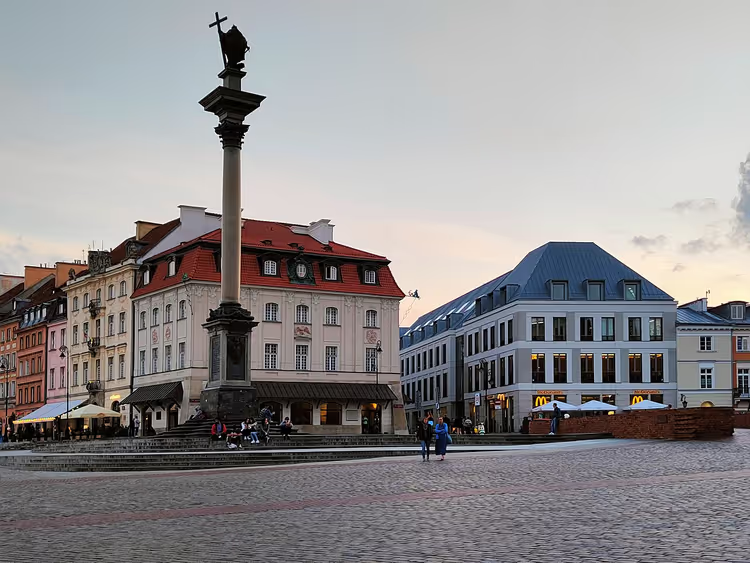 © Szczecinolog · CC BY-SAPhoto: Szczecinolog, CC BY-SA (https://creativecommons.org/licenses/by-sa/4.0), Wikimedia Commons
6. Castle Gardens
From the Castle Gardens, the royal residence looks different: you can see another facade of the palace from there.
The park on the banks of the Vistula was first laid out in the Middle Ages, and the landscape has been changed many times since. The current three-level garden with paths, white benches, fountains, and hedges was created in the early nineties.
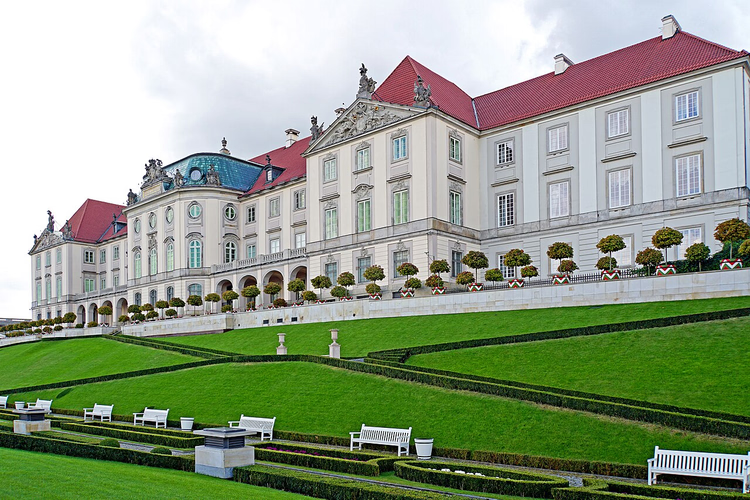 © Dennis G. Jarvis · CC BY-SAPhoto: Dennis G. Jarvis, CC BY-SA (https://creativecommons.org/licenses/by-sa/2.0), Wikimedia Commons
7. St. Anne's Church
The church's history begins in the 15th century: Princess Anna of Masovia founded a monastery here for Franciscan monks. In the 16th century the monastery burned down, and another Anna, Radziwiłł, built a new church on its foundations. The building was rebuilt many times, and its current appearance dates to the 18th century.
The church bell tower has an observation deck. A steep spiral staircase leads to the top, but the view of Castle Square from up there is the best you can get.
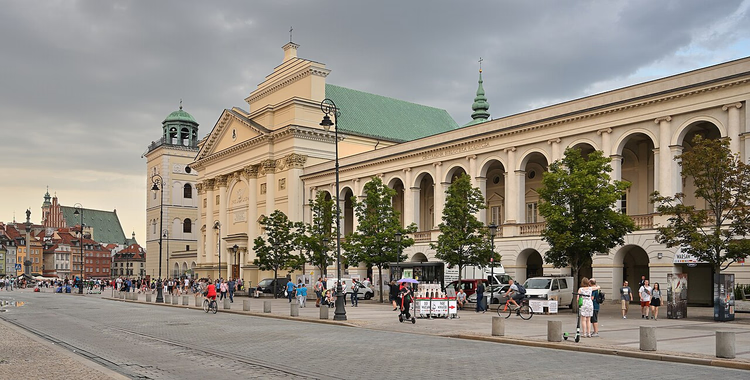 © Cayambe · CC BY-SAPhoto: Cayambe, CC BY-SA (https://creativecommons.org/licenses/by-sa/4.0), Wikimedia Commons
- The catch: the climb goes up a narrow spiral staircase, so people with claustrophobia will find it tough.
8. Krakowskie Przedmieście
The Royal Route starts at Castle Square. It runs along Krakowskie Przedmieście and Nowy Świat, Ujazdów Avenue, Belwederska and Sobieskiego streets, and ends at Wilanów Park. This was the route kings took to their summer residences.
Krakowskie Przedmieście is lined with Warsaw University buildings, the Polish Academy of Sciences, ministries, and the Presidential Palace. Walking the route with a guide is easier in a group: Warsaw tours on GetYourGuide.
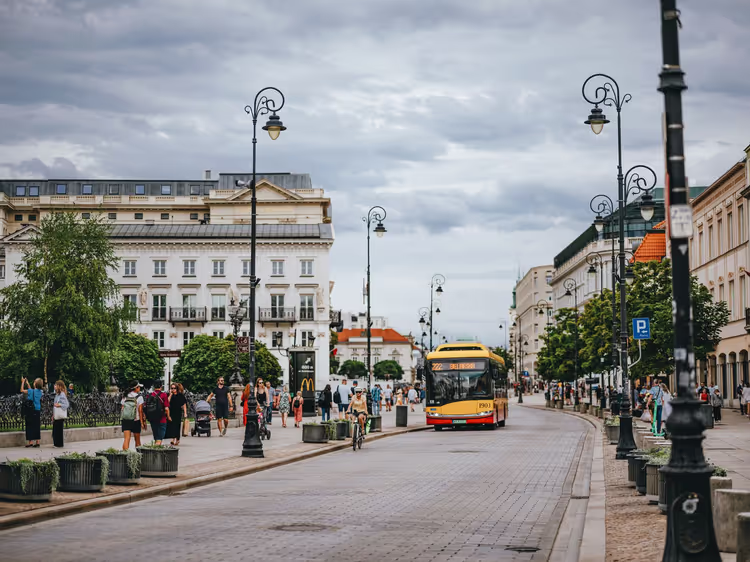
9. Nowy Świat Street
At the Nicolaus Copernicus monument, Krakowskie Przedmieście turns into Nowy Świat. This is the city's commercial artery with neoclassical architecture: restaurants, cafes, souvenir shops, and boutiques.
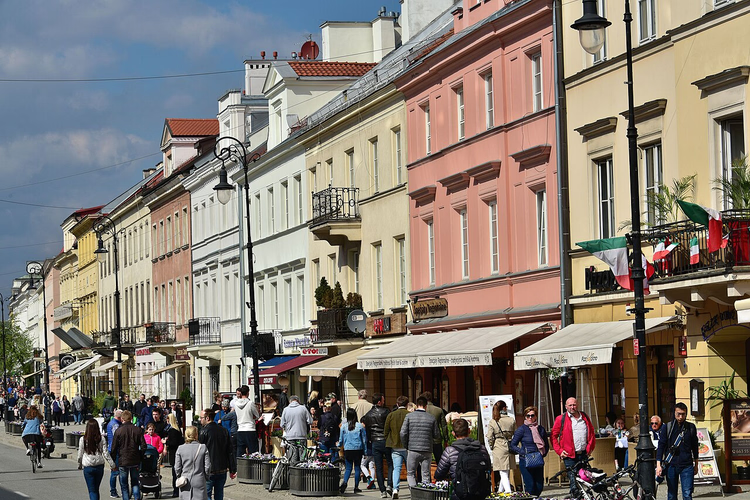 © Adrian Grycuk · CC BY-SAPhoto: Adrian Grycuk, CC BY-SA (https://creativecommons.org/licenses/by-sa/3.0/pl/deed.en), Wikimedia Commons
Pay attention to the marble benches: they have a button built in that plays Chopin melodies when pressed. The composer was born near Warsaw, and his sheet music and photographs are kept in the city museum.
10. Palace of Culture and Science
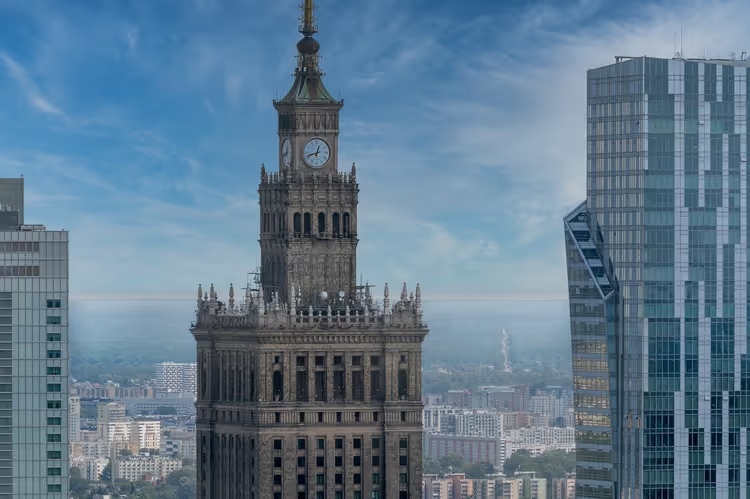
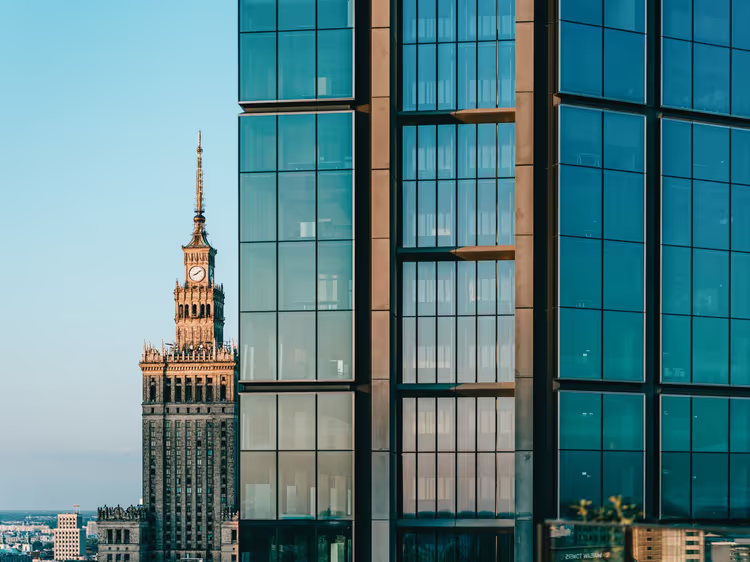
When you reach the Charles de Gaulle roundabout, turn right. The Palace of Culture and Science, built in the Stalinist style in the middle of the last century, was a gift to the Polish people from the Soviet government.
It is the tallest building in Warsaw. Inside there are a theater, a cinema, museums, offices, and cafes, and the top floor has an observation deck: you buy a ticket at the counter, and from up there all of Warsaw is spread out before you.
Five additional places to visit
If you have a second day, add these five places. They are spread across both banks of the river, so plan them by neighborhood.
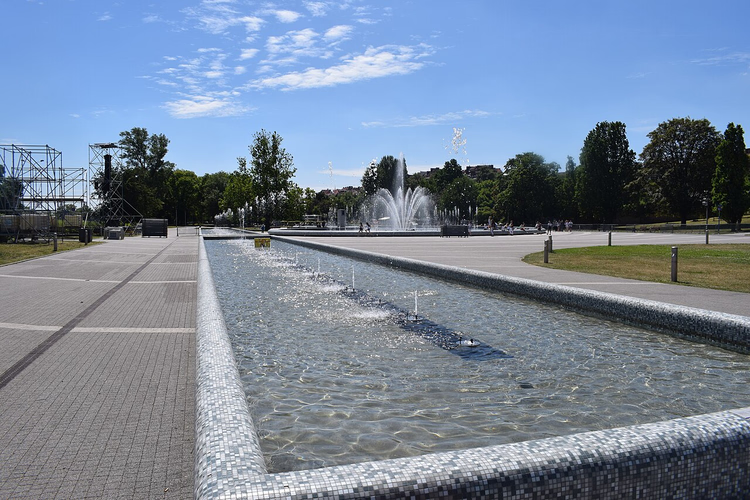
11. Multimedia Fountain Park
The fountain park sits on the Vistula embankment next to the historic center. From May through late September, it hosts water, light, and music shows, and admission is free (as of 09/2026, parkfontann.pl).
Come in the evening: in summer, shows start after sunset and draw large crowds. The 2026 season opened with the "Big Hearts" show (as of 09/2026, Warsaw city portal).
 © Erko · CC BY-SAPhoto: Erko, CC BY-SA (https://creativecommons.org/licenses/by-sa/4.0), Wikimedia Commons
12. Praga district
The neo-Gothic Basilica of St. Michael and St. Florian (Bazylika Świętych Michała i Floriana) is a handsome building, but it is more of a starting point for a walk through the Praga district.
 © Wistula · CC BY-SAPhoto: Wistula, CC BY-SA (https://creativecommons.org/licenses/by-sa/4.0), Wikimedia Commons
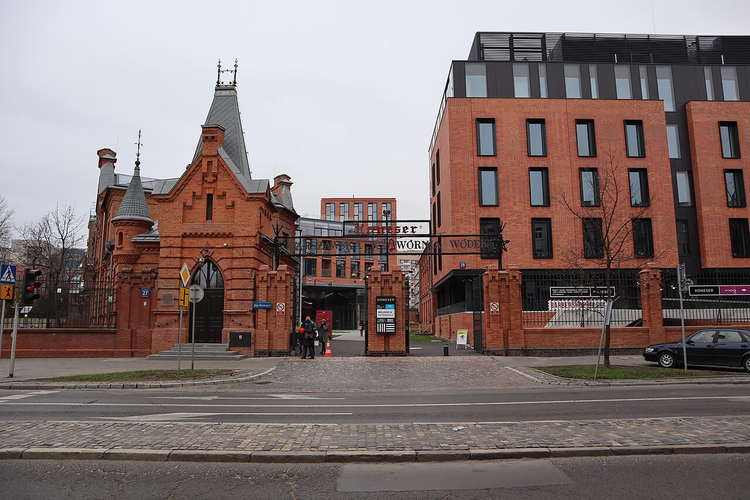
The district's name has nothing to do with the Czech Republic: it comes from the word "prażyć," meaning "to burn off." In the 15th century, a forest was burned off here and a village was built; in the 17th century it became a suburb of Warsaw, and in the late 18th century it was incorporated into the city.
Today it is a district of contrasts: restored buildings stand next to half-ruined ones, old churches next to glass-and-concrete structures, with plenty of graffiti and cafes.
13. Copernicus Science Centre
This is Poland's main science museum. Inside there are several themed zones and hundreds of interactive exhibits: you can spin them, launch them, and test them on yourself. Tickets are sold online for specific time slots, and ticket offices operate on a schedule (as of 09/2026, official website).
 © Adam Kozak · CC BY-SAPhoto: Adam Kozak, CC BY-SA (https://creativecommons.org/licenses/by-sa/4.0), Wikimedia Commons
The museum is named after Nicolaus Copernicus, the Polish astronomer who proposed the heliocentric model of the universe. Before him, it was believed that the Earth, not the Sun, was at the center of the world.
- The catch: entry is by timed sessions, and on weekends tickets for convenient slots sell out in advance.
14. Łazienki Park
Łazienki Park (Łazienki Królewskie), with the summer residence of Stanisław August Poniatowski, the last Polish king, lies about four kilometers from the Royal Castle (on the map). In the past, this distance was considered far from the capital.
The early Neoclassical palace was built in the 18th century on an artificial island in the middle of a lake. Around it lies a large park with paths and canals, greenhouses, an amphitheater, and a planetarium. Locals come here to stroll on weekends.
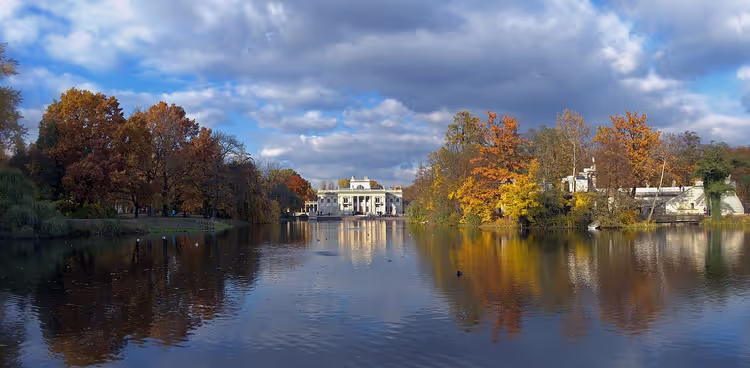
- Who it's for: those who want to catch their breath after the busy center and spend a calm evening.
15. Wilanów Palace
Wilanów Palace (Pałac w Wilanowie), the summer residence of King Jan III Sobieski, stands about twelve kilometers from the center along the Royal Route (on the map). The name "Villa Nova" eventually evolved into "Wilanów."
The 17th-century palace with its large garden was designed on the model of Versailles, and now houses an art museum. On Thursdays, admission to the palace, historic gardens, and park is free (as of 09/2026, official website).
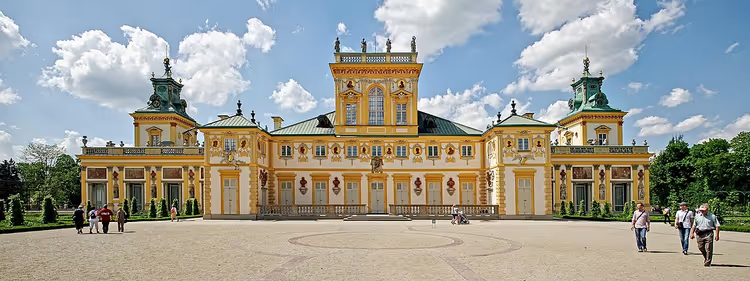
- The catch: the ticket office closes in the middle of the day, although the park stays open longer.
Tickets and opening hours (as of 09/2026)
Before your trip, double-check tickets and schedules: museum hours change in summer.
Site | Tickets and hours | Source |
|---|---|---|
Wilanów Palace | free on Thursdays, paid on other days; ticket office closes in the middle of the day | |
Copernicus Science Centre | online tickets for a specific time slot | |
Multimedia Fountain Park | free, season runs from May to September |
At the Royal Castle and the Palace of Culture, tickets are sold at the ticket office: lines are shorter on weekdays. A time slot for a specific entry time saves you an hour in high season.
If you're planning to visit several museums, check out time-slot tickets on Tiqets: they cover skip-the-line entry.
Tours and tickets in Warsaw
Guided tours, skip-the-line tickets and activities — most offers can be cancelled free of charge.
See offers on TiqetsThe widget loads once you give your consent.
⁉️🤔 Frequently asked questions
How much time do you need for Warsaw?
The ten main points on the route take a full day: six to eight hours with stops and lunch. Save the five additional points for the second day. If you only have a few hours, go with the Old Town. The Barbican, Market Square, Castle Square, and St. Anne's Church are close together, ten to fifteen minutes on foot between them.
When is the best time to visit the Old Town?
In the morning, at opening time. By eleven, Castle Square and Market Square are already crowded: tour groups start arriving. The St. Anne's Church observation deck and the Palace of Culture viewing terrace are better to visit before noon or closer to sunset, when the light is softer and there are fewer people.
Can you get around Warsaw on foot?
Yes, the historic core is compact: from the Barbican to the Palace of Culture is about four kilometers (on the map). It's easier to get to Łazienki and Wilanów by transport: Wilanów is about twelve kilometers along the Royal Route. To get to Praga, cross the Vistula; it's a separate district on the right bank.
How much do tickets to Warsaw museums cost?
It depends on the site. Entry to Wilanów Palace and its park is free on Thursdays, at the Copernicus Centre tickets are sold online for a specific time slot, and the fountain park shows are free. Always check current prices on the official museum websites, as they change in summer.
Is the Praga district worth including in the route?
Yes. Praga is noticeably different from the left bank: restored buildings stand next to half-ruined ones, with graffiti and cafes nearby. The district is a good way to end the day if you're heading to the free fountain show on the embankment in the evening: the season runs from May to September.
In short: what's worth booking
Warsaw can be covered in a day if you decide in advance what matters most to you. The plan is simple: Old Town in the morning, a museum in the afternoon, an observation deck closer to sunset.
If it's your first time in the city: the Old Town and the Royal Route. If you're traveling with kids: the Copernicus Science Centre. If you want some quiet: Łazienki Park and the Castle Gardens. If you have a second day: Praga and Wilanów.
Tickets with fixed entry times and central accommodation are best booked in advance: compare tickets and tours on GetYourGuide and find a hotel on Trip.com.

A small editorial team writing guides for independent travel. We travel ourselves, but we haven’t been everywhere, so we check prices, opening hours and how to get there against official sources.