












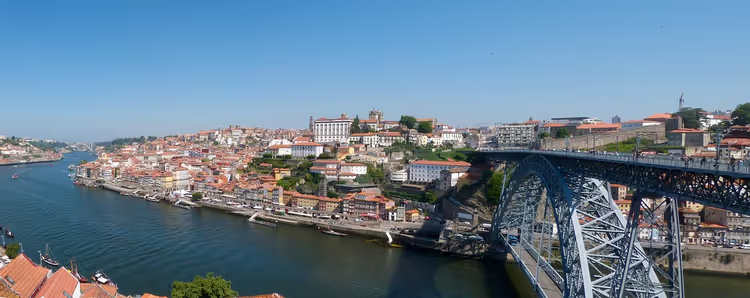
Weather in Porto by month: when to go and can you swim
The ocean at Porto is cold almost all year. Even in August, the water averages around 19 °C (seatemperature.org, as of 09/2026).
The air here is noticeably milder. Summer in northern Portugal passes without oppressive heat, and winter comes with almost no frost. This climate suits those who want to walk around the city all day without hiding from the sun. But the mildness comes at a price: there is more rain here than in the south of the country. Below, we break down the weather in Porto by month, water temperature, and the best seasons, so you can pick your dates without surprises.
 © Alvesgaspar · CC BY-SAPhoto: Alvesgaspar, CC BY-SA (https://creativecommons.org/licenses/by-sa/3.0), Wikimedia Commons
Porto's climate: Atlantic, mild, and humid
💡 In short:
- Porto sits at the mouth of the Douro River on the Atlantic coast, so the ocean, not continental heat, drives the weather here.
- In summer, the air rarely rises above 25 °C, and the ocean water stays cold almost all year.
- Weather data: as of 09/2026, according to Climates to Travel.
 © Estevoaei · CC BY-SAPhoto: Estevoaei, CC BY-SA (https://creativecommons.org/licenses/by-sa/4.0), Wikimedia Commons
The average annual temperature in Porto is around 15 °C (Climates to Travel, as of 09/2026). In winter, daytime air warms up to 14-15 °C, while at night it cools to 6-7 °C. In summer, it stays in a comfortable 18-25 °C range. Heat above 35 °C does happen, but not every year, and it usually lasts only a couple of days.
Northern Portugal is known for high humidity, and rain falls here from October through May. The sky is often overcast, and fog hangs over the Douro River in the mornings, which is why the greenery around the city is so lush. Bring a light jacket and an umbrella even in summer: evenings by the water are chilly. You can check the current forecast on IPMA, Portugal's meteorological service (checked 09/12/2026).
Weather in Porto by month
The table below shows long-term averages for 1991-2020 for air temperature, rainfall, and water temperature.
Month (air norms) | Min., °C | Max., °C | Average, °C | Rain, mm | Rainy days | Water (water norms), °C |
|---|---|---|---|---|---|---|
January | 6 | 14 | 10 | 160 | 13 | 14.5 |
February | 6 | 15 | 11 | 140 | 12 | 14 |
March | 8 | 17 | 13 | 90 | 10 | 14 |
April | 9 | 18 | 14 | 115 | 11 | 14.5 |
May | 12 | 20 | 16 | 100 | 10 | 15.5 |
June | 14 | 23 | 18 | 45 | 6 | 17 |
July | 15 | 24 | 20 | 20 | 3 | 18.5 |
August | 15 | 25 | 20 | 25 | 3 | 19 |
September | 14 | 24 | 19 | 70 | 6 | 18.5 |
October | 12 | 21 | 17 | 140 | 11 | 17.5 |
November | 9 | 17 | 13 | 160 | 12 | 16.5 |
December | 7 | 15 | 11 | 195 | 13 | 15 |
Most precipitation falls in winter, while July and August are almost dry. Keep this in mind if you plan to drive around the region.
January: the coldest month
January brings daytime temperatures around 14 °C, with nighttime lows near 6 °C (January norms, as of 09/2026). The month sees 160 mm of rain, usually over 13 days. You will want an umbrella and waterproof shoes.
February: wet, but days are longer
Daytime air warms up to 15 °C, with 140 mm of rain. Daylight is already noticeably longer than in January. The month passes quietly and without museum lines.
March: spring comes to the city
Daytime temperatures hold around 17 °C, with less precipitation (90 mm). By the end of the month, camellias and mimosa bloom in the surrounding area. Plan your walks with rain in mind, it is still frequent.
April: changeable weather
Daytime highs around 18 °C, with 115 mm of precipitation. The weather shifts quickly: sunshine can turn to a downpour within an hour. On the plus side, you will see the Douro Valley green and uncrowded.
May: the best month for the city
Air warms up to 20 °C, with 100 mm of rain over 10 days (May norms, as of 09/2026). Days are long and tourists are still few, so this is the best time for strolling along the Ribeira waterfront.
June: a warm start to summer
Daytime highs reach 23 °C, with only 45 mm of rain, but June can sometimes turn out cloudy and feel like spring. You will still need a light jacket by the river in the evening.
July: the driest month
Precipitation totals 20 mm over 3 days, with daytime highs of 24 °C, and heat above 35 °C is rare. Peak season falls in these months, so book hotels in advance.
August: peak summer warmth
Daytime highs around 25 °C, and the ocean water is warm by local standards (19 °C). Evenings are cool, so the ocean still gives you a jolt. Bring a sweater for walks after sunset.
September: golden season for wine
Daytime highs still reach 24 °C, water holds at 18.5 °C, and the grape harvest begins in the Douro Valley. This is the best period for wine trips.
October: rains return
Daytime highs around 21 °C, with 140 mm of precipitation. The first half of the month is often sunny. After that, humidity rises, and you should pack warm clothing.
November: damp and foggy
Air cools to 17 °C, with 160 mm of rain over 12 days. Fog hangs over the river in the mornings. The soft light works well for photos, but bring a raincoat.
December: the rainiest month
Daytime highs reach 15 °C, with 195 mm of precipitation, the most of the year. On the plus side, Porto dresses up for the holidays and opens Christmas markets. You will need a waterproof jacket.
Seasons in northern Portugal
 © Sanjorgepinho · CC BY-SAPhoto: Sanjorgepinho, CC BY-SA (https://creativecommons.org/licenses/by-sa/4.0), Wikimedia Commons
Summer in Porto: cool instead of hot
While the south of the country swelters, Porto holds around 25 °C during the day. Nights are cool and fresh. This climate suits you if you dislike stuffy heat and want to walk all day.
Autumn and winter: Douro Valley time
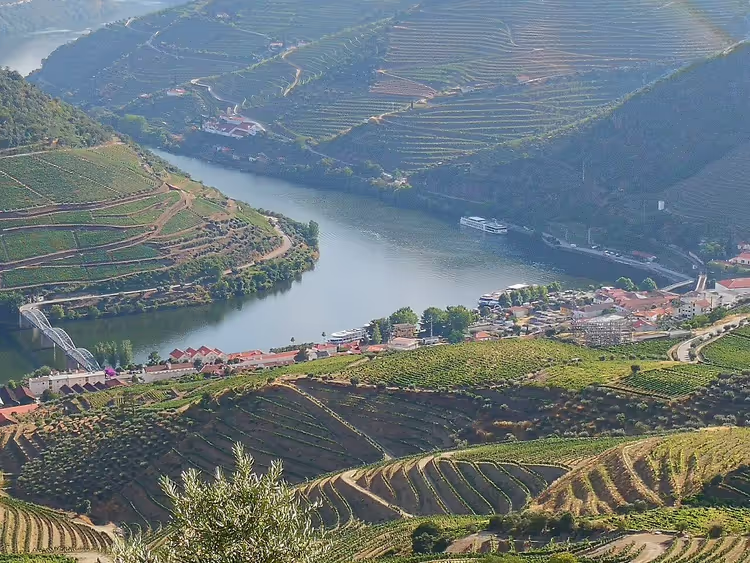
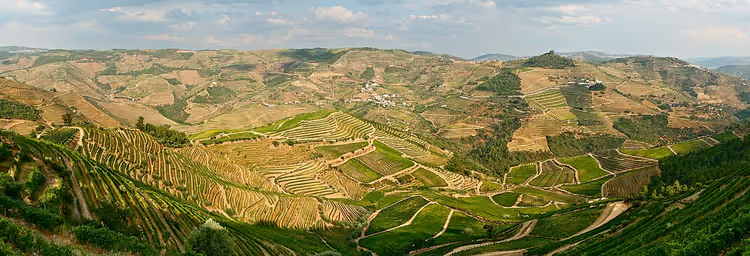
From October, the north becomes noticeably wetter, but that is exactly what creates the atmosphere of fog over the river and red-and-gold vineyards. Winters are mild, but high humidity makes a warm jacket essential.
 © François Philipp from Darmstadt, Germany · CC BYPhoto: François Philipp from Darmstadt, Germany, CC BY (https://creativecommons.org/licenses/by/2.0), Wikimedia Commons
Water temperature in Porto: only for the hardy
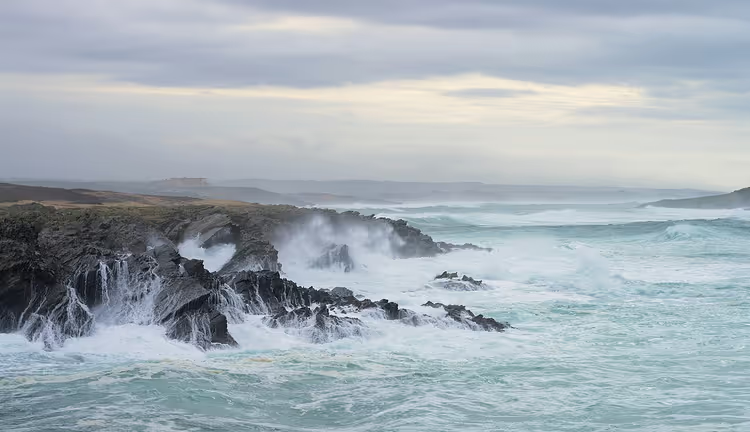
The beaches near Porto, from Foz do Douro to Matosinhos, are beautiful, but the water here is colder than in the Algarve. In August, the ocean warms to only 19 °C (water temperature, as of 09/2026), and from November to April it holds at 14-15 °C.
- Even in the warmest month, the water stays cool, and entering the sea refreshes you in seconds.
- The region attracts surfers with consistent waves, and a wetsuit is needed here year-round.
- For swimming in warm water, choose the south of Portugal, and leave Porto for walks.
If your trip is about the sea, plan it for the second half of August and go into the water in the morning.
Best time to visit northern Portugal
Trip purpose | Best months | Why |
|---|---|---|
City and waterfront | May-September | less rain (as of 09/2026, Climates to Travel) |
Douro Valley, wine | September-October | grape harvest and warm days |
Hiking, Peneda-Geres National Park | April-May | full waterfalls and blooming |
Low season | November-March | fewer tourists and lower prices |
For the city and the coast, the best period is from May through September. For wine, choose September, when the harvest is underway in the Douro Valley. Hiking enthusiasts should consider April and May: blooming season and full waterfalls coincide. Official seasonal recommendations are compiled by Visit Portugal, the country's tourism office (verified 09/12/2026).
⁉️🤔 Frequently asked questions
When is the best time to visit Porto?
The best time for the city is from May through September. The driest and warmest months are July and August. In May, downpours still happen, but there are fewer tourists. If warm water matters to you, keep in mind that the ocean near Porto stays cool even in summer.
Can you swim in the ocean near Porto?
You can swim, but the water is cold. In August it only warms up to 19 °C, and from November through April it stays at 14-15 °C (water data, as of 09/2026). Locals and surfers go in wearing wetsuits. For a beach vacation with warm water, it is better to choose the south of the country, the Algarve.
How many days does it rain in Porto in December?
In winter it rains often, especially in December and January. In December, 195 mm of precipitation falls over roughly 13 days, and in January 160 mm over 13 days (Climates to Travel, as of 09/2026). The sky is often overcast, and mornings can be foggy. Bring a waterproof jacket and an umbrella, they will come in handy on any winter trip.
Is it hot in Porto in summer?
No, there is almost no intense heat here. Daytime temperatures in July and August are around 24-25 °C, and nights are cool (summer normals, as of 09/2026). Heat waves above 35 °C do happen, but they are rare and short-lived. That is why summer in Porto is more comfortable than in southern Portugal.
What should you pack for Porto?
Put a light jacket and an umbrella in your suitcase in any season, even summer. Evenings by the water are cool, and rain can start suddenly. For the beach, add warm clothes for after swimming. Choose waterproof shoes.
In short: what is worth booking
Porto lies in a mild Atlantic climate zone, with no exhausting heat but more rain than in the south. The best time for the city is from May through September, and September suits the Douro wine valley. If you want a warm sea, choose the Algarve, and leave Porto for walks and food.
- For a vacation in July or August, take the city and the Douro Valley: the ocean water will be bracing.
- For wine tours, plan for September, the grape harvest month.
- With children, choose late spring or early summer, when there is no heat.
Book accommodation in high season well in advance, since July and August draw the most tourists.
Ad: this article contains affiliate links. We earn a commission if you book through them, at no extra cost to you.
It is worth comparing hotels in Porto ahead of time: see Porto hotels on Trip.com.

A small editorial team writing guides for independent travel. We travel ourselves, but we haven’t been everywhere, so we check prices, opening hours and how to get there against official sources.