
















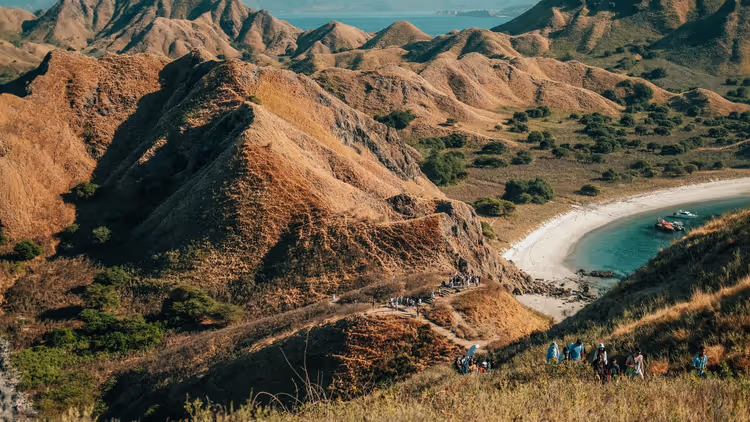
Weather in Indonesia: when is the dry season and what to do in the rain
You’re planning a trip to Indonesia and aren’t sure when to fly. There’s no one-size-fits-all answer, and that’s not a cop-out. The country stretches across thousands of islands on both sides of the equator, so the weather depends on the region.
In Bali, January brings rain almost every day, while Flores is usually dry during those same weeks. We’re not talking in generalities, we’re talking dates: when the dry season starts, when the wet season hits, and what that means for your itinerary. According to Indonesia’s meteorological service, the dry season in most regions will start earlier than usual in 2026.
Ad: this article contains affiliate links. We earn a commission if you book through them, at no extra cost to you.
Indonesia’s climate: the essentials
Indonesia lies in the tropics, so it’s warm year-round. Daytime temperatures climb above thirty degrees, and nights rarely drop below twenty. The sea is warm almost all the time, so you can swim in any month.
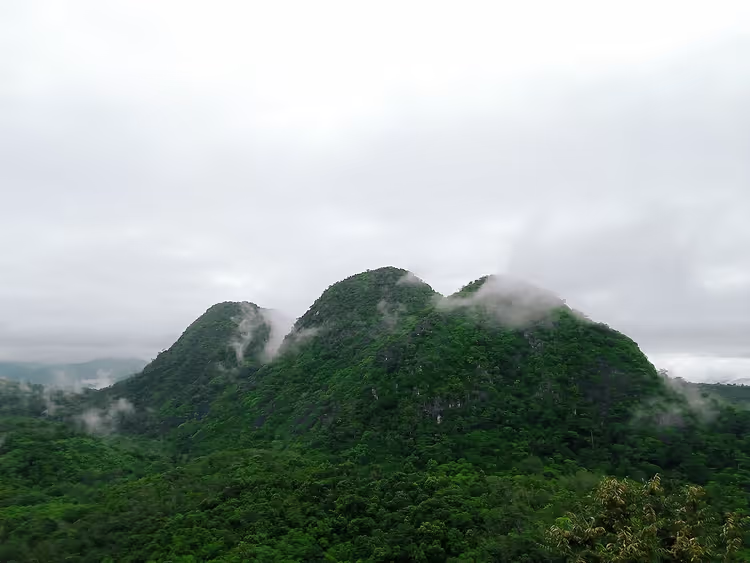 © AzraSalsabila · CC BY-SAPhoto: AzraSalsabila, CC BY-SA (https://creativecommons.org/licenses/by-sa/4.0), Wikimedia Commons
Rainfall is unevenly distributed across the country. The northwest, including Sumatra, gets precipitation all year long. The south and east, meaning Java, Bali, Lombok, and Flores, follow a monsoon schedule with a clear dry and wet season. That schedule is what determines when you should go.
💡 In short:
- The dry season in most regions runs roughly from May through October.
- The wet season arrives from November through April, with downpours most often in the afternoon.
- Season dates and the 2026 forecast: checked on 09/12/2026 on the BMKG website.
When is the best season to visit Indonesia
If you want dry days and predictable weather, choose May, June, September, or October. These are the edges of the high season: little rain, and the heat is milder than in the peak of summer.
 © musnahterinjak · CC BY-SAPhoto: musnahterinjak, CC BY-SA (https://creativecommons.org/licenses/by-sa/3.0), Wikimedia Commons
July and August are considered the peak of the dry season. The weather is at its most stable during these months, but hotels in Bali and the Gilis get more expensive and the beaches get crowded. Hotels in high season get booked up early, so it’s better to compare prices on Trip.com before you buy your flights.
To see the difference in practice, look not at the calendar but at humidity. Starting in March it gradually drops, and by June the air feels noticeably drier. Rain mostly goes away, but it doesn’t disappear entirely: a short downpour is possible even in July.
A separate note about February and March. These are transitional months: the sun already appears more often, but downpours still come. If you’re traveling then, build a flexible schedule and don’t put a boat trip on your first day.
Another reference point: high season coincides with European school holidays. In July and August, prices in Bali are at their highest, while in May and October the same hotel costs less with nearly identical weather. The price difference is especially noticeable on popular beaches.
When planning your route, look not only at the month but also at the island. The farther east you go, the sharper the difference between the dry and wet seasons, while in Sumatra there’s almost none. That’s why a multi-island trip is best planned from the end of the dry season.
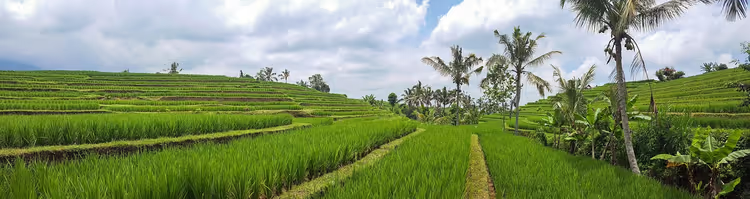
Dry and wet season: what’s the difference
The difference is most noticeable in the air. In the dry season, humidity drops, the heat is easier to bear, and rain is rare. In the wet season, the air is thick and muggy, and downpours come almost daily, usually after midday.
Another difference has to do with the sea. In the dry season it’s calmer, the water is clearer, and the waves on Bali’s south coast are consistent. In the wet season, rivers carry murky water into the sea, and ferries between islands are canceled more often. If your route includes transfers, check train and ferry schedules in advance.
Java has its own rhythm. The dry season here is shorter, and in the east of the island rain arrives earlier than in Bali. When planning a route across two islands at once, allow a buffer of one or two days.
Comparing the two seasons is easier in a table than in prose.
Parameter | Dry season | Wet season |
|---|---|---|
Months | May, October | November, April |
Rain | rare, usually brief | almost daily |
Humidity | lower | high |
Tourists | many, peak in July | few |
Prices | high | lower |
Sea | clearer and calmer | murkier, sometimes rough |
Where and when the rainy season happens
Rain in Indonesia doesn’t fall on a fixed schedule, and several regions work in reverse. Each has its own pattern, and it’s worth knowing before you book domestic flights.
Below is a quick regional summary where the months differ from the general pattern.
Region | When it rains | What it means |
|---|---|---|
West Java | even in the dry season | downpours in the mountains and jungle |
East Sulawesi | May, August | reverse schedule |
Raja Ampat | July, early September | affects diving visibility |
Sumatra | year-round, peak October, March | rain possible in any month |
West and southwest Java get rain even during the official dry season. This is especially noticeable in the highlands around Bandung and in the jungle of Ujung Kulon National Park. Here, short downpours should be considered normal at any time of year.
The east coast of Sulawesi, the areas around Luwuk and Kendari, runs on a reverse schedule. Rain comes from May through August, meaning exactly when Bali is dry. Beach vacations here are best planned for September and October, when the season flips.
Raja Ampat in West Papua gets wet from July to early September. For divers this is a key detail: water visibility and boat transfers depend directly on the weather. If you’re going for the underwater world, confirm dates with your operator in advance.
Sumatra doesn’t have a clear division into seasons. Downpours are possible year-round, but from October through March they become noticeably more frequent. If your route includes Sumatra, leave a buffer for rescheduling flights.
It helps to remember that rain is local. While it is pouring in Ubud, half an hour away it can be dry. On large islands, the weather often differs even between neighboring areas.
Local rains come in short but powerful squalls. The sky clouds over in a couple of minutes, and half an hour later the sun is shining again. Hiding under a tree during a thunderstorm is not a good idea; it is better to wait it out in a cafe or hotel.
Pros of the rainy season
The rainy season scares many people off, and for no good reason. From November to April the country looks different, and this time of year has its own strengths.
Fewer people. In the dry season, Bali, the Gilis, and Flores are crowded, while in the rain you share the same temples and beaches with only a few others. Lines at waterfalls and temples are shorter, and the atmosphere is calmer.
Lower prices. Hotels, tours, and flights in the off-season cost noticeably less than in July. Tours across Indonesia and accommodation during this period are cheaper, so your budget stretches to a longer trip.
Living nature. After the rain everything blooms, the greenery becomes rich, and the air smells of damp earth. Landscapes look fresher than in the scorched dry season.
Full waterfalls. Tumpak Sewu on Java and Sekumpul on Bali carry noticeably more water in the rain. Seeing them at this time is more impressive than in the dry season, when the flow weakens.
Gentler heat. Clouds soften the sun, so walking around temples and climbing mountains is easier. Long hikes are more bearable than under the direct July sun.
Different surfing. The east coast of Bali and Lombok get good waves precisely in the rain. Spots on the south of Bali, on the other hand, work in summer, so the choice depends on your level.
A benefit for locals. Homestays, restaurants, and guides get guests in the quiet season, when there are few tourists. At the same time, the strain on water, roads, and electricity on overcrowded Bali decreases.
Weather with character. The morning can be clear, lunch rainy, and the evening golden again. In one day you will see the country in several different states.
The rainy season suits those who are traveling for a long time, love greenery, and are ready to change plans according to the weather. It will not suit those who came for a week for consistent beach weather and demand sun every day.
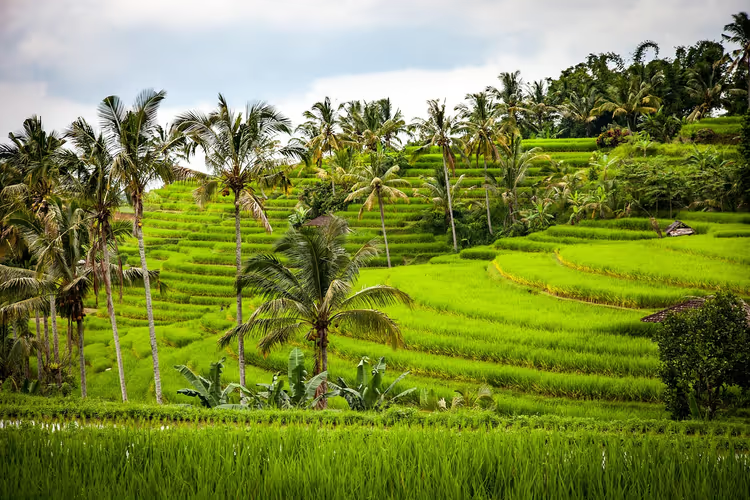
The catch of the rainy season
The wet season has its price, and it is fairer to name it upfront. Below is what to consider in your planning.
 © Thank You (25 Millions ) views from Fresno, USA · CC BYPhoto: Thank You (25 Millions ) views from Fresno, USA, CC BY (https://creativecommons.org/licenses/by/2.0), Wikimedia Commons
Sticky humidity. Before a squall, the air becomes heavy, and the heat feels worse than in the dry months. Many people feel tired on the first day because of this climate.
Lots of mosquitoes. When it rains, there are noticeably more insects, and with them the risk of dengue fever and malaria rises in certain regions. According to WHO, dengue in Southeast Asia is recorded year-round, but peaks often fall exactly on the rainy season.
Dirty beaches after downpours. Rivers carry plastic and trash into the sea, and swimming near urban beaches can be unpleasant. This is especially true for densely populated areas of Bali and Java. The closer a beach is to a river mouth and a big city, the higher the chance of seeing trash. In remote bays, the water is usually cleaner.
Ferry cancellations. Connections between the Gilis, Lombok, and Flores depend on sea conditions. In heavy rain, trips are canceled or rescheduled without notice. Plan transfers with a one-day buffer. If you have a flight home after the islands, leave an extra day in reserve.
Closed volcanoes. Treks to Rinjani on Lombok and Batur on Bali are often closed in the rain for safety. Trails get washed out, and the climb becomes risky. An overnight ascent in such weather is not worth planning, even if the morning looked clear.
Slippery routes. In jungles and near waterfalls, trails get washed out, rocks become slippery, and the risk of injury rises. Wear sturdy shoes and use poles if needed. Even experienced hikers fall on wet roots and rock slabs.
Leeches. In humid forests, especially near waterfalls, leeches are more active. They are not dangerous, but unpleasant. Long sleeves, high socks, and repellent spray help. After a walk, check your legs; it is easier than washing blood out of clothes.
Washed-out roads. In villages and on small islands, roads can be flooded or broken up. If you plan to drive around an island, allow more time for each leg of the trip.
Wet riding. On a scooter, the risk of falling is higher because of rain, mud, and bad roads. If you are not confident, comparing car rental options is calmer than riding yourself.
Dull light. The sky is often gray, and this affects photos. Bright sunsets and clear visibility are rare in the rain, but clouds give a dramatic backdrop.
Murky water for diving. Rainfall stirs up sediment from the bottom, and underwater visibility drops. Especially near river mouths and in areas with strong surf.
Days that drag on. Sometimes downpours last not hours but days, in short bursts. For a short trip, this can eat up half of your itinerary.
Limited surfing. Bali's southern spots, including Uluwatu, Padang Padang, and Canggu, work in the dry season. In the rain, you need local experience to find a wave on the east coast.
The main takeaway on the downsides is simple. Most problems are solved with a flexible schedule and time buffers. The hard case is a short island trip where ferries and volcano climbs depend on the rain.
Mosquitoes and health in the rain
A separate note on health, because in the rain it matters more than in the dry season. Mosquitoes breed in standing water, which becomes more abundant during the rainy season from November to April. Peak activity is in the evening and early morning.
According to WHO, malaria in Indonesia persists in a number of provinces outside Bali and Java, so the risk depends on your route. For Bali and Java, the danger is low, but dengue is possible almost everywhere. Dengue is carried by mosquitoes that are active during the day, so protection is needed not only in the evening.
When heading into the rain, bring a repellent with an active ingredient such as DEET or icaridin, and a mosquito net for rural overnight stays. Long-sleeved clothing also helps. Comparing insurance options also makes sense: medical costs in the region are high, and a policy covers emergencies. Before the trip, check the current situation with a doctor.
So when should you go: a short summary
There is no single answer, and that is the honest conclusion. It all depends on how much time you have and what you expect from the trip.
If you have two to three weeks and want minimal rain, go in the dry season. Checking available tours is easier in advance, before spots sell out.
If you have plenty of time, you are traveling spontaneously, and you do not mind a couple of wet days, the wet season will suit you. Greenery, availability, and low prices outweigh the inconveniences.
For a short beach trip, choose the dry season. For trekking and waterfalls, rain actually adds color.
If your route includes several islands, add a day for each transfer. Between Bali and the Gilis, and Bali and Lombok, trips depend on the sea, so a tight schedule breaks easily. This buffer saves you both when a ferry is rescheduled and when a trek is canceled.
 © musnahterinjak · CC BY-SAPhoto: musnahterinjak, CC BY-SA (https://creativecommons.org/licenses/by-sa/3.0), Wikimedia Commons
Weather in Indonesia is changing
The climate here does not stand still, and old charts no longer always match reality. In certain regions, rains come even in the dry season, and increasingly less predictably.
Example: in 2025, the wet season stretched into July, which is unusual for the classic pattern. The meteorological service links such shifts to overall climate variability and to El Niño and La Niña phases.
Another point: in some years, the dry season arrives later than usual. That is why tickets with date-change options are more convenient than rigid fares, especially for a long trip.
The practical takeaway is simple: do not rely on the calendar alone. Before the trip, check the meteorological service forecast and leave a free day in your itinerary. For a long trip, this is more of a plus: you will catch a dry window in any month.
What to do in the rain
Even on a gray day, there is plenty to do in Indonesia, and some activities actually benefit from the weather outside.
 © Thank You (25 Millions ) views from Fresno, USA · CC BYPhoto: Thank You (25 Millions ) views from Fresno, USA, CC BY (https://creativecommons.org/licenses/by/2.0), Wikimedia Commons
Start with the kitchen. Bali and Java offer cooking classes where you make nasi goreng and satay yourself. A cooking class in Bali lasts several hours and does not depend on the weather.
Next, crafts. Ubud and Yogyakarta teach batik, and in Celuk near Ubud you can make your own silver jewelry. These are relaxed half-day activities.
These workshops usually operate at hotels and in tourist centers. It is better to book a day ahead: when it rains, there are fewer open spots than you would expect.
Markets and museums also help. On Java, that means the palaces and local history museums of Yogyakarta; on Bali, the art galleries of Ubud. You can spend several hours under a roof and stay dry.
Do not forget about recovery. A Balinese massage and spa in Ubud or Canggu are a great way to close out a rainy day, and after walking on wet trails it is especially pleasant. Salons are open in the evening too, so you can end the day relaxing instead of rushing back to the hotel.
Chocolate workshops also help: at plantations near Ubud they show how cacao is fermented and roasted, then let you make your own bar from the finished mass. The activity takes place indoors and works even in a downpour. It is worth booking ahead because groups are small.
Another option: temples in the mist. In the rain, Balinese temples look quieter and more solemn, and there are fewer people. Tours to temple complexes run in any weather.
Yoga also fits. Ubud and Canggu have many studios where you can spend an hour under a roof and recharge. The rain actually helps you get into the right mindset.
Bali and Lombok climate table
To plan with numbers, here are the average values for Bali and Lombok. These are multi-year reference points, not a forecast: according to the climate reference book, actual weather can differ by several degrees.
Month | Temperature (°C) | Sun, hours per day | Rainy days | Humidity (%) | Water (°C) |
|---|---|---|---|---|---|
January | 26-31 | 6 | 17 | 85-90 | 29 |
February | 26-31 | 6 | 15 | 85-90 | 29 |
March | 26-31 | 7 | 13 | 80-85 | 29 |
April | 26-32 | 8 | 9 | 80-85 | 29 |
May | 25-31 | 9 | 5 | 75-80 | 28 |
June | 24-30 | 9 | 3 | 70-75 | 27 |
July | 24-30 | 9 | 3 | 70-75 | 27 |
August | 24-30 | 9 | 2 | 70-75 | 27 |
September | 25-31 | 9 | 4 | 75-80 | 28 |
October | 25-31 | 8 | 8 | 80-85 | 28 |
November | 26-31 | 7 | 12 | 85-90 | 29 |
December | 26-31 | 6 | 16 | 85-90 | 29 |
The key takeaway is clear: from June through August, rainy days are at a minimum, and from December through February they peak. For a beach trip, the difference between February and August in this region is very noticeable. The mountains are cooler than the coast, so a warm layer is worth packing in any season.
Pay separate attention to humidity: it rises faster than the number of rainy days. Even in months with few downpours, the air stays humid and feels heavier than in Europe.
What to pack: a short list
The kit depends on the season, but the base list is the same. In the rain it gets a bit longer, and in the dry season you add sun protection.
- A light rain jacket or poncho and a compact umbrella.
- A backpack cover or dry bag.
- Quick-drying shoes and sandals.
- Mosquito repellent.
- Spare clothes made from quick-drying fabrics.
- Zip bags for electronics and a bag for wet items.
- A book or board game for a rainy day.
For staying connected on the islands, a local SIM card or eSIM is useful, and you can activate it before you fly. In the rain, this saves time hunting for Wi-Fi and helps you call a transfer.
In the dry season, add high-SPF sunscreen and a hat to the list. The tropical sun burns fast, even when the sky is covered with light clouds.
The full version of the list, broken down by trip type, lives in a separate editorial guide on packing for Indonesia. Check it before you fly so you don't forget anything.
⁉️🤔 Frequently asked questions
When is the dry season in Indonesia?
In most regions it runs from May through October, with its peak in July and August. This is the best time for beaches, boat trips, and trekking. On Sumatra and in Raja Ampat the schedule shifts, so check the dates for the specific region. The weather service expects an early start to the dry season in 2026.
When does the rainy season start?
The wet season usually runs from November through April. Rain falls more often in the afternoon and tends to be short but heavy. Some days can be completely overcast. For a short trip this is a risk; for a long, flexible trip it's not a problem.
Does it rain all day during the rainy season?
No. Most often the morning is dry, and the downpour comes after lunch and lasts an hour or two. There are also drawn-out days with several squalls in a row. Schedule your main outings for the morning, the way locals do.
Is it worth going if you want the beach?
For a short beach trip, the dry season is better. After heavy rains, rivers wash trash into the sea. On a long trip, you simply wait out those days elsewhere.
Which months have the best surfing?
On Bali and Java, consistent waves hold from May through September. In the Mentawai Islands off Sumatra, the season runs from April through October, and on Rote Island it lasts from May through August. In the rain, the east coast of Bali and Lombok deliver good waves, while the southern spots go quiet.
Where is the best diving by season?
On Bali and Nusa Penida, visibility is better from April through October. In Komodo National Park, people dive from March through October, and in Raja Ampat the season runs from October through April. On Sulawesi, good visibility holds from May through October. Confirm the dates with your operator in advance.
Is it dangerous to ride a scooter in the rain?
Yes, the risk is higher. Roads get slippery, in villages they wash out, and visibility drops in a downpour. Don't ride in a thunderstorm and don't take a scooter without experience. If you doubt your skills, a hired driver is safer.
What should you do during heavy rain?
Move your island trips to the morning and don't plan your day hour by hour. Sign up for cooking classes, spa sessions, or craft workshops. These activities take place indoors and don't depend on the weather. That way one wet day won't fall out of your itinerary.
Can you swim during the rainy season?
Yes, but with caveats. The sea stays warm, but after downpours the water near city beaches turns murky due to river runoff. On islands and in bays farther from towns, swimming is more comfortable. Watch the currents and don't go into the water during a thunderstorm.
Do tours run in the rain?
Most land tours run on schedule, especially indoor ones. Boat trips and island-hopping tours get canceled when the sea is rough. Ferries between islands also depend on the weather, so keep a buffer day.
Do you need insurance for a trip to Indonesia?
Yes, and preferably with adventure sports coverage. Medical costs in the region are high, and in the rain the risk of injury on slippery trails is higher. Check whether your policy includes diving if you plan to dive. It's convenient to compare different programs in advance.
Are there mosquitoes on Bali?
Yes, mosquitoes are around all year, but in the rain there are noticeably more. Coils, mosquito nets, and long sleeves reduce the risk. In the evening, close the windows and turn on the air conditioning.
In short: what to book
The dry season suits beaches and the sea; the wet season suits greenery, freedom, and low prices. Choose based on your trip length and route, not on generic advice.
- If you have a short trip and want the beach: pick the dry months and compare Bali hotel prices on Trip.com.
- If you're going for a long, flexible stay: don't fear the rain and find flights on Kiwi.com for convenient dates.
We recommend planning your trip on the edges of the season: in May, June, September, or October the weather is already or still dry, and there are no crowds or high prices.

A small editorial team writing guides for independent travel. We travel ourselves, but we haven’t been everywhere, so we check prices, opening hours and how to get there against official sources.