
















Thailand in January: which coast to choose for a beach holiday
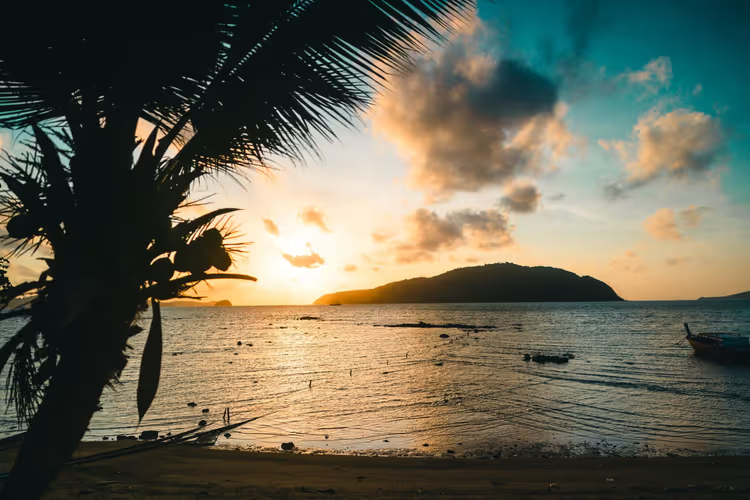
In January, Thailand greets tourists with two different kinds of weather. The west coast is in its dry season, while the eastern islands get rain. Your choice of resort determines whether you get a beach vacation or a week under an umbrella.
Phuket in January is dry and sunny: around 32.7 °C during the day, with rain only 4-5 times a month (as of: Phuket climate, TMD). On Samui, the same month brings 127 mm of precipitation and plenty of overcast skies. Below, we break down where it's dry in January, where it rains, and what water temperatures you'll find comfortable for swimming.
Where to go in January
💡 In short:
- For a dry beach and calm sea, choose the Andaman coast: Phuket, Krabi, Phi Phi, Khao Lak.
- For quiet and greenery, but with a risk of rain, pick the Gulf of Thailand islands: Samui, Phangan, Tao.
The weather on the two coasts differs dramatically in the same month. Compare the table.
Resort | Daytime | Nighttime | January rainfall |
|---|---|---|---|
Phuket, Andaman | 32.7 °C | 24.5 °C | 30 mm |
Samui, Gulf of Thailand | 29.0 °C | 24.2 °C | 127 mm |
Data from Phuket (1981-2010) and Samui (1991-2020) weather stations. The difference in precipitation is nearly fourfold, so these numbers are what you should use to choose your destination.
Andaman coast: dry season in full swing
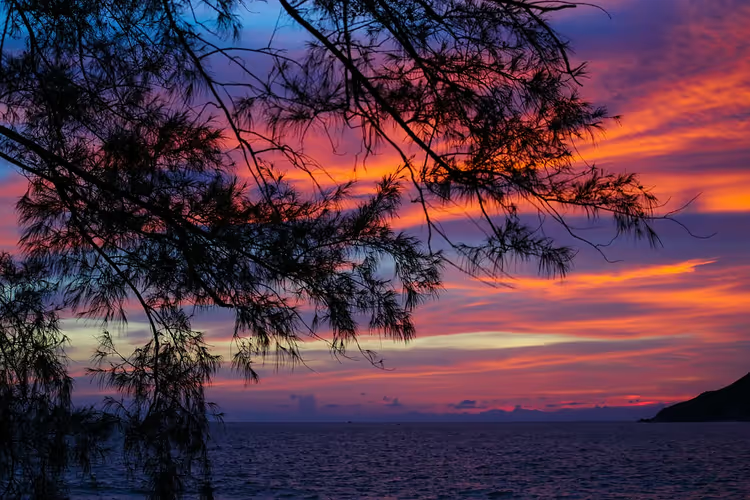
From December to March, the Andaman Sea stays dry. Phuket, Krabi, and Phi Phi host the bulk of tourists, and the sea remains calm. Precipitation is low: Phuket gets about 30 mm for the entire month of January, with rain on 4-5 days (as of: Phuket weather station). The sun shines for about 7.6 hours a day, and humidity stays around 70%.
 © Phuket@photographer.net from Phuket, Thailand · CC BYPhoto: Phuket@photographer.net from Phuket, Thailand, CC BY (https://creativecommons.org/licenses/by/2.0), Wikimedia Commons
The resorts on this coast attract different crowds. Phuket suits those who want a wide choice of hotels and restaurants. Krabi and Railay are loved for their cliffs and secluded beaches. You visit Phi Phi and the Similan Islands as a day trip from Phuket or Krabi.
- Who it's for: beach vacations, snorkeling, and diving in calm water.
- The catch: January is peak season here, with few available hotels, so book in advance.
The western sea rarely gets rough in January. Water clarity is high, so definitely bring a mask and snorkel. Keep in mind that Phuket's popular beaches fill up during the day, so it's better to arrive in the morning.
Upper gulf: Pattaya, Hua Hin, and Bangkok
The upper part of the gulf works differently. Pattaya and Hua Hin sit in the upper section, where the northeast monsoon barely reaches. As a result, January here is dry and sunny, with rare rain. The sea is calm, and swimming is comfortable even with children.
 © mapconcierge · CC BY-SAPhoto: mapconcierge, CC BY-SA (https://creativecommons.org/licenses/by-sa/4.0), Wikimedia Commons
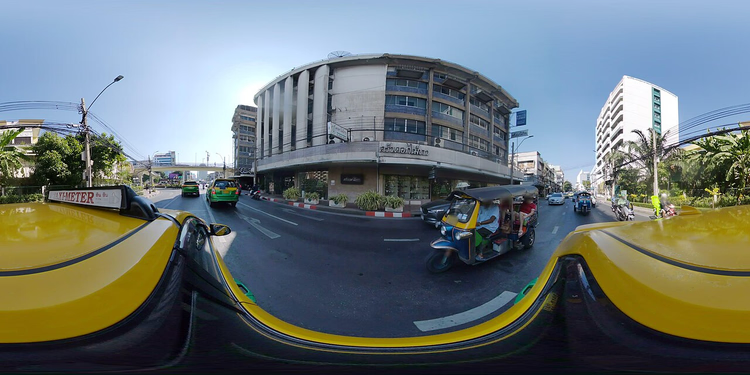
Bangkok is not a beach resort; it stands away from the sea. For a beach, you travel from the capital to Pattaya or Hua Hin. In the city itself, January is considered one of the most pleasant months: the heat eases, and you can take long evening walks.
- Who it's for: short getaways near Bangkok and city sightseeing.
Samui, Phangan, and Tao: a month of rain
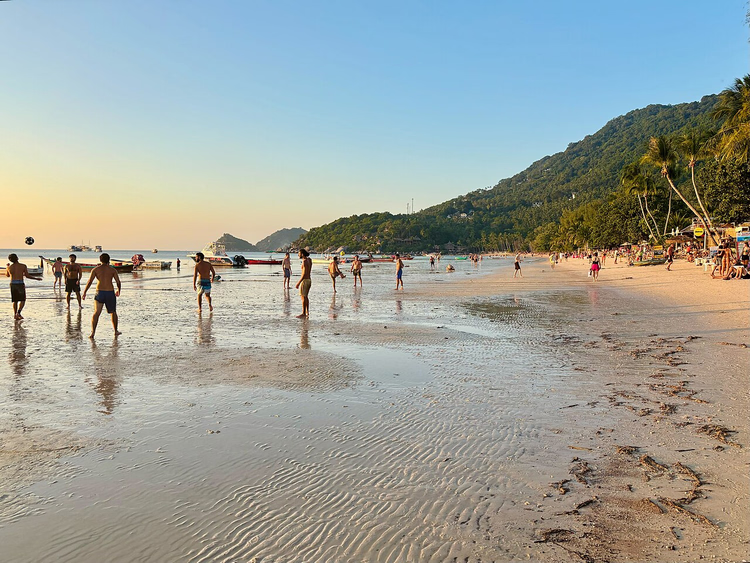
The lower Gulf of Thailand runs on a different schedule. On Samui, January brings 126.8 mm of precipitation, with rain on 8.5 days during the month (as of: Samui weather station, WMO). Daytime temperatures reach 29 °C, dropping to 24.2 °C at night.
 © kallerna · CC BY-SAPhoto: kallerna, CC BY-SA (https://creativecommons.org/licenses/by-sa/4.0), Wikimedia Commons
The peak of the rains on Samui falls in October, November, and December. In January, downpours still occur but become noticeably shorter (according to Samui weather station). A single downpour usually lasts 20 to 60 minutes, and then the sun comes out again. You can still get a beach day, but keep your plans flexible.
- Who it's for: those who want greenery, jungle, and fewer tourists.
- The catch: the risk of rain is higher than on the Andaman coast, and the sea can be rough.
The islands of Phangan and Tao follow the same rhythm. Divers still head to Tao in January because visibility inside the gulf is acceptable at this time. If rain is a dealbreaker for you, plan these islands for February or spring.
Water temperature in January
The water in January is warm on both coasts, but there is a difference. On Phuket, the average sea temperature stays around 28.5 °C (as of: seatemperature.info). On Samui, the water is slightly cooler, around 27.9 °C (seatemperature.info).
Minimum values on individual days don't drop below 26-27 °C (as of: seatemperature.info), so you won't need a wetsuit. For snorkeling, the Andaman Sea is more comfortable: the water is both clearer and warmer. In the upper gulf near Pattaya, the water is usually one to two degrees cooler due to river runoff.
What to pack and how to book
January is high season in Thailand, so book your hotel and flights in advance. From our travel experience, the best time to buy is two to three months before departure, when options are still plentiful and prices haven't risen yet.
- High-SPF sunscreen, a hat, and sunglasses: the sun is strong in January.
- A light rain jacket for the gulf islands and excursions.
- Insect repellent for evening walks.
On the Andaman coast, a swimsuit and sandals will be enough, but for temples bring clothing that covers your shoulders and knees. If you're traveling with children, choose Phuket or Pattaya: they have more hotels with pools.
⁉️🤔 Frequently asked questions
What's the weather like in Thailand in January?
In January, Thailand has a dry season in the west and a rainy one in the east. Phuket is hot with almost no rain (as of: Phuket station weather data). On Samui, rain is noticeably more frequent in January. Average water temperature stays around 28 °C on both coasts.
Where in Thailand is there no rain in January?
Look to the Andaman coast: Phuket, Krabi, Phi Phi, and Khao Lak. There, the dry season runs from December to March, with rain only a few days a month. The upper gulf is also dry: Pattaya and Hua Hin are sunny in January. Samui, however, still falls under the monsoon in January.
Can you swim in Thailand in January?
Yes, swimming is comfortable along the entire coast. The water on Phuket is slightly warmer than on Samui. You don't need a wetsuit.
Is Samui worth visiting in January?
It is, if you're ready for changeable weather. Rain is more frequent than on the Andaman coast, but downpours are usually short. In return, the island is green, hotels are cheaper than on Phuket, and there are fewer tourists. If you want guaranteed sunshine, choose the Andaman coast.
What's the weather like in Bangkok and Pattaya in January?
In Bangkok, January is considered one of the most pleasant months: the heat eases and there's little rain. The city itself is not on the sea, so for a beach you travel to Pattaya or Hua Hin. There, January is sunny and the sea is calm. The water near Pattaya is usually one to two degrees cooler than on Phuket.
In short: what to book
January offers two different vacations. If you need guaranteed sunshine and a calm sea, choose Phuket, Krabi, or Khao Lak. If you want greenery, diving, and fewer tourists, head to Samui, Phangan, or Tao. For a short trip near Bangkok, Pattaya and Hua Hin work well.
Pick the coast that matches your weather preferences and don't put off booking until the last week.

A small editorial team writing guides for independent travel. We travel ourselves, but we haven’t been everywhere, so we check prices, opening hours and how to get there against official sources.