
















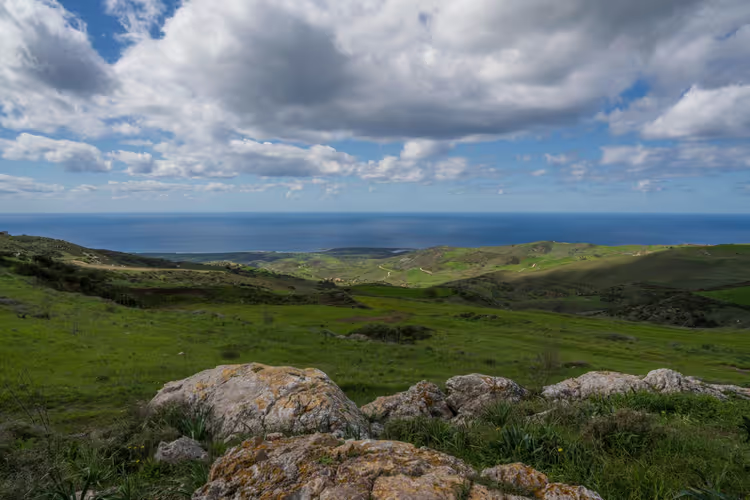
When to go to Cyprus: six months of warm sea and skiing on Troodos
Cyprus has a longer beach season than people usually think. The sea stays warm here for almost half a year, and in winter the mountains open their ski season. Everything depends on the month you travel, and getting the dates wrong changes your vacation more than your choice of hotel.
In open water, the sea stays above 22 °C from June through November, and in August it rises to 27 °C (summary from the Cyprus tourism portal, as of 09/2026). The island's dry summer runs from mid-May to mid-October, while winter lasts from December through February and remains mild (same source). So you can plan a beach vacation from spring through late autumn.
Resorts sit by the sea almost everywhere: there are beaches in Paphos, Limassol, Larnaca and Ayia Napa. There is one exception. Nicosia, the capital, lies in the center of the island. Below is a month-by-month breakdown: air, water, and who each month suits.
Ad: this article contains affiliate links, we earn a commission if you book through them, at no extra cost to you.
Beach season in Cyprus
💡 In short:
- Swimming is comfortable from June through November, with the warmest water in August (tourist office data, 09/2026).
- Peak heat falls in July and August: average daytime temperature is 30 °C on the plain and 24 °C in the Troodos mountains, with average highs reaching 38 °C and 27 °C (same report).
- Weather and sea: 09/2026, checked on the official Cyprus tourism portal.
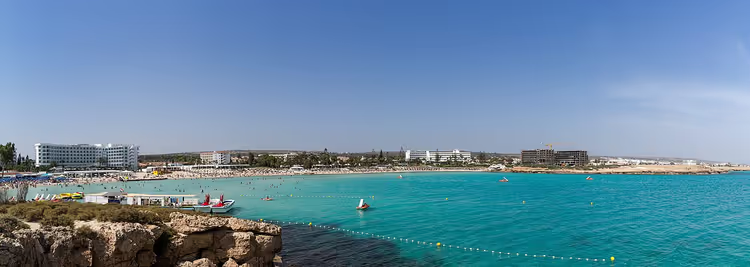
There is almost no rain in summer, so you can make beach plans without watching the forecast (climate report, 09/2026).
 © dronepicr · CC BYPhoto: dronepicr, CC BY (https://creativecommons.org/licenses/by/2.0), Wikimedia Commons
Humidity is low in summer: at midday on the plain it drops to 15-30%, so you handle the heat more easily than in muggy cities (tourist office report). The second factor is people. In high season, hotels get more expensive, and by lunchtime there are no free loungers left on popular beaches.
May: warm days and cool evenings
In May it is warm during the day, but you need a light sweater in the evening: the tourist office recommends summer clothing plus long sleeves for the evening in April and May (May report). The water does not warm up right away. Swimming depends on the weather in any given week.
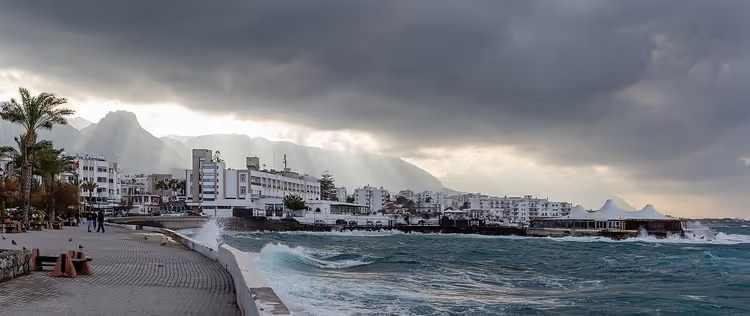
If you value sightseeing and empty beaches, go in the first half of the month. There is no heat yet, and you can explore monuments and waterfronts without queues. The sea in May is cool, but the beaches are empty.
 © Michal Klajban · CC BY-SAPhoto: Michal Klajban, CC BY-SA (https://creativecommons.org/licenses/by-sa/4.0), Wikimedia Commons
June: the most even month
From June, the sea rises above 22 °C and stays warm until November (island report). June is milder than July: the air is already warm, but there is no 30 °C-plus scorching heat yet.
This month suits you if you want to swim every day and not have to hunt for shade by lunchtime. Divers choose early June: the beaches are not yet crowded, and the water is already warm. You get a full beach season without the August crush.
Summer in Cyprus: July and August
July and August are the core of the season. There is the most sun, no rain, and accommodation prices are at their peak.
July: heat and early sightseeing
July is one of the hottest months. The average daytime temperature on the plain is around 30 °C, in the mountains around 24 °C. The average high reaches 38 °C on the plain and 27 °C in the mountains (July summary, 09/2026). The sea is so warm that by evening you barely feel any coolness in it.
Beach time in July revolves around morning and evening. Book excursions early, and at midday retreat to the shade, a museum, or your room. Overheating here is common.
 © Michal Klajban · CC BY-SAPhoto: Michal Klajban, CC BY-SA (https://creativecommons.org/licenses/by-sa/4.0), Wikimedia Commons
August: 27 °C sea and festivals
In August the heat is dry, and the open sea warms to 27 °C, in places near the shore to 28 °C (tourism portal data). Beaches are at their busiest this month, so you claim your spot by the water in the morning.
August also brings events: the wine festival in Limassol and music evenings in Paphos. Check dates in the Cyprus tourism portal events calendar.
Shoulder season: September and October
September and October mean a warm sea without exhausting heat. Both months suit trips with children and long walks.
September: the water is still warm
In September the weather is milder, while swimming and water sports remain at their best (September data, 09/2026). Beaches are less crowded than in August. You notice it in cafes and on the promenades.
Hotels for September are booked in advance, so it is worth checking hotels for these dates on Trip.com in early summer.
October: warm days, cool evenings
In October the days are still warm, while the evenings turn cool, and a light jacket will come in handy (tourist office).
For exploring the island, October works better than summer: the heat is gone, and rain is still rare. You can walk around towns on foot without getting tired.
 © up4k · CC BYPhoto: up4k, CC BY (https://creativecommons.org/licenses/by/3.0), Wikimedia Commons
Late fall and winter: November, December, and January
In winter the island does not shut down. Temperatures drop, but the sun remains, and part of your vacation moves into the city and the mountains.
November: the last month for swimming
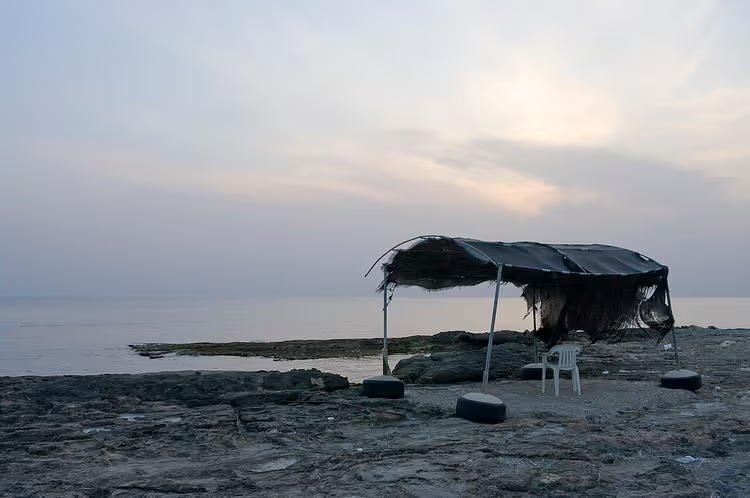
In November it is warm by day and cool by evening. The tourist office writes that this month you can dine outdoors, sunbathe, and even swim (seasonal summary). There are noticeably fewer swimmers in November.
If you dislike crowds and want to walk around the island on foot, November suits you better than September. The weather stays steady.
 © altgiperon · CC BYPhoto: altgiperon, CC BY (https://creativecommons.org/licenses/by/3.0), Wikimedia Commons
December and January: mild winter and skiing
January is the coolest month: around 10 °C during the day on the plain and 3 °C in the mountains, while average lows stay at 5 °C and 0 °C (winter data from the tourist office, 09/2026). The sun still shines for an average of six hours a day.
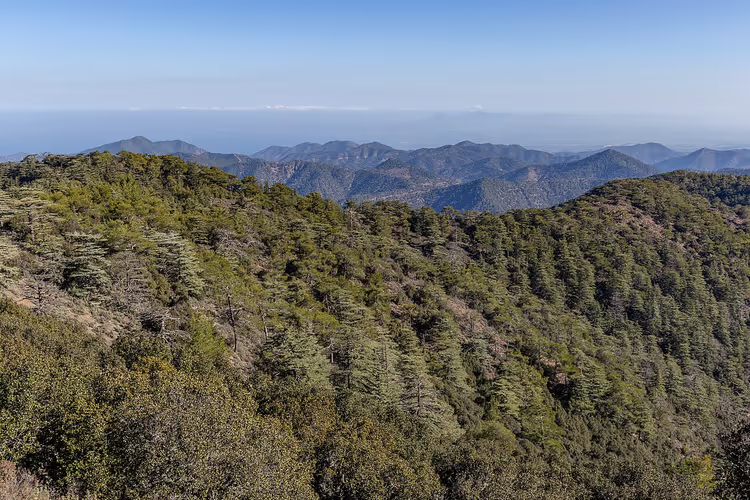
Snow in the Troodos mountains usually falls before Christmas. In winter, you can combine walks by the sea with skiing.
Spring in Cyprus: February through April
Spring starts early. Instead of heat, the island gets blossoms, and the beaches gradually come back to life.
February and March: almond blossoms and skiing
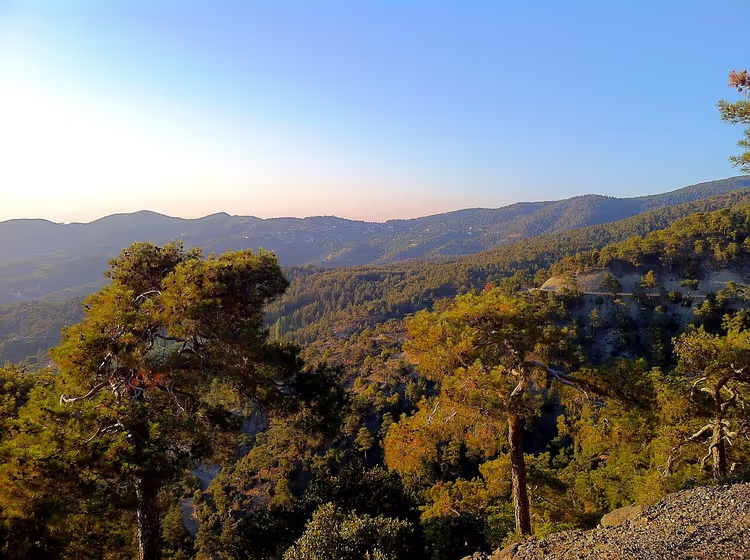
In February the weather is changeable, but almond trees are in bloom, and the tourist office calls the skiing conditions on Troodos ideal (summary). March brings more sun, and it is a good time for long walks.
Both months are too cold for swimming: from January through March the water stays at 16-17 °C (climate of Cyprus).
 © Tech bro · CC BY-SAPhoto: Tech bro, CC BY-SA (https://creativecommons.org/licenses/by-sa/3.0), Wikimedia Commons
April: a green island before summer
April is the last cool month before summer. It is warm during the day and fresh in the evening, so a light jacket will come in handy.
Nature peaks in April: the tourist office calls this the best time for nature, when the island is green and everything is in bloom (spring summary). Beaches are open, but the water remains cool after winter.
⁉️🤔 Frequently asked questions
When does the swimming season start in Cyprus?
Swimming is comfortable from June through November: according to the Cyprus tourism portal, open-sea water stays above 22 °C (island climate). In May the water does not warm up right away, although swimmers already appear. If you are going in May, add excursions to the beach so the weather does not decide for you.
What is the hottest month in Cyprus?
July and August. The average daytime temperature on the central plain is around 30 °C, and the average high reaches 38 °C. In the Troodos mountains it is several degrees cooler (same tourist office data, 09/2026). In August the sea warms up to 27 °C. Low humidity and the sea breeze soften the heat.
Can you swim in Cyprus in November?
Yes. November is the last month when open-sea water stays above 22 °C (season summary). It is warm during the day, you need a jacket in the evening, and you can have lunch outdoors. For those who dislike crowds, this is a good time: beaches are empty, and the sun shines almost every day.
Where can you ski in Cyprus?
In the Troodos mountains, in the center of the island. Snow usually falls there before Christmas, and the tourist office calls February the best time for skiing (climate). The season is short, so check the dates before your trip. You can rent jackets and equipment on site.
When should you go to avoid the heat and the crowds?
September and October: the sea is still warm, and beaches and cafes are calmer than in August. May suits you if excursions matter more to you than swimming. In February and March you get plenty of sun and a blooming island, but the water stays cold.
In short: what to book
Cyprus welcomes visitors all year round, so choose the month based on your trip.
- If you want sea and heat: July or August, a hotel with a pool, and excursions in the morning.
- If you want a warm sea without scorching heat: September or October.
- If you want blooming landscapes and walks: April and May.
- If you want skiing: February and the Troodos Mountains.
Book accommodation for the high season in advance, otherwise the options will narrow down to expensive ones. Check Cyprus hotel prices on Trip.com and island excursions on GetYourGuide.

A small editorial team writing guides for independent travel. We travel ourselves, but we haven’t been everywhere, so we check prices, opening hours and how to get there against official sources.