
















Thailand in July: where there is less rain and which coast to choose
In July, Thailand looks different from the advertising photos. Sun and downpours replace each other several times a day. A typical beach vacation does not work this way, but the heat is easier to bear than in April.
During the day, the air stays around 30 °C, the water cools only to 28 °C, and rains come often, although their peak falls in September and October. The difference between the coasts in summer is huge, and almost everything depends on your choice of resort. Below you will find figures for each region, the honest catches of the season, and our vacation plan.
Ad: this article contains affiliate links (we earn a commission if you book through them, at no extra cost to you).
What happens to the weather in July
💡 In short:
- July opens the peak of the southwest monsoon: the wind pulls moisture from the Indian Ocean straight onto the Andaman coast.
- Downpours are short and powerful, with sun quickly appearing between them and drying the sand.
- Weather and precipitation: 09/2026, according to the Thailand climate overview.
Summer rains in Thailand do not fall the way they do in Europe. One downpour usually lasts from twenty minutes to two hours. After it, the sky is blue again, and puddles dry very quickly on hot asphalt. That is why experienced travelers do not cancel a trip because of a rainy forecast.
Humidity in July is high, and sweat evaporates more slowly than in the dry season. But the thermometer rarely rises above 33 °C. The risk of heatstroke in midsummer is noticeably lower if you wear a hat and drink more water.
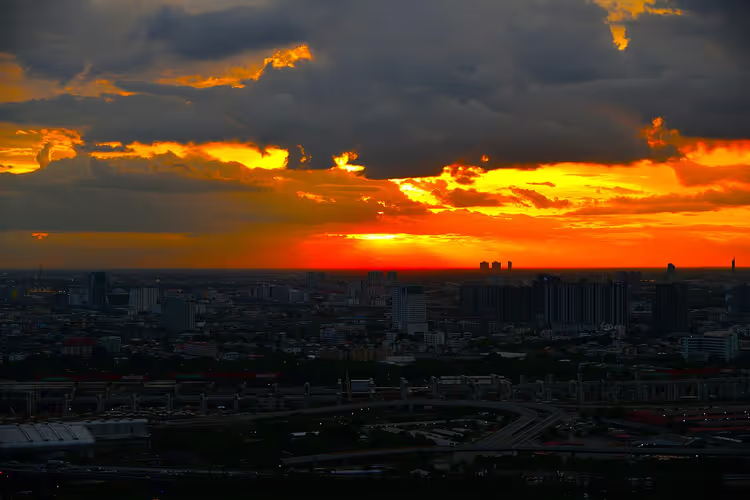
The country's two coasts behave differently on the same day. The Andaman Sea (Phuket, Krabi) receives the bulk of the monsoon rainfall. The Gulf of Thailand (Samui, Pattaya, Bangkok) stays noticeably drier. On the beaches of Samui and Pattaya, the swimming season is in full swing.
 © Trisorn Triboon · CC BY-SAPhoto: Trisorn Triboon, CC BY-SA (https://creativecommons.org/licenses/by-sa/4.0), Wikimedia Commons
Weather by region: comparison
Comparison across the main resorts:
Region | Daytime, °C | Nighttime, °C | July rainfall, mm | Water, °C |
|---|---|---|---|---|
Phuket and Krabi (Andaman Sea) | around 30 | 25-26 | over 250 | 28-29 |
Bangkok | around 32 | 26 | around 180 | 28-29 |
Pattaya | around 31 | 26 | around 150 | 28-29 |
Samui (Gulf of Thailand) | around 31 | 26 | around 120 | 29 |
Ko Chang (eastern Gulf of Thailand) | around 30 | 25 | 500-900 | 28-29 |
The spread in rainfall is huge even within the Gulf of Thailand (according to the climate summary, 09/2026). If minimal rain matters to you, look at the western islands of the gulf such as Samui and at Pattaya. There you will spend more hours on the beach than on the Andaman coast or on Ko Chang.
Phuket and Krabi: the humid Andaman coast
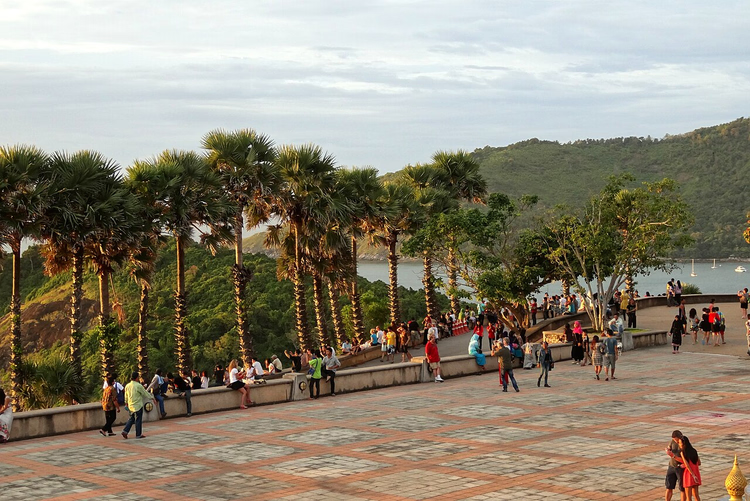
Phuket and Krabi in July are cooler than in winter, but humidity here is at its maximum. During the day around 30 °C, overnight the air cools by only four to five degrees (as of 09/2026, Phuket climate). You will barely feel any nighttime coolness.
 © Mikhail Deynekin · CC BY-SAPhoto: Mikhail Deynekin, CC BY-SA (https://creativecommons.org/licenses/by-sa/3.0), Wikimedia Commons
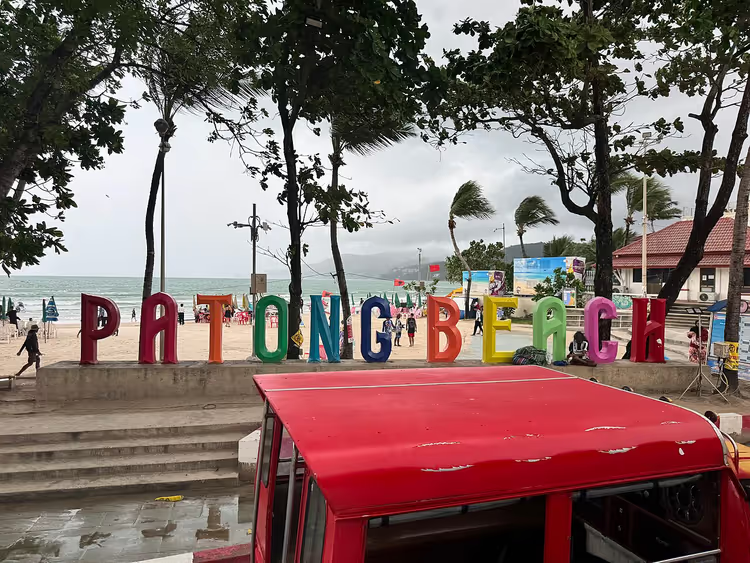
The sea on the west coast is rough. Waves bring out red flags, and swimming outside permitted zones is dangerous. The weather is less suitable for snorkeling than in the high season: after rains, the water is murky near the shore.
On Phuket, over 250 mm of rain falls per month (based on Phuket rainfall data). But the water itself stays warm around the clock, so the beach in the evening is still pleasant.
 © JULIANISME · CC BY-SAPhoto: JULIANISME, CC BY-SA (https://creativecommons.org/licenses/by-sa/4.0), Wikimedia Commons
Gulf of Thailand: Samui, Pattaya, Bangkok
The country's other coast follows different rules. Samui, Pattaya, and Bangkok get less rain, and the sea along their shores is calmer. If you want more sun and fewer wet umbrellas, choose Samui or Pattaya.
Samui gets the least rainfall (as of 09/2026, Samui climate). Pattaya and Bangkok receive 150-180 mm, but downpours come mostly in the afternoon. Keep your mornings for the beach in Pattaya and walks around Bangkok. Plan indoor excursions for after lunch.
Bangkok is worth visiting on its own: a tropical shower cools the air, and walking around the city becomes easier. Keep a light rain jacket handy rather than an umbrella that the wind will turn inside out.
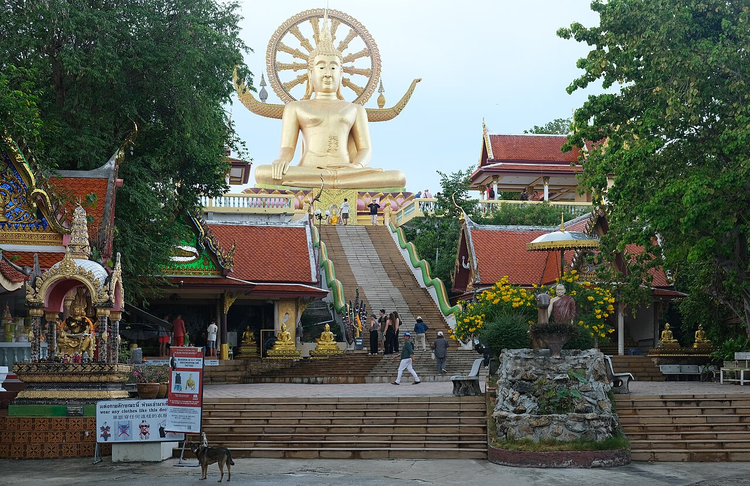 © kallerna · CC BY-SAPhoto: kallerna, CC BY-SA (https://creativecommons.org/licenses/by-sa/4.0), Wikimedia Commons
Ko Chang: the rainiest resort
Ko Chang, in the eastern part of the Gulf of Thailand, stands apart. In July, it gets between 500 and 900 mm of rain (as of 09/2026, Ko Chang climate). It rains almost every day, and showers can last for hours.
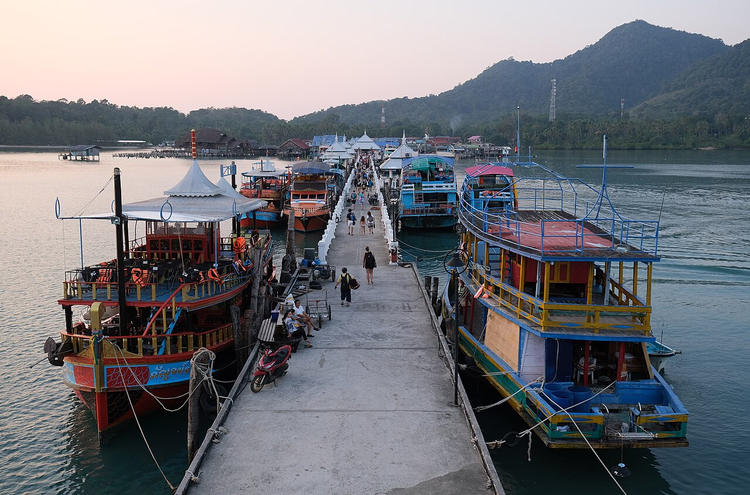 © kallerna · CC BY-SAPhoto: kallerna, CC BY-SA (https://creativecommons.org/licenses/by-sa/4.0), Wikimedia Commons
The upside of this secluded island remains: few tourists, and the jungle looks genuinely tropical. The catch is just as obvious: you plan your beach time with an eye on the sky, so pack a waterproof jacket.
July festivals: fruit and candles
July also marks the start of fruit season. Markets fill with ripe durian, mangosteen, rambutan, and lychee. They are sold by the kilogram, and the selection during these weeks is the widest of the year.
In the second half of July, Ubon Ratchathani province hosts the Candle Festival. Artisans carve huge figures from wax, and decorated floats and dance troupes move through the streets (about the event: article on Ubon Ratchathani province). Check the exact 2026 date with the local tourist office.
 © PattayaPatrol · CC BY-SAPhoto: PattayaPatrol, CC BY-SA (https://creativecommons.org/licenses/by-sa/4.0), Wikimedia Commons
What to bring and how to save
July in Thailand falls in the low season, so accommodation and tour prices are lower than in winter. Carriers and hotels cut their rates, and discounts on hotels in Thailand on Trip.com last for almost the entire month.
Pack a raincoat, non-slip sandals, and quick-drying clothes. Put your electronics in a dry bag: downpours start suddenly. Indoor excursions and cooking classes don't depend on the rain, so they're easy to schedule for the second half of the day.
⁉️🤔 Frequently asked questions
Can you swim in Thailand in July?
You can swim on both coasts because the water stays around 28-29 °C (as of 09/2026, climate normals). There's one restriction: on Phuket and Krabi, red flags go up during rough seas, and entering the water is prohibited at those times. Watch the flags and don't swim far from shore.
Does it rain all day long?
No. Showers are usually short and quickly give way to sun. The most rainy days are on Koh Chang and Phuket, where monthly rainfall ranges from 250 to 900 mm (according to the climate overview). Plan walks for the morning.
Where is it driest in July?
The driest place is Koh Samui: about 120 mm of rainfall per month. Pattaya and Bangkok come next. If stable weather matters to you, start with Koh Samui and Pattaya, and only then consider the Andaman coast.
Is it worth going with kids?
Yes, because there's no exhausting heat and the risk of overheating is lower. However, humidity is high and downpours arrive suddenly. Bring light raincoats and plan swimming for the morning, when the sea is calmer. That way you'll fit in both the beach and a walk through the market.
Do you need to book a hotel in advance?
In July, hotels have more availability than in high season, and prices are lower. Booking two weeks ahead is usually enough, but popular weekends on Koh Samui sell out faster. Check cancellation policies, because weather can change your plans.
In short: what's worth booking
July suits those who are ready for rain and want to save money. Pick the coast that fits your scenario, and your vacation won't disappoint.
- If you want minimal rain: choose Koh Samui or Pattaya.
- If you're ready for waves and greenery: look at Phuket and Krabi.
- If you're looking for seclusion: head to Koh Chang and bring a raincoat.
If you want to add excursions to your trip, check out tours and tickets on GetYourGuide: some programs take place indoors and don't depend on the rain.

A small editorial team writing guides for independent travel. We travel ourselves, but we haven’t been everywhere, so we check prices, opening hours and how to get there against official sources.