
















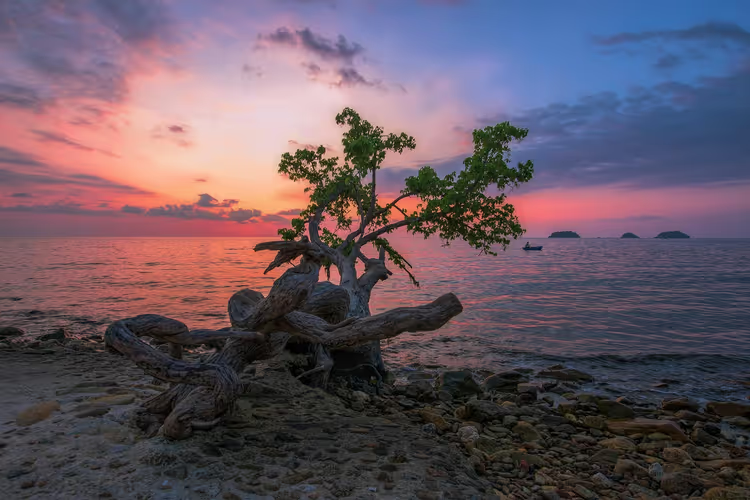
Weather in Thailand in August: where it is drier and where to go
August in Thailand is the middle of the rainy season. A vacation this month is still possible.
The monsoon brings moisture in two different streams. One drenches the Andaman coast, while the other barely touches Samui. The difference between the coasts is greater than standard forecasts show.
Below is a breakdown of five resorts in the country: Bangkok, Pattaya, Samui, Phuket, and Phi Phi. You will see where it rains more often, what weather to expect at sea, and where to go for sun.
What happens to the weather in August
💡 In short:
- August is the middle of the southwest monsoon: rain is frequent but usually short.
- The Gulf of Thailand is drier than the Andaman coast.
The monsoon arrives from the southwest and runs through October. In August it gains strength, and rain becomes part of the daily rhythm. Dry windows in the schedule appear almost every day, but predicting them in advance is difficult.
Air temperature barely changes from month to month. In Bangkok, daytime highs stay around 33 °C, and the sea is warm year-round (as of 09/2026, 1991-2020 normals for Bangkok). The difference between August and February is not in the sea but in the amount of water in the air. So plan your vacation around the rain, not the heat.
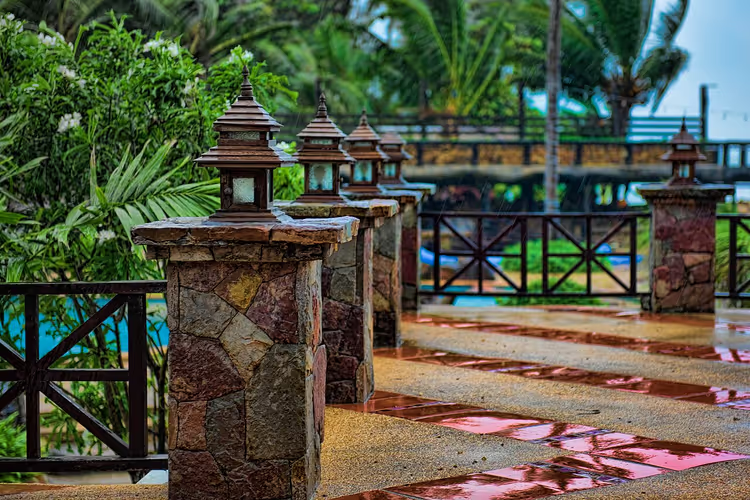 © cloud.shepherd · CC BYPhoto: cloud.shepherd, CC BY (https://creativecommons.org/licenses/by/2.0), Wikimedia Commons
August by resort: table
Resort | Rain in August | Daytime | What it means for you |
|---|---|---|---|
about 227 mm over 16 rainy days | about 33 °C | schedule transfers and temples for the morning | |
Pattaya | frequent downpours, water on the streets | hot and humid | keep a spare pair of shoes |
drier than Phuket and Pattaya | about 30 °C | beach morning, evening downpour | |
about 287 mm over 19 rainy days | about 32 °C | waves, swimming depending on weather | |
Phi Phi | like Phuket, but in short bursts | warm | catch the morning windows |
Sources by line: climate summaries from the meteorological service of Thailand and NOAA, period 1991-2020 (as of 09/2026).
Bangkok: rain in the big city
August in Bangkok is one of the wettest months of the year. During the day the air warms up to 33 °C, at night it cools only to 26 °C, and humidity stays around 76% (as of 09/2026, Bangkok climate normals). About 227 mm of rain falls over 16 days during the month. The peak comes in September, when the norm reaches 336 mm.
 © Preecha.MJ · CC BY-SAPhoto: Preecha.MJ, CC BY-SA (https://creativecommons.org/licenses/by-sa/4.0), Wikimedia Commons
Downpours here are short but dense. Water in low-lying areas doesn't linger long and drains away within a few minutes. Don't take a taxi during a downpour: cars get stuck in traffic, and you lose an hour. Go to the nearest cafe or switch to the Skytrain, which rides above the congestion.
For temples, August is no obstacle. In the morning the air is cleaner, and there are fewer people at the entrance to the Temple of the Emerald Buddha (Wat Phra Kaew). Wait for opening, see the main hall, and return to the hotel before noon. Check the forecast on the meteorological service website before leaving the hotel.
Pattaya: wet season in full swing
Pattaya sits on the eastern shore of the Gulf of Thailand, where August is the height of the wet season. Rain falls often but rarely lasts the whole day. The sky clouds over in the morning, pours around midday, and clears again.
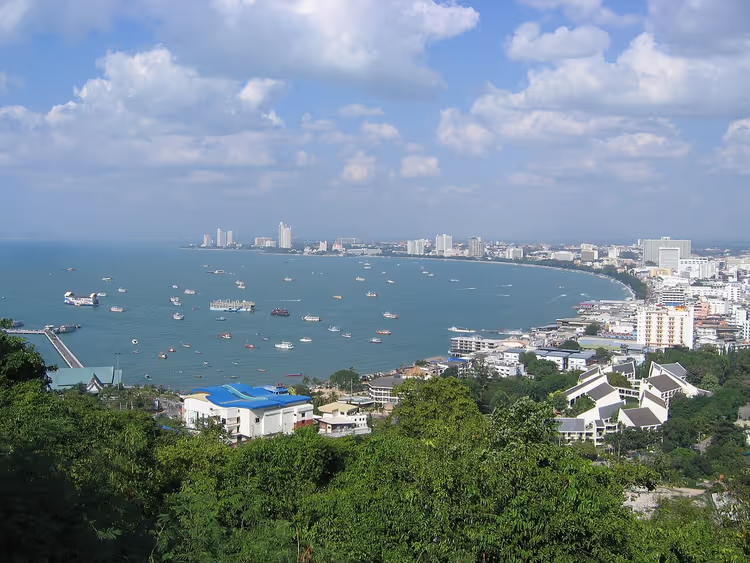 © Sergey S. Dukachev · CC BY-SAPhoto: Sergey S. Dukachev, CC BY-SA (https://creativecommons.org/licenses/by-sa/3.0), Wikimedia Commons
Pattaya's main feature: water on the streets. A downpour floods low-lying areas near Beach Road, but the water drains away within a few minutes. Bring shoes without leather and a waterproof backpack, and half of August's inconveniences will stop bothering you.
Mosquitoes appear after rain, so keep repellent close at hand. The sea in the gulf is calmer than on the Andaman coast: waves are smaller here, and swimming is easier. If you want to visit the islands, pick a day without a storm and don't plan to return late in the evening.
Samui: drier than the west
Samui lies in the Gulf of Thailand, and that changes the whole picture. The island receives about 1,960 mm of precipitation per year versus 2,220 mm on Phuket (as of 09/2026, Wikipedia). Only two months of the year bring more than 212 mm of rain here, and the wettest period falls in mid-October, which is after your vacation.
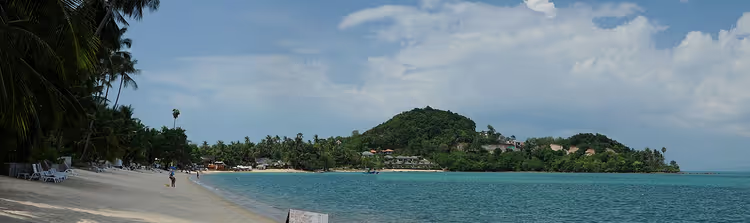 © Ssuri · CC BY-SAPhoto: Ssuri, CC BY-SA (https://creativecommons.org/licenses/by-sa/3.0), Wikimedia Commons
In August, rain on Samui is short. A typical downpour lasts 20-60 minutes and more often arrives toward evening (as of 09/2026, Wikipedia). During the day the sea is calm, the water is warm, and Chaweng and Bophut beaches remain the island's main spots.
Plan your day properly. In the morning, go to the beach while there's sun and calm water. After lunch, move your outings to cafes, the market, or Na Muang waterfall. In the evening, take an umbrella: a short shower at the resort is normal, not a ruined vacation.
Phuket: waves and surfing
Phuket in August is wetter than other popular resorts in the country. The Mueang Phuket area receives about 287 mm of precipitation over 19 rainy days, around 32 °C during the day, around 25 °C at night, humidity around 79% (as of 09/2026, Wikipedia). At the airport weather station the numbers are higher: about 330 mm over 20 rainy days.
The sea on the west coast is rough. The southwest wind raises waves, and currents appear near the shore. For families with small children, this is the main catch of the month: swimming with a toddler in such water is inconvenient and unsafe.
Surfers, however, like August. On the western beaches the waves hold steady, and there are fewer people in the morning. Check the wave report before heading out and keep your camera in a waterproof bag: a downpour on the beach starts quickly.
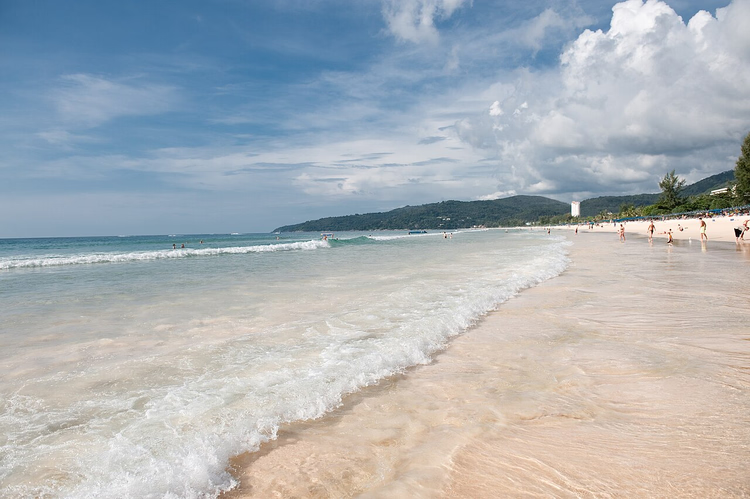 © Айрат Хайруллин · CC BYPhoto: Айрат Хайруллин, CC BY (https://creativecommons.org/licenses/by/3.0), Wikimedia Commons
Phi Phi: short showers and ferries
The Phi Phi Islands live under the same rainy regime as Phuket. The rhythm is different: on Phi Phi, rain more often comes in the evening and at night, while the morning stays clear.
You get here by ferry from Phuket or Krabi. In August, the schedule depends on the waves: in strong wind, departures are canceled. Don't schedule the transfer on your departure day; leave a one-day buffer.
On the islands, take boat excursions in the morning. After lunch the wind picks up, and boats return earlier. For snorkeling, choose a day with calm water and a bay sheltered from the wind.
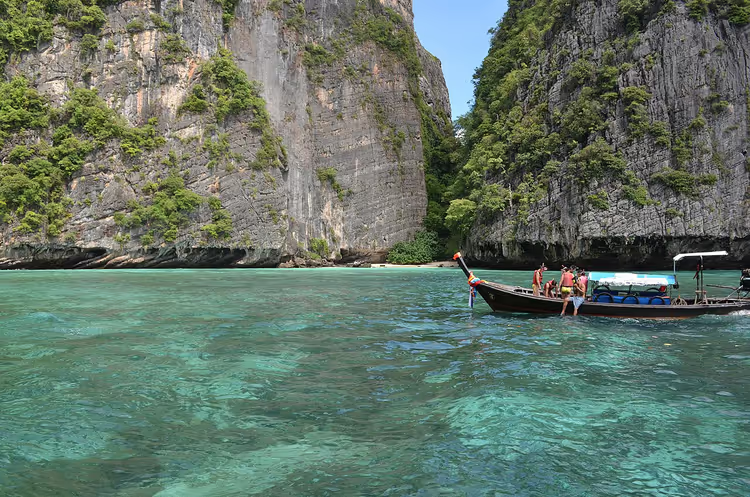 © Luxure · CC BYPhoto: Luxure, CC BY (https://creativecommons.org/licenses/by/3.0/au/deed.en), Wikimedia Commons
Similan and Surin Islands are closed until October 15
If August means diving for you, keep the official restriction in mind. Thailand's Department of National Parks closes the Similan and Surin Islands for five months, from May 16 to October 15, 2026 (as of 09/2026, Wochenblitz). The reason is twofold: reef recovery and tourist safety during the monsoon season.
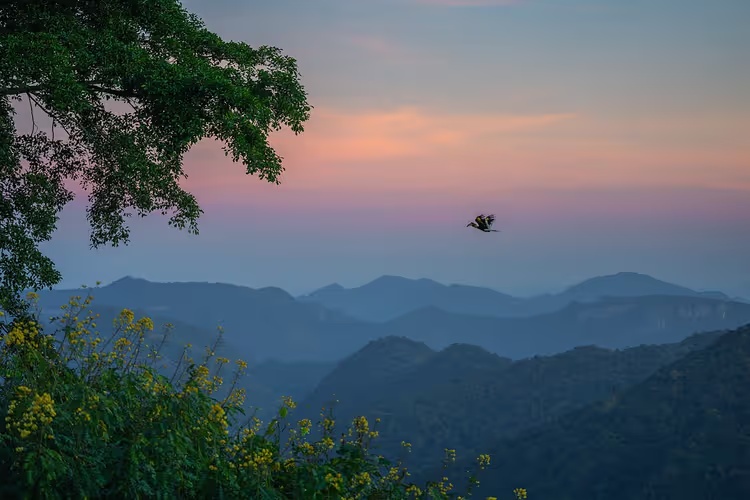 © PonlawatThai · CC BY-SAPhoto: PonlawatThai, CC BY-SA (https://creativecommons.org/licenses/by-sa/4.0), Wikimedia Commons
In practice, this means a simple rule: liveaboards and day trips to the Similans do not run in August. Choose other destinations. Phi Phi, Krabi, and the bays around them operate year-round, and local dive centers offer sites close to shore. Check the schedule in advance so you don't lose a day at the pier.
How to plan a vacation in August
Six simple rules can save your trip during the rainy season.
- Plan beach time and excursions for the morning: the chance of rain increases by midday.
- Bring a light rain jacket and quick-drying clothes; an umbrella is useless in the wind.
- Leave one free day for travel: ferries and domestic flights depend on the weather.
- Keep your phone and documents in a waterproof bag.
- Bring repellent: mosquitoes are active after rain, especially in Pattaya.
- Check the weather service forecast every morning.
One more tip: don't try to cover three resorts in a week. In August, travel eats up time, and the weather makes its own adjustments. Pick one base and build your plans around it.
⁉️🤔 Frequently asked questions
Does the weather in Thailand in August vary a lot by region?
Yes, the difference between the coasts is bigger than it seems. The Andaman coast, meaning Phuket and Phi Phi, gets noticeably more rain. Koh Samui in the Gulf of Thailand lives with short downpours of 20-60 minutes (as of 09/2026, Wikipedia).
Is it worth going to Phuket in August with kids?
For a beach vacation with little ones, August is not the best month. Waves, currents, and frequent downpours make swimming harder, and the sea is rarely calm. For surfing, walks, and trips around the island, the month works if you are ready to adjust to the forecast every day.
Which resort should I choose if I want more sun?
Look at Koh Samui. It gets less rain than Phuket, and the wettest period falls in mid-October. Bangkok and Pattaya are also wet in August, but the downpours there are short.
What to pack for August?
A raincoat, quick-drying clothes, a waterproof phone pouch, and insect repellent. Leather shoes in Pattaya and Bangkok fall apart quickly, so bring a spare pair. Also check that your insurance covers active recreation, otherwise snorkeling will be left without protection.
Which islands are closed in August?
The Similan and Surin Islands are closed until October 15, 2026. Neither liveaboards nor day tours go there. Phi Phi, Krabi, Koh Samui, and Pattaya are open in August. Ferries to the islands get canceled in strong winds, so leave a one-day buffer.
In short: what to book
August divides Thailand into two zones, and the choice of resort matters more than the forecast. If dry weather is important to you, pick Koh Samui: downpours there are short, and the rainfall peak comes only in October. For surfing and waves, go to Phuket; for the city and temples, to Bangkok; and for a calm bay, to Pattaya. Leave Phi Phi for a short morning trip.
Book accommodation with free cancellation and leave a one-day buffer for transfers. In the rainy season, a flexible plan is worth more than any room upgrade, and you keep the freedom to change resorts based on the weather.

A small editorial team writing guides for independent travel. We travel ourselves, but we haven’t been everywhere, so we check prices, opening hours and how to get there against official sources.