
















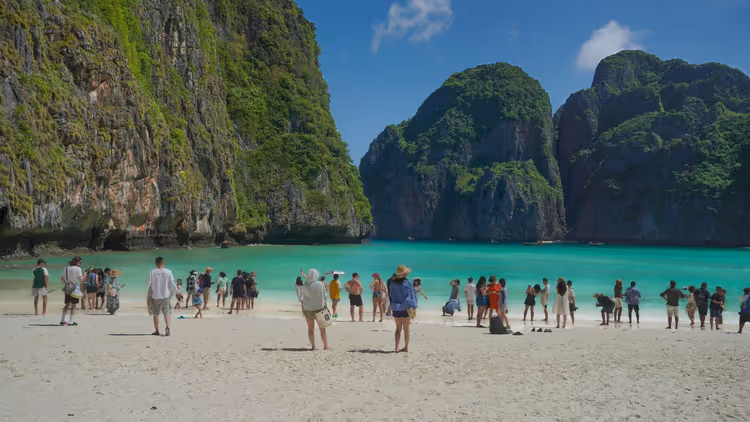
Weather in Thailand in June: where it is dry and where to go
In June, Thailand changes beyond recognition, and the culprit is the monsoon with its downpours, wind, and waves. Along with the bad weather come low prices and half-empty beaches.
Choosing the right region matters more here than your vacation month: in the west it rains almost daily, while in the Gulf of Thailand those same days stay dry. Another reason to go: Loei province hosts the Ghost Festival.
Below, we break down the weather by region and show where you can swim without red flags and what to keep in your backpack in case of a downpour.
Ad: this article contains affiliate links. We earn a commission if you book through them, at no extra cost to you.
Thailand in June: monsoon and low season
June opens the rainy season across almost the entire country. During the day the air warms above 30 °C, at night the temperature rarely drops below 24 °C, and the sea near the shore stays around 29-30 °C (as of 09/2026, ADAC climate table).
Downpours come in short bursts: water drains away quickly into storm sewers, and the sun returns within an hour. That is exactly why low season does not mean a ruined trip: hotels and flights in June are cheaper than from November to March, and there are almost no lines at ticket counters.
Clouds do not protect you from sunburn and create a dangerous illusion: under them, skin burns just as fast as on a clear day. Use high-SPF sunscreen every time you go outside.
After downpours, midges and mosquitoes breed, as wet grass and standing water suit them perfectly. Repellent will come in handy on the beach, at the hotel, and on an evening walk.
💡 In short:
- Swim in the Gulf of Thailand: Samui, Phangan, Tao.
- On Phuket, choose the east coast rather than the sunset side.
- Save mornings for excursions, because rain usually comes in the evening.
- Climate and rainfall by region: checked 15.09.2026, ADAC monthly summary.
Andaman coast: Phuket and Krabi
The west coast takes the brunt of the monsoon. In Phuket and Krabi it rains almost every other day, and the sea builds up high waves. Calm windows do happen, but they rarely last more than a couple of hours.
 © Preecha.MJ · CC BY-SAPhoto: Preecha.MJ, CC BY-SA (https://creativecommons.org/licenses/by-sa/4.0), Wikimedia Commons
Swimming in this weather is possible, but with caveats. Red flags on beaches are not put up for decoration. Rip currents in June are strong and carry away even confident swimmers. Listen to lifeguards and do not swim past the buoys.
Hotels in low season lower their prices, and staff work at a more relaxed pace. Check Phuket hotel prices on Trip.com in advance: the June selection is wider than in February.
East coast of Phuket: where it is calmer
On Phuket, look for the east coast. While the west is stormy, in the Chalong, Panwa, and Siray areas the sea is noticeably calmer and the sky stays clear more often. This is where hotels with swim areas free of red flags are located in June.
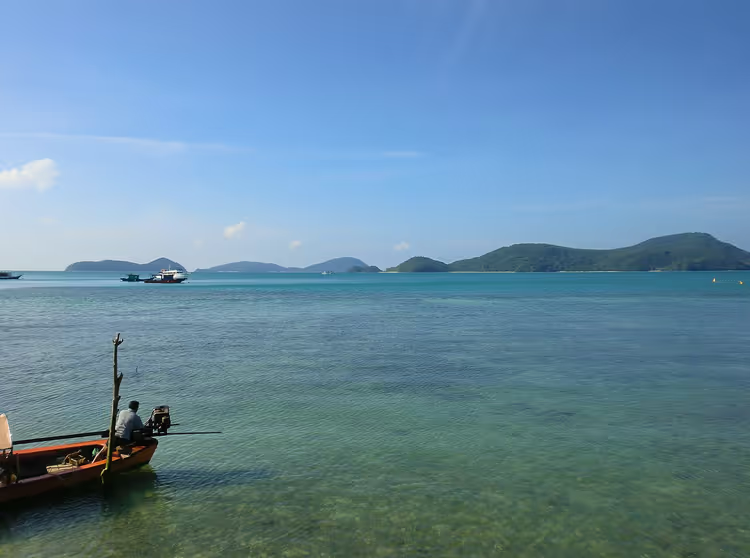 © Whym · CC BY-SAPhoto: Whym, CC BY-SA (https://creativecommons.org/licenses/by-sa/3.0), Wikimedia Commons
A second plus: the piers are nearby. From the east you can head out to the Phi Phi islands and Phang Nga Bay even when the western beaches are closed for swimming. Boats depart on schedule even in the rain.
So the area of your hotel on Phuket matters more than your travel dates. Choose a wave-protected bay, not a sunset view.
Samui, Phangan, and Tao: a different monsoon
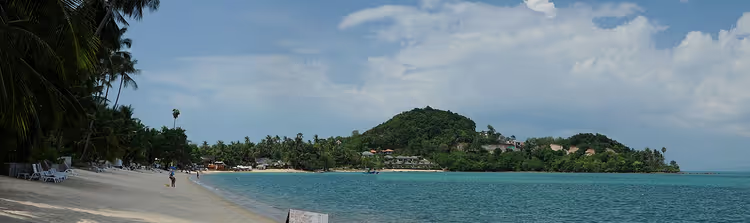
The Gulf of Thailand runs on its own calendar: while Phuket is drowning in rain, Samui, Phangan, and Tao have dry weather. Their rainy season shifts to autumn, and from June through August the islands get one of the clearest periods of the year (per ADAC data on the Gulf of Thailand).
 © Ssuri · CC BY-SAPhoto: Ssuri, CC BY-SA (https://creativecommons.org/licenses/by-sa/3.0), Wikimedia Commons
The sea here is warm and calm, without the tidal chop of the Andaman Sea. Rain comes in short bursts, so once a cloud passes the beach is back in business, and for swimming with kids this is the best June option.
For diving, the gulf is also a better fit, since visibility doesn't drop as much as it does on the west coast. Dive schools on Tao run year-round and take on beginners.
Samui hotels in June are cheaper than in winter, so check Samui hotel prices on Trip.com ahead of time if you want a bungalow by the water.
North and northeast: Chiang Mai and Loei
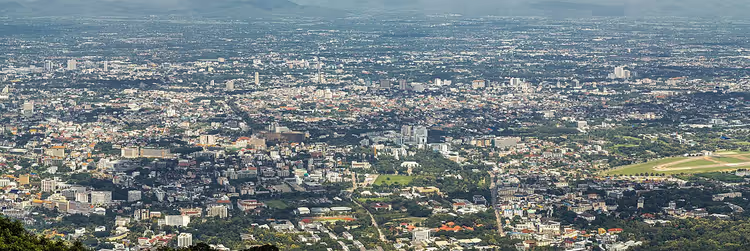
In the north, the rainy season is only just getting started. June brings greenery, short thunderstorms, and cool nights: by morning the air drops to 23 °C, and during the day it stays around 31 °C (as of 09/2026, Northern Thailand climate per ADAC). The humidity here is milder than on the coast.
 © Supanut Arunoprayote · CC BYPhoto: Supanut Arunoprayote, CC BY (https://creativecommons.org/licenses/by/4.0), Wikimedia Commons
The mountains hold the clouds, so rain more often arrives in the evening. Mornings in Chiang Mai stay dry: use them for markets and temples, and plan cafes, massages, or museums for the afternoon.
Rice terraces and waterfalls are full of water in June. The flows are stronger than in the dry season, and there are noticeably fewer tourists, so June is actually the best time to go for photos of the greenery.
It gets cool in the mountains at night, so a light jacket won't go to waste even in the tropics.
Bangkok and Pattaya: short downpours
The capital gets less rain than the west coast: a downpour lasts an hour, then the city comes back to life, the metro runs, malls stay open, taxis keep moving. Tours are rarely canceled.
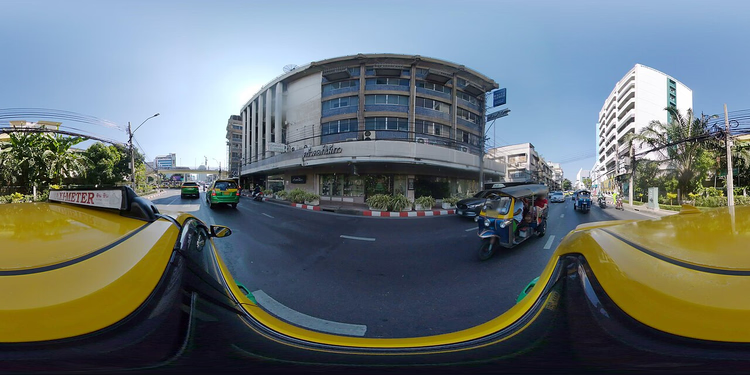 © mapconcierge · CC BY-SAPhoto: mapconcierge, CC BY-SA (https://creativecommons.org/licenses/by-sa/4.0), Wikimedia Commons
In Pattaya, the sea breeze knocks down the heat, but it also brings waves, so swimming is sometimes restricted. The promenade and cafes, though, work in any weather.
The main problem here isn't rain, it's the mugginess between downpours. Plan walks for the morning, and in the afternoon head into museums and malls, since three days is enough for the city and one more for a trip to the nearby islands.
Surfing, kiting, and diving in June
June brings wind almost every day. Windsurfing and kitesurfing schools in Hua Hin, Phuket, and Samui are running at full capacity. A beginner needs just a couple of lessons to get up on the board.
Diving is trickier. On the west coast, visibility drops and some marine parks are closed. The Similan Islands welcome visitors only from mid-October to mid-May, so you can't get there in June. Conditions in the Gulf of Thailand are better, so plan your dives on Tao or Phangan.
Waterfall and jungle tours also win in June: the water is at its peak. Choose established operators, because the trails get washed out. You can compare tours and excursions on GetYourGuide in advance, before you even fly.
The ghost festival in Dan Sai
Going to Isan, in the northeast of the country, in June is worth it for Phi Ta Khon. The festival takes place in the Dan Sai district of Loei province from June 20 to 22, 2026 (as of 09/2026, Tourism Authority of Thailand portal). On these days, locals put on masks made of bamboo and coconut shells and march through the streets in a large procession.
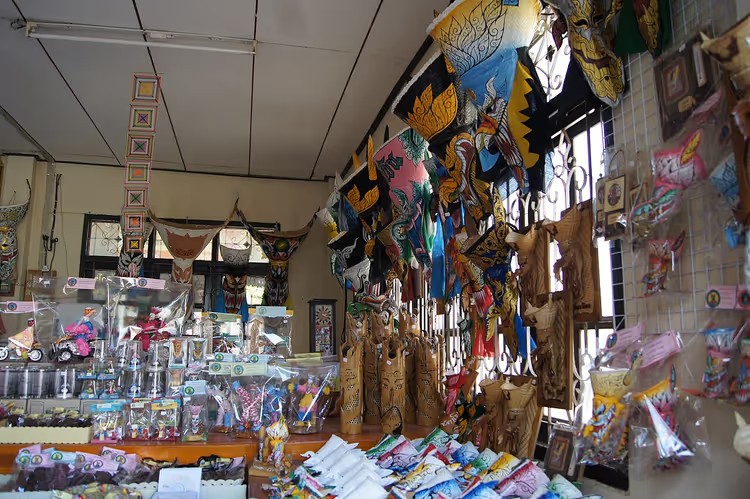 © Charin ninsu · CC BYPhoto: Charin ninsu, CC BY (https://creativecommons.org/licenses/by/3.0), Wikimedia Commons
Hotels for the festival dates get booked months in advance, so if you want to catch the parade, look for accommodation early. The trip from Chiang Mai takes half a day, and it's easier to fly from Bangkok.
What to pack and how to plan your trip
A raincoat is more useful than an umbrella, because the wind breaks the spokes, while a compact poncho sits in your backpack and doesn't get in the way. Bring two: one for the city, one in your luggage.
Choose quick-drying clothes, since the humidity is high and a T-shirt takes a long time to dry after a downpour. A second pair of shoes will save you from wet sneakers the next day.
Add a waterproof phone case and a power bank, because navigation and taxis drain the battery.
For connectivity on the trip, it's more convenient to use an eSIM for Thailand, and it's worth comparing travel insurance options in advance, before you fly.
The daily plan is simple: tours and transfers in the morning, beach and pool in the afternoon, dinner under a roof in the evening.
⁉️🤔 Frequently asked questions
Is it worth going to Thailand in June?
Yes, if you pick the right region. Koh Samui, Koh Phangan, and Koh Tao are dry in June, so you'll get sun and calm seas. The trip pays off if you're ready for short downpours.
Where does it rain the least in June?
In the Gulf of Thailand and on the east side of Phuket. On Phuket, stay on the east coast, in the Chalong and Panwa areas.
Can you swim in Phuket in June?
Yes, in calm bays and only between the flags. When the waves are strong, lifeguards close the beach, and it's not a formality: the currents on the west side are dangerous in June.
What's closed in June?
The Similan Islands: the marine park doesn't accept visitors from mid-May to mid-October. Some dive sites on the west side are also inaccessible.
Is it cheaper to travel in June?
Yes, June is part of the low season. Discounts last all month, except during the festival days in Loei.
In short: what to book
If you want sun and calm seas, choose Samui, Phangan, or Tao. If you want greenery, cooler weather, and mountains, head to Chiang Mai and Loei. If your Phuket ticket is already booked, look for a hotel on the east coast and don't plan to swim on the sunset side.
Check hotel prices in Thailand on Trip.com in advance: there's more choice in the low season and prices are lower.

A small editorial team writing guides for independent travel. We travel ourselves, but we haven’t been everywhere, so we check prices, opening hours and how to get there against official sources.