
















 AIIllustrative image: AI-generated
When to go to Sri Lanka: seasons by region without rain
A vacation to Sri Lanka is easy to ruin by picking the wrong month. While the west coast is getting drenched, the east coast is soaking up the sun. The island is set up so that one coast almost always stays dry. We have broken down by region when to go to Sri Lanka so you don't get caught in a downpour.
Below you will find a season table, month-by-month weather, safaris in the national parks, and flight times from Germany. We cross-checked the months and temperature ranges against the island's climate data (as of 09/2026, climatestotravel.com).
Ad: this article contains affiliate links, we earn a commission if you book through them, at no extra cost to you.
How the seasons work in Sri Lanka
💡 In short:
- Two monsoons, Yala and Maha, split the island into two climate halves.
- The west and south are dry from December through April, the east from May through September.
- In summer, head to the east coast; in winter, the west coast.
- Safaris in Yala National Park are officially best from June through September.
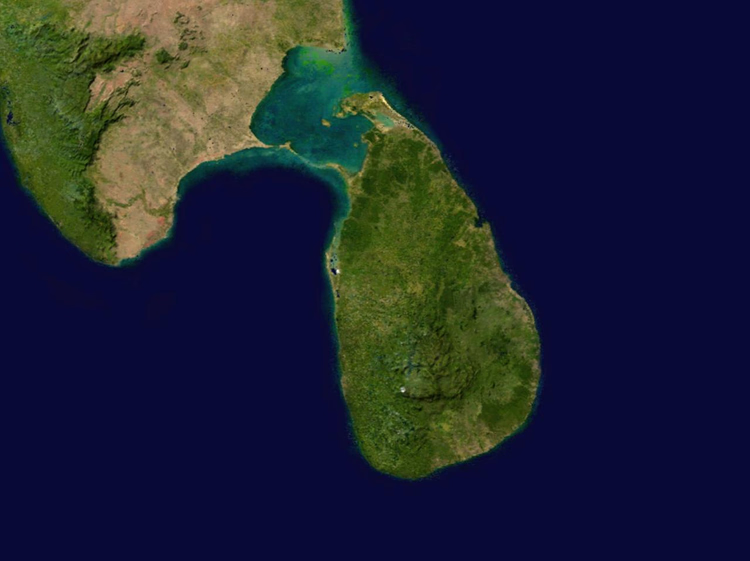
The southwest monsoon arrives on the island from May through September. During these months, rain falls on the west and south coasts, as well as in the central highlands. The northeast monsoon works in the opposite phase: from October through January, it soaks the north and east of the island. Together they give you the main takeaway for planning.
A monsoon does not mean a solid wall of rain across the whole island. While one half of the island is wet, the other stays dry and sunny. Plan your route along the dry coast, and the weather will almost never let you down.
Region | Dry season | Daytime |
|---|---|---|
West and south coasts | December - April | around +30 °C |
East coast | May - September | +28-34 °C |
Central highlands | December - March | +15-20 °C |
North, Jaffna area | January - March and July - September | +28-33 °C |
Source for months and temperatures: climatestotravel.com (as of 09/2026).
West and south coasts: December-April
The west and south coasts open their season in December and keep it going through April. Rain in these months is rare and comes in short bursts, and there is plenty of sun from morning to evening. This is where people come for a first beach vacation: Colombo, Negombo, Bentota, Mirissa, and Hikkaduwa all sit along the same coastline.
You will need a base close to the water. The drive between Hikkaduwa and Mirissa takes about an hour and a half, so you don't have to change hotels every three days. In the morning the water is calmer, and swimming is more comfortable before noon.
From May through November, this coast enters its rainy season. Downpours come more often, but nature turns bright green and accommodation prices drop noticeably. The catch: some dive trips and boat excursions get canceled because of the waves.
East coast: May-September
The east coast wakes up exactly when the west goes under rain. From May through September it is dry here, the sea is calm, and the sun shines for most of the day. This is the time for Trincomalee, Nilaveli, and Pasikuda.
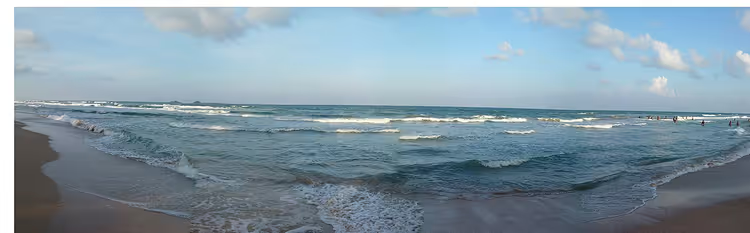 © Fazulrahman2020 · CC BY-SAPhoto: Fazulrahman2020, CC BY-SA (https://creativecommons.org/licenses/by-sa/4.0), Wikimedia Commons
You will have a chance to combine beach and water. Near Trincomalee lies Pigeon Island with its coral reef, and in Arugam Bay surfers from around the world chase waves. For snorkeling, it's better to head out in the morning before the wind picks up.
In November, the east coast itself enters its rainy season. Then it makes more sense to move to the west of the island, where dry weather is just settling in. The catch with the east: infrastructure is more modest than in the south, and after heavy downpours some roads get washed out.
Central highlands: tea plantations and cool air
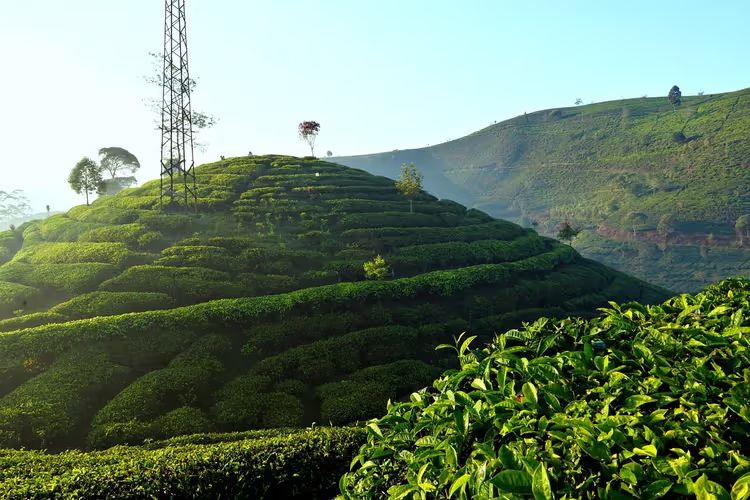
The central highlands greet you with cool air after the hot coast. This is where Kandy, Nuwara Eliya, and Ella are located, surrounded by tea plantations and mountains wrapped in mist. Daytime temperatures in Nuwara Eliya stay around 15-20 °C, so you will definitely need a sweater in the evening (as of 09/2026, climatestotravel.com).
The dry season in the highlands is short, with rain almost stopping from December through March. From May through October, the highlands go through a wet phase but stay green and suitable for walks. Bring a rain jacket and comfortable shoes: trails are slippery after rain.
The main reason to linger in the highlands: the train ride. The Kandy, Nuwara Eliya, and Ella route is considered one of the most beautiful in Asia, and tickets for morning departures sell out in advance.
North of the island: Jaffna and Dambulla
The north of Sri Lanka runs on its own schedule. The best time to visit Jaffna and the surrounding peninsulas falls in January - March and July - September. During these months it is dry there, and the air is milder than in the south.
You will be interested in the nearby cultural triangle. The Dambulla cave temple with its hundreds of Buddha statues, the ancient cities of Anuradhapura and Polonnaruwa are best seen in dry weather, because some of the sites are open-air.
From October through December, the north gets its heaviest rains of the year. They don't cancel the trip, but they noticeably cut into your time outdoors. The catch with the north: few tourists, and some transport runs less frequently.
Safaris: when to see elephants and leopards
The national parks run on a separate calendar. For elephants, people go to Udawalawe National Park and Minneriya National Park; for leopards, to Yala National Park. Yala has the highest leopard density in the world, and the park officially names June - September as the best time (as of 09/2026, official park website).
You should keep one important detail in mind. Blocks 1 and 2 of Yala National Park are closed from September 14 to October 15, 2026 due to drought; the remaining blocks stay open. The park is open from 6:00 AM to 6:00 PM and lies 260 km southeast of Colombo (as of 09/2026, official park website).
It's better to take a safari at dawn, when animals are active and not hiding in the shade. By midday, the heat drives them into the brush, and you will see less. The catch in high season: jeeps line up at the entrance, so book your visit time in advance.
What to do in the rainy season
Rain in Sri Lanka rarely lasts all day. More often it is a short downpour, after which the sun comes out again. Even in the wet season, you will have time for both the beach and excursions.
Cities and culture will come in handy. Colombo has museums and galleries, Kandy is home to the Temple of the Tooth, and the tea regions offer Ceylon tea tastings. Local cuisine doesn't depend on the forecast either: take a cooking class and try rice and curry.
The catch with the rainy season: sudden downpours disrupt your plans for the day. Leave some buffer in your schedule and keep a rain jacket in your backpack.
⁉️🤔 Frequently asked questions
When is the best time to visit Sri Lanka for the first time?
Plan your first vacation for December - April and choose the west or south coast. During these months it is dry and warm there, and the tourist infrastructure runs at full capacity. If you want to see both beaches and the highlands, add December - March: then both parts of the island treat you to good weather.
Does the rainy season ruin a vacation on the island?
Not necessarily. Downpours are usually short, and the sun comes out again in between. Plus, the island is set up so that in any month one half stays dry. You should go in the wet season for the green landscapes and low accommodation prices, not for a guaranteed tan.
When is the best time to see elephants and leopards?
Elephants and leopards live in the national parks year-round. For Yala, the official season runs from June through September, and from September 14 to October 15, 2026, blocks 1 and 2 are closed due to drought (as of 09/2026, Yala park data). For elephants, people also go to Minneriya and Udawalawe, where safaris run all year.
How long is the flight to Sri Lanka from Germany?
A direct flight from Frankfurt to Colombo takes about 10 hours 10 minutes (as of 09/2026, flightsfrom.com). Connecting routes make the journey longer, but they often cost less. From the airport to the beaches, you still have anywhere from half an hour to several hours by car.
What weather awaits you in the central highlands?
The highlands are noticeably cooler than the coast. Daytime temperatures in Nuwara Eliya stay around 15-20 °C, and at night they can drop lower (as of 09/2026, climatestotravel.com). It is dry here from December through March, so bring a sweater and a jacket even in the warm season.
In short: what to book
Your choice of accommodation depends on the month of your trip. If you are going from December through April, take the west or south coast and a hotel near Hikkaduwa or Mirissa. If your vacation falls in May - September, look east: Trincomalee, Pasikuda, and Arugam Bay.
Your vacation | Where to go |
|---|---|
December - April | West and south, safari in Udawalawe |
May - September | East coast, Arugam Bay, safari in Yala |
Year-round | Highlands and the cultural triangle |
Keep two things in mind. First, pick the dry coast according to the calendar, and only then book your accommodation: in high season, good coastal hotels get snapped up in advance.

A small editorial team writing guides for independent travel. We travel ourselves, but we haven’t been everywhere, so we check prices, opening hours and how to get there against official sources.