
















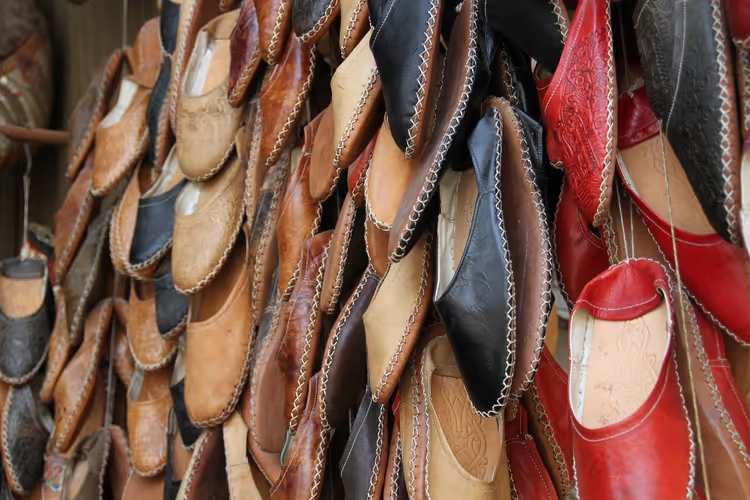
What to bring from Egypt: 20 souvenirs and how to spot a fake
The bazaars of Cairo, Hurghada, and Sharm El Sheikh are packed with souvenirs. Choosing a gift in this flood of options is hard: synthetic fabric is sold as cotton, and an ordinary banana leaf is passed off as papyrus. We put together 20 Egyptian souvenirs and explained what to bring home and how to avoid overpaying.
Prices at the bazaar are almost always negotiable, and quality is checked by hand. Egyptian cotton is not an advertising myth: the country grows the long-staple Gossypium barbadense variety (crop description). Spices, oils, textiles, and amulets are brought back both as gifts and for personal use.
Below is a breakdown by group: where to buy, how to bargain, and what to look for.
What to bring from Egypt
💡 In short:
- Split your purchases into three groups: food and cosmetics, textiles, jewelry and amulets.
- Buy cotton and oils in stores, and spices and small items at the bazaar.
- Bargaining is appropriate at the bazaar and does not work in supermarkets and duty-free shops.
Souvenir | Who to give it to | Price level |
|---|---|---|
Incense and oils | adults, colleagues | medium |
Incense sticks | acquaintances, inexpensive gift | low |
Hookah | hookah smokers | medium |
Spices | people who cook | low |
Sweets | children, for tea | low |
Tea | family and colleagues | low |
Coffee | coffee lovers | low |
Fruit | yourself, on the spot | low |
Jewelry | loved ones and yourself | high |
Cosmetics and oils | women | medium |
Cotton products | family and home | medium |
Camel wool | elderly people, home | medium |
Onyx products | interior design enthusiasts | medium |
Keffiyeh and scarves | friends, yourself | low |
Rugs | home | high |
Clay pottery | for weddings and anniversaries | medium |
Papyrus | colleagues, for the office | low |
Ankh | esoteric enthusiasts | low |
Scarab | collectors | low |
Cat figurines | cat lovers | low |
1. Incense and essential oils
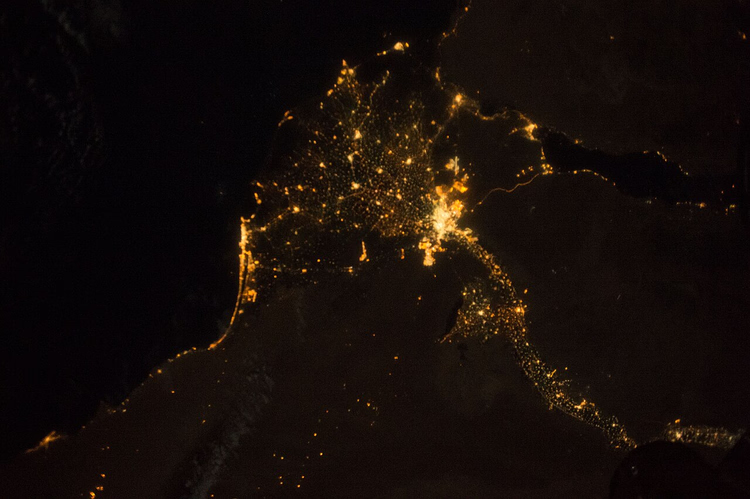
Aromatic oils and incense are part of Egypt's history: they filled temples and were used to treat the bodies of the dead. The composition of kyphi incense has not survived to this day, but researchers name myrrh, mimosa, cinnamon, and menthol. Today, bazaars sell jasmine, frankincense, juniper, and dozens of other scents.
The widest selection is in Cairo's markets, where prices are also lower than in hotel shops. Test the scent on your skin, not by the label. If the seller won't let you open the bottle, buy a small size to try.
In ancient Egypt, aromas were the domain of the god Nefertem, and archaeologists found a rich incense vessel in Tutankhamun's tomb. Kyphi incense was used both in temple rituals and as medicine. This historical background explains why local oils are valued more highly than ordinary perfume.
- Where to buy: Cairo markets.
- How to choose: test the scent on your skin, not by the bottle.
2. Incense sticks
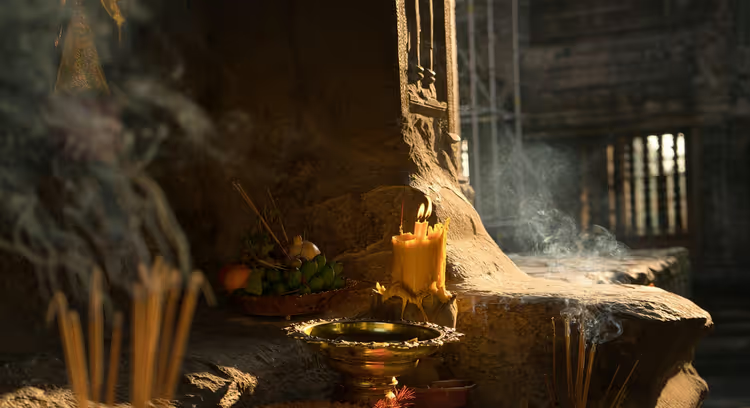
Sticks are sold everywhere, and the range of scents is enormous. The stick is made from a reed splint with an aromatic compound; when burned, it releases the chosen scent.
Look for rare scents in specialty shops, not hotel kiosks. Buy a pack to try: cheap sticks often drown out the scent with smoke. Test them at home, because the shop smells of a hundred scents at once.
- How to check: sticks with a natural composition smell even, without harsh chemical notes.
- Where to buy: bazaar shops.
3. Hookah
 © Mona Hassan Abo-Abda · CC BY-SAPhoto: Mona Hassan Abo-Abda, CC BY-SA (https://creativecommons.org/licenses/by-sa/4.0), Wikimedia Commons
Many tourists want to bring home a hookah, and it's easy to buy a fake here. Original devices are handmade, so they cost more than copies. Hookah smoking in Egypt began several centuries ago, and the tradition is still alive today.
Check the weight and metal: the body should be copper and heavy, and the base transparent, with additional filters. Tobacco is sold in large packs of several boxes.
People smoke everywhere in Egypt: on the street, in cafes, at home, and even in the car. A good device is sold not only to tourists but also to locals, and quality is not skimped on here. Buy a hookah in the middle of your trip so you have time to check the parts before leaving.
- Where to buy: a specialty store, not a street stall.
- How to choose: a heavy copper body and a transparent base.
- The catch: at the market, a cheap copy is often sold instead of handmade work.
4. Spices
 © Miomir Magdevski · CC BY-SAPhoto: Miomir Magdevski, CC BY-SA (https://creativecommons.org/licenses/by-sa/4.0), Wikimedia Commons
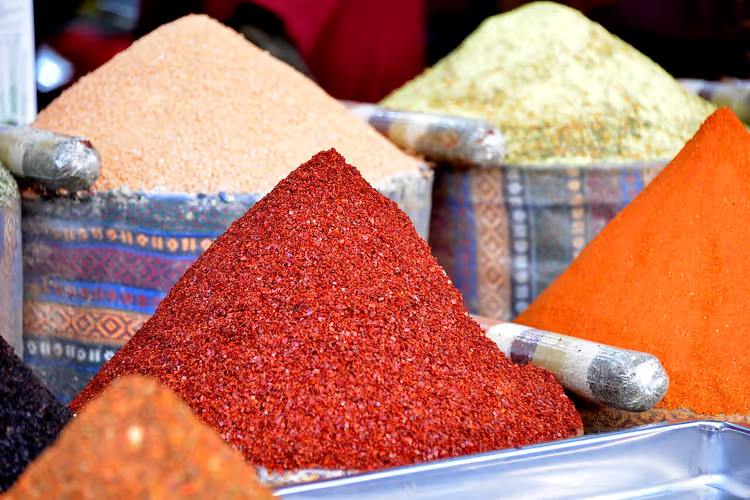
Eastern bazaars are famous for spices, and Egypt is one of the region's leaders here. The selection is huge, from familiar seasonings to blends for meat and fish.
Buy spices by weight and in a sealed bag, not ground mixes at the entrance. At home, keep them in glass away from light, so the aroma lasts longer.
- Where to buy: spice sections at the bazaar.
- How to choose: buy whole seeds, they hold their aroma longer than ground ones.
5. Sweets
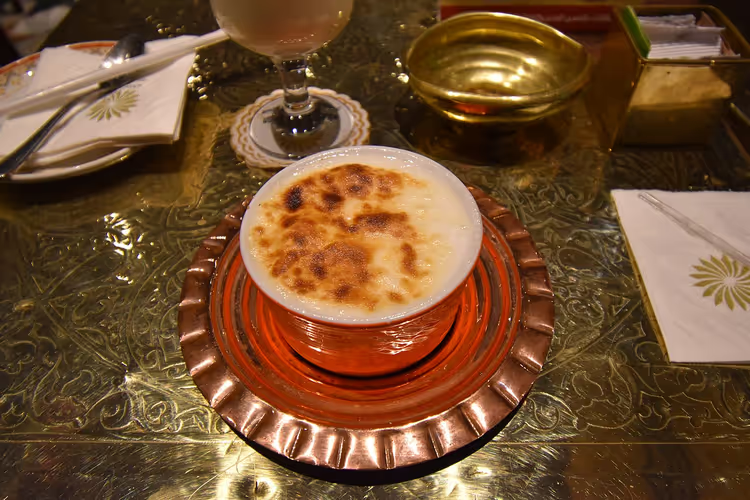 © Fred Cherrygarden · CC BY-SAPhoto: Fred Cherrygarden, CC BY-SA (https://creativecommons.org/licenses/by-sa/4.0), Wikimedia Commons
Tourists try local desserts on their first day at the hotel, and many bring them home. National sweets include qatayef, fiteer with filling, om ali, masfour made from dried fruit with nuts, and meshbek donuts.
Lots of syrup and sticky glaze don't handle heat well, so choose factory packaging. Buy sweets as gifts in the middle of your trip, not right before departure.
- Who to give them to: children and for tea.
- The catch: syrup leaks in luggage, so buy sealed boxes.
6. Tea
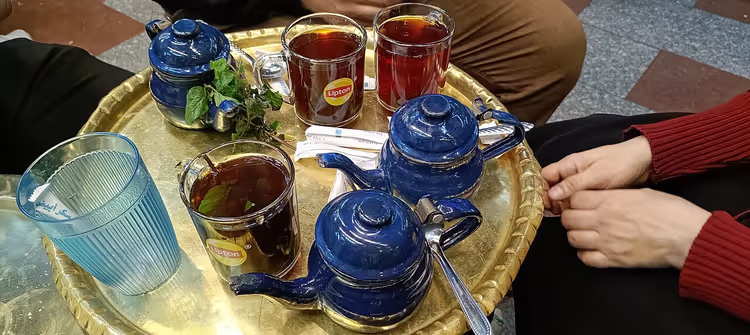 © Esraa Mohamed Aita · CC BY-SAPhoto: Esraa Mohamed Aita, CC BY-SA (https://creativecommons.org/licenses/by-sa/4.0), Wikimedia Commons
Tea in Egypt is not steeped, it is boiled for a long time and left to brew. It is often drunk with milk, and in cool weather mint, cinnamon, ginger, and cardamom are added.
There are many varieties, from black tea to herbal blends. Buy loose-leaf tea in Cairo's tea shops, where it is fresher than the store-bought kind.
Tea houses in Egypt serve as meeting places: people sit there for a long time over a single cup and discuss the news. If you want to understand the local taste, order tea with milk and mint and watch how it is served in a glass.
- Where to buy: tea shops and the bazaar.
- How to check: good tea has whole leaves, not dust.
7. Coffee
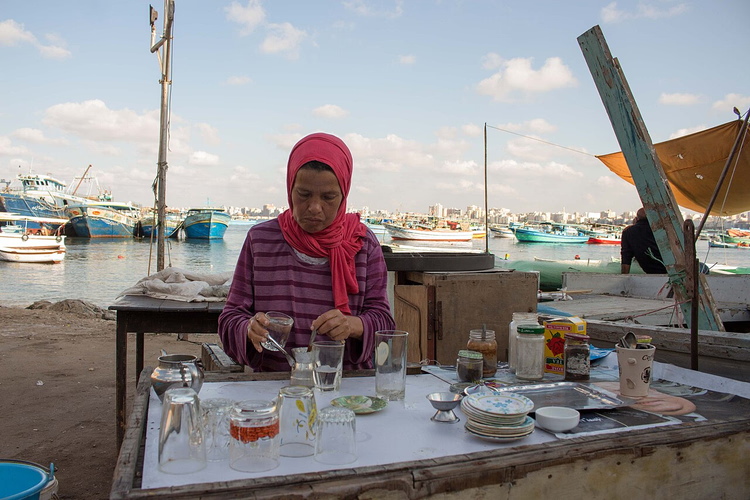 © Hesham Ebaid · CC BY-SAPhoto: Hesham Ebaid, CC BY-SA (https://creativecommons.org/licenses/by-sa/4.0), Wikimedia Commons
Coffee in Egypt is imported, none is grown there, but it is drunk everywhere. Local coffee is strong, with cardamom and nutmeg.
In resort towns, coffee shops are common, and a bag of beans costs less there than in Europe. Many people stock up for a whole year at once.
The drink is brewed strong and served in small cups. Cardamom and nutmeg are added directly to the ground beans, so the taste is spicy. At home, this coffee is made in a cezve or a French press.
- How to choose: buy freshly roasted whole beans.
- Where to buy: coffee shops in resort towns.
8. Fruit
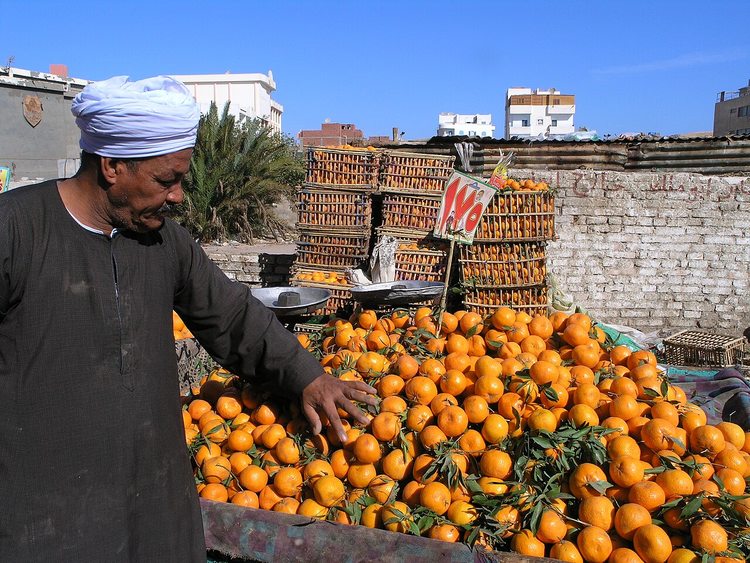 © Menshov Vladimir · CC BYPhoto: Menshov Vladimir, CC BY (https://creativecommons.org/licenses/by/3.0), Wikimedia Commons
Fresh fruit is more of an experience than a souvenir: you don't bring it home, but you eat it every day while you're there. At the bazaar you can wander for hours among citrus and local fruits.
The selection depends on the season, so ask the seller what is ripe right now. That way you'll catch the peak of flavor and won't overpay.
- Who it's for: for those who want to try exotic fruit on the spot.
- The catch: seasonality, your favorite fruit may not be available during your dates.
9. Jewelry
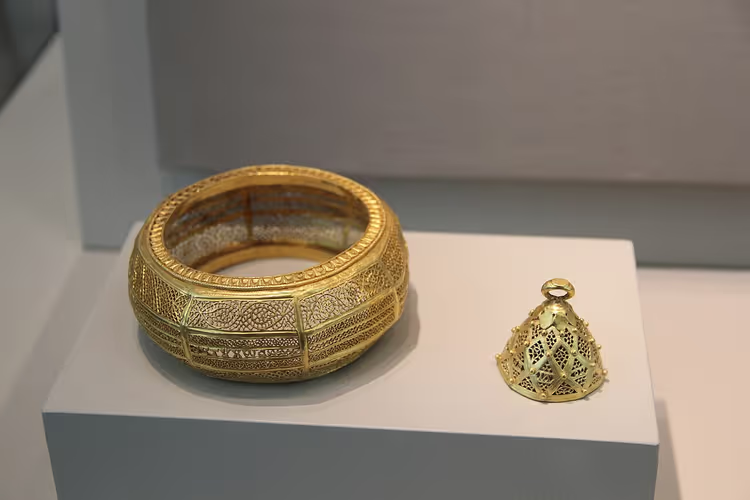
Jewelry making in Egypt has ancient roots. Craftsmen copy old designs and make modern pieces, so the selection is wide.
In duty-free shops, prices are fixed and you avoid haggling. For purchases, go to the Jewelry Shop in the center of El Gouna and Hurghada, to the shops around the Cairo Museum, and to the Sea Gull store on Sheraton Street in Hurghada.
- Where to buy: duty-free shops, boutiques, the souvenir section of the Cairo Museum.
- The catch: at the market, you're more likely to find copies rather than original work.
10. Cosmetics and oils
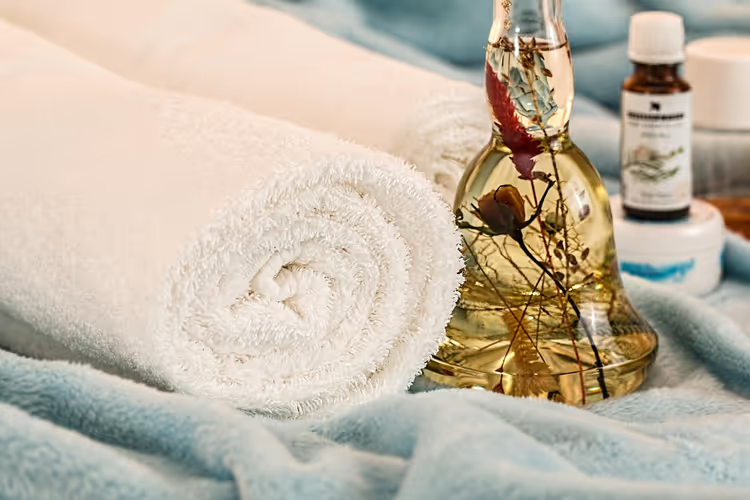
Buy cosmetics in hotel shops, beauty salons, and specialized supermarkets. Oil-based perfumes are relatively inexpensive, keep their scent for years, and suit both women and men.
Cosmetic oils, argan, almond, and jojoba, should be bought in specialized stores. Black seed oil is more expensive than the others, and it is often counterfeited at markets, so buy it only in a store.
- Where to buy: supermarkets, salons, specialized stores.
- How to choose: for hair, look for argan blends with coconut.
11. Cotton products
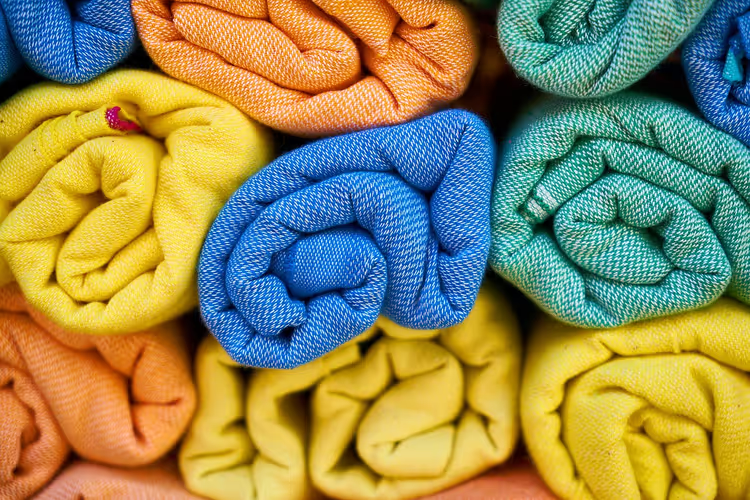
Egyptian cotton attracts buyers with its quality: tourists buy towels, bed linen, loungewear, and men's and women's underwear in large quantities. Bed linen is sold with embroidery or appliqué.
Clothing made from cotton fabric lasts for years, doesn't pill, and keeps its shape. Branded items are marked with a sewn-in made in Egypt label and a sticker indicating 100% cotton content.
Cotton shrinks when washed, so wash it in cool water. Buy a size with a little extra room if the item is thick.
- How to check: made in Egypt label and a cotton content mark.
- Price: mid-range.
- The catch: cotton shrinks in hot water.
12. Camel wool products
 AIIllustrative image: AI-generated
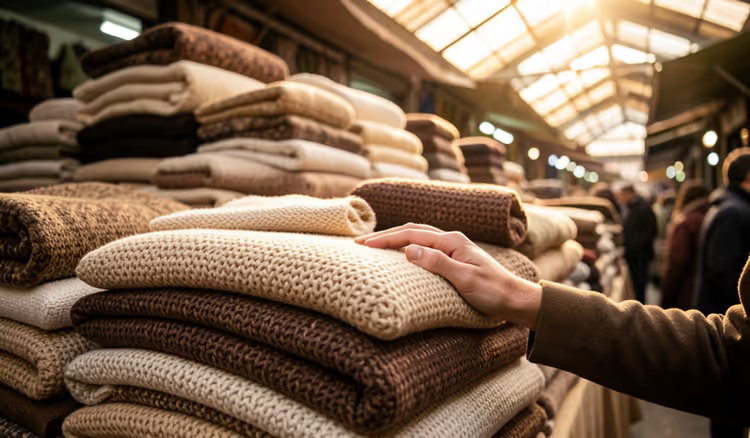
Camel wool blankets and throws have long been valued for their warmth and durability. Markets sell socks, slippers, pillows, throws, and children's items made from camel wool.
Local tour operators recommend buying these items on shopping tours: prices there are lower than at the market. Check the seams and fabric density, as cheap throws often have wool blended with synthetics.
Wool holds heat well, so throws and blankets are bought for winter. Before buying, smell the item: natural wool has a light scent, while cheap synthetics have a sharp chemical smell. This is how you can tell real camel wool from an acrylic blend.
- Who to gift it to: elderly relatives and for the home.
- Where to buy: markets and specialty wool shops.
13. Onyx products
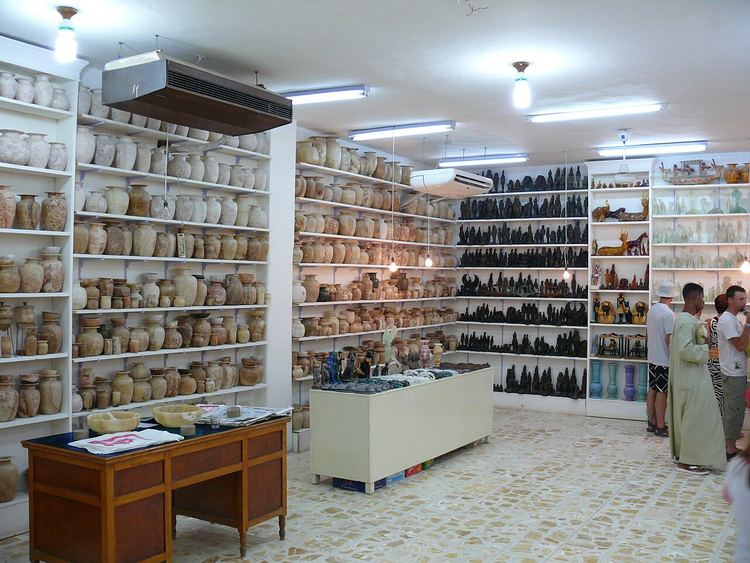 © Aligatorek · CC BY-SAPhoto: Aligatorek, CC BY-SA (https://creativecommons.org/licenses/by-sa/3.0), Wikimedia Commons
What is sold as onyx in Egyptian markets is usually alabaster, not quartz chalcedony. The stone is used to make vases, candlesticks, paperweights, and jewelry.
Items made from this stone look beautiful in a home office interior. Look for it at the large markets in Cairo, Hurghada, Sharm El Sheikh, and Alexandria: the selection is wider there and there's room to bargain.
- Where to buy: large markets.
- How to choose: pick a solid stone with no chips or cracks.
14. Keffiyeh and scarves
The keffiyeh, or arafatka, is recognized by its black-and-white checkered pattern: it's a cotton headscarf. Markets sell not only scarves but also women's stoles in various colors and full sets.
It's best to buy them at market stalls where the price is negotiable. When bargaining, don't show your money and don't rush. Name a starting price noticeably lower than the asking price, and the seller will meet you halfway if they see genuine interest.
- Where to buy: market stalls.
- How to bargain: don't show haste or money.
15. Carpets
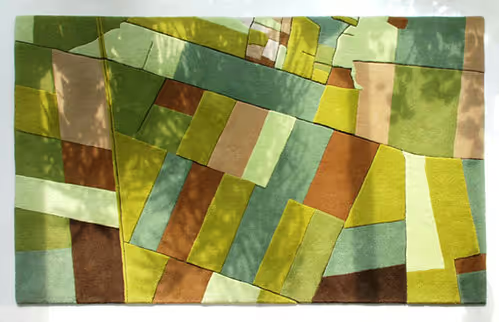 © Kombinat Warszawa · CC BY-SAPhoto: Kombinat Warszawa, CC BY-SA (https://creativecommons.org/licenses/by-sa/2.0/), Flickr
Carpet weaving has existed in Egypt since ancient times. Today markets sell flatweave rugs made from cotton, viscose, linen, jute, polyester, and acrylic, both handmade and machine-made.
Egyptian carpets are resistant to moths, mold, and water, don't attract dust, and are antistatic and hypoallergenic. Worth mentioning separately is the Oriental Weavers carpet factory: they make viscose, chenille, and tapestry products.
- How to choose: check the knot density and the back side.
- The catch: a large carpet is hard to transport and check in as baggage.
16. Clay and porcelain tableware
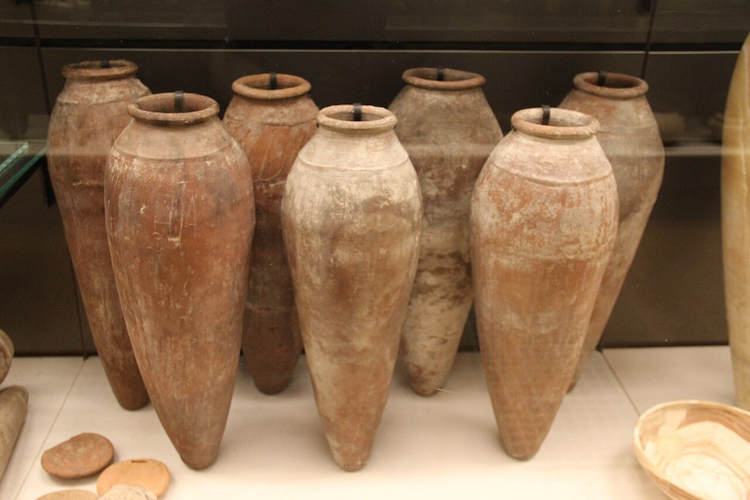
Pottery is one of the oldest crafts. Market stalls are full of ceramics: earthenware and porcelain attract buyers with their price and quality of workmanship.
Tourists buy tableware in full sets. A dinnerware set is a great wedding or anniversary gift, and such presents are usually kept in the home for a long time.
- Who to gift it to: for weddings and anniversaries.
- The catch: ceramics break in transit, so carry them in hand luggage with padding.
17. Papyrus
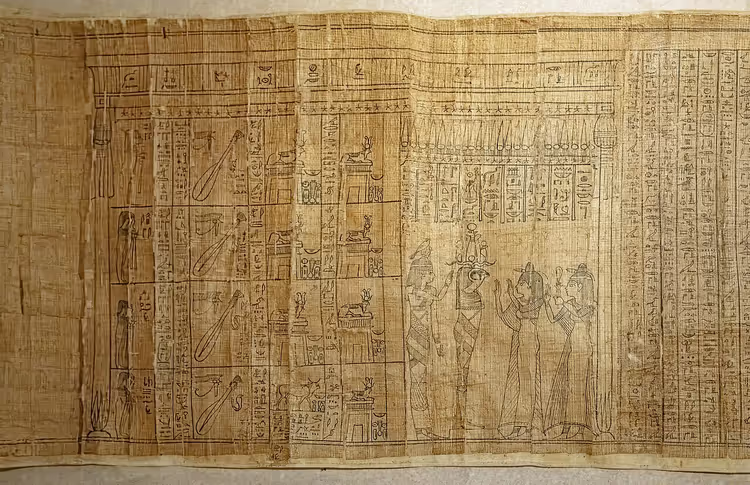
Papyrus, or byblos, is the predecessor of paper. It is made from the pith of a wetland plant that grows in the Nile Delta. In ancient times, papyrus was the main writing material.
Today markets, shops, and hotel stores sell scrolls of various sizes with drawings and inscriptions. Modern scrolls replicate ancient artifacts but are not originals.
The papyrus-making technique was described by Pliny in his "Natural History." Modern artisans replicate it by hand, which is why a genuine scroll feels dense and slightly ribbed to the touch, not thin like ordinary paper.
- Where to buy: hotel souvenir shops and markets.
- Who to gift it to: colleagues and for the office.
18. Ankh
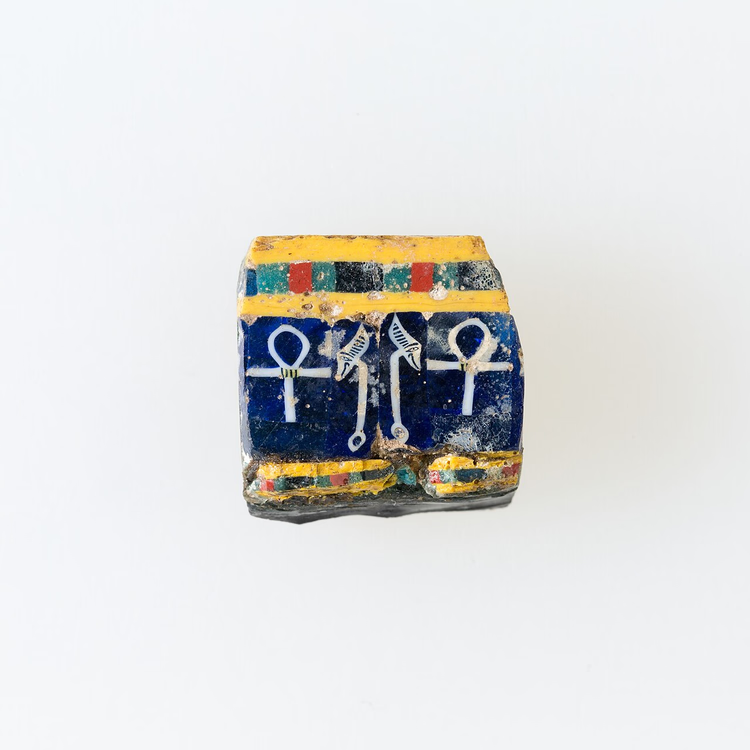
The ankh traces its history back to Ancient Egypt. It is a cross with a loop at the top, a symbol of life and immortality. The ankh was placed in the pharaoh's tomb as a guide to the realm of the dead, Duat (according to the article on the ankh).
Souvenir ankhs are made from gold, silver, onyx, and faience. Many people buy it as a talisman and believe the symbol brings luck and success in personal matters.
- Who to gift it to: those interested in esotericism.
- Where to buy: jewelry shops and markets.
19. Scarab
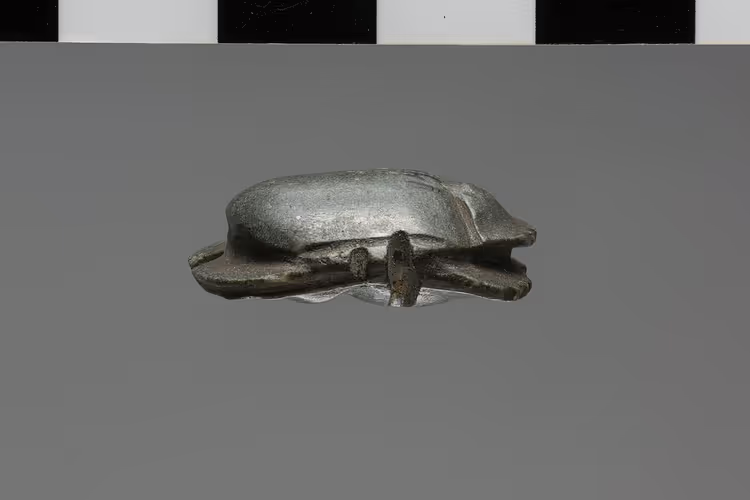
The scarab beetle was the sacred insect of the sun god Ra. It was associated with the movement of the sun and rebirth after death.
Scarab figurines are made from gold, silver, onyx, and faience, and the image is widely used in jewelry. Few tourists leave Egypt without at least one scarab.
- Who to gift it to: souvenir collectors.
- Where to buy: markets and jewelry shops.
20. Cat figurines
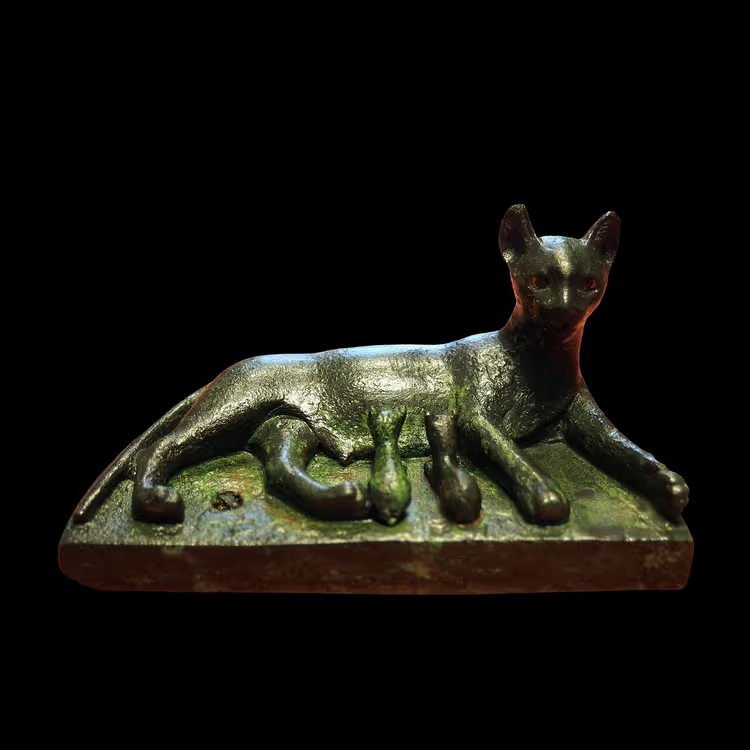 © Rama · CC BY-SAPhoto: Rama, CC BY-SA (https://creativecommons.org/licenses/by-sa/3.0/fr/deed.en), Wikimedia Commons
Cats in Ancient Egypt were revered: they were fed, cared for, and mummified after death. The memory of this cult lives on in souvenir figurines.
Cat figurines are sold at bazaars, in shops, and in hotel souvenir departments. Along with scarabs, they have become classics of the souvenir collection.
- Who to give it to: cat lovers.
- Where to buy: bazaar, shops, hotel stores.
⁉️🤔 Frequently asked questions
Which souvenir from Egypt do people bring home most often?
Cotton, spices, and oils. Textiles are easy to pack, they don't spoil, and they cost noticeably less than in Europe. Spices and essential oils take up little space. A hookah or a carpet, on the other hand, is bought deliberately, for a specific spot in the apartment, because shipping and weight create extra hassle.
Can you bargain at a bazaar in Egypt?
Bargaining at a bazaar is appropriate and considered the norm. Name a price lower than the asking one, don't show your money, and don't rush. The seller will offer a compromise if they see you're ready to walk away. In shops with fixed price tags and in supermarkets, bargaining is not accepted: there you pay according to the price list.
Where should you buy souvenirs to avoid running into a fake?
Buy hookahs, carpets, and black seed oil in specialized shops. Cosmetics are sold in salons and supermarkets, papyrus in hotel souvenir stores. At the bazaar, they mostly sell souvenir copies. A made in Egypt tag and a composition label on textiles confirm the factory origin of the item.
How much money should you take for souvenirs?
You don't need a lot: most souvenirs from Egypt are cheaper than in Europe. The most expensive items are carpets, jewelry, and onyx. Take cash in Egyptian pounds for the bazaar and a card for shops. Sellers often give a discount for cash, but bargaining still matters more than the payment method.
What should you bring a child from Egypt?
Children's items made of camel wool, sweets, and incense sticks with soft scents. Wool socks and slippers will come in handy in the cold season. Choose factory-made sweets in sealed packaging so they survive the trip. Children usually keep cat and scarab figurines for themselves as a vacation souvenir.
In short: what's worth booking
Egypt is great for gifts: there are plenty of things with history here, and prices are lower than in Europe. If you're going for textiles, take cotton and camel wool. If you need a gift for colleagues, spices, tea, and incense sticks will do. For loved ones, save jewelry and onyx, and for the home, take a look at carpets and clay pottery.
Take cash and don't rush. You'll find the best souvenir from Egypt after your second lap around the bazaar, when the seller tells you the real price.

A small editorial team writing guides for independent travel. We travel ourselves, but we haven’t been everywhere, so we check prices, opening hours and how to get there against official sources.