










Egypt all year round: choosing a season for diving, temples, or the beach
Egypt welcomes visitors year-round, but the country runs on two different schedules. In winter people fly here for the Red Sea beaches, in summer divers arrive. Between these two poles there is a window with neither exhausting heat nor crowds.
The weather changes abruptly. In March the khamsin picks up, a scorching wind carrying sand.
Below we break down the seasons in order. You will see where it is comfortable to walk around temples, when to go for diving, and how to plan around Ramadan. Weather and seasons were checked in September 2026.
Ad: this article contains affiliate links, we earn a commission if you book through them, at no extra cost to you.
When to go to Egypt: four seasons
💡 In short:
- April, late September, and October offer the best balance of weather and crowds.
- In summer the heat reaches 42 °C (as of 09/2026, Lonely Planet), but the sea is warm and clear.
- In winter Luxor has blue skies, and the Red Sea is in beach season.
- Seasons and weather: 09/2026, according to Lonely Planet.
Each season is good in its own way. Let's compare them by weather, tourist numbers, and trip goals.
Season | Weather | Crowds | What it's good for |
|---|---|---|---|
Shoulder season (March-May, September-November) | warm and dry | moderate | temples, Nile cruise, desert |
Summer (June-August) | very hot | few in the south | diving, beaches |
Winter (December-February) | mild, rain in Cairo | many | Luxor, Sinai, Red Sea |
Shoulder season: spring and fall
Fall and spring offer the golden middle ground. Daytime temperatures stay within comfortable limits, and major sites are no longer packed with people. Discounts on accommodation also appear.
Important: May and September are still very hot. If you handle heat poorly or are traveling with children, choose March, April, late September, or October. These are the months most travelers call the best time for Egypt.
In the shoulder season the light on the Nile becomes soft and clear. For photography these are convenient weeks in Luxor and Aswan, and in the Western Desert oases the date harvest is underway. The sea is also pleasing: diving at this time is available and costs less.
The main risk of spring is the khamsin. The wind starts blowing in March and carries sand. Storms disrupt travel, sometimes cancel flights, keep feluccas from leaving Aswan, and reduce visibility almost to zero. Add one or two buffer days so your plans don't fall apart.
In April the khamsin still occurs, but otherwise it is an almost perfect month. Warm evenings suit night feluccas from Aswan and camping in the White Desert. May usually brings good-value packages in Sharm El Sheikh, Hurghada, El Gouna, and Marsa Alam.
- The catch: in May the heat returns, and in March the khamsin gets in the way.
If you are planning a beach vacation, compare prices for hotels in Hurghada on Trip.com.
Summer: heat and the best time for diving
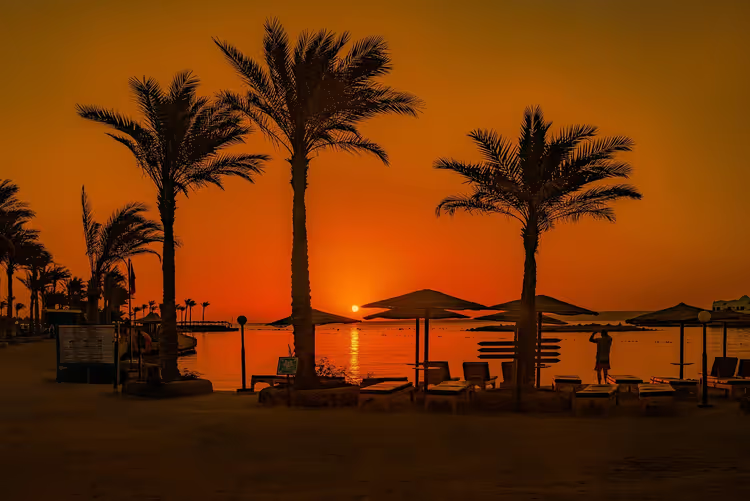
In summer, Egypt turns into a blazing furnace. The average daytime high reaches 42 °C (as of 09/2026, Lonely Planet). The temples and tombs of Luxor open at 6:00, so an early start really saves you (as of 09/2026, Egypt Day Tours).
 © dronepicr · CC BYPhoto: dronepicr, CC BY (https://creativecommons.org/licenses/by/2.0), Wikimedia Commons
If you're not up for that kind of strain, it's better to skip the Western Desert in summer. The same logic applies to long routes under the open sun.
On the other hand, summer marks the start of diving season. You can dive in Egypt year-round, but serious divers head to Sharm el-Sheikh and the Red Sea coast. They're willing to put up with the heat on shore for calm, warm water and excellent visibility underwater.
On the Mediterranean coast, summer coincides with the peak of domestic tourism. Half of Cairo heads to the beaches. Alexandria is also hot, but at least there's a sea breeze. You'll be more comfortable in the morning or closer to sunset.
- Who it's for: divers, beach lovers, and early temple excursions.
- Not for: those who handle extreme heat poorly and are coming primarily for the desert.
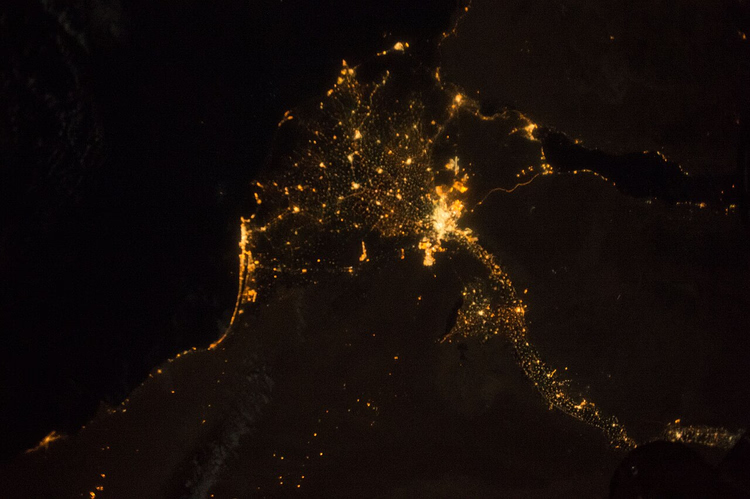
Winter: Luxor, Sinai, and beaches
In winter, people flee the gray skies of Northern Europe for Egypt. Many head to the beaches of Sharm el-Sheikh and the Red Sea to soak up the sun. The weather is generally good across the country, but Cairo and Alexandria do get rain.
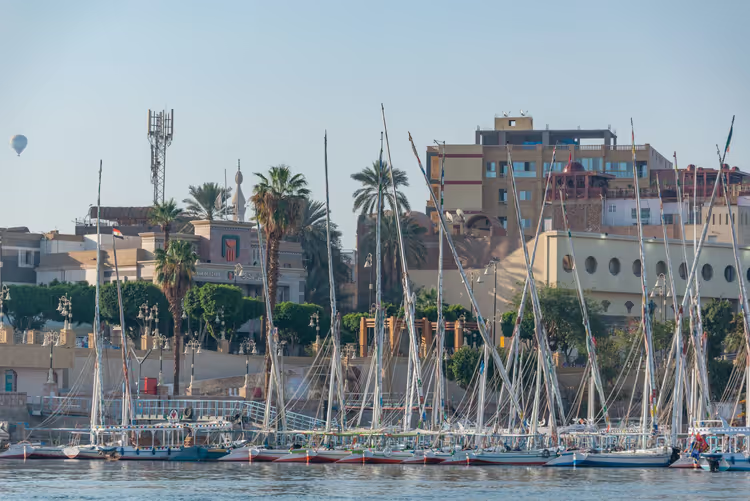
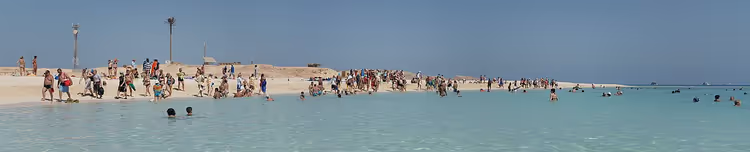 © kallerna · CC BY-SAPhoto: kallerna, CC BY-SA (https://creativecommons.org/licenses/by-sa/3.0), Wikimedia Commons
If temples are your goal, winter is ideal. Luxor has blue skies and pleasant daytime temperatures, so long walks through the ruins don't turn into an ordeal. Winter also marks the start of high season for Sinai and the Western Desert: hiking, camel treks, and sun without the exhausting heat.
Divers should keep one thing in mind. In December, the sea can be rough for boat dives, while shore dives usually go fine. The South Sinai and the Red Sea coast are convenient places to learn to dive.
In Cairo, the winter months are good for walks to madrasas and mosques. The nights are colder than you'd expect, so bring warm clothes. And be prepared for high accommodation prices in high season, especially around Christmas and New Year's.
A cultural development in recent years also changes your plans. Since November 1, 2025, the Grand Egyptian Museum, the world's largest archaeological museum, has been open in Giza (as of 09/2026, Wikipedia).
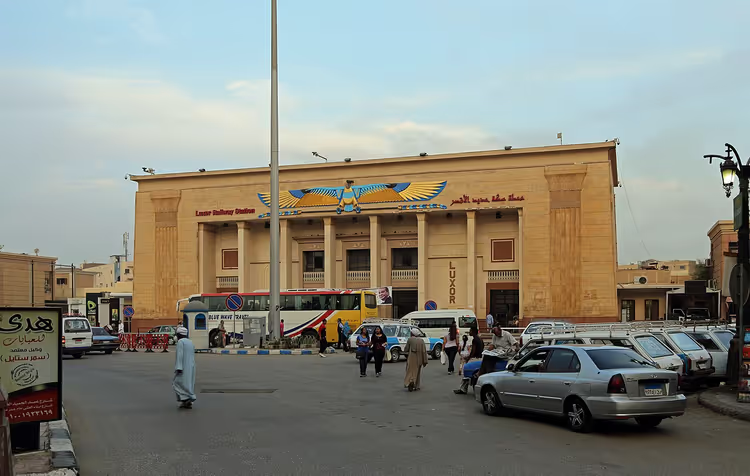 © Marc Ryckaert · CC BY-SAPhoto: Marc Ryckaert, CC BY-SA (https://creativecommons.org/licenses/by-sa/4.0), Wikimedia Commons
What Ramadan changes
Ramadan is not tied to the Gregorian calendar because the Muslim year is shorter. In 2026, the fast ran from February 19 to March 19 (as of 09/2026, Morocco World News, Any Calendar), and in 2027 the dates will shift again.
If you arrive during Ramadan, expect a short working day. Sights, shops, and services operate fewer hours, and many regular cafes open only after sunset.
Non-Muslims are not required to fast, but respect for those who are fasting is appreciated here. Don't drink or eat conspicuously in the street, and the atmosphere will be friendly toward you.
⁉️🤔 Frequently asked questions
When does Egypt have the fewest tourists?
The fewest people are in the shoulder season. April, late September, and October give you comfortable temperatures and open space at the main monuments. In summer, the south is also uncrowded, but the heat gets in the way. Winter, on the other hand, is high season, so in December and January it will be packed at the pyramids and in Luxor.
Can you swim in Egypt in winter?
Yes, people swim in the Red Sea in winter. The water stays warm, and the daytime air is usually mild. Sharm el-Sheikh and Hurghada operate year-round precisely because of this. The Mediterranean is much cooler, and people rarely swim there in winter.
When is the best time to go to Egypt for diving?
You can dive all year, but the best conditions are in summer. Sharm el-Sheikh and the Red Sea offer calm, warm water and high visibility.
What is khamsin?
Khamsin blows in Egypt from March and carries sand. It reduces visibility and disrupts transport, so leave a buffer day in your plan.
Is it worth going to Egypt in summer?
Yes, if you're going for the sea and diving. In summer, the Red Sea has excellent visibility and warm water. But the desert and long excursions in the open sun are better postponed because of the intense heat.
In short: what to book
The choice depends on your goal. If you want warmth and the sea, go for Sharm el-Sheikh or Hurghada in winter. For temples and pyramids, it's more convenient to travel in April or October: to Luxor and Giza. For diving, plan for summer.
To avoid overpaying in high season, compare hotels in advance on Trip.com.

A small editorial team writing guides for independent travel. We travel ourselves, but we haven’t been everywhere, so we check prices, opening hours and how to get there against official sources.