
















What to bring from Montenegro: 20 gifts and export rules
Pršut in Montenegro is sold as whole hams. It is the most expensive item in the gift set. Meat and dairy products from Montenegro are prohibited from being brought into the EU and Switzerland in personal luggage. We went through the country's markets, monastery shops, and oil mills and collected souvenirs, and for each one we noted the export rules. Below you will find prices, places to buy, aging times, and the honest catch of each idea.
1. Pršut from Njeguši, smoked over beech wood
💡 In short:
- Buy pršut from farms in Njeguši and Cetinje.
- Look for wine and rakija in shops at wineries, not in hotel lobbies.
- Meat and dairy products cannot be brought into the EU and Switzerland in personal luggage, vacuum sealing won't help.
- Prices, labeling, and aging times: 09/2026, verified on the Montenegro government portal.
 © Haydn Blackey from Cardiff, Wales · CC BY-SAPhoto: Haydn Blackey from Cardiff, Wales, CC BY-SA (https://creativecommons.org/licenses/by-sa/2.0), Wikimedia Commons
Pršut from Njeguši (Njeguški pršut) is made from a pork ham: the meat is cured with sea salt, smoked over dry beech wood, and aged for at least nine months (product specification). It was the first Montenegrin product to receive a geographical designation (government decision). The village of Njeguši on the slope of Lovćen has lived by this craft for centuries.
It is sold as a whole ham, a large piece, or in vacuum-sealed slices. Bringing pršut into the EU and Switzerland in personal luggage is prohibited, even in vacuum packaging. It only makes sense to take it where meat from Montenegro is allowed.
Prices at private farms start at around 13 € per kilogram (as of 09/2026, producer listings). In souvenir shops in Budva and Kotor, the same weight costs noticeably more, and vacuum-sealed slices are priced per package as a whole.
- The catch: pršut will not be allowed into the EU and Switzerland in personal luggage, vacuum sealing doesn't help.
- Where to buy: farms in Njeguši and Cetinje, meat sections of markets, supermarkets.
2. Olive oil from Bar
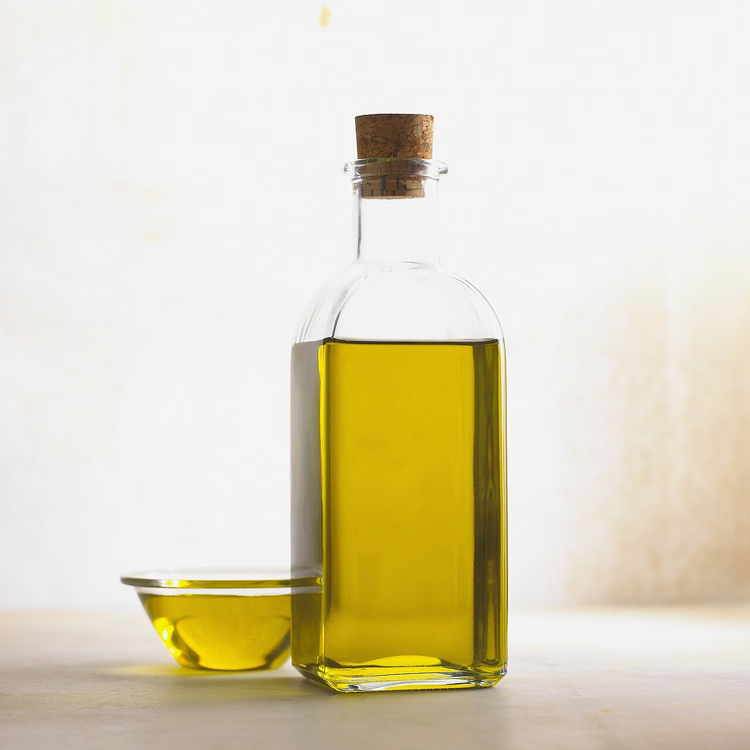
Olives have grown in the south of the country for millennia, and oil is pressed here in almost every coastal community. In the village of Mirovica near Bar stands Stara Maslina, a tree about 2,240 years old, placed under protection in 1957 (Bar guide). People come to see its trunk and, while there, buy oil from neighboring producers.
On the label, look for three things: category, region, and bottling date. The most valuable oil is Extra virgin category: cold-pressed, without chemical refining. Below that are refined (Refined) and pomace (Pomace) oils. The PDO mark confirms protected origin, PGI indicates a specific region, and BIO means organic farming.
The bottle should be in dark glass or tin, because light kills flavor faster than time. Quality oil is thick, with a fruity note and no metallic aftertaste. The House of Olive in Bar runs a national olive oil competition, which will take place for the second time in 2026 (KUĆA MASLINA). That gives you a rough idea of who in the country is working seriously.
- The catch: under the PDO label, resort shops sell blends, so check the region and bottling date.
- Where to buy: olive mills and shops in Bar, Stari Bar, and Ulcinj, city markets.
3. Market fruit and dried figs
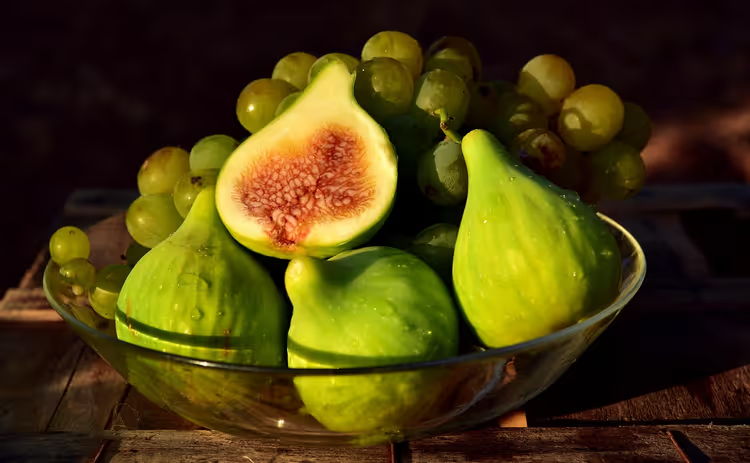
In summer and fall, the stalls are overflowing with fresh fruit: figs, apricots, peaches, pomegranates, nectarines. The selection depends on the month of your trip, so in May you will see one thing, and in September something completely different. Boxes from the first harvest are always more expensive.
Fresh fruit is best eaten on the spot rather than transported. For a gift, choose dried figs, dried jujube (iglice), and nuts. Jujube tastes like a cross between an apple and a pear, and looks like large dates.
Dried figs are sold by weight and in packages, most often at markets and farm shops. At the end of the day, sellers are more willing to lower the price, especially if you buy several kilograms at once.
- The catch: many countries do not allow fresh fruit across the border, so buy dried fruit and jam.
- Where to buy: city markets, roadside stands, supermarkets.
4. Cream kajmak
 © Milica Buha · CC BY-SAPhoto: Milica Buha, CC BY-SA (https://creativecommons.org/licenses/by-sa/4.0), Wikimedia Commons
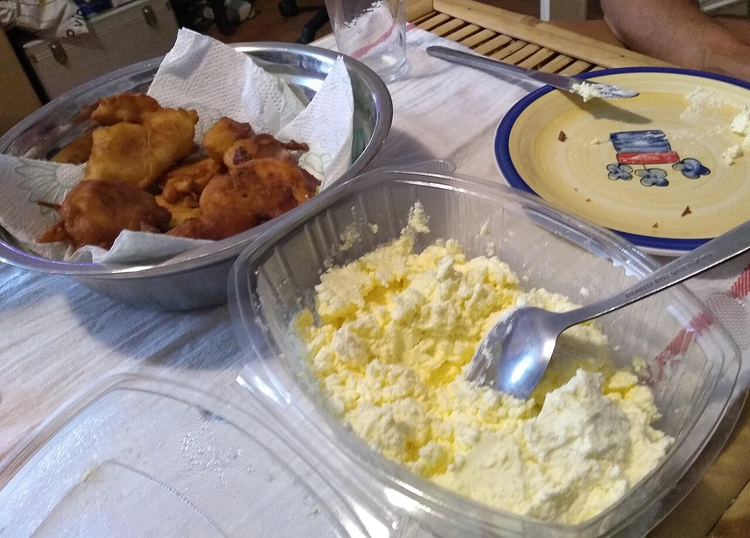
Kajmak is made from skimmed cream: it is aged in layers for several days until the mass becomes thick and yellowish. The product is high in fat, with a nutty flavor closer to butter than to sour cream. In the Balkans, this is a national food, not a tourist exoticism.
Kajmak is eaten with bread and fruit, and added to meat dishes and porridge. At home, it works well for breakfast: spread it on toast and top with a spoonful of jam. In Montenegro, it is served in most restaurants serving national cuisine.
Bringing kajmak into the EU and Switzerland in personal luggage is prohibited, as with other dairy products. So try it on the spot, and take it home only where it is allowed.
- The catch: dairy products in personal luggage will not be allowed into the EU and Switzerland.
- Where to buy: markets, dairy sections of supermarkets, farm shops.
5. Lavender in sachets and oil
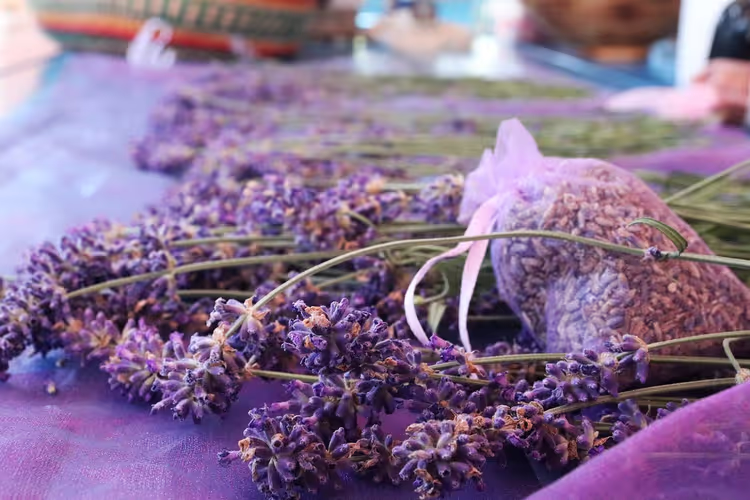
Lavender grows all along the coast and in the mountains, so it is sold everywhere: bunches, sachets, oil, jam, flavored sugar. It is also used to make the rolls you can try in the bakeries of Kotor and Herceg Novi.
Cotton sachets are placed with bed linen or in a wardrobe. They give off a fresh scent that lasts a season. The oil is used for aroma lamps, massage, or baths, and here the seller's honesty matters.
In pharmacies and souvenir shops, the selection is larger, but prices are higher. In remote resort villages, the same sachets cost less than in the center of Kotor or Budva.
- The catch: the sachet scent fades after a season, and diluted oil gives itself away with a sharp alcohol smell.
- Where to buy: pharmacies, souvenir shops, private sellers at markets.
6. Plantaže wine: Vranac and Krstač
 © Bjoertvedt · CC BY-SAPhoto: Bjoertvedt, CC BY-SA (https://creativecommons.org/licenses/by-sa/4.0), Wikimedia Commons
The country's largest winemaker, Plantaže, operates on two sites: red varieties grow near Lake Skadar, white ones in the outskirts of Podgorica. The first Vranac wine went into oak barriques in 2005, and since then aging takes 18 months in barrels made of French-Slavonian oak (winery history).
The red Vranac is full-bodied, with cherry and wild berries. The white Krstač is dry, with a floral aroma, served with fish and cheese. The rosé is made from red grapes using a separate technique, and the dessert wine Medun is made from semi-dried grapes.
The price range is wide: from table bottles to collectible aged vintages. You can only take a limited quantity out, and the limits depend on the country of entry.
- The catch: glass breaks in a suitcase and adds excess weight, and alcohol import limits differ for each destination.
- Where to buy: Plantaže brand stores, supermarkets, wine shops near the vineyards.
7. Rakija: šljivovica, lozovača, kajsijevača
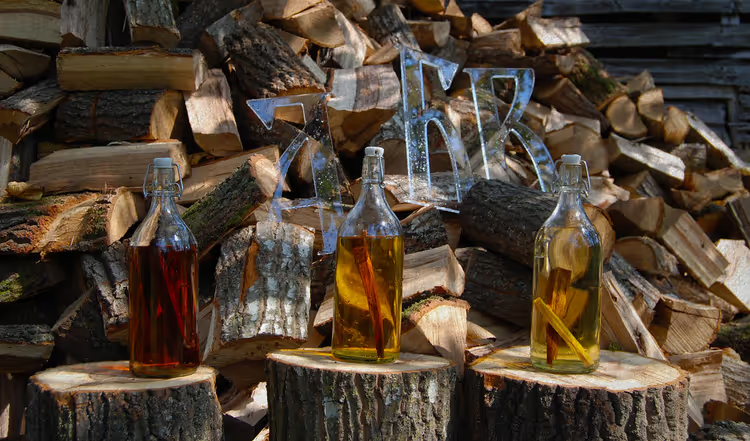 © Radoslav Minchev · CC BY-SAPhoto: Radoslav Minchev, CC BY-SA (https://creativecommons.org/licenses/by-sa/2.0/), Flickr
Rakija is considered essential at any gathering, and in strength it is several times stronger than wine. The names depend on the raw material: šljivovica from plums, lozovača from grapes, viljamovka from pears, kajsijevača from apricots, jabukovača from apples. Honey, nuts, herbs, and anise are added to the mix.
It is drunk from small shot glasses in small sips, so a bottle lasts a long time. The homemade version (domaća) is valued more than the store-bought one: it is made in villages, often for sale by the roadside.
Small bottles are convenient for gifts: they do not weigh much and let you put together a set of several varieties. If you buy at a market, ask to taste before buying.
- The catch: strong spirits are not allowed in carry-on luggage, so pack them in checked baggage and watch the weight.
- Where to buy: markets, village farms, supermarkets, duty-free.
8. Nikšićko beer from Nikšić
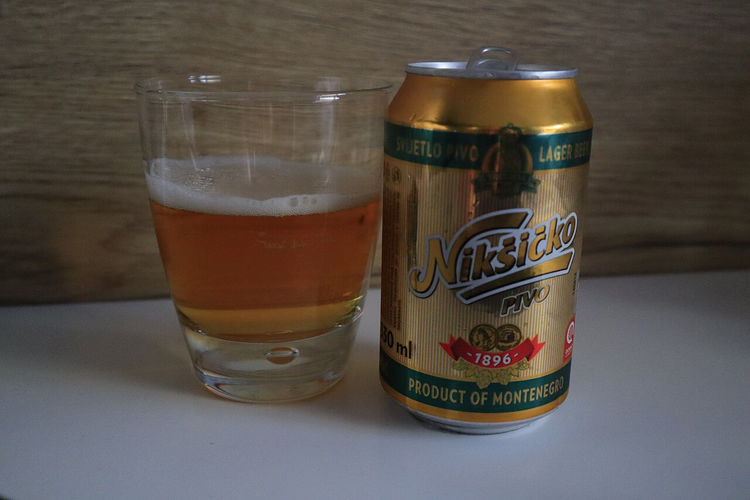 © Wistula · CC BY-SAPhoto: Wistula, CC BY-SA (https://creativecommons.org/licenses/by-sa/4.0), Wikimedia Commons
The Trebjesa brewery has been brewing beer in Nikšić since 1896 and remains the country's largest beer producer (Trebjesa history). Today it is part of Molson Coors, so the lineup includes Jelen, Beck's, and Staropramen alongside the local Nik.
The Nikšićko brand is a light lager: malt, hops, barley, and mountain water. It comes in Nik Gold and Nik Cool variants, while the dark version is less common and mostly found in cans. A glass at a bar costs less than a European one, so a tasting costs almost nothing.
People bring cans home because glass is heavier and breaks. You won't be able to replicate the taste of draft beer by the sea in another city, but a can with the logo will remind you of the trip. For fresh beer from small breweries, look near the breweries themselves.
- The catch: cans take up weight, and the taste of draft beer can't be brought back home.
- Where to buy: supermarkets, bars and pubs, brewery brand stores.
9. Cheese from Njeguši and leaf cheese
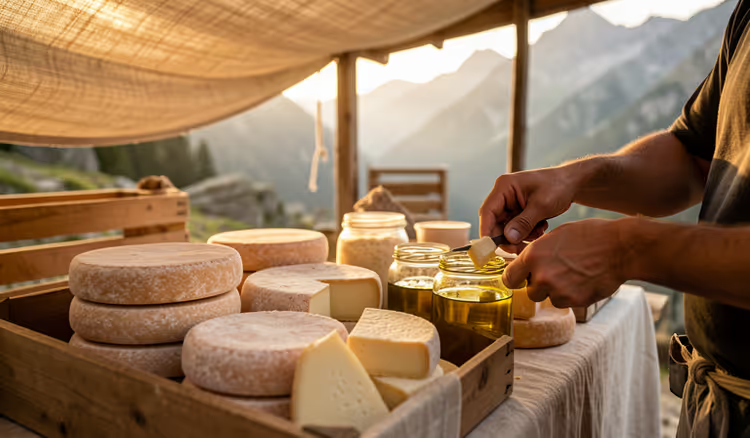 AIIllustrative image: AI-generated
Cheesemakers in mountain villages keep goats and sheep, so the cheese here is dense and salty. The wheels are aged in olive oil, which makes the flavor softer and the rind darker. At markets you'll hear simple labels: young, old, cow's milk, goat's milk.
A separate story is leaf cheese (lisnati) from the Kolašin area. It is cut into thin sheets and made according to a recipe that is not repeated outside the valley. This particular variety costs more than the others because its yield is small.
Marinated cheese is sold in jars filled with oil: this option travels home easily and keeps longer than fresh. For gifts, choose small vacuum packs, they're easier to hand out.
- The catch: a fresh wheel leaks in the heat; without vacuum sealing and cold, it won't make it home.
- Where to buy: markets, Njeguši cheesemakers, dairy shops in Kolašin.
10. Kapa with gold embroidery
The kapa looks simple: a small round black cap with a crimson top. In fact, it is an ancient headdress with heraldic embroidery, where every motif is tied to the country's history. The top is decorated with gold thread, so the cap reads as a ceremonial rather than everyday item.
The kapa is worn as part of the men's national costume, and tourists buy it as a keepsake. In large cities, sellers ask noticeably more for it than in villages and markets in the country's interior. Choose dense wool and even embroidery; the cheap version falls apart after the first wash.
- The catch: in tourist centers the price is inflated, so look for a kapa at markets away from the waterfront.
- Where to buy: markets, folk craft shops, shops at ethno-villages.
11. Paintings with Adriatic landscapes
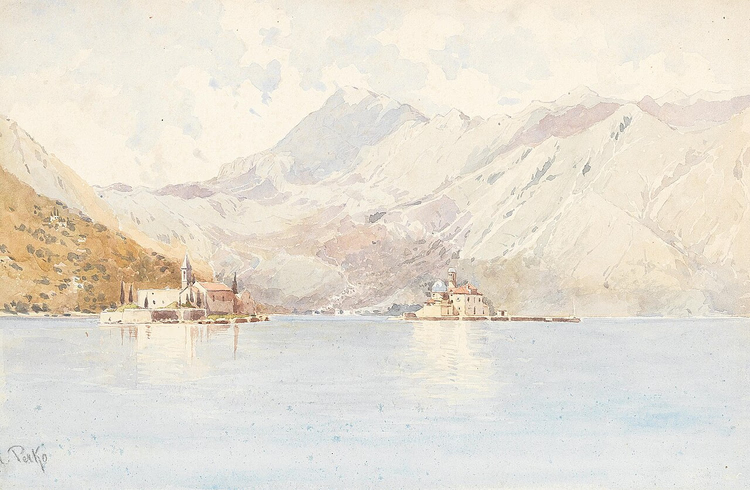
Artists on the waterfronts sell three categories of work: printed posters, artist's copies, and pieces from gallery collections. The category determines both the price and how long the painting will last on your wall. Sometimes you recognize a bay on the canvas where you swam a week ago.
Most often people buy sea and mountain landscapes, as well as views of old towns like Kotor and Perast. At home, such a piece fills an empty spot on the wall and reminds you of the trip better than a magnet. Buy a copy of a known master only from a gallery and with a receipt.
Street vendors are willing to give you a deal if you buy two works at once. Ask them to roll the canvas into a tube, otherwise it will arrive with creases along the edges.
- The catch: a large frame won't fit in carry-on luggage, and a printed poster costs less at home.
- Where to buy: galleries in Kotor and Budva, piers, artists' workshops.
12. Kotor silver and filigree
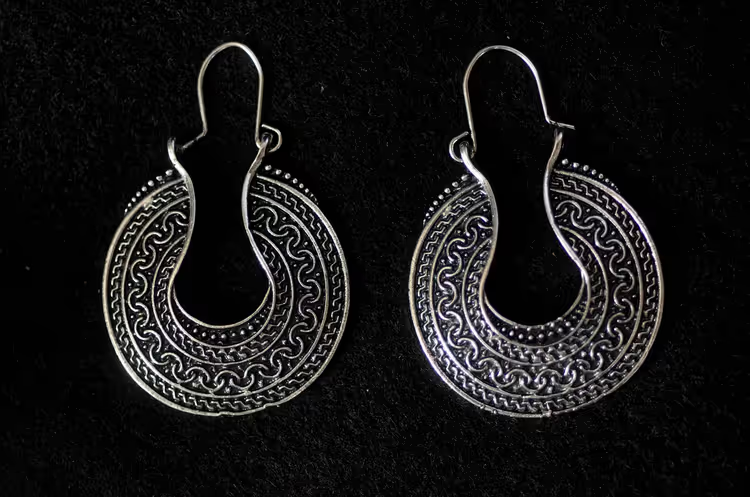
Filigree is woven from thin silver threads, with semiprecious stones and enamel added. This is how earrings, bracelets, rings, pendants, and small tableware are made. Kotor workshops have kept this technique for centuries, so in the old town you'll find dozens of shop windows with such jewelry.
Nearby they also sell branded goods: Italian costume jewelry, watches, accessories. Their prices are close to European ones, so buying here only makes sense during a sale. Local silver, however, is genuinely cheaper than in shops in major European cities.
For an expensive piece, be sure to keep the receipt until you get home: customs may ask for proof of value if you are carrying several pieces of jewelry.
- The catch: expensive purchases will have to be declared, so keep the receipt handy.
- Where to buy: jewelry stores and workshops in Kotor, markets, shops in the Old Town.
13. Wool and Italian clothing
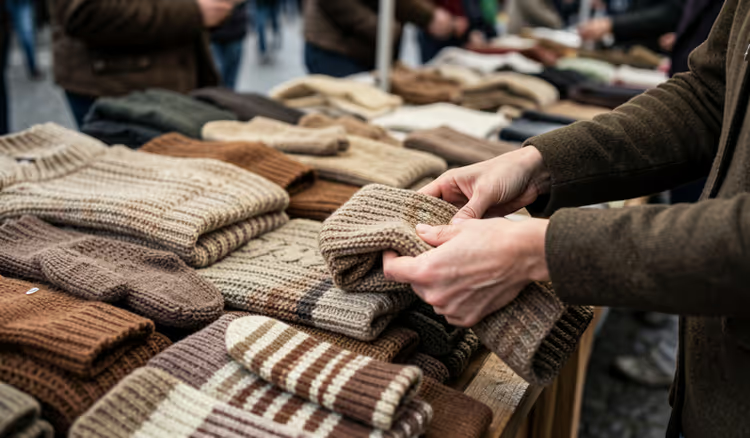 AIIllustrative image: AI-generated
Clothing comes to Montenegro from two directions: from Italy and from Turkey. In boutiques in Podgorica and Bar you'll find Italian collections, while coastal stalls sell Turkish mass-market goods alongside products from China. The difference in price and quality is obvious as soon as you pick up the fabric.
What's worth bringing home is Montenegrin wool: sweaters, shawls, socks, mittens, hand-knitted scarves, and wool tablecloths. Socks and mittens keep you warm in a cold climate, and a scarf replaces a down jacket in the off-season. Knitting techniques are passed down in families here, so patterns are rarely repeated.
Sales take place in late August and in December, when discounts reach their seasonal peak. If you're planning a big purchase, time your trip around those weeks.
- The catch: cheap items from beach stalls last one season.
- Where to buy: boutiques in Podgorica and Bar, markets, hand-knitting shops.
14. Hand-painted ceramics
Bringing pots and pans from the country makes no sense; you have plenty at home. But ceramics deserve attention: large flat serving dishes, jugs, cups, and coffee cezves. The painting is applied by hand and covered with glaze, so each piece differs slightly from the next.
Different clays are used: fireclay, red and brown clay, sometimes porcelain and stoneware. The motifs repeat local landscapes, houses, and grapevines. The dishes are used for hot food, salads, and fruit, while a cezve for coffee makes a practical gift.
Pack ceramics in clothing and carry them in hand luggage; in checked baggage everything else will crush them. If you're buying a set, check that all pieces have the same glaze shade.
- The catch: ceramics are heavy and fragile; you can only carry them in hand luggage with padding.
- Where to buy: markets, craft fairs, shops at workshops.
15. Dark honeydew honey
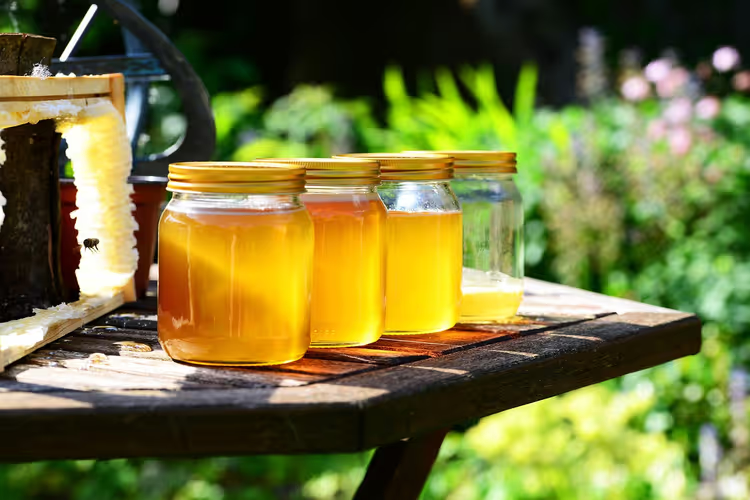
Next to the golden jars on the shelves sits almost black honey. This is honeydew honey: bees collect it not from flowers but from honeydew on oak, maple, linden, and conifers. In Europe this product is valued for its medicinal properties and bought more as a remedy than as a dessert.
A separate category is black cumin honey, used in folk medicine for the stomach. The taste of honeydew honey is dark, with a bitterness and a long aftertaste: it is nothing like acacia or linden honey. In Montenegro it is sold at apiaries, including at the Morača monastery.
Buy from a beekeeper and ask to taste: the difference between varieties is huge, and the price rises with the rarity of the source. A small jar is more convenient for a gift.
- The catch: liquid honey leaks in baggage, and the taste depends heavily on the year and the apiary.
- Where to buy: apiaries, monastery shops, city markets, beekeepers' stores.
16. Icons, candles, and brojanica
 AIIllustrative image: AI-generated
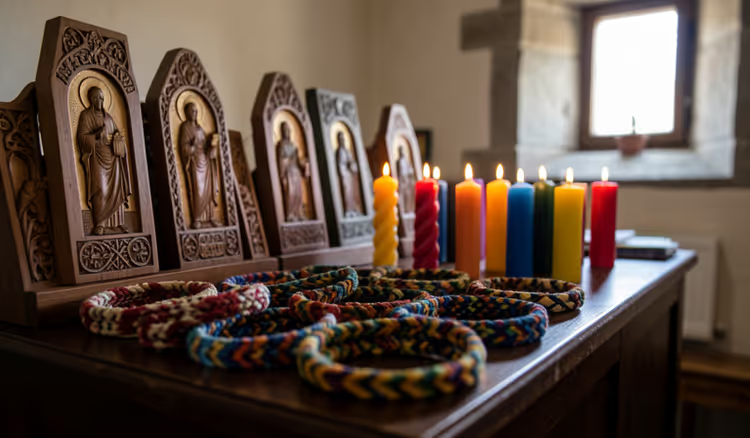
Religious souvenirs in Montenegro are sold both in shops and directly at monasteries. Carved wooden icons are inexpensive if you choose a small size. Candles are made from colored wax: they come straight, twisted, and carved.
The brojanica deserves special attention: a blessed bracelet made of sheep's wool. Monks weave it, knotting crosses into the braid, and it is worn as a reminder of prayer. In monastery shops you'll also find herbal blends, soap, ointments, and honey from their own hives.
If you want genuine handmade work, skip the stalls near the beach and go into a monastery or parish shop. There they will also tell you which herbs to brew and how.
- The catch: in beach stalls, stamped pieces are sold as icons rather than carvings.
- Where to buy: monastery shops, parish stores, souvenir sections.
17. Cosmetics from pharmacies and monasteries
You will find mass-market cosmetics in resort pharmacies and supermarkets with almost no restrictions: European brands, children's lines, hair care products. Prices are not much different from back home, but the selection is tailored to sun and sea water.
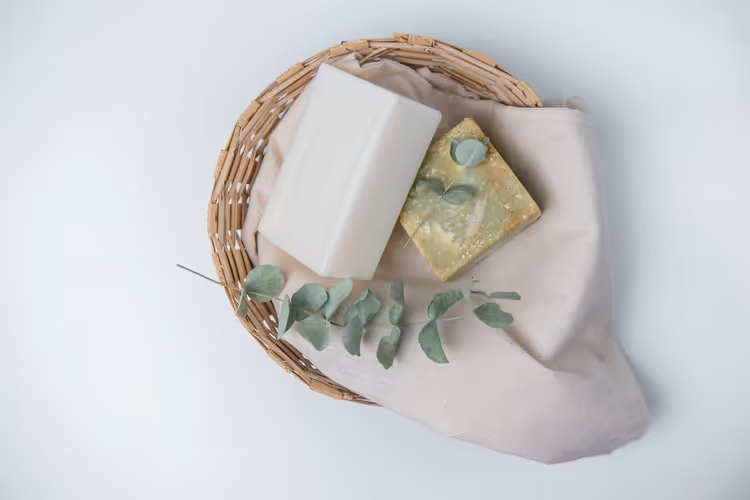
More interesting is natural soap made in monasteries from local olive oil and herbs. It smells good, suits sensitive skin, and costs about the same as an ordinary souvenir. Nearby they sell lavender creams, oils, and after-sun balms.
Buy only what you will actually use at home: a bar of soap does not take up much space, but a set of creams can weigh down your suitcase. It is better to skip expensive skincare lines at resort pharmacies; you can find them on sale back home.
- The catch: mass-market cosmetics are not worth a special trip, the price difference is small.
- Where to buy: pharmacies, supermarkets, monastery shops.
18. Wicker baskets and boxes
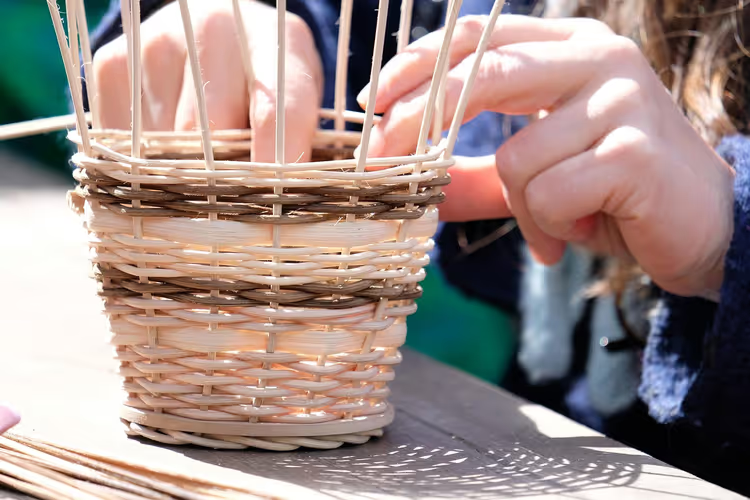
Wicker weaving in Montenegro is tied to water: willow branches grow along the shores of lakes and rivers. Craftsmen use purple willow, white willow, and broom, less often grapevine. Each region has its own technique, so two similar baskets are woven with different patterns.
Wicker is used to make boxes, vases, chests, mats, small boxes, and household items. A special item is the sheverni basket, used for mushroom picking in the mountains. At the market these items are inexpensive and look honest, with no varnish or plastic.
Small boxes and baskets for bread or Easter kulich make convenient gifts. Check that the branches fit tightly and no ends stick out, otherwise the item will snag fabric in your suitcase.
- The catch: wicker items get crushed in luggage and take up space that could be used for clothes.
- Where to buy: markets, craft fairs, villages near Lake Skadar.
19. Gusle as a musical souvenir
 © Unknown author · CC BY-SAPhoto: Unknown author, CC BY-SA (https://creativecommons.org/licenses/by-sa/3.0/rs/deed.en), Wikimedia Commons
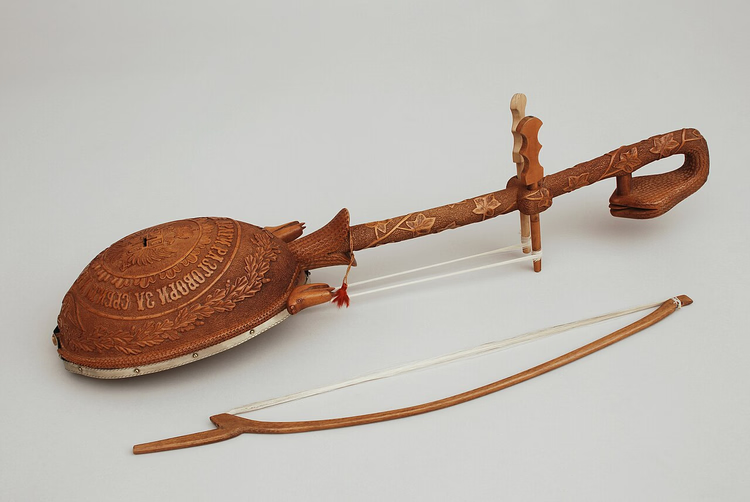
The gusle in Montenegro is remembered from before Christianity: it was played to accompany tales of ancestors. The instrument is made of beech or ash, usually has one or two strings, and the body is hollowed out by hand. In souvenir shops and at small bazaars you will find dozens of versions with different finishes.
Craftsmen compete in carving: the body features ornaments, images of eagles, snakes, goats, and portraits of famous people. A mandatory decorative element is a ram's head, a symbol of fertility. The sound of gift versions is not tuned; this is more of a wall piece.
If you are bringing a gusle as a gift, ask the seller to wrap the body tightly and secure the strings. The instrument will not get dented in luggage if it travels in rigid packaging.
- The catch: souvenir gusle are not tuned and do not sound right, you will not be able to play them.
- Where to buy: souvenir shops, bazaars, folk instrument workshops.
20. Dolls in national costumes
As a gift for a child, people here buy dolls dressed in the costumes of a specific people. Montenegrin series include shepherds and soldiers, and their clothing replicates the real thing: a woolen vest called cmadan, a long silk belt, a gunj jacket, a kapa cap. From the outfits a child can tell a young girl from a married woman.
The costume was made from practical materials: wool, linen, homespun cloth in muted shades. Some of these items locals still wear today, for example the struka scarf or a woolen blanket instead of a stole. The doll turns out heavy and dense, not a Chinese knockoff.
Most often people buy a set of two or three dolls to show the difference between everyday and festive dress. If you are bringing the gift on a plane, ask for a sturdier box: faces and embroidery get easily crushed in a suitcase.
- The catch: a doll in an authentic costume costs noticeably more than an ordinary toy.
- Where to buy: souvenir shops, markets, ethnographic museum shops.
Our picks: what to bring for whom
Task | What to bring | Where to buy | Price level |
|---|---|---|---|
Colleagues at work | vacuum-packed pršut, rakija in small bottles | markets, supermarkets | mid-range |
Parents | Vranac wine, leaf cheese, dark honey | wineries, cheese dairies, apiaries | above average |
Children | dolls in national costumes, honey | souvenir shops, apiaries | mid-range |
For home as a keepsake | painted ceramics, wicker baskets, paintings | markets, workshops | from low to high |
A friend who reads | carved gusle, an icon, a brojanica | bazaars, monastery shops | low |
For yourself on the road | kajmak, figs, lavender sachet | markets, pharmacies | low |
Compare not only price but also weight: the suitcase at the airport is weighed more strictly than you think. Food is almost always heavier than souvenirs, so set aside a separate bag for it.
⁉️🤔 Frequently asked questions
How much does a basic set of gifts from Montenegro cost?
Start with the heaviest items. Pršut will cost the most, and a bottle of local wine and a jar of honey will add a bit more. A set for several people easily fits into the budget of an average trip if you buy food at markets rather than in hotels.
What will not get through customs?
Meat and dairy products from Montenegro are prohibited in personal luggage when entering the EU and Switzerland. So do not bring pršut and kajmak there; vacuum sealing and factory packaging will not help. Fresh fruit, plants, and seeds are also restricted by many countries. Check the import rules on your customs website before buying.
Where are souvenirs cheapest?
Farther from the waterfront. Markets in Nikšić, Cetinje, and Podgorica keep prices lower than resort areas, and apiaries, oil mills, and monastery shops sell without a sea-view markup. In Budva and Kotor the same items cost more, especially in shops right by the pier.
How much alcohol can you take out?
Limits depend on the country you are flying to: EU countries have their own duty-free allowances, and they are lower than you might think. Bring alcohol in checked luggage; it will not be allowed in carry-on. Look up the exact figures on the customs website for your destination.
What to bring if your suitcase is already full?
Then take things that take up no space and do not break: lavender sachets, a brojanica, dried figs, a pack of honey in soft packaging. Such gifts are easy to distribute among bags and you will not mind giving them away. Heavy items like ceramics and wine can wait until your next trip.
In short: what is worth planning ahead
Buy souvenirs on the last day of your trip so that food does not sit in the car in the sun.
Put together your set in advance and check the weight before leaving for the airport: then you will not be rearranging jars at the check-in counter.

A small editorial team writing guides for independent travel. We travel ourselves, but we haven’t been everywhere, so we check prices, opening hours and how to get there against official sources.