








What to do in winter in Croatia: thermal pools, skiing and campsites without crowds
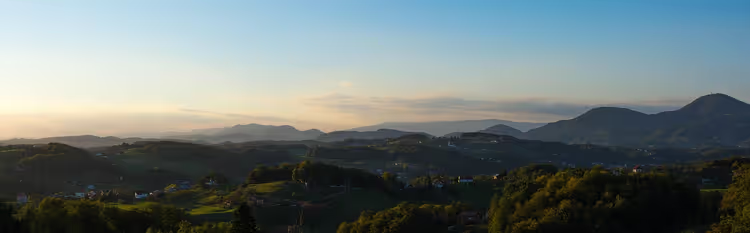
Winter in Croatia looks completely different. The summer crowds disappear, the waterfronts empty out, and prices drop to low-season levels. You walk the walls of Dubrovnik with no line and park your camper where you wouldn't have found a spot in July.
Below, we break down what to do in Croatia in winter, where it's warmest, what to pack, and which campsites stay open year-round.
Ad: this article contains affiliate links, we earn a commission if you book through them, at no extra cost to you.
 © PaliGol · CC BY-SAPhoto: PaliGol, CC BY-SA (https://creativecommons.org/licenses/by-sa/4.0), Wikimedia Commons
What to do in Croatia in winter
💡 In short:
- Check out Advent in Zagreb, Museum Night in late January, and the Rijeka Carnival in February.
- Warm up in thermal springs and hit the slopes from December through February.
- Tickets, opening hours, and open campsites: as of 09/2026, verified on the official Plitvice Lakes National Park website and camping.hr.
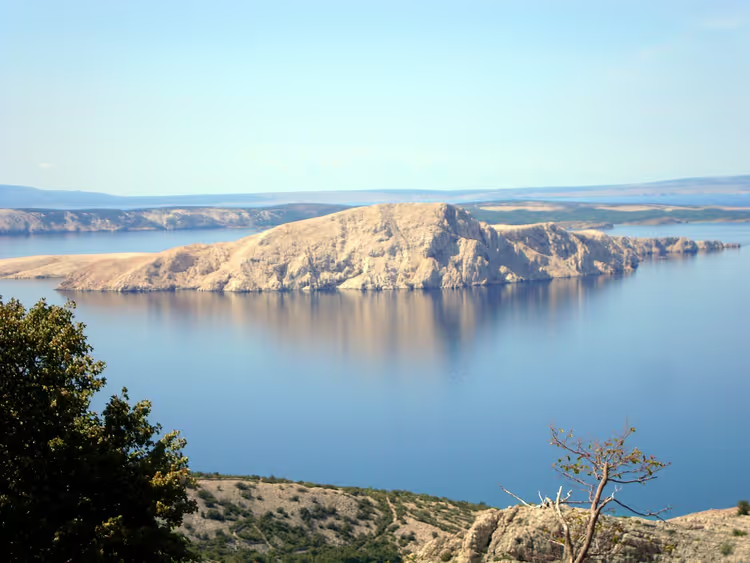
The main Adriatic resorts go quiet in winter. In Dubrovnik, Split, and on Hvar, you stroll the waterfronts without crowds and walk up to major sights with no lines. Game of Thrones fans photograph filming locations alone, not over the shoulder of someone else's tour group.
Winter markets and festivals
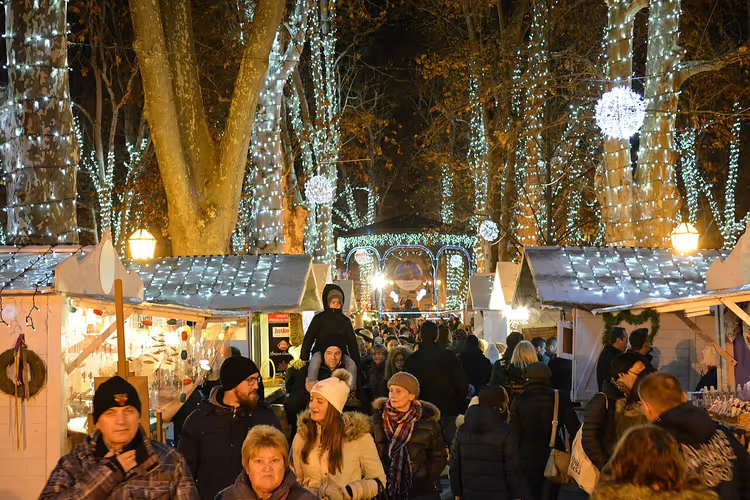
From late November through the first days of January, Zagreb hosts Advent (as of 09/2026, adventzagreb.hr). There's more than one market here: over 25 locations across the city, pavilions with live music, an ice rink, and a lit-up pedestrian tunnel. On weekends, Ban Jelačić Square gets packed, so come on a weekday evening.
 © Branko Radovanović · CC BY-SAPhoto: Branko Radovanović, CC BY-SA (https://creativecommons.org/licenses/by-sa/4.0), Wikimedia Commons
Dubrovnik runs a winter festival starting in December that lasts nearly a month and a half. In late January, Museum Night opens: on 30.01.2026, museums and galleries welcome visitors in the evening, most from 6:00 PM (as of 09/2026, noc-muzeja.hr). Carnival season kicks off in February. The main parade of the Rijeka Carnival takes place on 03.02.2026, while in the town of Pag the celebration is quieter and more colorful.
Winter cuisine
In winter, menus feature sarma, grah, and bakalar. Hearty dishes: stuffed cabbage rolls, thick bean soup, cod. Portions are large, and after lunch you're unlikely to order dessert. Red wine is poured by the glass in nearly every konoba.
Hiking and national parks
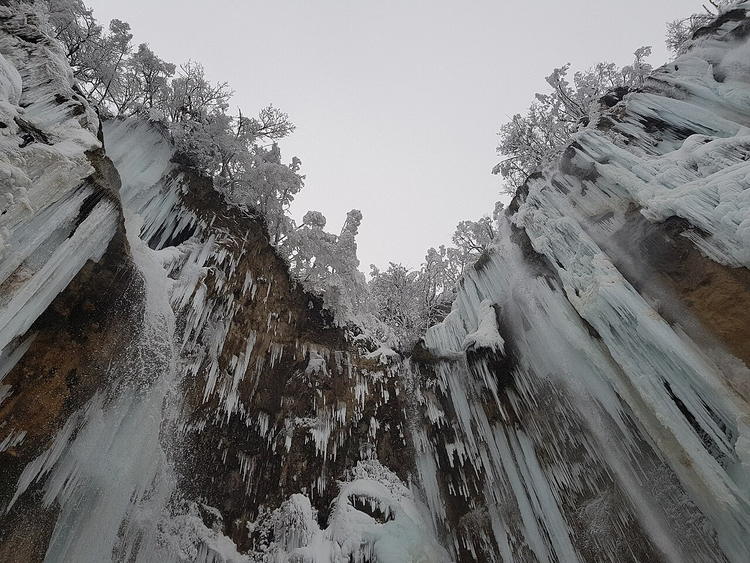
National parks empty out in winter. Plitvice Lakes look different under snow and frost: some waterfalls freeze, and the ice holds the light. Winter admission is cheaper than summer; check the current price and schedule on the park's official website. Bring waterproof footwear: the trails are slippery.
 © 2xk · CC BY-SAPhoto: 2xk, CC BY-SA (https://creativecommons.org/licenses/by-sa/4.0), Wikimedia Commons
Alpine skiing
Don't count on Bjelolasica, the Olympic base that old guidebooks still mention: the complex has been closed since 2015 (as of 09/2026, sviportali.com.hr). Near Rijeka, Platak is operating: the ticket office opens around 8:00, lifts run from 9 to 4, and on Tuesdays and Fridays you can ski under floodlights from 7 to 10 pm. The season usually lasts from December to February, but snow cover is uneven. During thaws some slopes close, so check trail status before heading out.
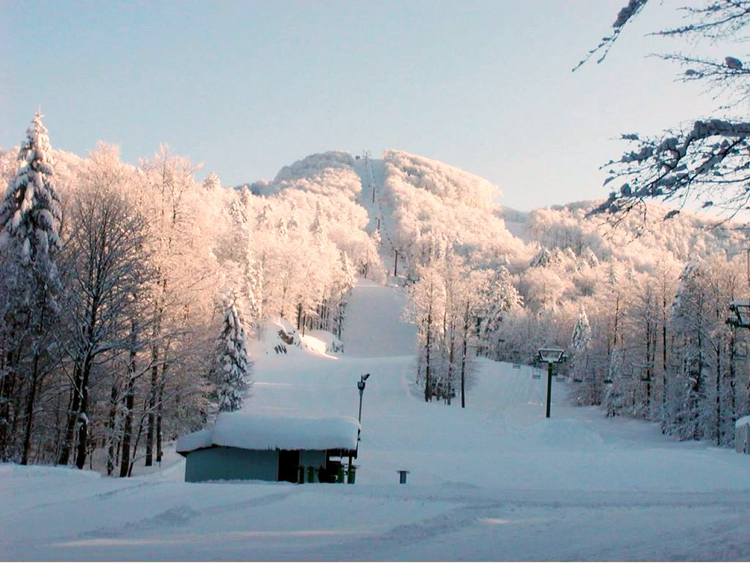 © Zoran Kurelić Rabko · CC BY-SAPhoto: Zoran Kurelić Rabko, CC BY-SA (https://creativecommons.org/licenses/by-sa/3.0), Wikimedia Commons
Thermal springs
Thermal resorts operate year-round, and they're especially good in winter. At Stubičke Toplice and Tuheljske Toplice you swim outdoors while snow lies all around. Bring a swimsuit even in January: you won't be allowed into the pool without one.
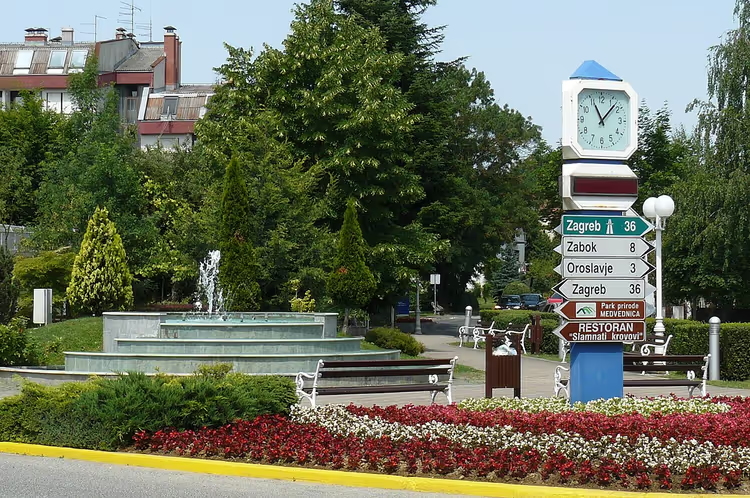 © MOs810 · CC BY-SAPhoto: MOs810, CC BY-SA (https://creativecommons.org/licenses/by-sa/4.0), Wikimedia Commons
Ready-made tours around the country and tickets with a guide are collected in the block below.
Tours and tickets
Guided tours, skip-the-line tickets and activities — most offers can be cancelled free of charge.
See offers on GetYourGuideThe widget loads once you give your consent.
Winter weather: three climate zones
Croatia is divided into three climate zones, and winter weather varies greatly among them. Here's a cheat sheet for what to pack.
Region | Daytime | Nighttime | What to bring |
|---|---|---|---|
Dalmatia (Split, Dubrovnik) | above freezing, around ten degrees | around five | a windbreaker and a sweater |
The plains and Zagreb | slightly above freezing | frost | a warm coat and a hat |
Mountainous Croatia | colder than the plains | freezing | a shell jacket and gloves |
Dalmatia has the mildest winters. Daytime temperatures stay above freezing, rain alternates with sun, and a windbreaker and sweater will be enough. On the plains and around Zagreb it's colder than on the coast, and snow sometimes falls. Mountainous Croatia has an alpine climate: cool by day, frequent frost at night, and snow cover that lasts until spring. That's why skiing happens in the mountains.
Watch the road. In winter the bura blows along the coast, a cold and very strong wind. On bridges and near the sea, gusts can knock you off your feet and push your car out of its lane. On such days grip the wheel firmly, slow down, and don't overtake trucks.
What to bring and how to travel
Pack warm clothes according to the forecast, but bring a swimsuit anyway: you'll need it at thermal springs and in hotel pools. For a motorhome, add an extension cord, gas, and a couple of days' water supply.
There's no general requirement to use winter tires in Croatia, but winter equipment is mandatory on some roads. A sign shows exactly where the rule applies (Revija HAK). On these sections you need at least two tires marked M+S with tread of at least 4 mm. On snow-covered roads, chains are additionally required, and studded tires are prohibited.
Wild camping outside designated campsites is not officially allowed in Croatia, so choose your site in advance from the camping.hr list. If you don't want to drive your own motorhome, compare car rental prices: in the low season, rentals are noticeably cheaper than in summer.
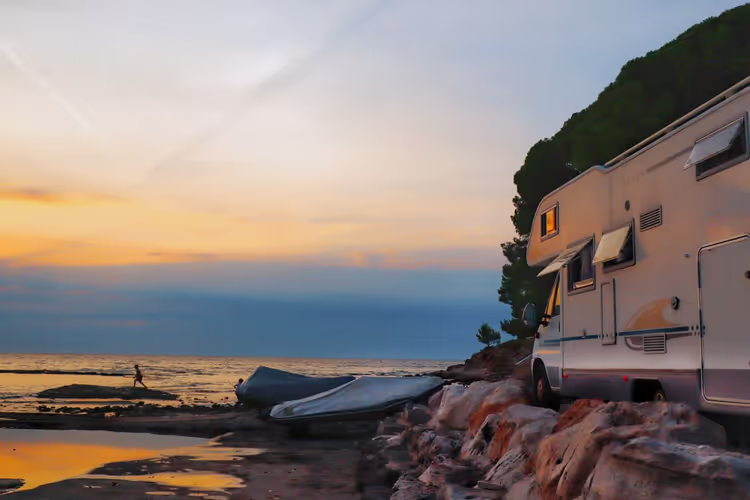
If you're traveling with a dog, prepare the pet documents according to EU rules and keep it on a leash in cities and on beaches. Check the pet entry requirements in advance, as they change.
Camping in Croatia in winter
Some campsites close for the winter, so check their status before you set off. Year-round sites can be found on the camping.hr map: they are available in Istria near Poreč and Pula, in the Kvarner Gulf on the islands, and in Dalmatia.
Near Plitvice Lakes, Camping Plitvice operates in winter and makes a convenient base for a trip to the frozen waterfalls. In the low season, there are usually spots available, so you can plan your route almost spontaneously. Still, contact the site a day or two ahead: in winter, the reception often keeps shorter hours, and nearby cafes and shops may be closed.
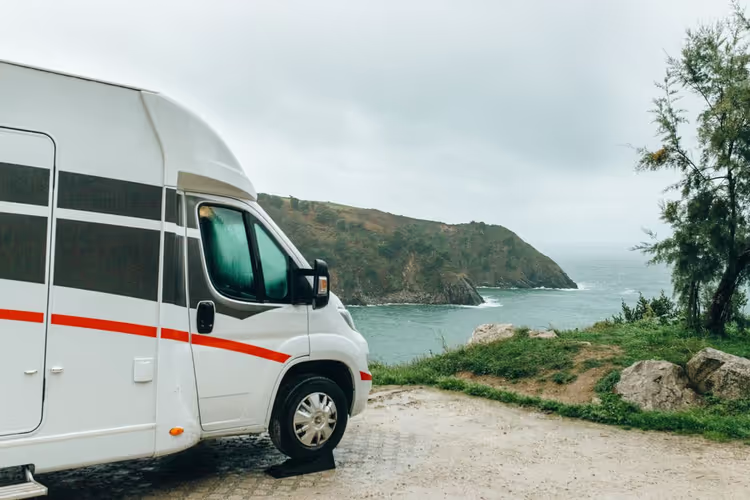
If you want to alternate nights on wheels with hotels, compare hotels and apartments in Croatia on Trip.com.
⁉️🤔 Frequently asked questions
Is it warm on the Croatian coast in winter?
Dalmatia is the mildest in winter: daytime temperatures are usually above freezing, and at night it's around five degrees Celsius. Rain happens, but so does sun. Further north and in the mountains it's colder, and you'll need proper winter clothing there. For walks, bring a windbreaker: the bura wind makes the weather feel noticeably colder than the thermometer shows.
Do campsites in Croatia operate in winter?
Yes, but not all of them. Some sites close for the winter, while year-round ones are listed on the camping.hr map. Most of these campsites are in Istria and the Kvarner Gulf. Before you set off, check the status and reception hours, and remember that wild camping outside campsites is not allowed in the country.
Can you ski in Croatia in winter?
Yes, but the options are limited. Platak operates near Rijeka, and the season usually runs from December to February. Snow cover is uneven, so check the slope status before heading out.
What should you pack for a winter trip?
Warm clothing according to the forecast, waterproof shoes, and a swimsuit for the thermal pools. For the car, bring chains: they are mandatory on snow-covered roads.
Is Plitvice Lakes worth visiting in winter?
Yes, in winter it's one of the main reasons to go to Croatia. The waterfalls partially freeze, snow and ice transform the landscape, and there are almost no tourists. Admission is cheaper in winter than in summer; check the schedule and prices on the park's official website.
In short: what to book
Wintering in Croatia comes down to three things: the mild coast, thermal pools, and open campsites. If you have a week and want to avoid the cold, base yourself in Istria or the Kvarner Gulf: from there, both Pula and the islands are close by. If you want snow and skiing, look for accommodation in Mountainous Croatia and near Platak.
For a short route, two stops are enough: Zagreb with its Advent and thermal resorts, plus one day at Plitvice Lakes. Book your motorhome site in advance, and pack warm clothes and a swimsuit in one suitcase.

A small editorial team writing guides for independent travel. We travel ourselves, but we haven’t been everywhere, so we check prices, opening hours and how to get there against official sources.