
















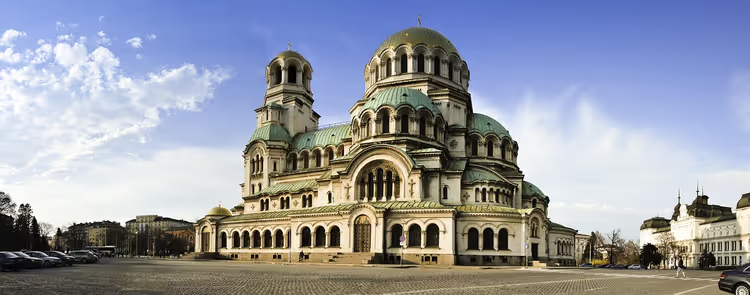
Bulgaria in three days: Tsarevets Fortress, Shipka and the Valley of Roses
Bulgaria for many people ends at the Black Sea coast. But inland, in three days you can drive from Sofia through Veliko Tarnovo and Gabrovo to Kazanlak and back.
After that you will need a car: there are winding mountain roads between the points, and some sites are off the bus routes. Below is a day-by-day plan with prices, opening hours, and distances on the map.
Ad: this article contains affiliate links. We earn a commission if you book through them, at no extra cost to you.
Choosing the route
💡 In short:
- The route is designed for three full days and two overnight stays.
- It is more convenient to travel by rental car than by bus.
- Prices and opening hours: 09/2026, verified on the official website of the Etar Museum and the Sofia metro website.
Western and eastern Bulgaria are not alike. We suggest an eastern loop: Sofia, Veliko Tarnovo, Gabrovo, Kazanlak, and back to Sofia.
In three days you will see both the modern capital and the ancient one. You will walk around Gabrovo, the city of humor, visit several museums, and climb Shipka.
The order of stops is planned so that in the evening you are always at your hotel, not on the road.
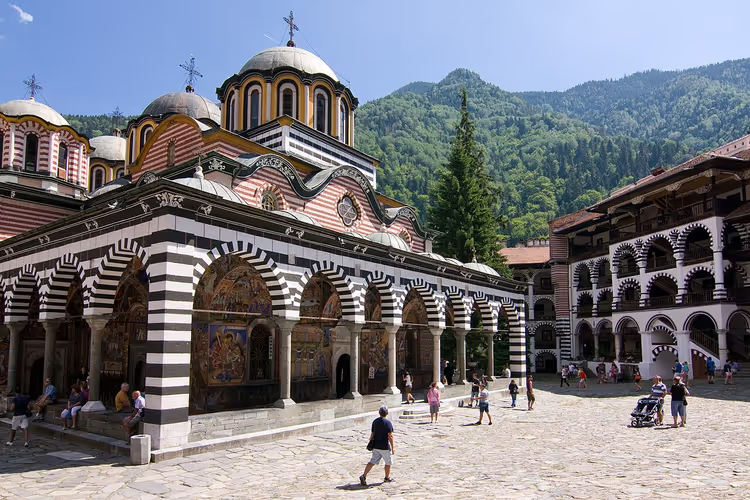 © Raggatt2000 · CC BY-SAPhoto: Raggatt2000, CC BY-SA (https://creativecommons.org/licenses/by-sa/3.0), Wikimedia Commons
How to get there
The country's main air gateway is in Sofia, at SOF airport, the largest hub in Bulgaria. Bulgaria lies at the crossroads of Balkan roads, but for three days a plane is the most convenient option.
Daily flights to Sofia operate from Vienna, Munich, and Istanbul. In winter, seasonal charters to ski resorts are added.
Book tickets in advance. Before weekends and at the height of the season, prices rise noticeably, especially for ski destinations.
How to get from the airport to the city
Sofia airport is away from the center, so travel time depends heavily on traffic. The metro remains the most predictable option.
Line M4 goes directly to Terminal 2. Trains run from 5:26 to 23:49, and a ticket costs €0.80 (as of 09/2026, Sofia metro website). From there you ride to the center without transfers.
If you arrive at night, check the last trains in advance. Then your options narrow to a taxi or a transfer.
A bus also runs from the airport to the center, but it is inconvenient with luggage. Take a taxi at the official stand by the exit: the meter should be on, and the price list should be on the window.
A transfer with a driver is easy to book in advance. You will be met in the arrivals hall and driven to your hotel.
Hotels: Sofia and Veliko Tarnovo
Sofia has many hotels for any budget. Hostels and inexpensive three-star hotels are located near the main attractions. For five stars and quiet, people go to the Vitosha district at the foot of the mountain of the same name.
For an overnight stay in Veliko Tarnovo, it is best to stay near the Tsarevets Fortress. Then an evening walk through the old town will take just a couple of minutes on foot.
For hotel prices in central Sofia, see Trip.com. In high season, book several weeks in advance, otherwise the choice narrows to the outskirts.
Car rental
You can rent a car in Bulgaria from age 21 with a driver's license. An international permit does not hurt, but an EU country license is usually enough.
A three-day rental solves the transportation issue. The price depends on the season and car class, so book in advance and compare rental terms.
Rental offices are at the airport, in central Sofia, and at major hotels. You can discuss the terms with the company in advance on its website.
Fuel and toll road sections are paid separately from the rental.

Day 1: Sofia and Alexander Nevsky Square
Sofia, the capital of Bulgaria, is one of the oldest cities in Europe. People settled here as far back as the Neolithic era, helped by the mild climate, nearby mountains, and hot mineral springs.
The center is compact. You can cover all the main sights around Alexander Nevsky Square in three hours, and in the evening head down to Vitosha Boulevard.
Alexander Nevsky Cathedral
Start at Alexander Nevsky Square. Here stands the Alexander Nevsky Cathedral, the symbol of Sofia and one of the largest Orthodox churches in the Balkans.
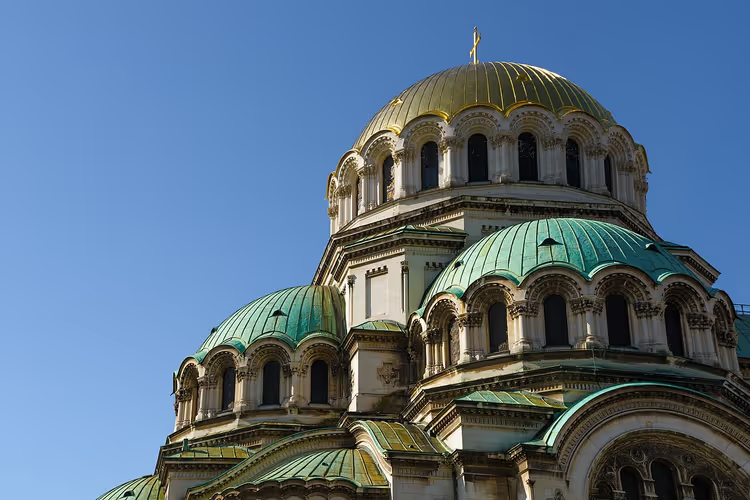
Admission to the cathedral is free. You only pay for the crypt museum with its icon collection in the basement. Take a guide for the visit: without one, the details of the murals will remain unclear.
Nearby stands the Church of Saint Sofia, which gave the city its name. It survived centuries of Ottoman rule: the ancient frescoes have not survived, but the age of the building is impressive.
- The catch: services are held in the cathedral, so loud guided tours are inappropriate here.
Tomb of the Unknown Soldier
At the Tomb of the Unknown Soldier you can take photos. Very close by is the grave of the Bulgarian poet Ivan Vazov.
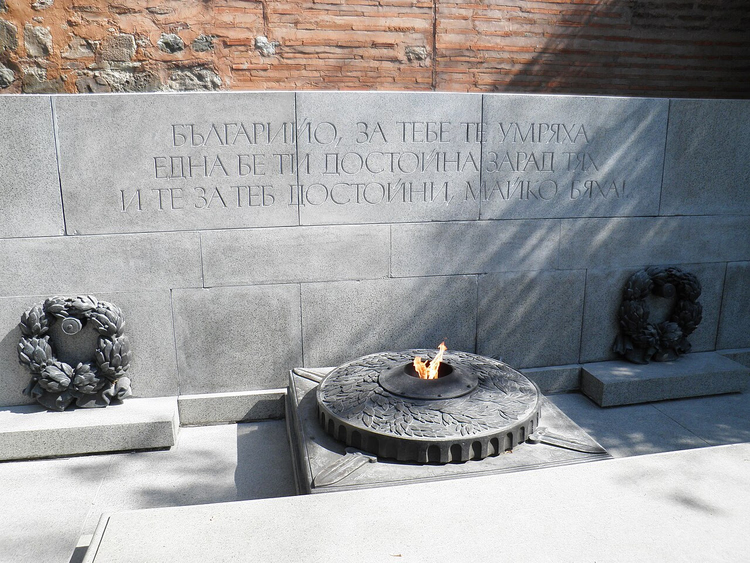 © Mister No · CC BYPhoto: Mister No, CC BY (https://creativecommons.org/licenses/by/3.0), Wikimedia Commons
Synodal Palace
On the other side of the square, the Synodal Palace draws the eye: a mix of Byzantine and Ottoman styles. Nearby stands a monument to the Bulgarian volunteer corps.
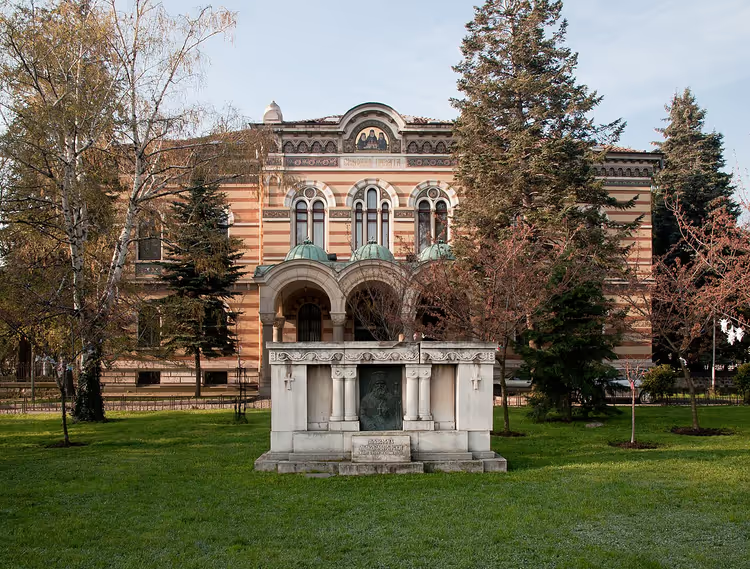 © Plamen Agov (Пламен Агов) · CC BY-SAPhoto: Plamen Agov (Пламен Агов), CC BY-SA (https://creativecommons.org/licenses/by-sa/3.0), Wikimedia Commons
Tourist bus
Further around the center, it is convenient to ride the tourist bus. In an hour and a half it passes the Banya Bashi Mosque, the Rotunda of Saint George, the National Art Gallery in the former Royal Palace, Boyana Church, the Archaeological Museum, and the Church of Saint Petka.
The Rotunda of Saint George is considered the oldest building in the city. You will see it almost immediately after departure.
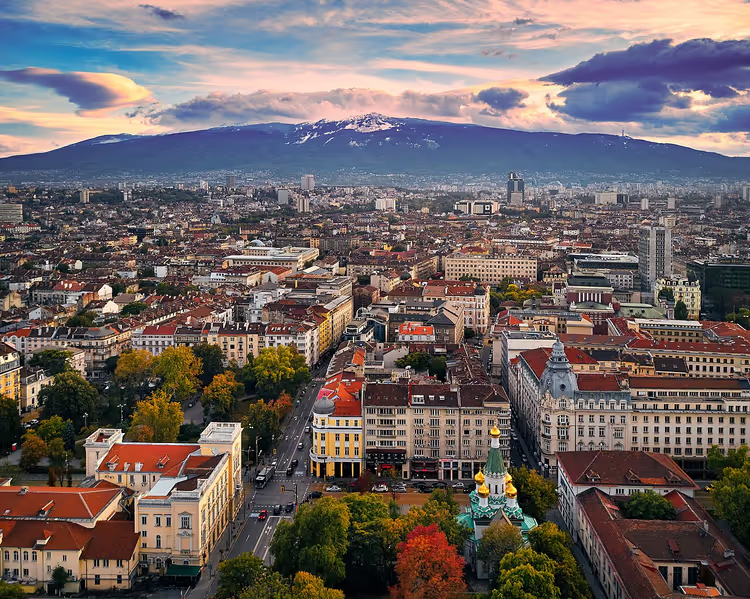 © Deensel · CC BYPhoto: Deensel, CC BY (https://creativecommons.org/licenses/by/2.0), Wikimedia Commons
Buses run once an hour during the daytime. Check the exact schedule at the stop by the square.
Vitosha Boulevard
Spend the evening on Vitosha Boulevard. This is the city's main pedestrian street, with cafes, bars, restaurants, and shops.
There are almost no cars here, so walking with children is comfortable. Prices in cafes are lower than in the centers of Western European capitals.
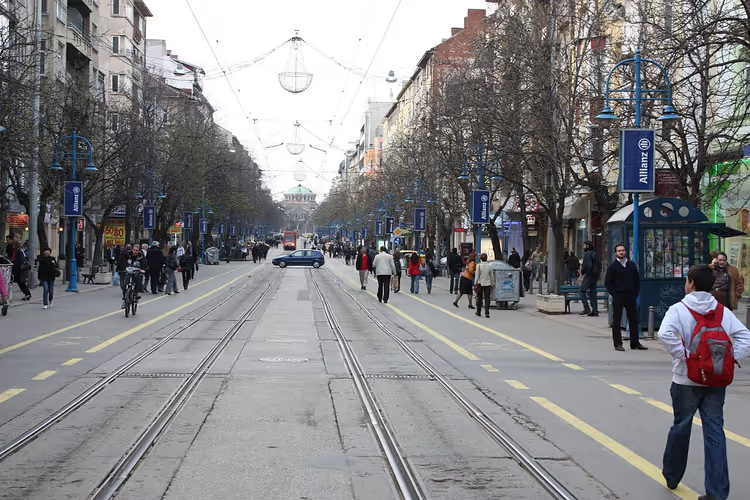 © Apostoloff · CC BY-SAPhoto: Apostoloff, CC BY-SA (https://creativecommons.org/licenses/by-sa/3.0), Wikimedia Commons
1-Day route on the map
We have put the first day's stops on a map. Open the route and use it to plan your walk through the center of Sofia.
Day 1: Sofia and Alexander Nevsky Square
Places on the map
- 1Alexander Nevsky Memorial Cathedral Symbol of Sofia and one of the largest Orthodox churches in the Balkans, free entry
- 2Church of Saint Sofia The church that gave the city its name, it survived centuries of Ottoman rule
- 3Synodal Palace A mix of Byzantine and Ottoman styles at the edge of the square
- 4Djamiya Mosque A stop on the city-centre sightseeing bus route
- 5National Art Gallery Occupies the former Royal Palace
- 6Boyana Church A stop on the sightseeing bus route
- 7Sofia Archaeological Museum A stop on the sightseeing bus route
- 8Church of Saint Petka The last stop of the sightseeing bus loop
- 9Vitosha Boulevard Main pedestrian street with cafés, bars and shops
Day 2: Veliko Tarnovo and Tsarevets Fortress
How to get there from Sofia
The A2 Hemus motorway and the I-4 road connect Sofia with Veliko Tarnovo. You pass the airport and join the Hemus motorway, then the road continues east.
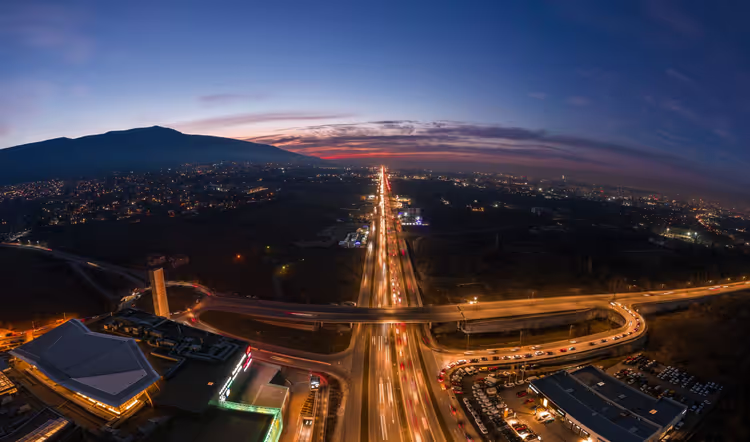
The city is 221 km away (on the map), about three hours on the road. Leave in the morning so you arrive by lunchtime.
Veliko Tarnovo is known as the ancient Bulgarian capital, the city of tsars and poets. It is small, but in terms of monuments it rivals Sofia.
Laki Hotel near the fortress
For the night, consider the Laki Hotel on the edge of a cliff. The rooms look out over Tsarevets Fortress, and on weekends you can see the Sound and Light show right from there.
Rooms have a shower, a fridge and free Wi-Fi, and free parking is available. Prices are moderate, so it is better to book a room in advance.
Tsarevets Fortress
Tsarevets is considered the pride and symbol of Veliko Tarnovo. The fortress stands on the hill of the same name in the city center.
An adult ticket is inexpensive. Allow an hour and a half to two hours for the visit: the climb, walking the walls and the panorama of the old town.
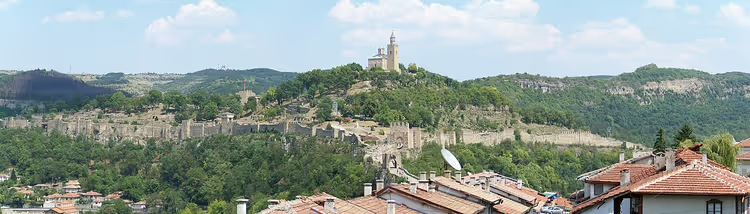 © www.vacacionesbulgaria.com · CC BY-SAPhoto: www.vacacionesbulgaria.com, CC BY-SA (https://creativecommons.org/licenses/by-sa/4.0), Wikimedia Commons
- The catch: the climb up the hill is steep, so bring water in hot weather.
Church of saints Peter and Paul
Then walk down to the foot of the hill. Two churches stand here, each more beautiful than the other: the Church of saints Peter and Paul with its ancient interior, and the 13th-century Church of the Forty Martyrs.
The Tsarevgrad Tarnov multimedia center is open nearby. It is better value to buy a combined ticket for the center and both churches: children enter free with it.
Sarafkina House Museum
From here, head to General Gurko Street. There you will find the Sarafkina House Museum, a charming ethnographic museum. It shows how Bulgarians lived two centuries ago.
 © Adam Jones from Kelowna, BC, Canada · CC BY-SAPhoto: Adam Jones from Kelowna, BC, Canada, CC BY-SA (https://creativecommons.org/licenses/by-sa/2.0), Wikimedia Commons
Mehana Gurko Hotel
Right there on Gurko Street, you can have lunch at the Mehana Gurko Hotel. The food is good, and the dining room looks out over the gorge and the houses on the other bank.
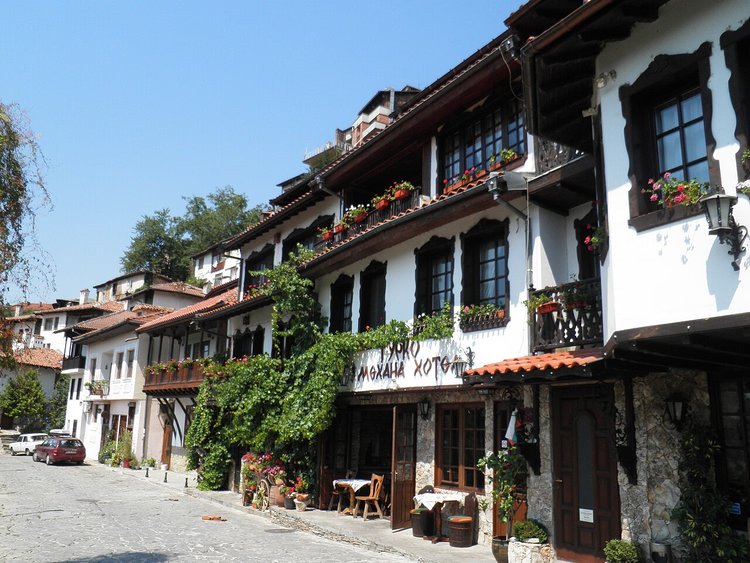 © Mister No · CC BYPhoto: Mister No, CC BY (https://creativecommons.org/licenses/by/3.0), Wikimedia Commons
Archaeological Museum
From Gurko Street it is easy to cross to Ivanka Boteva Street and stop by the Archaeological Museum. It occupies a picturesque building, and the exhibits include finds from the Neolithic era.
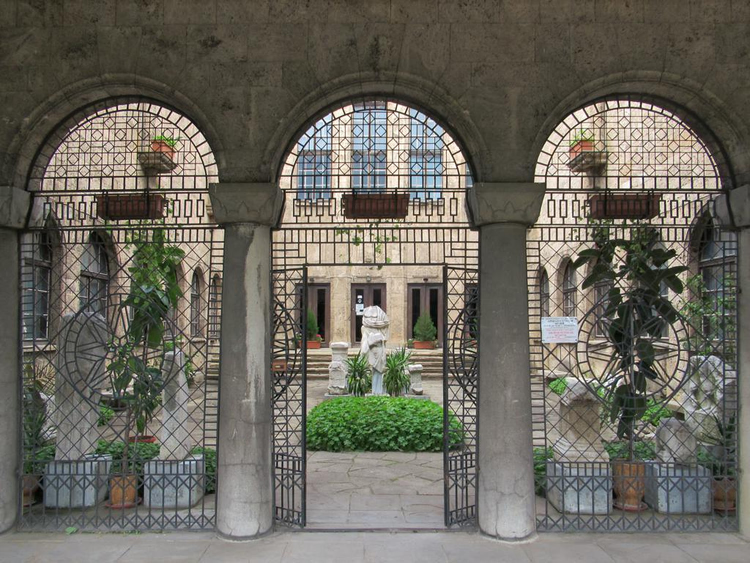 © David Stanley from Nanaimo, Canada · CC BYPhoto: David Stanley from Nanaimo, Canada, CC BY (https://creativecommons.org/licenses/by/2.0), Wikimedia Commons
Admission is paid. Guide services and a photography permit are paid separately, so check at the ticket office.
Samovodska Charshia
You can end the day at Samovodska Charshia. It is a street with cobblestones, whitewashed houses and souvenir shops.
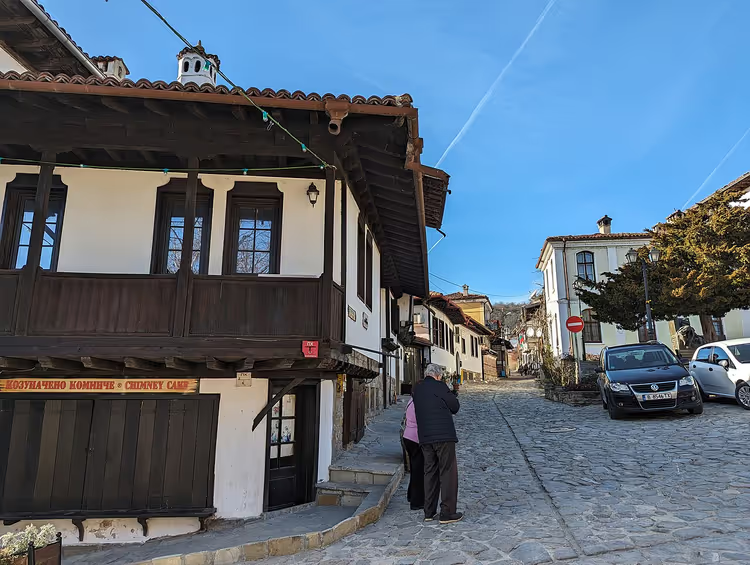 © Андрей Романенко · CC BY-SAPhoto: Андрей Романенко, CC BY-SA (https://creativecommons.org/licenses/by-sa/4.0), Wikimedia Commons
Hadji Nikoli Inn
Another notable street in the old town is called Rakovski. Here you will find the Hadji Nikoli Inn, which gives a sense of the interior of an eastern caravanserai.
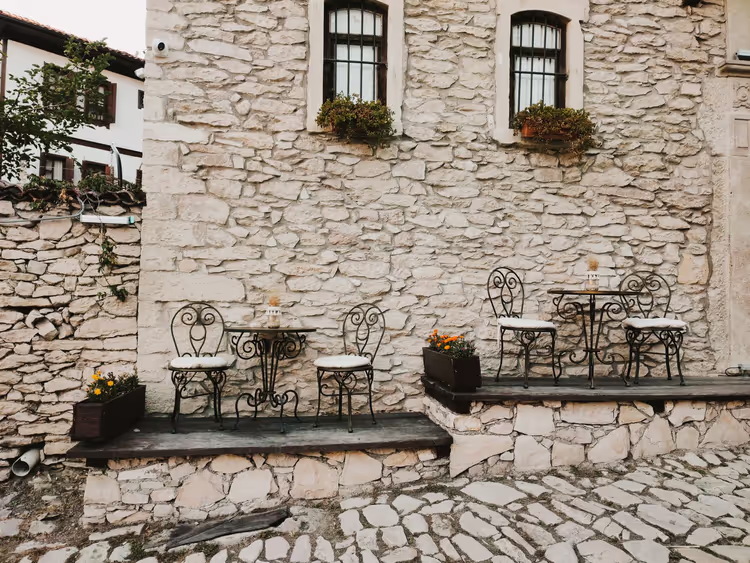
Nearby stands the "house with the monkey", named for the figure on its facade.
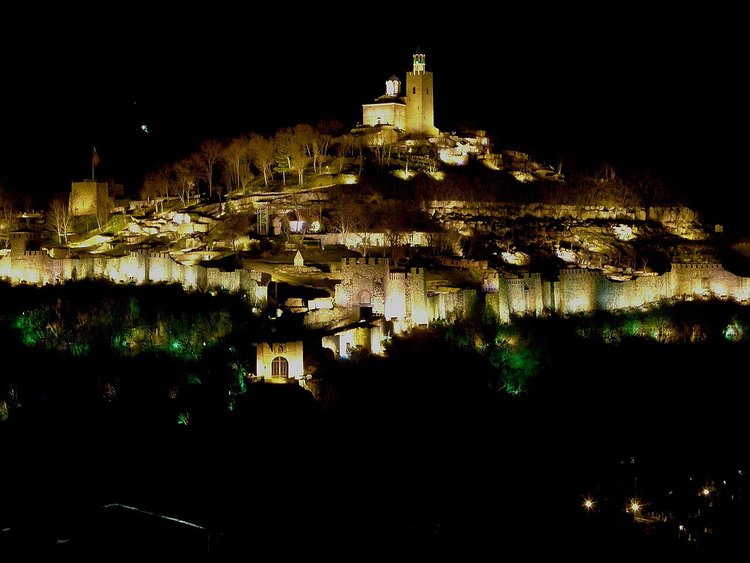
Sound and Light show at Tsarevets
It is best to time your trip to Veliko Tarnovo for the weekend. On those days, the Sound and Light laser show is held on Tsarevets Hill.
 © Klearchos Kapoutsis · CC BYPhoto: Klearchos Kapoutsis, CC BY (https://creativecommons.org/licenses/by/2.0), Wikimedia Commons
To watch the show up close, buy tickets.
Day 2 route on the map
We have also mapped the second day. It is a handy way to check the order of stops and the travel time between them.
Day 2: Veliko Tarnovo and Tsarevets Fortress
Places on the map
- 1Laki Hotel on the edge of a cliff, the fortress and the Sound and Light show are visible from the rooms
- 2Tsarevets Fortress on a hill in the city centre, allow an hour and a half to two hours to visit
- 3Church of Saints Peter and Paul At the foot of the hill, with ancient decor
- 4Tsarevgrad Tarnov Multimedia Centre Combined ticket for the centre and both churches, free entry for children
- 5Sarafov House Museum Ethnographic museum on General Gurko Street about life two centuries ago
- 6Gurko Mehana Hotel with restaurant on Gurko Street, the hall has a view of the gorge
- 7Archaeological Museum Picturesque building on Ivanka Boteva Street, with finds from the Neolithic era
- 8Samovodska Charshia Bazaar: a cobbled lane with white houses and souvenir shops
- 9Hadji Nikoli Inn On Rakovski Street, decorated like an eastern caravanserai
- 10House with the Monkey Named after the figure on its facade, located not far from Rakovski Street
Day 3: Gabrovo, Shipka and the valley of roses
Leave Veliko Tarnovo on the E85 road. Along the way you will pass Dryanovo Monastery, Bacho Kiro Cave, Gabrovo, the craftsmen's town of Etar, Shipka and Kazanlak with its Rose Museum.
 AIIllustrative image: AI-generated
Kazanlak is 91 km away (on the map). Part of the road runs along a mountain serpentine, so allow extra time for the drive.
Stop 1: Dryanovo Monastery
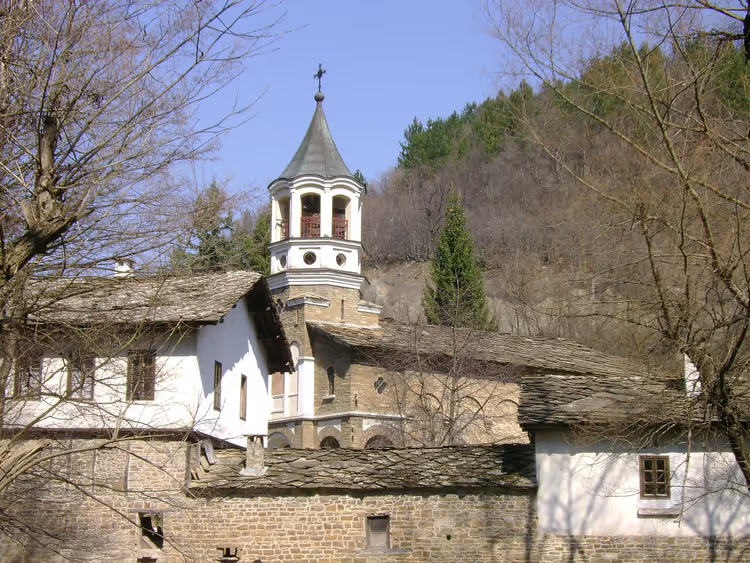
Dryanovo Monastery was founded in the 12th century. It has been rebuilt several times over its history, but much has survived from ancient times. The octagonal bell tower draws the eye, and a cozy garden surrounds the main buildings.
 © Todor Bozhinov · CC BY-SAPhoto: Todor Bozhinov, CC BY-SA (http://creativecommons.org/licenses/by-sa/3.0/), Wikimedia Commons
Through the park and a gate you come out to the river and Bacho Kiro Cave. You can explore it in two ways: on your own along the short route, or with a guide along the long one.
The cave is distinctive. Even on the short route, the underground halls with stalactites, stalagmites and flowstone formations are impressive. The halls have unusual names: "Concert Hall", "Purgatory".
Stop 2: Etar, an open-air crafts museum
Etar was created specifically for tourists. Around fifty structures are gathered across a large area: reconstructed houses, water mills and craft workshops.
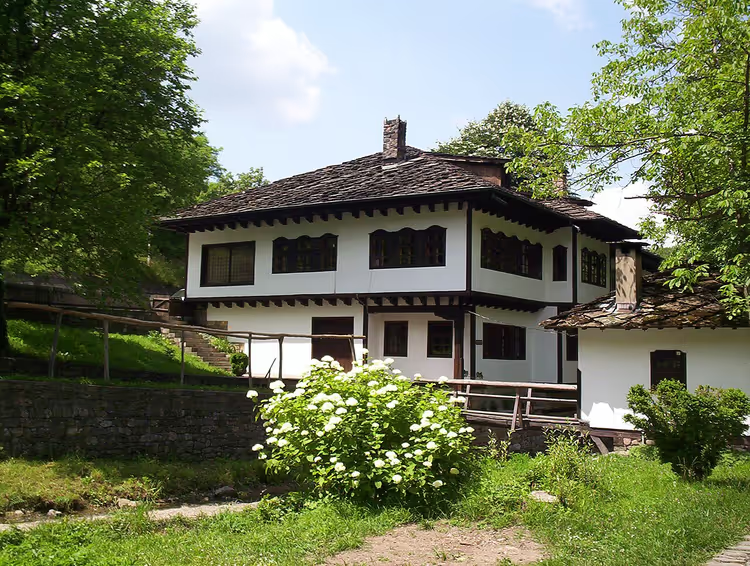 © www.vacacionesbulgaria.com · CC BY-SAPhoto: www.vacacionesbulgaria.com, CC BY-SA (https://creativecommons.org/licenses/by-sa/4.0), Wikimedia Commons
The museum is open daily, seven days a week. In summer, from late April to late September, it is open from 9:00 to 19:00 (as of 09/2026, official website). Admission is inexpensive, and there is a family ticket for those with children.
Here you can buy silver items made by local artisans. Stop by the workshops too: the craftspeople work in front of visitors.
Stop 3: Gabrovo, the capital of Bulgarian humor
In Gabrovo, be sure to visit the House of Humor and Satire. It is the only museum in the world dedicated to laughter. The exhibition spans six floors.
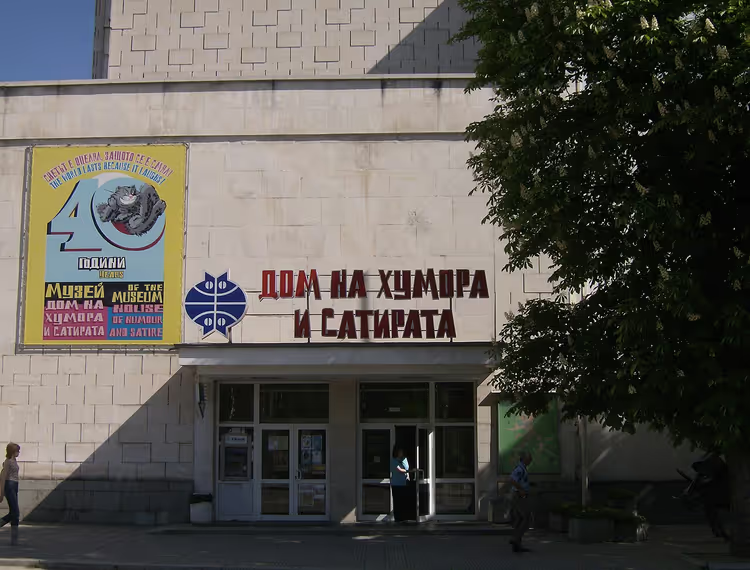
Take a photo by the sculpture of Don Quixote and Sancho Panza and buy a book of jokes. From April to October the museum is open seven days a week (as of 09/2026, official website). Admission is inexpensive.
Stop 4: Shipka
The park-museum at Shipka Pass is dedicated to the defense of the pass during the Russo-Turkish War. At its center rises the Monument of Freedom with a huge bronze lion figure at the entrance.
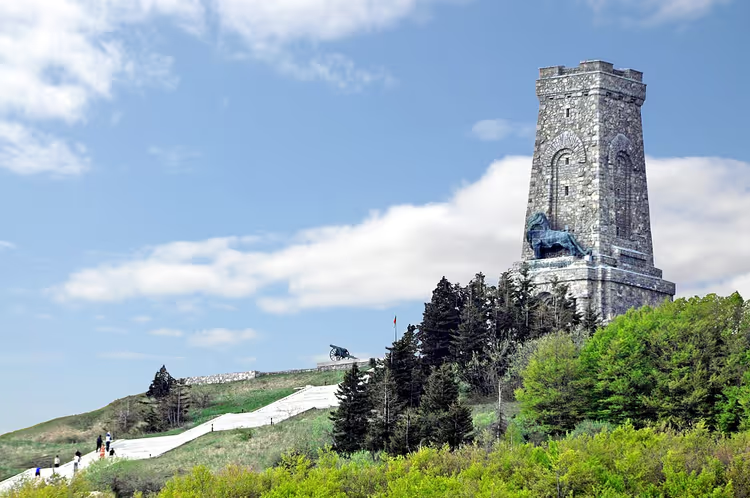 © Dennis G. Jarvis · CC BY-SAPhoto: Dennis G. Jarvis, CC BY-SA (https://creativecommons.org/licenses/by-sa/2.0), Wikimedia Commons
The memorial resembles a truncated pyramid. The upper floors house museum exhibitions, and the top platform offers a panorama of the surrounding area.
Adult admission is paid and inexpensive. Nearby, dugouts, fortifications, batteries and positions of the pass defenders have been restored.
Also visit the Church of the Nativity, built in the spirit of 17th-century Russian architecture. The names of the heroes who defended Shipka are carved on marble plaques inside.
Head down to the main road and have lunch at a local cafe. The portions are large and the prices are reasonable.
Stop 5: Kazanlak, the city of roses and kings
From Shipka to Kazanlak is about 14 km (on the map). This region is called the Valley of Roses and the Valley of the Thracian Kings.
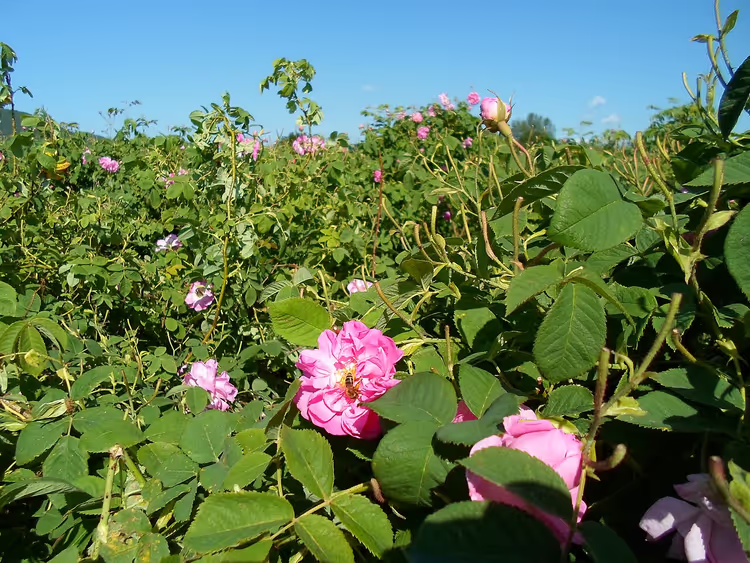 © Animsaj · CC BY-SAPhoto: Animsaj, CC BY-SA (https://creativecommons.org/licenses/by-sa/3.0), Wikimedia Commons
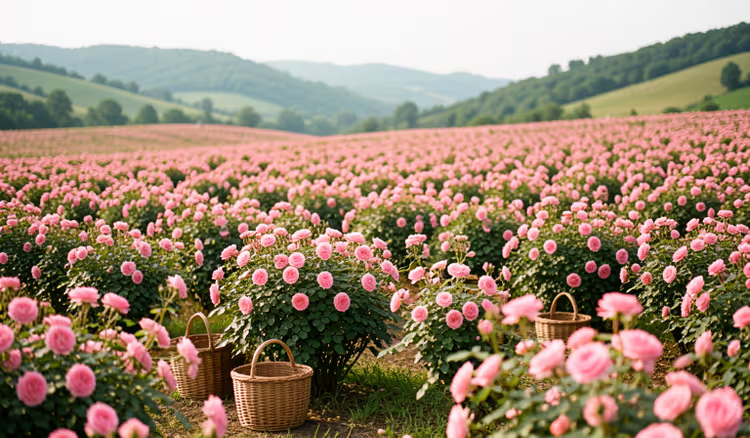
The Valley of Roses attracts tourists in late May and early June, when the surroundings are steeped in the fragrance of blooming buds. The Rose Festival takes place at the same time.
If you come at another time, don't be disappointed. Visit the Rose Museum: they will tell you about rose oil production, and you'll receive petals and buds as a souvenir.
The Rose Museum is open from April 20 to October 31; from November to March advance booking is required (as of 09/2026, official website). Admission and the tour are inexpensive.
If you have time left, stop by Tyulbeto Park in the northeast of the city. There you'll find a Thracian tomb, the country's only monument of early Hellenistic painting and a UNESCO site.
3-Day route on the map
Day 3: Gabrovo, Shipka and the Rose Valley
Places on the map
- 1Dryanovo Monastery Founded in the 12th century, notable for its octagonal bell tower and garden
- 2Bacho Kiro Cave Short and long routes, halls with stalactites
- 3Etar Open-air museum of crafts, about fifty exhibits
- 4House of Humour and Satire The world's only museum of laughter, six floors of exhibits
- 5Freedom Monument Memorial at the Shipka Pass with a stone lion and panoramic views
- 6Nativity of Christ Cathedral Built in the style of Russian architecture, with the names of Shipka's defenders inside
- 7Kazanlak Valley of Roses and Valley of the Thracian Kings, about 14 km from Shipka
- 8Thracian Tomb in Tyulbeto Park UNESCO site in the north-east of the city
From Kazanlak, the I-6 road leads to Sofia via Karlovo and Sopot. It is 194 km (on the map) of almost straight road, and in three hours you are back in the capital.
Before the trip, you should settle two things: how you will get from the airport and which tickets to buy in advance.
Tours and tickets in Sofia
Guided tours, skip-the-line tickets and activities — most offers can be cancelled free of charge.
See offers on KiwitaxiThe widget loads once you give your consent.
It is convenient to arrange a transfer for the entire stay at once. Then you will be met at the airport and will not have to look for parking.
Tours and tickets in Sofia
Guided tours, skip-the-line tickets and activities — most offers can be cancelled free of charge.
See offers on TiqetsThe widget loads once you give your consent.
⁉️🤔 Frequently asked questions
How much does it cost to enter the Alexander Nevsky Cathedral in Sofia?
Entry to the cathedral itself is free. You only pay for the crypt museum with its icon collection in the basement. You pay separately for a guide if you want to understand the history of the church.
Can you do this route without a car?
Technically yes, but it is inconvenient. Buses between the stops run infrequently, and getting to Dryanovo Monastery and Shipka without a car takes a long time. A rental car saves you a whole day.
How much time do you need for Tsarevets Fortress?
Allow one and a half to two hours. That is enough for the climb, walking the walls, and the old town panorama. On weekends, add time for the "Sound and Light" show.
When is the best time to visit Kazanlak?
In late May and early June, when the roses bloom and the Rose Festival takes place. In other months, you can see the Rose Museum and the Thracian tomb in Tyulbeto Park.
Where should you stay in Veliko Tarnovo?
The most convenient option is near Tsarevets Fortress: then the old town is a couple of minutes on foot. The "Lucky" hotel works well if you want to see the show from your room.
In short: what is worth booking
A three-day route through Bulgaria rests on three things: a car, overnight stays, and tickets.
If you are short on time, pick up a car at the airport and stay first in Sofia, then in Veliko Tarnovo.
If you are traveling with family, do not skip Etar and the Rose Museum. At Etar, craftsmen work in front of visitors, and at the Rose Museum they give away rose petals.
If you want evening impressions, plan a night in Veliko Tarnovo around the weekend and the "Sound and Light" show.
For hotels in Sofia, check Trip.com, for tours around the country book on GetYourGuide, and for car rental compare options.
Also read: Bulgaria's ski resorts.

A small editorial team writing guides for independent travel. We travel ourselves, but we haven’t been everywhere, so we check prices, opening hours and how to get there against official sources.