
















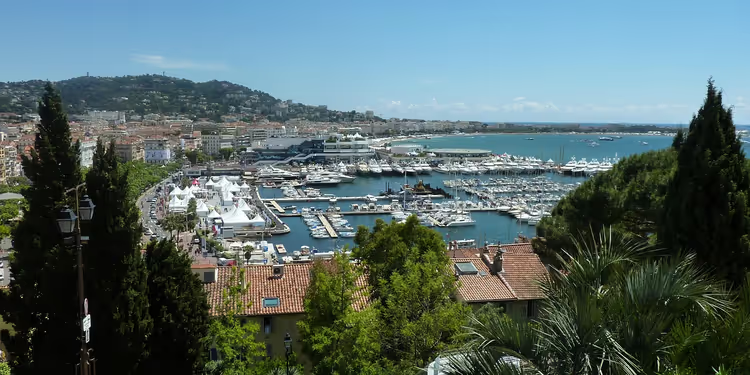
Cannes in a day: 15 places from the Old Port to Ile Sainte-Marguerite
Cannes is often seen as a one-night town. The promenade, the red carpet, the shop windows. But more fits into a day here than you would expect. From the fishing quarter of Le Suquet to Île Sainte-Marguerite, there are 15 stops, and most of them are free.
We put together a route that can realistically be walked in a day, with two short rides. You can skip any stop or stretch it into hours. Keep an eye on opening hours: the Forville market is only alive until lunchtime, and the Museum of Childhood is open only in the afternoon.
Ad: this article contains affiliate links, we earn a commission if you book through them, at no extra cost to you.
What to fit into one day in Cannes
💡 In short:
- Start at the Forville market: it is open from 7:00 to 13:00.
- Le Suquet and the Old Town take 2-3 hours, La Croisette another 1.5-2 hours.
- Île Sainte-Marguerite requires a separate boat trip, plan half a day.
- Prices and opening hours: 09/2026, verified on the Cannes tourist office website.
The city center is compact: from the train station to the Old Port is about a 15-minute walk (on the map). La Croisette runs along the sea for several kilometers, and it is convenient to walk it one way. Most stops are free; you pay at museums, the casino, and on the boat.
Part of the day | What you can fit in | Tickets in advance | On foot |
|---|---|---|---|
Morning | Marché Forville, Chapelle de la Miséricorde | not needed | 2-3 km |
Day | Le Suquet, Musée des Explorations du Monde | museum €6.50 (as of 09/2026, museum page on the Cannes city hall website) | 2-3 km |
Evening | La Croisette, Palais des Festivals | not needed | 3-4 km |
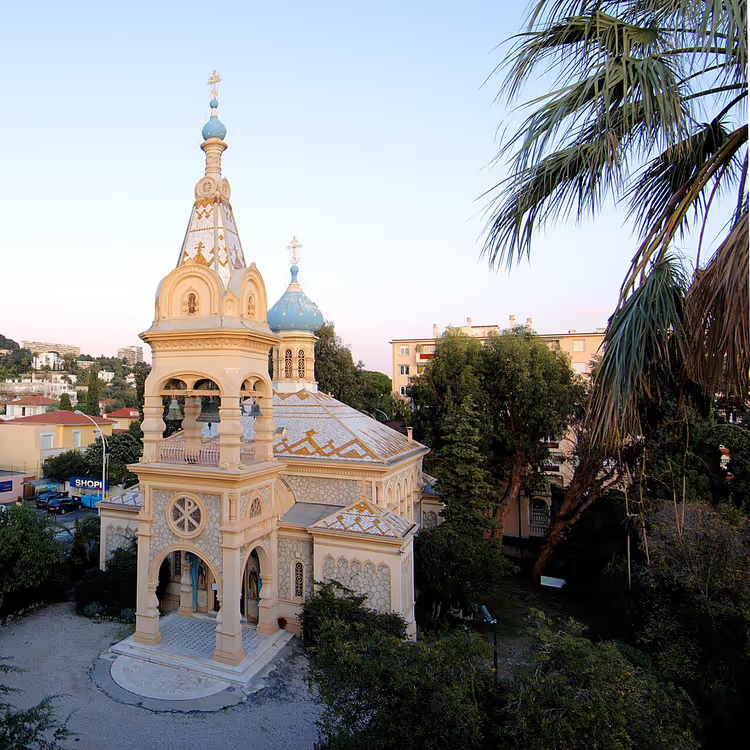
1. Church of the Archangel Michael
 © Иерей Максим Массалитин · CC BY-SAPhoto: Иерей Максим Массалитин, CC BY-SA (https://creativecommons.org/licenses/by-sa/2.0), Wikimedia Commons
The Russian Orthodox church did not appear in Cannes right away. For a long time the only church on the Riviera stood in Nice, and services here were held in the private villa of Alexandra Tripe from 1886.
The parish grew, and in 1894 a church dedicated to the Archangel Michael was founded on a designated plot. The design was by the French architect Nouveau, and the interior could hold up to 400 worshippers. Parishioners donated gold and silver vessels, old icons, and processional banners.
The main decoration today is an icon-painting by Lemotte. It depicts the Virgin and Child, Prince Vladimir, and Princess Olga. The church is active, and you can easily get inside outside of services. Dress modestly and keep your voice down: this is a parish, not a museum.
2. Plage du Martinez
 © Grand Hyatt Cannes · CC BY-SAPhoto: Grand Hyatt Cannes, CC BY-SA (https://creativecommons.org/licenses/by-sa/4.0), Wikimedia Commons
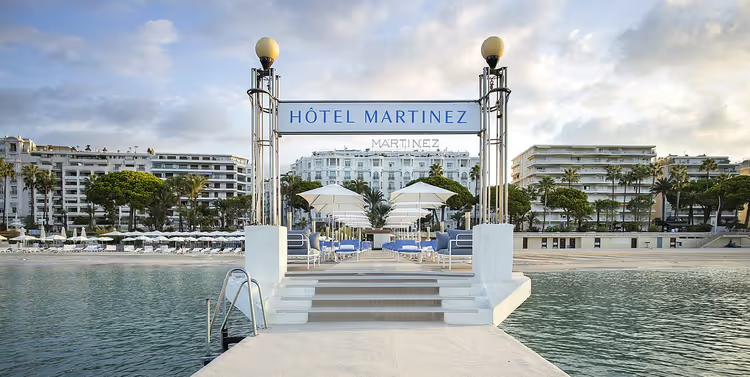
Plage du Martinez is considered the largest beach on La Croisette. It is private and belongs to the hotel of the same name. White sand and well-developed facilities draw both locals and tourists.
There are about 400 loungers and a modern pontoon that extends far into the sea. Rental is expensive, since the hotel is considered upscale. Check the exact price for a lounger on site: it changes by season. Find hotels in Cannes on Trip.com.
The beach offers water sports and a restaurant with Mediterranean cuisine. In the evening, tables are set out on the pontoon, and you can order wine with appetizers. The main reason people come here: celebrities are often around, and they usually allow themselves to be photographed.
3. Casino Barrière Le Croisette
 © Indigo&fushia · CC BY-SAPhoto: Indigo&fushia, CC BY-SA (https://creativecommons.org/licenses/by-sa/4.0), Wikimedia Commons
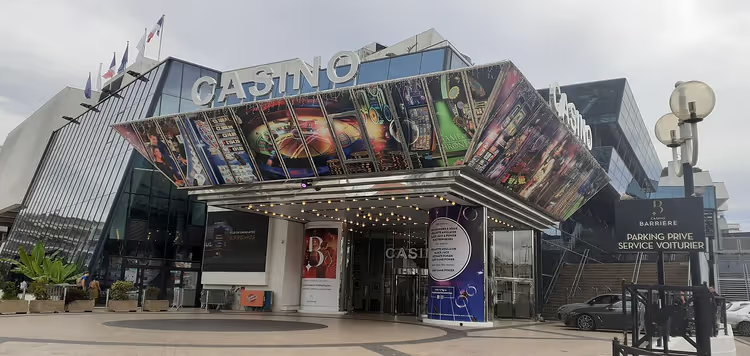
The casino on La Croisette is open daily; entry is allowed from age 18. The gaming rooms open around 10:00 and close well after midnight (as of 09/2026, Casinos Barrière).
Inside there is a main floor and a VIP area for high stakes. The tables offer European roulette, Texas hold'em, and sic bo, plus more than 300 slot machines. If you are a beginner, start with the slots: you risk a minimal amount and get a feel for the energy of the room.
The interior was designed by Pascal Desprez. He went for subdued lighting, contrasting tones, drapery, and gold leather. The currency is one: euros. People come here just for the atmosphere, and also for the chance to spot a celebrity.
4. Église notre-dame de bon voyage
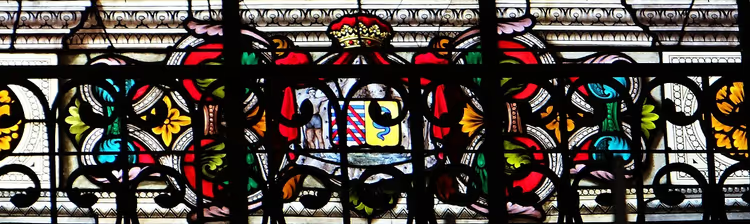 © MOSSOT · CC BY-SAPhoto: MOSSOT, CC BY-SA (https://creativecommons.org/licenses/by-sa/4.0), Wikimedia Commons
This church stands in the center, next to the Palais des Festivals. In the 16th century, a chapel stood on this site, built during a plague epidemic. People called it "Our Lady of the Sands": dunes were nearby.
In 1815, Napoleon, fleeing from Elba, set up camp here. His "100 days" began from this spot, and Cannes went over to his side without resistance. Fishermen also prayed in the chapel before heading out to sea.
The current building was constructed in 1879. The architect Laurent Vianay chose a strict neo-Romanesque style and gray stone. The bell tower and two other towers were never finished due to a lack of money. Step inside to see the stained glass: noble residents of Cannes were married and mourned in this church.
5. Palais des Festivals et des Congrès
The palace resembles a huge cruise liner. It looks especially striking in May, during the Cannes Film Festival. The wide staircase with the red carpet draws photographers from around the world.
The rest of the time there are no carpets here, and ordinary tourists pose on the steps instead of stars. The palace was built in 1982 to a design by architects Druet and Bennet. Its area exceeds 28,000 m².
From the terraces on the upper floors you can see the promenade, the islands, and the old town. Inside, film screenings, conferences, and exhibitions take place. A restaurant, nightclub, and casino also operate here. Next to the palace is the Allée des Étoiles.
6. Allée des Étoiles
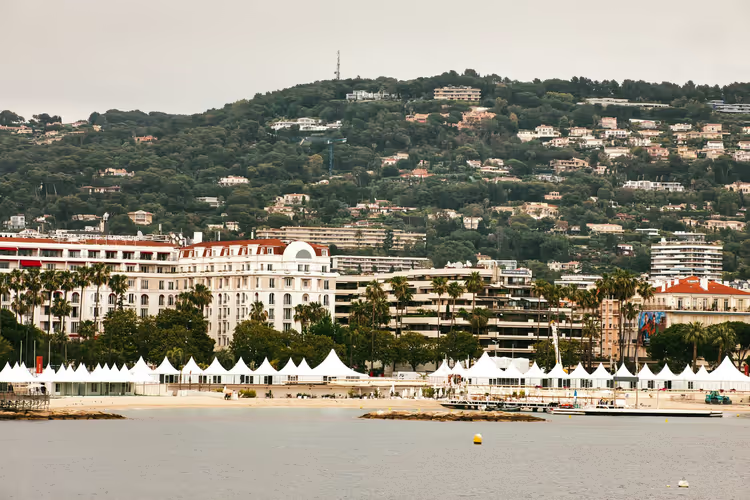
You don't notice the Walk of Fame right away. There are no trees here: on the Esplanade Georges Pompidou, right on the sidewalk, lie tiles with handprints. This is the famous walk, the local equivalent of the Hollywood one.
The tiles look modest, and locals complain: people walk on them, and over time they deteriorate. The casts are made in Vallauris: first from clay and plaster, then from steel. The plaster originals are kept at the Palais des Festivals.
The walk opened in 1985, and today there are more than 400 prints. You'll find the hands of Charlie Chaplin and Sophia Loren, Jean-Paul Belmondo and Catherine Deneuve, Sharon Stone and Tatiana Samoilova. Walk along the esplanade slowly so you don't miss the tile you're looking for.
7. Museum of Childhood
There's almost nowhere to go with kids in Cannes: the city is more about the beach, clubs, and casinos. The exception is the Museum of Childhood. It houses about 600 dolls, and both children and their parents visit with interest.
The exhibits date back to the time of Napoleon III, meaning they're about two to three centuries old. There are also later toys, doll clothes, shoes, and furniture. A separate section explains how dolls were made in France and what life was like for the craftsmen.
The museum welcomes visitors in the afternoon. It's closed on Sundays and Mondays, so plan your visit ahead. If you're traveling with a child, schedule the museum after lunch: groups arrive in the morning.
8. Chapelle de la Miséricorde
Chapelle de la Miséricorde is considered one of the oldest buildings in the city. The chapel stands next to the Forville market. It was built at the turn of the 16th and 17th centuries and dedicated to Our Lady of Mercy of the Seashore.
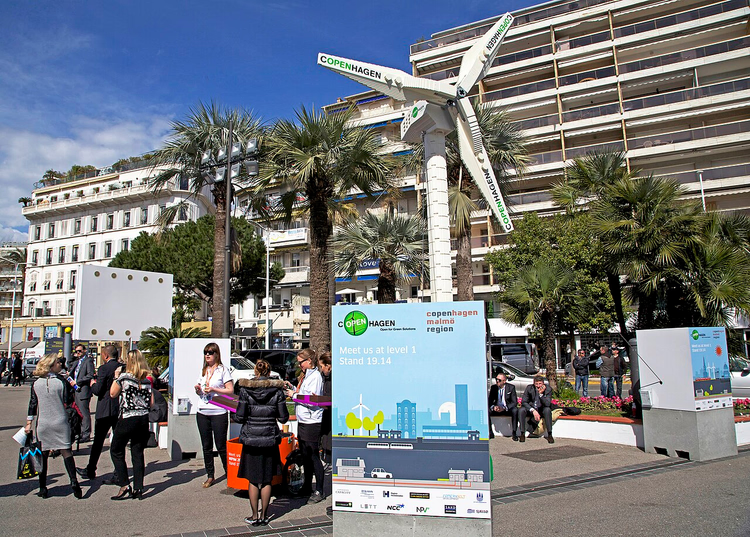 © News Oresund · CC BYPhoto: News Oresund, CC BY (https://creativecommons.org/licenses/by/2.0), Wikimedia Commons
Later that long name was given to the neighboring church, and the chapel kept the short one. Its second name is the Chapel of the Black Penitents, after the brotherhood that was dissolved in the 19th century. Such brotherhoods in France were named by colors and taught asceticism and penance.
The dimensions are modest: about 26 meters long and 9 wide. The architecture is simple and austere, and the only bright spot is the spire on the low bell tower with glazed tiles. The chapel is active, with masses served in Latin. The entrance is from Rue de la Miséricorde.
9. Marché Forville
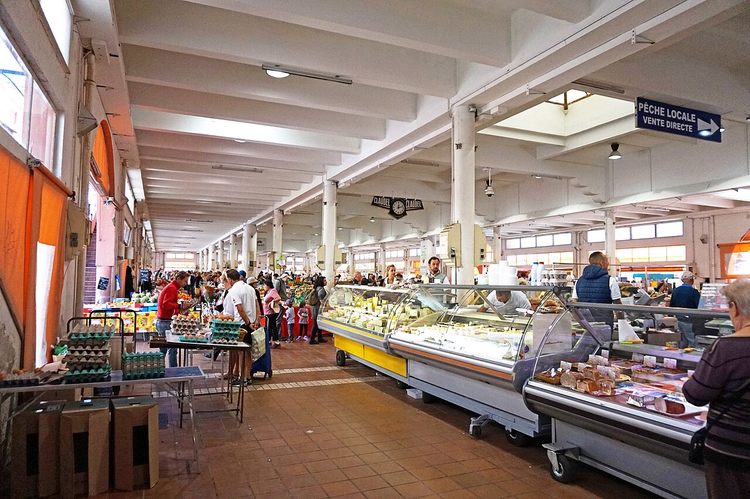 © Tiia Monto · CC BY-SAPhoto: Tiia Monto, CC BY-SA (https://creativecommons.org/licenses/by-sa/3.0), Wikimedia Commons
Marché Forville is worth visiting if you want to feel the true spirit of France. The covered market is open every day all summer, and the rest of the year from Tuesday to Sunday (as of 09/2026, official Marché Forville website).
The hours are simple: from 7:00 AM to 1:00 PM. The freshest goods arrive in the morning, and by afternoon the market is already closed. Here they sell flowers, seeds and bulbs, meat and fish, cheeses and vegetables, spices and exotic fruits.
You'll be offered a taste of wine or cheese and told which country the fruit came from. If you speak French, haggle: the price is often lowered. There's parking near the market, and the surrounding streets with old houses and cafes are worth a stroll too.
10. Église Notre-Dame de l'Espérance
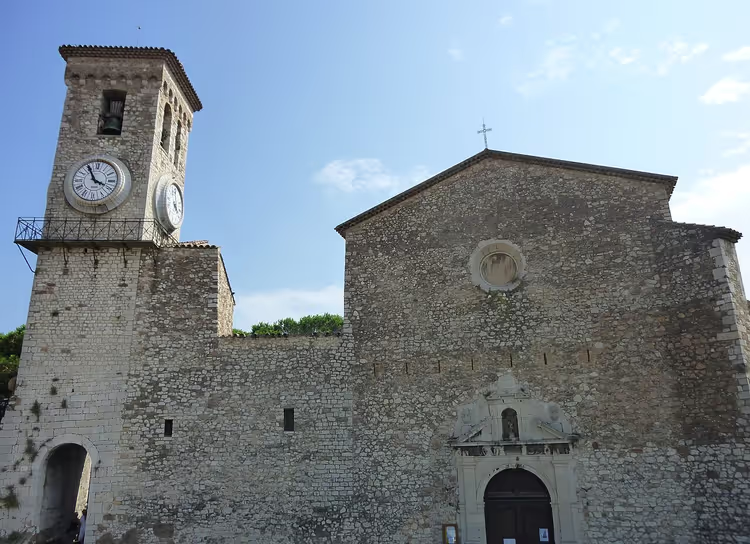 © Miniwark · CC BY-SAPhoto: Miniwark, CC BY-SA (https://creativecommons.org/licenses/by-sa/3.0), Wikimedia Commons
This old Catholic church stands at the top of Le Suquet hill. Its bell tower is visible from anywhere in Cannes. Before it, there was only a chapel of Saint Anne here, which by the 16th century had become too small for the parishioners.
The new church was supposed to be built in a few years, but construction dragged on for more than a century. Plague epidemics and wars got in the way. The church welcomed its first parishioners only in 1641.
The building was constructed in the Gothic style from brown stone, with a rectangular bell tower and a clock. The interior is austere, but it does feature frescoes by Georges Roux and gilded statues of the Virgin Mary (18th century) and Saint Anne (15th century). In June, musicians play on the church porch during the Nuits Musicales du Suquet festival. At Christmas, a nativity scene is set up where the sacred story comes to life.
11. Galerie 1414
Galerie 1414 is a good fit if you are looking for an unusual gift. It showcases contemporary painting, and the gallery is owned by the artist Coco Trabiche. Some of the canvases are on display, while others are for sale.
The paintings cover different genres: landscapes, still lifes, portraits. Sometimes you can commission a canvas on your own theme. If you are walking to Le Suquet through the old town streets, stop by on your way.
12. Musée des Explorations du Monde
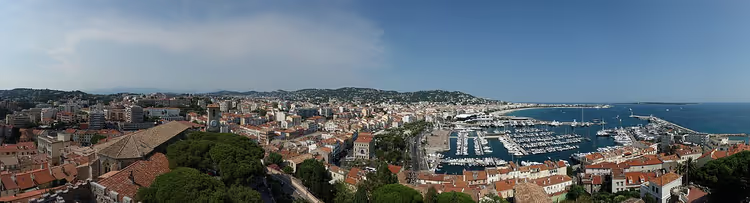 © Spike · CC BY-SAPhoto: Spike, CC BY-SA (https://creativecommons.org/licenses/by-sa/4.0), Wikimedia Commons
Musée des Explorations du Monde (formerly the Musée de la Castre) occupies the old castle on Le Suquet hill. Almost nothing remains of the original 11th-century castle. The ruins were not demolished only because the walls turned out to be too thick.
The collections were assembled during excavations in Egypt, Greece, and Rome. There is also art from Australia, Africa, and the Americas, as well as paintings by Provençal artists from the 18th and 19th centuries. The Sainte-Anne chapel houses a large collection of musical instruments, including exotic ones.
A full ticket costs €6.50, a reduced ticket €3.50 (as of 09/2026, museum page on the Cannes tourist office website). From September 14 to October 30, 2026, the museum is closed for renovation. In normal operation, it is open Tuesday through Sunday, closed on Mondays. Climb the tower: 109 steps and a panoramic view of the city. Cannes museum tickets on Tiqets.
13. Quai Saint-Pierre and the old port
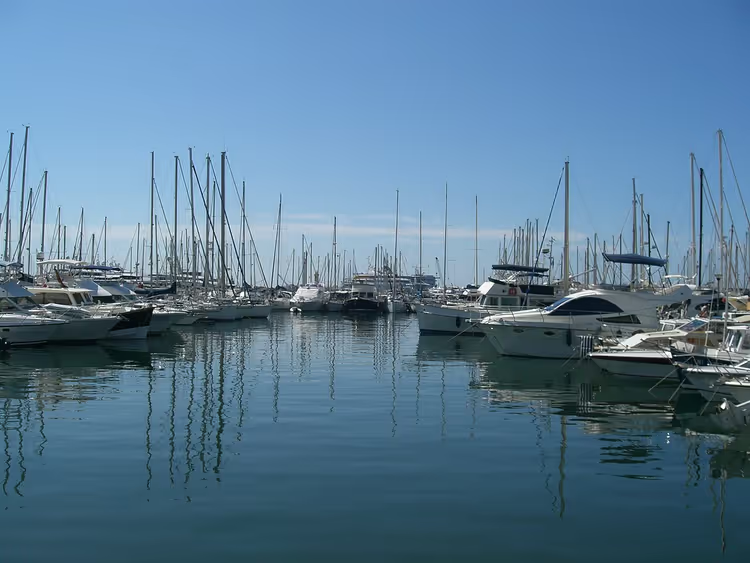 © Xomex · CC BYPhoto: Xomex, CC BY (https://creativecommons.org/licenses/by/3.0), Wikimedia Commons
Quai Saint-Pierre is considered the oldest part of the Old Port. The quay was built in the mid-19th century, when Cannes was a small fishing village. Today, fishermen's boats still moor here, while yachts of the rich and famous dock nearby. In total, the port can accommodate up to 500 small vessels.
The port owes its existence to the English Lord Brougham. In the 1830s, he was delayed in Cannes by a cholera epidemic, fell in love with the town, and built a house here. At the request of local residents, he laid out the port, and in 1838 the Quai Saint-Pierre appeared.
In 1898, Prince Albert Edward, the future King of England, laid the first stone of the pier and made Cannes his residence. Since the 1920s, the Royal Regatta has been held here every year. From the port, you can board a boat and head to the Lérins Islands.
14. Cimetière du Grand Jas
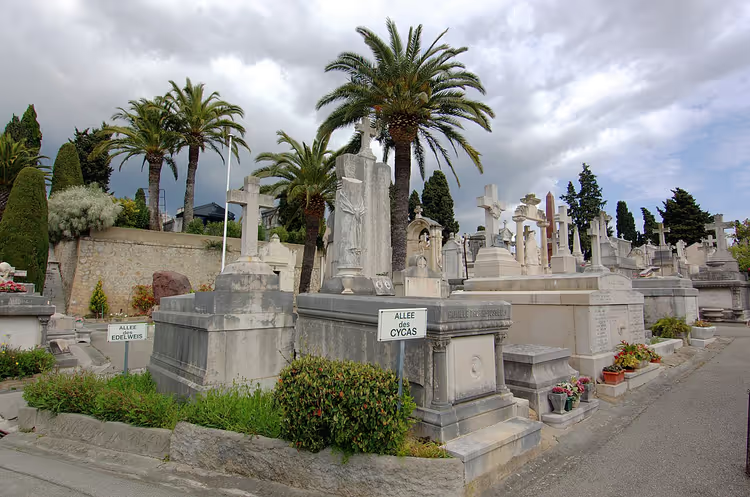 © ACOR Cannes · CC BY-SAPhoto: ACOR Cannes, CC BY-SA (https://creativecommons.org/licenses/by-sa/3.0), Wikimedia Commons
Cimetière du Grand Jas is considered one of the most famous cemeteries in France. People come here not only to visit graves: it has long since become a park, and many of the monuments have turned into genuine works of art.
The cemetery is located in the northwest of the city and covers about 9 hectares. It appeared in the mid-19th century. The best approach is to stop by the administrative office and hire a guide: otherwise you will miss the most interesting parts.
Prosper Mérimée is buried here, and in the "Russian section" you will find quite a few vaults. One of them holds the family of Sergei Chekhov. Nearby are the graves of Carl Fabergé, Olga Picasso, and the aviator Nikolai Popov. There are also graves of Russian soldiers from World War I.
15. Île Sainte-Marguerite
 © Christophe.Finot · CC BY-SAPhoto: Christophe.Finot, CC BY-SA (https://creativecommons.org/licenses/by-sa/2.5), Wikimedia Commons
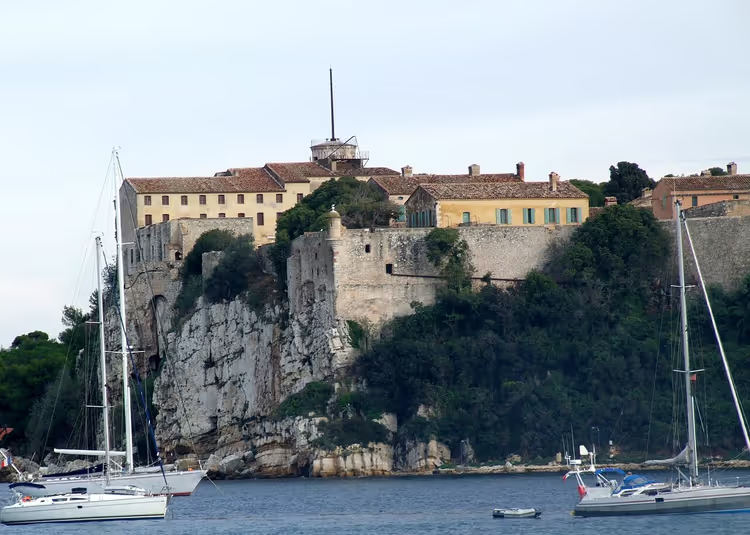
Île Sainte-Marguerite is small, about 3 km long and about 900 m wide, but it has plenty of sights. The first thing you will see is the chapel of Saint Margaret of Antioch, built by crusader knights. Historians do not rule out that Saint Margaret of Antioch herself was fictional.
In the early 17th century, the island passed to the Duke of Chevreuse, and construction of Fort Royal began here. The French and Spanish fought fiercely over the fort, and it later became a prison. This is where the Man in the Iron Mask spent 11 long years. Who he was has never been established.
Besides the fort, the island has a Museum of the Sea, a small fishing village, and a botanical garden with unusual trees. Smoking is prohibited here. Buy your boat ticket from Cannes through the carrier, and check the schedule on the Horizon sailings page (as of 09/2026).
Tours and tickets in Cannes
Guided tours, skip-the-line tickets and activities — most offers can be cancelled free of charge.
See offers on GetYourGuideThe widget loads once you give your consent.
Cannes route on the map
All 15 points are collected on the map below. You can change the order: do the Old Town and Le Suquet in the morning, head to La Croisette after lunch. Set aside Île Sainte-Marguerite as a separate block if you have half a day left. Between the Old Port and La Croisette, it's easy to walk along the waterfront.
Route through Cannes
Places on the map
- 1Church of St Michael the Archangel Russian Orthodox church, active parish since 1894
- 2Plage du Martinez The largest beach on the Croisette, about 400 sunbeds
- 3Casino Barrière Le Croisette Gaming halls, roulette and poker, entry from age 18
- 4Église Notre-Dame de Bon Voyage 1879 church in Neo-Romanesque style, Napoleon's camp in 1815
- 5Palais des Festivals et des Congrès Festival palace, red carpet of the Cannes Film Festival
- 6Walk of Fame Tiles with handprints on the Georges Pompidou esplanade
- 7Museum of Childhood About 600 dolls, exhibits from the time of Napoleon III
- 8Chapelle de la Miséricorde One of the city's oldest buildings, chapel of the Black Penitents
- 9Marché Forville Covered market, open from 7:00 to 13:00
- 10Église Notre-Dame de l'Espérance Gothic church on the Le Suquet hill, first parishioners in 1641
- 11Galerie 1414 Contemporary painting, some canvases for sale
- 12Musée des Explorations du Monde Former Musée de la Castre, castle on the Le Suquet hill
- 13Quai Saint-Pierre and the Old Port Oldest part of the port, up to 500 vessels
- 14Cimetière du Grand Jas Famous park cemetery, tomb of Prosper Mérimée
- 15Île Sainte-Marguerite Fort Royal, prison of the Man in the Iron Mask, Sea Museum
⁉️🤔 Frequently asked questions
How much time do you need to see Cannes?
One day is enough for most of the stops in the center. Allow 2-3 hours for Le Suquet and the Old Town, 1.5-2 hours for La Croisette, and the morning for the Forville market. The Museum of Childhood is only open in the afternoon, so schedule it after lunch. With Île Sainte-Marguerite, plan for half a day more.
What to see in Cannes for free?
Almost all the main points are free. You can visit the Palais des Festivals, the Walk of Fame, the Old Port, Église Notre-Dame de Bon Voyage, and Église Notre-Dame de l'Espérance without a ticket. You only need to pay at museums, the casino, and for the boat to Île Sainte-Marguerite.
How do you get to Île Sainte-Marguerite?
Boats leave from the Old Port of Cannes regularly and year-round. Buy a round-trip ticket from the operator, and check departure times in the Horizon boat schedule (as of 09/2026). On the island, Fort Royal, the Museum of the Sea, and the botanical garden await you.
When is the best time to visit Cannes?
You can enjoy mild weather and no crowds from April through June and in September-October. In May, the city is overloaded because of the film festival, and accommodation prices rise. In summer it's hot, and La Croisette beach is packed. For museums, choose the shoulder season.
Where to eat in Cannes?
During the day, Marché Forville is enough: they sell cheeses, fish, and ready-made snacks. Near the market and on the Le Suquet hill, there are many small restaurants. In the evening, the beach restaurant at the Martinez serves Mediterranean cuisine. In summer, it's best to book a table in advance.
In short: what to book
A day in Cannes comes together from three blocks: the market and Le Suquet in the morning, La Croisette in the afternoon, and Île Sainte-Marguerite as a separate trip. You'll pass the Palais des Festivals and the Old Port in any case. Adjust everything else to the weather and your energy.
- If you have only one day: take Marché Forville, Chapelle de la Miséricorde, and the Le Suquet hill.
- If you're with kids: schedule the Museum of Childhood for the second half of the day.
- If you have an extra half day: add Île Sainte-Marguerite and the Museum of the Sea.
- If you want quiet: skip La Croisette and spend more time in Le Suquet.
Tours and tickets for the French Riviera are easy to browse in advance: find tours on GetYourGuide.

A small editorial team writing guides for independent travel. We travel ourselves, but we haven’t been everywhere, so we check prices, opening hours and how to get there against official sources.