
















10 Day trips from Nice: routes without a car
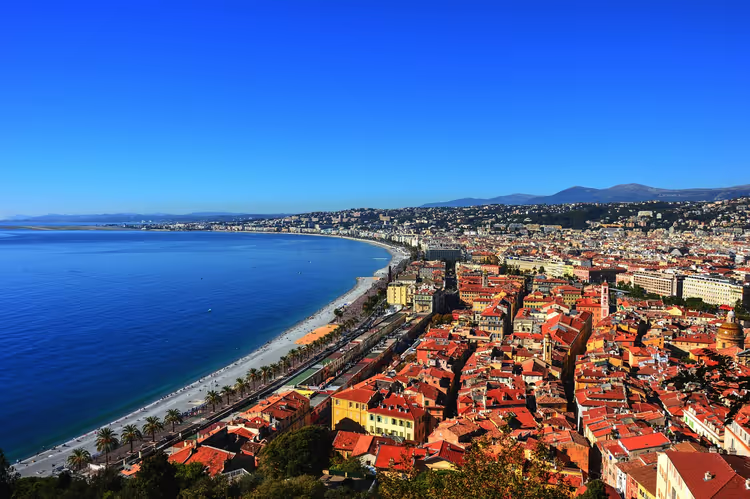
Nice sits between the sea and the foothills of the Alps, and the Italian border is very close. In a single day you can easily see very different corners of the French Riviera from here. You don't need a car: TER regional trains and regional buses cover almost the entire coast and foothills.
Distances here are short. The train from Nice to Menton takes about 40 minutes, and a one-way ticket costs from 8 € (as of 09/2026, SNCF Connect schedule and fares). To Villefranche-sur-Mer the train gets you there in just a few minutes, to Monaco about half an hour. Buses will also take you to mountain villages where trains don't go.
Some people will find one day enough for two towns, while others will want to stretch their Riviera experience over a week. We've put together 10 day trips from Nice: Menton and Monaco, Villefranche and Antibes, Grasse and Èze, Saint-Tropez and the Verdon Gorge, Cannes and Saint-Paul-de-Vence. For each destination you'll find how to get there, travel time, an honest catch, and a ready-made tour option if you don't want to plan everything yourself.
Pick based on your mood. Sea and old streets, perfume and markets, luxury and nature. Nice is so conveniently located that any of these scenarios fits into one day. Regional trains run frequently, so you can adjust your schedule as you go.
Ad: this article contains affiliate links, we earn a commission if you book through them, at no extra cost to you.
1. Menton, the lemon town by the border
💡 In short:
- Day trips from Nice are easiest to build around TER trains: they connect Nice with Menton, Monaco, Antibes, Cannes, and Villefranche.
- The nearest towns are less than 40 minutes away, so you don't need a car for the coast.
- For the Verdon Gorge and Saint-Tropez, it makes more sense to go with a tour or by boat.
- Train prices and schedules: 09/2026, verified on the official SNCF Connect website.
Menton sits right at the Italian border, the last French town east of Nice. The old town is painted pink, orange, and every shade of lemon yellow. Its mild microclimate made it famous back in the 19th century, and the local cuisine borrows heavily from neighboring Italy, so pasta and olive oil on the table are nothing unusual here.
The town only became French in 1860, and its fame came from English aristocrats and artists. They came here in winter: the local air was believed to help with respiratory illnesses. The sun shines here most of the year, so Menton long remained a fashionable winter resort rather than a summer beach destination.
Start your walk at the Marché des Halles market, which is open in the mornings and feeds the whole town. Then climb the old town stairways to the Basilique Saint-Michel-Archange with its striped facade. From the basilica a path leads to the Cimetière du Vieux Château: from its terraces you can see terracotta rooftops, the sea, and Italy in the haze.
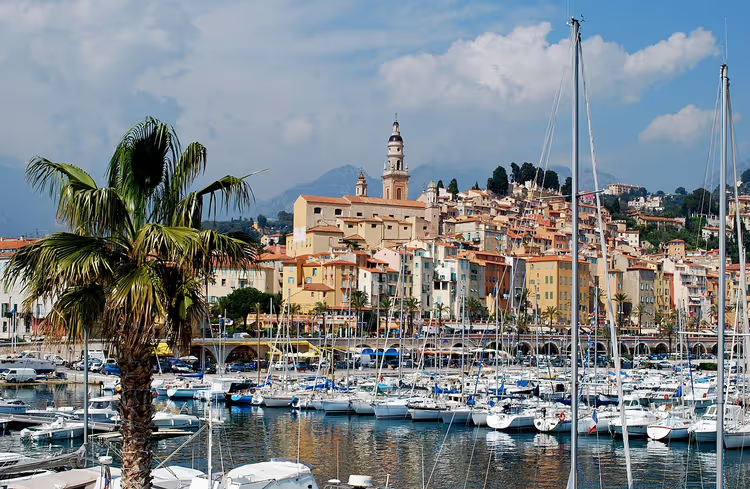
Once you descend to the sea, you'll find yourself in a different part of Menton. Here there are museums, gardens, and several beaches along the promenade, so the day isn't limited to a single walk. The most convenient half-day botanical garden is Jardin botanique Val Rahmeh, created thanks to the local warm climate.
The town is known for more than just its old center. Thanks to the mild winters, subtropical plants thrive here, and historic villas have been turned into parks. Garden lovers can build an entire day around one of these estates and not regret the time spent.
In the evening it's pleasant to return to the promenade: cafes line the water, and the sun sets right over the bay. Bring a light jacket, the evening breeze from the sea is cool, and a t-shirt by the water will feel chilly.
Menton definitely deserves a full day. Many tours take visitors further: to a market across the border in Italy and to the viewpoint at La Turbie above Monaco. If you go on your own, you'll have time for both swimming and a long unhurried lunch.
Menton is also great for its gardens. Thanks to the warm winters, palms, agaves, and citrus trees grow here, which are rarely found in other Riviera towns. Besides Jardin botanique Val Rahmeh, it's worth visiting the park of one of the historic villas: the paths are laid out in terraces, and from them the old town is visible from above like a postcard. An hour is enough to see a garden, and it's easy to combine with the beach nearby.
It's also easy here with children. The beaches along the promenade have a gentle slope, there are ice cream cafes, and the entire old town can be walked in a couple of hours even with a stroller along the lower streets. Garden and cemetery tickets are inexpensive, so the day works out cheaper than in Monaco or Saint-Tropez. Bring water and a hat: on the climb to the basilica there's almost no shade, and the sun here is strong.
How to get there: the TER train from Nice-Ville station takes about 40 minutes, tickets start at 8 € (as of 09/2026, Nice-Menton train fares). Get off at Menton Garavan if you want to start at the Val Rahmeh garden and the eastern part of the old town.
How much time: allow a full day, especially if you want to swim and have lunch. Driving here makes almost no sense: the train is simpler and saves you from hunting for parking.
Who it's for: for those who appreciate a market, pastel facades, and the sea without the crowds. Menton also suits families because the beaches are right by the promenade.
The catch: tours often combine Menton with Monaco and the Italian town of Sanremo, leaving little time for the town itself. For a relaxed day, it's better to go on your own.
2. Villefranche-sur-Mer, the bay next to Nice
Villefranche-sur-Mer is built around a deep bay just east of Nice. The old town cascades down the slope with warm facades, stairways, and covered passages, ending right at the water's edge. There are almost no cars here, so walking is peaceful.
There's no ready-made list of sights here, and that's the whole point. Stroll along the waterfront, find the Rue Obscure hidden beneath the houses, and peek into the tiny Chapelle Saint-Pierre with its frescoes by Jean Cocteau. Save time for swimming at the long Plage des Marinières beach.
In character the town resembles Italy's Cinque Terre, only with a noticeable touch of wealth that spreads across the entire Riviera. You'll feel it at the moorings, in the shop windows, and in the quiet dignity of the locals themselves. In summer, large yachts dock here, and the bay turns into a theater.
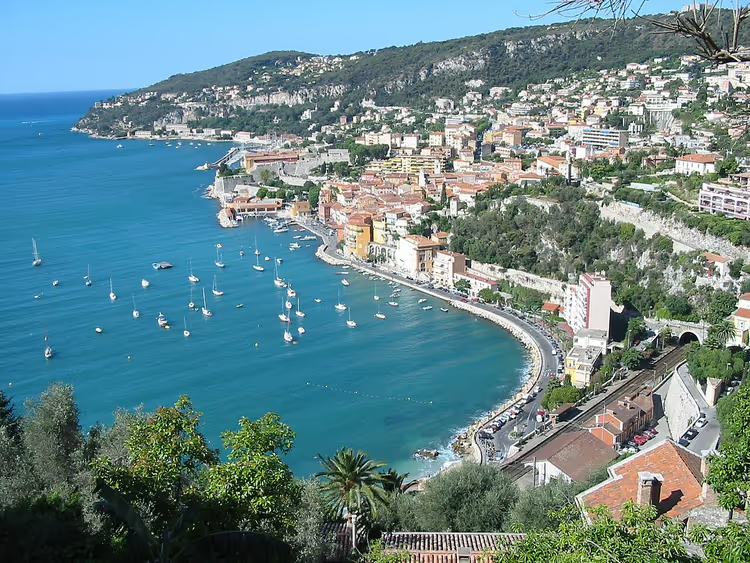 © Tom Corser · CC BY-SAPhoto: Tom Corser, CC BY-SA (https://creativecommons.org/licenses/by-sa/2.0/uk/deed.en), Wikimedia Commons
Because of its proximity to Nice, Villefranche is enough for half a day. But with a leisurely lunch and a couple of hours at the beach, it will easily fill a whole day.
The main thing here isn't individual sights but the rhythm of the town itself. Narrow streets open onto small squares, boats are visible from the windows, and the scent of pines rises from the water. Bring a swimsuit: the bay is sheltered from the wind, and the water here is calmer than at the city beaches of Nice. In summer, short boat trips to the Mala caves depart from the port, where you can also snorkel.
How to get there: a direct TER train from Nice-Ville station takes less than ten minutes and stops next to Plage des Marinières beach (as of 09/2026, SNCF Connect train schedule). Alternative: bus 15 from central Nice toward Saint-Jean-Cap-Ferrat (as of 09/2026, Lignes d'Azur bus schedule). It's slower, but you'll see the coast from the window.
On foot: a coastal path around Cap de Nice leads here from Nice. From Port Lympia it's about an hour and a half walk, and it requires good shoes.
The catch: the climb from the station and the path from Nice are tough in the heat, and the bay itself fills with visitors in summer.
Tour: bike tour from Nice to Villefranche on GetYourGuide. The route climbs to Fort du Mont Alban, from where you can see both bays at once.
3. Grasse, the perfume capital
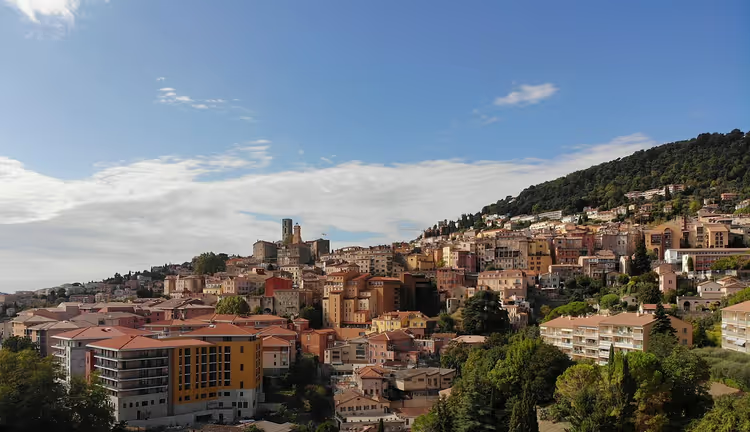
Grasse lies north of Cannes and is known primarily for perfume. It is the unofficial perfume capital of the world and the birthplace of many familiar scents, so people come here for the museum and the old factories, not for the sea.
Most visitors head to the Musée International de la Parfumerie and to the houses of Fragonard, Molinard, and Galimard. There they show how a fragrance is assembled from individual notes and let you create your own bottle in a workshop. Even without buying perfume, a tour of the workshops takes about an hour and is worth your time.
 © Olivier Cleynen · CC BYPhoto: Olivier Cleynen, CC BY (https://creativecommons.org/licenses/by/4.0), Wikimedia Commons
Beyond perfume, leave time for the compact old town. Narrow streets and tall ochre houses open onto small squares with cafes and views toward the coast. Stop by the Cathédrale Notre-Dame-du-Puy: it houses paintings by Rubens and Jean-Honoré Fragonard, who was born in Grasse.
A factory tour, the perfume museum, and a walk through the old town will easily fill almost an entire day. There is no need to turn the trip into a checklist here, the town's rhythm is too relaxed for that. While you are at it, look for souvenirs: a bottle here costs less than at the airport.
Getting there: direct trains from Nice run about once an hour, with a travel time of 70-80 minutes (as of 09/2026, train schedules on SNCF Connect). The station sits below the historic center, so add another 15-20 minutes for the walk uphill or take a local bus.
Bus: the former line 500 has become route ZOU! 650, connecting the Grand Arénas transit hub in Nice with Grasse (as of 09/2026, official ZOU! schedules). Travel time depends on traffic, so the train is more predictable.
By car: the drive from Nice takes about an hour; leave your car in one of the parking lots around the pedestrian center.
The catch: the station sits below the town, and the climb up to the old town is tough in the midday heat.
Tour: perfume workshop in Grasse on GetYourGuide.
4. Monaco in one day
Monaco covers less than two square kilometers, yet packs in a surprising amount of luxury, spectacle, and sights. It makes sense to split a day here into two parts, otherwise the climbs and walks will wear you out.
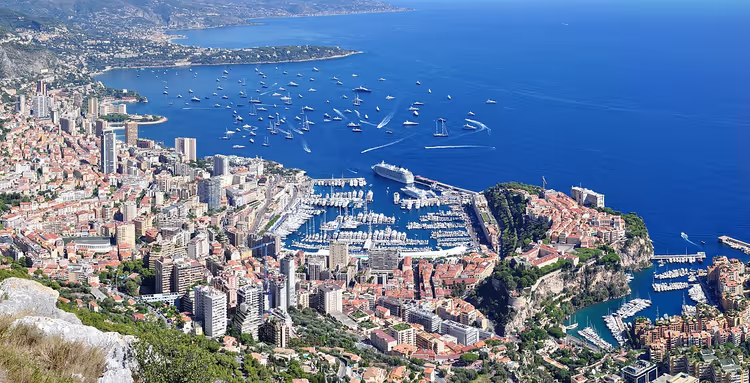
Start in Monaco-Ville, on the rock of Le Rocher. The Prince's Palace looks out over the harbor, and the changing of the guard takes place daily at 11:55 (as of 09/2026, Visit Monaco). Then explore the streets around the palace, step into Monaco Cathedral, and head up to the Oceanographic Museum of Monaco. Along the way you will find gardens on the rock with sea views.
 © Tobi 87 · CC BY-SAPhoto: Tobi 87, CC BY-SA (https://creativecommons.org/licenses/by-sa/3.0), Wikimedia Commons
Down below, at Port Hercule, superyachts and Grand Prix scenery await. The Prince's car collection displays around a hundred vehicles, including race cars and Formula 1 machines. In 2022 it moved to the port, at 54 Route de la Piscine.
End your day in Monte Carlo, where the Casino de Monte-Carlo, Hôtel de Paris, and Café de Paris stand around one lavish square. The gaming rooms admit visitors aged 18 and over with a passport or ID (as of 09/2026, Casino de Monte-Carlo). During the day a strict dress code is not required, but neat clothing is. If you do not gamble, a look at the casino and the square from outside is enough.
If you are traveling with children, stop by the Oceanographic Museum: it has shark aquariums and interactive halls that take a couple of hours. Tickets are not cheap, so buy them online in advance and arrive at opening time while the halls are still empty.
Practical tip: choose comfortable shoes and take a smaller bag. Multi-level walkways and escalators speed up the route between districts, but in the heat the climbs are still tiring. Lunch in Monte Carlo costs more than in Nice, so some visitors bring food and have a picnic in the museum garden, where there is shade and a sea view.
Getting there: the most pleasant option is the ferry from Nice along the coast, which takes under an hour. The train is faster, about 25 minutes, and arrives right in the center, from where everything is within walking distance.
The catch: Monaco is steep and densely built, and the climbs and level changes are tiring. You can count on elevators and escalators, but allow a full day for both districts.
Tour: Nice-Monaco ferry ticket.
5. Antibes, the old town and the marina
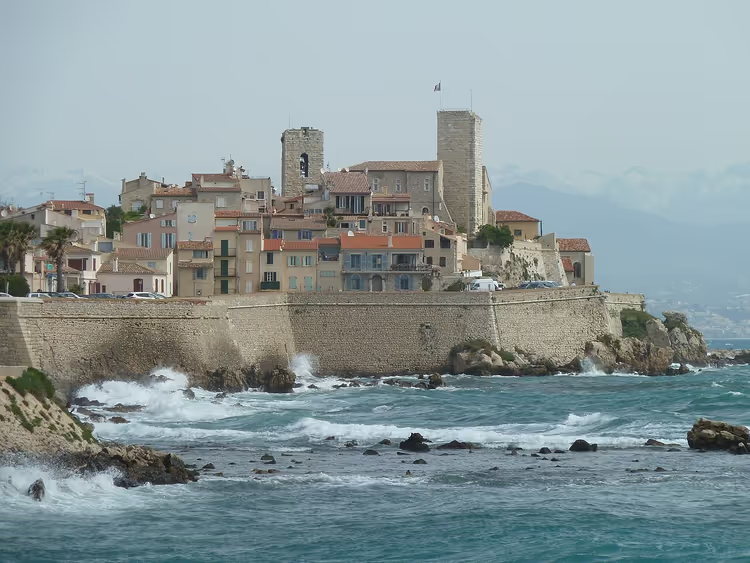
Antibes was founded by the ancient Greeks and is one of the oldest towns on the French Riviera. It is also home to the first museum dedicated to Pablo Picasso: the artist worked in the town briefly and donated some of his works to it.
The museum occupies Château Grimaldi, a 14th-century palace that later served as the residence of Monaco's rulers. Besides it, Antibes is worth visiting for one of the most impressive marinas on the Riviera and the Fort Carré, which once served as a prison. Museum tickets are inexpensive, and there are almost no lines here.
 © Abxbay · CC BY-SAPhoto: Abxbay, CC BY-SA (https://creativecommons.org/licenses/by-sa/3.0), Wikimedia Commons
Antibes is easy to explore on foot: the old town is small, and the market and waterfront are close together. In the morning, a food market operates on the square, where people buy cheese, olives, and local wine. If you want to add another town to your day, hop on a train: the neighboring towns are on the same TER line.
Getting there: the train from Nice takes under half an hour (as of 09/2026, TER Sud schedule). The last train back leaves shortly before ten in the evening, so you can spend the evening in town.
The catch: during the day the waterfront and marina are crowded, and the central beaches are narrow.
Tour: a Riviera sightseeing trip on GetYourGuide.
6. Eze, a village on a cliff
Eze has a population of about two thousand, and it's one of the most picturesque medieval villages in the region. It sits on a cliff slightly back from the sea, which makes it feel like a calm alternative to the glamorous coastal towns.
Be sure to walk up to the Notre-Dame de l'Assomption church and stop by the Jardin Exotique: its terraces offer the best view of the coast. Many people come here specifically for that panorama, not for the village itself.
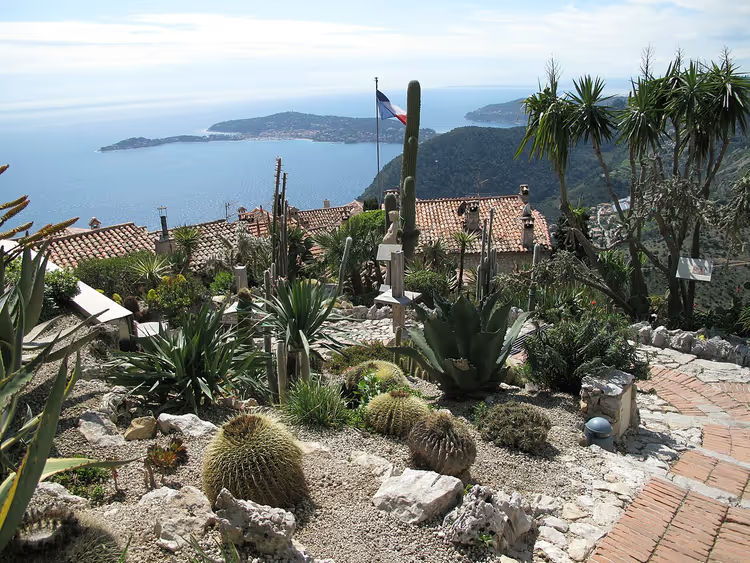
The houses in Eze crowd onto narrow terraces, and there's almost no room for cars. On foot, though, you can walk the entire village in half an hour and find a viewpoint overlooking the bay.
Another reason to stop in Eze: the Fragonard perfume factory. Fragrances have been made here using traditional methods for a hundred years, and the tour of the workshops is free. If you can't get into a workshop in Grasse, the factory in Eze is a good substitute and takes about an hour.
Getting there: the train stops on the coast, and from there it's a long uphill climb that's difficult for people with limited mobility. Bus 82 from Nice directly to the village is more convenient (as of 09/2026, Lignes d'Azur route map).
By car: the drive takes about half an hour, but parking in the village is always a challenge, so arrive early.
The catch: the narrow streets are packed in summer, and the climb from the station is tough in the heat.
Tour: an Eze and Monaco tour on GetYourGuide. A guide will take you through the village, then show you Monaco and Monte Carlo.
7. Saint-Tropez, luxury and sailboats
Saint-Tropez is known as a luxury resort, but it was a fishing town until artists like Henri Matisse and the first Hollywood stars arrived. Today it's boutiques, designer beach clubs, and the yachts of the rich and famous.
Beyond that, stroll the streets with Provençal-style shutters and climb up to the citadel for a view of the Mediterranean. The town's small museum tells the story of what Saint-Tropez was like before Hollywood, when fishermen lived here and ordinary vines grew.
 © dronepicr · CC BYPhoto: dronepicr, CC BY (https://creativecommons.org/licenses/by/2.0), Wikimedia Commons
For lunch, stop by Dior Des Lices, a café at the Dior boutique with a cozy flower-filled courtyard. Prices are high, but the atmosphere is exactly what people come here for. Beyond that, the town has plenty of regular restaurants near the port.
If you want to spend a day in the town's signature style, book a lounger at one of the beach clubs. That's the main local ritual, not sightseeing.
Toward evening, the town comes alive. Yachts return to the port, lights come on along the waterfront, and the famous promenade begins, the very thing people come here for. If you don't have a car, keep an eye on the time of the last bus toward Saint-Raphaël, otherwise you'll have to call a taxi.
During the midday heat, it's best to stick to the shady streets of the old town. That's also where small galleries and workshops hide, selling local ceramics and textiles at reasonable prices. From the windows you can also see how the old houses are laid out, with narrow courtyards and wooden shutters.
For your budget, Saint-Tropez is a tricky town: even lunch at a simple café costs more than in Nice. If you want to save money, bring water and sandwiches, and save your main spending for a lounger by the water.
How to get there: there's no direct rail line from Nice. First take a train to Saint-Raphaël-Valescure station, then a bus or taxi. The most pleasant option: a boat from Nice, with views of Cannes, Antibes, and the Esterel cliffs along the way.
The catch: without a car or boat, the trip takes a long time, so don't plan Saint-Tropez as a half-day outing.
Tour: boat ticket to Saint-Tropez on GetYourGuide.
8. Verdon Gorge and turquoise water
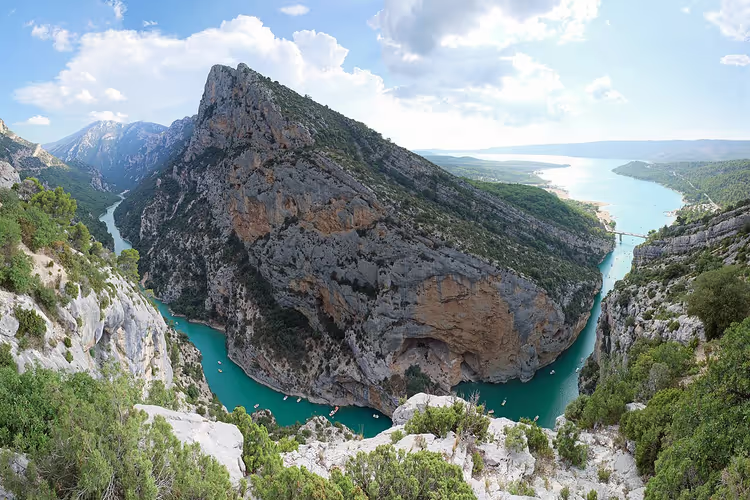
Verdon Gorge is the deepest in France and one of the most beautiful places in Provence. Because of the limestone cliffs, the water keeps its turquoise color, which is why it's called the "Grand Canyon of Europe" and compared to its American counterpart.
Part of the lake turns into white rapids. Around the lake and gorge, kayaks are available to rent, or you can simply lay out a towel and swim in the clear water. Don't miss the viewpoint at Pont du Galetas, where you get that iconic view of the gorge that people come here for.
 © kallerna · CC BY-SAPhoto: kallerna, CC BY-SA (https://creativecommons.org/licenses/by-sa/4.0), Wikimedia Commons
Picturesque villages are scattered around the gorge, pleasant places to stop for lunch. Castellane sits right at the entrance to the gorge, and Moustiers-Sainte-Marie is lovely in early summer, when lavender fields bloom nearby. If you're there during lavender season, add a couple of hours for a photo stop at the fields, they're worth it.
Plan the day with extra time: the drive one way takes about two hours, and you still need time for swimming and lunch in a village. It's better to leave Nice early in the morning and return by evening, otherwise you'll spend more time behind the wheel than in nature.
The water in the gorge stays cool even in the heat, because it's fed by mountain springs. Swimming is more pleasant in the afternoon, when the sun has warmed the shallows. Bring water and a snack: there are few cafés near the viewpoints, and in season they have lines.
Kayak rentals operate from morning to evening, but it's better to arrive at opening time, while there are few people on the water. If you don't want to paddle yourself, short boat trips into the gorge are organized at Pont du Galetas. Book ahead: in July and August spots fill up fast, and without a reservation you risk being left on the shore.
How to get there: public transport here is inconvenient, so you need a car. The drive from Nice takes about two hours, and there's parking at Pont du Galetas. From the dock you can take a boat and head deeper into the gorge by water.
The catch: without a car the trip is almost impossible, and in summer the viewpoints are crowded and noisy.
Tour: Verdon and lavender fields tour on GetYourGuide.
9. Cannes beyond the film festival
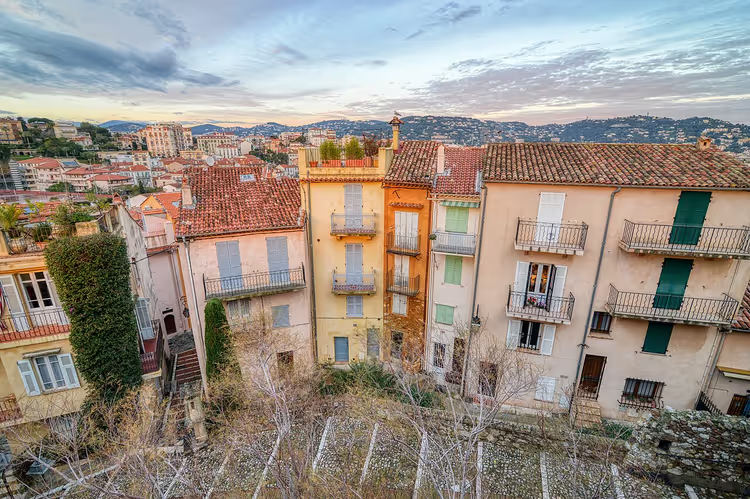
Cannes is not just the film festival. Start your day in the old quarter of Le Suquet, where ancient streets and pastel houses sit alongside family-run restaurants. From here you get a view of the bay and the whole city.
If you're not afraid of heights, climb the tower next to the Notre-Dame d'Espérance church: it offers the best panorama of the city. Then people-watch on La Croisette, the huge boulevard with hotels and boutiques along the waterfront, and catch the sunset at Le Vieux Port.
 © Jorge Láscar from Australia · CC BYPhoto: Jorge Láscar from Australia, CC BY (https://creativecommons.org/licenses/by/2.0), Wikimedia Commons
Cannes is easy to combine with a long walk along the water. From Le Vieux Port, a long promenade runs along the shore, and it's an easy walk to beaches that are less crowded than in the center. Bring water: in the heat there's little shade on the open shore.
For shopping, try the side streets away from La Croisette: there are more affordable shops and fewer tourists. In the evening, seafood restaurants open near the port, and the air gets cooler. Take the train back, the last one to Nice leaves late, so your evening can stretch out.
How to get there: the train from Nice takes about half an hour, and the city is easy to explore on foot (as of 09/2026, TER Sud regional trains).
The catch: during festival days prices rise noticeably, and finding a hotel in the center becomes harder.
Tour: scenic Riviera drive ending in Cannes.
10. Saint-Paul-de-Vence and the artists
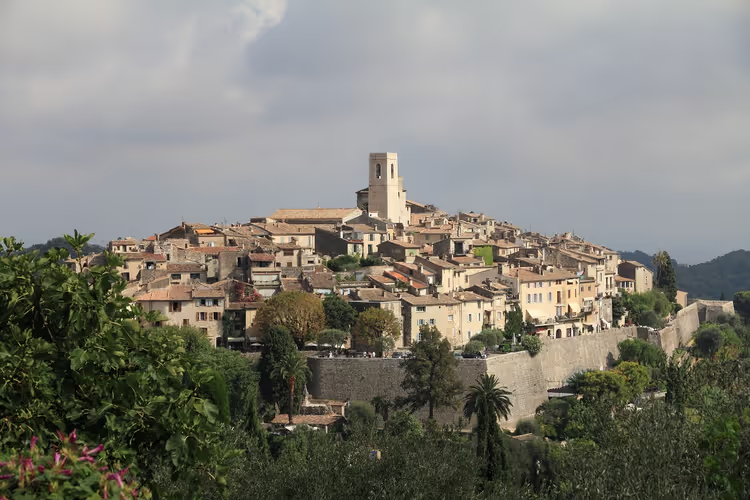
Saint-Paul-de-Vence was made famous by artists who lived and worked in this hilltop village. Today it's a colorful medieval village where it's easy to spend a whole day without noticing the time pass.
Have lunch at La Colombe d'Or, a restaurant at a small hotel. Artists were once welcomed here and allowed to pay with paintings instead of money, so dining feels like being in a gallery, with the walls covered in works. It's best to book a table in advance, the place is popular.
 © Baptiste ROUSSEL · CC BY-SAPhoto: Baptiste ROUSSEL, CC BY-SA (https://creativecommons.org/licenses/by-sa/3.0), Wikimedia Commons
Along the way, take a look at the Fontaine de Saint-Paul-de-Vence on the central square: it serves as the focal point for town celebrations. For the best views, walk up to the Cimetière de Saint-Paul-de-Vence, where the Mediterranean glitters between the trees. The artist Marc Chagall is buried here as well.
How to get there: first take a train from Nice to Cagnes-sur-Mer, then a short bus ride to the village. By car from Nice it takes about 45 minutes, but parking near the walls is not free either.
The catch: getting there by public transport is more difficult than to the coastal towns, and the trip takes a full day.
Tour: tour of the medieval villages of Provence on GetYourGuide.
⁉️🤔 Frequently asked questions
Can you visit several towns in one day?
Yes, if you use the train. Nice, Villefranche, Monaco, Antibes, and Cannes are all on the same TER line, so two towns in one day is entirely realistic. They are ten to thirty minutes apart, and tickets are sold at station ticket machines.
Do you need a car for day trips from Nice?
For the coast, you don't need a car. TER trains will take you to Menton, Monaco, Antibes, Cannes, and Villefranche, while Lignes d'Azur buses go to Eze and Saint-Paul-de-Vence. A car is only necessary for the Verdon Gorge and remote villages in Provence.
How much is the train from Nice to Menton and how long does it take?
The train takes about 40 minutes, and a one-way ticket starts at 8 EUR (as of 09/2026, current price on SNCF Connect). Tickets are sold at the station and in the app; regional TER trains don't require advance booking, so just arrive a few minutes before departure.
Where can I check current train and bus schedules?
For trains, check SNCF Connect and the TER Sud website; for buses, use Lignes d'Azur for Nice and the surrounding area, and ZOU! for intercity routes. Schedules change by season, so check them on the day of your trip rather than the evening before.
Is it worth going to the Verdon Gorge without a car?
Without a car, it's difficult. Public transport takes a long time and involves transfers, so either book a guided tour or rent a car in Nice. The drive takes about two hours each way, leaving you less time for the canyon itself.
Which should I choose, Monaco or Saint-Tropez?
Monaco is closer and easier: the train takes about 25 minutes, and one day is enough to see it. Saint-Tropez is farther, but it's best explored by boat. If you have one free day, go with Monaco and save Saint-Tropez for a separate trip.
In short: what's worth booking
The ten destinations break down by your interests. If you have one day and it's your first time on the Riviera, go with Menton or Monaco: each will fill a full day. Villefranche-sur-Mer is good for the sea and swimming, Grasse for fragrances, Saint-Tropez for luxury, and the Verdon Gorge for nature.
If you have a couple of free days, add Antibes, Eze, and Cannes: they're close by and connected by train. Save Saint-Paul-de-Vence for a relaxed day with lunch at La Colombe d'Or.
It's easier to plan your trip in advance: look for accommodation in Nice before high season, book tours for a specific morning, and rent a car only for the Verdon area.

A small editorial team writing guides for independent travel. We travel ourselves, but we haven’t been everywhere, so we check prices, opening hours and how to get there against official sources.