
















Prague in 7 days: route by districts, tickets and opening hours
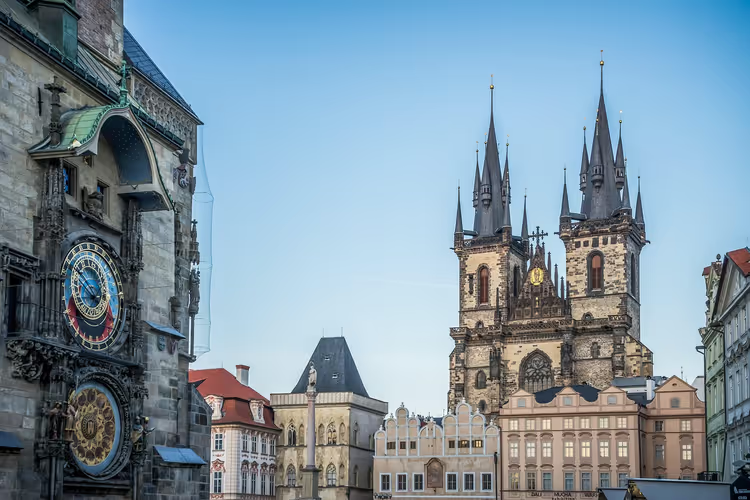
Prague can be walked end to end in seven days. It all comes down to how you split the route by neighborhood. The Old Town astronomical clock chimes every hour from 8:00 AM to 11:00 PM, and a crowd always gathers at the tower (according to Prague City Tourism, 09/2026). We put together a seven-day route: the center, Petřín, Prague Castle, Malá Strana, the zoo, Vyšehrad, and the Palladium shopping center. You'll see the main sights without rushing or unnecessary travel. Each day covers one neighborhood and a couple of tickets. Below you'll find prices, opening hours, and honest catches. Hours and prices were checked on 03.09.2026 on official websites.
Ad: this article contains affiliate links, we earn a commission if you book through them, at no extra cost to you.
Day 1. Old Town Square and the astronomical clock
💡 In short:
- Start with the town hall and the astronomical clock, then walk around the square in a loop.
- The Jan Hus Memorial and the Church of Our Lady before Týn are a stone's throw from each other.
- Prices and opening hours: 09/2026, checked on the official town hall website
 © Jakub Hałun · CC BY-SAPhoto: Jakub Hałun, CC BY-SA (https://creativecommons.org/licenses/by-sa/4.0), Wikimedia Commons
Old Town Square
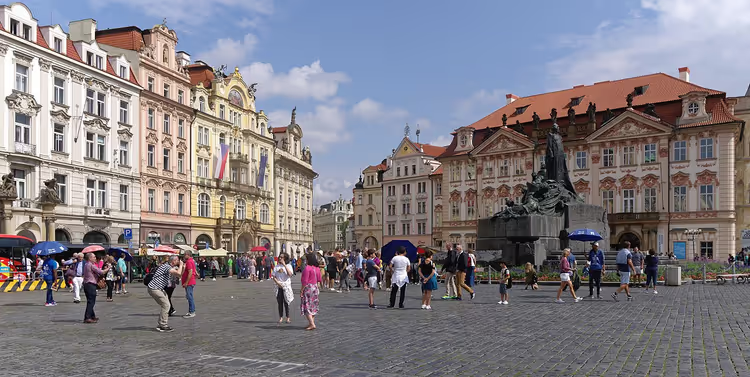
Old Town Square grew out of a large market at the crossroads of Europe's trade routes. The first mention of it dates back to the 12th century. The square got its official name in the late 19th century, when the market finally moved away. Kings were crowned here, festivals were held, and public executions took place. You'll feel the density of this history just by walking around the square in a loop.
The square covers about fifteen thousand square meters. That space fits the town hall, two churches, a monument, and dozens of historic houses. Come by nine in the morning: the clock tower area is still crowd-free, and your photos come out calm. During the day, music is always playing and street performers are working.
 © Bahnfrend · CC BY-SAPhoto: Bahnfrend, CC BY-SA (https://creativecommons.org/licenses/by-sa/4.0), Wikimedia Commons
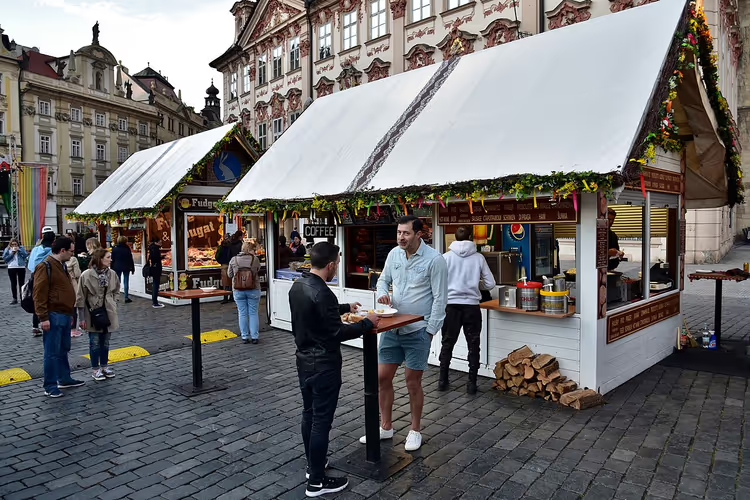
The Old Town Hall began as a Gothic building from 1338 (according to the Prague tourist office, 09/2026). Later, Renaissance-style houses were added on both sides. The astronomical clock on the tower puts on a short show with the apostles every hour from 8:00 AM to 11:00 PM. Under the cornice, the coats of arms of city council members and an old inscription reading "Prague, head of the kingdom" have been preserved.
The Wedding Hall operates in the pink wing of the town hall. Mendelssohn's "Wedding March" can be heard from there on holidays. Climbing the tower costs money, but the view of the square from above is worth the wait. Take a morning slot: by noon, groups gather at the ticket office. If you want to get inside without queuing, buy your slot online in advance.
One of the houses next to the town hall was saved almost by accident. The building was slated for demolition due to its dilapidated state, but Renaissance-era paintings were found under the Baroque plaster. Medallions with portraits of rulers, mythological scenes, and allegorical figures were restored. Now the city's monument protection service operates here, at Old Town Square 1/3.
The Church of St. Nicholas gives itself away with its green domes, visible from afar. A small parish church stood on this site as early as the 13th century. After a fire, the building was rebuilt in the 18th century and took on its current Baroque appearance. Today, services are held here during the day, and organ classics sound in the evening. Address: Old Town Square 27A. Go in between concerts, when the hall is empty.
Jan Hus Memorial
 © Petr Vilgus · CC BYPhoto: Petr Vilgus, CC BY (https://creativecommons.org/licenses/by/2.5), Wikimedia Commons
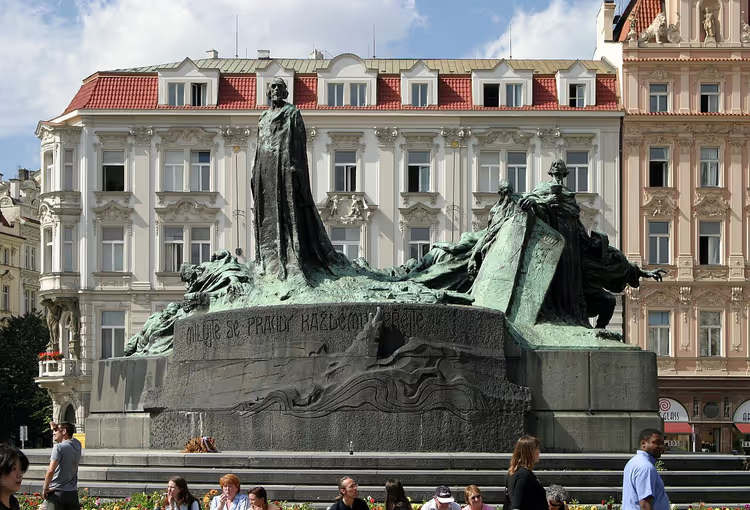
The Jan Hus Memorial rises straight out of the cobblestones in the center of the square. The monument was funded by public donations over twelve years, and it was a collective patriotic effort. Hus himself stands in the center, with symbolic figures of his supporters arranged below. A sculpture of a young mother stands out, reading as a symbol of the country's rebirth. Walk around the monument from both sides: from the south it looks completely different.
Church of Our Lady before Týn
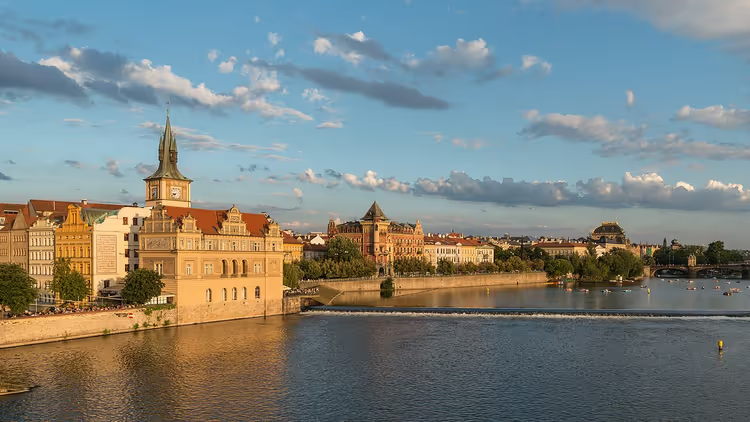 © DXR · CC BY-SAPhoto: DXR, CC BY-SA (https://creativecommons.org/licenses/by-sa/4.0), Wikimedia Commons
The Church of Our Lady before Týn took two centuries to build, and it combines Gothic and Baroque. Two tall towers with sharp spires serve as a landmark for the entire square. Inside stands a stone Gothic pulpit and a pewter baptismal font with reliefs of the apostles. The walls are decorated with large canvases depicting Mary and Christ. A full tour takes about half an hour at a leisurely pace.
Entry to the church is free, but services follow a schedule. Step inside in the morning, while there are few tour groups around. You'll exit through a different door, straight onto Pařížská Street. The nearest metro station is called Staroměstská, and trams stop near the square.
Day 2. Petřín Hill and the observation tower
Viewpoint
Petřín Hill rises above the Vltava and unites eight gardens and parks. Back in pagan times, the god Perun was worshipped here, as evidenced by the remains of shrines. Much of what you'll see at the top was built for the international industrial exhibition of the late 19th century. Today these pavilions are considered national monuments of the Czech Republic.
The best panorama of the city opens up from the top. You can see Prague Castle, St. Vitus Cathedral, and all the bridges across the Vltava. Come at sunset: the light falls on the rooftops, and the city looks especially peaceful. In winter, the paths are slippery, so wear shoes with good tread.
Observation tower
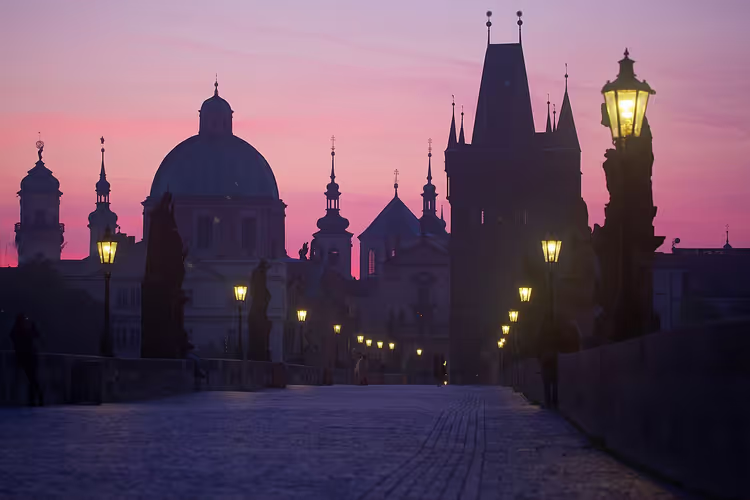 © Bradley Weber · CC BYPhoto: Bradley Weber, CC BY (https://creativecommons.org/licenses/by/2.0), Wikimedia Commons
Petřín Lookout Tower echoes the outline of the Eiffel Tower, just much smaller. It was built with public donations. Inside there are three levels: underground, lower, and upper. The underground level houses a museum of literary characters by the writer Jára Cimrman. The lower level has souvenir shops and a cafe, and the top has an observation deck.
Buy a ticket for the tower on site or online in advance. The line for the lift is short in the morning on weekdays. The observation deck is open year-round. Admission is paid; check the exact opening hours on the tower's official website, 09/2026.
Mirror maze
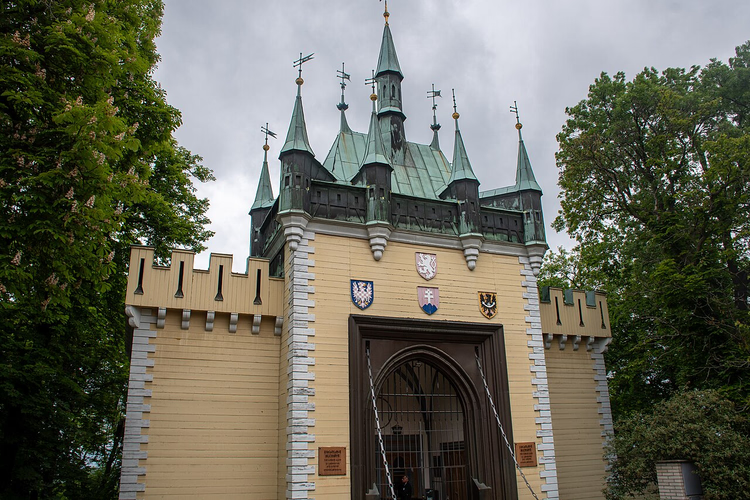 © BugWarp · CC BY-SAPhoto: BugWarp, CC BY-SA (https://creativecommons.org/licenses/by-sa/4.0), Wikimedia Commons
A few meters from the tower, the Mirror Maze is tucked away. Inside hangs a historical panorama depicting a scene from the Thirty Years' War and the clash between Czechs and Swedes on Charles Bridge. Nearby stands the "Chapel of Golgotha," whose facade is painted with a scene of Christ's resurrection. Kids enjoy it here more than adults do. Stop by if you're traveling with family.
Nearby you'll find the Church of St. Lawrence, the Hunger Wall, and the Štefánik Observatory. All of these spots are in the same park and require no travel between them. Exploring this part of the hill takes about an hour.
Rose garden
The rose garden occupies the slope above the maze. Roses are planted here in three patterns: fan, circle, and parterre. The garden is open only in the warm season. In summer it's easy to escape the crowds here and rest in the shade. Come before noon, before the sun gets too hot.
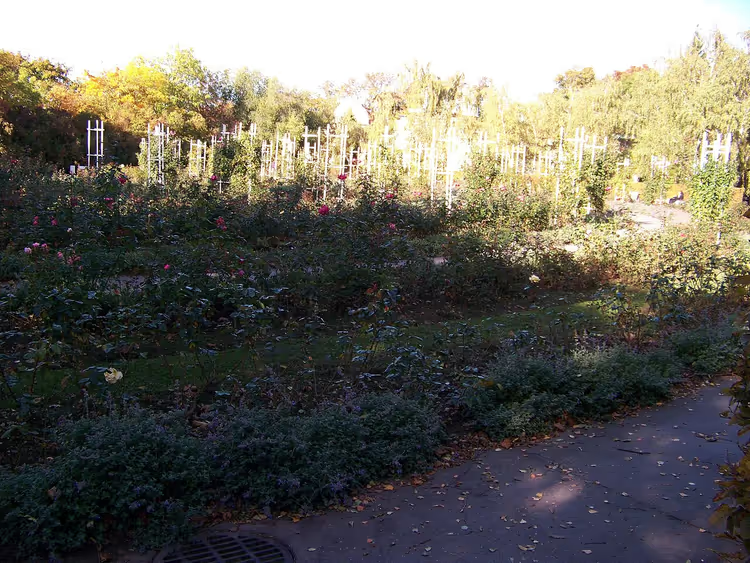 © ŠJů ( cs:ŠJů ) · CC BY-SAPhoto: ŠJů ( cs:ŠJů ), CC BY-SA (https://creativecommons.org/licenses/by-sa/3.0), Wikimedia Commons
How to get to Petřín
The funicular from the Újezd stop is not running yet: it was closed for reconstruction and is expected to return to service on September 22, 2026 (according to Prague Morning, 09/2026). Until then, walk up the park paths or take a tram to the Újezd stop. Check routes and schedules at the stop. Compare airport transfer options in advance so you don't have to hunt for a taxi with your suitcases.
From the Hellichova stop, head down to the Vltava and you'll reach Kampa Island. There you'll find an English-style park, an old mill wheel, and the Čertovka stream. Closer to Charles Bridge stands the John Lennon Wall with messages from fans of the musician. A walk around Kampa takes about an hour (according to the map).
Day 3. Prague castle and st. vitus cathedral
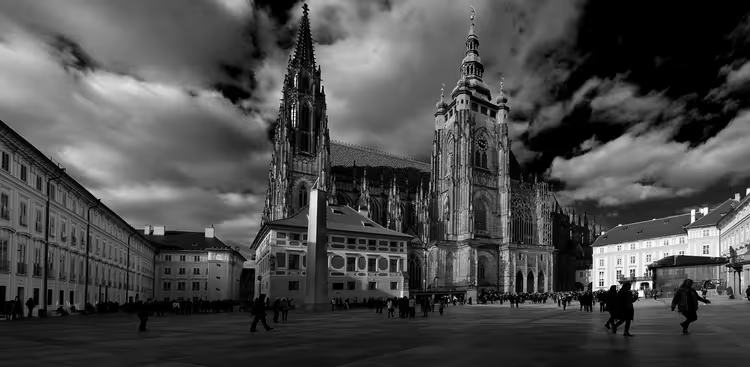
Prague Castle has served as a fortress since the early Middle Ages. In the 14th century it became the residence of Emperor Charles IV. The walls were reinforced, the castle was expanded, and the royal palace was rebuilt. The palace roof was even covered in gold as a sign of imperial power. A major reconstruction of the complex took place in the 17th century, after the Swedish occupation.
The castle grounds are open every day, and the historic buildings welcome visitors from 9:00 AM to 5:00 PM in the summer season (according to the official Prague Castle website, 09/2026). The Old Royal Palace was closed from September 3 to October 1, 2026, and has welcomed visitors again since October 2. Walk through the gate with the guard and turn right toward the ticket offices. A price list with all ticket categories is posted there.
Royal Palace
 © Jan Polák · CC BY-SAPhoto: Jan Polák, CC BY-SA (https://creativecommons.org/licenses/by-sa/3.0), Wikimedia Commons
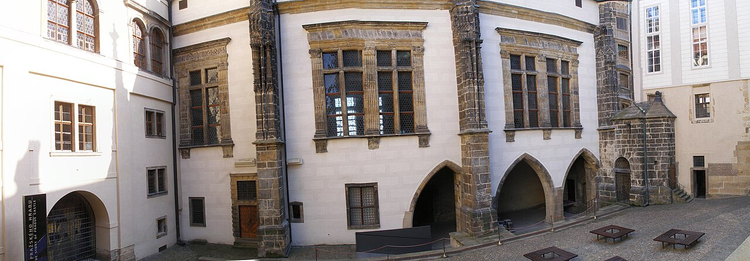
The Royal Palace houses the Chapel of All Saints, the Spanish Hall, the Vladislav Hall, and the Bohemian Chancellery. The Vladislav Hall spans two floors in height and remains the most spacious room in the old palace. Inside you will see relics that speak to the wealth of the Bohemian kings. The grand halls impress with their decoration no less than the facades do. Before your visit, check the Castle website for temporary closures: in autumn 2026 the palace was closed for almost a month.
St. George's Basilica
 © Tilman2007 · CC BY-SAPhoto: Tilman2007, CC BY-SA (https://creativecommons.org/licenses/by-sa/4.0), Wikimedia Commons
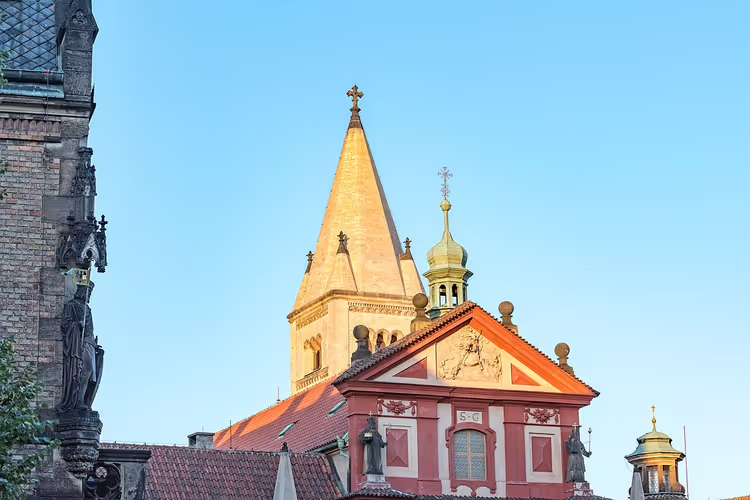
St. George's Basilica dates back to the 10th century and is considered the oldest church in the castle complex. Its ornate Baroque facade stands next to two white early Gothic towers. The towers are called Adam and Eve. Above the entrance you will find sculptures of the church's founders, Prince Vratislaus and Princess Mlada. Inside, there is a sense of quiet, and people stop here before visiting the bustling cathedral. The 17th-century reconstruction preserved the building's ancient features.
St. Vitus Cathedral
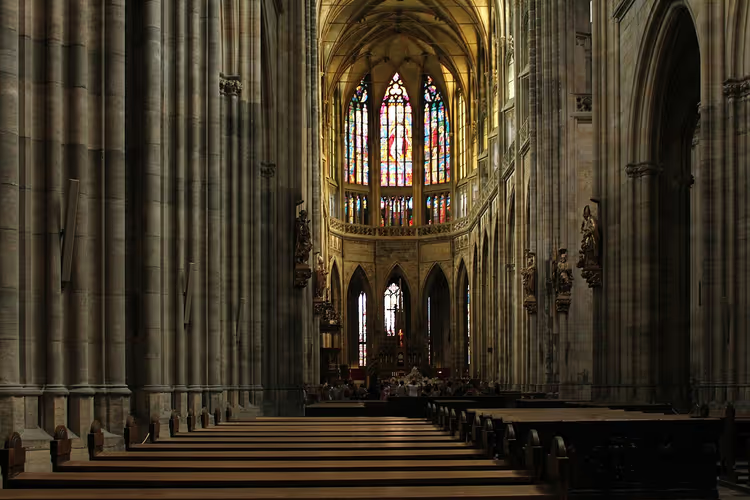
St. Vitus Cathedral is visible from anywhere in Prague. Its spires rise dozens of meters above the castle. The walls are covered with intricate tracery, and the portals are decorated with figures of chimeras and gargoyles that serve as water spouts. The Golden Gate deserves special attention, with its mosaic of gilded Venetian glass. The mosaic depicts scenes of the Last Judgment.
An Orthodox crucifix is also located here, which seems like a mystery for a Catholic church. Entry is by ticket, and bags are checked at the entrance. Get a ticket for the main route: it covers the cathedral and Golden Lane. Arrive at opening time, when the nave is almost empty.
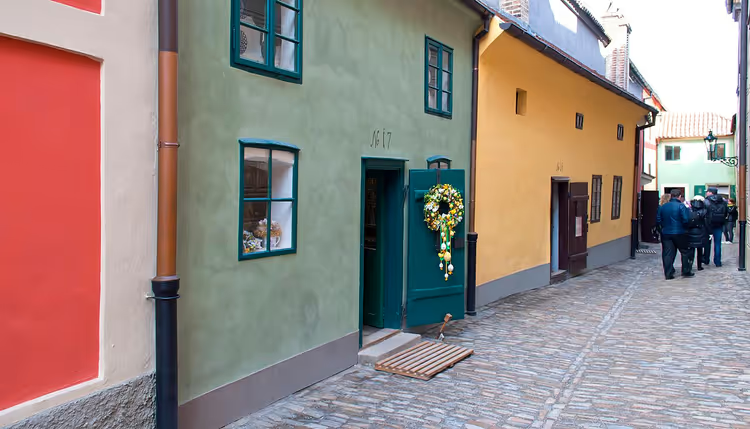
Golden Lane
 © Mihael Grmek · CC BY-SAPhoto: Mihael Grmek, CC BY-SA (https://creativecommons.org/licenses/by-sa/3.0), Wikimedia Commons
Golden Lane consists of tiny houses pressed tightly together. In the 17th century, "red riflemen" who guarded prisoners lived here. The name is linked to a legend about alchemists who sought a way to extract gold from stone. Today the houses contain souvenir shops, snack bars, and small stores. The lane is open from early morning until late evening, and ticket offices operate during the day.
Arrive at opening time: the alley is almost empty then. You can step into the houses without crowding and calmly take photos with your phone. Golden Lane is included in the main route ticket, so you don't need to buy a separate entry.
If you plan to visit many museums, check out the Prague Visitor Card for 2, 3, or 4 days: it pays for itself starting with the third attraction.
Tours and tickets in Prague
Guided tours, skip-the-line tickets and activities — most offers can be cancelled free of charge.
See offers on GetYourGuideThe widget loads once you give your consent.
Day 4. Malá strana and the wallenstein garden
Malá Strana has preserved its Baroque spirit: there is almost no modern construction here. The district's center, Malostranské Square, is surrounded by the Liechtenstein, Smiřický, and Sternberg palaces. Each of them serves as an example of Baroque style. The district is easy to explore on foot, and the climbs are short. From the city center you can walk here via Charles Bridge in half an hour (according to the map).
Church of St. Nicholas
 © Björn S... · CC BY-SAPhoto: Björn S..., CC BY-SA (https://creativecommons.org/licenses/by-sa/2.0), Wikimedia Commons
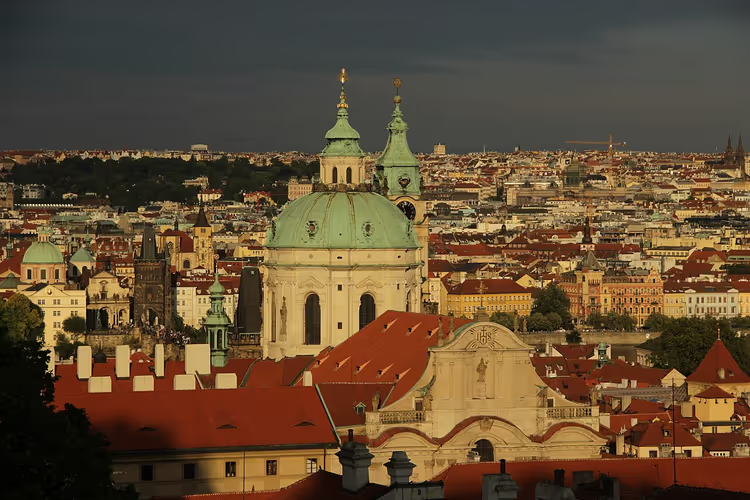
The Church of St. Nicholas on Malostranské Square is considered the pinnacle of Prague Baroque. It was here, two weeks after Mozart's death, that his "Requiem" was first performed. Inside, pay attention to the fresco on the central vault depicting scenes from the saint's life. Also worth seeing are the copper sculpture of St. Nicholas and the statues of Christ's followers. The stucco work and the large chandelier make the hall resemble a theater stage. Address: Malostranské Square, 2/25. The church is open during the day and closes earlier in winter.
Wallenstein Palace
 © Ymblanter · CC BY-SAPhoto: Ymblanter, CC BY-SA (https://creativecommons.org/licenses/by-sa/4.0), Wikimedia Commons
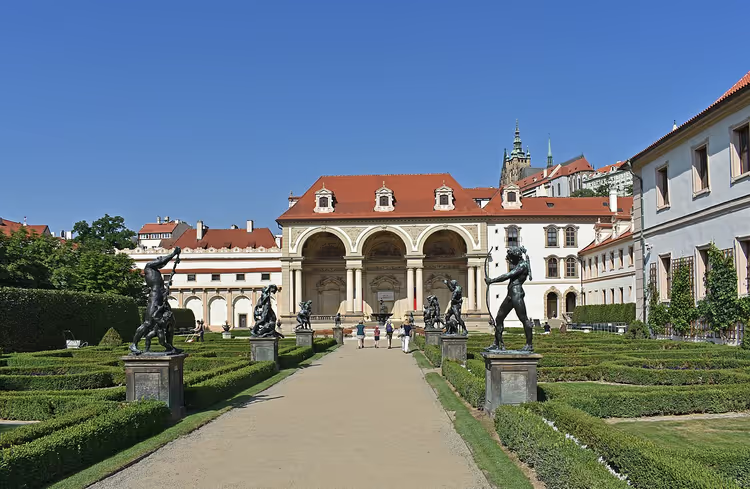
Waldstein Palace is worth seeing as an example of a Baroque complex. It is not just a building but an entire garden with a maze of evergreen shrubs. The garden features sculptures and an artificial stalactite cave. The Knights' Hall inside the palace rises two stories high. The decoration looks ornate and rich even from the outside.
On the ceiling fresco, Duke Waldstein is depicted as the god Mars on a chariot. The frescoes are painted with scenes from Ovid and Virgil. Today the building houses the Senate of the Czech Republic and the Pedagogical Museum. You can get into the garden on weekends during the warm season. Trams to the square run from the center.
Nerudova Street
 © Richard Mortel from Riyadh, Saudi Arabia · CC BYPhoto: Richard Mortel from Riyadh, Saudi Arabia, CC BY (https://creativecommons.org/licenses/by/2.0), Wikimedia Commons
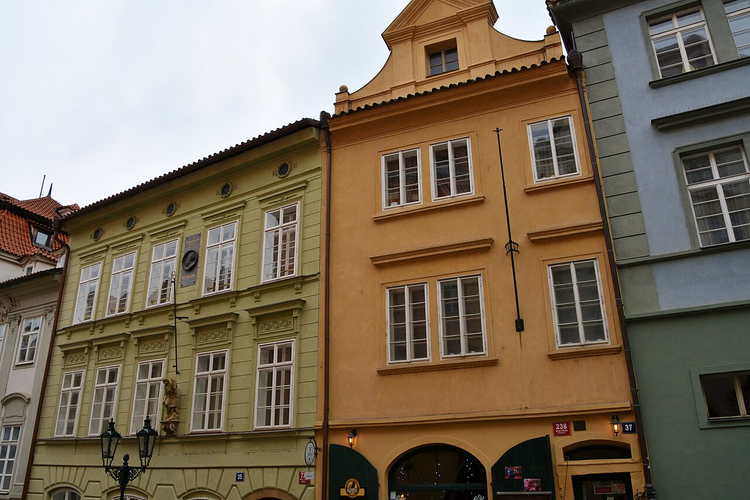
Nerudova Street was once part of the Royal Route. On the old mansions, a coat of arms of the owner is fixed instead of a house number. This is a pedestrian zone where the embassies of Romania and Italy are located. You will see Baroque and Renaissance facades, Gothic cellars, and ornate door handles. Spend half an hour here and just take in the details.
Karmelitská Street
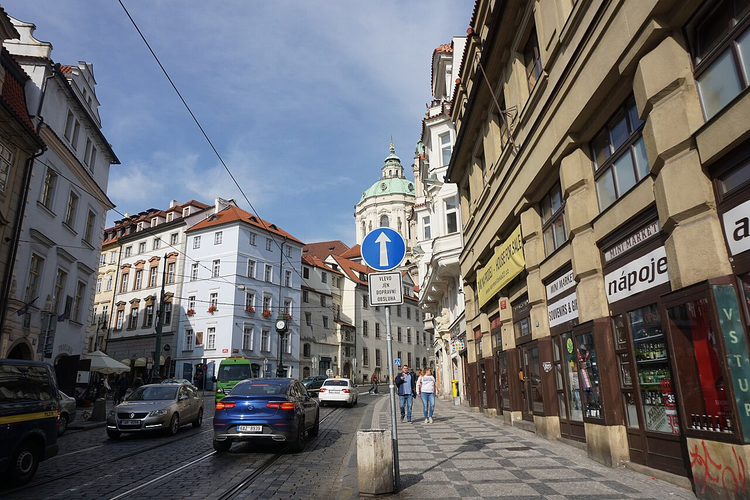 © Andrew Milligan sumo · CC BYPhoto: Andrew Milligan sumo, CC BY (https://creativecommons.org/licenses/by/2.0), Wikimedia Commons
Karmelitská Street slopes downward, which is why the Church of Our Lady Victorious stands here. It is known for the statuette of the Infant Jesus on the central altar. Believers attribute protective power to the figurine, and pilgrims come to see it. You can visit the church for free, but viewing is limited during Mass. Be quiet, this is an active church.
House at the Black Lion
The House at the Black Lion preserves the memory of a former inn. Admiral Nelson and the Hamiltons stayed here. You will find the building by the coat of arms with a black lion above the entrance. There is no separate ticket here; it is part of a walk through the district. The house is convenient to see on the way to the Vltava.
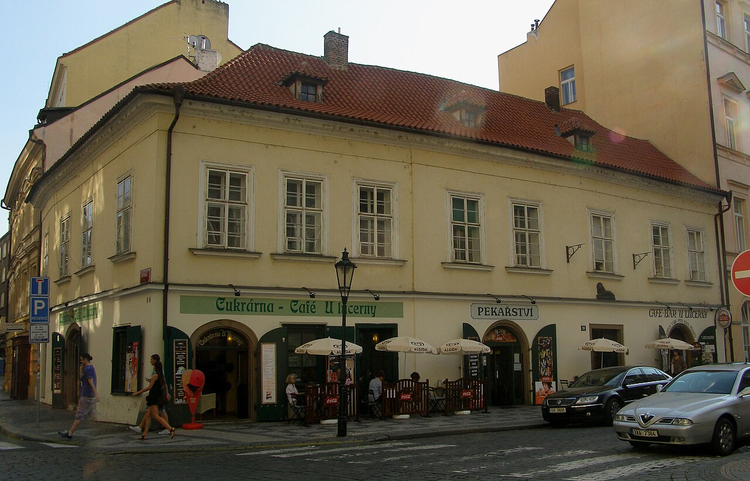 © Michal Kmínek · CC BY-SAPhoto: Michal Kmínek, CC BY-SA (https://creativecommons.org/licenses/by-sa/3.0), Wikimedia Commons
From Malá Strana it is easy to walk down to the river. A Vltava river cruise with coffee and cake departs from the pier under Charles Bridge and lasts about an hour.
Day 5. Prague Zoo
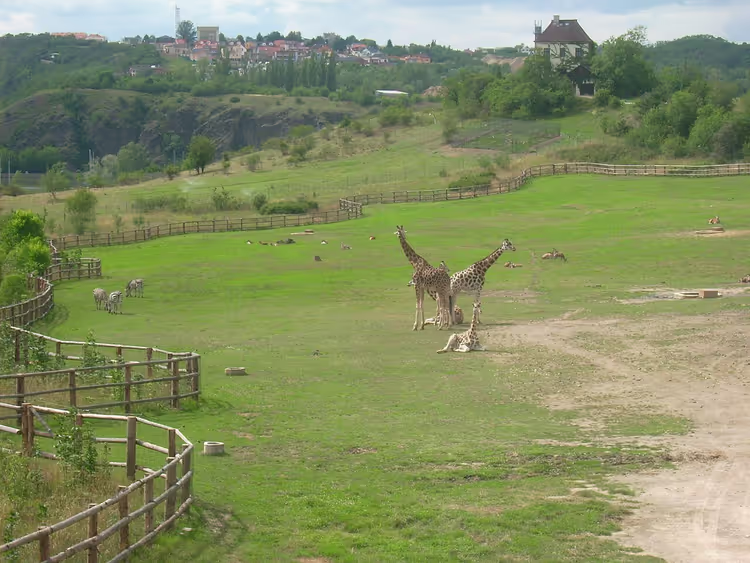
Prague Zoo spreads across two levels in the Troja district. The grounds cover about sixty hectares, and seeing everything takes a full day. The zoo ranks among the best in the world and holds a large collection of rare species. The animals here live in conditions close to their natural habitats. Even on weekdays it is crowded, so buy your ticket in advance.
An adult ticket costs 330 CZK, a child aged 3 to 15 costs 250 CZK, and children under 3 enter free (according to the zoo's official website, 09/2026). Visitors over 70 pay a symbolic one crown. A family ticket for two adults and four children costs 1000 CZK. Car parking costs 300 CZK per day.
The largest pavilions focus on the tropics and Africa. The Indonesian Jungle maintains a warm, humid climate and houses hundreds of tropical species. The Africa Up Close pavilion introduces mongooses, porcupines, flamingos, and marabou storks. In South America you will see llamas and various monkeys. The remaining enclosures are home to tigers, lions, gorillas, and penguins.
A separate area is dedicated to children. A small tram runs through the children's zoo, and animal feed is sold in vending machines. The grounds have cafes, restrooms, playgrounds, and even a pool. In summer the zoo stays open longer, and in winter it closes earlier (according to the zoo, 09/2026). Plan your visit for the morning so you can cover both levels.
How to get to the zoo
From the center, take the metro to Nádraží Holešovice station on the red line. From the metro, bus 112 will take you to the final stop (according to DPP, 09/2026). In summer, a special Zoodus bus and a river boat run to the zoo from the bridges in the center. The boat travels along the Vltava, and you will see the embankments along the way. The hop-on hop-off bus is convenient if you do not want to deal with transfers.
Plan at least four hours for the zoo. If you are going with children, start at the upper level and work your way down. That way you will avoid the steepest climbs. Bring water and snacks; prices in the cafes inside are higher than in the city.
Day 6. Vyšehrad and Slavín cemetery
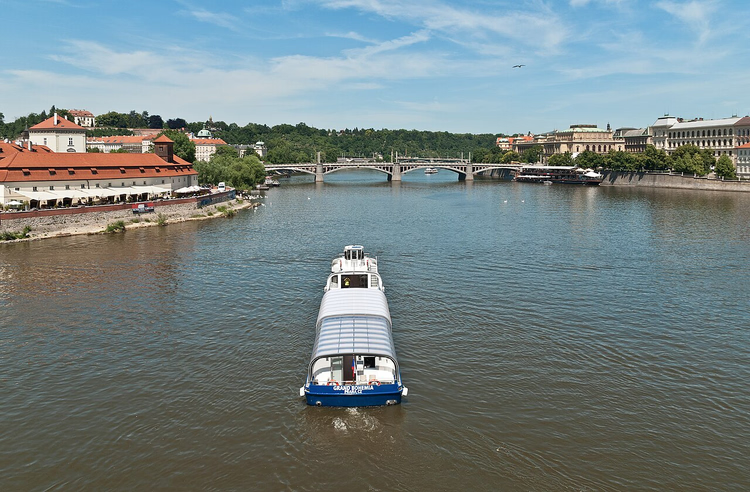 © Jacek Halicki · CC BY-SAPhoto: Jacek Halicki, CC BY-SA (https://creativecommons.org/licenses/by-sa/3.0), Wikimedia Commons
Vyšehrad is considered the oldest fortress in Czechia. Some historians trace the beginning of Prague's history back to this place. The fortress stands on high ground, and the ramparts open up a wide panorama of the Vltava and the city. Today it is a quiet district with palaces, parks, and old legends. The climb to the walls is gentle, and you will pass quiet gardens along the way.
The main church of Vyšehrad is named after Peter and Paul. It was built back in the early 11th century, modeled on a Roman basilica. After a fire, the church was rebuilt and two towers with spires and stars were added. The side chapels are done in the Baroque style. Admission is paid, and some halls are sometimes closed for renovation.
Above the central facade hangs a relief depicting the Last Judgment. Inside, you will find colorful stained glass windows and sculptures of Peter, Paul, Cyril, and Methodius. A separate fresco depicts Our Lady of the Rains. Every element of the interior is tied to a legend, which makes the visit more engaging. Check opening hours and prices on the official Vyšehrad website, 09/2026.
The cemetery and Slavín
 © Jorge Franganillo · CC BYPhoto: Jorge Franganillo, CC BY (https://creativecommons.org/licenses/by/2.0), Wikimedia Commons
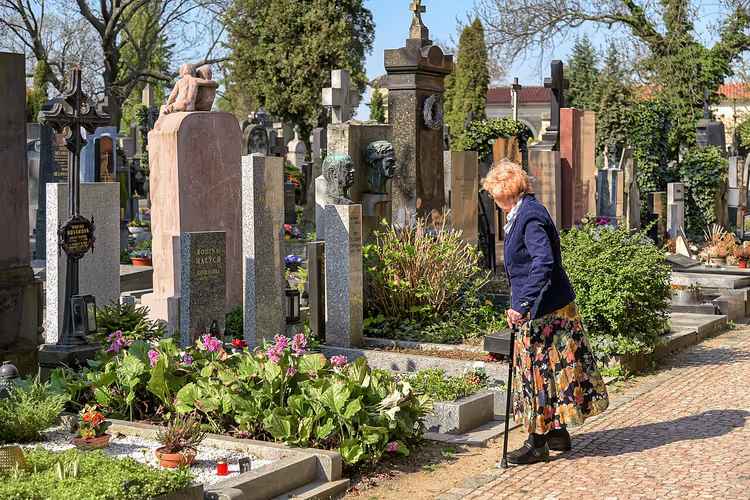
Next to the church lies Vyšehrad Cemetery. More than five hundred prominent Czech citizens are buried here. The main monument is called Slavín, and it bears the inscription "You died, but you still speak." Beneath the sarcophagus rest the remains of fifty famous people. Each gravestone is designed as a sculptural or architectural work.
A walk through the cemetery is peaceful, with almost no noise. You will feel the difference from the crowded Old Town Square.
How to get to Vyšehrad
The fortress is served by the metro, the station is called Vyšehrad on line C. Trams stop just below the fortress. You can also walk along the Vltava embankment from the National Theatre, which takes about half an hour (according to the map). A hot air balloon flight over Prague will show you the city from above if you want to close out the week with a bright finale.
Day 7. Palladium and shopping
 © Giorgio Galeotti · CC BYPhoto: Giorgio Galeotti, CC BY (https://creativecommons.org/licenses/by/4.0), Wikimedia Commons
Palladium stands on Republic Square, address: náměstí Republiky 1. Inside, five floors of shops with local and global brands are open. There are also cafes where you can take a break between purchases. The interior is designed so that the building reads as part of the old town. Take the metro to Náměstí Republiky station on line B, trams stop nearby.
Plan half a day for shopping, otherwise you will not have time to cover all the floors. You will find souvenirs, clothing, and Czech glass here. Take your purchases with you and keep your receipts until you leave. That way you can calmly check your list and not forget anything.
Prague itinerary on the map
The table below shows how the days are distributed. It will help you decide in advance where to buy tickets.
Day | Main focus | Tickets in advance |
|---|---|---|
First | Old Town Square and the astronomical clock | not needed |
Second | Petřín and the observation tower | for the tower |
Third | Prague Castle and St. Vitus Cathedral | main route |
Fourth | Malá Strana and Wallenstein Garden | not needed |
Fifth | Prague Zoo | required |
Sixth | Vyšehrad and Slavín Cemetery | for the church |
Seventh | Palladium and shopping | not needed |
The map below is organized by itinerary day. You can open it on your phone and follow the points in order.
A route through Prague for seven days
Places on the map
- Old Town Hall The chimes strike every hour from 8:00 to 23:00, the tower climb is paid
- Church of St Nicholas in the Old Town The green domes are visible from afar, in the evening organ classics play
- Jan Hus Monument Funded with public money over twelve years, stands in the centre of the square
- Church of Our Lady before Týn Gothic mixed with Baroque, two spired towers, free entry
- Petřín A hill above the Vltava with eight gardens and the city's best panorama
- Petřín Tower A small copy of the Eiffel Tower, three levels and an observation deck on top
- Mirror Maze A few metres from the tower, a panorama of the Thirty Years' War inside
- Rose Garden A slope above the maze, roses in a fan, round and parterre beds, summer only
- Kampa Island An English-style park, a mill wheel and the Čertovka stream, an hour's walk
- John Lennon Wall Closer to Charles Bridge, inscriptions from fans of the musician
- Prague Castle A fortress from the early Middle Ages, historic buildings open 9:00-17:00
- Old Royal Palace The two-storey Vladislav Hall, closed for restoration until 1 October 2026
- Basilica of St George The Castle's oldest church, dating from the 10th century, the Adam and Eve towers
- St Vitus Cathedral The Golden Gate with Venetian mosaic, entry as part of the main route
- Golden Lane Tiny houses with shops, included in the main route ticket
- Malá Strana A Baroque district without modern development, palaces around the square
- Church of St Nicholas The peak of Prague Baroque on Malostranské Square, house 2/25
- Wallenstein Palace A Baroque complex with a garden, maze and stalactite cave
- Nerudova Street Part of the Royal Route, houses bear coats of arms instead of numbers
- Church of Our Lady Victorious Karmelitská Street, a figurine of the Infant Jesus on the altar
- Prague Zoo Sixty hectares in the Troja district, adult ticket 330 CZK
- Vyšehrad The oldest fortress in Czechia, a panorama of the Vltava and the city from the ramparts
- Basilica of St Peter and St Paul The main church of Vyšehrad, the Adam and Eve towers, paid entry
- Slavín Cemetery Over five hundred notable Czechs, a monument with the inscription You have died, but still speak
- Palladium Five floors of shops on Náměstí Republiky square, house 1
⁉️🤔 Frequently asked questions
How much money do you need for a week in Prague?
The main expenses are accommodation and tickets. Entry to many churches is free, and an adult ticket to the zoo costs 330 crowns. Prague Castle and the zoo will take the most. Budget with a buffer and compare hotel prices in advance, and the week will go smoothly.
Do you need a tourist card for seven days?
A tourist card pays off if you plan to visit more than three paid attractions in a row. Over a week you will visit Prague Castle, St. Vitus Cathedral, Golden Lane, and museums. In that case, a multi-day card is cheaper than individual tickets. Buy it online so you do not have to stand in line at the ticket office.
Can you do the itinerary without a car?
Yes, the entire itinerary is built on the metro, trams, and walking. The districts are close to each other, and you can walk from Prague Castle to Malá Strana. Leave the car outside the city: parking in the center is expensive, and access is restricted. A ticket is valid for all types of transport by time.
When is the best time to visit Prague?
May, June, and September offer mild weather and long days. July and August are hot and crowded, but the Petřín gardens and the Singing Fountains are open. In winter the city is quieter, but observation decks close earlier. Come in spring or early autumn if you want relaxed walks without the heat.
What to do on a rainy day?
Rain is a good time to take shelter in Prague Castle and St. Vitus Cathedral. Museums are indoors. If you get wet, stop by the Palladium shopping center or any museum on Wenceslas Square. Plan key sights for the first half of the day, and rain will not ruin your itinerary.
In short: what to book
A week in Prague rests on four paid anchors: Prague Castle, the zoo, the Petřín Tower, and Vyšehrad. Everything else you will see for free during your walks. Buy tickets for attractions online, and you will not waste time at ticket offices.
- If you only have three days: the center, Prague Castle, and Malá Strana.
- If you are traveling with kids: the zoo and the Mirror Maze on Petřín.
- If you want a panorama: Vyšehrad toward evening and Petřín at sunset.
- If you love shopping: leave the last day for Palladium.
For getting around the city, a multi-day tourist card is convenient, and book your airport transfer in advance so the first day starts without hassle.

A small editorial team writing guides for independent travel. We travel ourselves, but we haven’t been everywhere, so we check prices, opening hours and how to get there against official sources.